 Admin
Admin Snack Manufacturing Lines: Integrated Production for Higher Efficiency and Strong Market Competitiveness
Factories that rely on high-performance integrated production lines and precise filling and packaging machines are able to meet growing market demand, reduce product loss, and deliver consistent quality that satisfies consumers.
Investing in the latest manufacturing and packaging technologies opens the door to wholesale distribution and export markets, increasing profitability and giving snack products a strong competitive edge.
What Are Snacks and How Are They Evolving in Modern Industry?
Snack products include a wide range of items such as crispy corn chips, popcorn, and medium-sized savory snacks.
They can be formed into various shapes—round, rectangular, spiral, or custom designs—depending on the configuration and tooling of the production line.
Snack Production Line Stages Inside Factories
Raw Material Preparation
The line begins with receiving corn grits or other base ingredients, which are blended with carefully calculated ratios of oil, water (when required), and additives according to the industrial recipe.
Mixing
Ingredients are processed in powerful food-grade stainless steel mixers. This precise mixing stage usually takes only a few minutes and ensures uniform distribution of all components.
Feeding and Extrusion
The blended material is fed into an extruder, where snacks are formed into the desired size and shape—small pieces, strips, or innovative forms tailored to market preferences.
Drying and Roasting
Shaped snacks pass through industrial drying ovens that remove moisture and roast the product to achieve the ideal crunch. Precise temperature control preserves color and flavor.
Flavor Application
After roasting, seasoning and flavoring are applied through specialized coating units synchronized with line speed to ensure even flavor distribution.
Filling and Packaging
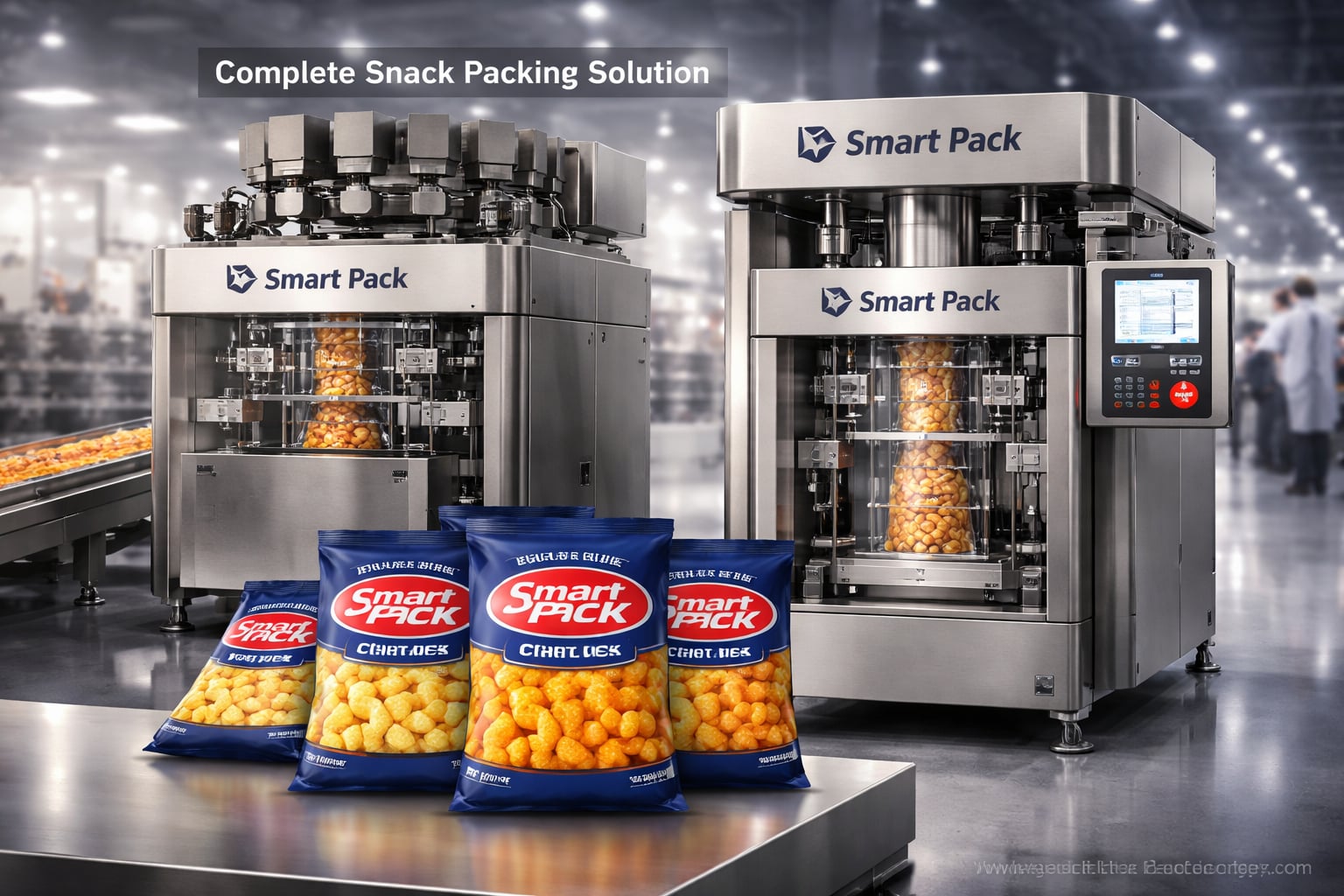
The finished product is transferred to dedicated machines that pack snacks into various package sizes and seal them to protect against moisture and oxygen.
Visual Examples of Snack Products
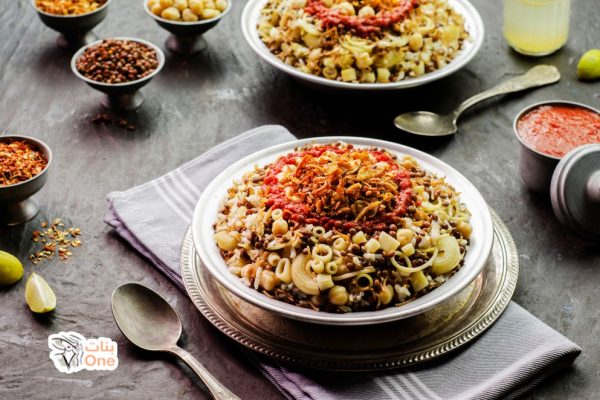
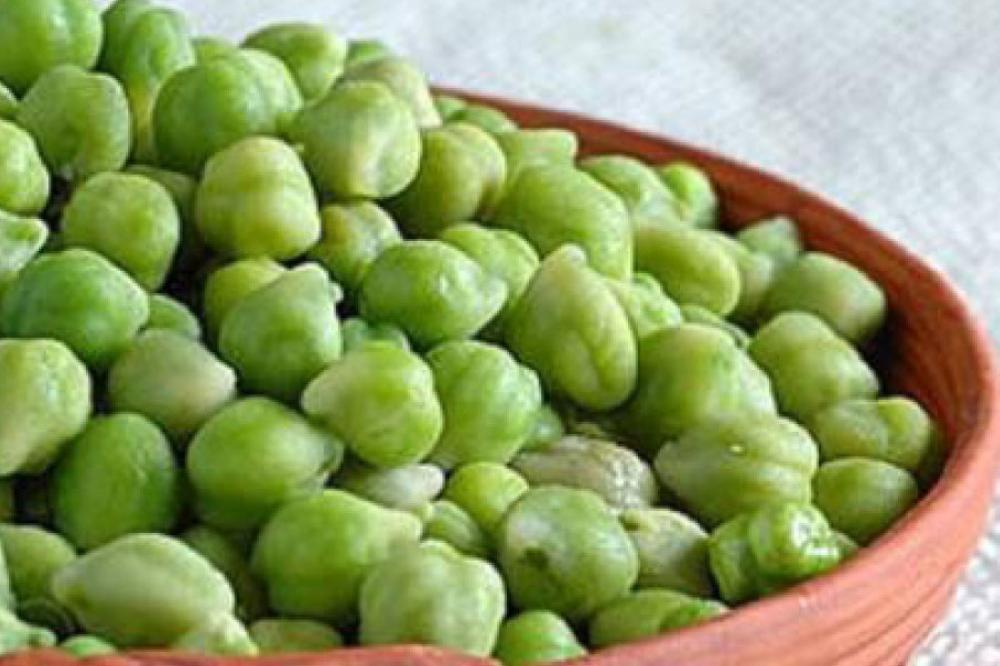
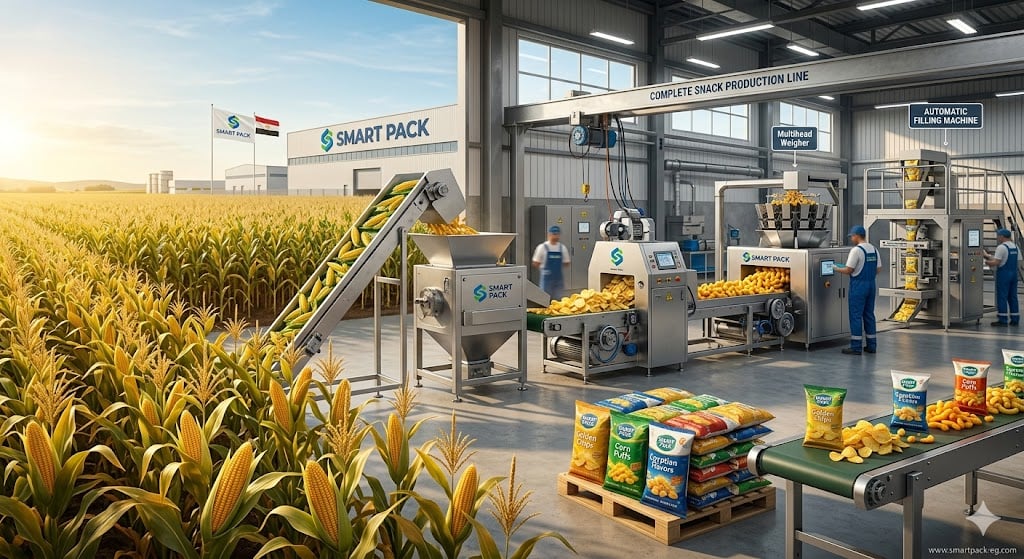
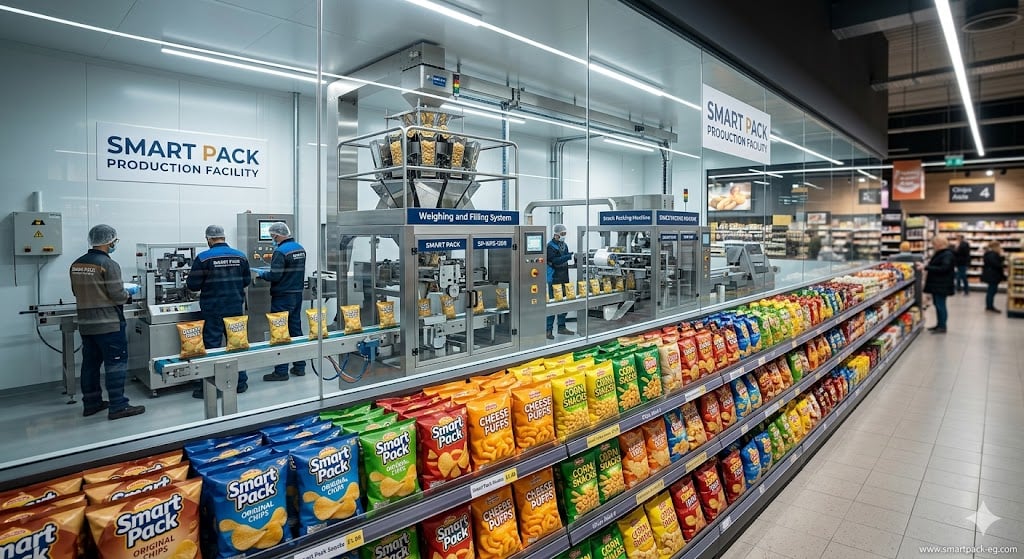
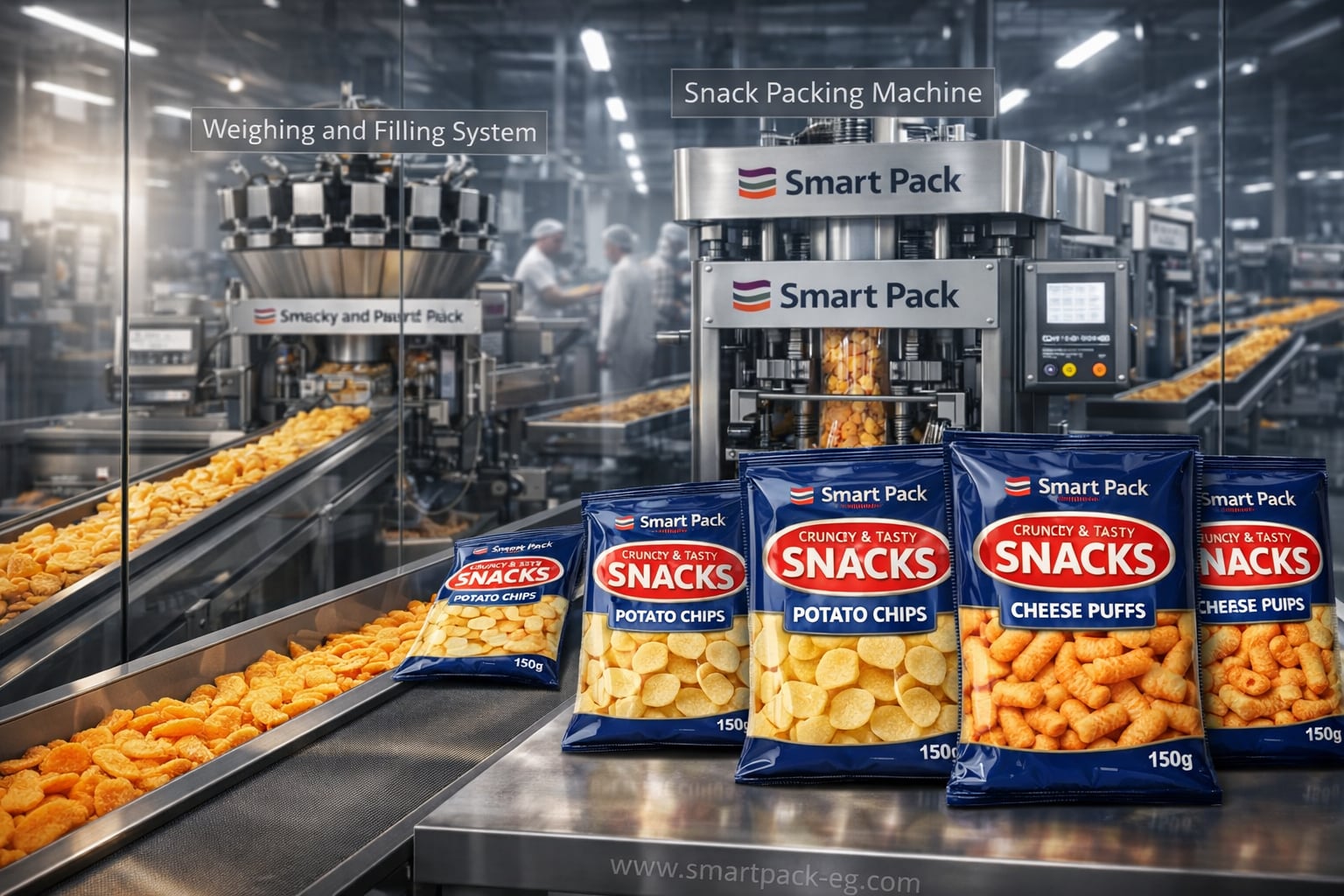
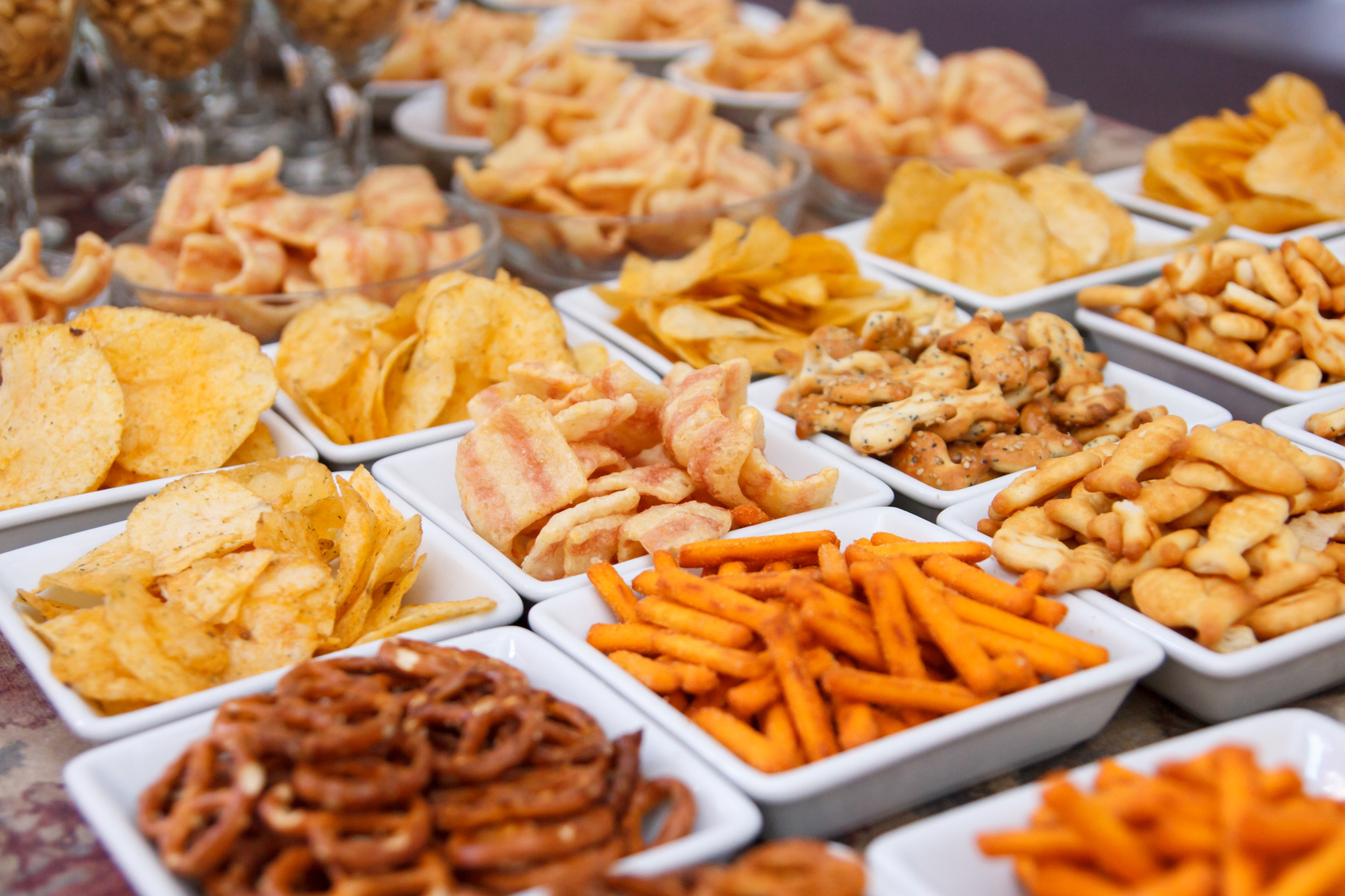
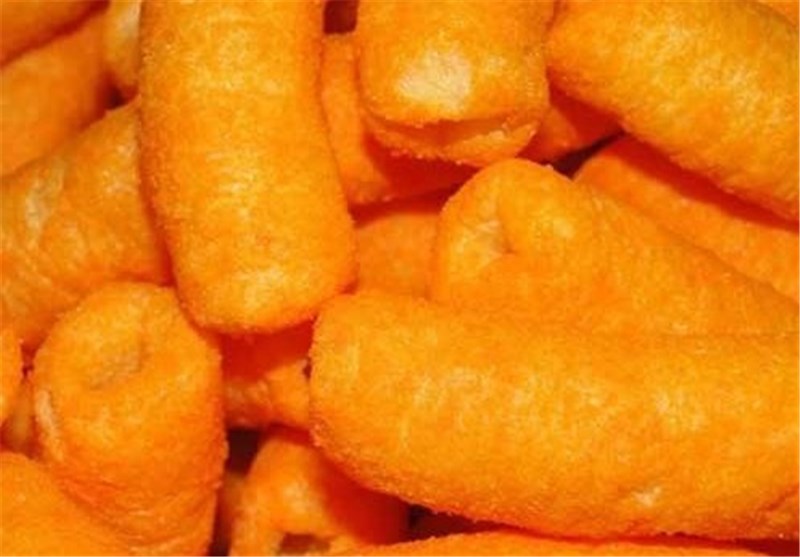
These images illustrate the diversity of snack products such as corn chips and crunchy cereal snacks with appealing texture and color—ideal for use on your website or marketing materials.
Visual Examples of Snack Production Machinery
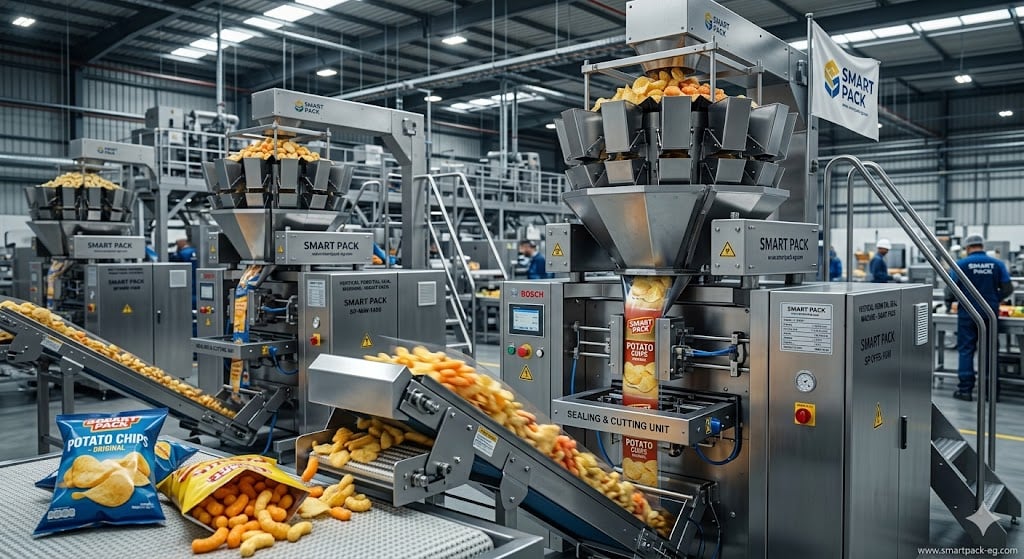
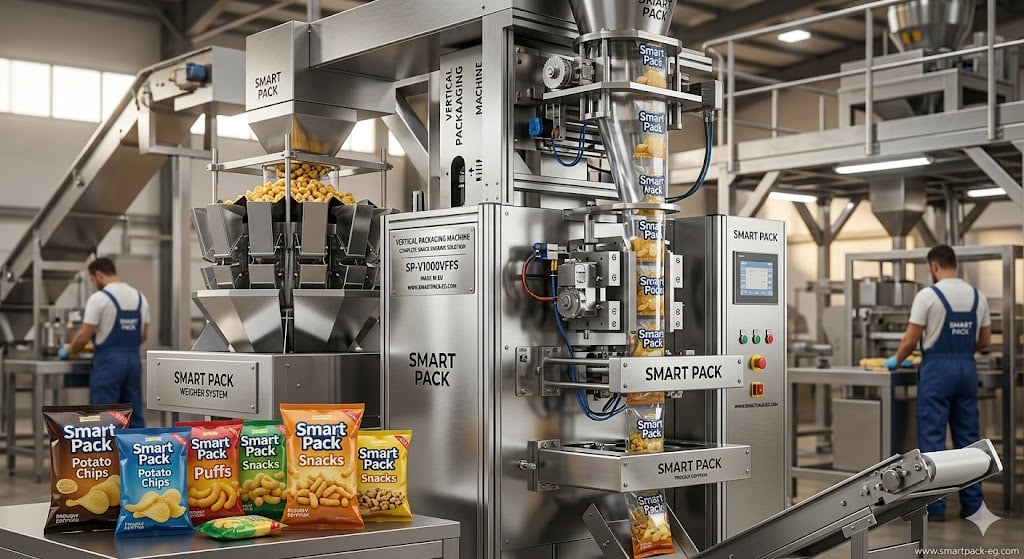
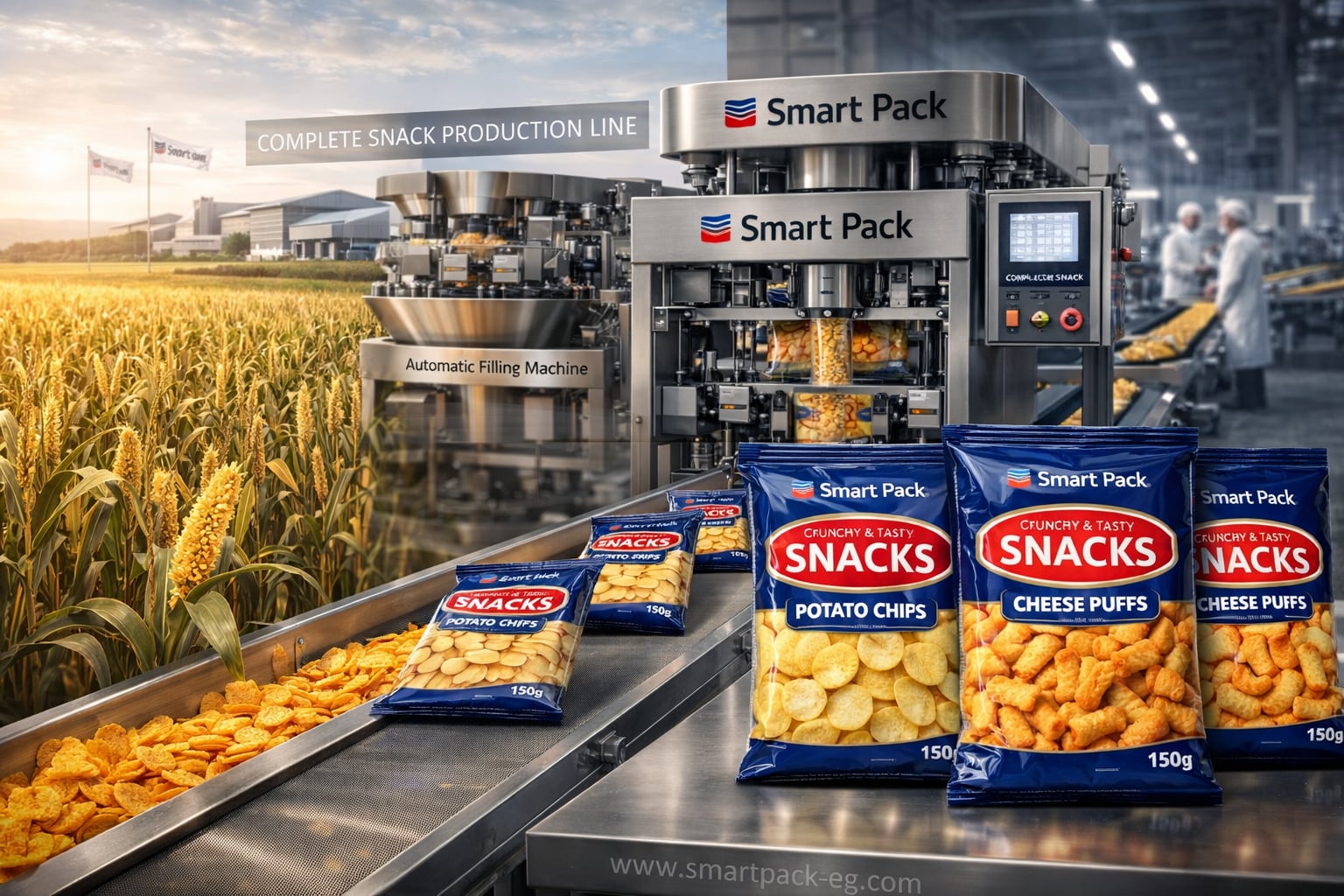
These images show industrial snack production lines, including extrusion units, drying ovens, and seasoning systems.
Suitable Filling and Packaging Machines After Production
Selecting the right filling and packaging machines is the key factor that determines product quality during marketing and distribution.
Recommended Packaging Machine Types
-
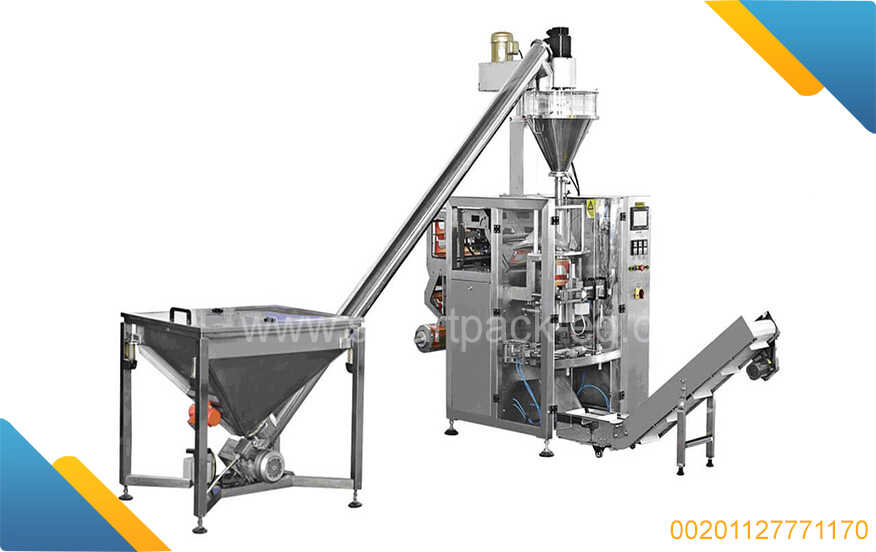
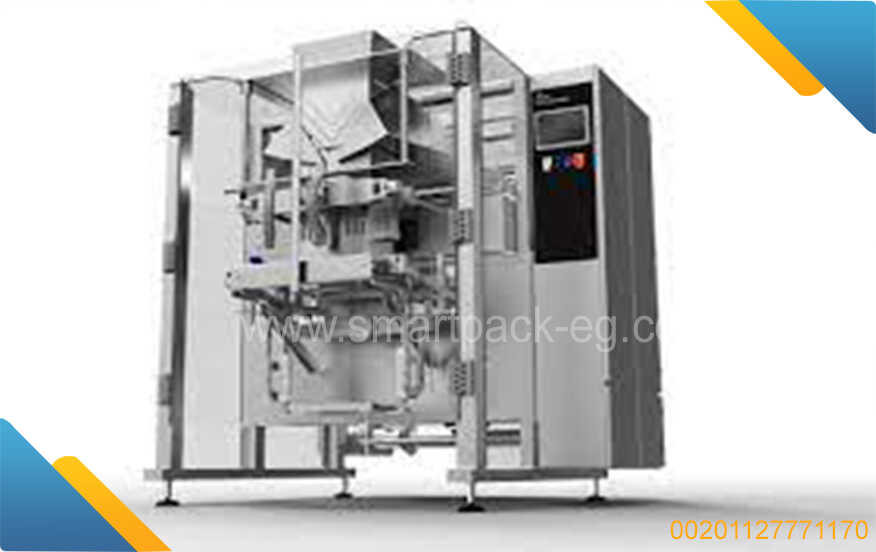
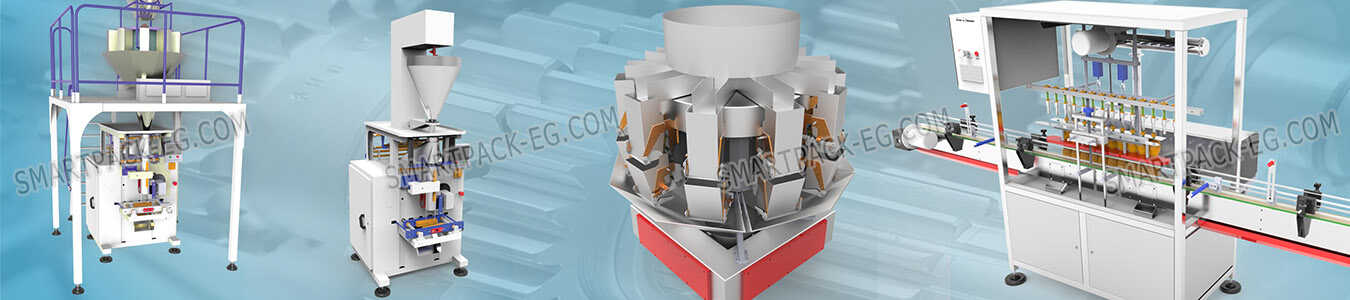
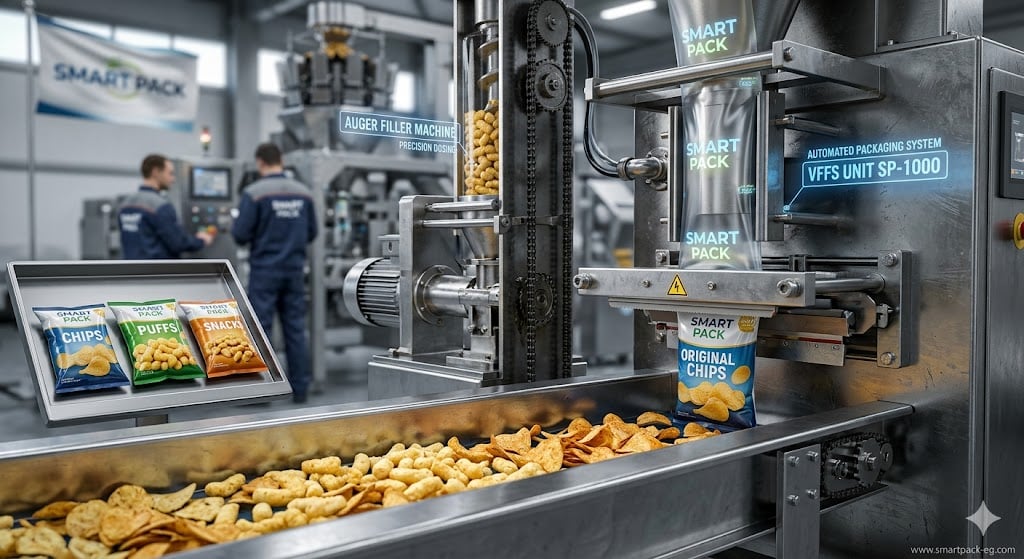
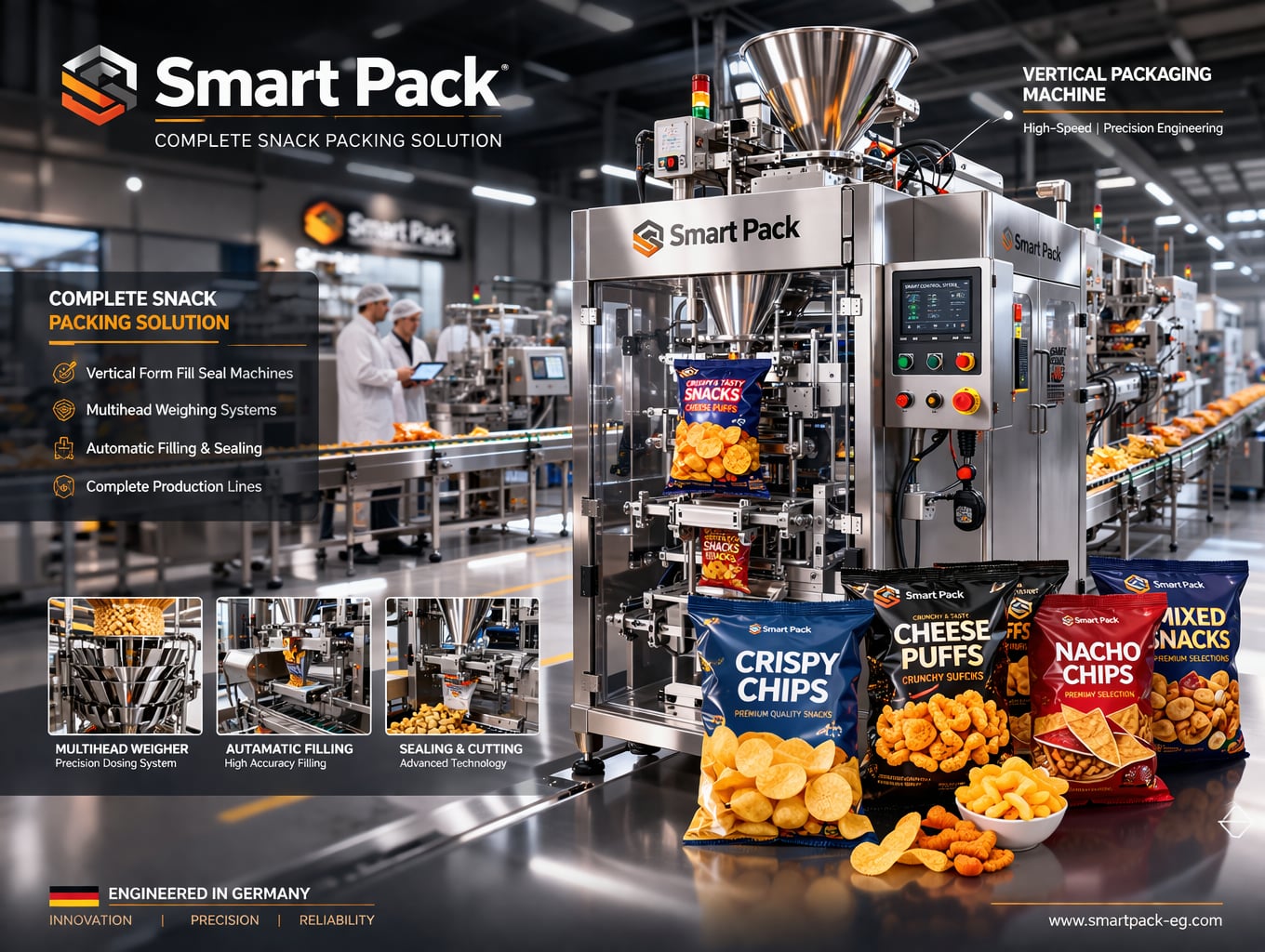
Vertical Form Fill Seal (VFFS) machines for packing snacks into airtight bags of various sizes
-
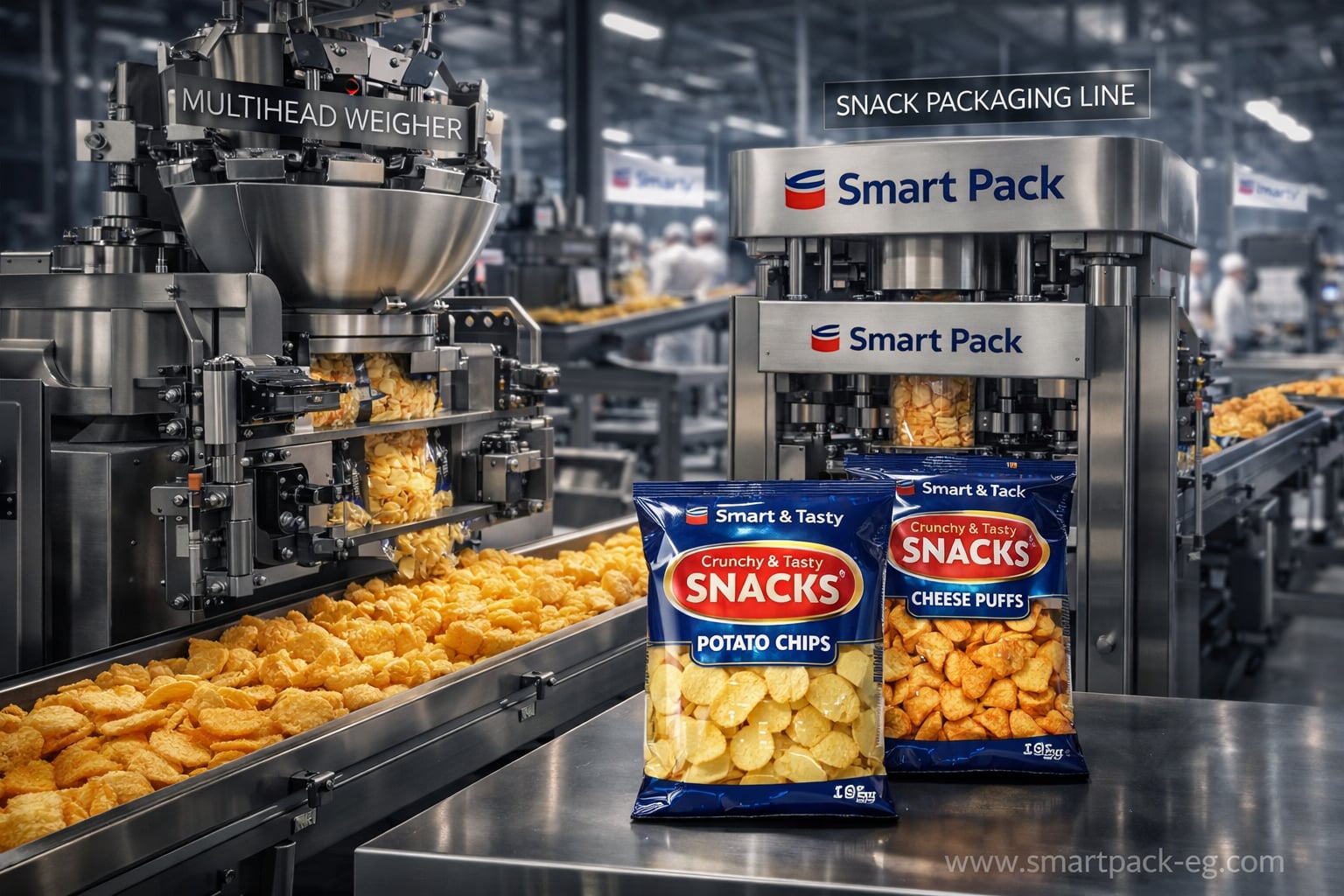
Multihead weighing systems for accurate portion control before filling
-
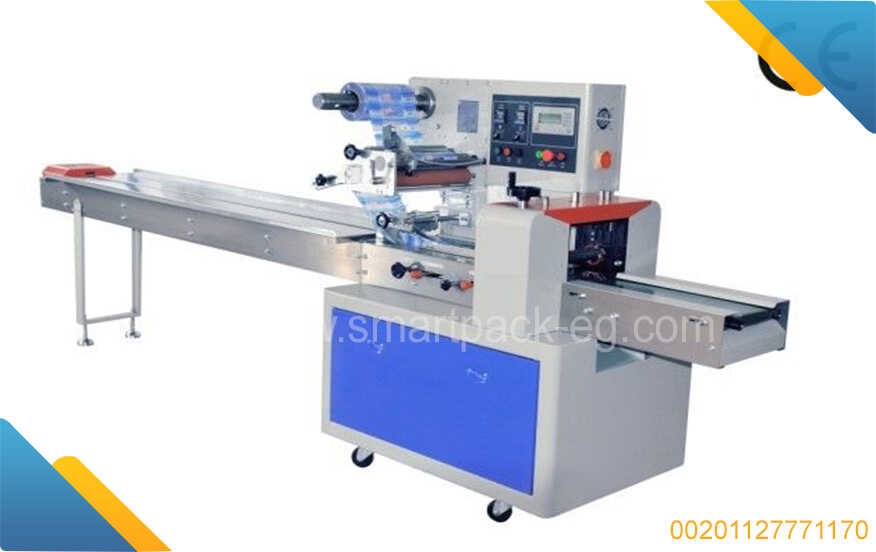
Shrink wrapping and bundle machines for preparing grouped packs for transport
-
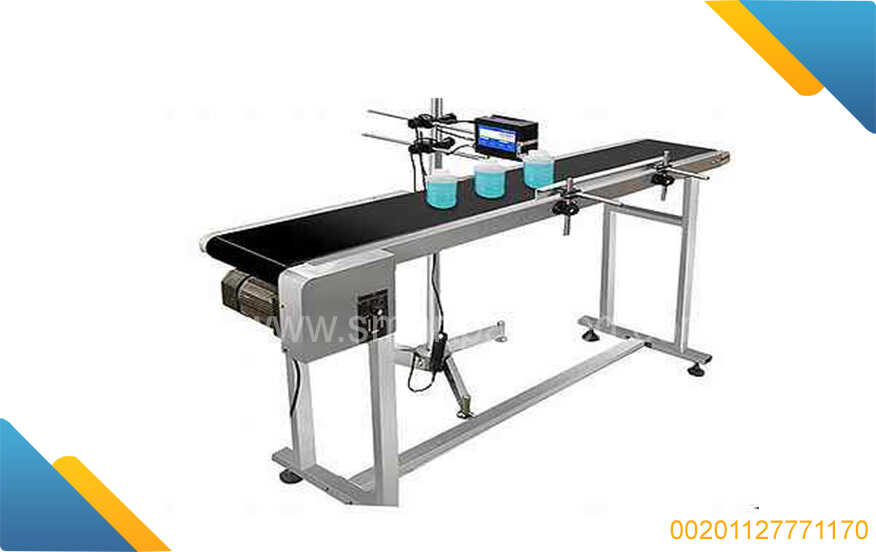
Date coding and printing machines for adding production dates and barcodes
Industrial Filling and Packaging Machines Overview
| Machine Type | Function | Impact on Quality | Role in Export |
|---|---|---|---|
| Vertical Packaging Machine | Packing snacks into bags | Protection from air and moisture | Required for export markets |
| Multihead Weigher | Accurate product weighing | Consistent pack weight | Supports packaging compliance |
| Shrink Wrapping Machine | Bundle packaging | Easier transport and storage | Ready for bulk shipment |
| Date Coding Printer | Printing package data | Market regulation compliance | Simplifies export approval |
How Snack Production Lines Increase Profitability and Enable Expansion
Demand for snack foods in Egypt continues to grow with the expansion of modern retail channels and distribution networks. This makes investing in a complete snack production line a strong strategic decision.
Modern snack lines offer capabilities such as:
-
Production capacities ranging from 160 to 500 kg per hour (or higher depending on line design)
-
Ability to produce multiple shapes to satisfy diverse consumer preferences
-
Flavor application systems synchronized with operational speed
Practical Tips for Investing in Snack Production Lines from Smart Pack
-
Define the required production capacity based on a clear study of expected local and export demand
-
Invest in food-grade stainless steel machines to ensure hygiene, durability, and easy cleaning
-
Choose filling and packaging machines compatible with multihead weighers and automatic printing systems
-
Request after-sales service and operator training to ensure smooth, error-free operation
-
Ensure the production line is expandable, allowing additional units to be added as demand grows
Frequently Asked Questions
What distinguishes snack production lines from other food lines?
Snack lines offer flexible shaping options and efficient flavor application for a wide variety of products.
Can the same line be used for different snack products?
Yes, by changing dies and components inside the extruder, multiple snack varieties can be produced.
Does packaging affect export potential?
Absolutely. High-quality packaging with accurate data printing significantly improves acceptance in international markets.
What is the typical production capacity?
Between 160 and 500 kg per hour, depending on line configuration.
How can product quality be preserved after manufacturing?
Using airtight packaging systems and oxygen control technologies helps maintain crunchiness and shelf life.
Conclusion
Manufacturing snacks through a fully integrated production line—from mixing to packaging—is not just an option, but a real investment opportunity in a fast-growing food market.
Combining advanced processing technology, modern filling and packaging machines, and a well-planned marketing strategy opens the door to strong local profitability and successful export expansion.