 Admin
Admin Vegetable Ghee Manufacturing in Egypt: A Growing Industrial Opportunity with Scalable Profitability
Vegetable ghee manufacturing in Egypt has seen significant development in recent years, driven by strong local demand and its widespread use as a core ingredient across many food industries.
Factories that invested in modern production lines and precise filling and packaging machines have achieved operational stability and a noticeable increase in profit margins.
By selecting a fully integrated production line from the outset, vegetable ghee shifts from a consumer product into a powerful industrial opportunity with strong potential for expansion and export.
Why Vegetable Ghee Is a Strategic Industrial Product
Vegetable ghee offers a long shelf life and stable physical properties compared to animal fats, making it ideal for large-scale food manufacturing.
It is widely used in bakeries, confectionery, ready-food industries, and restaurants, providing factories with steady, non-seasonal demand.
Its controllable texture, color, and flavor allow manufacturers to produce multiple price segments using the same production line.
Raw Materials Used in Vegetable Ghee Manufacturing
Vegetable ghee production relies on carefully selected vegetable oils and functional additives to achieve the desired consistency and stability.
Key Raw Materials
-
Vegetable oils such as palm oil, palm kernel oil, and coconut oil
-
Emulsifiers to ensure uniform blending
-
Food-grade colorants for the desired appearance
-
Flavoring agents for distinctive taste
-
Antioxidants to extend shelf life
Selecting high-quality raw materials minimizes phase separation issues and improves product stability during storage and distribution.
Vegetable Ghee Manufacturing Stages in Industrial Production Lines
Mixing Stage
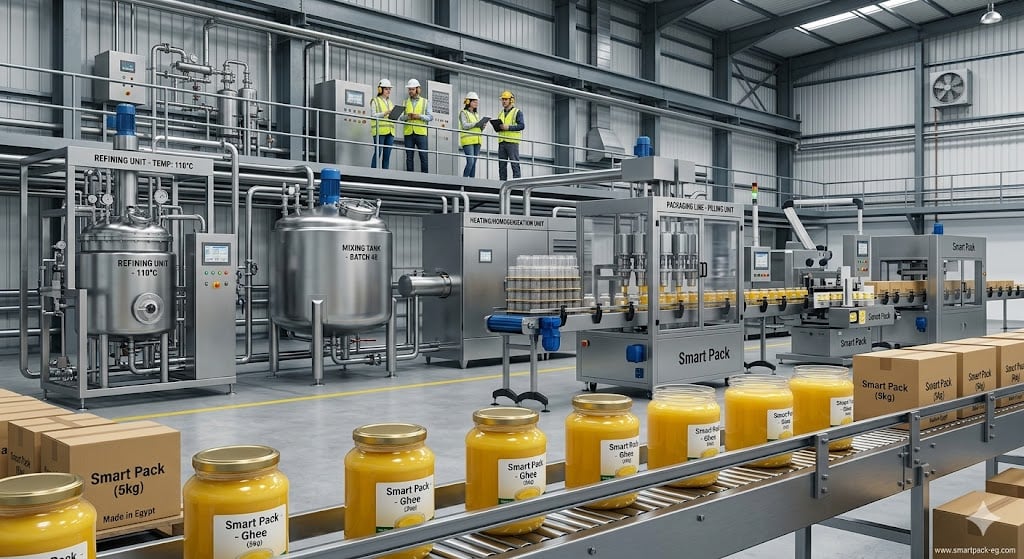
Vegetable oils are heated and blended in specific ratios inside industrial mixers equipped with temperature control systems to ensure complete melting.
Emulsification Stage
Emulsifiers are added and mixed at controlled speeds to achieve a smooth and stable consistency.
Cooling and Crystallization Stage
The mixture is gradually cooled using specialized cooling units to form the crystalline structure that defines the final texture of vegetable ghee.
Optional Conditioning Stage
Certain formulations require a short resting period to enhance sensory properties.
Transfer to Filling
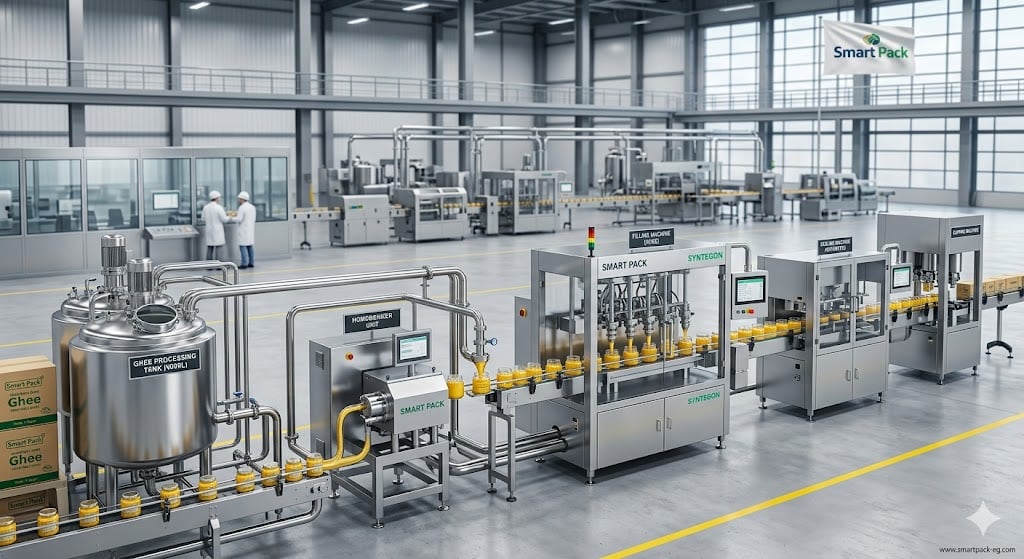
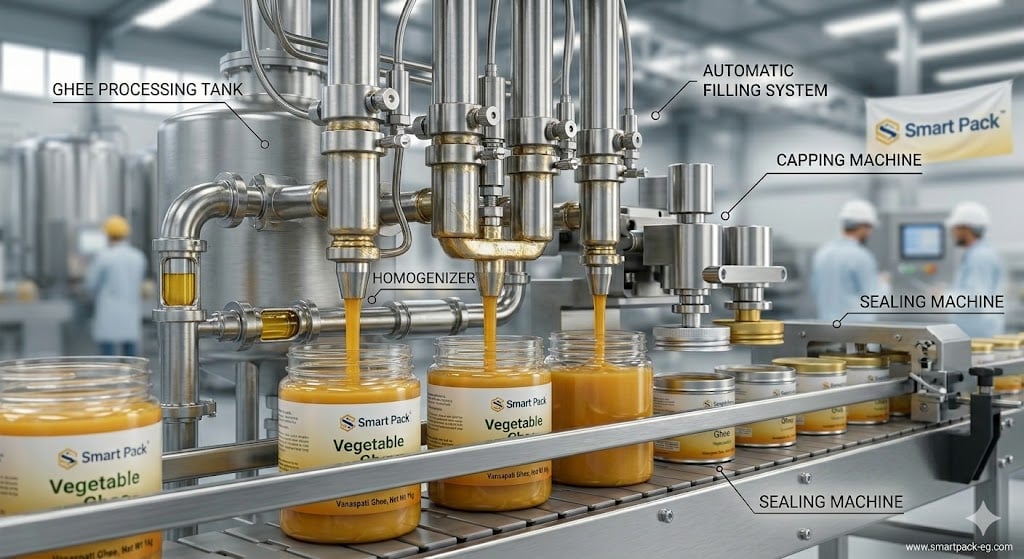
Once the final consistency is reached, the vegetable ghee is pumped directly to filling machines.
Forms of Vegetable Ghee Ready for Packaging
-
Vegetable ghee in plastic containers
-
Vegetable ghee in metal tins
-
Vegetable ghee for industrial use in large containers
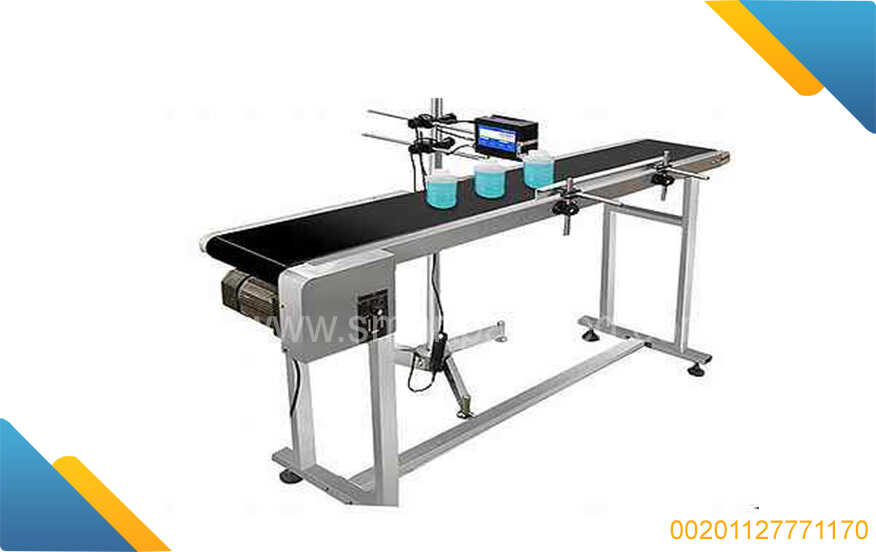
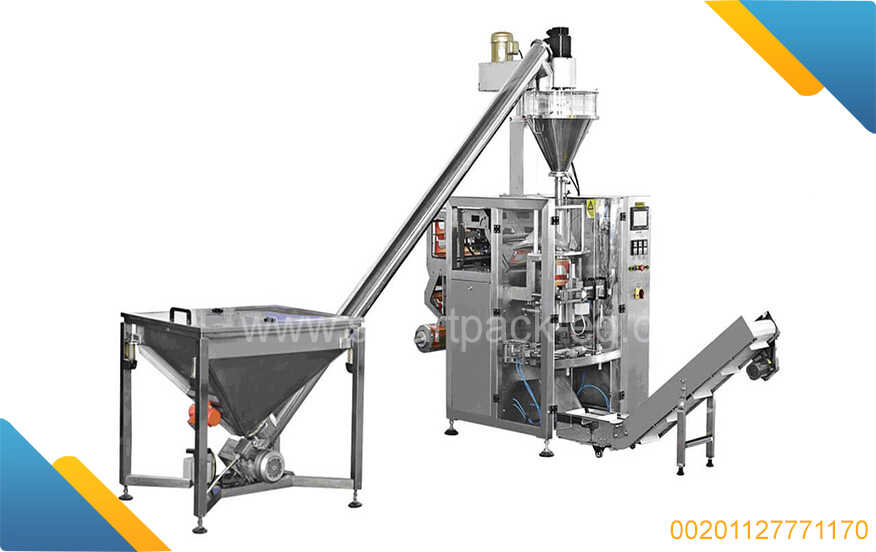
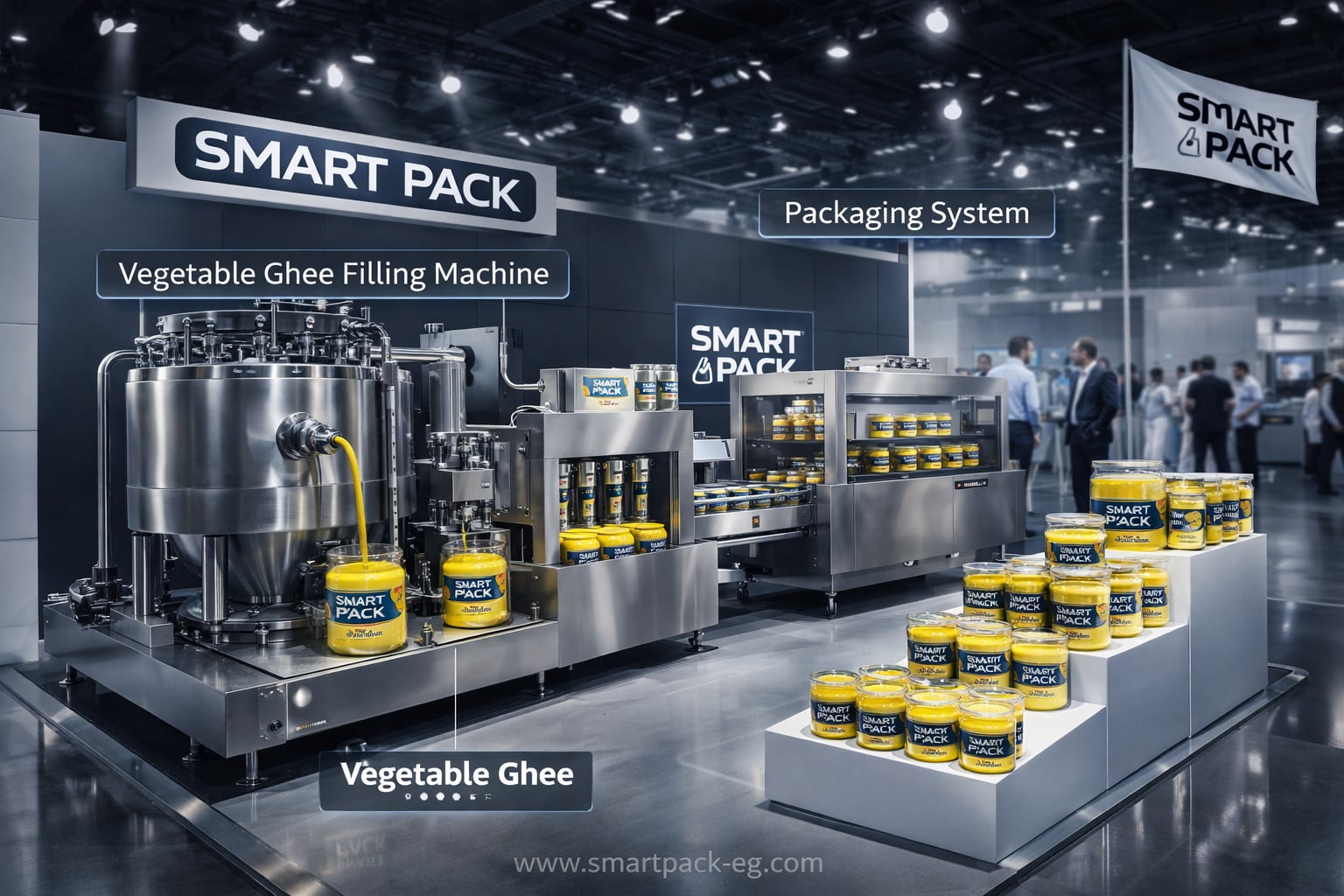
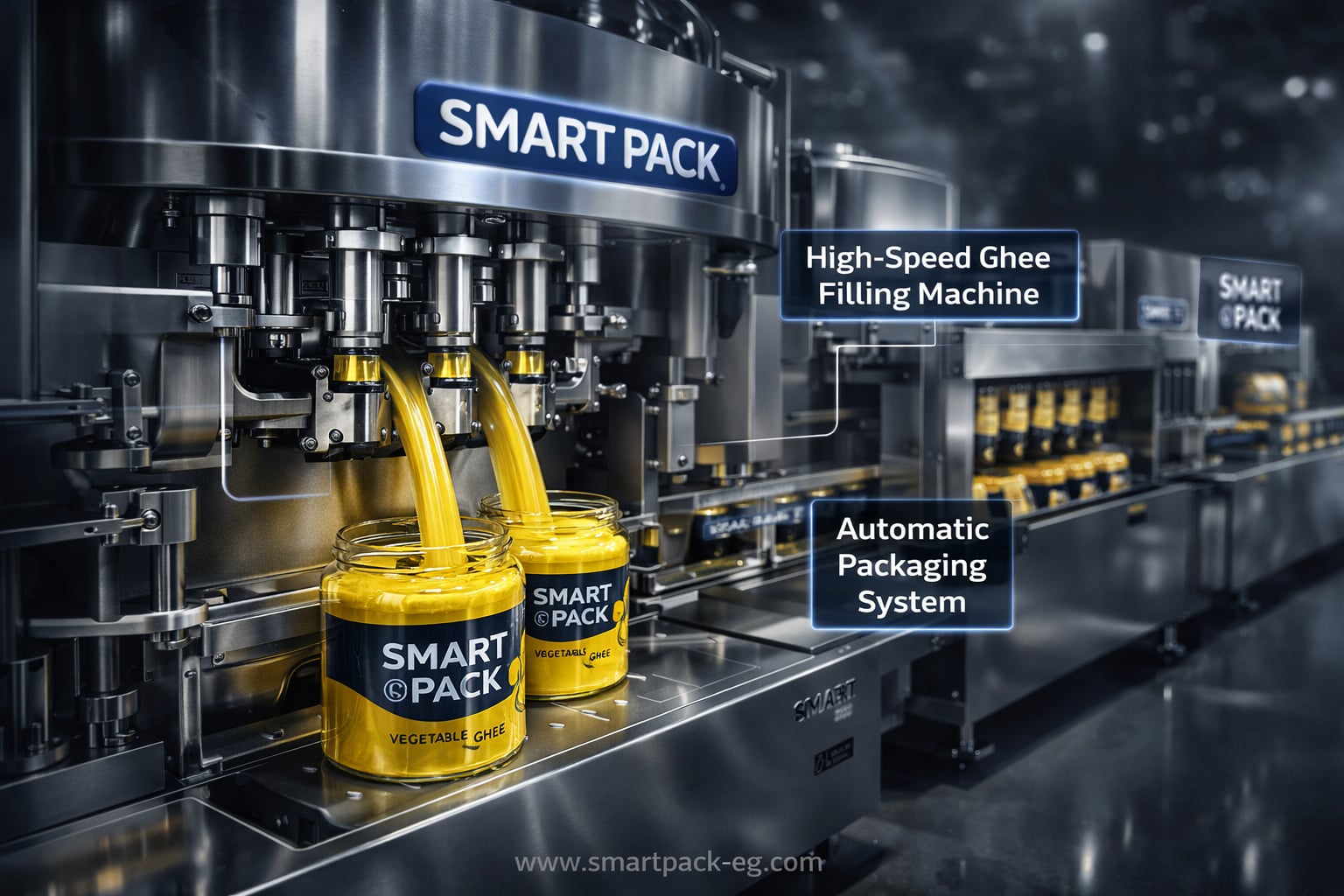
Filling Machines Used After Vegetable Ghee Processing
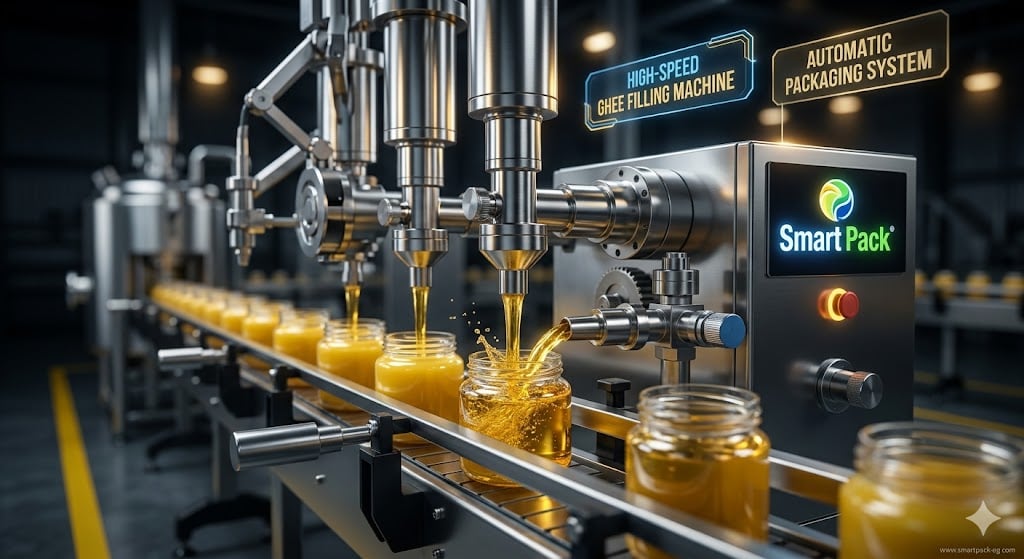
The filling stage has a direct impact on product quality and safety during market handling and distribution.
Suitable Filling Machine Types
-
Semi-automatic filling machines for vegetable ghee
-
Fully automatic filling machines
-
Large-container filling machines for wholesale and bakeries
Vegetable Ghee Filling Machines – Operational Overview
| Filling Machine Type | Suitable Container Size | Production Capacity | Operational Benefit |
|---|---|---|---|
| Semi-Automatic Filling Machine | Small to medium containers | Flexible operation with manual control | Ideal for emerging factories |
| Automatic Filling Machine | Large-scale production lines | High speed and consistent weight | Reduced product loss |
| Large-Container Filling Machine | Industrial and wholesale use | Accurate filling of large volumes | Supports contract-based supply |
Packaging Machines and Market Preparation
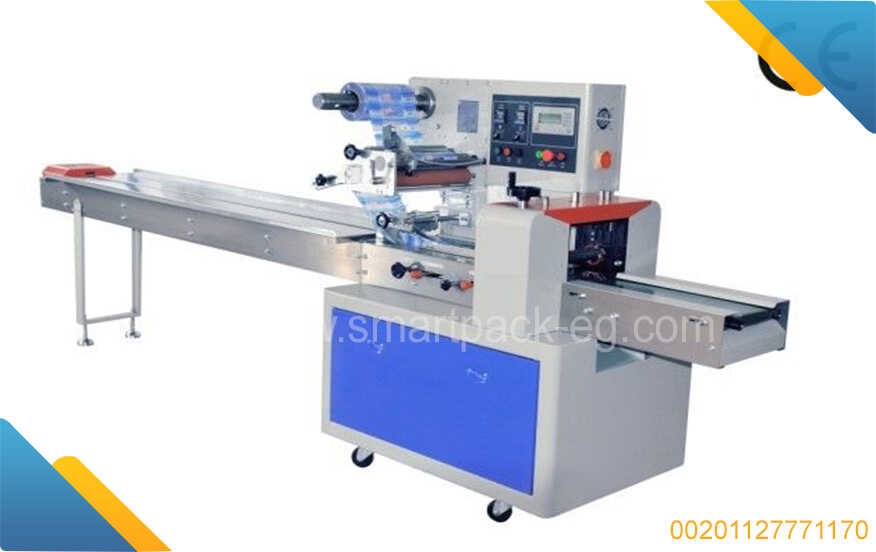
Proper packaging protects vegetable ghee from external factors and enhances its commercial appearance.
Types of Packaging Machines
-
Lid sealing and capping machines
-
Shrink wrapping machines
-
Cartoning machines for shipping
Industrial Packaging Machines Overview
| Packaging Machine Type | Factory Use | Marketing Benefit | Export Relevance |
|---|---|---|---|
| Lid Sealing Machine | Secure container closure | Leak prevention | Required locally |
| Shrink Wrapping Machine | Bundling finished packs | Easier handling and transport | Supports distribution |
| Cartoning Machine | Bulk shipping | Full protection during transport | Essential for export |
Integrated Vegetable Ghee Production Line for Factories
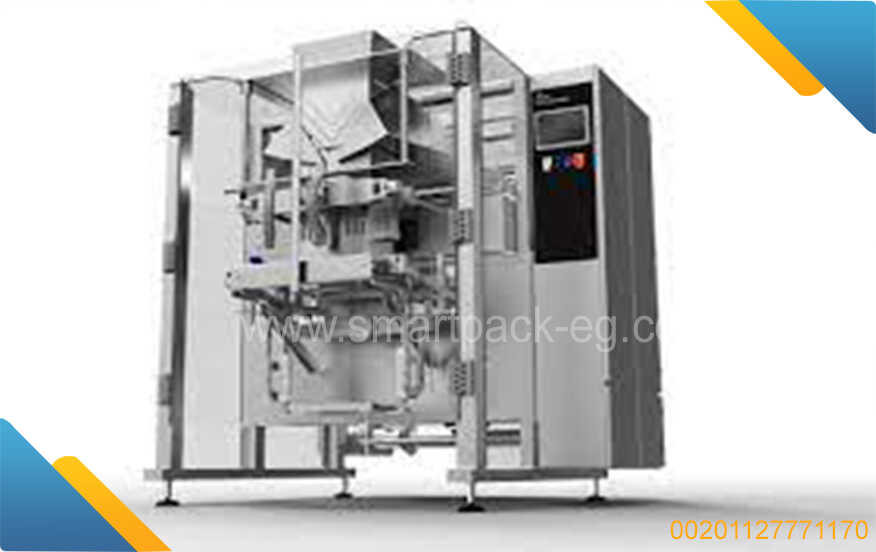
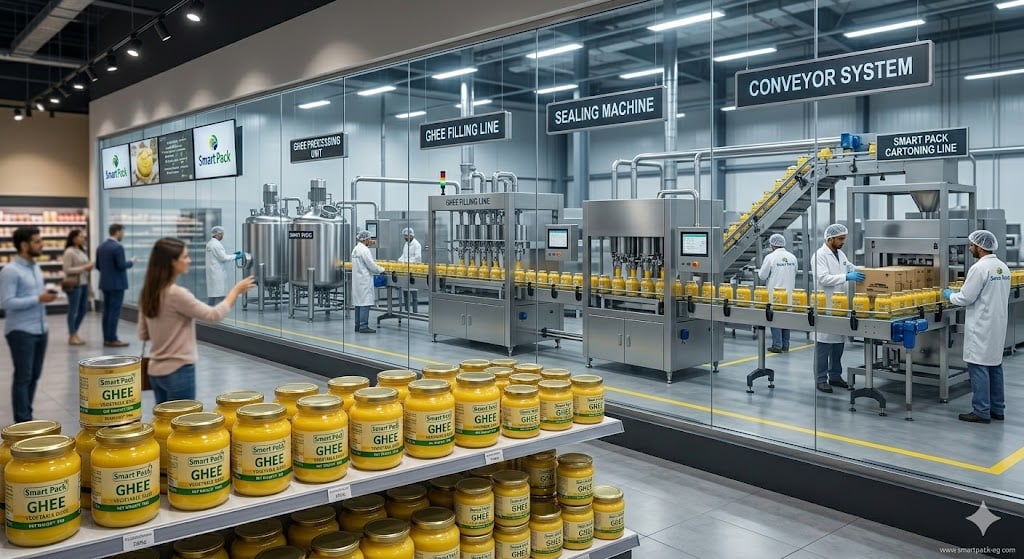
An integrated production line connects mixing, emulsification, cooling, filling, and packaging into a single system that reduces labor and increases operational efficiency.
When properly designed, the factory can meet local market needs and export orders without interruptions or operational losses.
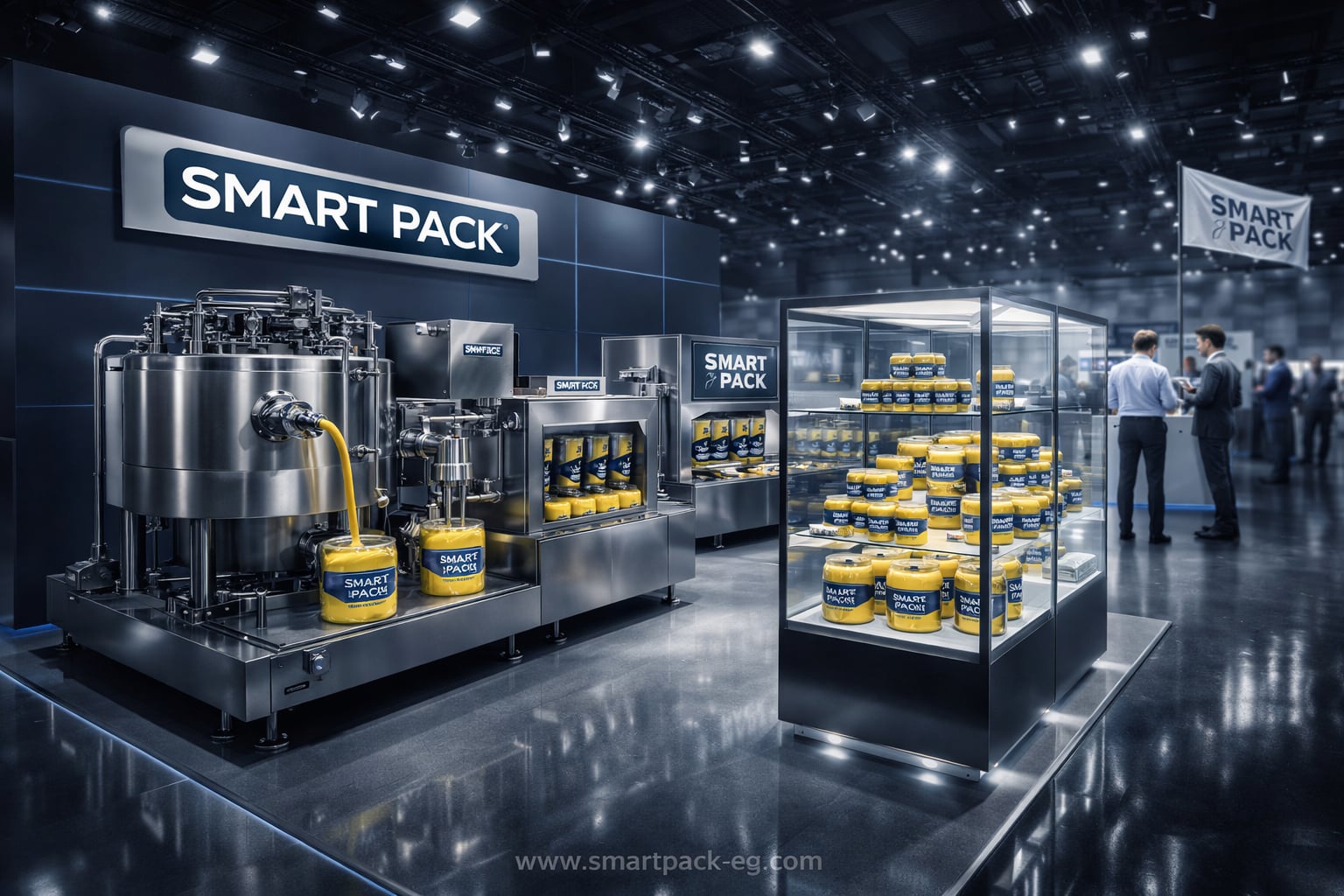
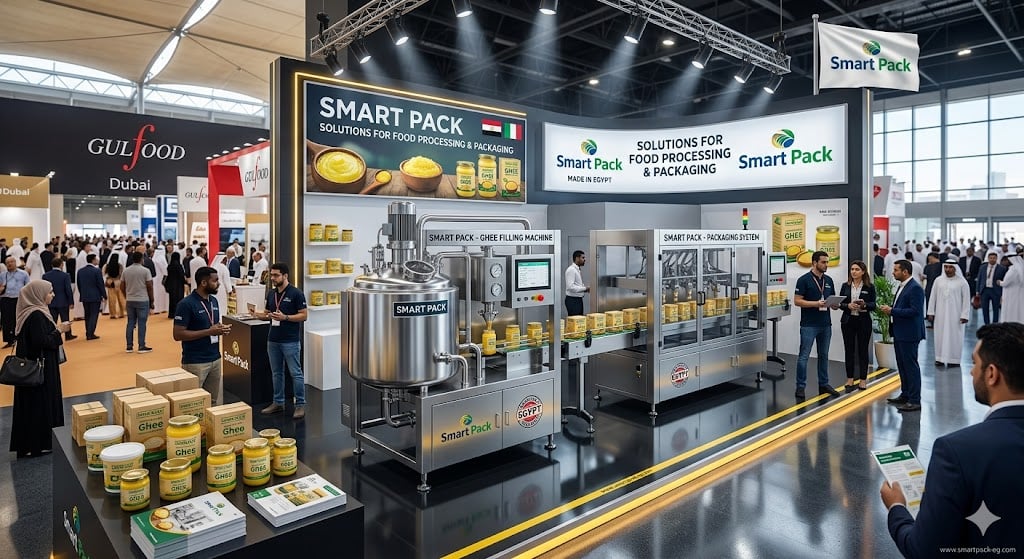
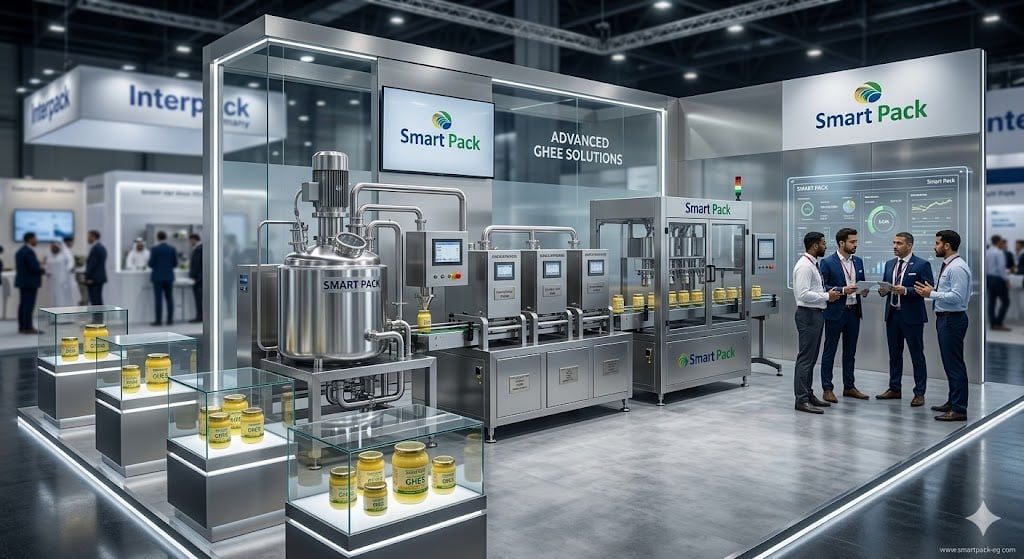
Many factories rely on specialized solutions from Smart Pack to deliver production lines and filling and packaging machines tailored to project scale and target market requirements.
Practical Tips for Investing in Vegetable Ghee Production Lines
-
Choose a scalable production line without major redesign
-
Ensure equipment is manufactured from certified food-grade materials
-
Focus on weight accuracy and texture consistency during filling
-
Invest in packaging that preserves product quality
-
Work with a supplier that provides continuous technical support
How the Right Investment Improves Profitability
-
Lower production cost per unit
-
Reduced losses during filling
-
Increased production capacity
-
Access to new distribution and export markets
Each of these factors directly contributes to higher profit margins and long-term industrial stability.
Frequently Asked Questions
Is vegetable ghee suitable for export?
Yes, when approved quality and packaging standards are met.
Can multiple ghee types be produced on the same line?
Yes, with a flexible production line design.
Which stage most affects product quality?
Emulsification and cooling, followed by accurate filling.
Does vegetable ghee require special machinery?
Yes, as it is a semi-solid product requiring dedicated filling equipment.
Why is choosing a specialized supplier important?
To ensure efficient operation and minimize technical errors.
The rapid development of vegetable ghee manufacturing in Egypt has made it one of the most attractive food industries for investment when implemented with an integrated production line and suitable filling and packaging machines.
With proper planning from the start, vegetable ghee becomes a profitable industrial product capable of steady local growth and successful export expansion.