 Admin
Admin Industrial Biscuit Manufacturing: A Stable, Profitable Food Industry with Scalable Growth
Industrial biscuit manufacturing is considered one of the most stable and profitable food industries, driven by strong daily demand and ease of marketing both locally and internationally.
Factories that rely on advanced production lines and precise filling and packaging machines are able to deliver consistent-quality products capable of competing in major markets.
When an integrated production line is selected from the start, a biscuit project transforms into a long-term industrial investment with sustainable returns and scalable growth.
Why Biscuits Are a Strategic Product for Factories
Biscuits are fast-moving food products with low waste and easy storage. They can be produced in multiple shapes and flavors, making them suitable for all age groups and diverse markets.
The wide variety of biscuit types allows factories to expand their product portfolio without major changes to the production line, increasing return on investment while reducing unit production costs.
Types of Biscuits Supported by Industrial Production Lines
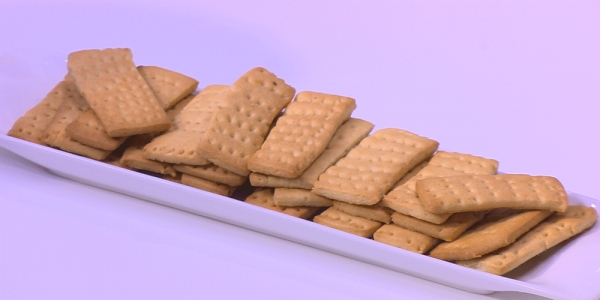
Plain Biscuits
The most widely consumed type, known for simple manufacturing processes and high demand in both local and export markets.
Filled Biscuits
Includes cream-filled, chocolate-filled, or jam-filled biscuits. These products offer higher added value and stronger profit margins.
Wafer Biscuits
A high-demand export product made of thin layers with internal filling, requiring high precision in manufacturing and packaging.
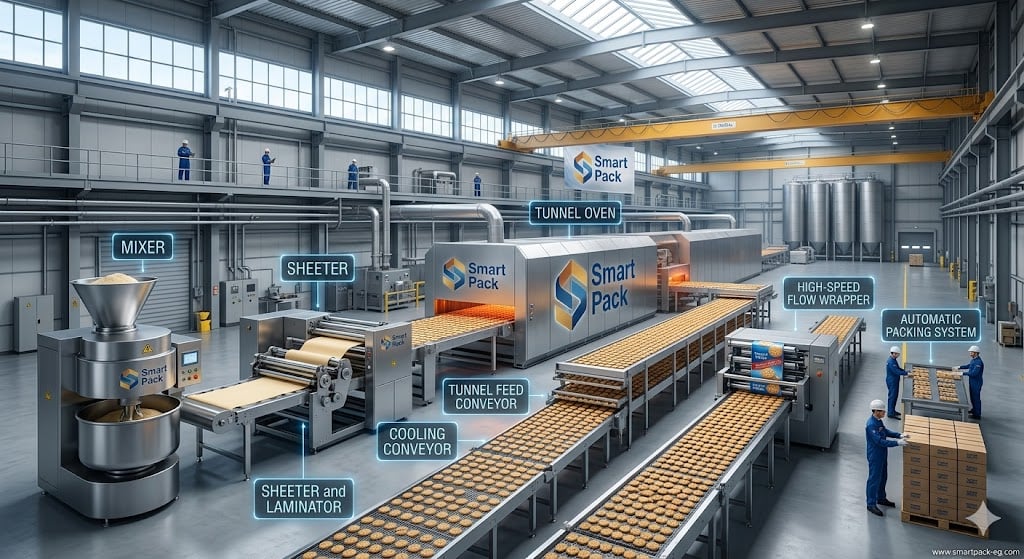
Biscuit Manufacturing Stages within Production Lines
Raw Material Preparation
Flour, sugar, fats, and additives are accurately weighed to ensure consistent quality.
Mixing and Dough Preparation
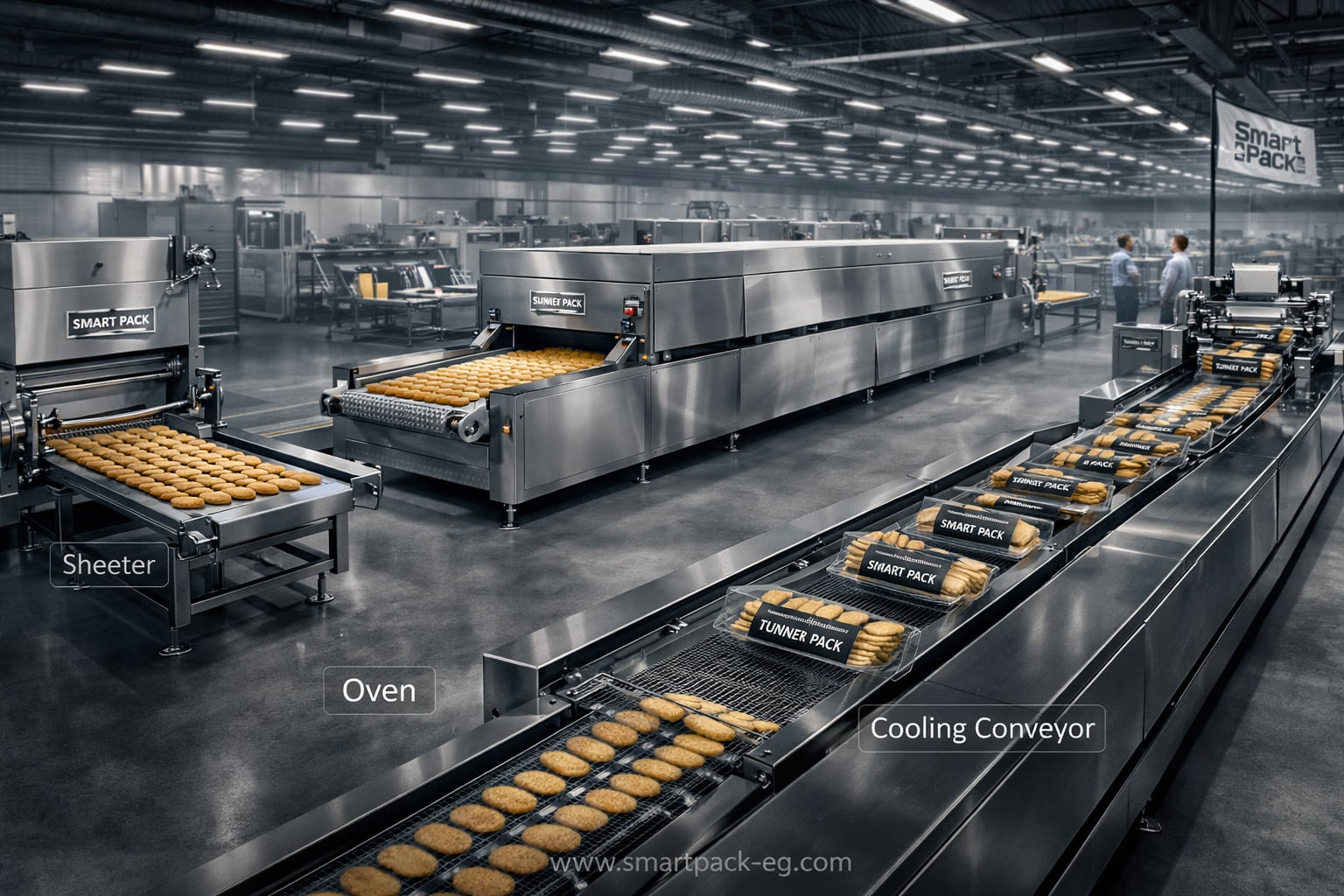
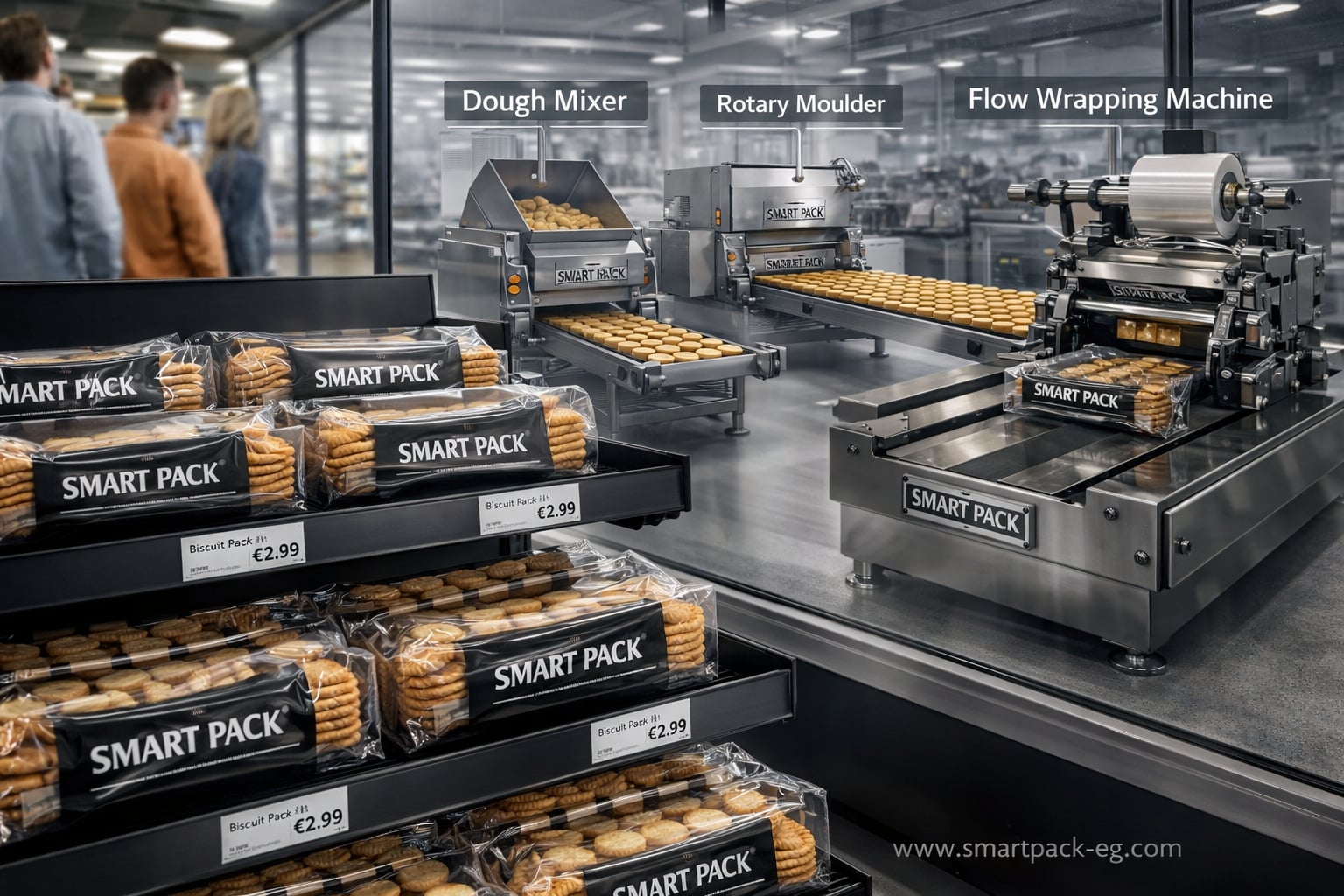
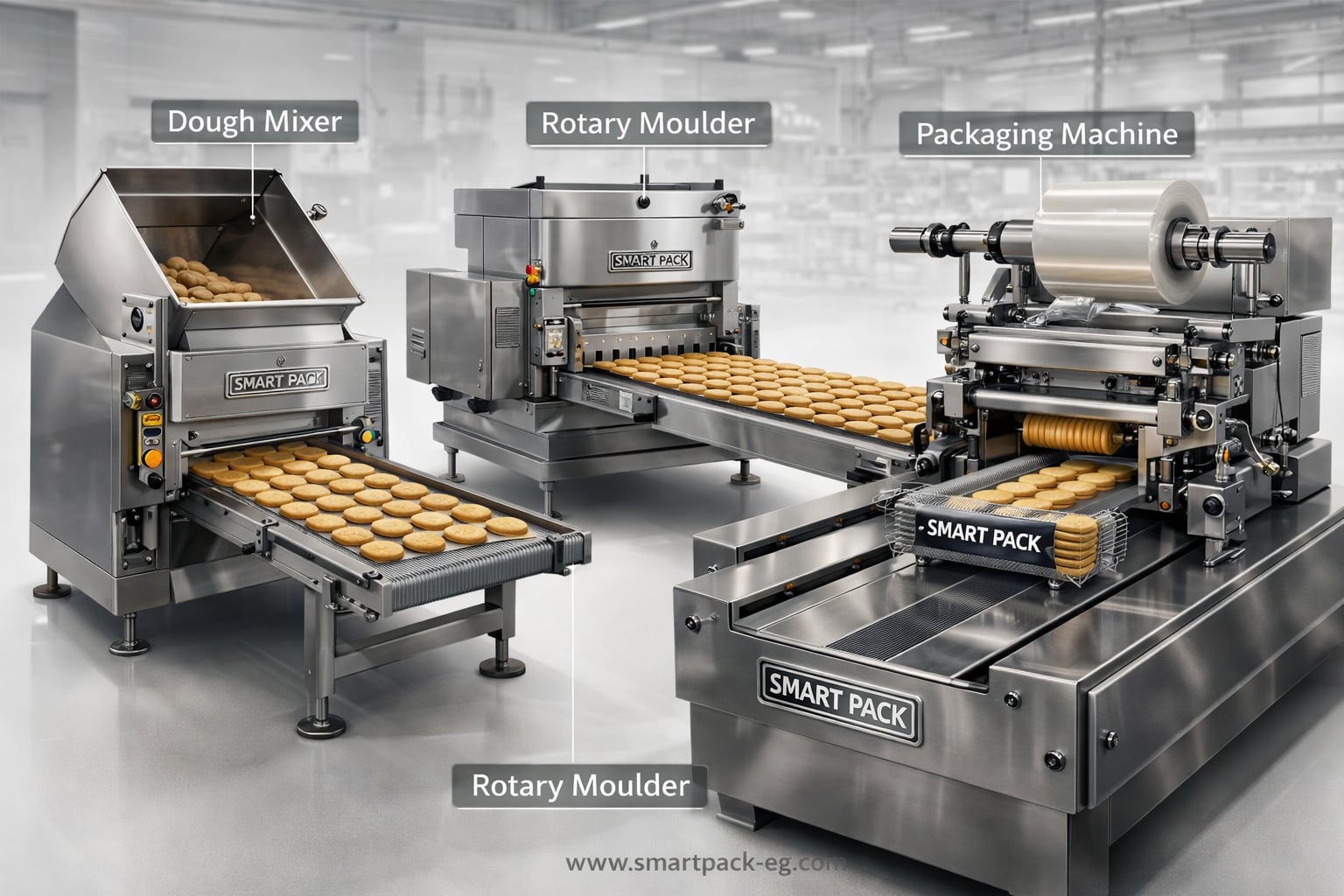
Industrial mixers are used to achieve uniform dough and the required texture for each biscuit type.
Forming
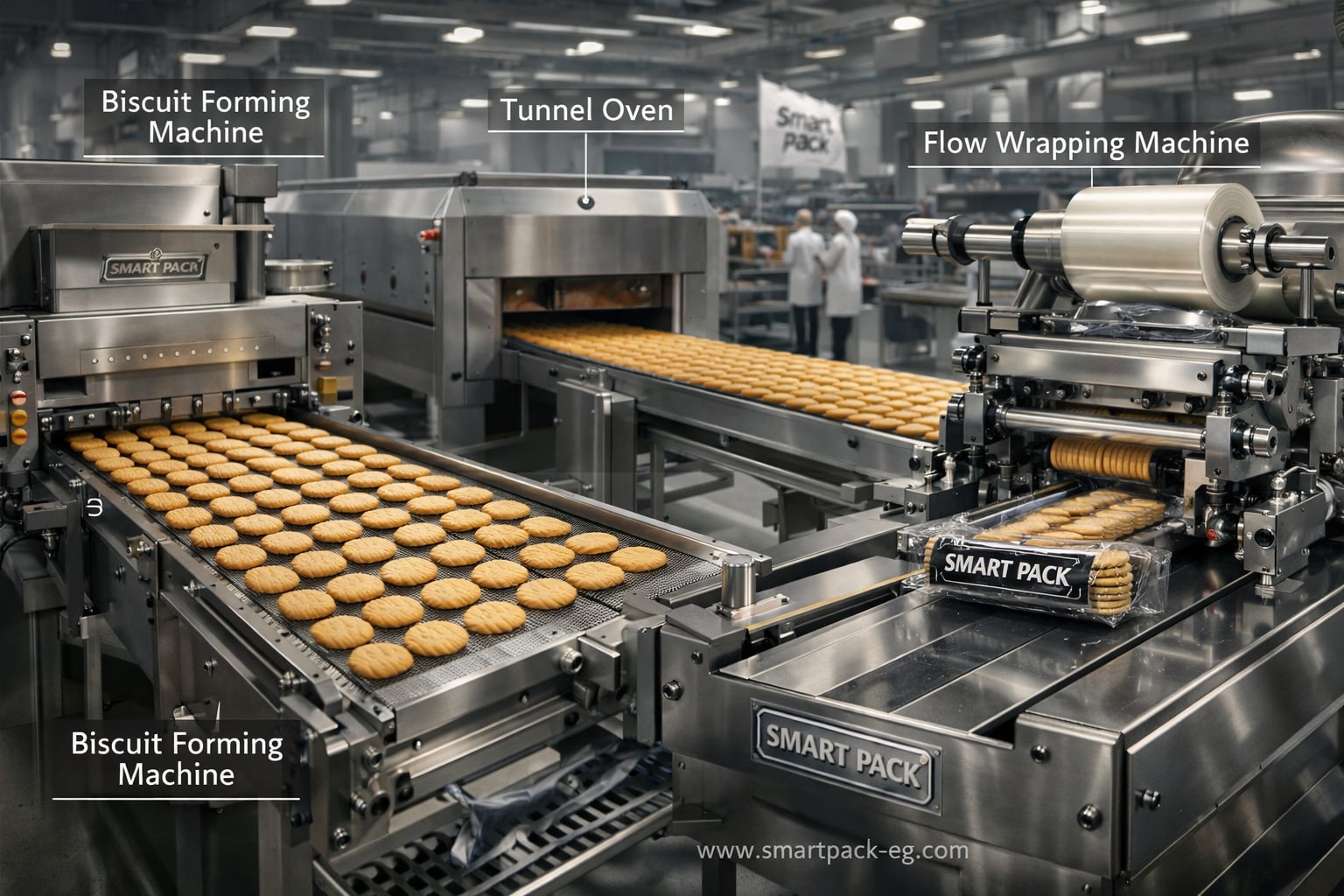
Varies depending on the product, including plain biscuit shaping, wafer sheet forming, or molded units for filled biscuits.
Baking
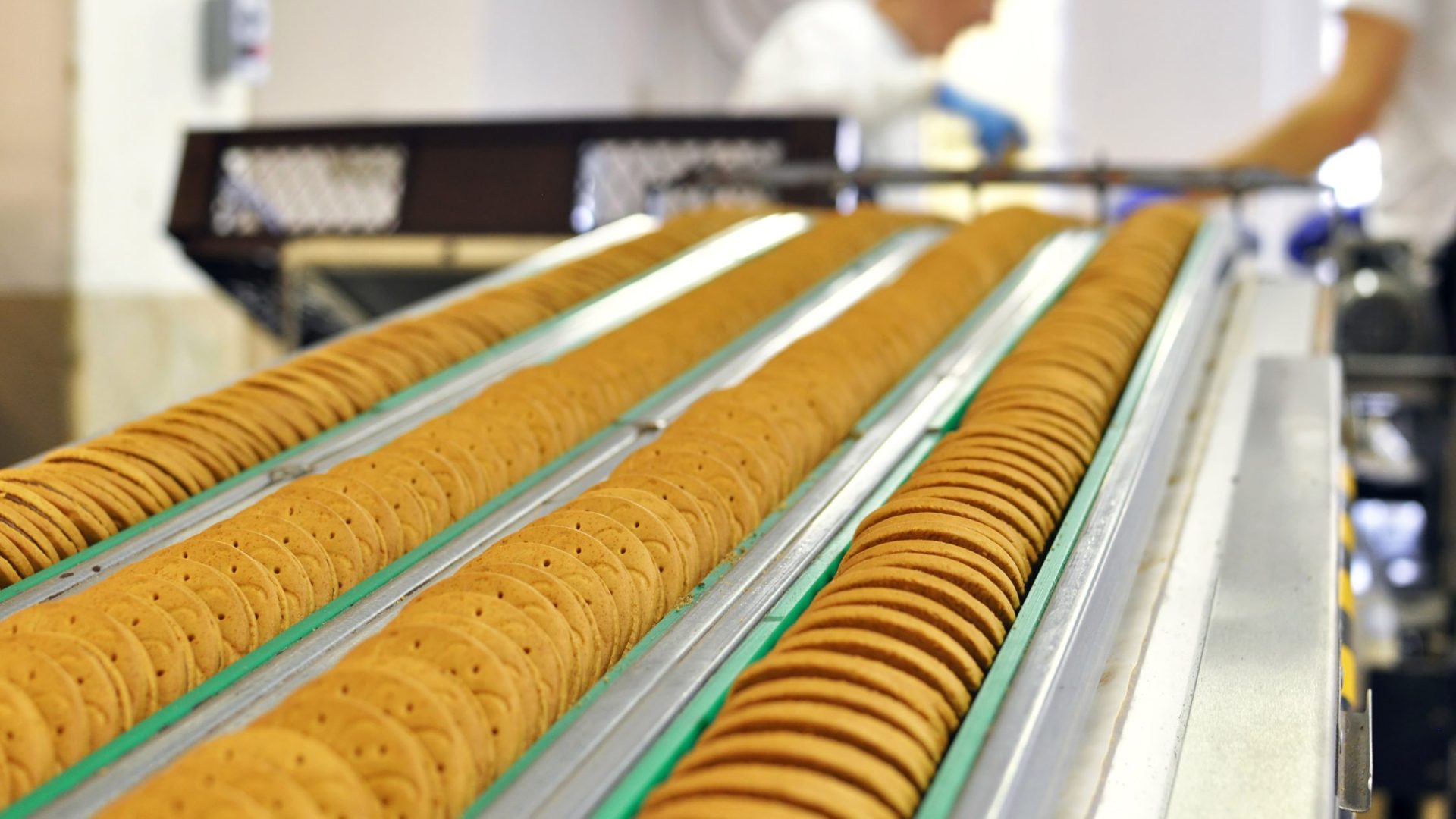
A critical stage affecting taste, color, and crispness, controlled through continuous industrial ovens.
Cooling
Gradual cooling preserves product shape and prevents condensation before packaging.
Filling and Assembly
Specific to filled biscuits and wafers, performed with high precision to ensure even filling distribution.
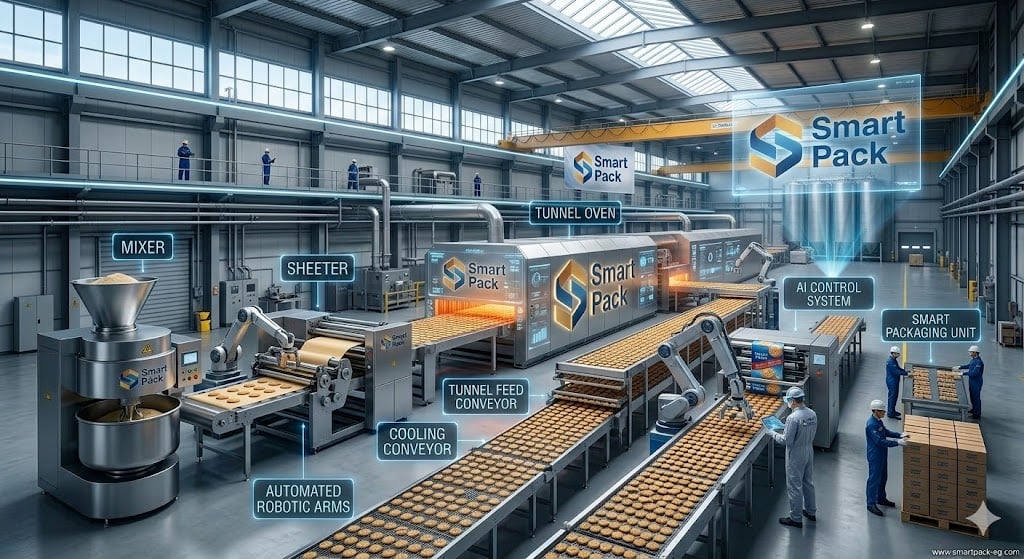
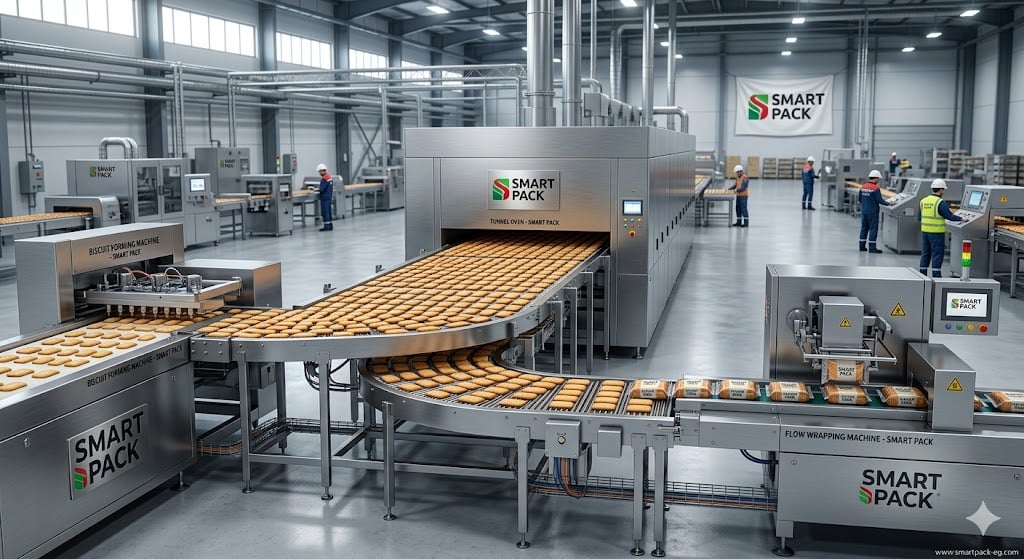
Integrated Industrial Biscuit Production Line
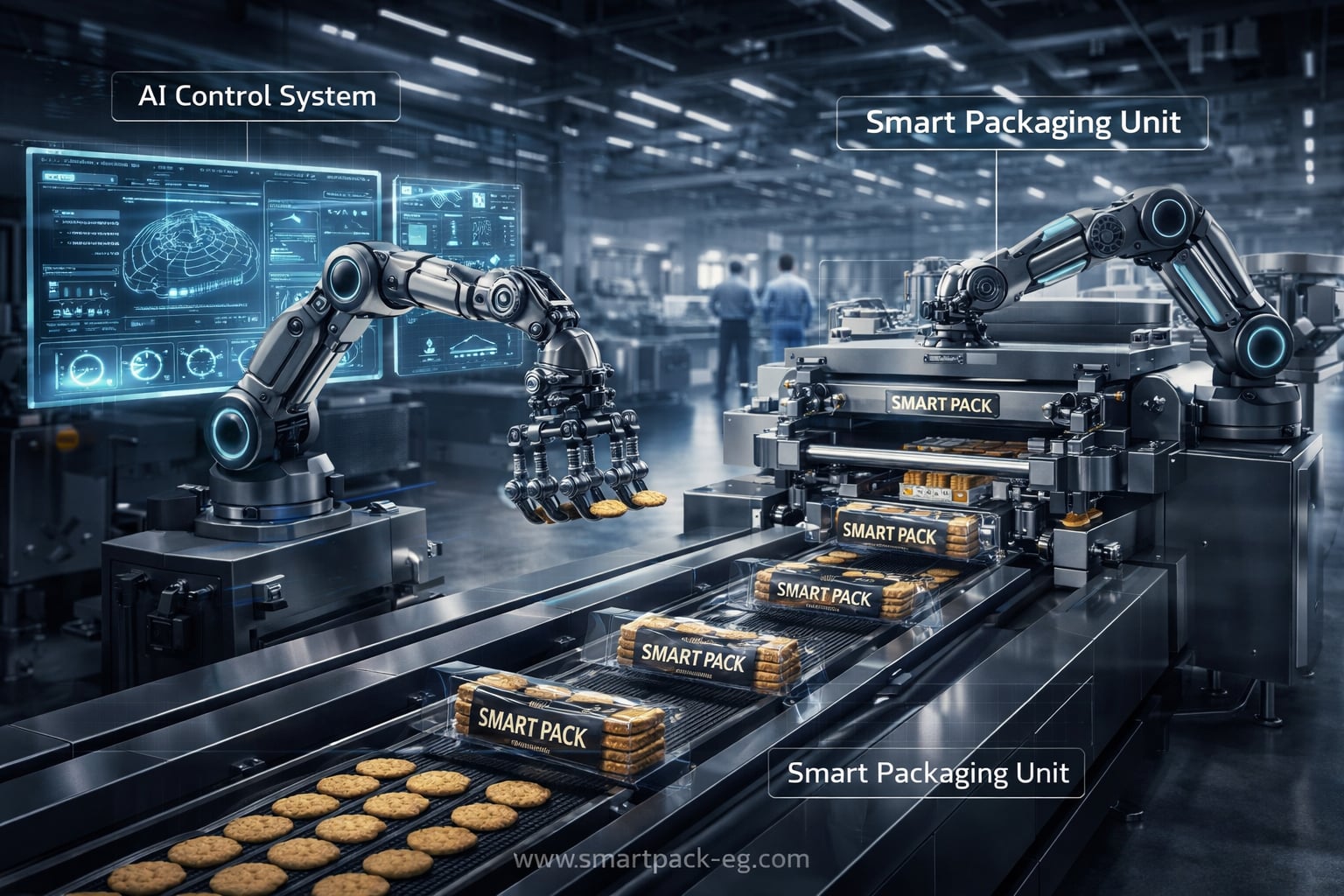
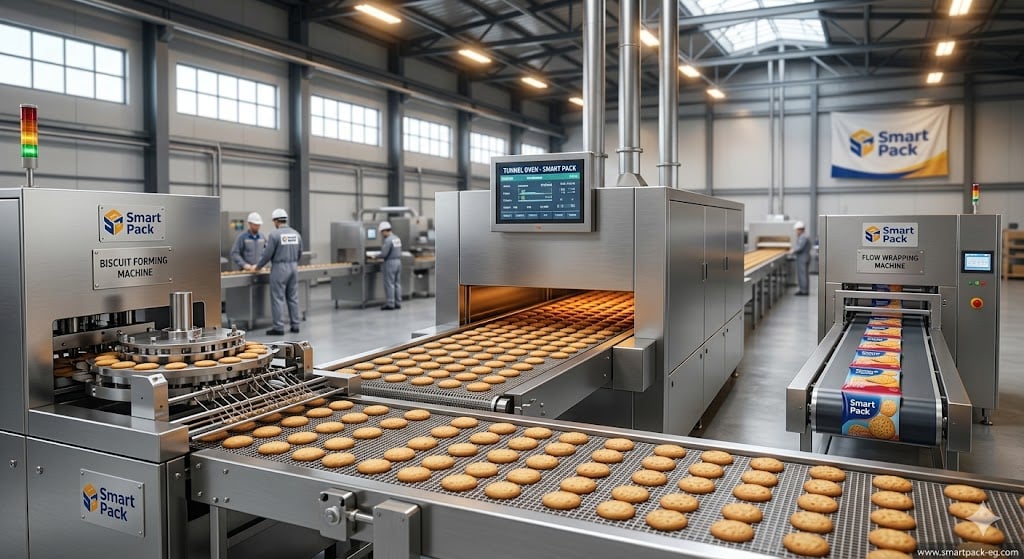
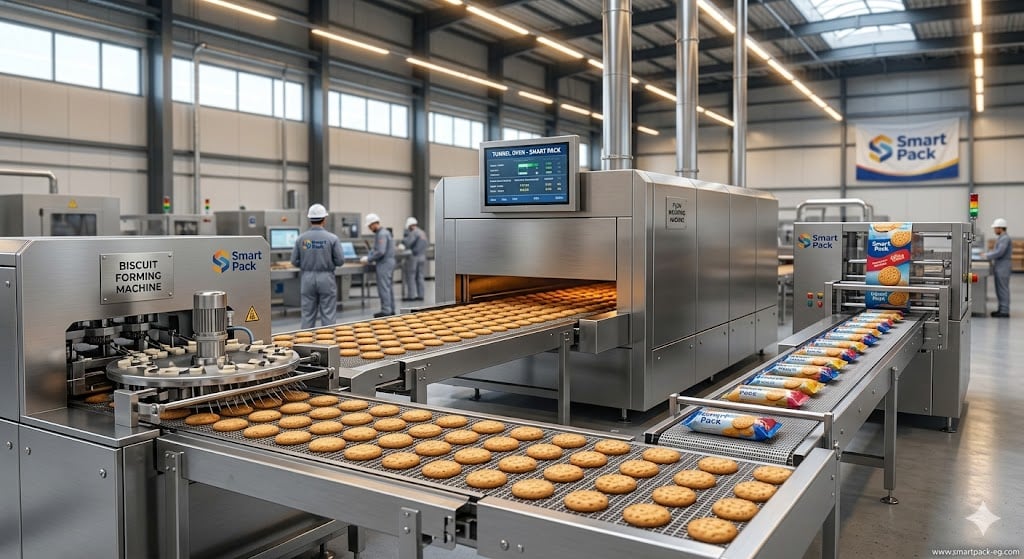
An integrated production line connects all stages into a single workflow, minimizing manual handling, increasing output capacity, and ensuring consistent quality.
Choosing a complete line helps factories reduce operating costs and respond faster to market demand.
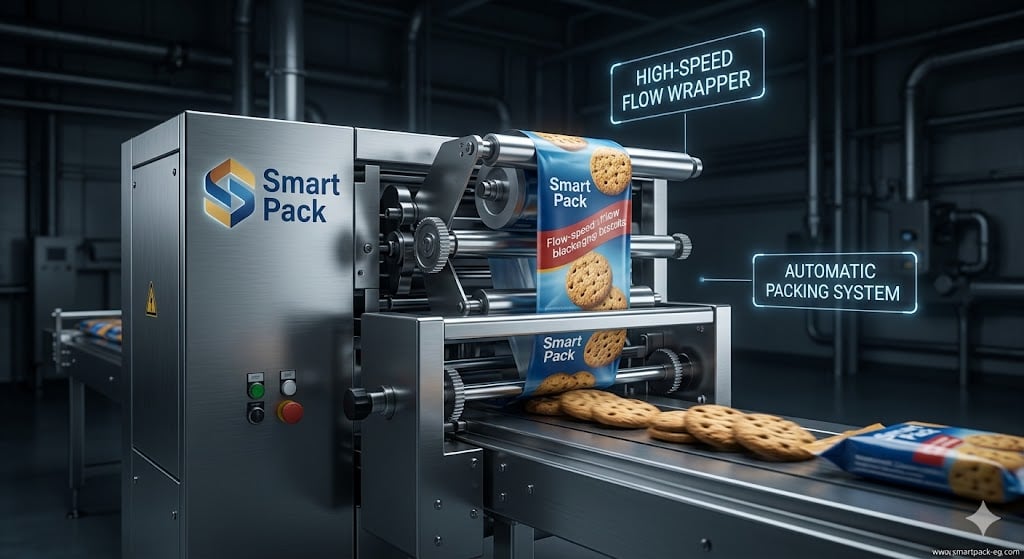
Suitable Packaging Machines for Biscuit Products
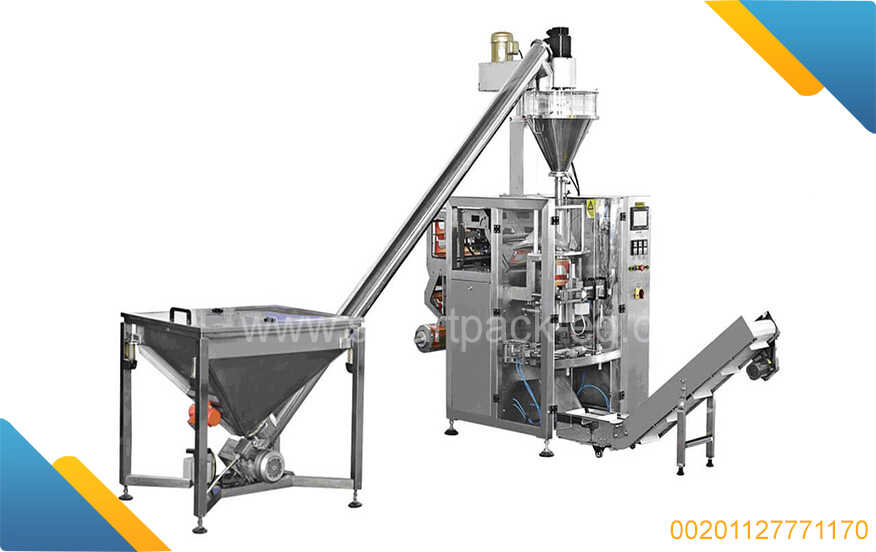
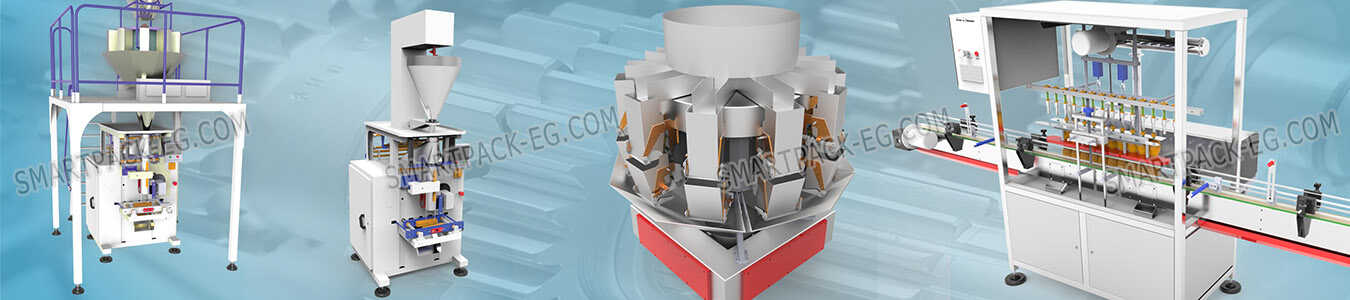
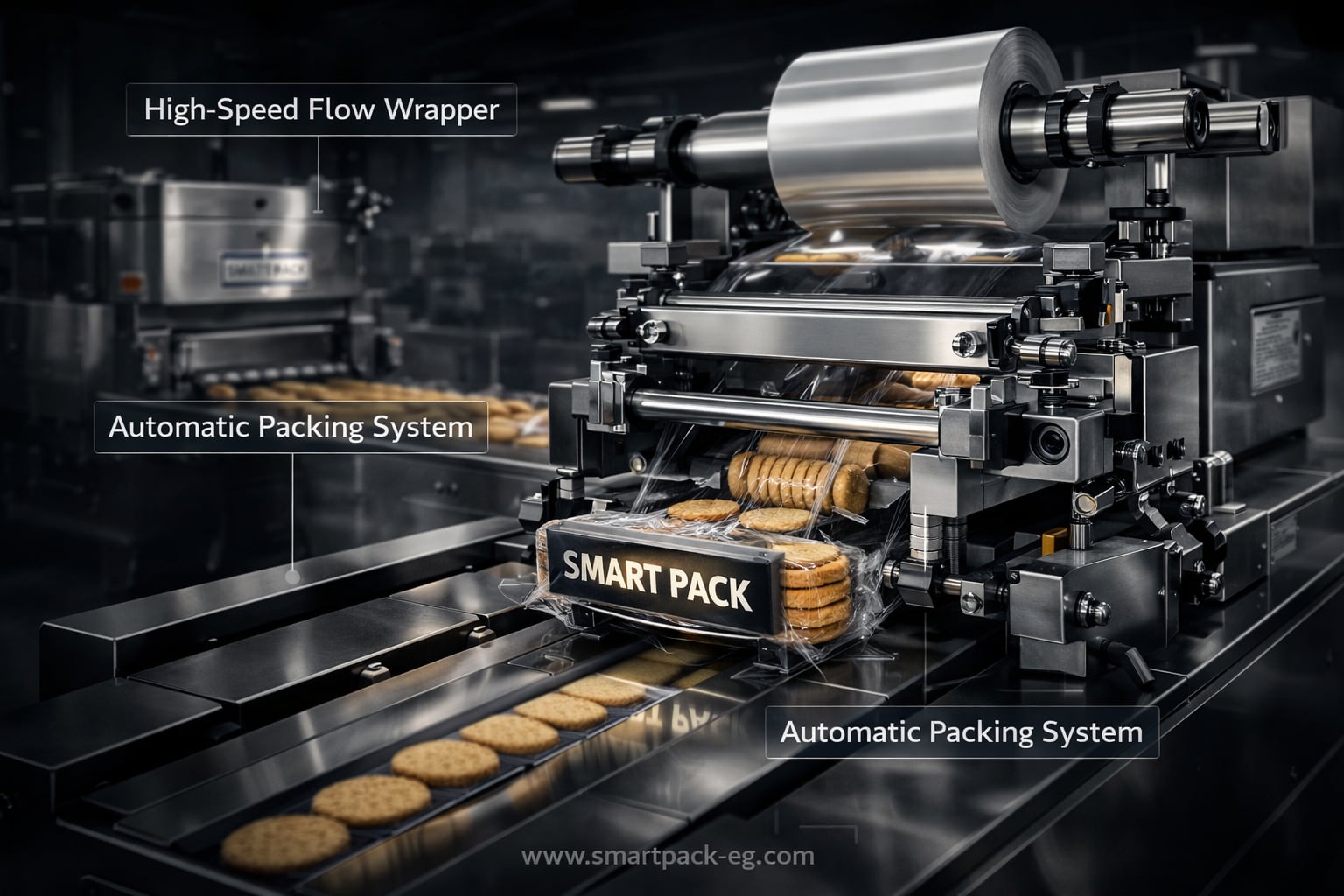
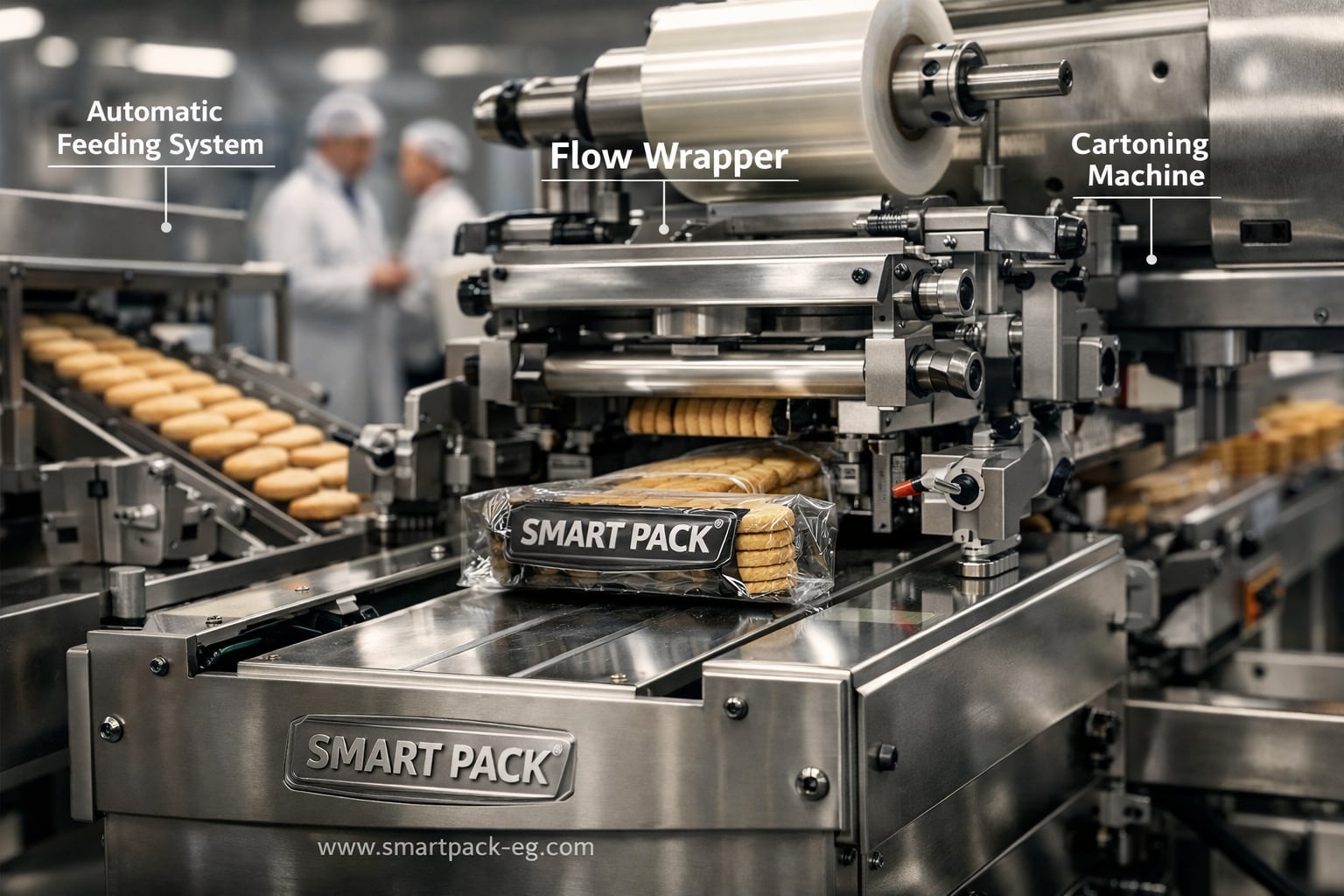
Selecting the right packaging machine is essential to preserve biscuit shape, maintain crispness, and prevent breakage during packing.
Common Packaging Machine Types
-
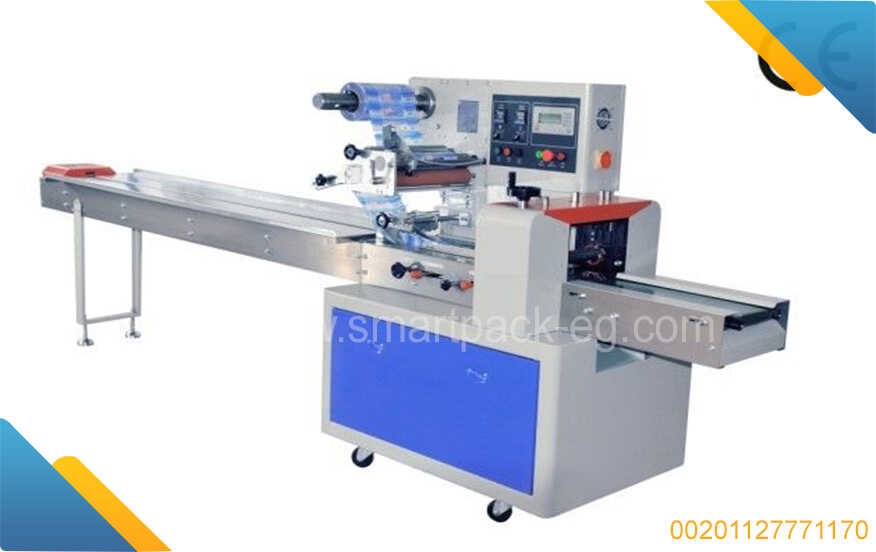
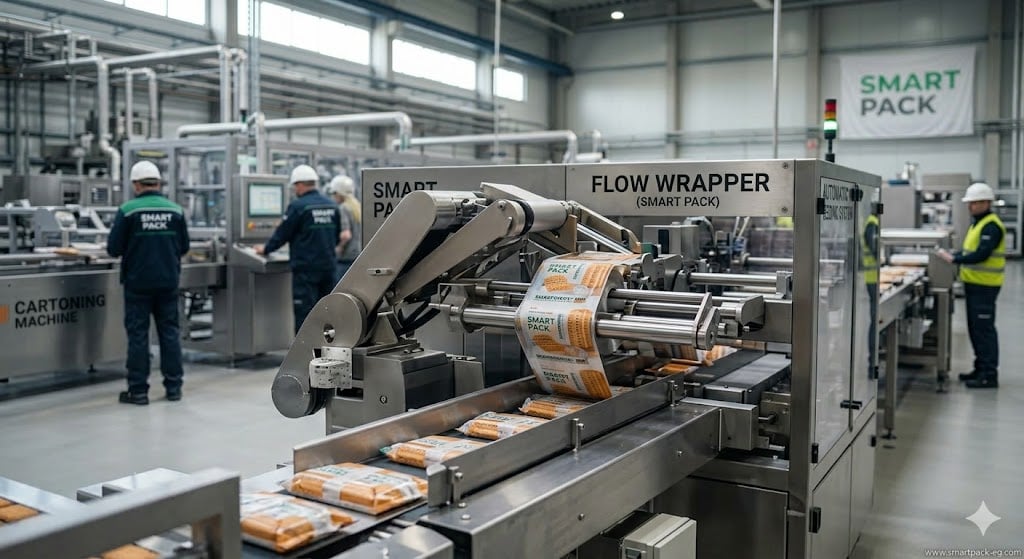
Horizontal flow wrapping machines for plain and filled biscuits
-
Multi-lane packaging machines for high-speed production
-
Specialized packaging machines for wafer biscuits
Biscuit Packaging Machines – Operational Overview
| Packaging Machine Type | Suitable Biscuit Type | Factory Capacity | Market Impact |
|---|---|---|---|
| Automatic Horizontal Packaging Machine | Plain and filled biscuits | High speed with product protection | Enhanced commercial appearance |
| Multi-Lane Packaging Machine | Large-scale production lines | Dense and stable output | Meets large distribution demand |
| Wafer Packaging Machine | Wafer biscuits | High-precision wrapping | Supports export readiness |
Secondary Packaging and Biscuit Distribution Preparation
Packaging not only protects the product but also defines its market image and competitive strength.
Types of Secondary Packaging Machines
-
Shrink wrapping machines
-
Cartoning and grouping machines
-
Carton packing machines for export
Industrial Packaging Machines Overview
| Packaging Machine Type | Factory Use | Marketing Benefit | Export Relevance |
|---|---|---|---|
| Shrink Wrapping Machine | Bundle packaging | Protection during transport | Required for distribution |
| Grouping Machine | Product arrangement | Organized sales presentation | Improves logistics efficiency |
| Carton Packing Machine | Bulk shipments | Full protection | Essential for export |
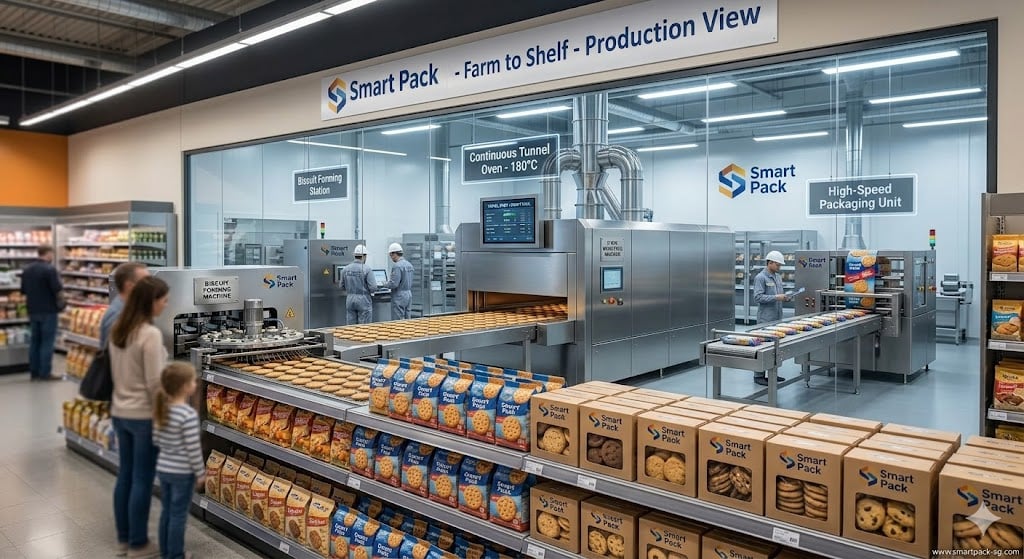
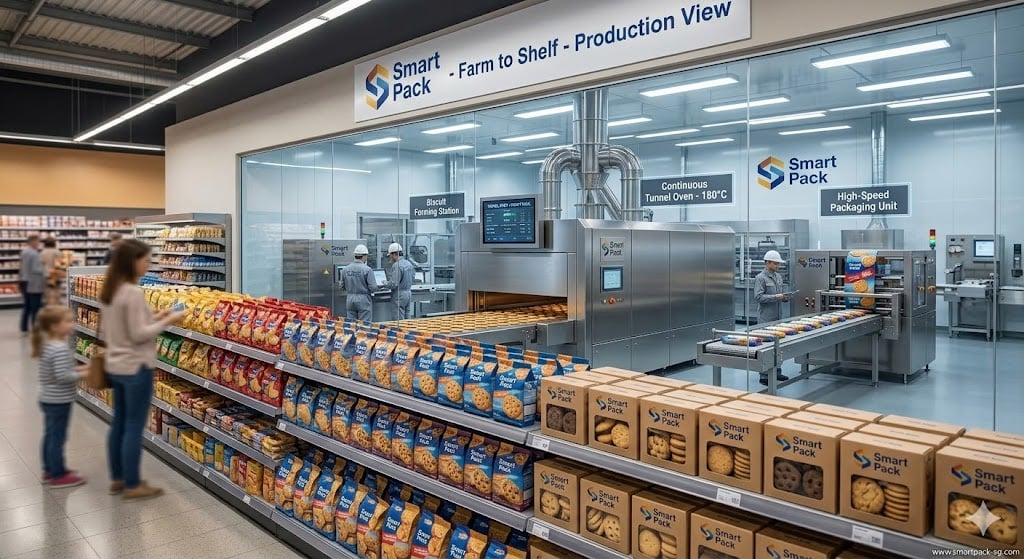
Biscuit Production Lines and Machinery from Smart Pack
-
Choose a scalable production line without full replacement
-
Use packaging machines that protect biscuit crispness
-
Ensure machine compatibility with multiple biscuit types
-
Prioritize after-sales service and preventive maintenance
-
Invest in export-ready packaging solutions
Successful factories rely on the expertise of specialized companies such as Smart Pack to deliver complete production lines and customized filling and packaging solutions tailored to market needs.
How an Integrated Production Line Increases Profitability
-
Reduced breakage and product loss
-
Higher production speed
-
Improved product appearance
-
Access to new export markets
All these factors lead to higher profit margins and long-term project stability.
Frequently Asked Questions
Is biscuit manufacturing suitable for export?
Yes, especially wafer biscuits and filled biscuits.
Can multiple biscuit types be produced on the same line?
Yes, when a flexible production line is selected.
Which stage most affects biscuit quality?
Baking and packaging stages.
Does packaging affect shelf life?
Yes, proper packaging preserves crispness and freshness.
Why is choosing a specialized supplier important?
To ensure production line quality and minimize operational errors.
Industrial biscuit manufacturing is more than a food process—it is a fully integrated industrial project that depends on production line precision and high-quality filling and packaging machinery.
With the right investment from the beginning, factories can compete locally and globally while achieving stable, scalable, and sustainable profits.