
 Admin
Admin Sesame Roasting: A Critical Value-Adding Step in Modern Food Manufacturing
Sesame roasting is no longer a secondary stage in food processing. It has become a decisive step that directly impacts product quality, market value, and competitiveness in both local and export markets.
Factories that rely on precise roasting methods and integrated production lines achieve consistent flavor and color, reduce waste, and significantly increase profit margins.
When professional roasting is combined with suitable filling and packaging machines, sesame is transformed from a raw material into a high-value industrial product ready for major markets.
The Importance of the Sesame Roasting Stage in Production Lines
Sesame roasting determines the final flavor profile and market acceptance of the product, whether it is sold directly or used in downstream industries such as tahini, confectionery, and bakery products.
Uneven roasting leads to the loss of natural oils or seed burning, negatively affecting quality and shelf life. For this reason, modern factories depend on precise industrial roasting solutions rather than traditional methods.
Different Sesame Roasting Methods Used in Factories
Continuous Thermal Roasting
Used in high-capacity factories, this method maintains stable temperatures with full control over roasting time, ensuring uniform color and balanced flavor.
Rotary Drum Roasting
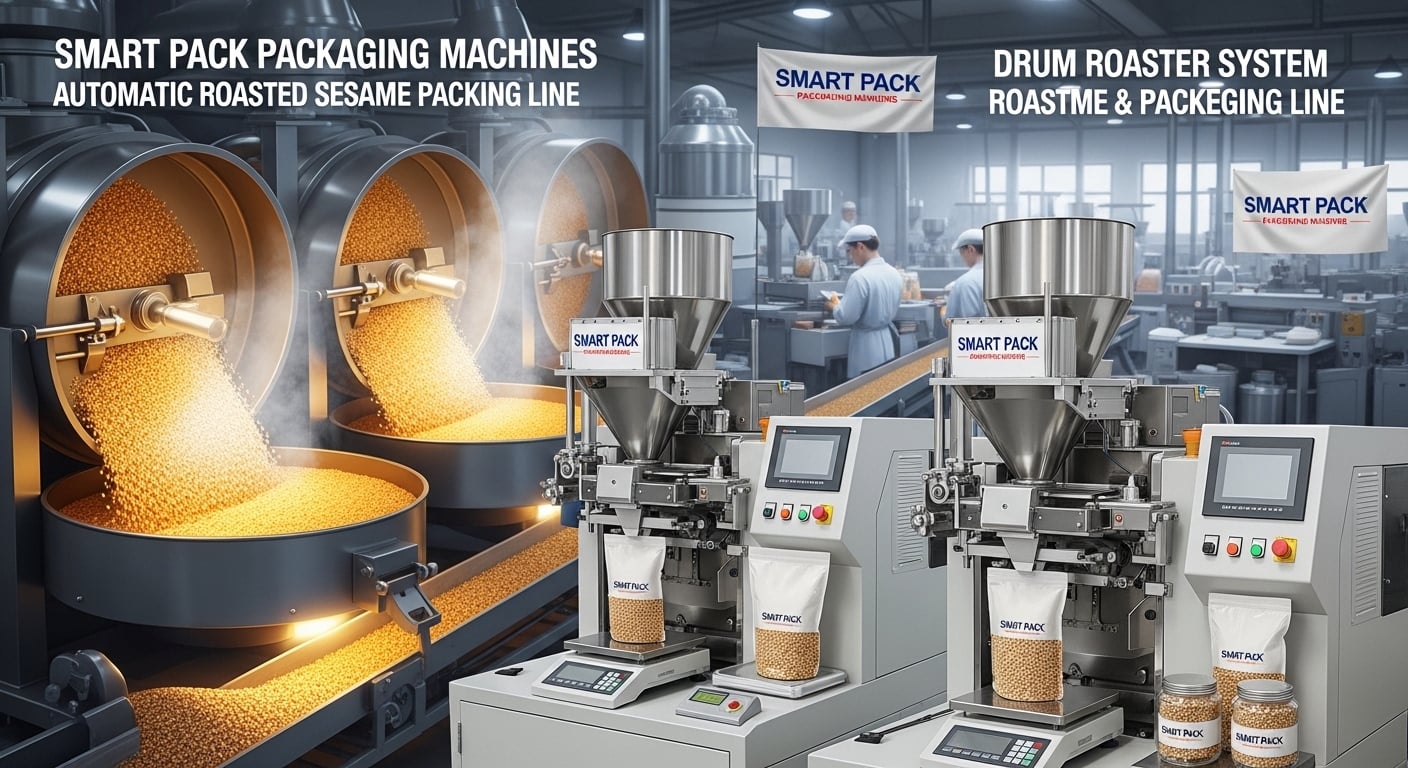
An efficient solution for large volumes, featuring continuous rotation that prevents burning. It is well suited for factories serving both domestic and export markets.
Semi-Automatic Roasting
Common in medium or emerging factories, offering good control with lower initial investment costs.
Sesame Production Line After Roasting
Once roasting is completed, sesame moves directly into preparation stages that make it suitable for packaging or further industrial use.
Post-Roasting Stages
-
Gradual cooling to preserve natural oils
-
Inspection and removal of non-conforming seeds
-
Routing either to direct packaging or to sesame-based product manufacturing
This seamless connection between roasting and subsequent stages reduces production time and improves operational efficiency.
Suitable Filling Machines for Roasted Sesame
Selecting the right filling machine is essential to preserve the quality of roasted sesame and prevent moisture absorption or flavor loss.
Types of Filling Machines Used
-
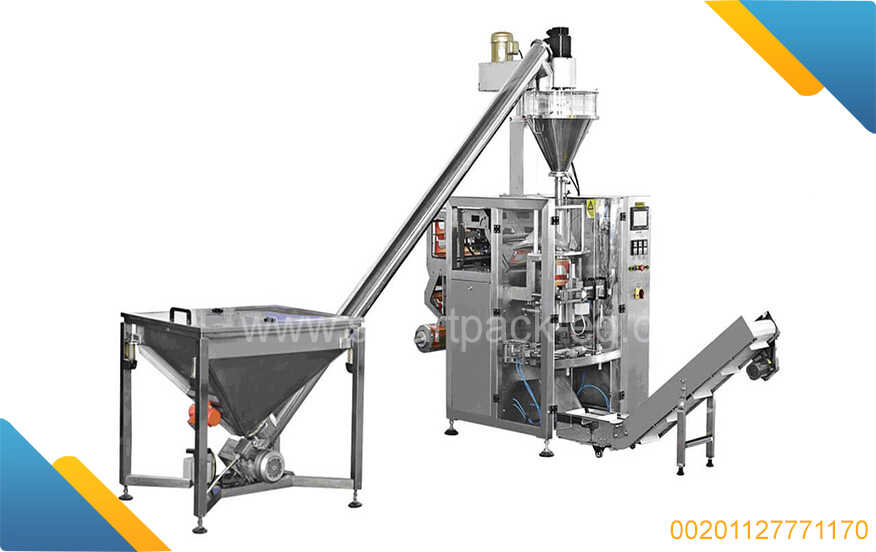
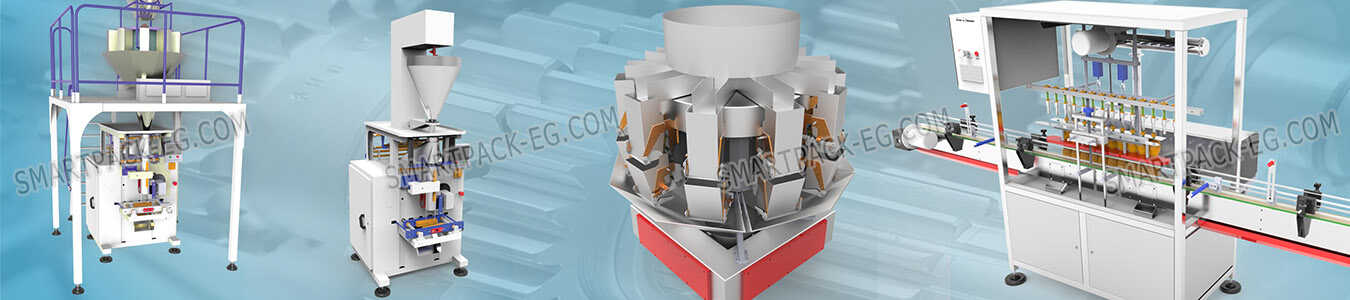
Granule filling machines for bulk roasted sesame
-
Multi-head filling machines for commercial packages with different weights
-
Vacuum filling machines for export and long-term storage
Filling Machines and Operational Capacities
| Filling Machine Type | Product Form After Roasting | Actual Factory Capacity | Direct Impact on Market and Profit |
|---|---|---|---|
| Automatic Granule Filling Machine | Roasted sesame for retail or industrial use | Stable operation with high weight accuracy and constant speed | Reduced waste and increased customer trust |
| Multi-Head Filling Machine | Commercial sesame packs in various weights | High output to meet large market demand | Higher profit margins and improved distribution |
| Vacuum Filling Machine | Sesame for storage or export | Protection against moisture and oxidation | Extended shelf life and stronger export potential |
Packaging Machines and Their Role in Marketing Roasted Sesame
Professional packaging does more than protect the product—it defines how consumers and importers perceive it. Packaging is a key requirement for entering international markets.
Suitable Packaging Machine Types
-
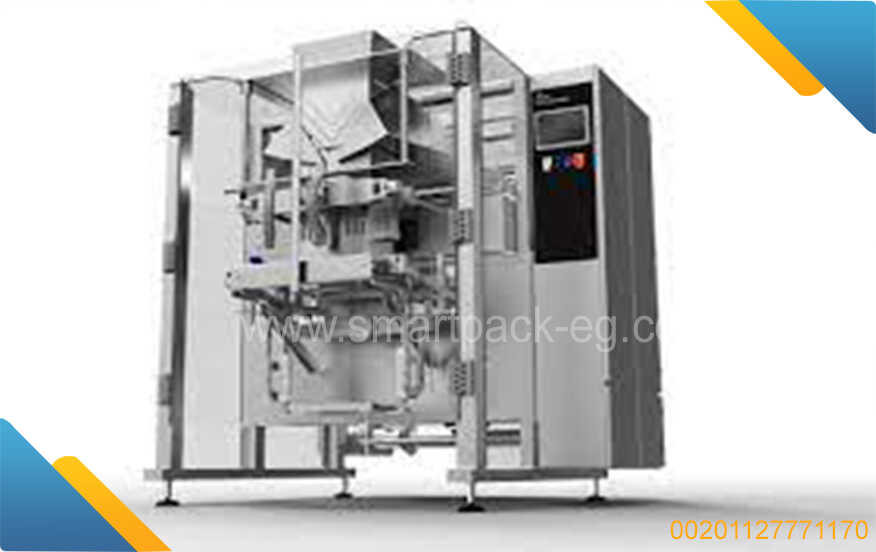
Sealed bag packaging machines
-
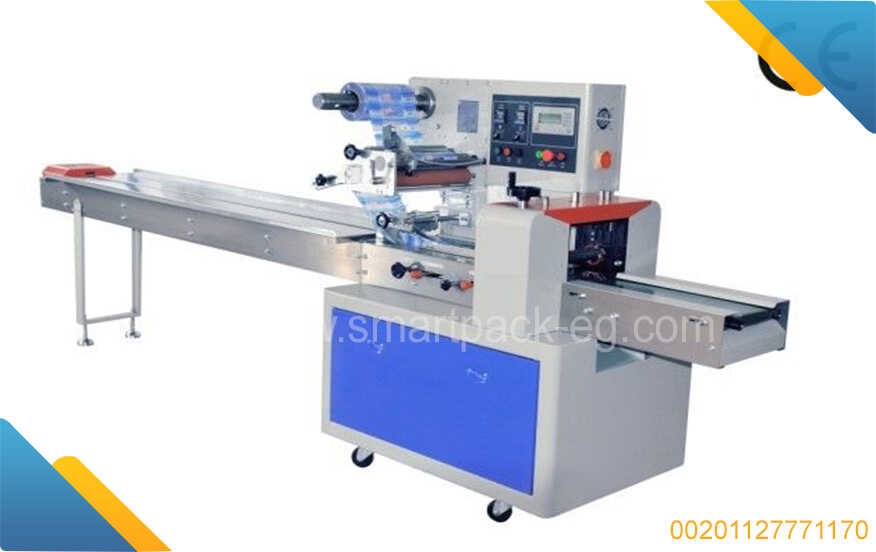
Shrink wrapping machines for bundled products
-
Carton packaging machines for export lines
Industrial Packaging Machines Overview
| Packaging Machine Type | Use Within the Production Line | Marketing Value | Export Relevance |
|---|---|---|---|
| Bag Packaging Machine | Individual roasted sesame packs | Professional appearance and moisture protection | Suitable for local markets |
| Shrink Wrapping Machine | Bundling multiple units | Easier handling and reduced damage | Required by distribution chains |
| Carton Packaging Machine | Export shipment preparation | Full protection during transport | Essential for international export |
Linking Roasting to an Integrated Production Line for Profitability
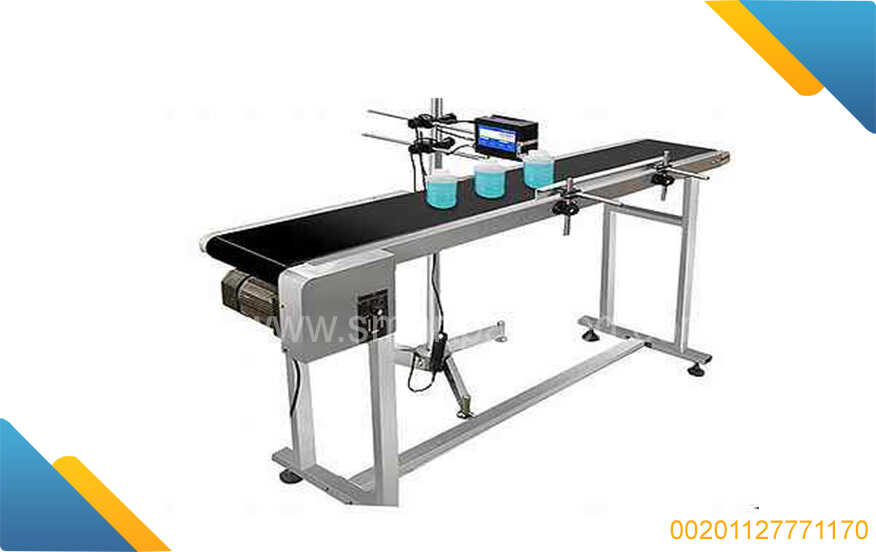
Factories that succeed in the market do not treat roasting as a standalone step. Instead, they integrate it into a complete production line that starts with sesame reception and ends with a packed and labeled product ready for sale or export.
This integration reduces labor requirements, increases production capacity, and gives factories a real ability to scale.
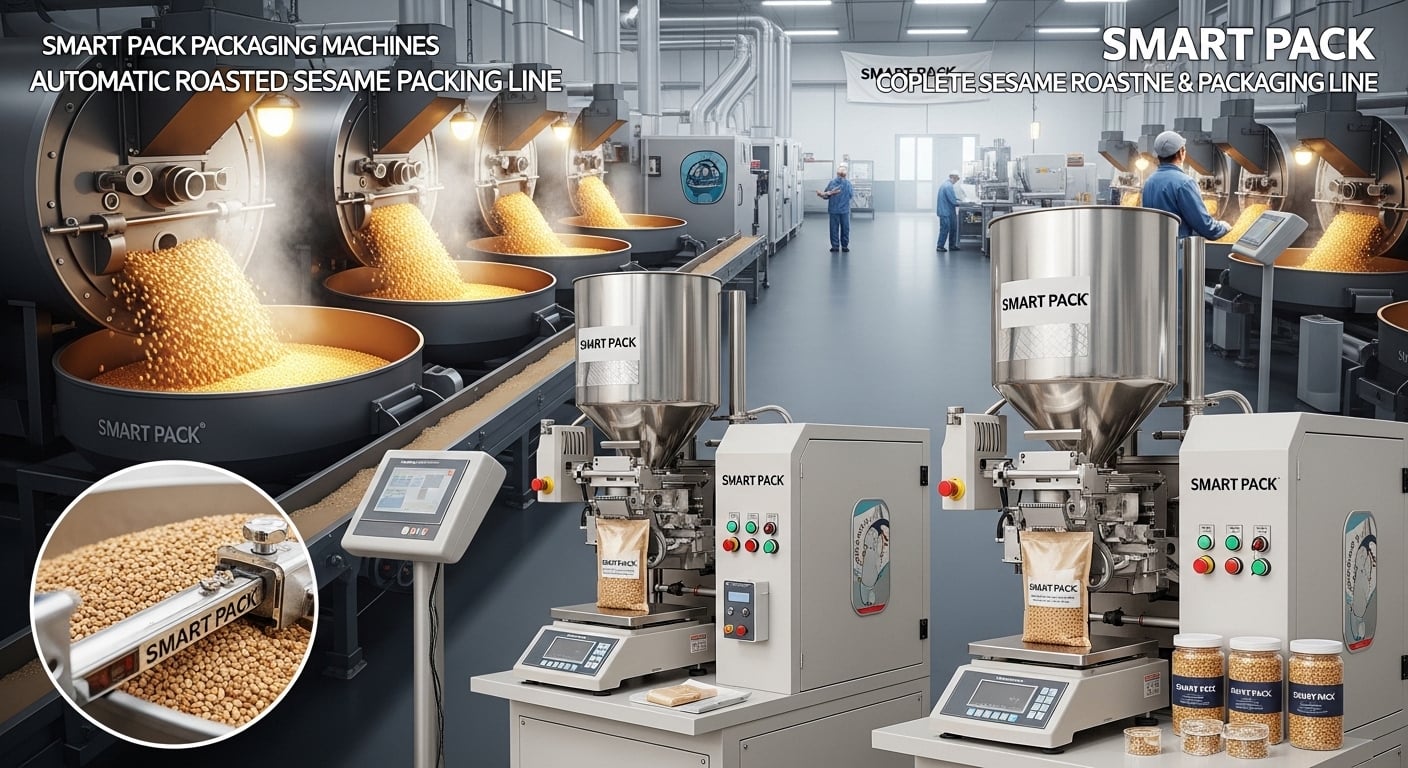
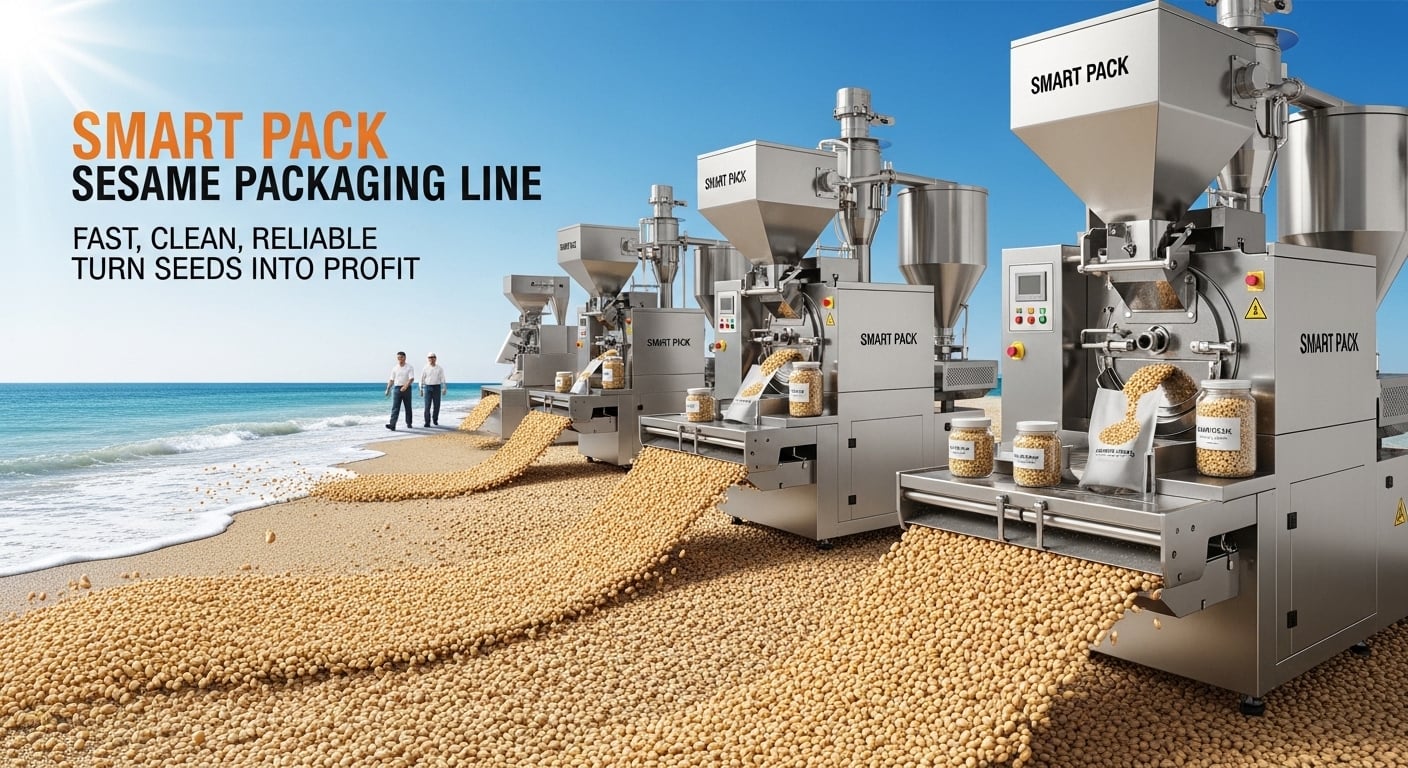
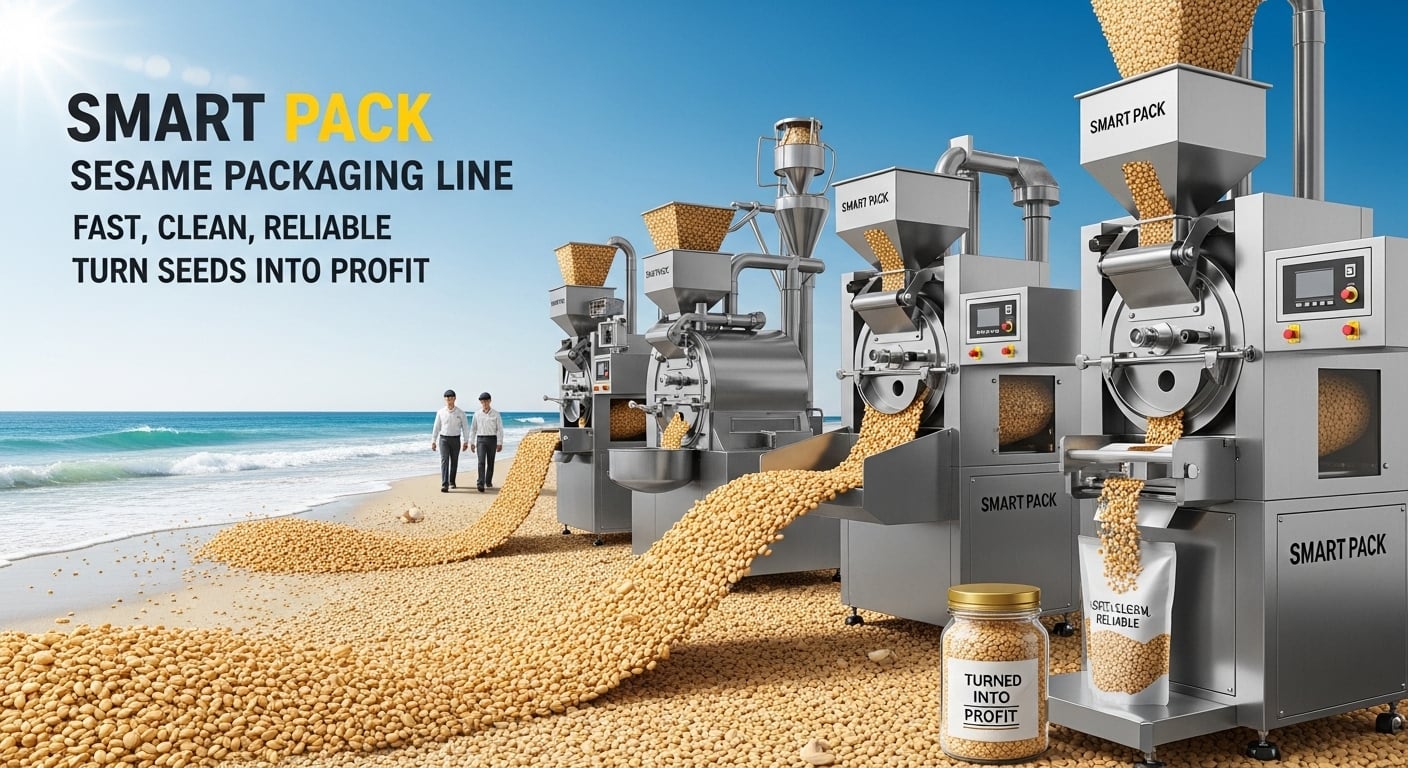
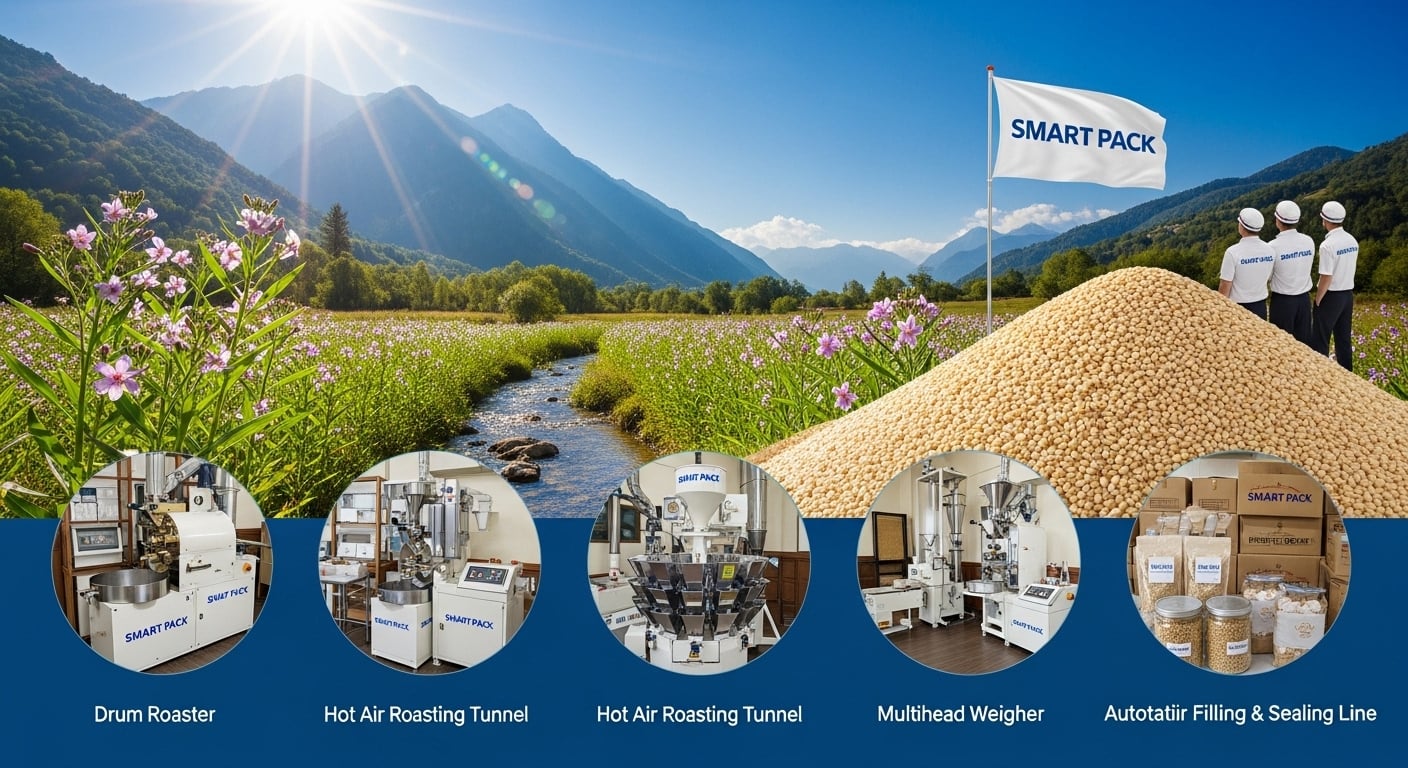
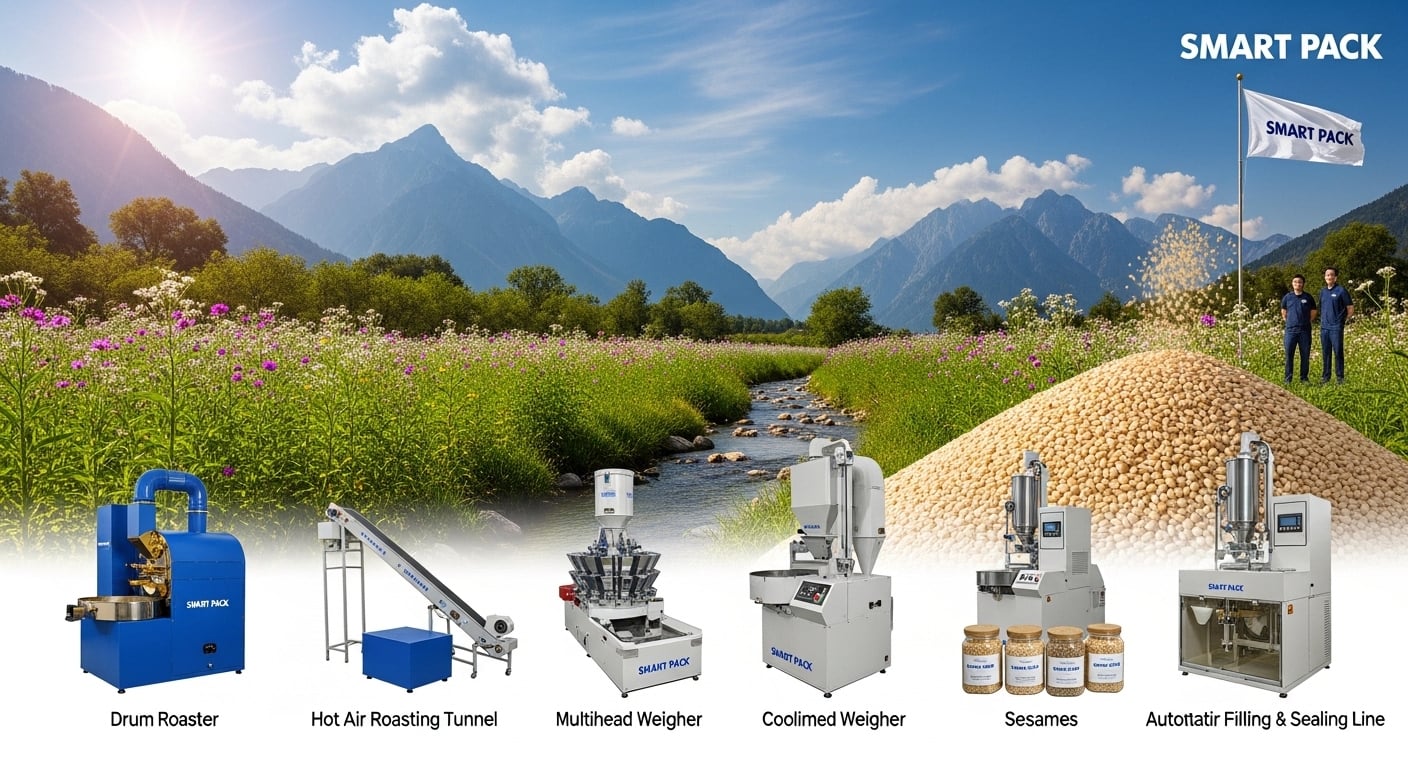
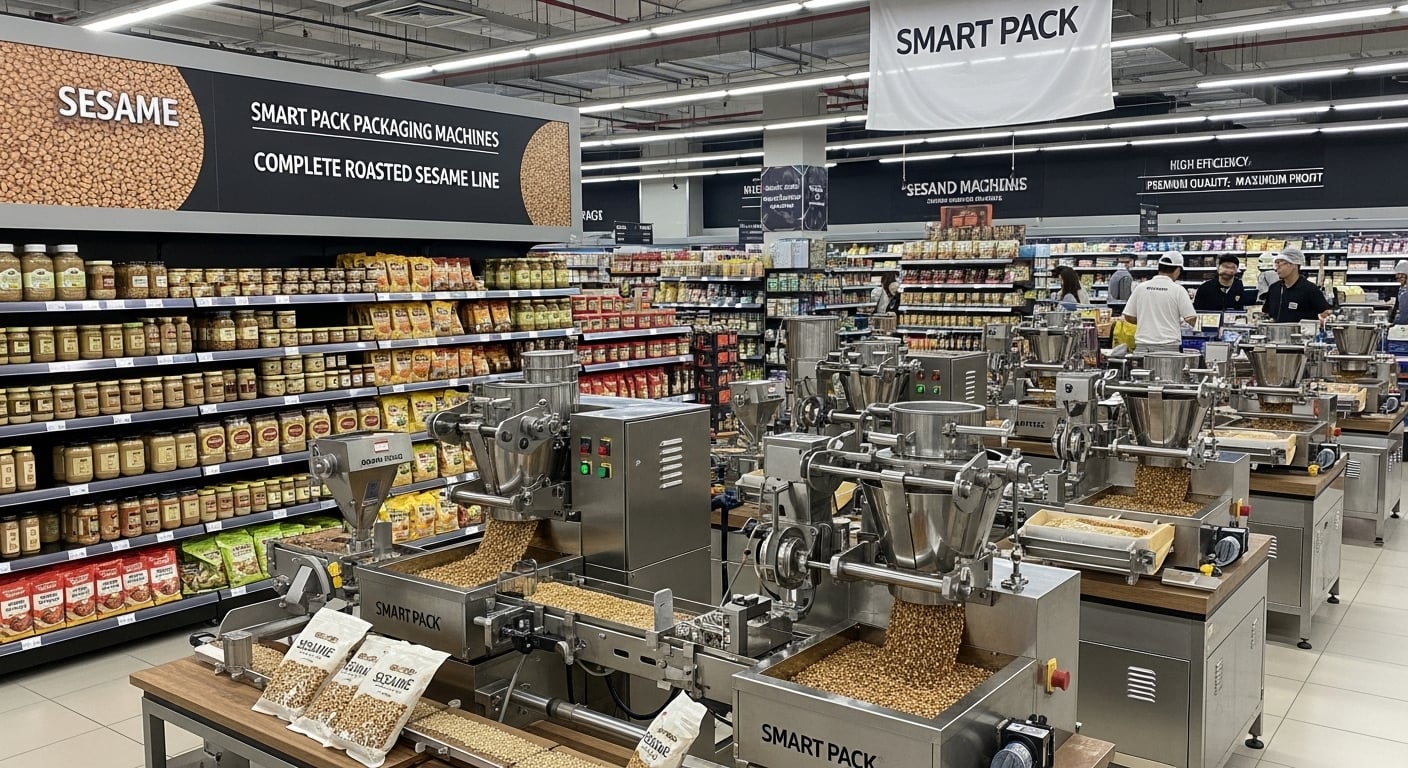
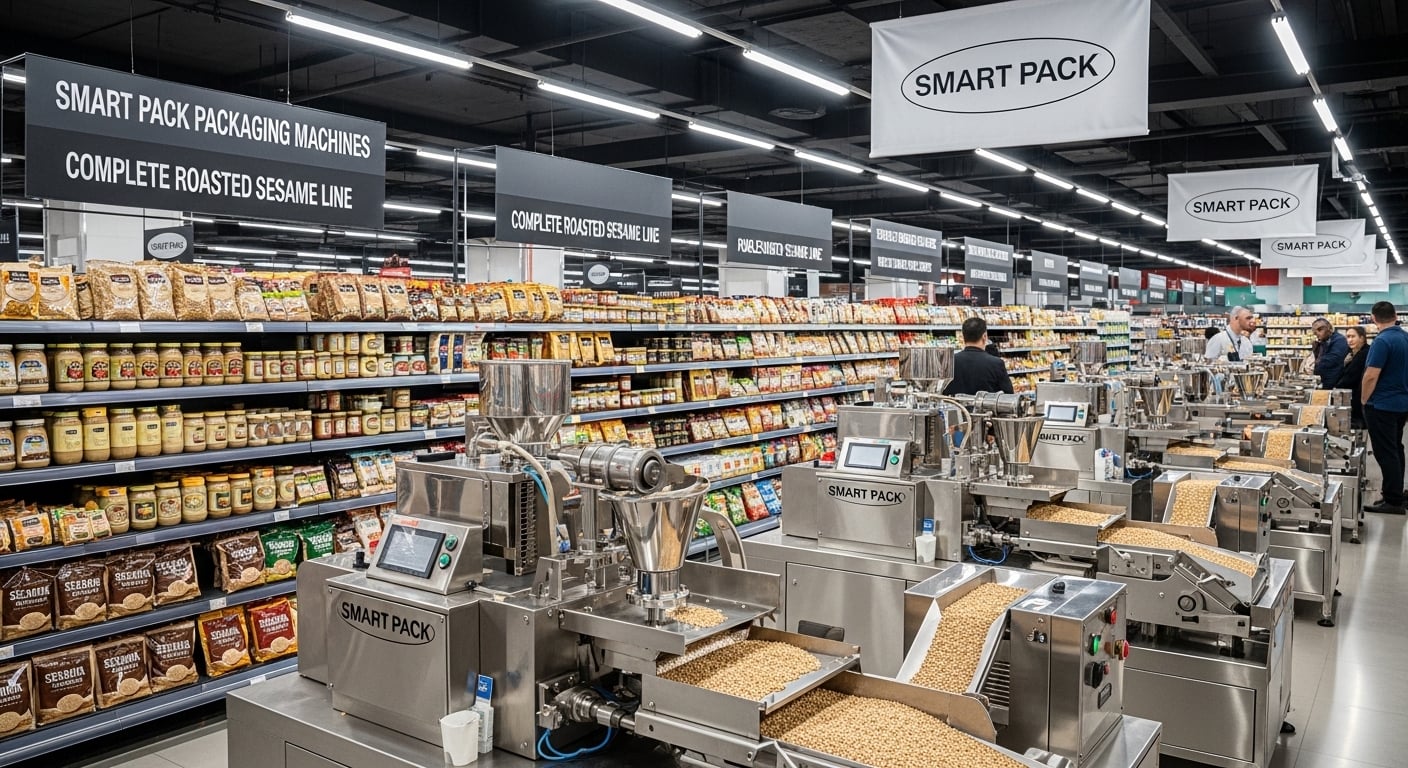
At this stage, manufacturers rely on specialized solutions provided by Smart Pack to design production lines that combine roasting, filling, and packaging in a way that serves both market demand and profitability.
How the Right Machinery Choices Directly Impact Profit
-
Precise roasting control reduces waste
-
Accurate filling preserves weight consistency and brand reputation
-
High-quality packaging opens export opportunities
-
Integrated production lines accelerate capital turnover
Every correct decision in machine selection translates directly into higher profitability and long-term sustainability.
Frequently Asked Questions
Is industrial roasting better than traditional roasting?
Yes, because it ensures consistent quality, reduced waste, and precise flavor control.
Can sesame be packaged immediately after roasting?
Yes, after proper cooling and inspection using suitable machines.
Does packaging affect export potential?
Directly, as it protects quality during long-distance shipping.
Can the production line be expanded later?
Yes, when scalable and upgrade-ready machines are selected.
Why work with a specialized provider?
To design a balanced production line that minimizes errors and maximizes profitability.
Sesame roasting is not just a technical step—it is an investment decision that determines product quality, profitability, and market position.
When professional roasting is integrated with the right filling and packaging machines within a complete production line, the factory gains the confidence and capability to compete successfully in both local and export markets.