 Admin
Admin Spice Manufacturing and Packaging Project: A High-Profit Opportunity for Modern Factories
The spice manufacturing and packaging project is no longer a small-scale business. When executed with a well-designed production line and precise filling machines, it becomes one of the most profitable food industry investments.
Consistent demand in both local markets and export destinations makes spices a fast-moving product with strong profit margins.
By combining high product quality, accurate filling, and market-appropriate packaging, a spice factory can evolve into a scalable and highly efficient production system.
The Importance of the Spice Project for Factories and Markets
The spice industry serves a wide range of markets, including households, restaurants, hotels, food processing companies, and export channels. This diversity gives factories exceptional marketing flexibility and multiple sales outlets.
Additionally, product variety—ranging from ground spices and whole seeds to dry blends and liquid seasonings—allows manufacturers to expand production lines without major structural changes.
Types of Spice Products Supported by Modern Production Lines
Ground Spices
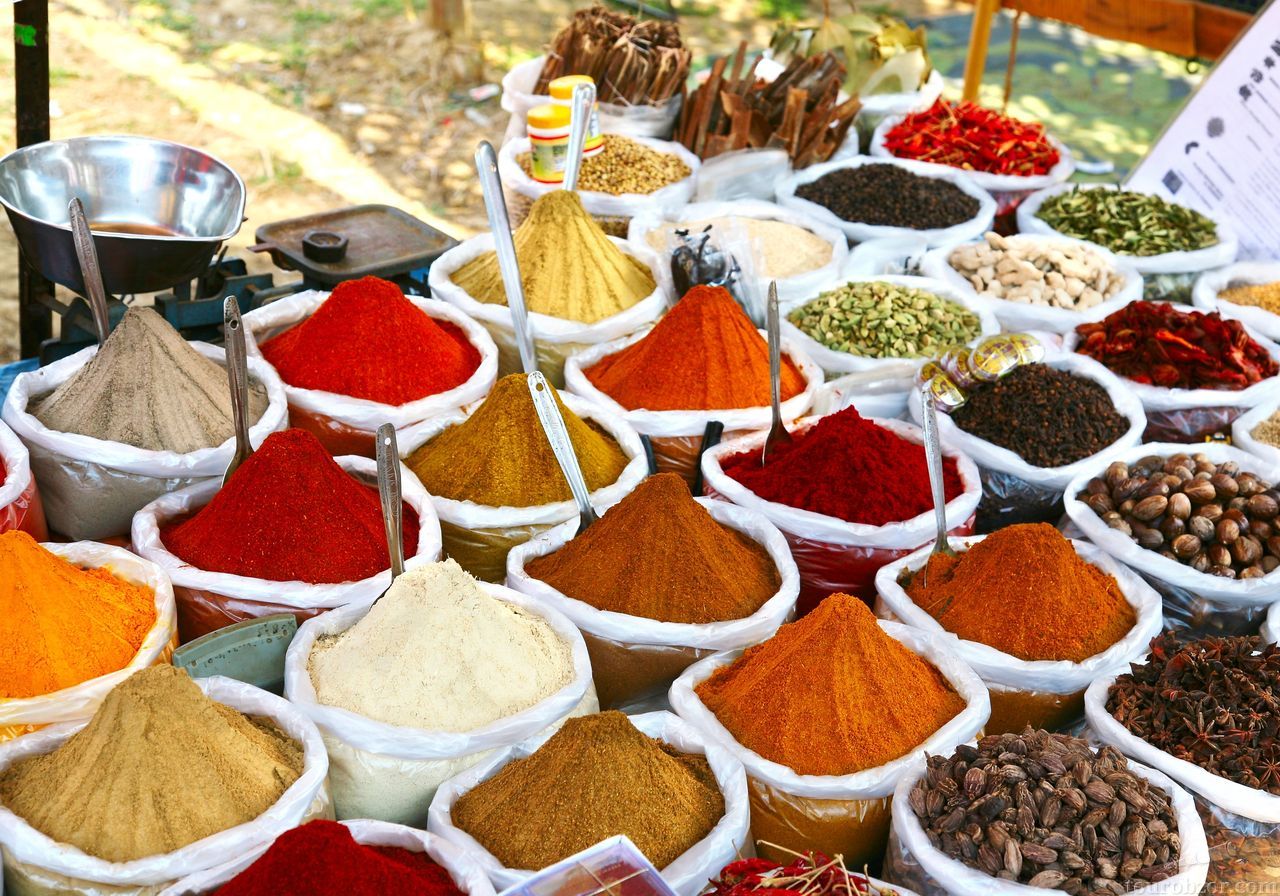
Such as cumin, black pepper, turmeric, paprika, cinnamon, and ginger. These products rely heavily on precise grinding and accurate weight control during packaging.
Whole Spices and Seeds
Including peppercorns, cloves, cardamom, and coriander. These require granule filling machines that preserve product shape and quality.
Dry Spice Blends
Like meat, chicken, and barbecue seasonings, which demand high accuracy in weighing and uniform mixing.
Liquid Spices and Seasonings
Such as marinades and ready-made sauces, requiring liquid filling machines that are precise, hygienic, and easy to clean.
Stages of the Spice Production Line Inside Factories
Raw Material Preparation
Spices are sourced from trusted suppliers, then cleaned and dried to ensure quality and food safety.
Grinding or Processing
Spices are ground or prepared according to product type, with full control over texture and consistency.
Mixing
For blends, ingredients are mixed in precise ratios to maintain consistent flavor.
Filling
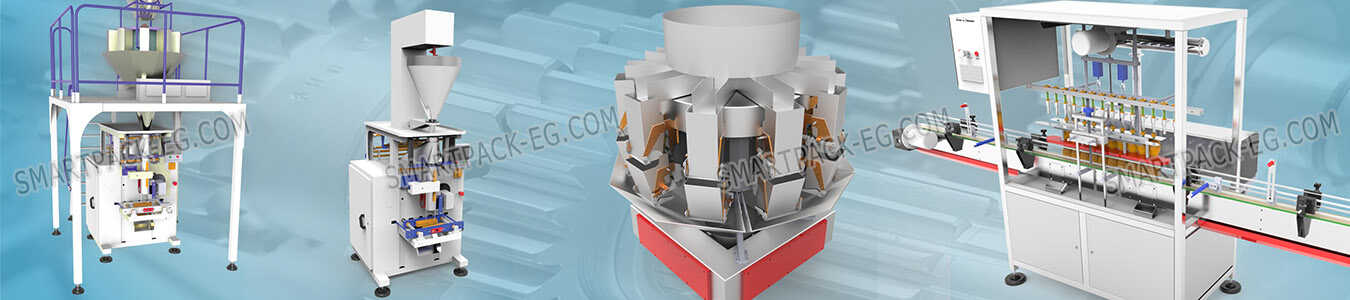
Products are transferred to suitable filling machines based on whether they are powder, granules, or liquids.
Packaging
The final stage that prepares the product for sale or export.
Filling Machines Used in Spice Factories
Choosing the right filling machine has a direct impact on product quality and factory profitability. Any error in weight accuracy or sealing leads to immediate losses.
Types of Filling Machines
-
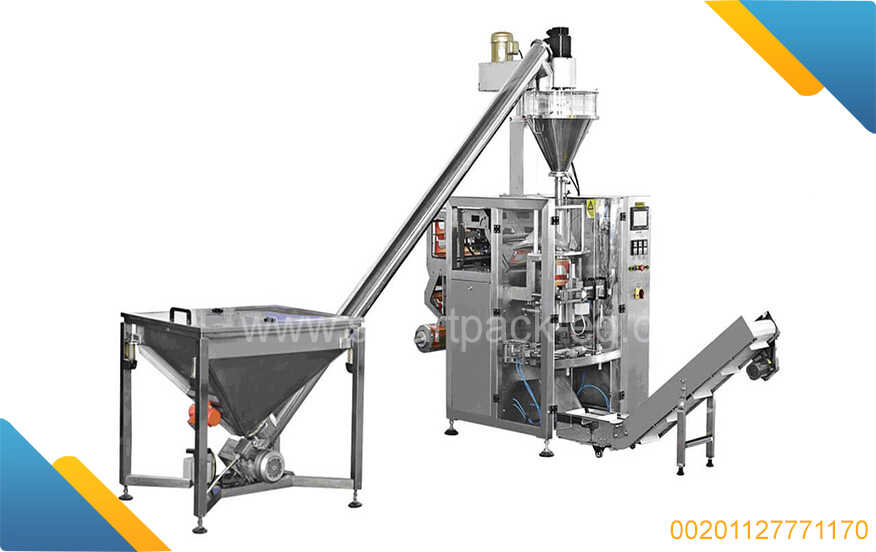
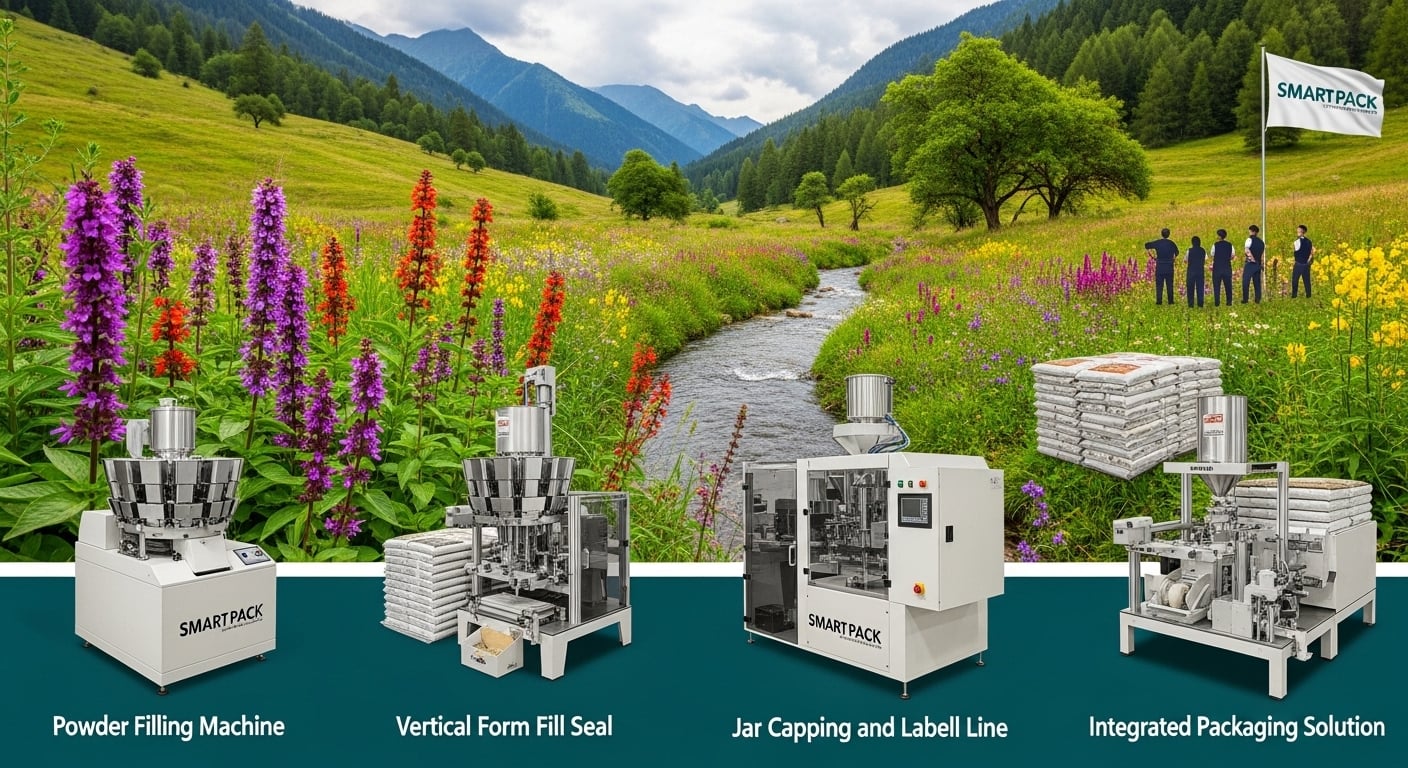
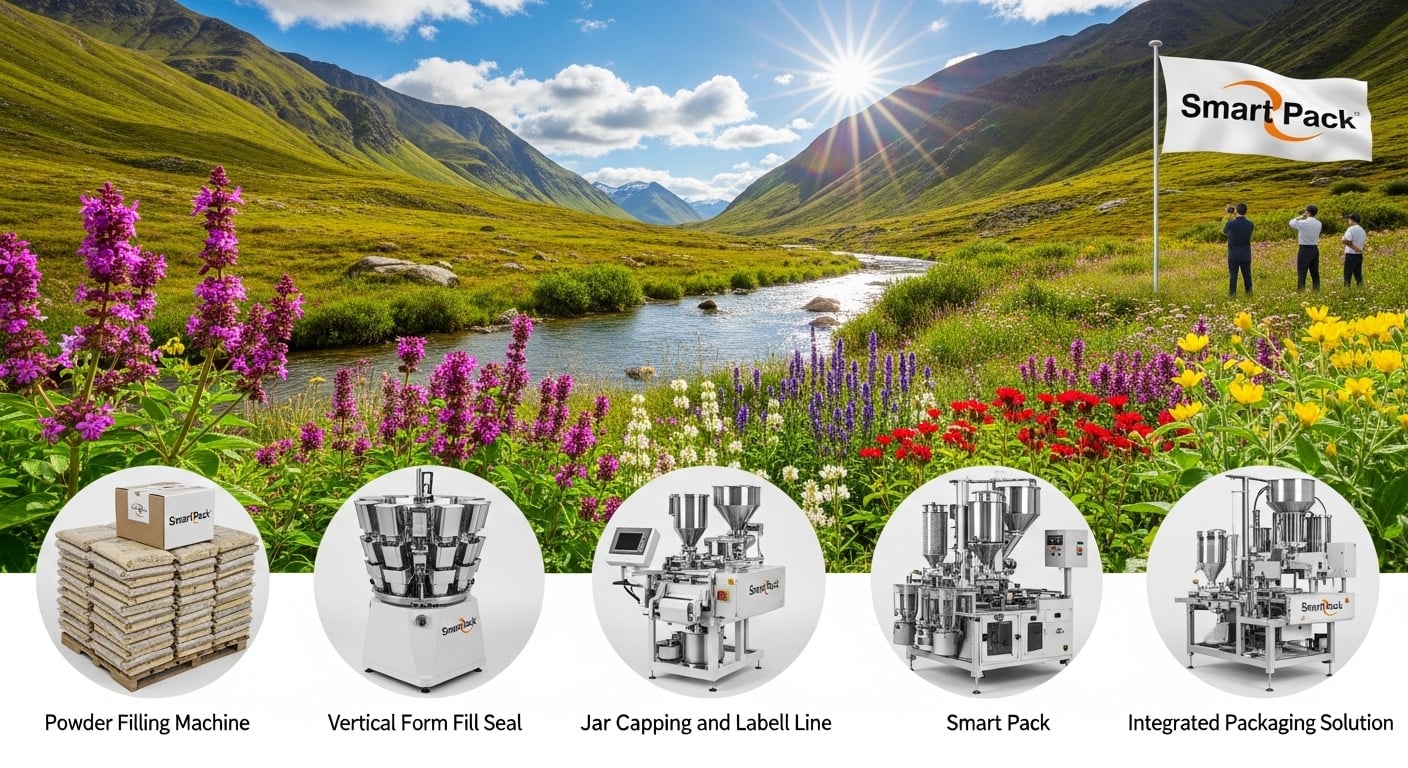
Powder filling machines for ground spices
-
Granule filling machines for whole spices
-
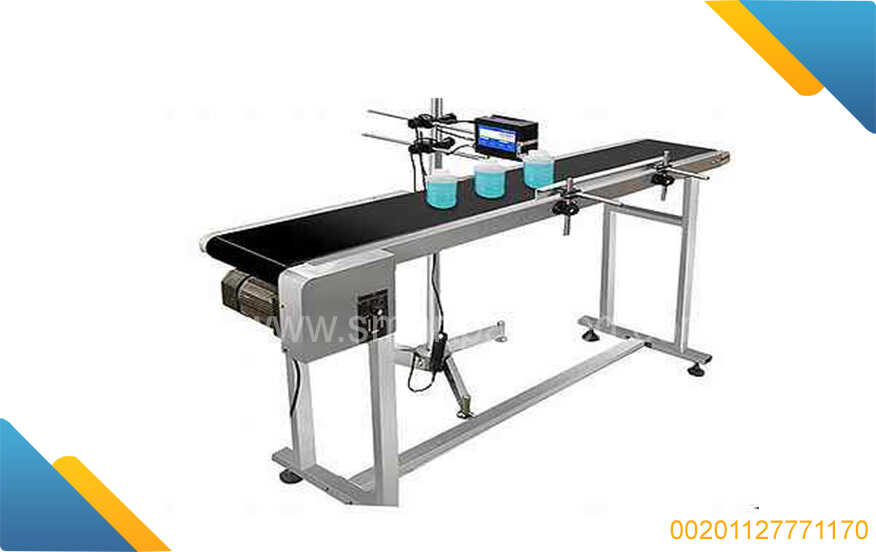
Liquid filling machines for sauces and seasonings
Filling Machines and Operational Specifications
| Filling Machine Type | Product Type | Production Capacity | Direct Benefit to the Factory |
|---|---|---|---|
| Automatic Powder Filling Machine | Ground spices and dry blends | Stable operation with precise weight per package | Reduced waste and increased market trust |
| Granule Filling Machine | Whole spices and seeds | Handles various sizes without damaging the product | Preserves product appearance and market value |
| Liquid Filling Machine | Sauces and liquid spices | Accurate filling, easy cleaning, hygienic design | Export readiness and compliance with food standards |
Packaging Machines and Their Role in Spice Marketing
High-quality packaging preserves aroma, prevents moisture, and enhances the product’s commercial appearance—making it essential for acceptance in international markets.
Types of Packaging Machines
-
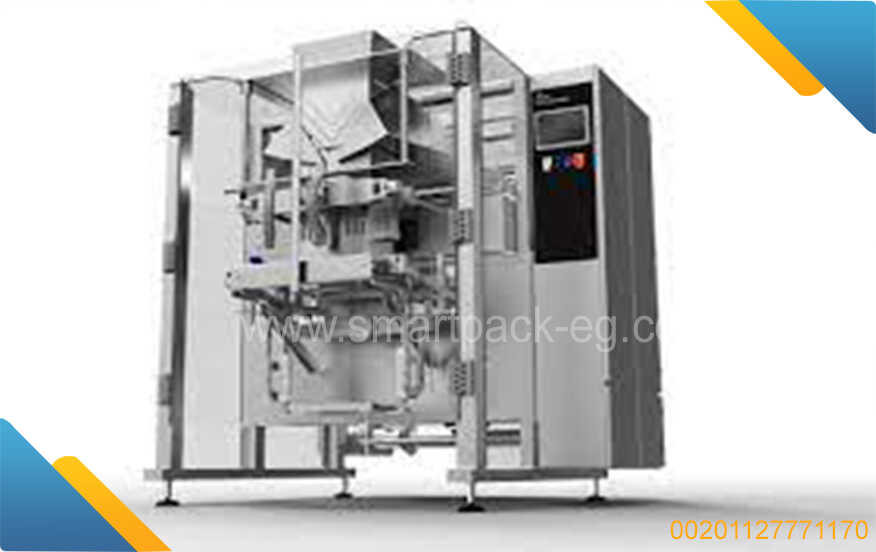
Bag packaging machines for small units
-
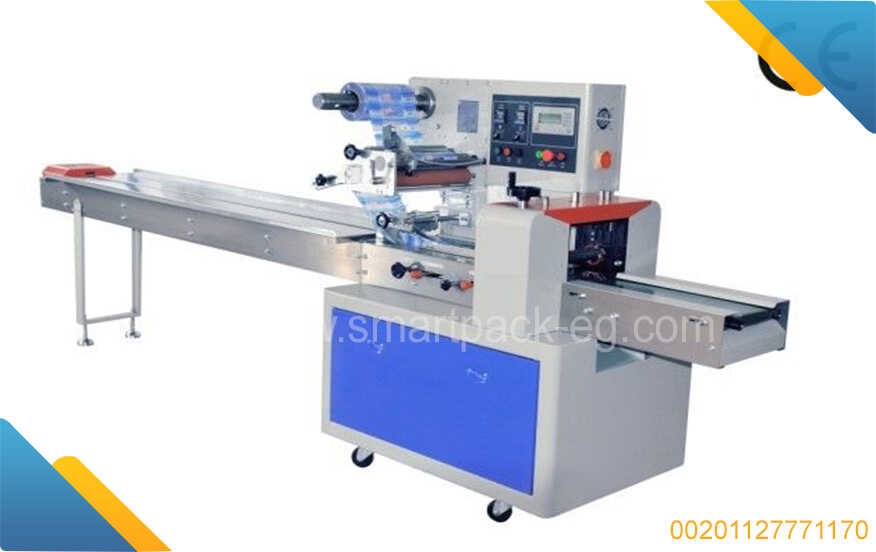
Shrink wrapping machines for bundled products
-
Carton packaging machines for export shipments
Industrial Packaging Machines Overview
| Packaging Machine Type | Industrial Use | Marketing Value | Export Impact |
|---|---|---|---|
| Bag Packaging Machine | Individual small and medium packs | Improved visual appeal | Suitable for local markets |
| Shrink Wrapping Machine | Grouping spice packages | Easier transport and reduced damage | Required by distribution chains |
| Carton Packaging Machine | Export shipment preparation | Product protection during long shipping | Essential for international export |
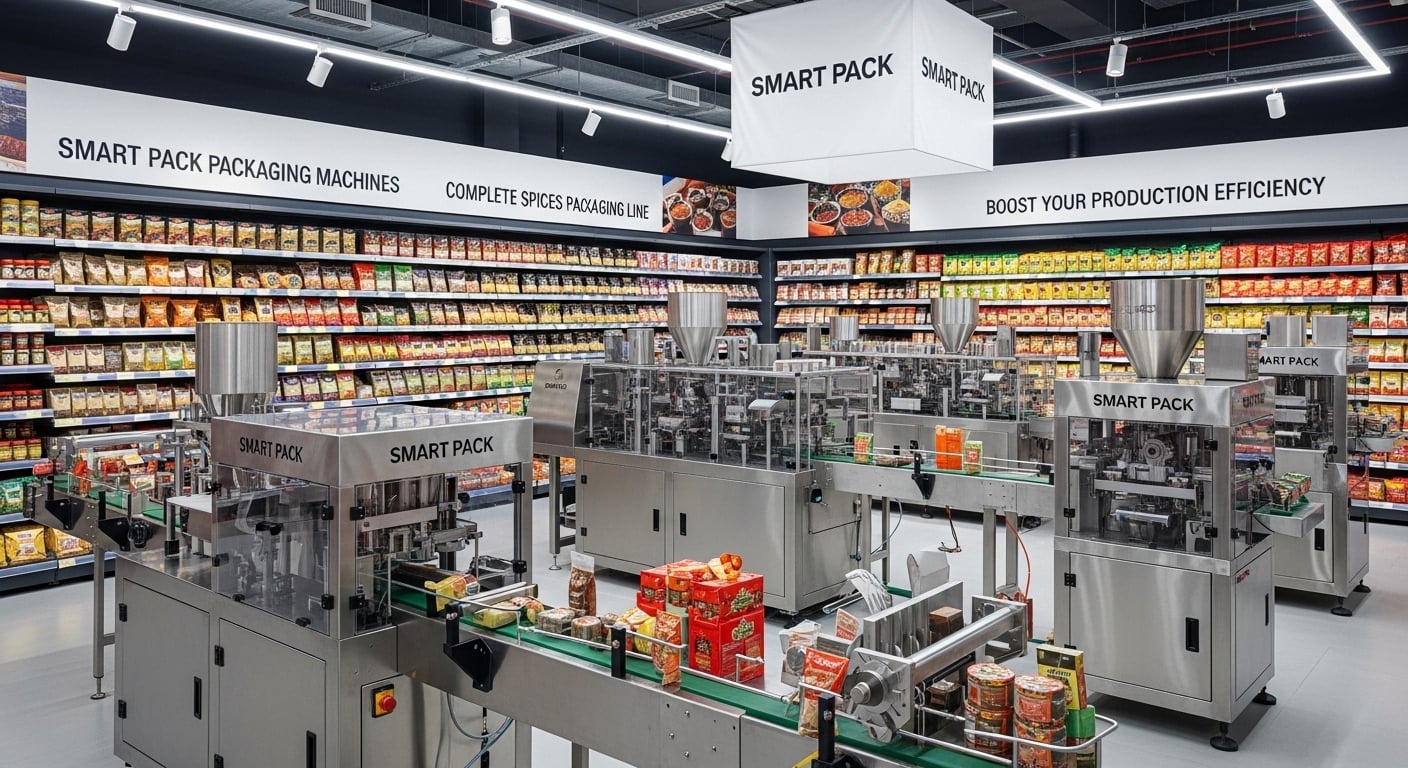
Integrated Spice Production Line for Factories
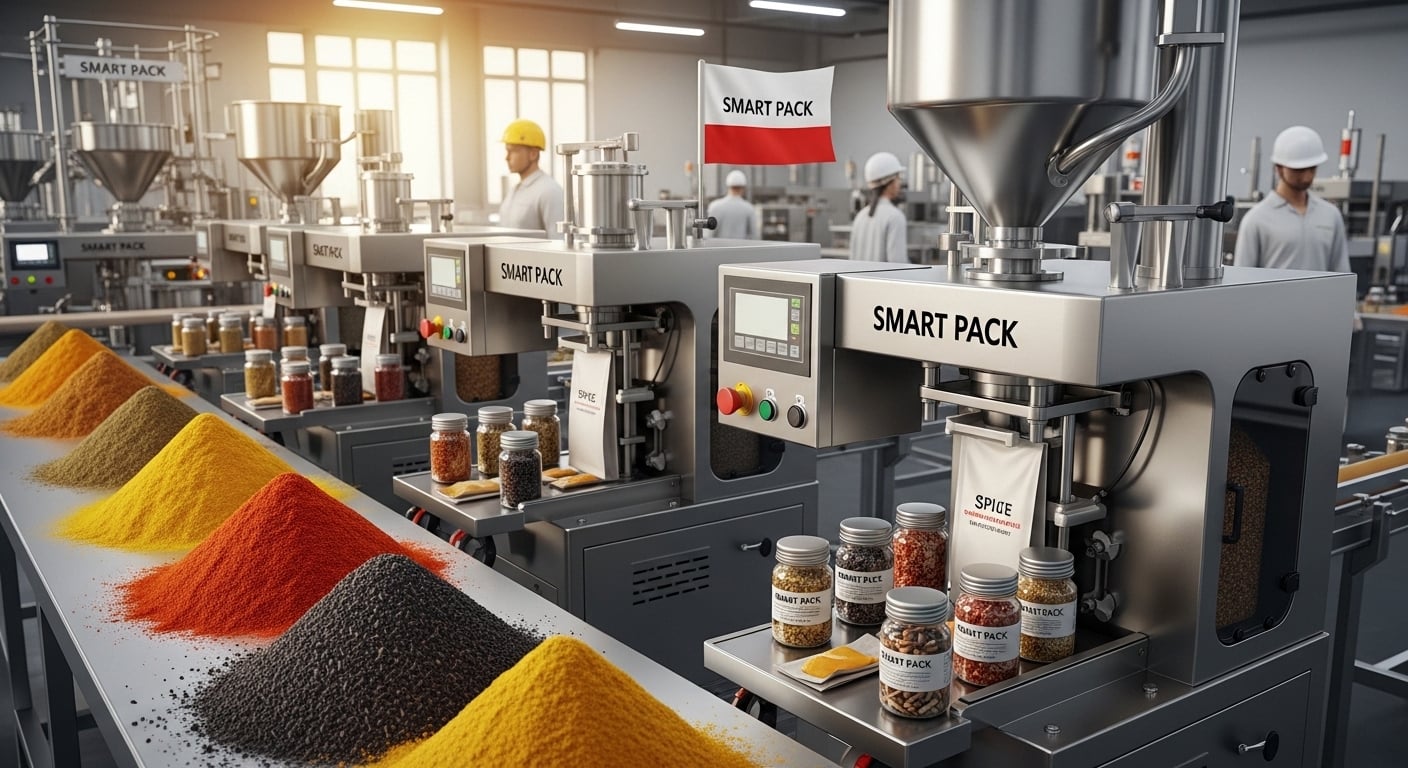
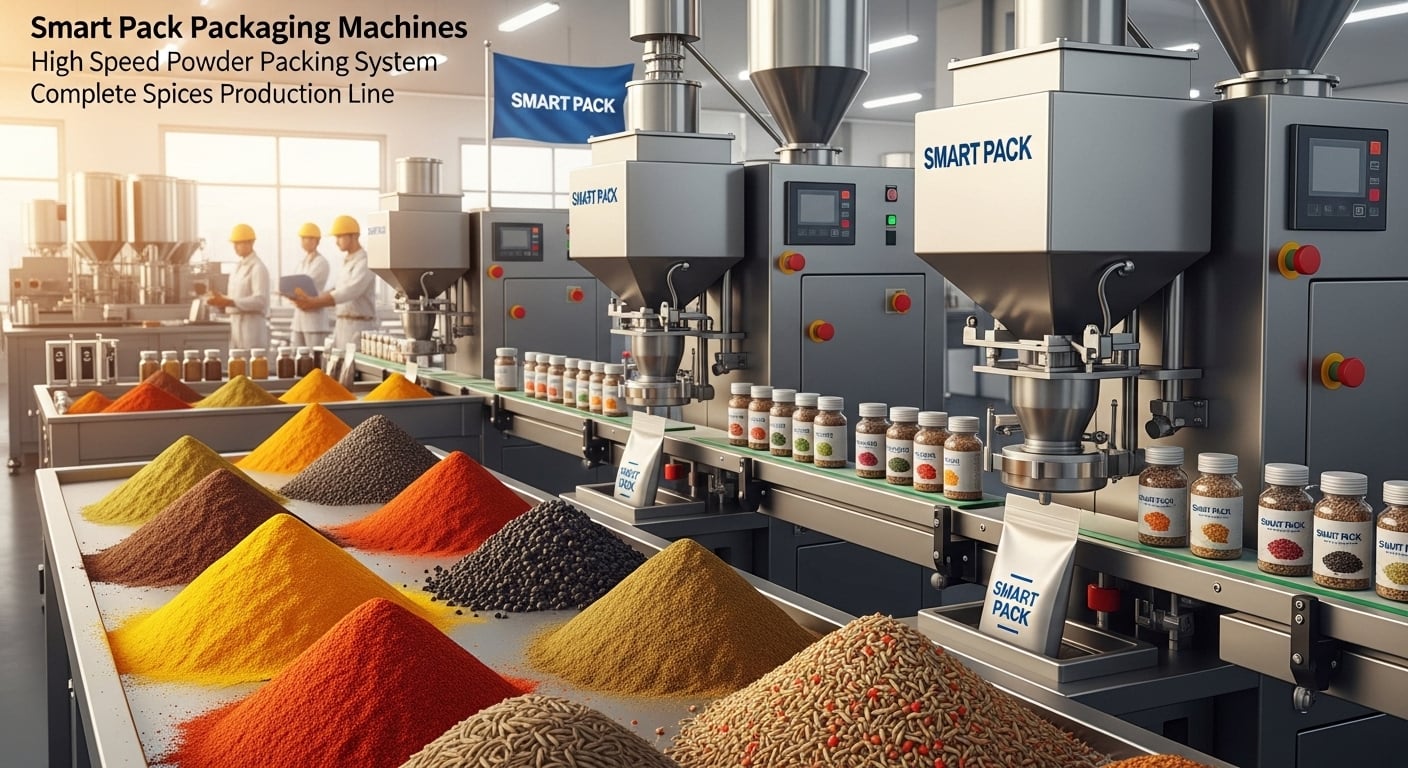
A fully integrated production line connects processing, filling, and packaging into one continuous workflow. This reduces labor costs and significantly increases operational efficiency.
With proper line design, factories can scale production without compromising quality or increasing operating expenses.
At this stage, manufacturers rely on specialized companies such as Smart Pack to deliver complete production line solutions tailored to local market needs and export requirements.
How a Spice Factory Achieves Maximum Profitability
Profitability is not only about sales—it depends on minimizing waste, accelerating production cycles, and selecting machines that reduce downtime and ensure continuity.
By investing in suitable filling and packaging machines, factories can meet large domestic and export orders without operational pressure.
Frequently Asked Questions
Is the spice project suitable for export?
Yes, provided that raw material quality, filling accuracy, and packaging standards are strictly maintained.
Can multiple spice products be produced on the same line?
Yes, when flexible and adjustable machines are selected.
Which stage is most critical in the spice production line?
The filling stage, as it directly affects weight accuracy and product quality.
Do liquid spices require a different production line?
They require dedicated liquid filling machines, but these can be integrated within the same factory.
Why is it better to work with a specialized company?
To ensure correct machine selection and avoid costly mistakes at the project’s early stages.
A successful spice factory begins with a carefully planned production line and filling and packaging machines tailored to the product type and target market.
When the project is built on solid foundations, spices become a high-turnover product that delivers sustainable profits in both local and export markets.