 Admin
Admin Plastic Manufacturing Today:
A Scalable Industrial Investment Opportunity with Real Growth Potential
Plastic manufacturing is no longer just a traditional industrial activity. It has become a real investment opportunity for anyone seeking a scalable, sustainable project that serves dozens of different sectors.
Success in this field does not depend on the idea alone, but on choosing the right production line, along with reliable filling and packaging machines that ensure consistent quality, high execution speed, and well-controlled operating costs. This is what makes the real difference between a small, limited project and a factory capable of competing and growing long-term.
Why Plastic Manufacturing Is One of the Strongest Industrial Projects
Continuous demand for plastic products in both local and export markets makes this sector one of the most stable industrial fields. Plastic products are used across food, medical, electrical, construction, and packaging industries, giving investors great flexibility in choosing products and target markets.
When a plastic project is established on a scientific foundation with a suitable production line, future expansion becomes a natural step rather than a risky move.
Main Stages of Plastic Manufacturing in Production Lines
Raw Material Preparation
The process begins with selecting the appropriate plastic raw materials based on the product type. At this stage, material quality is verified to ensure it can withstand processing without affecting the final product properties.
Melting and Processing
Raw materials are heated inside specialized machines until the required plasticity is reached, with precise temperature control to maintain quality and prevent deformation.
Forming
Forming is the core stage of the production process, where molten plastic is transformed into its final shape using the most suitable method for the product.
Cooling and Stabilization
After forming, products are gradually cooled to maintain dimensions, final shape, and to prevent manufacturing defects.
Inspection and Preparation
Products are inspected to ensure they meet specifications before moving to the filling and packaging stage.
Plastic Forming Methods Used in Factories
Injection Molding
Used to produce precise components such as caps and small parts. Known for high accuracy and mass production capability.
Blow Molding
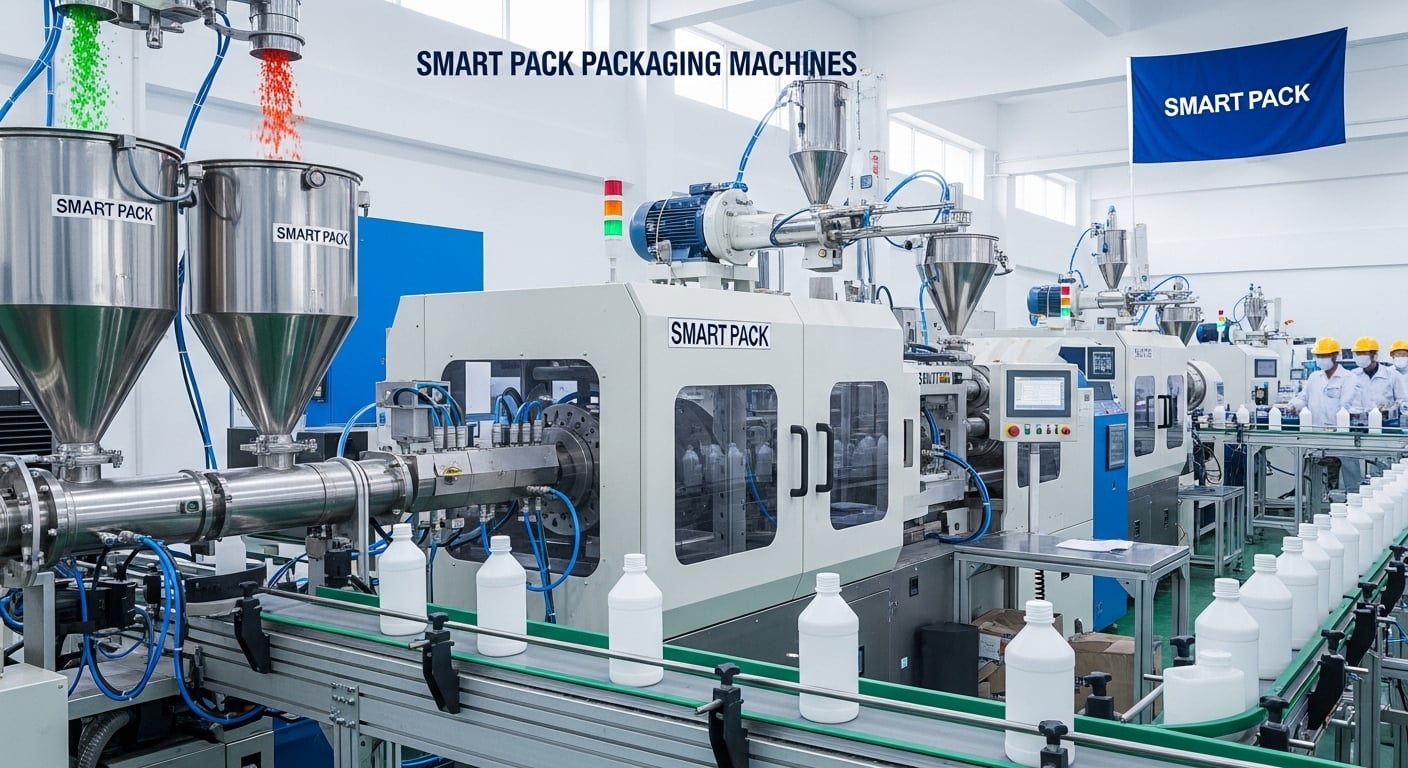
Commonly used for plastic bottles and containers. It is one of the most widely used methods in packaging-related industries.
Extrusion
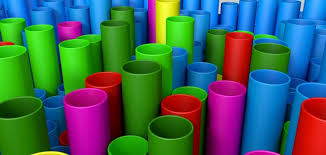
Produces continuous shapes such as pipes and plastic rolls. Known for steady operation and long-term production efficiency.
Compression Molding
Used for thick or specialized parts that require high durability and strength.
Plastic Forming Methods Overview
| Forming Method | Product Type | Key Advantage | Project Type |
|---|---|---|---|
| Injection Molding | Precision parts | Accuracy & consistency | Medium & large factories |
| Blow Molding | Containers | Fast production | Packaging industries |
| Extrusion | Pipes & rolls | Continuous output | Long-term projects |
| Compression | Thick products | High durability | Specialized industries |
The Role of Plastic Production Lines in Improving Efficiency
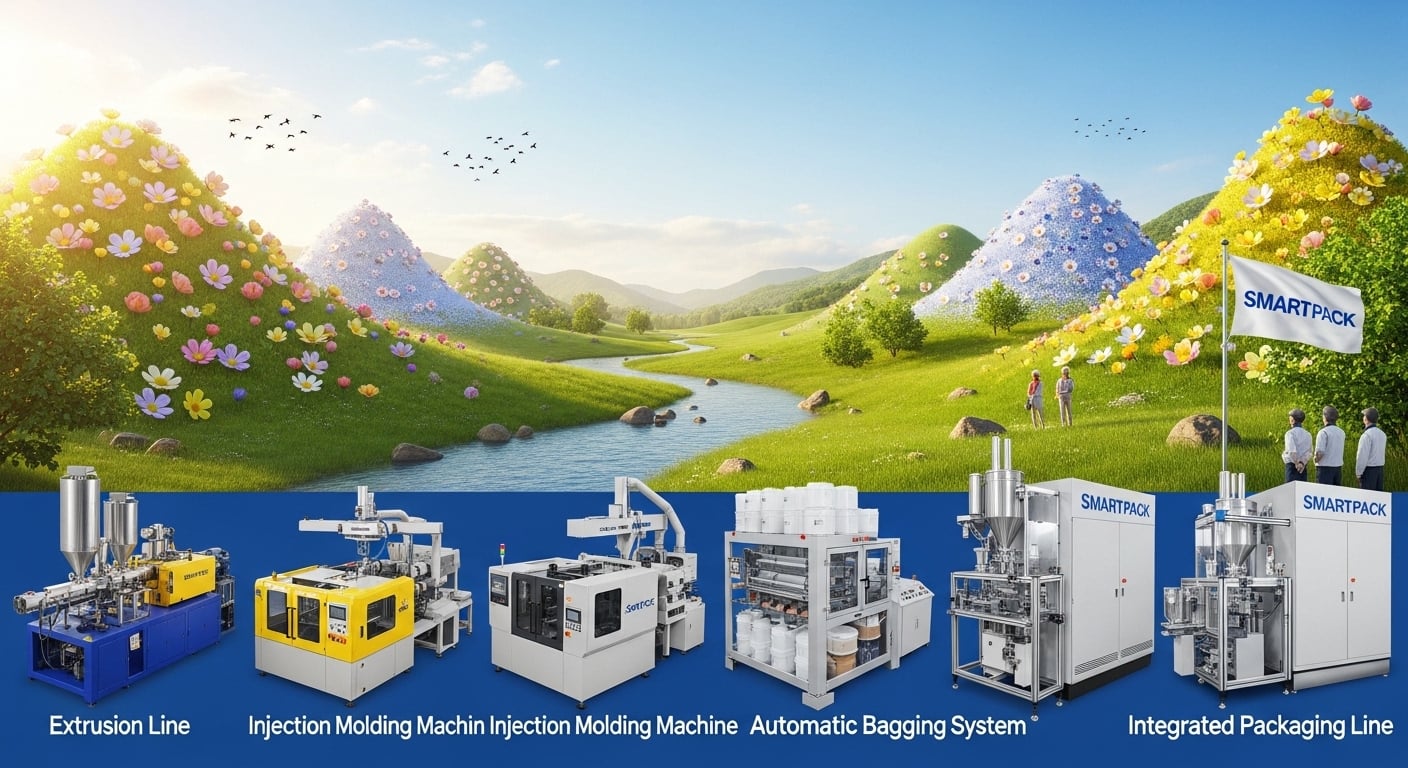
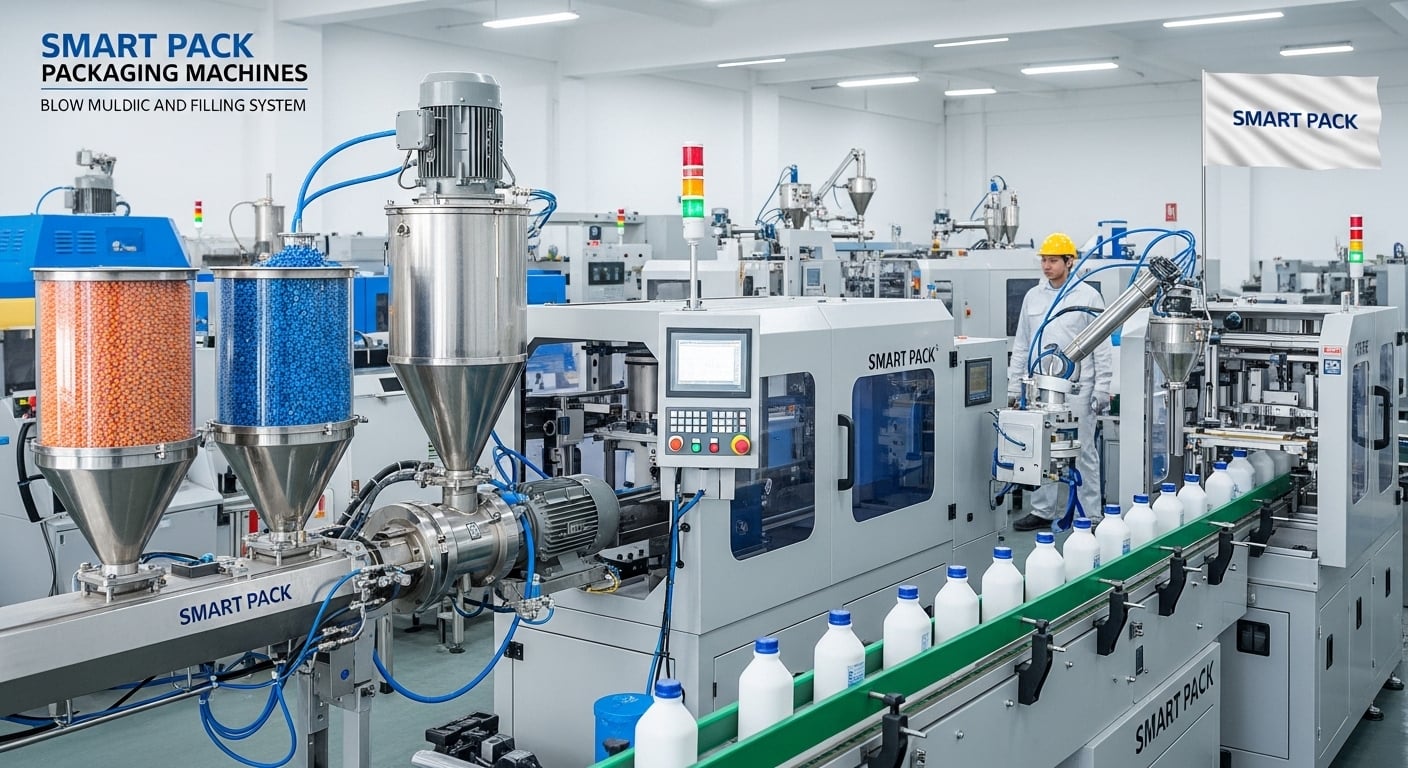
An integrated production line connects all stages into a smooth, unified system, reducing manual intervention, increasing production speed, and maintaining consistent quality.
The more carefully a production line is designed, the greater the ability to control costs and achieve stable profitability.
Suitable Filling Machines for Plastic Products
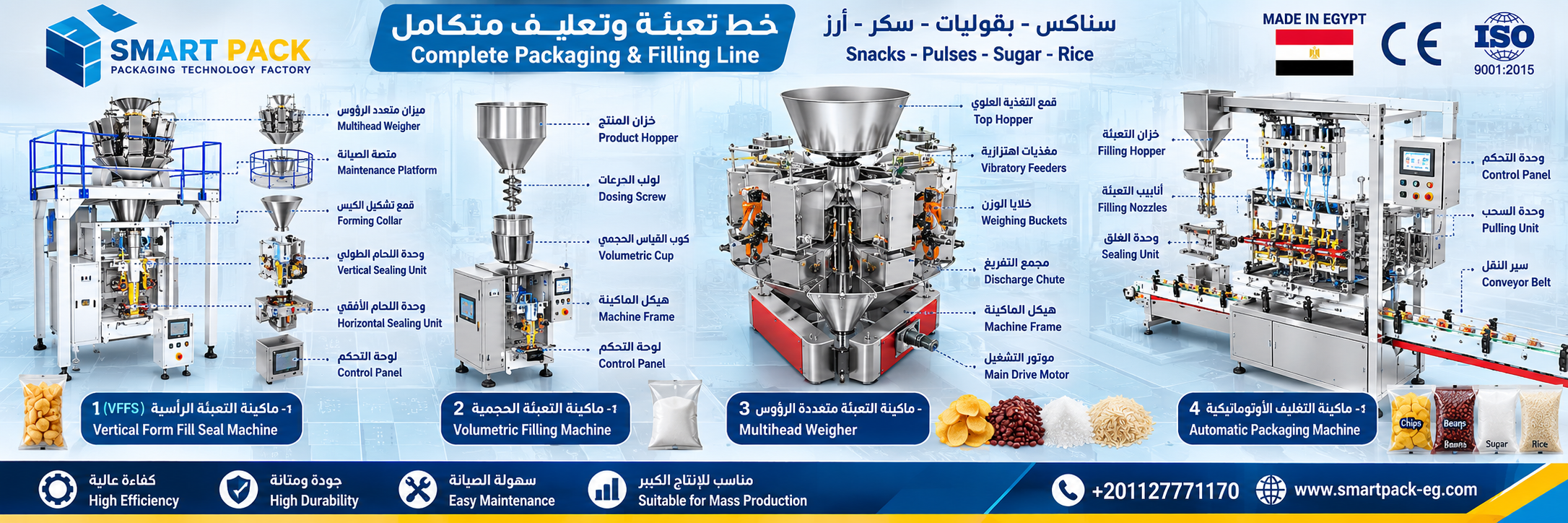
Filling machines are just as important as forming machines, especially for products sold or shipped in large quantities. They help organize quantities and simplify storage and transportation.
Filling Machine Types Overview
| Machine Type | Working Method | Product Type | Benefit |
|---|---|---|---|
| Counting Filling | Piece counting | Caps & small parts | High accuracy |
| Weight Filling | Total weight | Bulk products | Speed |
| Group Filling | Unit grouping | Containers | Organization |
Packaging Machines and Their Importance in Product Protection
Proper packaging protects plastic products from scratches and breakage, while giving them an organized appearance that simplifies handling and marketing—especially for shipping and export operations.
Packaging Machine Types
| Packaging Type | Usage | Advantage | Best For |
|---|---|---|---|
| Shrink Packaging | Product bundling | Protection | Distribution |
| Bag Packaging | Individual sales | Flexibility | Local market |
| Carton Packaging | Shipping | Safety | Export |
How to Choose the Right Production Line and Filling & Packaging Machines
The correct choice starts with defining the product type and target production capacity, then selecting machines that are upgradeable to allow future expansion without replacing the entire system.
At this stage, working with an experienced partner becomes a safety factor for the project—such as Smart Pack, which provides integrated solutions from project study to operation and technical support.
Practical Tips Before Investing in a Plastic Factory
-
Clearly define the product before purchasing machines
-
Avoid oversizing the production line at the beginning
-
Choose machines that are easy to maintain
-
Ensure availability of technical support
-
Plan for future expansion from the start
Frequently Asked Questions
What is the best forming method for new plastic projects?
It depends on the product type, but injection and blow molding are the most common for fast-growing projects.
Can multiple products run on the same production line?
Yes, if flexible machines are selected that allow mold or setting changes.
Is filling necessary for plastic products?
Yes, it simplifies storage and transportation and helps maintain product quality.
Why is packaging important in industrial projects?
Packaging protects the product and gives it a professional appearance that enhances marketability.
Why is it better to work with a specialized company?
Because it provides a comprehensive vision, reduces errors, and speeds up reaching actual production.
Conclusion
A successful plastic manufacturing project does not start with a machine—it starts with the right decision. When a project is built on a well-designed production line and suitable filling and packaging machines, the investment transforms into a real production system capable of stable growth and strong market competition.