 Admin
Admin Pasta Manufacturing: An Integrated Strategy from Milling to Filling and Packaging That Sets Your Product Apart
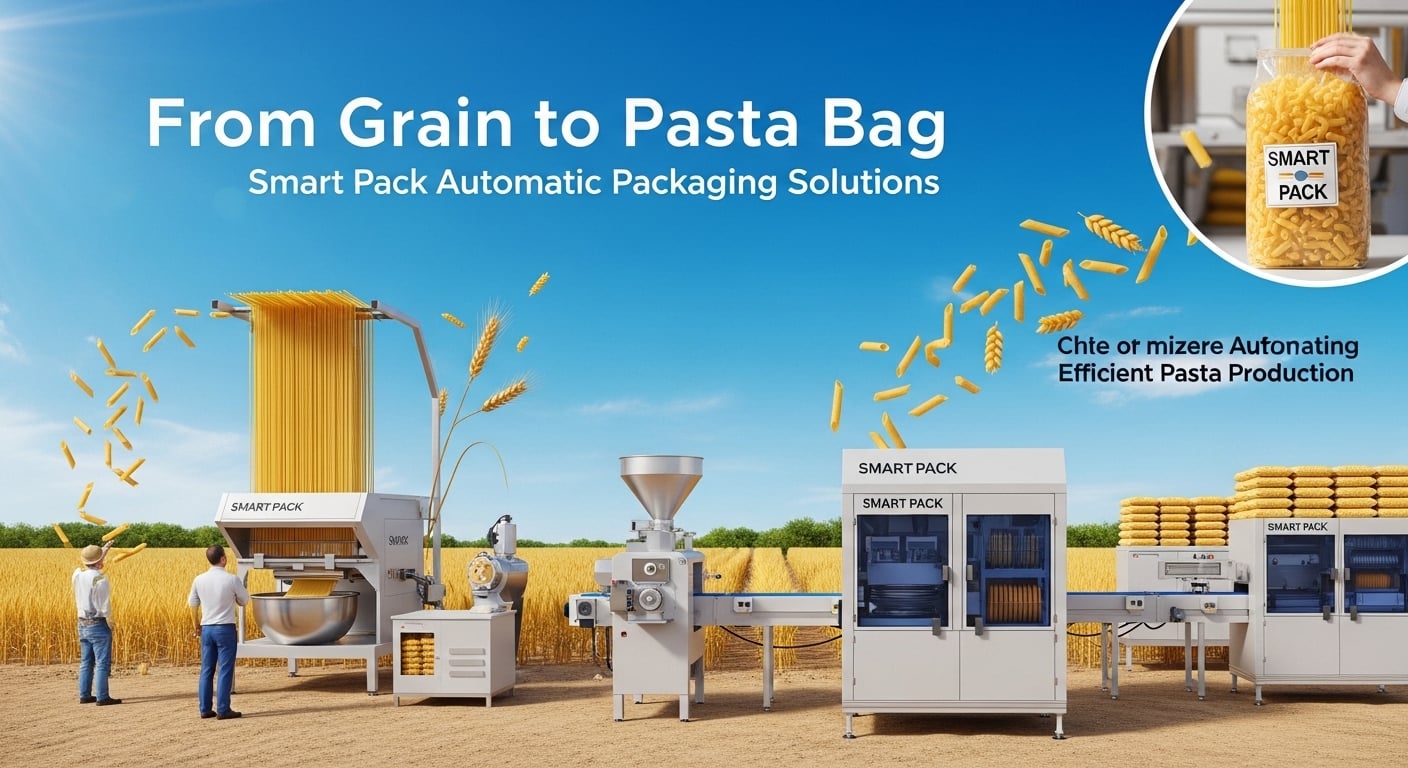
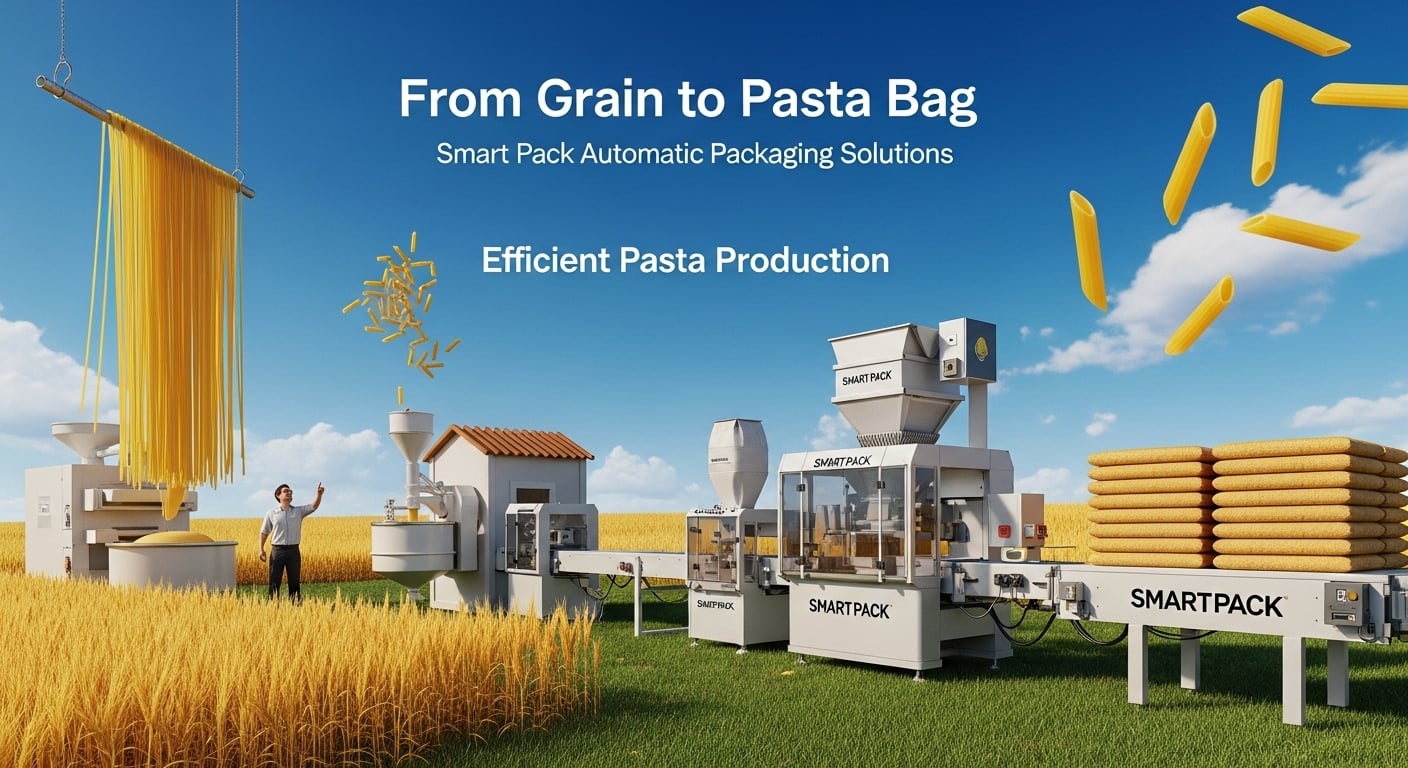
Achieving a strong position in the pasta market does not come from producing the product alone. It comes from designing a fully integrated production line that starts with raw materials and ends with a high-quality, retail-ready package.
Today’s pasta industry is not only about taste preferences—it requires precision in processing, strict control of dough quality, balanced drying, and professional filling and packaging. This integrated approach ensures strong competitiveness in both local and export markets.
In this professional guide, you will find everything you need to know about pasta manufacturing, production machinery, filling and packaging systems, and how to choose the best technical solutions.
What Is Pasta and Why Does It Remain a Core Food Industry Product?
Pasta is a type of dried dough product primarily made from durum wheat semolina and water. Depending on the product type, eggs or other ingredients may be added. Pasta is one of the most widely consumed grain-based foods worldwide due to its ease of cooking and versatility.
Pasta is used in:
-
Daily household meals
-
Restaurants and cafés
-
Ready-to-eat food industries
-
Local and export markets
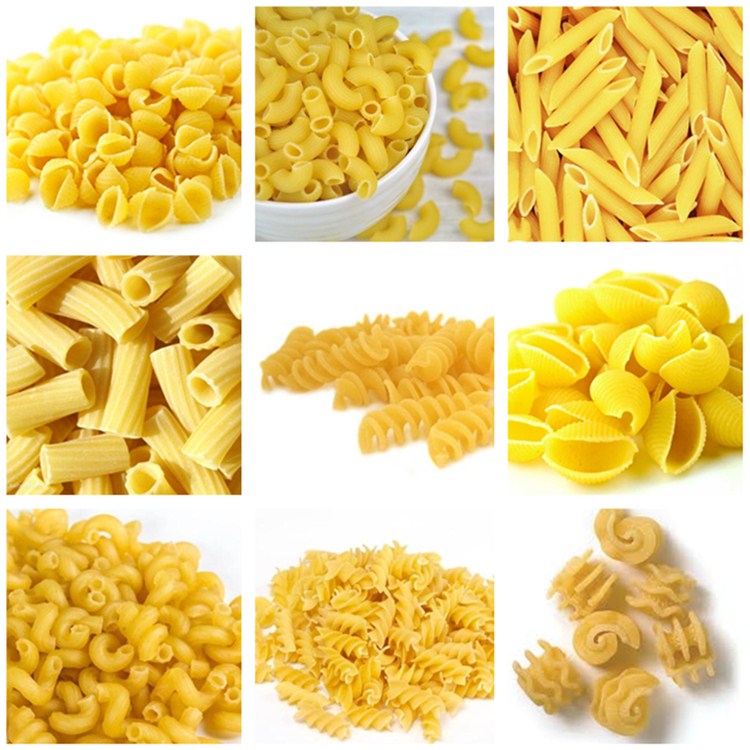
Despite the wide variety of shapes and sizes—from thin spaghetti to short-cut pasta—all pasta products share the same need for robust manufacturing standards and consistent quality.
The Importance of Designing a Professional Pasta Production Line
Entering the pasta manufacturing business requires more than a collection of separate machines. A production line is an integrated system that ensures a uniform final product in shape, weight, and quality—meeting the expectations of consumers, retailers, and distributors.
A well-designed pasta production line includes:
-
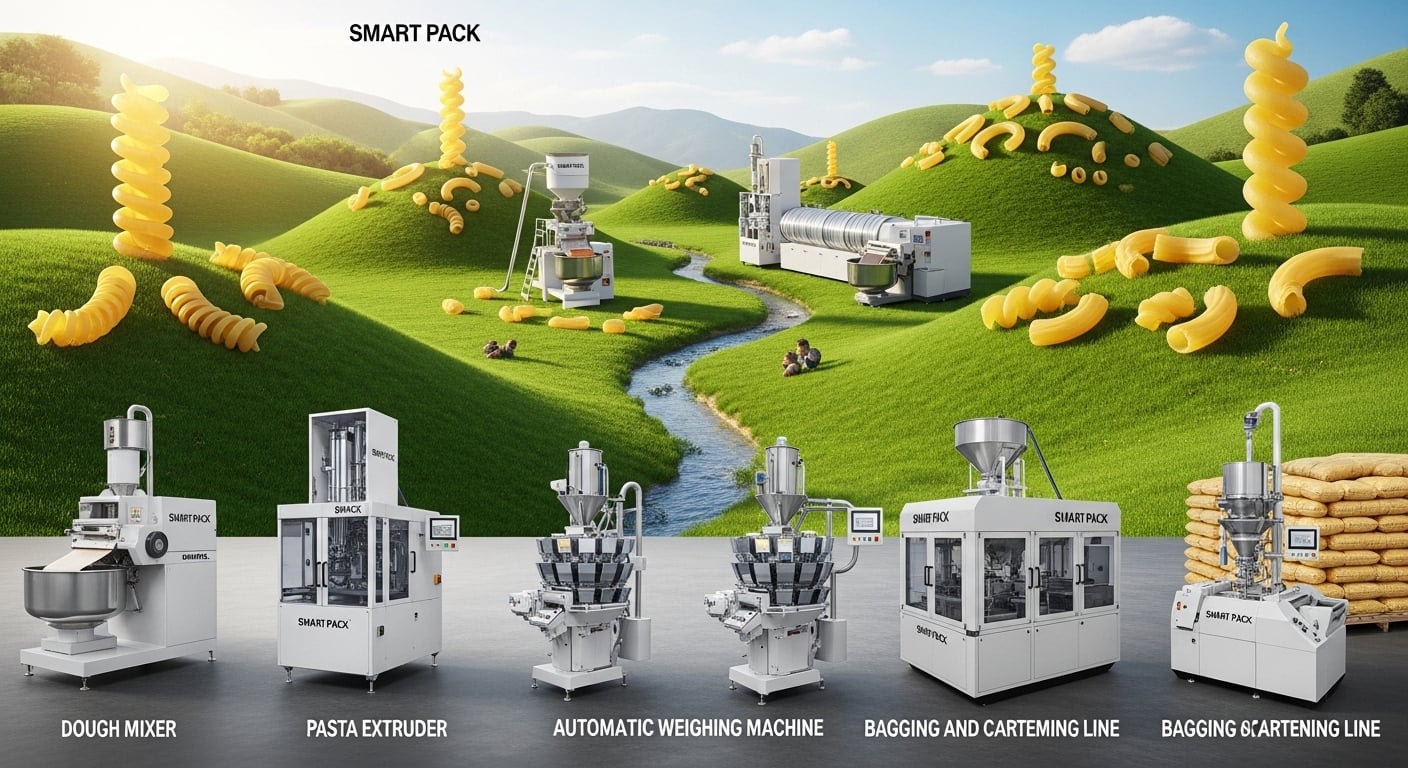
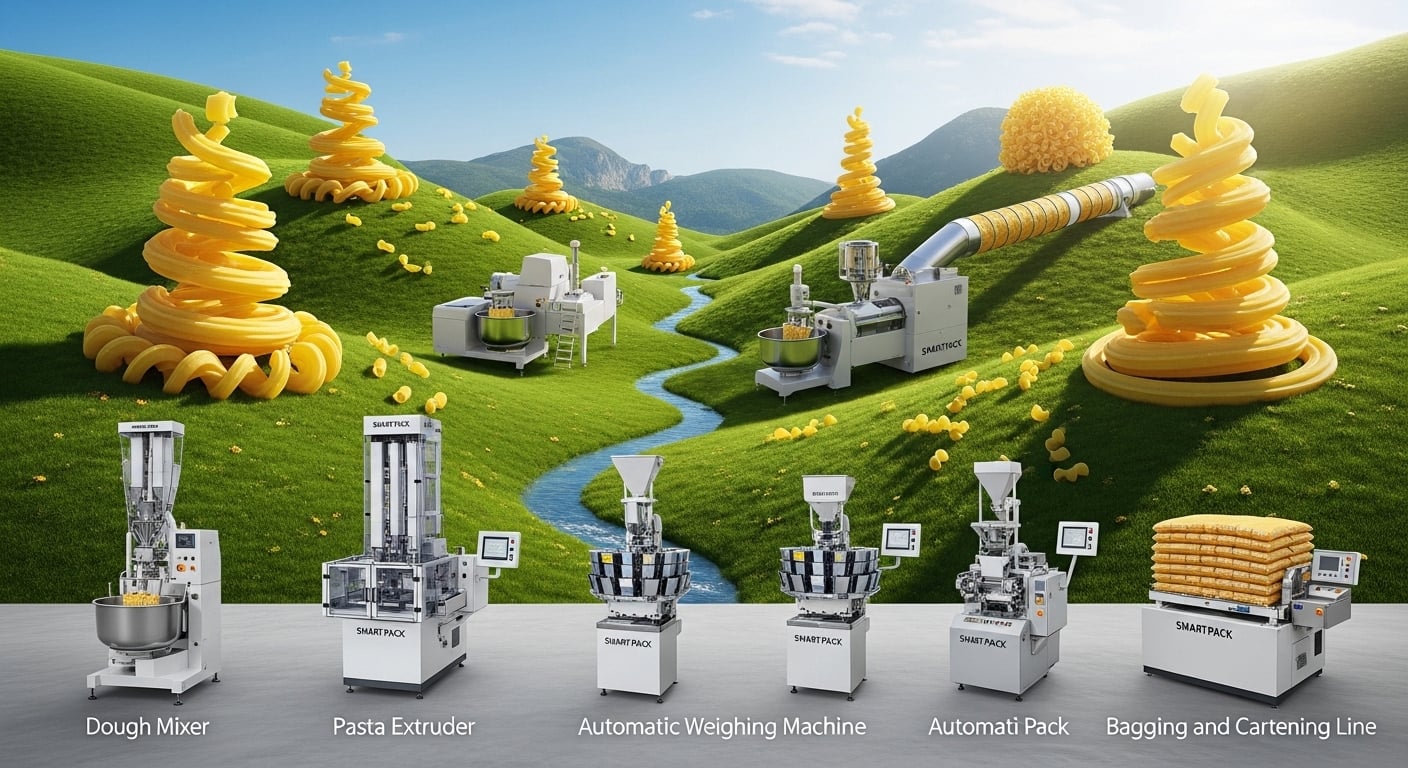
Dough mixing with precise ingredient ratios
-
Extrusion and shaping into multiple forms
-
Controlled drying to extend shelf life
-
Cooling and stabilization
-
Professional filling and shelf-ready packaging
Each stage requires high-quality equipment and expert technical design to achieve optimal results.
Pasta Manufacturing Steps in Factories: From Raw Material to Final Product
1. Mixing Semolina and Water to Prepare the Dough
Durum wheat semolina is mixed with water to form a homogeneous dough. Heavy-duty mechanical mixers ensure even blending without lumps, directly affecting dough quality and shaping performance.
2. Kneading and Pressing
The dough is then processed through kneading and pressing machines to achieve the ideal elastic texture. Modern lines often use continuous pressure technology to ensure consistent quality across all production batches.
3. Extrusion and Shaping
Extrusion machines shape the dough into different pasta forms such as spaghetti, short pasta, fusilli, and more. These machines use interchangeable dies to produce a wide range of shapes.
4. Drying
Drying is a critical stage. Improper drying can cause cracking or deformation. Automated drying ovens ensure balanced moisture removal, allowing dried pasta to maintain quality and low moisture content for long-term storage.
5. Cooling
After drying, pasta is cooled using air-cooling systems to stabilize structure and temperature before packaging, without affecting shape or texture.
Design Your Production Line Professionally and Start Producing High-Quality Pasta
An integrated pasta production and shaping system guarantees:
-
Consistent product quality from the first batch
-
Wide variety of product shapes and sizes
-
Reduced waste and higher production efficiency
-
Strong competitiveness in local and export markets
Pasta Manufacturing Machines: The Core of the Production Process
Mixing and Kneading Machines
Responsible for preparing uniform dough with minimal waste and improved processing characteristics.
Extrusion and Shaping Machines
Use interchangeable molds to produce various pasta shapes, defining product identity and quality.
Advanced Drying Ovens
Ensure efficient drying while preserving color, shape, and structure, extending shelf life.
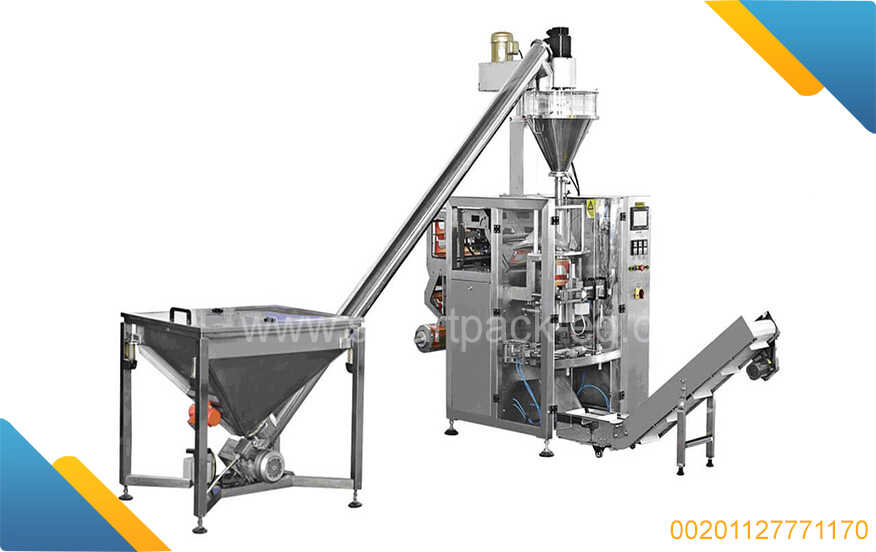
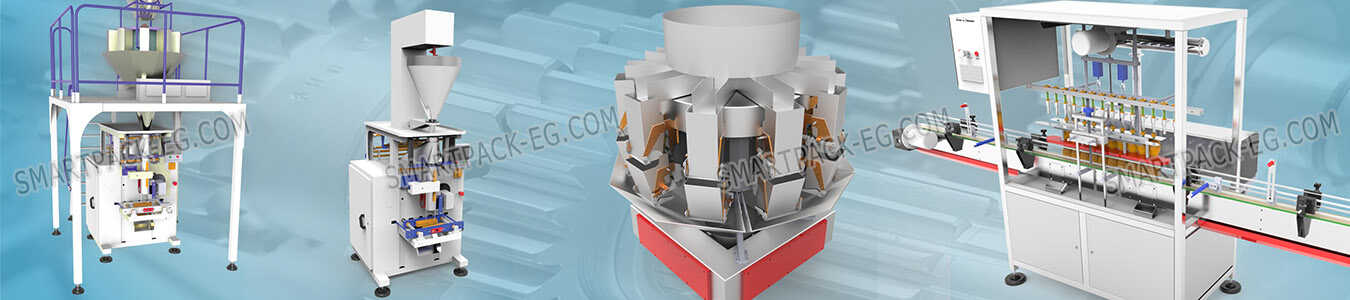
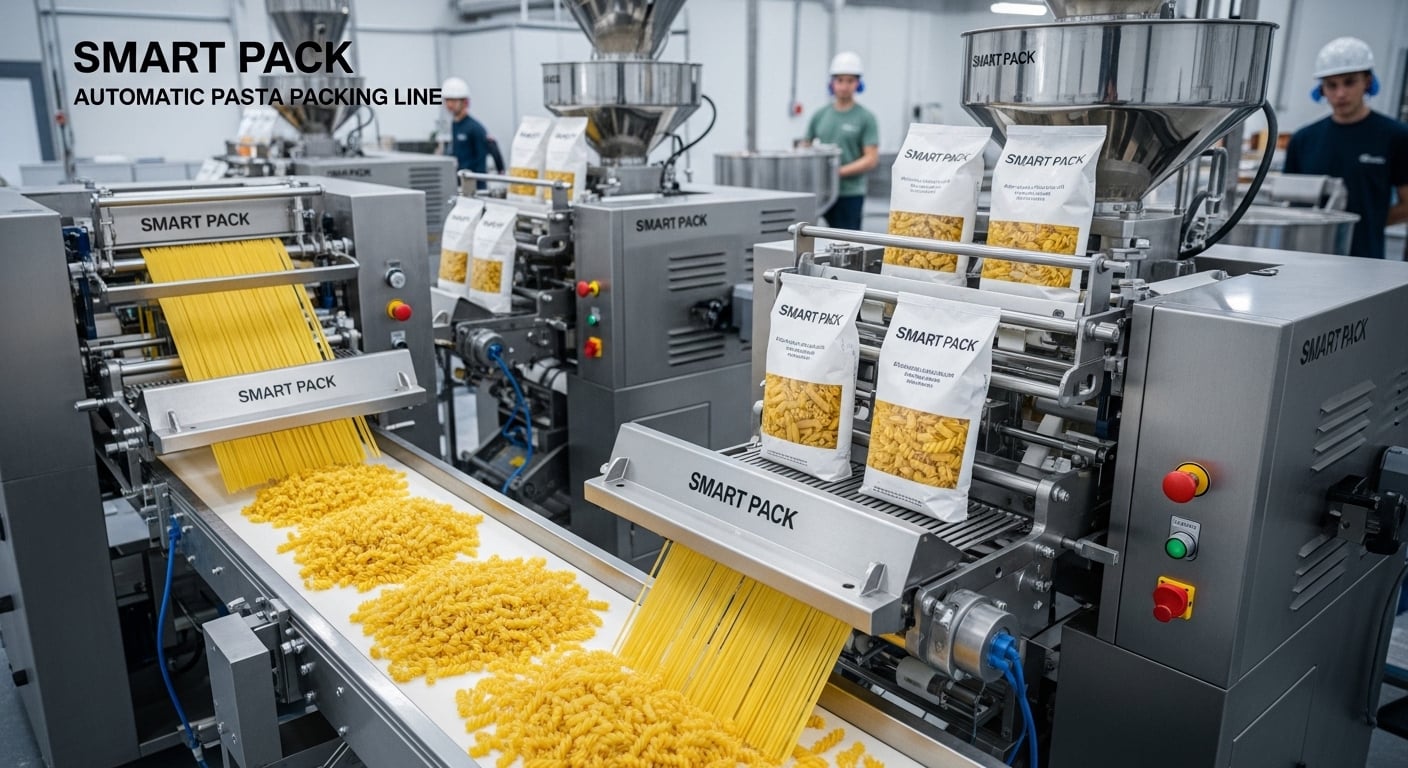
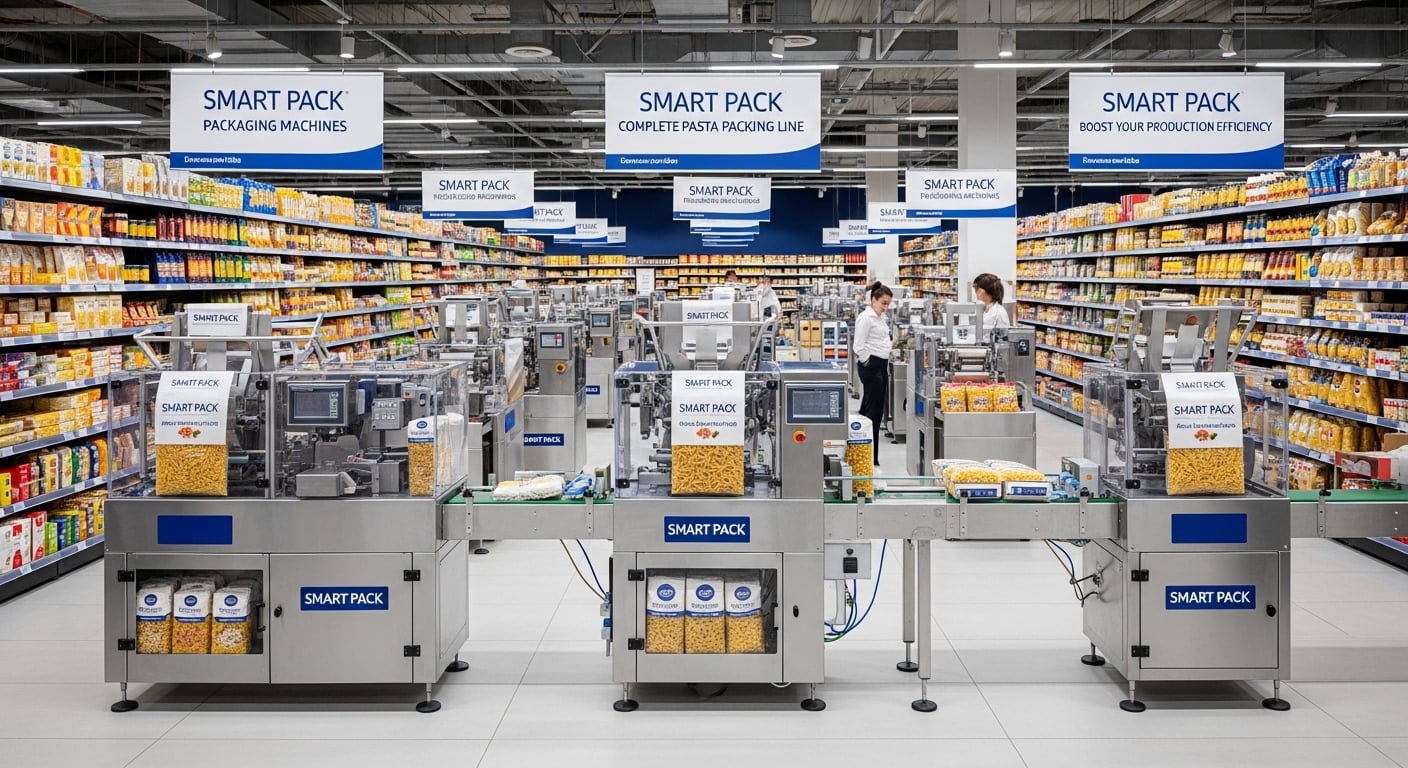
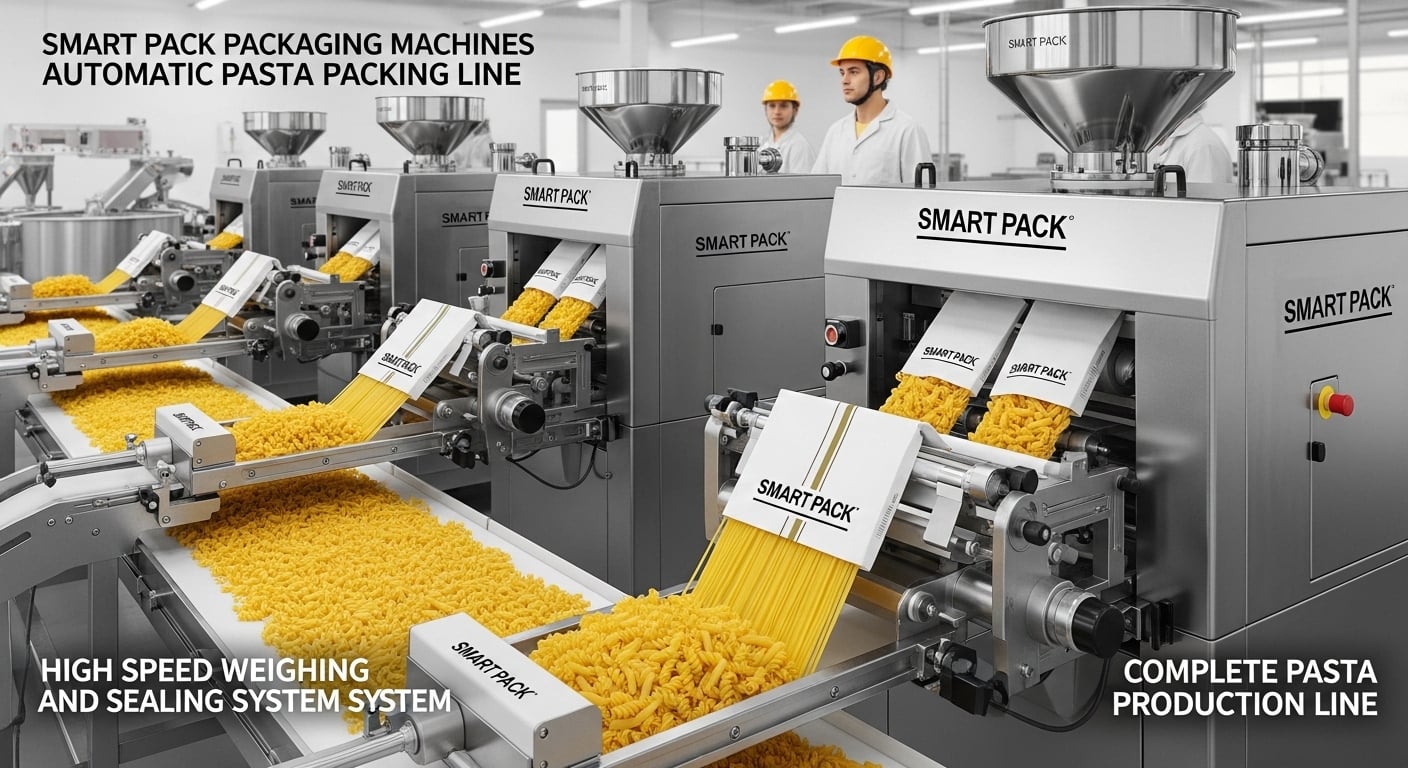
Filling and Packaging Machines After Production
Filling and packaging are not merely final steps; they determine how the product is perceived in the market.
Packaging ensures:
-
Protection from moisture
-
Accurate weight per package
-
Professional shelf appearance
-
Easier storage, transportation, and export
Manual vs Automated Pasta Packaging
| Factor | Manual Packaging | Automated Packaging |
|---|---|---|
| Production speed | Low | High |
| Weight accuracy | Inconsistent | Precise |
| Product waste | High | Low |
| Final appearance | Traditional | Professional |
| Scalability | Limited | Excellent |
How to Choose the Right Packaging Machine for Your Project
When selecting a packaging machine, consider:
-
Package type and size (paper bags, plastic bags, transparent packs)
-
Accuracy of the weighing system
-
Ease of maintenance
-
Compatibility with production line flow
-
Flexibility to change package formats
Professional Packaging Builds Market Trust and Increases Product Value
In the pasta market, shelf competition is intense. Well-packaged products achieve:
-
Faster sales turnover
-
Wider retail acceptance
-
Higher consumer trust
-
Greater export opportunities
Export Requirements for Pasta Products
To access international markets, your product must meet:
-
Consistent quality and specifications
-
Certified and accurate net weight
-
Clear labeling and product information
-
Secure sealing to protect quality during shipping
Choose the Right Industrial Partner to Elevate Your Production Line
Selecting a specialized company for pasta production line design and advanced filling and packaging systems is a strategic investment that saves time and reduces risk.
Working with Smart Pack ensures:
-
Customized solutions tailored to production capacity
-
Full integration between production and packaging stages
-
Professional technical support
-
Future scalability and system upgrades
Industrial Tips Before Launching a Pasta Factory Project
-
Start with a scalable production capacity aligned with your target market
-
Choose machines that allow easy shape and weight adjustments
-
Train operators on operation and maintenance
-
Define market requirements before selecting packaging formats
-
Plan for export early if targeting international markets
Start Your Pasta Project with a Professional Foundation
If you are planning to establish a new pasta factory or upgrade an existing line, designing an integrated production system and selecting the right filling and packaging machines are the foundation of success.
At Smart Pack, we provide complete pasta production line solutions with professional filling and packaging systems suitable for local and export markets.
Request a free technical consultation today to select the most efficient equipment at the best cost.
Start turning your vision of a successful pasta project into a profitable and sustainable industrial reality.
Frequently Asked Questions About Pasta Manufacturing and Packaging
What are the main raw materials for pasta production?
Durum wheat semolina and water, with optional eggs or additional ingredients depending on product type.
Can pasta shapes be changed on the same production line?
Yes, by changing extrusion dies, multiple shapes such as spaghetti and short pasta can be produced.
What is the shelf life of dried pasta?
Dried pasta can be stored for years in sealed packaging when kept in a cool, dry environment.