 Admin
Admin How to Save Time and Reduce Costs Using Modern Packaging Machines
Start your flour production project only after fully understanding how raw material quality directly impacts the final product value in both local and global markets.
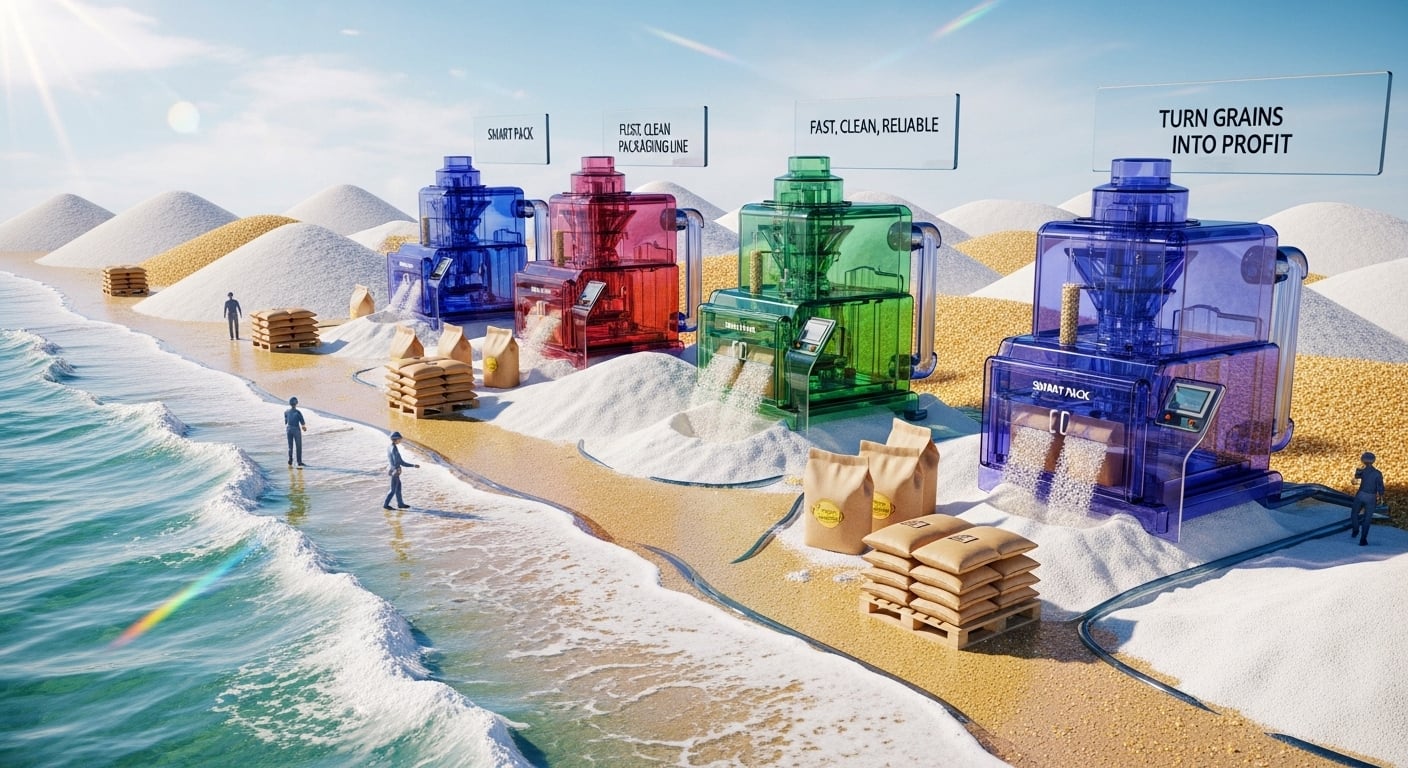
Moving from traditional grain milling to high-quality flour production requires an integrated production line that includes advanced milling equipment and modern, high-precision filling and packaging machines capable of handling different flour types and weight ranges.
In this comprehensive guide, we provide a complete industrial and marketing overview of flour types, milling stages, grains used, suitable packaging machines, and best practices to ensure product quality and project profitability.
What Is Flour and How Is It Produced from Different Grains?
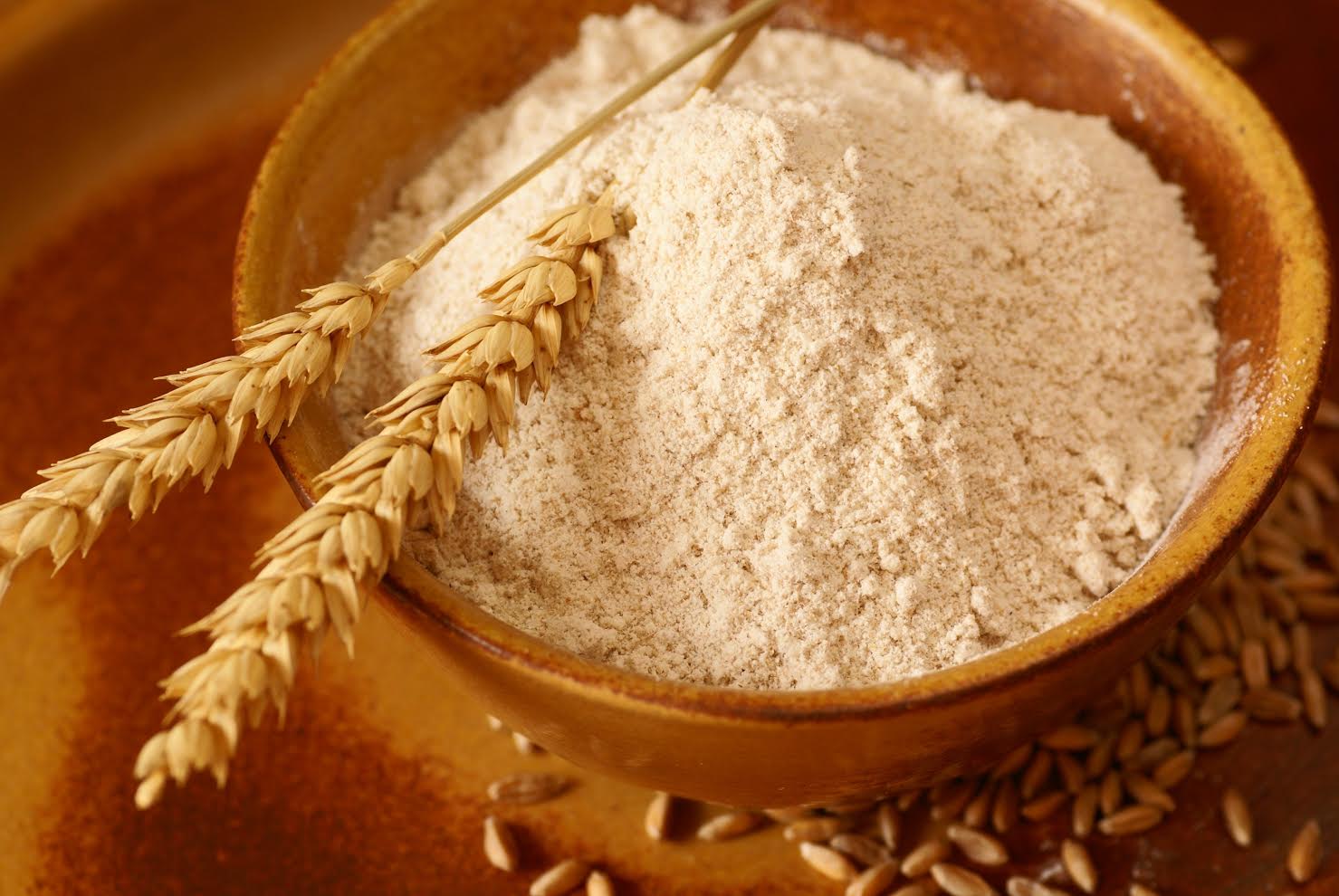
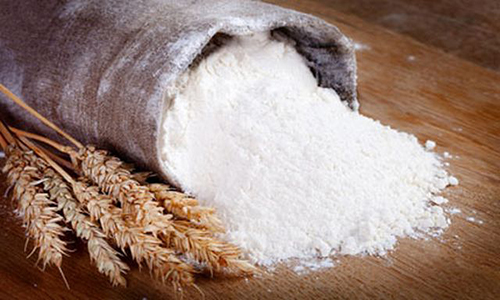
Flour is a fine powder typically produced by grinding grains. It is a core ingredient in bread, baked goods, cakes, pastries, and various food industries. Flour can be produced from multiple grains and starch sources, including:
-
Wheat (the most widely used worldwide for bread and bakery products)
-
Barley
-
Corn
-
Rice
-
Millet
-
Other starch-rich sources such as potatoes, peas, and beans
The importance of flour lies in its nutritional components—especially starch and proteins—which give dough its structure, elasticity, and fermentation ability, while also contributing to daily energy intake.
Grains Used in Milling and Common Flour Types
Different grains are milled depending on the intended application:
Wheat Flour
-
The most commonly used flour worldwide
-
Rich in proteins that contribute to gluten formation and dough elasticity
Corn Flour
-
Used in traditional breads and specialty food products
-
Provides distinct flavor but less elasticity than wheat flour
Barley Flour
-
Used in niche products or blended with wheat flour to enhance nutritional value
Rice Flour and Other Starches
-
Widely used in many cuisines
-
Essential for gluten-free bakery and food products
All grains undergo cleaning, sorting, and sometimes conditioning before entering the milling process.
Why Is Milling Important in Flour Production?
Milling is the essential process that converts grains into usable flour. Its main objectives are to:
-
Separate the endosperm (starch-rich core) from the bran and germ
-
Improve water absorption and dough uniformity
-
Achieve different fineness levels based on final product requirements (bread flour, cake flour, etc.)
Modern milling relies on roller mills, dry milling systems, and multi-stage separation technologies to ensure consistency and high extraction rates.
Grain Preparation Stages Before Milling
To achieve premium-quality flour, grains pass through several key stages:
1. Receiving and Initial Inspection
Grains are inspected for moisture content, size consistency, impurities, and defects before entering production.
2. Cleaning and Sorting
Advanced cleaning systems such as destoners, vibrating sieves, and air cleaners remove dust, stones, and unwanted materials.
3. Milling and Fractionation
Multi-stage roller mills are used to reach the desired fineness, supported by vibrating sifters and grading systems to maintain quality at every stage.
Increase Product Value Through Precision — From Milling to Final Packaging
Shifting from traditional milling to an advanced production line gives you a strong competitive advantage. The real added value lies in:
-
Improving flour quality
-
Ensuring batch-to-batch consistency
-
Extending shelf life and reducing waste
-
Delivering a product ready for immediate packaging and marketing
Flour Packaging Machines: The Key to Project Success
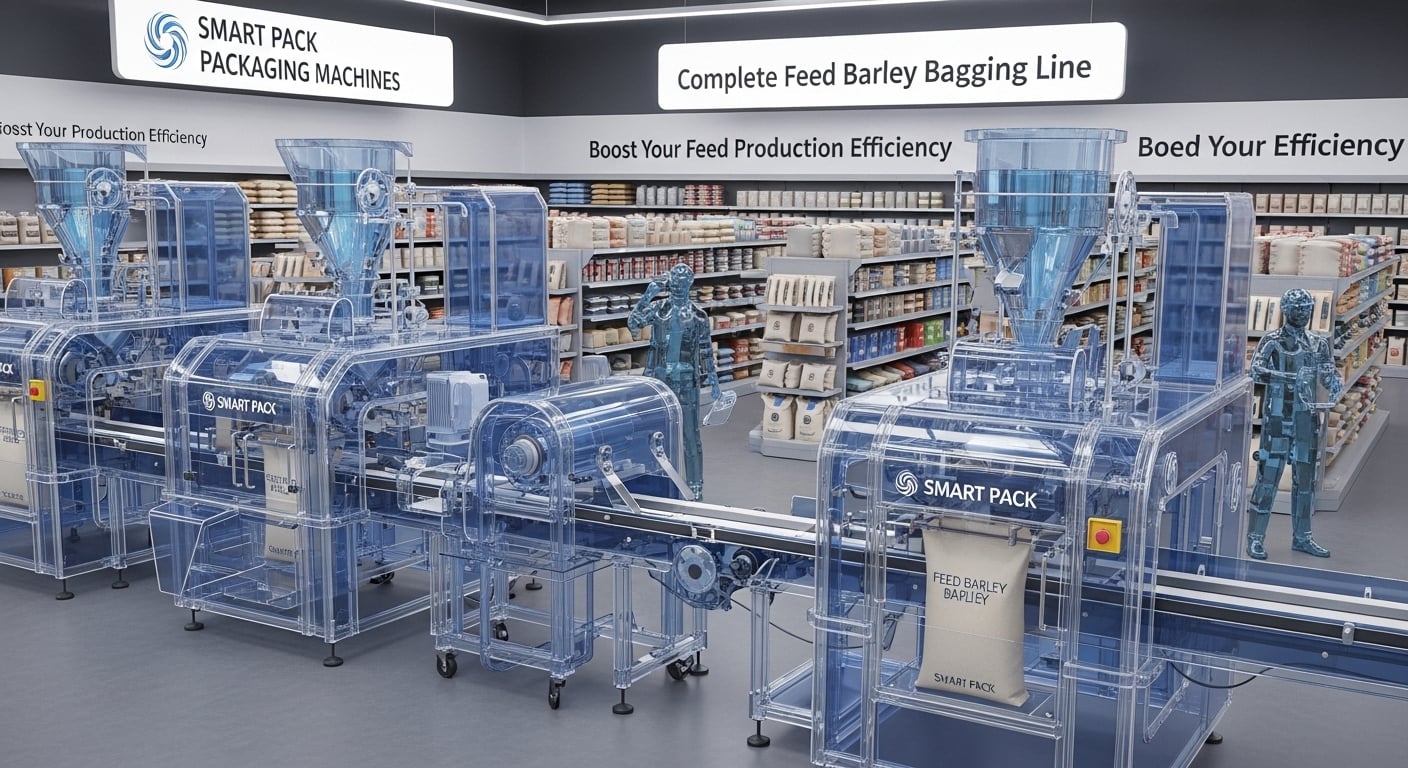
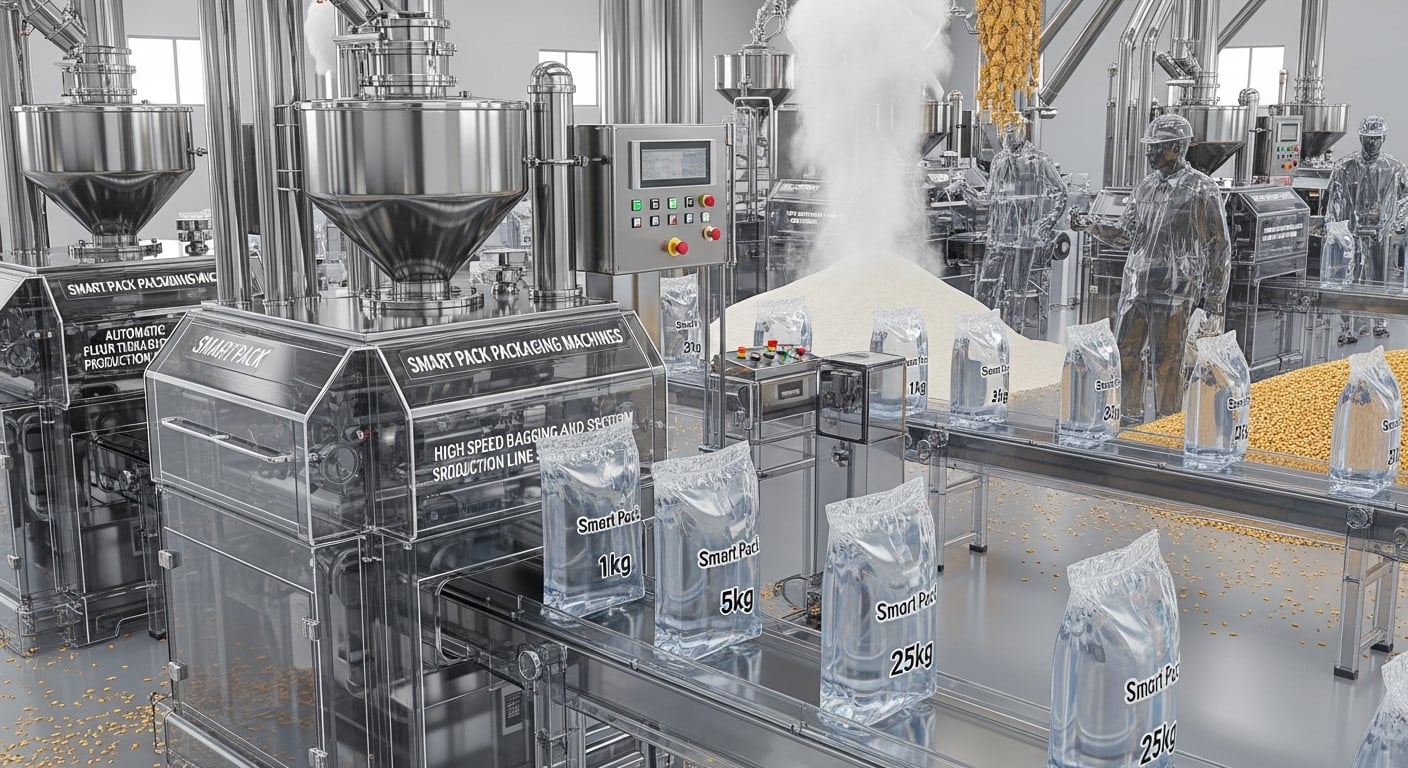
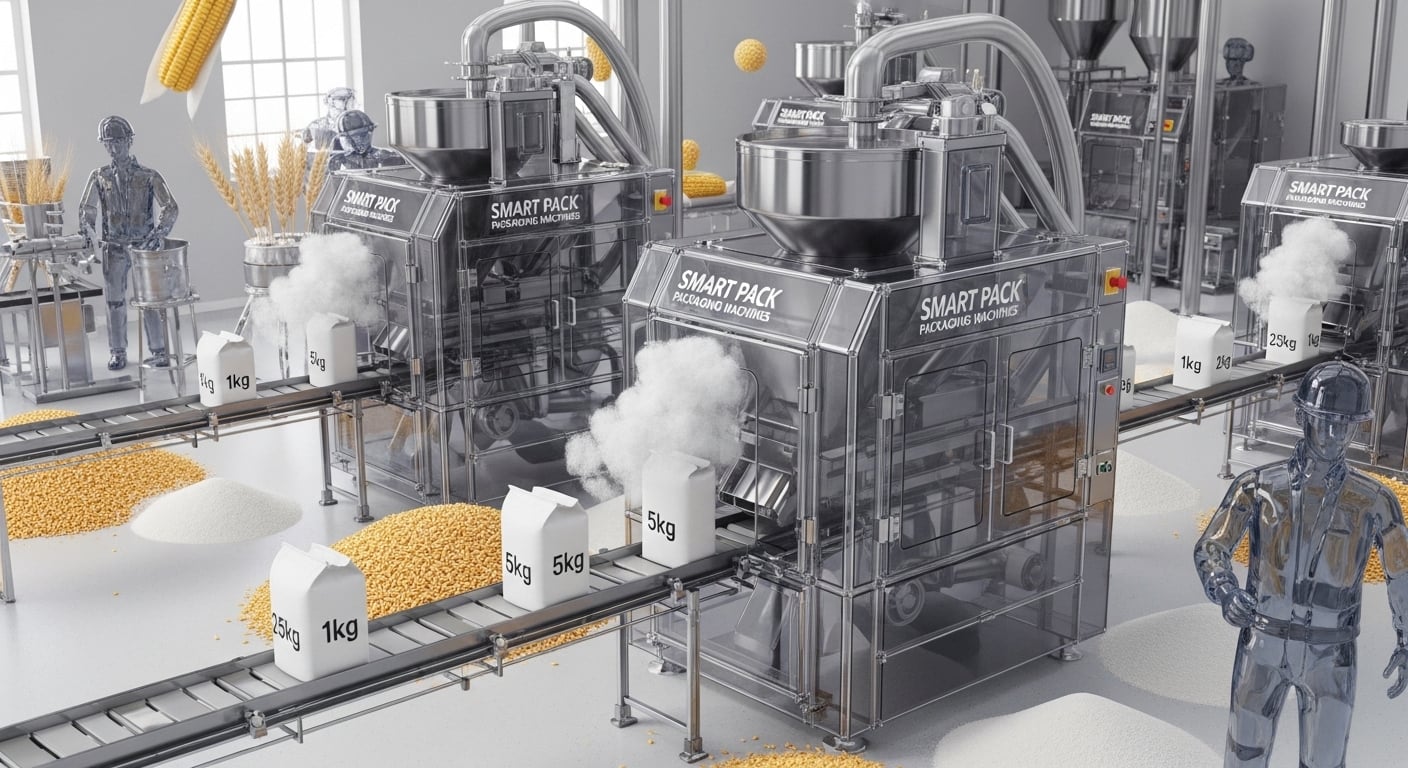
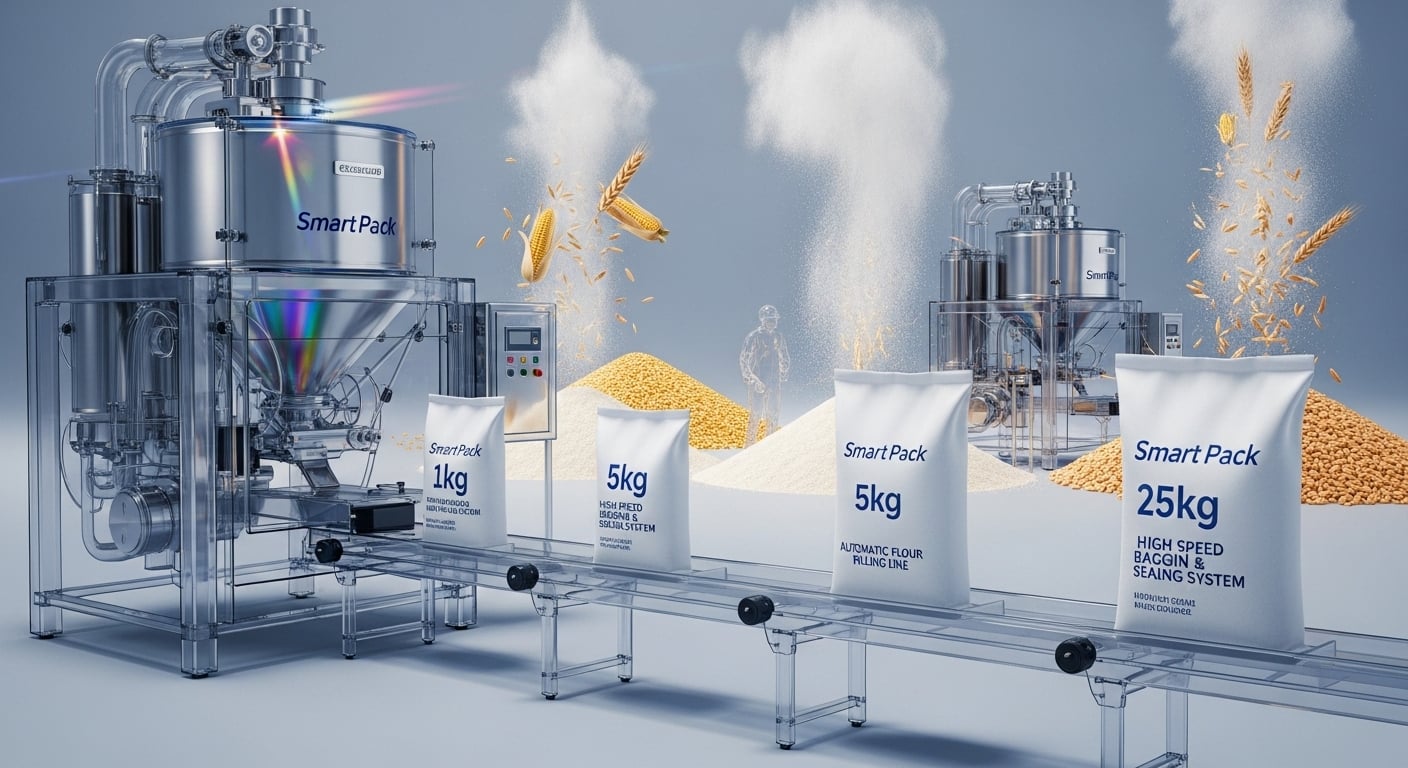
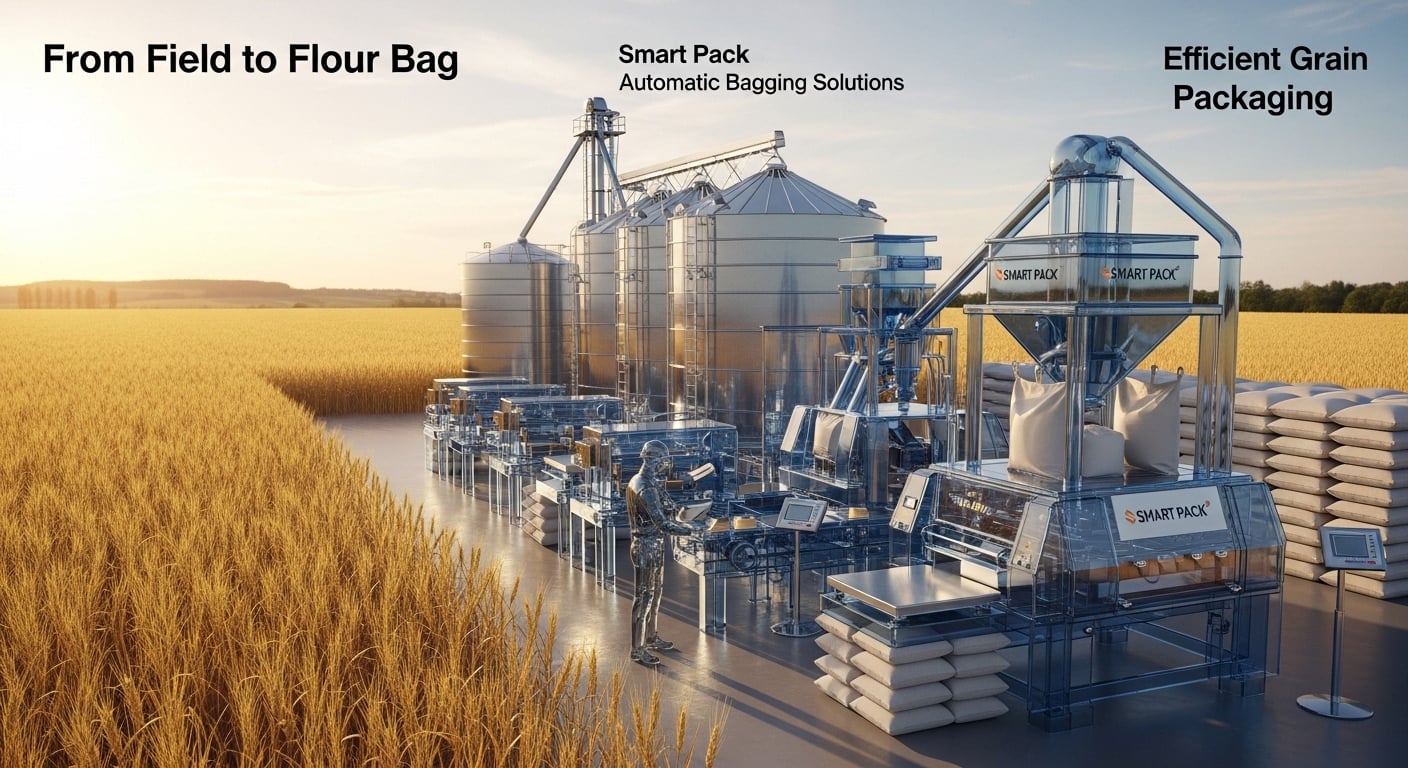
Once uniform, high-quality flour is produced, modern filling and packaging machines ensure that the product reaches consumers in a safe, attractive, and compliant form.
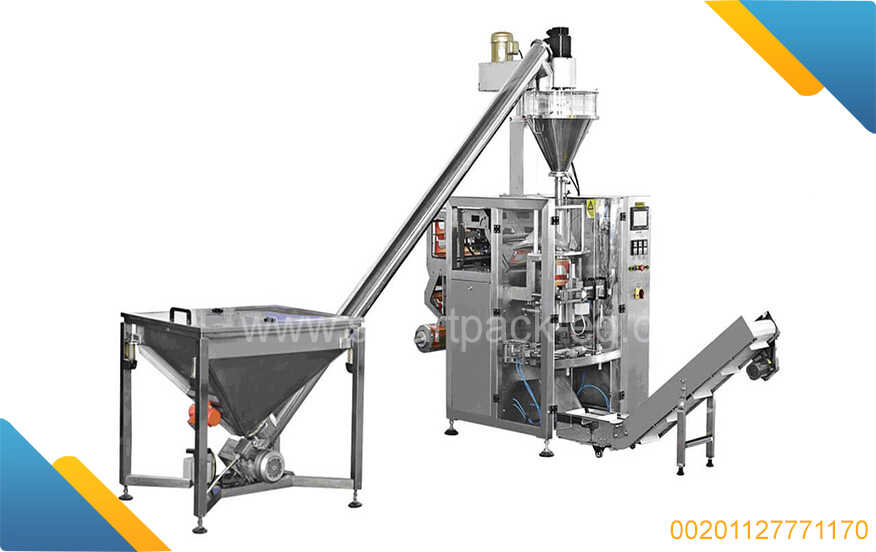
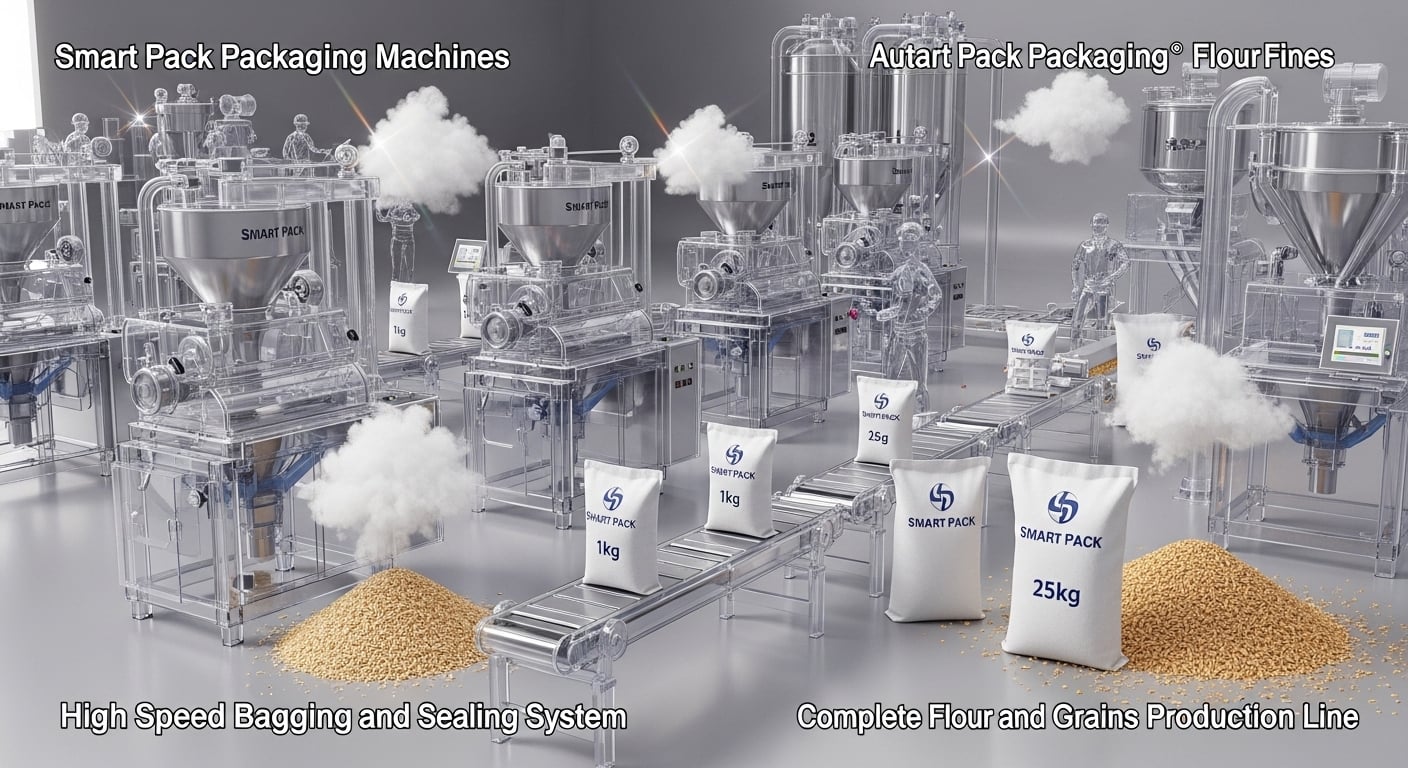
Modern flour packaging systems include:
-
High-precision electronic weighing systems
-
Volumetric filling machines
-
Vertical bagging systems for 1–50 kg bags
-
Secure sealing systems to protect against moisture and air
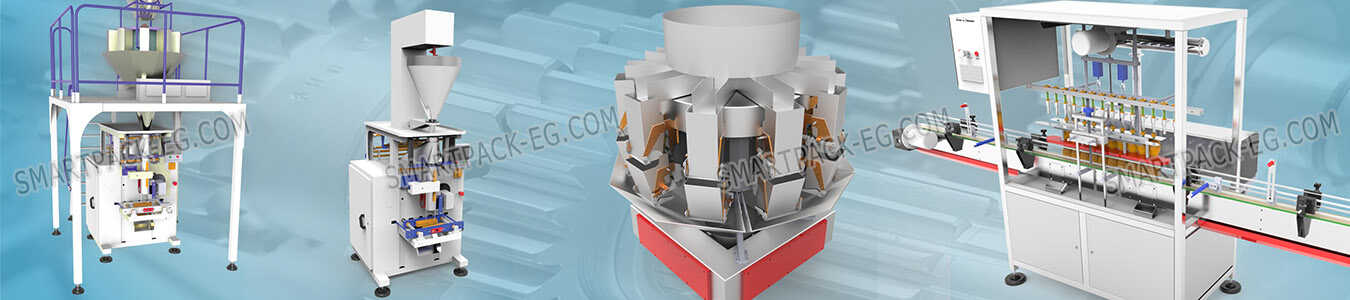
Types of Flour and Grain Packaging Machines for Your Project
Electronic Weighing Filling Machines
-
Ideal for medium-scale projects
-
High weight accuracy
-
Suitable for 1–25 kg bags
Fully Automatic Packaging Machines
-
Designed for large factories
-
High-speed operation across multiple weight ranges
-
Reduced reliance on manual labor
Multi-Head Filling Systems
-
Suitable for very high production volumes
-
Significantly reduces filling time
-
Compatible with fully integrated production lines
Manual vs. Automated Flour Packaging Comparison
| Comparison Aspect | Manual Packaging | Automated Packaging |
|---|---|---|
| Production Speed | Limited | Very high |
| Weight Accuracy | Inconsistent | Consistent & repeatable |
| Material Loss | High | Low |
| Final Quality | Less uniform | Professional & standardized |
| Scalability | Weak | Excellent |
How to Choose the Right Packaging Machine for Your Flour Project
-
Define your expected daily production capacity
-
Determine sales weight formats (1 kg, 5 kg, 25 kg, etc.)
-
Consider export requirements such as outer packaging and labeling
-
Test weight accuracy and sealing quality before final purchase
Professional Packaging Gives You a Competitive Advantage Locally and Globally
Packaging is not just about placing flour in a bag—it is about creating added value that attracts distributors and retailers, protects against moisture and air, extends shelf life, and enables access to export markets.
Expert Tips Before Purchasing Packaging Machines
-
Request a full technical consultation and production capacity analysis
-
Verify spare parts availability and after-sales support
-
Choose machines with easy weight adjustment
-
Prioritize ease of operation and maintenance to reduce downtime
Start Your Flour Project with a Well-Planned Production Strategy
If you aim to launch a flour milling and packaging project—or upgrade your existing line—choosing the right equipment is your most impactful investment decision.
At Smart Pack, we provide advanced filling and packaging machines backed by professional technical support, tailored to both local and export market requirements.
Get a free technical consultation today to identify the best packaging solution for your flour weights and production line.
Start now and transform milling and packaging operations into a modern production system that guarantees product quality and customer trust.
Frequently Asked Questions About Flour Milling and Packaging
What is the difference between flour packaging machines and grain packaging machines?
Flour machines use specialized weight and control systems designed for powder products, unlike grain machines made for granular materials.
Can the same machine handle multiple weights?
Yes, modern packaging machines allow easy adjustment for different weight formats.
What are the key export packaging requirements for flour?
Moisture-resistant packaging with clear labeling (weight, production date, country of origin, and quality specifications).