 Admin
Admin Achieving High-Quality Sugar Products: From Source Selection to Smart Packaging
Achieving high-quality sugar products starts with selecting the right source and accurately defining sugar types.
Choosing the appropriate machinery and proper packaging methods significantly enhances your product’s value in the market.
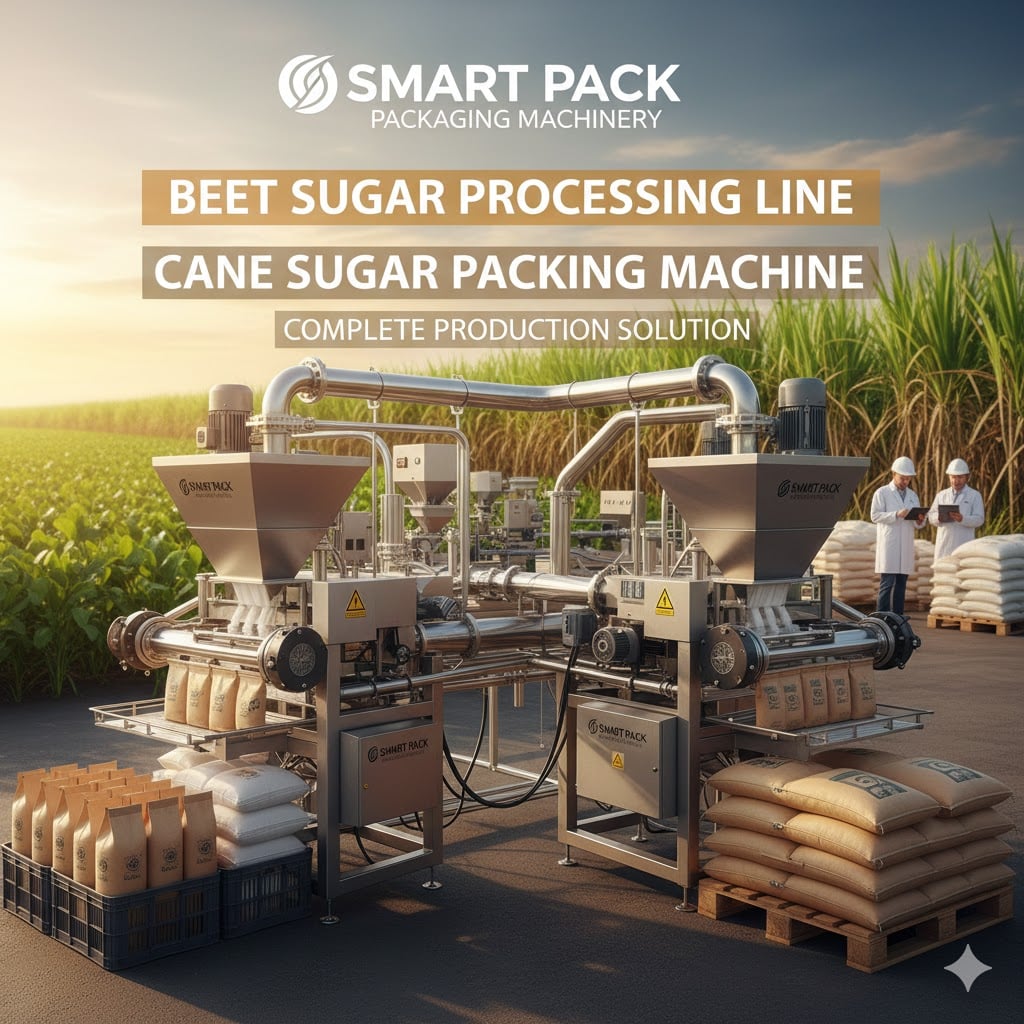
Organizing the production line from raw materials to final packaging reduces waste and improves overall operational efficiency.
Sugar is one of the most essential food ingredients used across multiple industries such as confectionery, bakery products, beverages, and canned foods. To ensure consistent quality and stable performance, manufacturers must understand the nature of sugar, its sources, and select the right filling and packaging systems.
In this article, we explain in detail:
-
Types of sugar and their main sources
-
Sugar manufacturing stages in factories
-
Filling and packaging machines used in the sugar industry
-
Proper sugar packaging methods
-
Practical tips for choosing the right machinery
-
A concise guide to working with a trusted manufacturer
Types of Sugar and Their Main Sources
White Sugar
Produced from sugarcane or sugar beet through refining and purification processes. It is widely used in household and commercial food applications.
Brown Sugar
Commonly used in bakery and confectionery industries due to its distinctive flavor and higher moisture content compared to white sugar.
Liquid Sugar
Used in beverages and food solutions that require ready-to-use sweetening without additional dissolving.
Main Sugar Sources
-
Sugarcane: Predominantly grown in tropical regions and contains a high sucrose content.
-
Sugar Beet: Cultivated in moderate climates and provides high-purity sucrose.
Sugar Manufacturing Stages in Industrial Plants
The core stages of sugar production include:
Juice Extraction
Crushing sugarcane or sugar beet to extract raw juice.
Juice Concentration
Removing a large portion of water to obtain thick syrup.
Crystallization and Separation
Converting concentrated syrup into sugar crystals and separating them.
Refining
Purifying sugar crystals to obtain clean, white sugar.
Each stage requires specialized equipment and directly impacts the quality of the final product.
Filling and Packaging Machines in the Sugar Industry
Packaging machinery varies based on sugar type and production capacity:
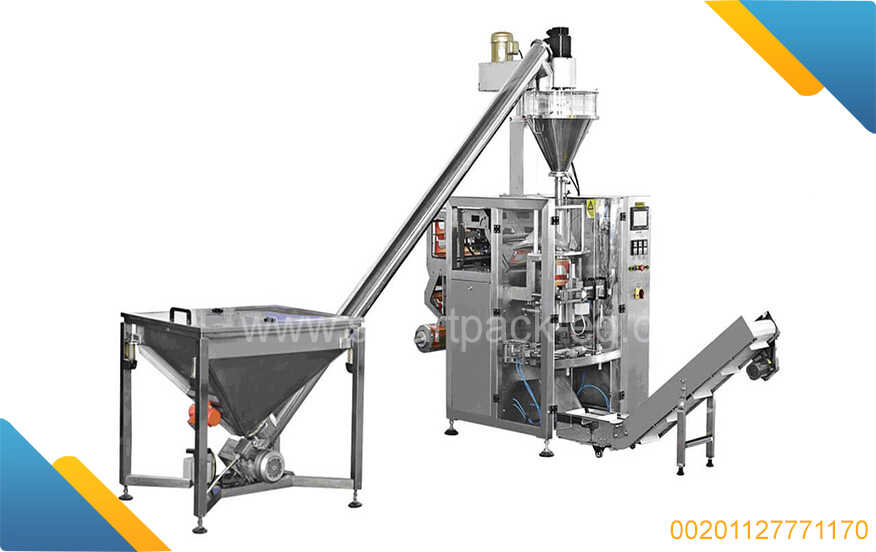
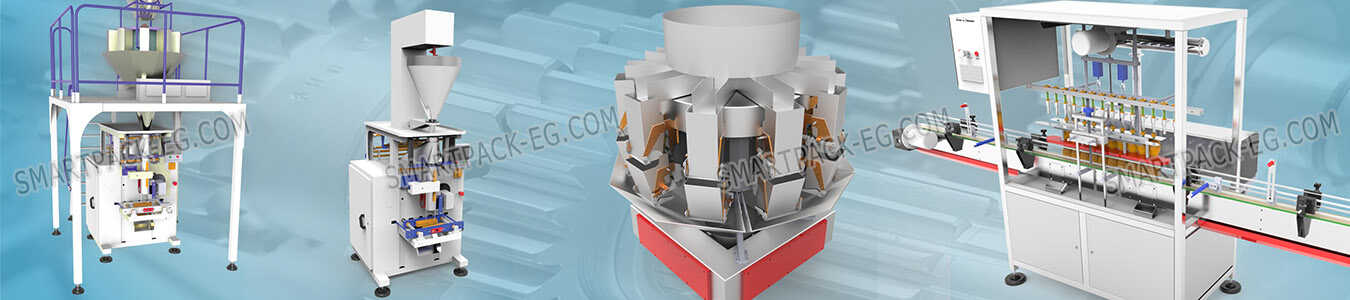
Filling Machines
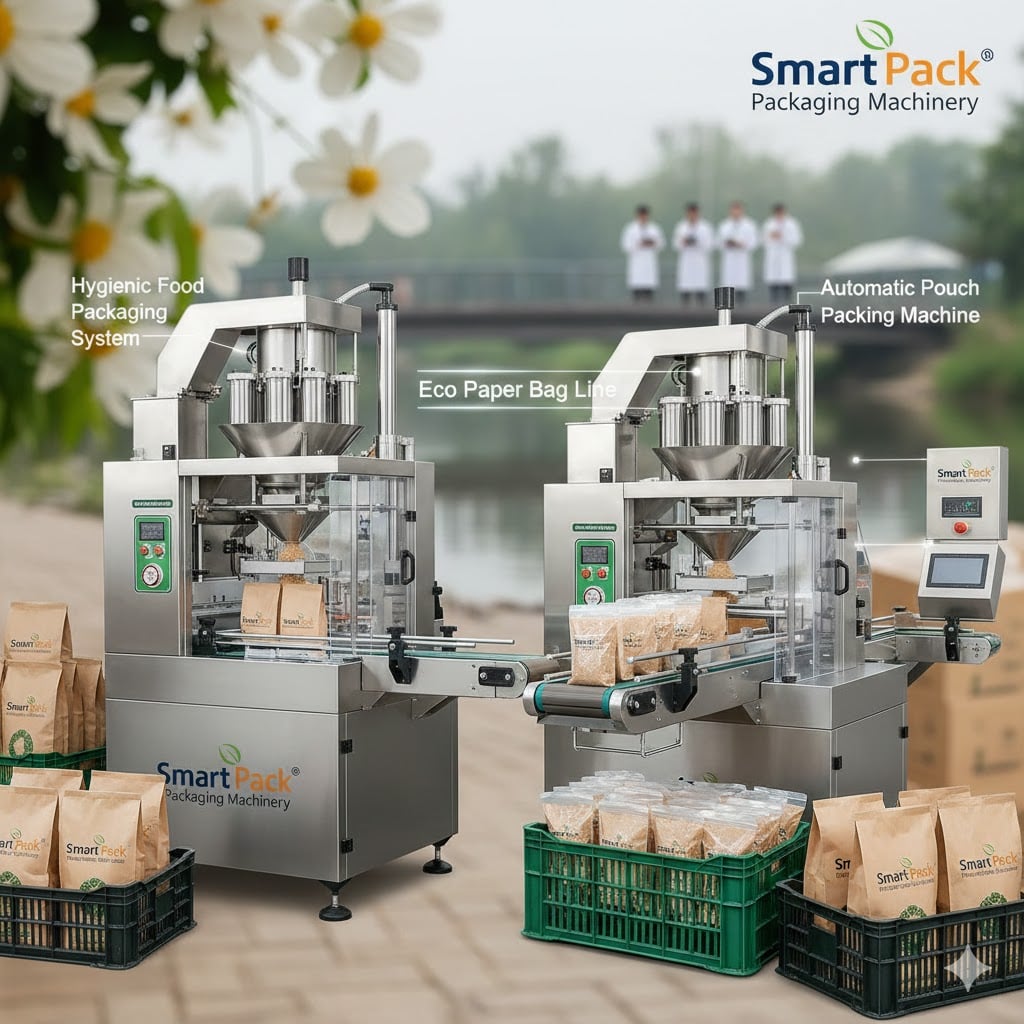
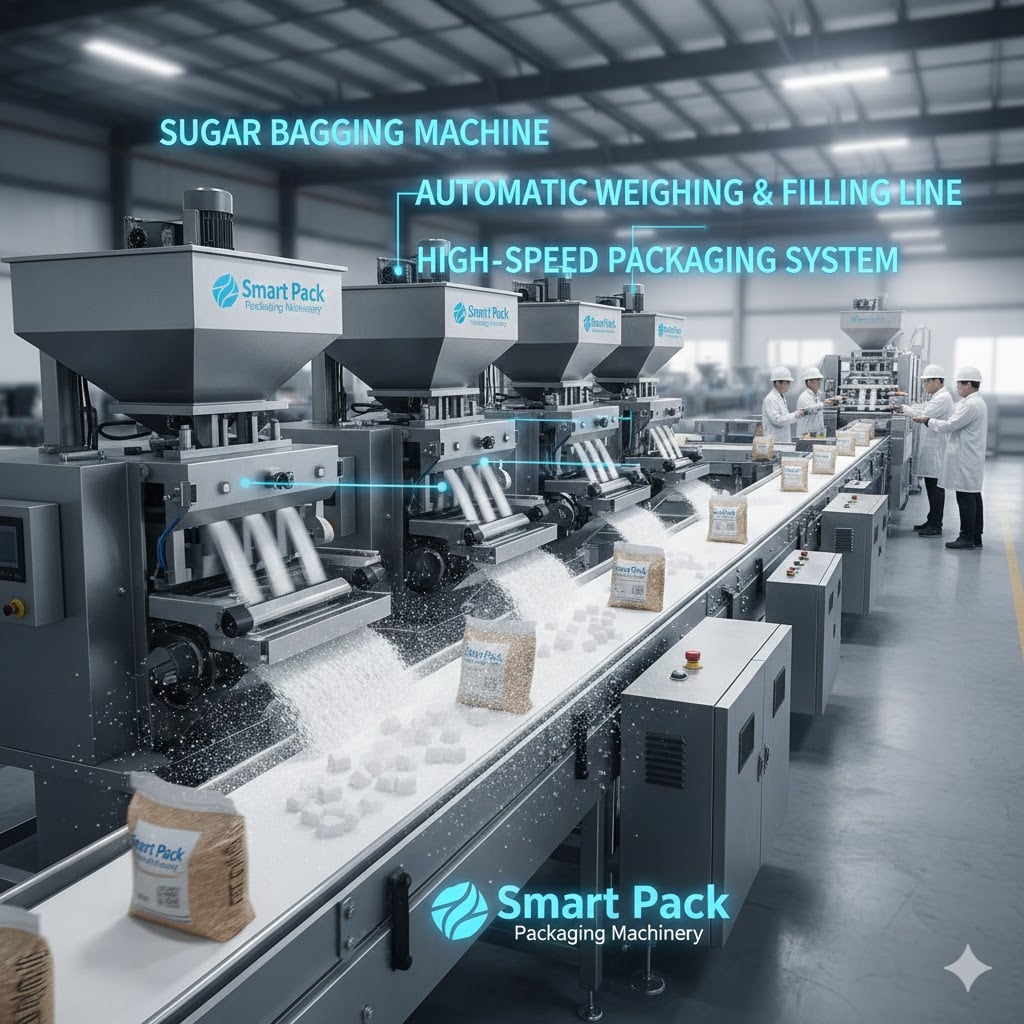
These machines accurately fill sugar into different packages (bags, sachets, plastic containers) using either volumetric or high-precision electronic weighing systems.
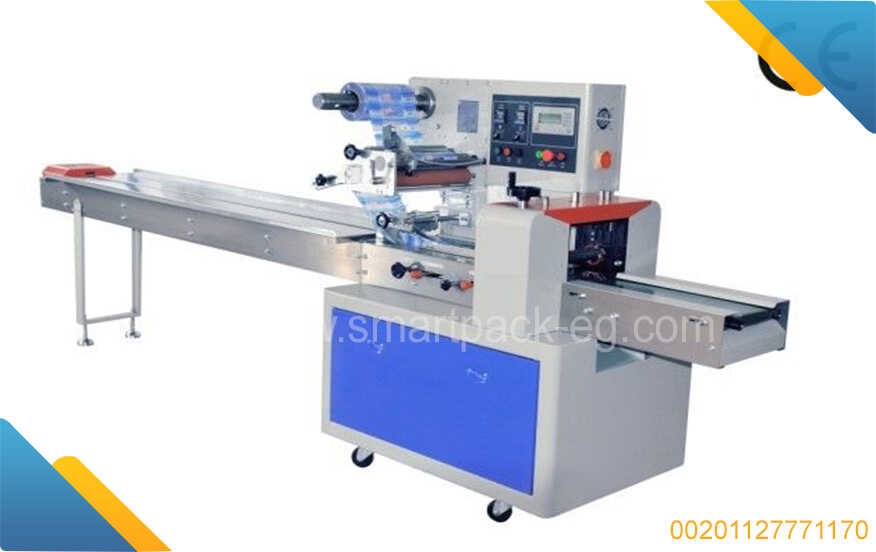
Sealing Machines
After filling, packages are tightly sealed to prevent moisture entry and extend shelf life.
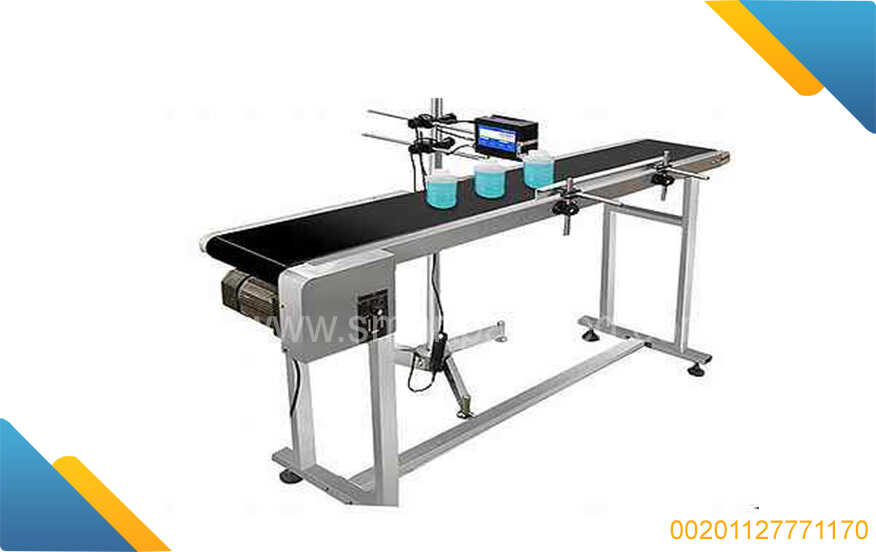
Labeling and Printing Machines
Used to apply essential product information such as:
-
Product name
-
Net weight
-
Production date
-
Batch number
Common Sugar Packaging Formats
Standard Sugar Bags
Used for gram-based or kilogram packaging, suitable for retail consumers.
Sachets
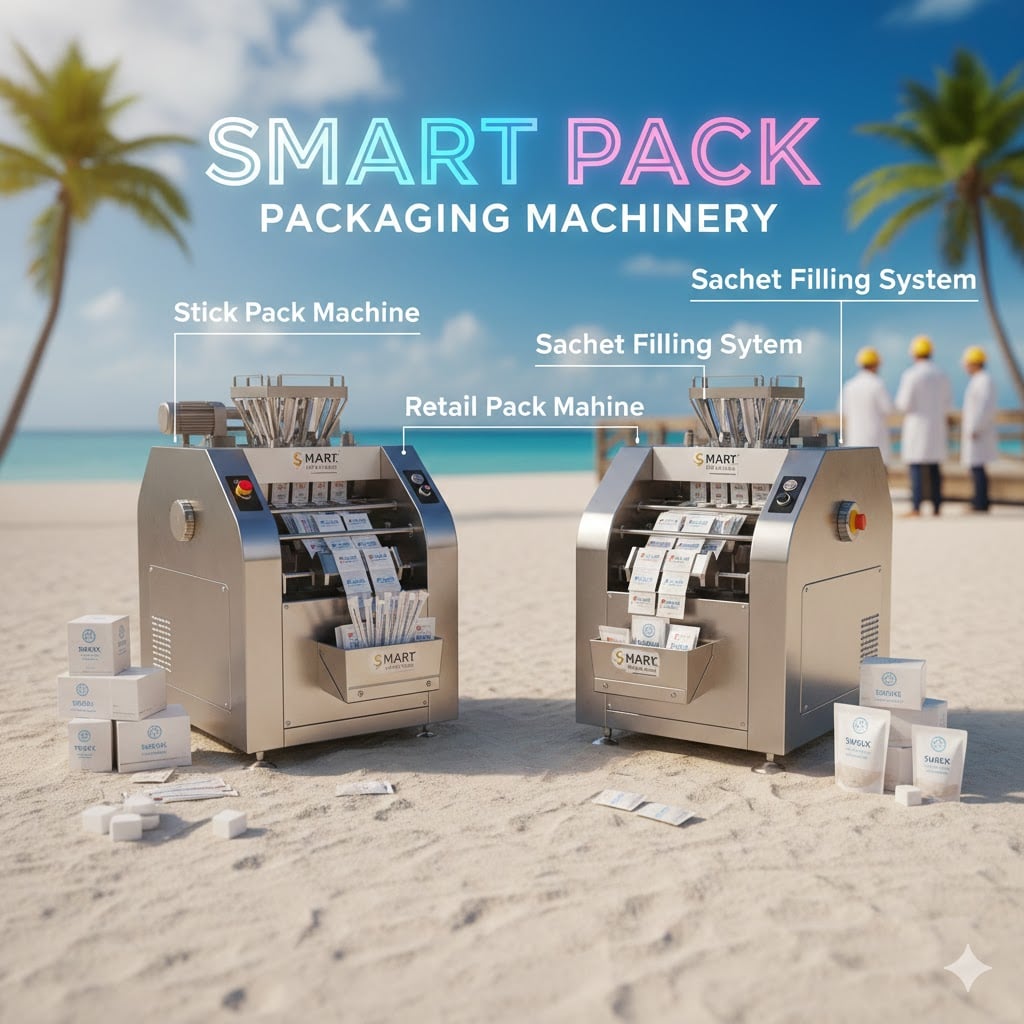
Small packs (5–30 grams) widely used in cafés, hotels, and catering services.
Paper and Carton Packaging
Often used for premium products or secondary packaging to protect sugar during transportation.
Choosing the Right Sugar Filling and Packaging Machines
Define Production Capacity
Determine daily or monthly output to select machines with appropriate operating capacity.
Select the Required Packaging Type
Choose filling systems compatible with sachets, bags, or rigid containers.
Accuracy and Operational Efficiency
Machines with advanced weighing and control systems reduce waste and ensure balanced, continuous production flow.
Practical Tips When Purchasing Filling and Packaging Machines
-
Clearly define your production requirements before comparing offers
-
Do not rely on price alone—evaluate specifications, after-sales support, and spare parts availability
-
Request a live machine trial whenever possible
-
Ensure operator training and maintenance services are provided
-
Choose a supplier with proven experience in food packaging machinery
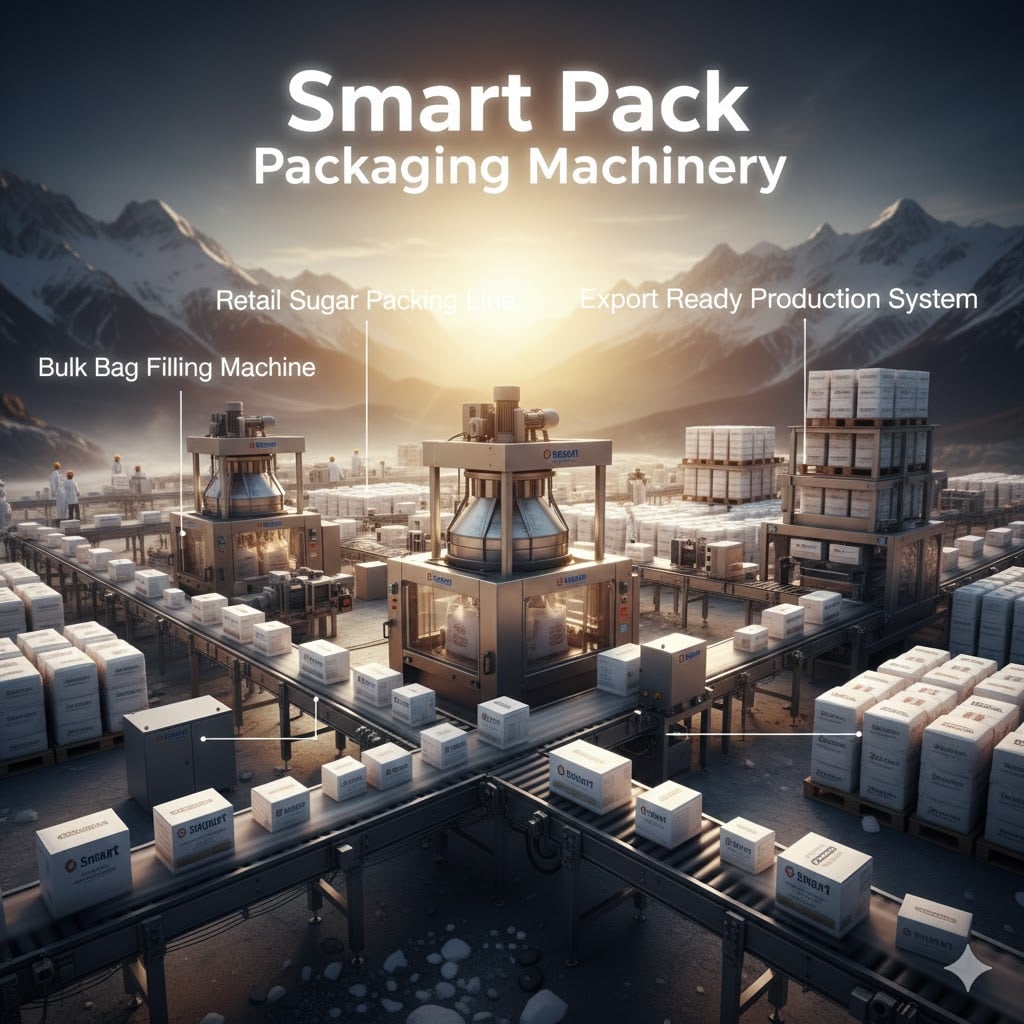
Purchasing Sugar Packaging Machines from Smart Pack
When working with Smart Pack for filling and packaging machines and production lines, you benefit from:
-
Pre-purchase technical consultations to define optimal specifications
-
Custom machine design based on your product
-
Installation, commissioning, and hands-on training
-
Reliable after-sales technical support
-
Ongoing follow-up and best operational practices
These steps ensure a fully integrated solution that enhances product quality while reducing long-term operating costs.
Frequently Asked Questions (FAQ)
What types of sugar can be packaged?
White sugar, brown sugar, and liquid sugar can all be packaged using suitable filling systems.
What types of sugar filling machines are available?
They include volumetric bag fillers, small sachet machines, and labeling systems.
Do packaging machines require regular maintenance?
Yes, regular maintenance ensures continuous performance and minimizes downtime.
How can I ensure high-quality packaging?
Selecting machines with high weighing accuracy and proper sealing systems guarantees packaging quality.
What is the difference between sachet packaging and large bags?
Sachets are ideal for single servings, while large bags are suitable for retail and bulk use.
Can sugar machines be integrated into a full production line?
Yes, they can be integrated with other processing units provided operational specifications are compatible.
Conclusion
Understanding sugar types, sources, and proper filling and packaging methods allows you to design an efficient production line with consistent product quality.
Selecting the right machinery—especially from a specialized manufacturer like Smart Pack—strengthens your competitive position in the market and ensures long-term operational sustainability.