 Admin
Admin Avoid Production Line Purchasing Mistakes — Invest in Filling & Packaging Machines That Deliver Continuous Profits, Not Unexpected Losses
Do not let a rushed decision when buying filling and packaging machines or production lines drain your capital and shut down your factory for months. Choosing industrial equipment wisely is the fastest path to higher output, lower costs, and record-breaking ROI from the very first production season.
Many factory owners start with enthusiasm, only to discover that the line they purchased delivers barely half the expected capacity.
Breakdowns increase, labor costs rise, waste grows — and profits silently disappear.
In 90% of cases, the problem is not the market.
It is poor production and packaging line selection from the beginning.
This practical guide will show you the most common purchasing mistakes and how to avoid them professionally to protect your investment and build a factory that runs at maximum efficiency.
1. Why Do Packaging Factory Owners Make Equipment Purchasing Mistakes?
4
-
Focusing only on the lowest price
-
No proper technical study of required production capacity
-
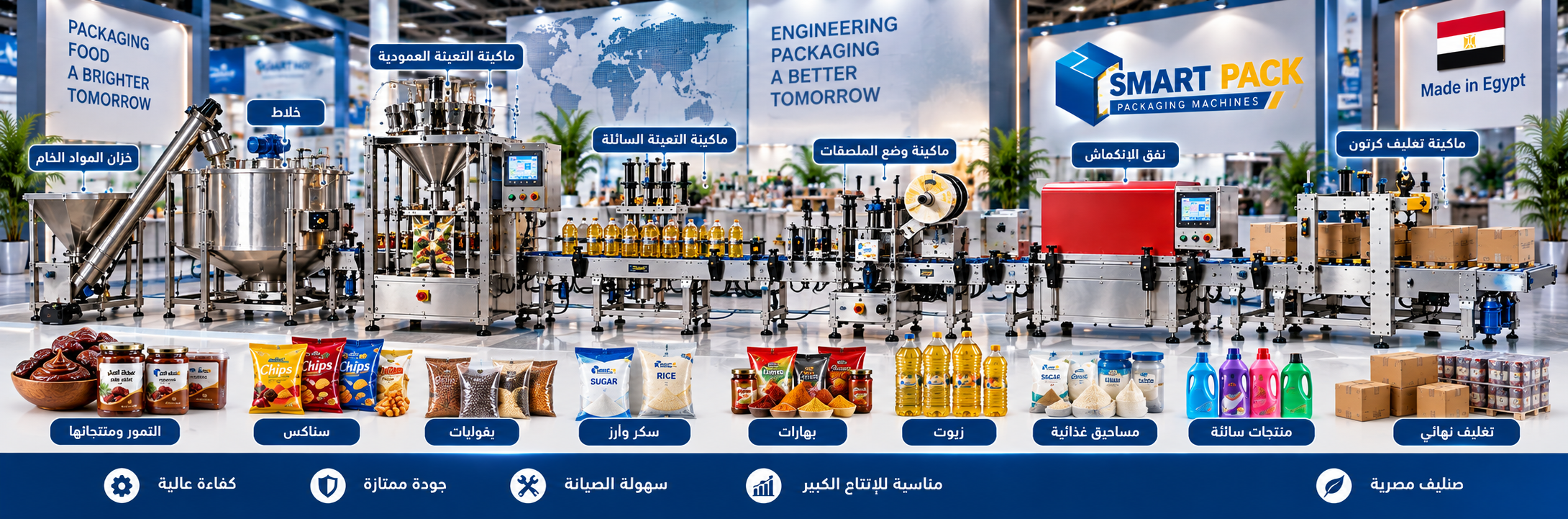
Buying standalone machines instead of an integrated filling line
-
Ignoring operating and maintenance costs
-
Dealing with non-specialized suppliers
Direct results:
-
Frequent downtime
-
Low productivity
-
Increased labor
-
Material waste
-
Capital loss instead of profit growth
2. Common Production Line Buying Mistakes & Their Impact on Profitability
Mistake 1: Buying Filling & Packaging Machines Based Only on Price
-
Cheap machine = low-quality materials
-
Continuous breakdowns
-
Spare parts unavailable
-
Production stops for days or weeks
The machine may be cheap upfront — but breakdown costs can exceed its price within a year.
Golden rule:
Buy quality, not the lowest price.
Mistake 2: Choosing Production Capacity Below Market Demand
Some factories buy machines producing 1,200 units/hour while market demand requires 5,000+.
Results:
-
Rejected orders
-
Delivery delays
-
Lost customers
-
Competitors dominate the market
Always choose a scalable filling and packaging line that supports future expansion.
Mistake 3: Buying Separate Machines Instead of an Integrated Line
4
When machines operate independently:
-
Manual transfers
-
Human errors
-
Slow production
-
Bottlenecks
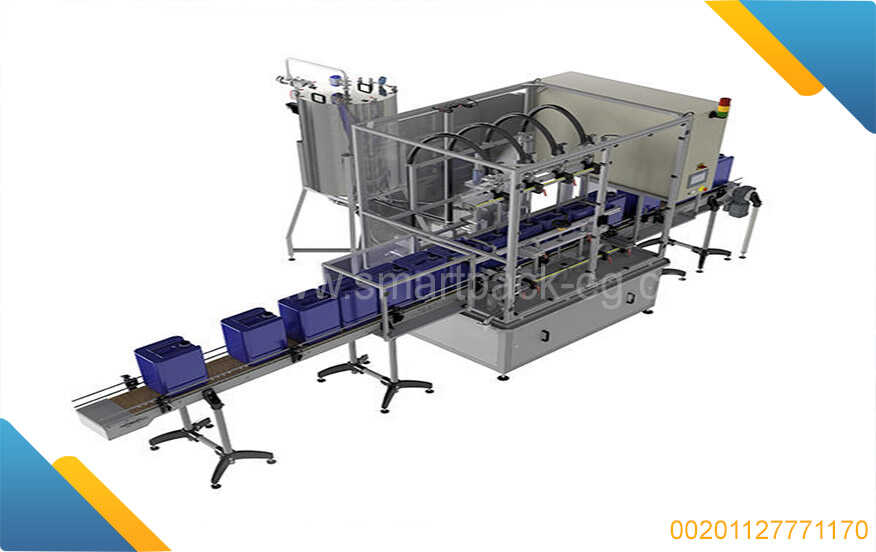
An integrated automatic production line provides:
-
Automated conveyors
-
Full synchronization
-
Higher speed
-
Reduced labor
Production output can increase up to 3×.
Mistake 4: Ignoring Product Characteristics
Not every filling machine suits every product.
Examples:
-
Viscous detergents require piston filling systems
-
Powders require auger systems
-
Grains require multihead weighers
-
Foamy liquids require anti-foam systems
Wrong choice = leakage + inaccurate filling + major daily waste.
Mistake 5: Ignoring Operating Costs (Not Just Purchase Price)
Some production lines consume:
-
Higher electricity
-
More labor
-
Frequent maintenance
-
Excess packaging materials
They may look cheaper initially — but are far more expensive long-term.
Always ask:
What is the cost per unit after operation?
3. Low-Quality vs Professional Production Line Comparison
| Factor | Low-Quality Line | Professional Automatic Line |
|---|---|---|
| Production Capacity | 1,000–1,500 units/hour with frequent stops | 6,000–10,000+ units/hour continuous |
| Labor Required | 6–8 workers | 1–2 supervisors |
| Breakdown Rate | High & frequent | Very low |
| Filling Accuracy | High waste & weight errors | High precision & minimal waste |
| Operating Cost per Unit | High | Very low |
| Profitability | Limited | High & stable |
Monthly net profit differences can reach tens of thousands of dollars.
4. How to Avoid Capital Loss When Buying Production Lines
Smart pre-purchase steps:
-
Calculate your target production accurately
-
Choose scalable automatic filling machines
-
Request real product testing
-
Ensure maintenance and spare part availability
-
Buy an integrated line instead of separate machines
-
Calculate cost per unit, not just machine price
Each of these steps can save thousands annually.
5. Profit Comparison – Traditional vs Automatic Line
| Item | Traditional Line | Integrated Automatic Line |
|---|---|---|
| Daily Output | 8,000 units | 25,000 units |
| Labor | 8 workers | 2 workers |
| Profit per Unit | $0.20 | $0.30 |
| Daily Profit | $1,600 | $7,500 |
| Payback Period | Very slow | Less than 1 year |
The right production line can multiply profits more than four times.
6. Professional Buying Tips from Smart Pack
4
-
Request a customized production and filling line design based on your product and factory capacity
-
Ensure installation and commissioning services
-
Choose a supplier offering long-term maintenance and training
-
Use stainless steel machines for food and chemical industries
-
Work with Smart Pack, specialized in integrated filling and packaging machinery for maximum operational efficiency and ROI
Buying from a trusted supplier directly protects your capital.
7. Quick Answers for Confident Purchasing Decisions
What is the biggest mistake when buying a production line?
Focusing only on purchase price without calculating operating costs and profitability.
Is buying a full production line better than separate machines?
Yes. It increases speed and reduces labor and breakdowns.
How do I choose the right filling machine type?
Based on product characteristics and required production capacity.
How long does ROI take for an automatic line?
Typically 6–12 months.
Is investing in modern filling machines worth it?
Absolutely. They reduce costs and continuously increase profitability.
Start Protecting Your Investment and Increasing Output Today
Do not risk your capital with weak equipment or random decisions.
Contact Smart Pack today for a technical consultation and a customized automatic filling and packaging line design that doubles your production, lowers costs, and ensures stable profits for years.
Make the smart decision today — and let your production lines work for you, not against you.