 Admin
Admin Automatic Production Line That Doubles Your Factory Output, Reduces Labor, and Increases Profits from the First Month of Operation
Start transforming your factory into a smart, fully automatic filling and packaging system that operates faster, at lower cost, and with consistent quality — giving you a real competitive advantage in local and export markets.
If you manage a factory or are planning to launch a new industrial project, understand this: the difference between limited profits and rapid growth is not just the product — it is the efficiency of your production and packaging line.
Every minute of downtime, excess labor, or material waste is a direct loss from your profits.
A fully integrated automatic production line means higher output, fewer errors, and significantly higher profitability.
1. Why Switching to an Automatic Production Line Is the Smartest Decision for Packaging Factories
4
-
Production speed jumps from hundreds to thousands of units per hour.
-
Manual labor can be reduced by up to 60–70%.
-
Packaging and product waste are significantly minimized.
-
Consistent filling and packaging quality for every unit.
-
Easy scalability and export readiness.
Simply put:
Automatic filling and packaging line = Lower cost per unit + Higher production + Greater profit margin.
2. What Is an Automatic Production Line in Packaging Factories?
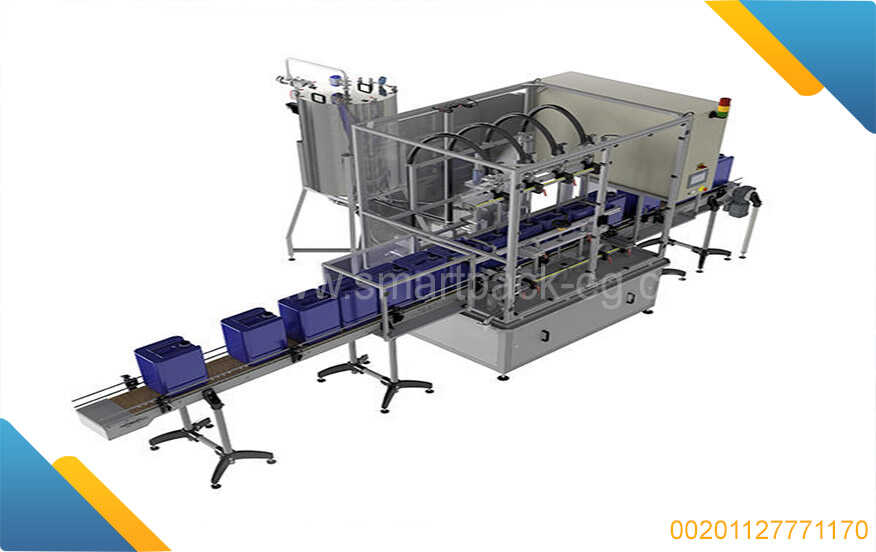
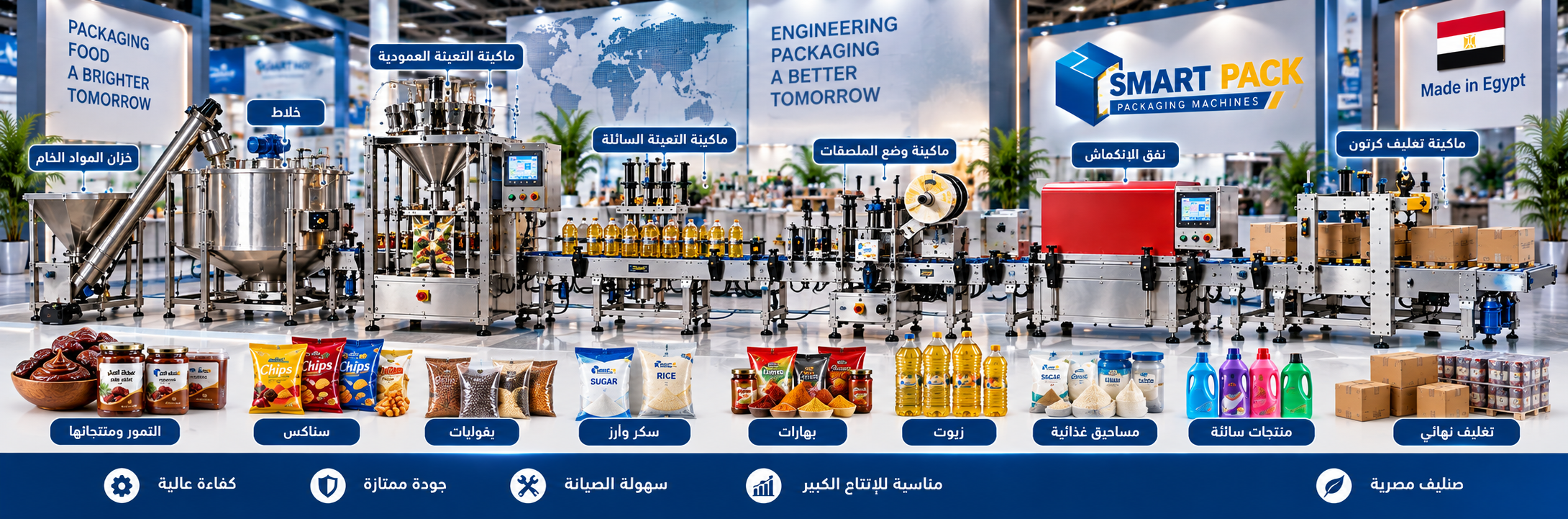
An automatic production line is an integrated system of filling and packaging machines operating sequentially with minimal human intervention. It typically includes:
-
Product feeding unit
-
Filling machine (liquid / powder / granule / viscous)
-
Capping or sealing machine
-
Final packaging or shrink wrapping machine
-
Automatic conveyor systems
-
PLC control system with monitoring screens
-
Quality inspection and date coding
The result: continuous 24/7 production with minimal manual involvement.
3. Core Components of a Professional Filling & Packaging Line
4
Essential machines for any production line:
-
Detergent and liquid filling machines for chemical and food industries
-
Powder filling machines for spices, flour, and powdered detergents
-
Bag or container packaging machines
-
Shrink or heat sealing machines
-
Automated conveying and sorting systems
Selecting the right filling machine type depends on your product nature and required production speed.
4. Step-by-Step Guide to Building a Successful Automatic Line
-
Define product type (food, chemical, detergent, powder, grains).
-
Set target daily production capacity.
-
Calculate available factory space.
-
Choose the appropriate automation level.
-
Purchase compatible filling and packaging machines as one integrated system.
-
Install and perform trial operation.
-
Train staff on operation and maintenance.
Each carefully planned step means faster ROI and fewer breakdowns.
5. Comparison of Production Systems (Labor, Output, Profitability)
| System Type | Number of Workers | Hourly Capacity | Monthly Operating Cost | Typical Use | Expected Profitability |
|---|---|---|---|---|---|
| Manual | 8–10 | 400–700 units | Very High | Very small or temporary projects | Low |
| Semi-Automatic | 3–4 | 1200–2000 units | Medium | Startup production lines | Moderate |
| Fully Automatic | 1 supervisor | 5000–10,000+ units | Very Low per unit | Medium & large factories, export | Very High |
Monthly profit differences can multiply several times within the same production space.
6. Market Study & Profit Example – Detergent Factory
| Item | Estimated Value |
|---|---|
| Fully Integrated Automatic Line Cost | $60,000 |
| Daily Production (8 hours) | 25,000 units |
| Total Unit Cost | $0.22 |
| Selling Price | $0.55 |
| Net Profit per Unit | $0.33 |
| Daily Profit | $8,250 |
| Capital Payback Period | Less than 8 months |
Automatic production lines are not an expense — they are daily profit-generating assets.
7. How to Choose the Right Filling Machines for Your Project
-
For liquids and detergents: viscous or detergent filling machines.
-
For powders: precision auger filling systems.
-
For grains: multihead weighing machines.
-
For final packaging: shrink or sealing machines.
-
For large-scale output: fully integrated production lines.
Machine compatibility is more important than choosing the lowest price.
8. Professional Buying Tips from Smart Pack
4
-
Request a customized production line design based on your product.
-
Ensure installation and commissioning services are provided.
-
Choose high-quality food-grade stainless steel components.
-
Train your team for operation and maintenance.
-
Work with a trusted supplier like Smart Pack, specialized in integrated filling and packaging machinery with warranty and continuous technical support.
Smart purchasing reduces breakdowns and saves thousands of dollars annually.
9. Key Questions Before Buying an Automatic Production Line
Is an automatic line suitable for small factories?
Yes, especially if rapid growth and labor reduction are planned.
How much labor can it reduce?
Up to 70% compared to manual systems.
Is electricity consumption high?
Typically lower than long-term manual labor costs.
What are the best filling machines for food industries?
Automatic stainless-steel machines with precise control and consistent weighing.
When should I move from a single machine to a full line?
When production exceeds 2,000–3,000 units per hour.
It’s Time to Double Your Factory Output
Do not let competitors outpace you with faster and more efficient production lines.
Equip your factory today with integrated automatic filling and packaging systems from Smart Pack and receive a free technical consultation and customized line design.
Contact now — produce more, with fewer workers, and achieve higher profits from day one.