 Admin
Admin Why Is CNC Technology a Revolution in Packaging and Filling Machines?
At the core of any advanced manufacturing industry, production processes are steadily shifting from traditional manual operation to smart automated systems. With the growing demand for higher precision, faster production speeds, and improved product quality, Computer Numerical Control (CNC) technology has become a cornerstone of modern industrial manufacturing.
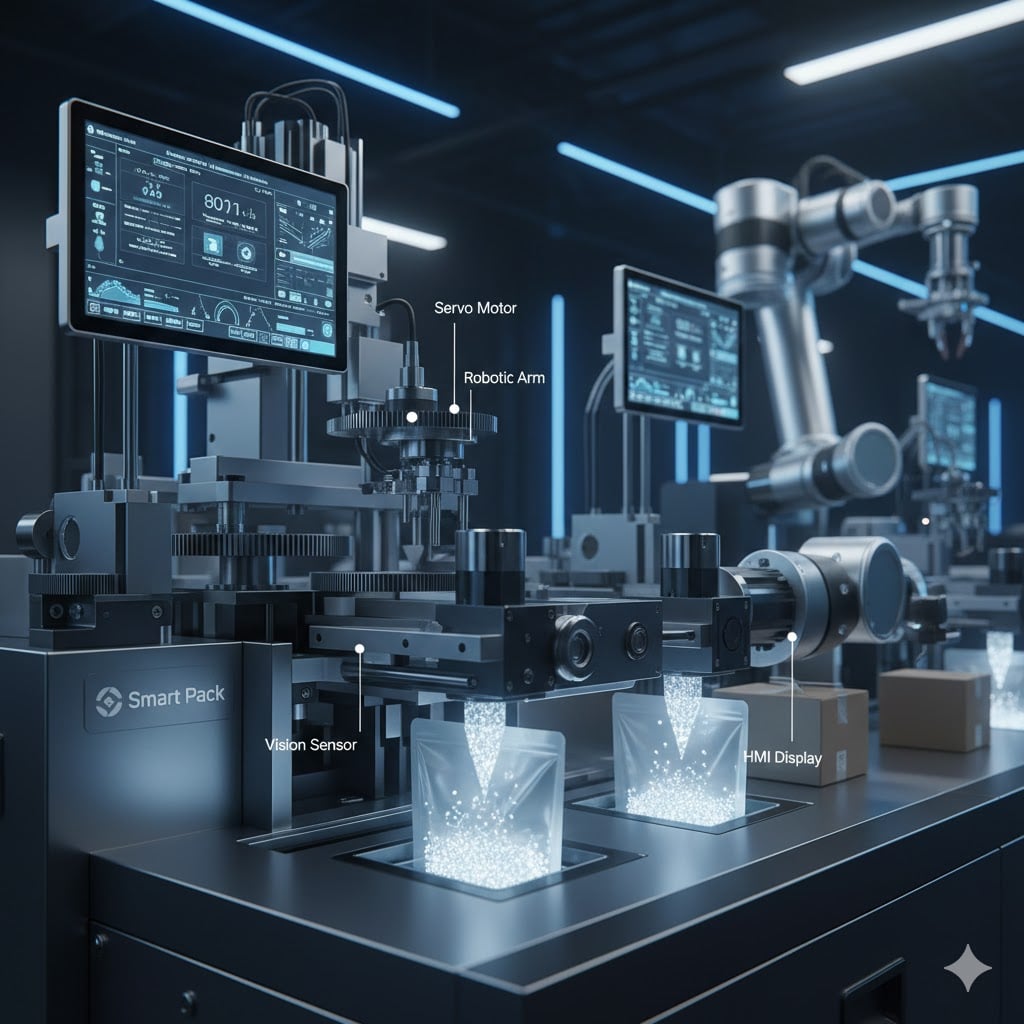
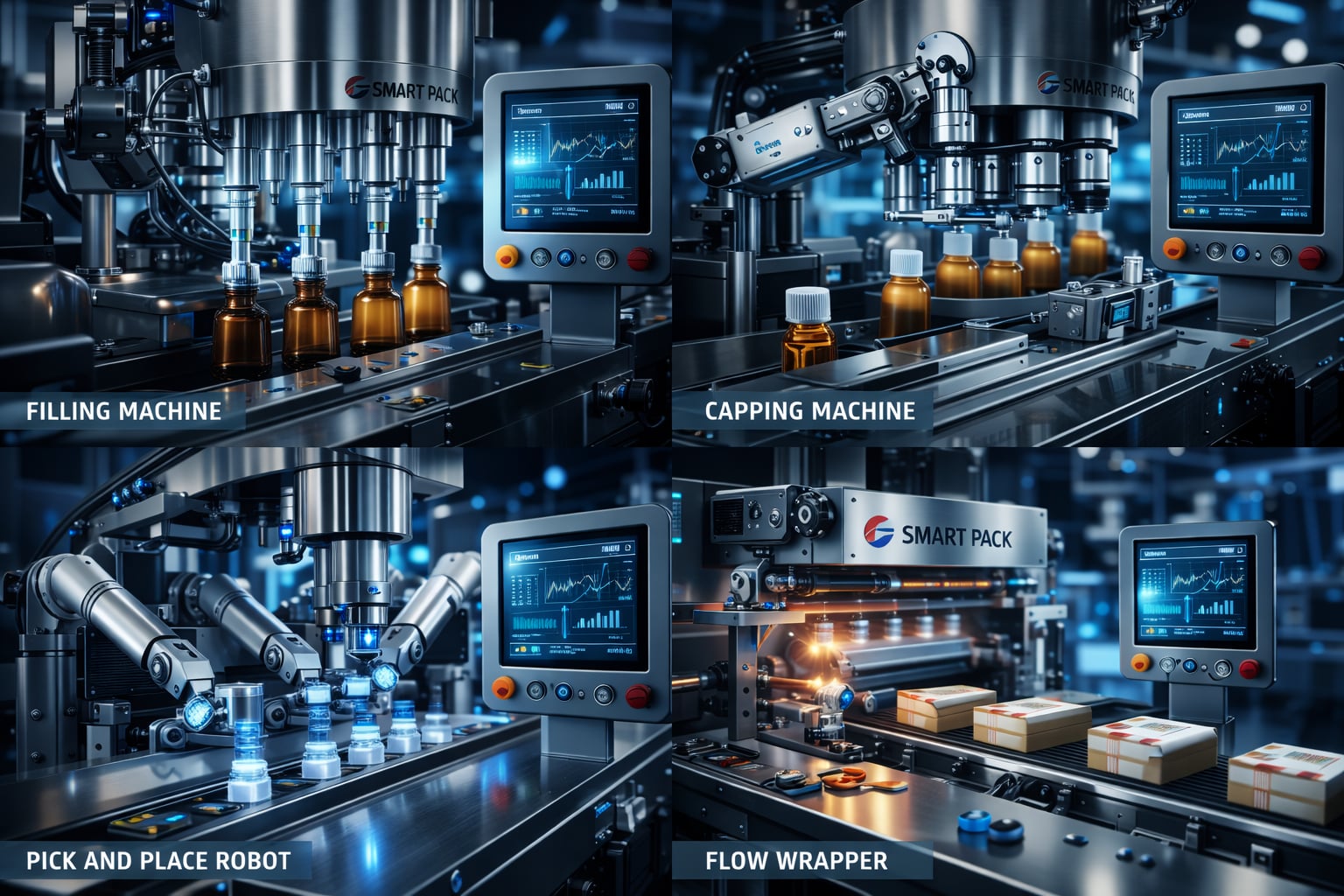
When we talk about CNC-controlled packaging and filling machines, we are not referring merely to cutting or shaping tools. Instead, we are discussing fully computerized systems capable of executing complex operations with extreme accuracy and minimal human intervention. This dramatically increases production line efficiency, reduces human error, saves operating time, and enables factories to handle multiple materials and packaging sizes with ease.
CNC-based digital technology in packaging goes far beyond cutting or engraving. It extends to electrically and programmatically controlled management of forming, cutting, conveying, sealing, packaging, and finishing processes—delivering stable performance, consistent quality, and high repeatability.
What Is CNC Control and How Does It Impact Industry?
CNC control means that machine motion and operation are executed through computer-based programmed commands rather than direct manual operation. Because these commands are pre-designed to perform precise tasks, performance becomes measurable, controllable, and highly repeatable.
CNC machines have driven an industrial transformation that can be summarized in three key advantages:
-
Improved manufacturing quality and reduced material waste
-
Higher production speed with reliable repetition
-
Seamless integration with advanced technologies such as robotics and smart sensors
When CNC technology is integrated into packaging and filling lines, it fundamentally changes the rules of production. Complex operations such as cutting, perforating, welding, sealing, and even printing data on packages can be performed with exceptional accuracy, high speed, and minimal error rates.
Why Do Packaging and Filling Factories Need CNC Solutions?
The packaging and filling industry involves a wide range of processes that demand precision at every step—from forming packages and cutting materials to sealing, printing, and final product assembly.
By adopting CNC machines, factories do not simply acquire equipment; they gain a fully programmable operating system capable of repeating the same process thousands of times with unmatched consistency. This level of automation is essential for high-volume production environments that require:
-
Continuous operation over long production cycles
-
High consistency in size, shape, and weight
-
Precision in cutting, engraving, and forming operations
-
Fast changeovers when modifying products or packaging designs
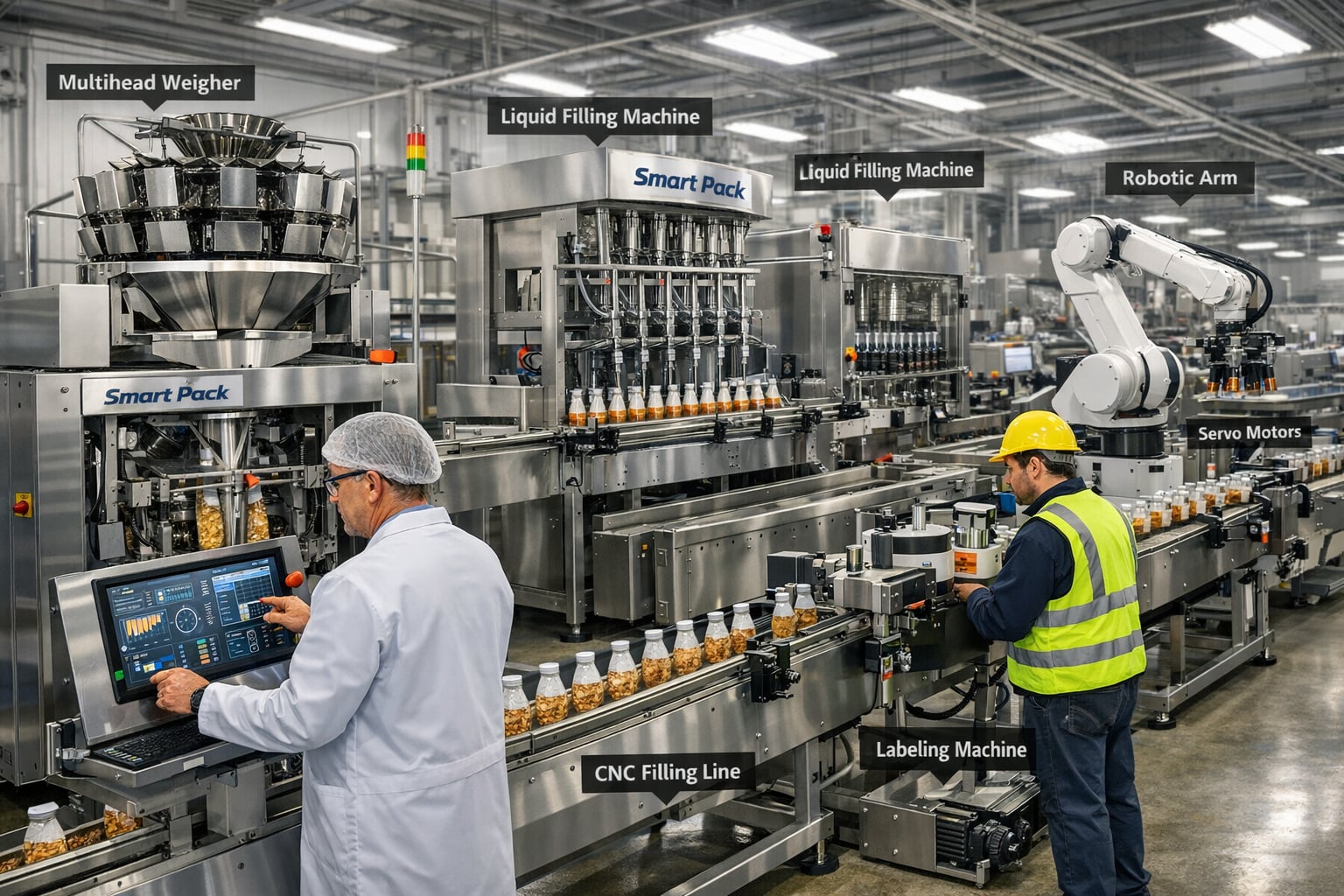
In many modern packaging facilities, CNC systems are integrated with robotic automation to further reduce reliance on manual labor, increase production speed, and minimize operational errors.
Types of CNC Machines Used in Industrial Environments
Before exploring their role in packaging and filling, it is important to understand the main types of CNC machines used in industry, as each serves specific applications:
| CNC Machine Type | Main Function | Industrial Application |
|---|---|---|
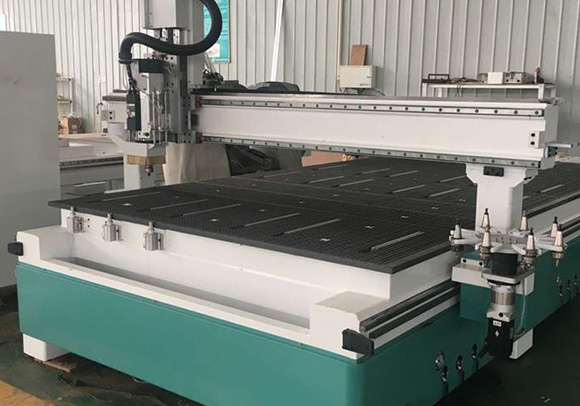
| CNC Router | 3D cutting of parts and models | Mold making, covers, custom packaging |
| CNC Milling Machine | Material removal using rotating tools | Shaping metal and plastic components |
| CNC Lathe | Rotational machining of cylindrical parts | Shafts and rollers in packaging equipment |
| CNC Laser Machine | High-precision cutting and engraving | Marking codes, openings, package designs |
| CNC Plasma Cutter | Cutting thick metal sheets | Fabrication of metal frames and structures |
Choosing the right CNC machine depends on the material type and the desired results within the packaging line.
How Do CNC Machines Operate in Packaging Lines?
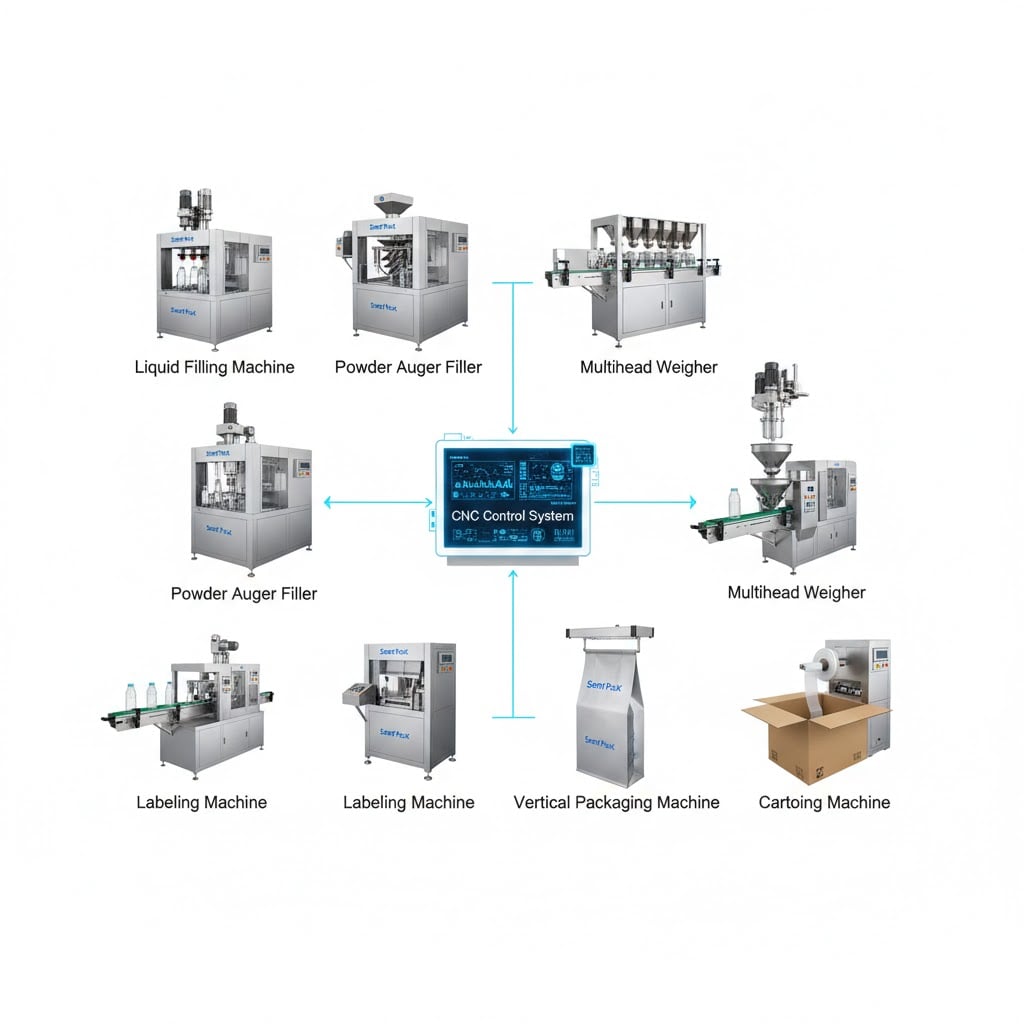
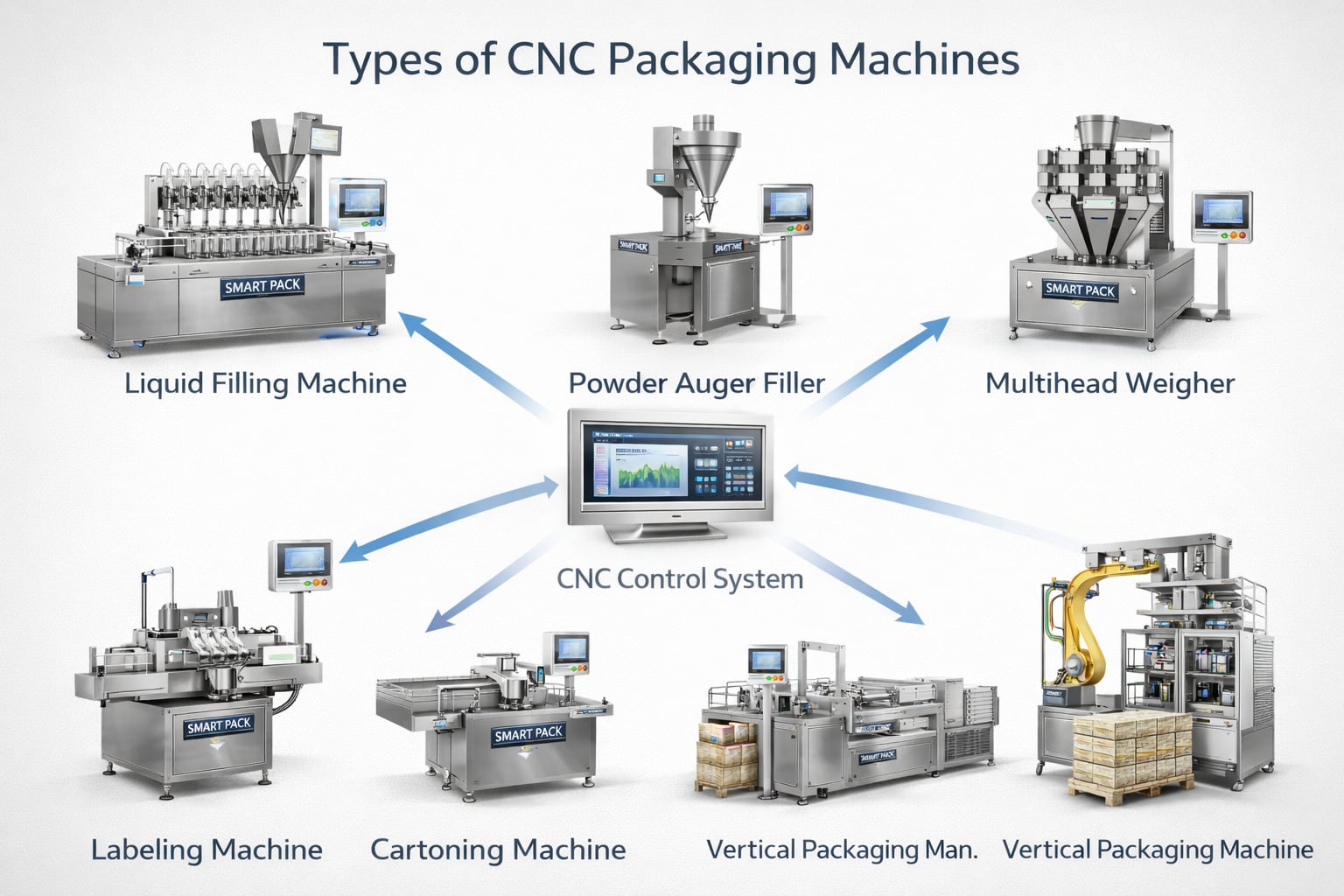
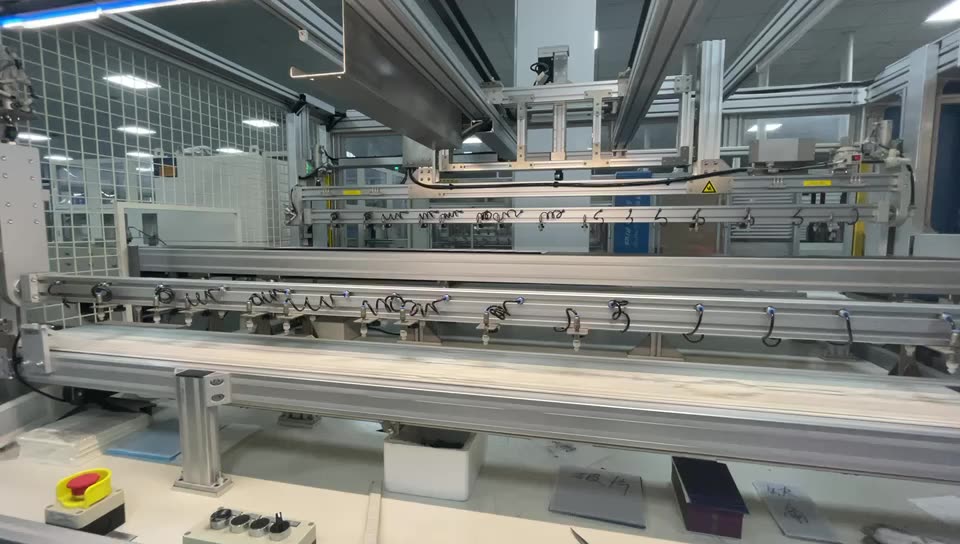
In industrial applications, CNC machines rarely operate as standalone units. Instead, they form part of an integrated system that includes feeding units, cutting, welding, conveying, and packaging modules.
The system relies on precise digital programming that converts a CAD design into operational commands controlling axis movement, speed, and force according to product requirements.
Example:
In a CNC machine used for cardboard packaging production, the digital cutting design is uploaded to the control unit. The machine then cuts the sheets with extreme precision before transferring them to folding, assembly, or sealing stages within the production line.
The Role of CNC in Improving Packaging Efficiency
When CNC technology is implemented in packaging and filling environments, its benefits extend well beyond cutting operations, including:
-
High measurement accuracy with zero process deviation
-
Reduced waste and scrap caused by manual errors
-
Flexible production management based on market demand
-
Integration with digital data systems for performance monitoring
-
Significant reduction in setup and changeover downtime
With ongoing digital advancement, many CNC systems are evolving into smart, internet-connected platforms capable of analyzing performance data and automatically optimizing quality—giving manufacturers a strong competitive edge.
Practical CNC Applications in Packaging and Filling
CNC systems are used across multiple stages of packaging lines, such as:
-
Manufacturing molds and mechanical components for package forming
-
Cutting and preparing metal or plastic frames for filling units
-
Producing precision mechanical parts that control product flow
-
Custom preparation of packaging components based on product size
-
Integrating CNC with robotic systems for automated part handling
CNC vs. Traditional Operation in Packaging
| Factor | Traditional Operation | CNC System |
|---|---|---|
| Accuracy | Limited | Extremely high |
| Repeatability | Inconsistent | Fully consistent |
| Labor dependency | High | Low |
| Waste cost | High | Low |
| Changeover speed | Slow | Fast |
| Digital optimization | Minimal | High |
CNC systems provide superior digital control, enhance final product quality, and significantly reduce operational losses—making them the optimal choice for high-precision production lines.
Comprehensive Table of CNC Solutions in Packaging
| CNC Solution | Material | Packaging Function | Key Advantage |
|---|---|---|---|
| CNC Router | Plastic & wood | Cutting packaging molds | Speed and precision |
| CNC Milling | Metal | Machine part shaping | Strength and reliability |
| CNC Lathe | Metal | Shafts and rollers | Dimensional consistency |
| CNC Laser | Metal & foils | Engraving and marking | Ultra-high precision |
| CNC Plasma Cutter | Metal sheets | Structural fabrication | Powerful cutting |
Tips for Choosing the Right CNC Machine for Packaging Investment
-
Identify the materials you will process daily
-
Calculate target production volume to define automation level
-
Choose a supplier offering strong technical support and spare parts
-
Ensure the system allows future upgrades and scalability
Frequently Asked Questions (FAQ)
What is the difference between CNC and PLC in packaging machines?
CNC controls motion and tooling precision, while PLC manages machine logic and operational sequences.
Is CNC suitable for all packaging applications?
CNC is ideal for any stage requiring precise cutting, forming, or preparation before final packaging.
Does CNC increase investment costs?
Initial investment may be higher, but long-term savings from efficiency and reduced waste offset the cost.
Can CNC systems be upgraded easily?
Yes, when using flexible platforms designed for future integration and expansion.
Is CNC suitable for small projects?
It can be used for precision tasks, though hybrid solutions may be more cost-effective for small-scale operations.
How is CNC different from standard 3D systems?
CNC controls multi-axis movement through precise programming to achieve exact results from digital designs.
Contact Smart Pack
If you are a manufacturer or investor in Egypt looking to upgrade your factory with advanced automation and CNC-controlled packaging and filling solutions, Smart Pack offers integrated expertise that includes:
-
Factory requirement analysis
-
Selection of suitable CNC equipment
-
Design of complete, integrated production lines
-
Long-term technical support and maintenance
Smart Pack is your ideal partner for building more efficient, precise, and competitive production lines—locally and internationally.