 Admin
Admin Premium Solid Soap Filling and Packaging Machines Project in Egypt
The Premium Solid Soap Filling and Packaging Machines Project in Egypt is considered one of the most attractive industrial investment opportunities, as it combines stable market demand, ease of marketing, and the ability to expand gradually. This makes it an ideal choice for investors seeking a production-based business centered on an essential consumer product that is not tied to seasonal demand.
Solid soap is used daily in households, commercial facilities, hotels, hospitals, and educational institutions, ensuring continuous sales throughout the year with minimal exposure to market fluctuations.
The success of this project does not rely solely on the quality of the soap formula or the availability of raw materials. Instead, it depends primarily on premium solid soap filling and packaging machines, as packaging is the stage where a simple soap bar is transformed into a competitive commercial product capable of succeeding in both local and regional markets. The more precise the filling process, the more professional the packaging appearance, and the more organized the production line, the higher the level of trust from both distributors and consumers.
Importance of Premium Solid Soap Packaging Machines in Egypt
In the Egyptian market, consumers no longer accept poorly packaged products or soap bars that lack consistency in shape and weight. Likewise, wholesalers and major distribution chains impose strict packaging standards, including weight accuracy, clear labeling, and secure sealing.
This is where the true value of premium solid soap filling and packaging machines becomes evident, as they contribute to:
-
Complete standardization of soap bar weights
-
Reducing material waste caused by manual packaging
-
Increasing production efficiency and reducing labor dependency
-
Enhancing the final appearance of the product
-
Expanding production and distribution capacity
Overview of the Solid Soap Production and Packaging Line
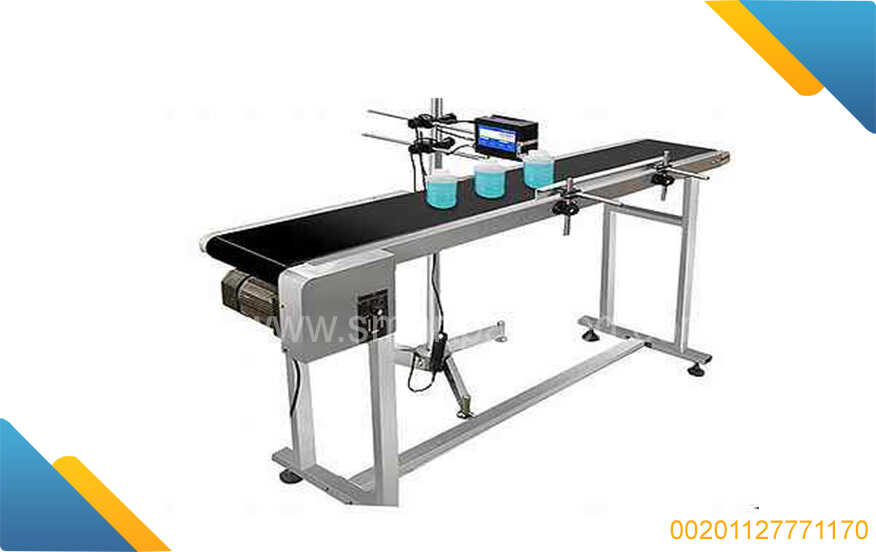
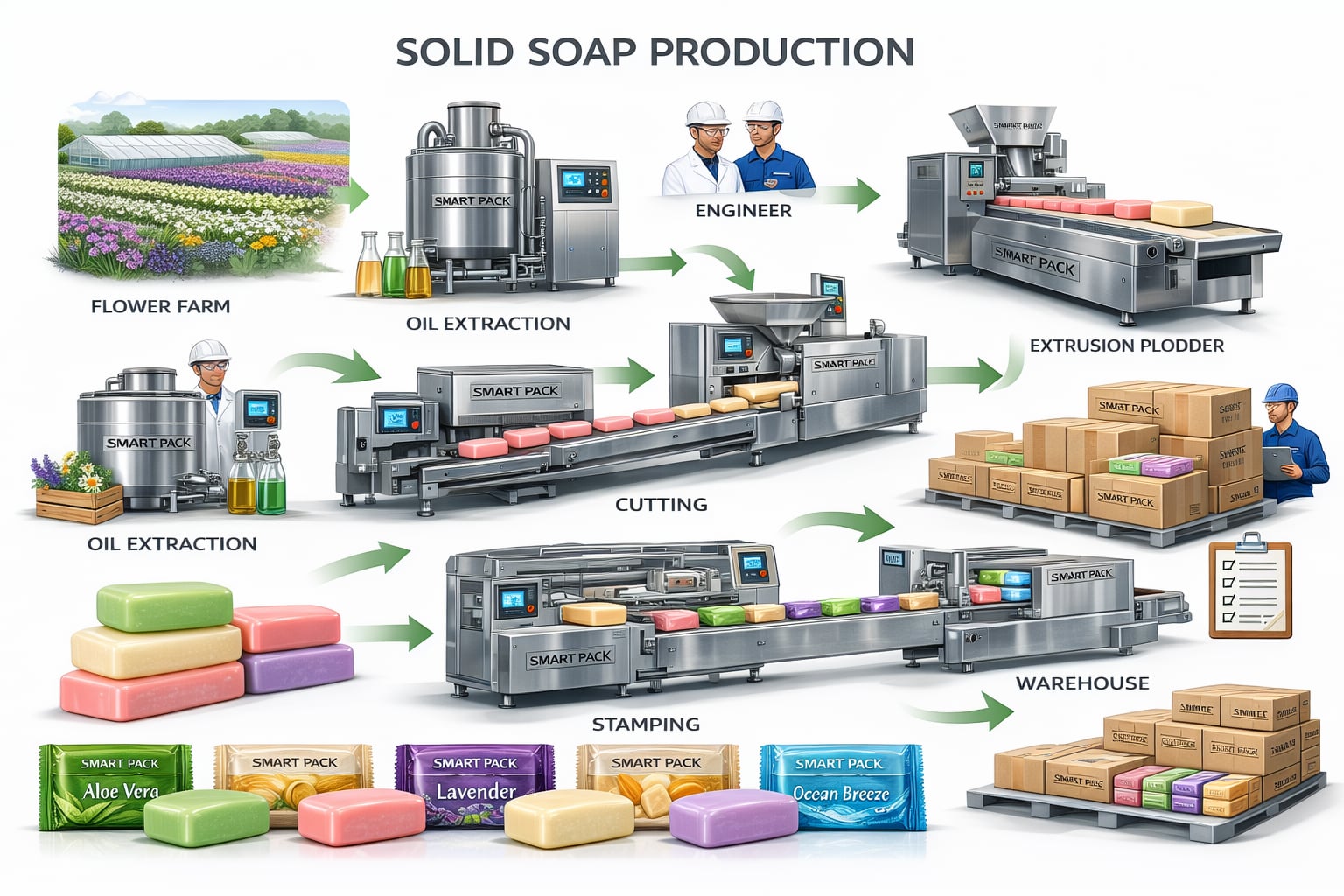
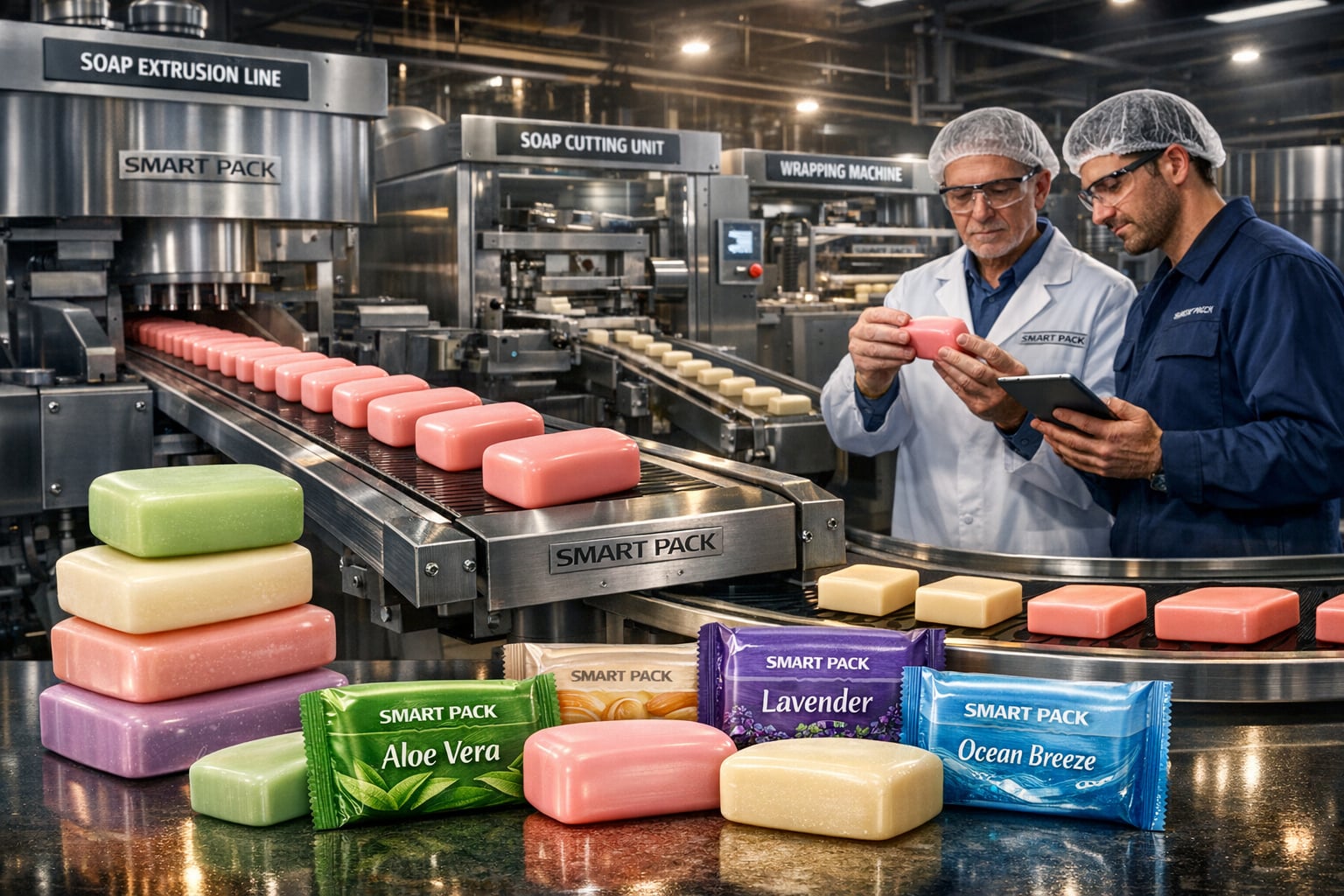
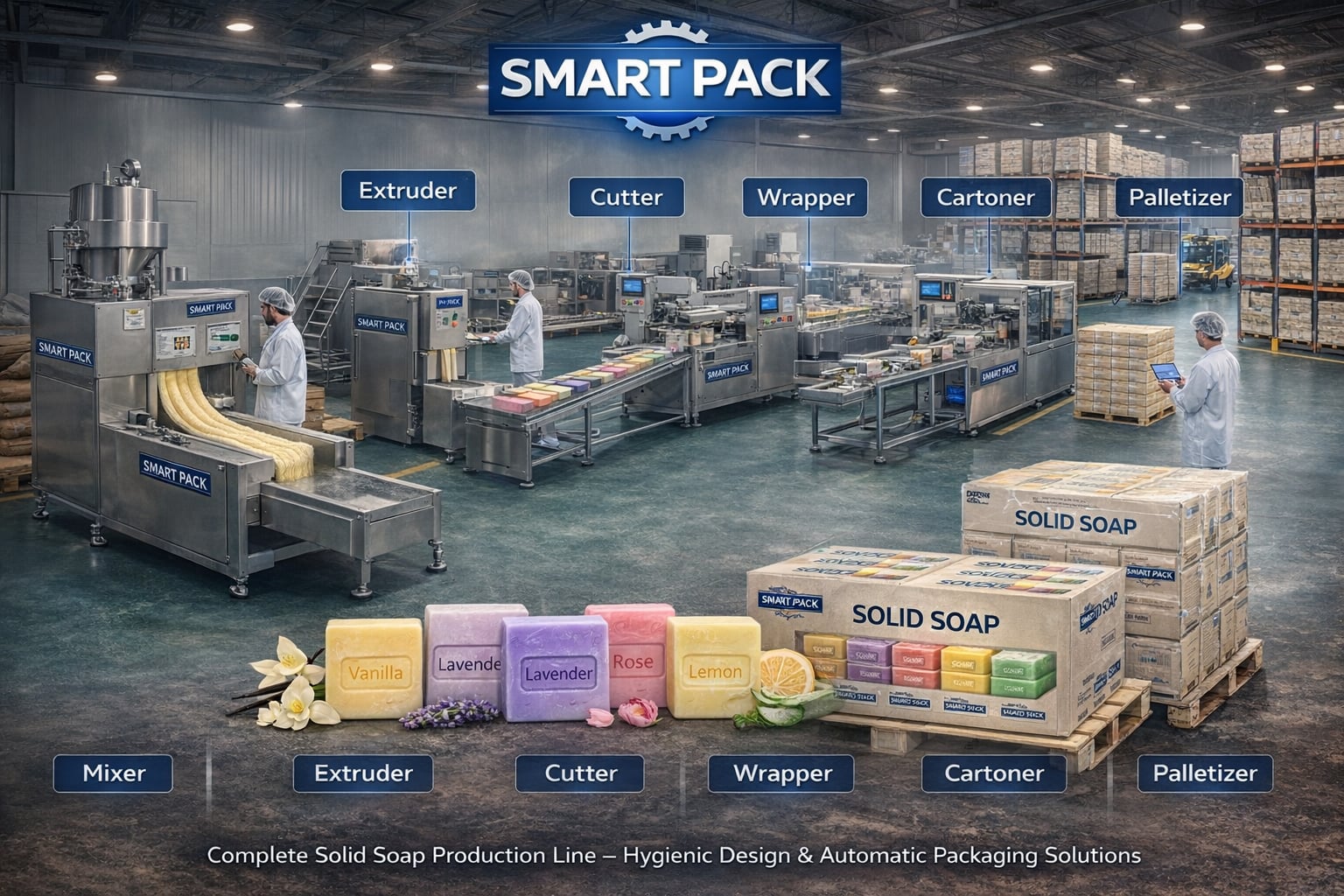
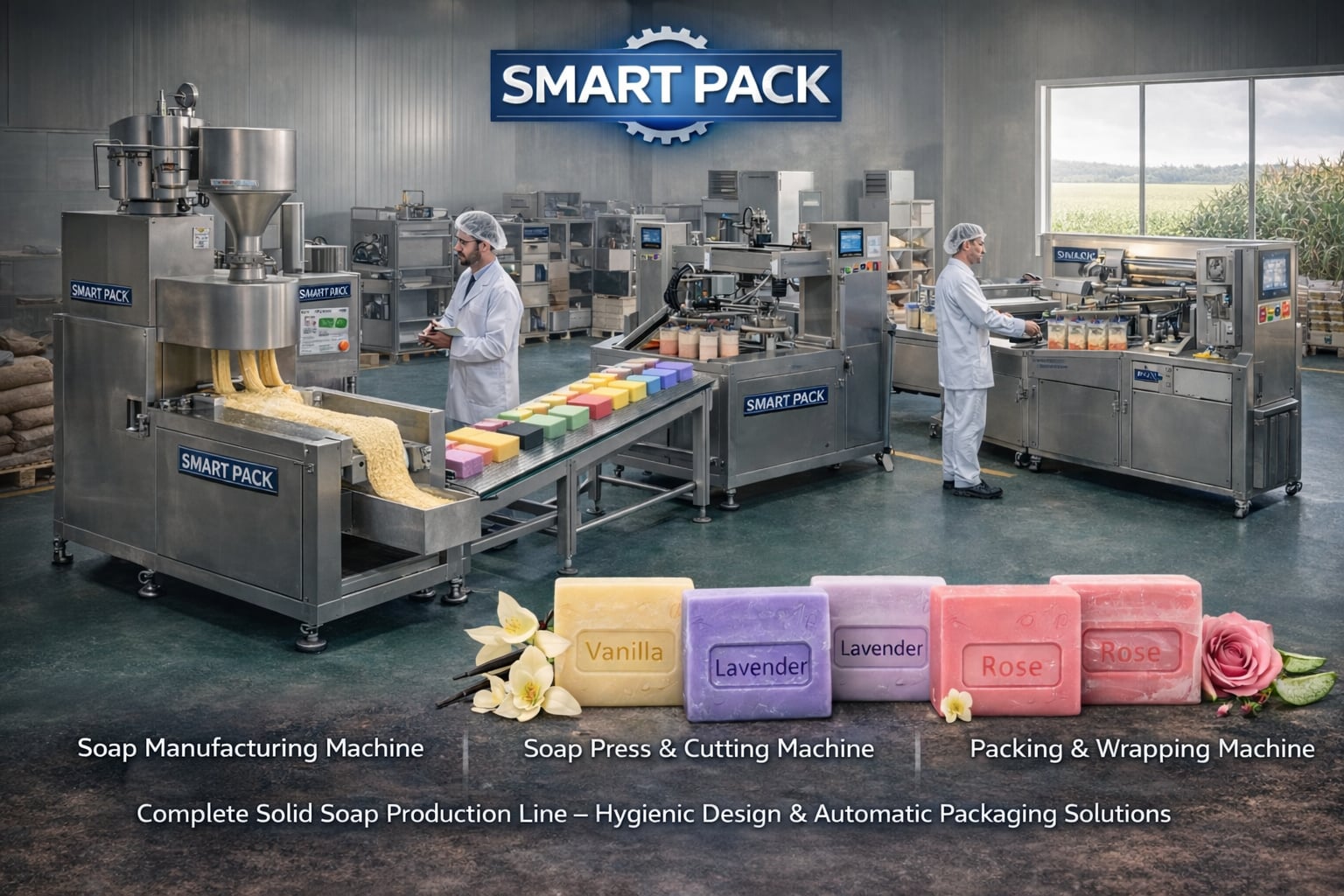
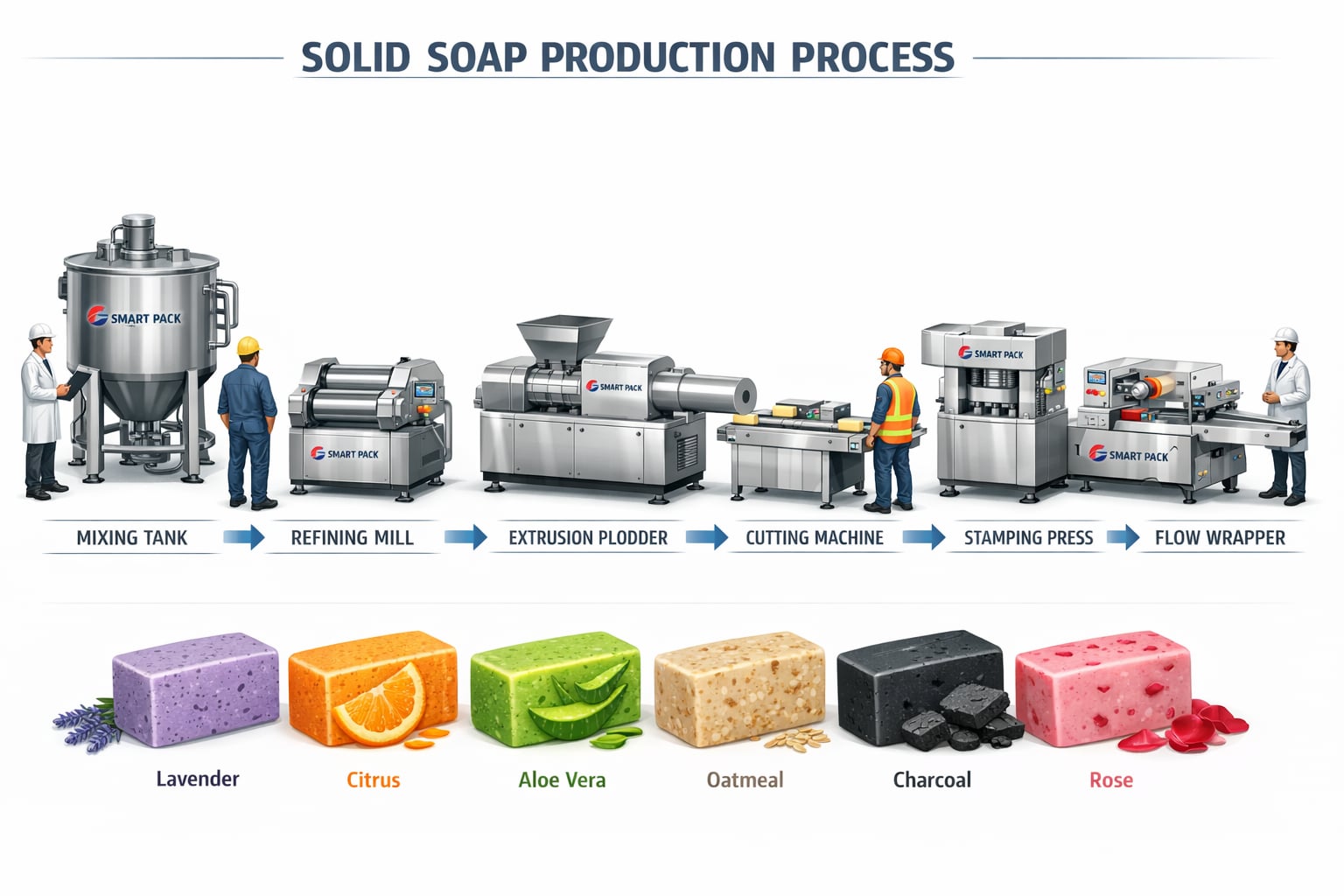
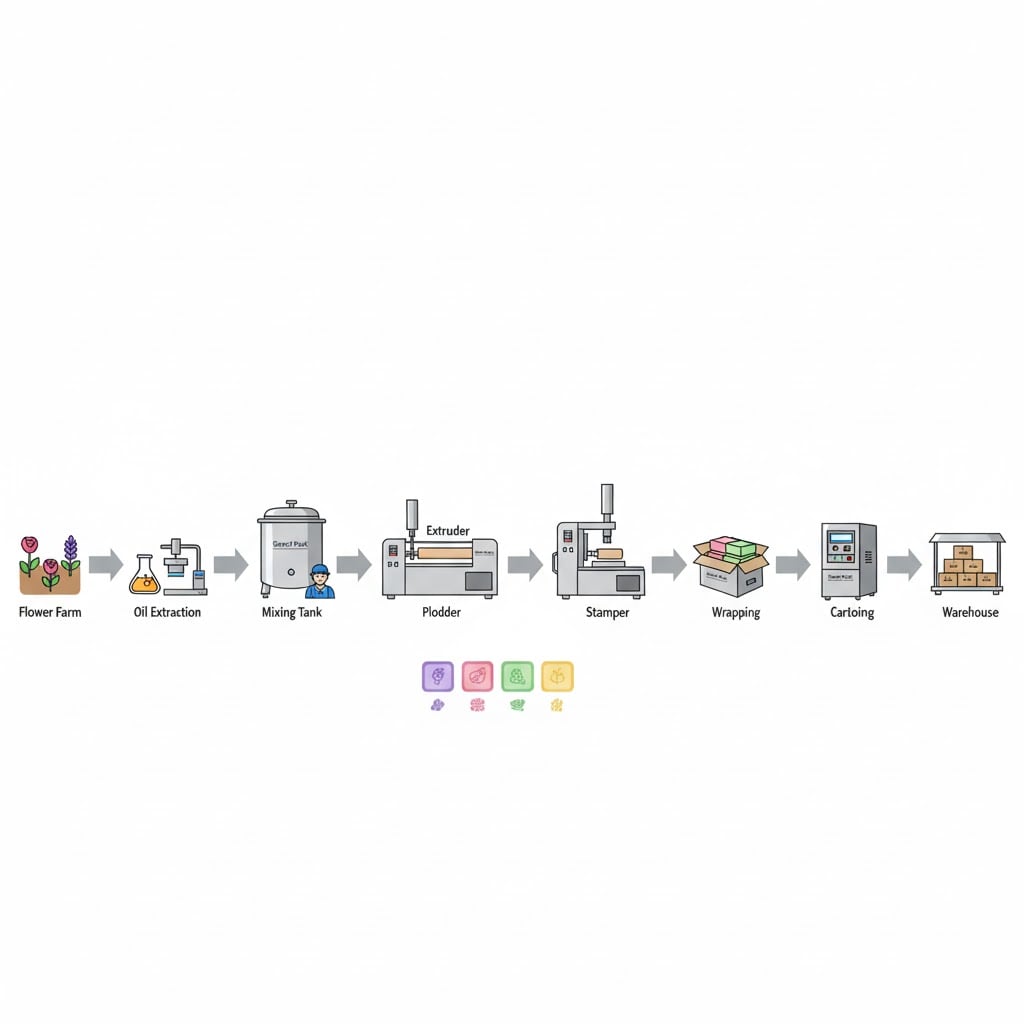
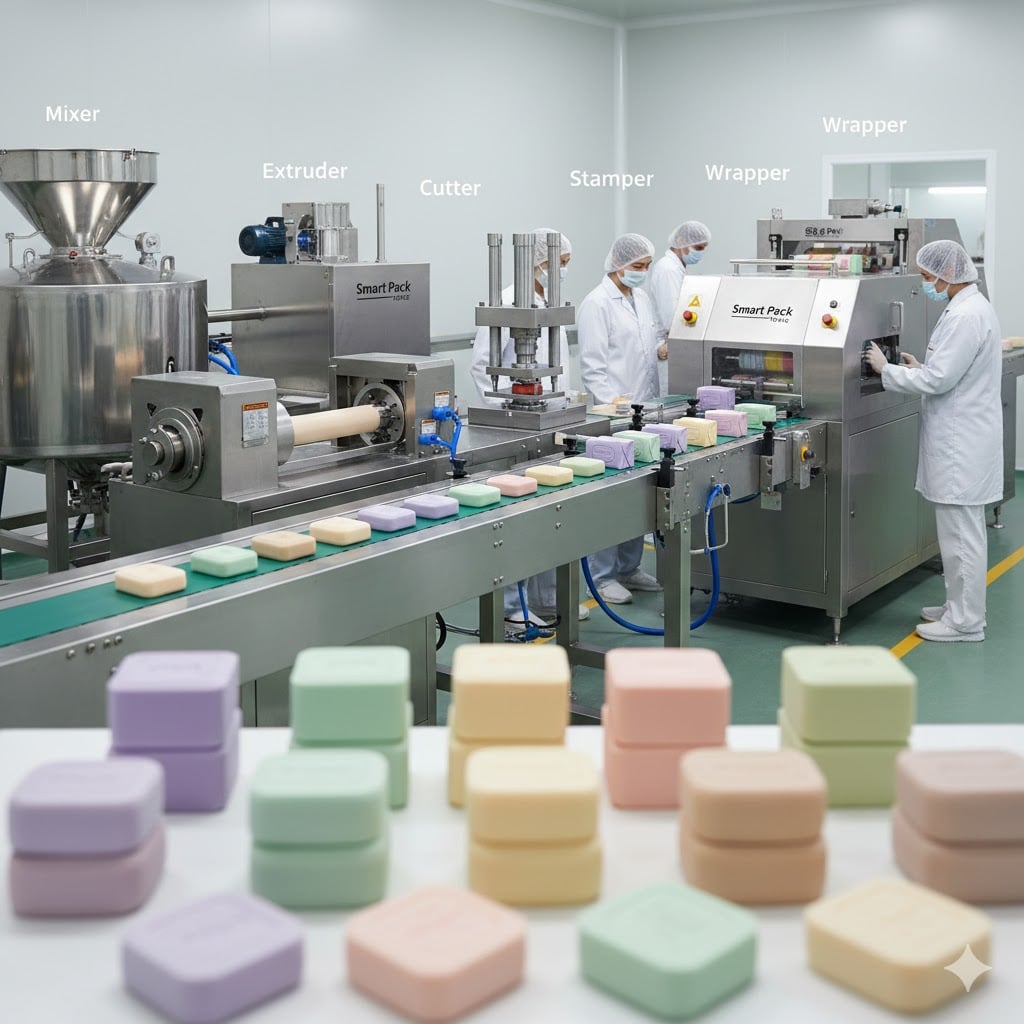
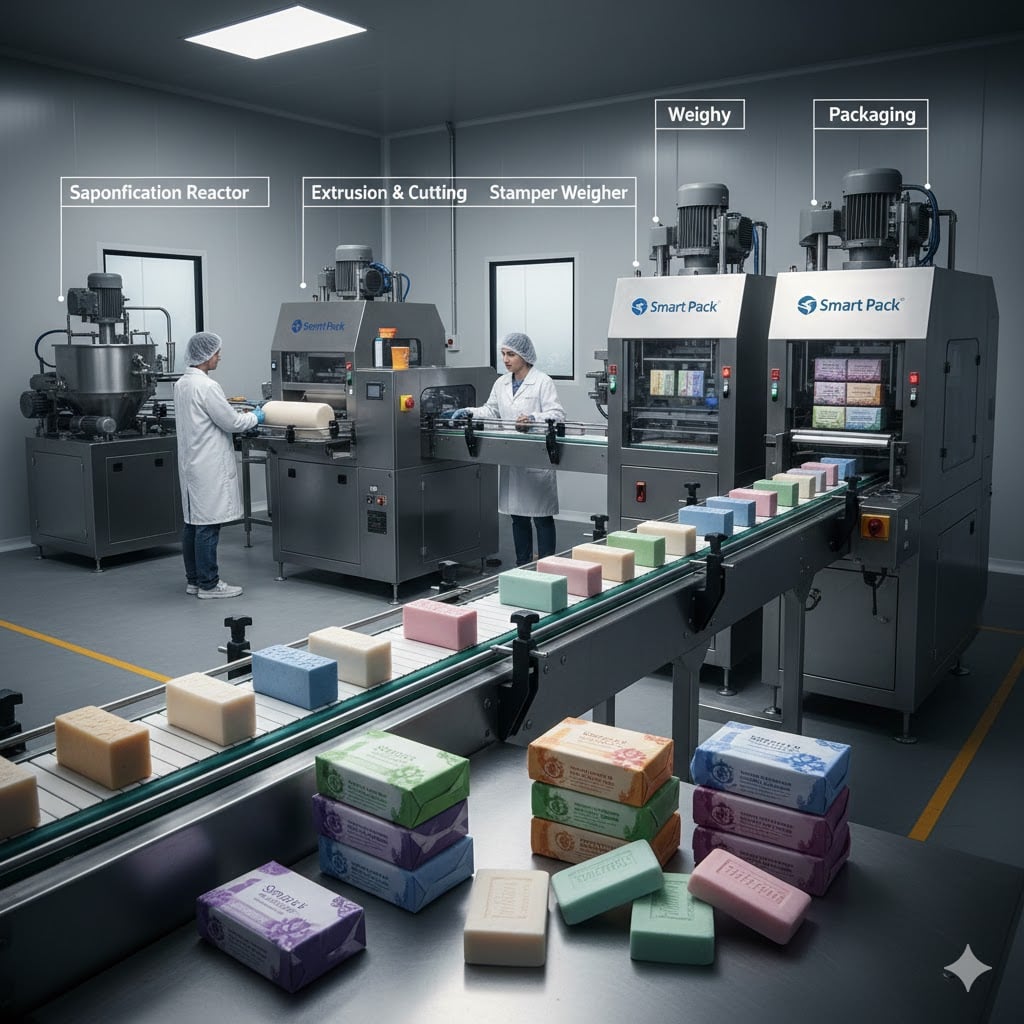
A premium solid soap production, filling, and packaging line consists of a set of interconnected machines operating in a precise sequence to ensure consistent quality at every stage. The line typically includes primary production units, forming units, and finally filling and packaging units. Operating as an integrated system, the line minimizes errors while maximizing productivity.
Detailed Stages of the Project
Raw Material Preparation and Mixing Stage
The process begins with mixing oils, alkaline substances, and special additives inside industrial mixers designed for continuous operation and uniform distribution. Temperature and mixing speed are carefully controlled, as this stage directly affects the final soap quality.
Pressing and Extrusion Stage
After mixing, the compound is transferred to pressing and extrusion machines that compress and shape the mixture into solid bars with uniform density. This step ensures consistent hardness and form for every soap bar.
Cutting and Shaping Stage
The soap bars are cut into specific weights such as 90 g, 100 g, or 125 g according to market requirements. Branding logos or custom designs can also be embossed directly onto the soap at this stage.
Filling and Packaging Stage
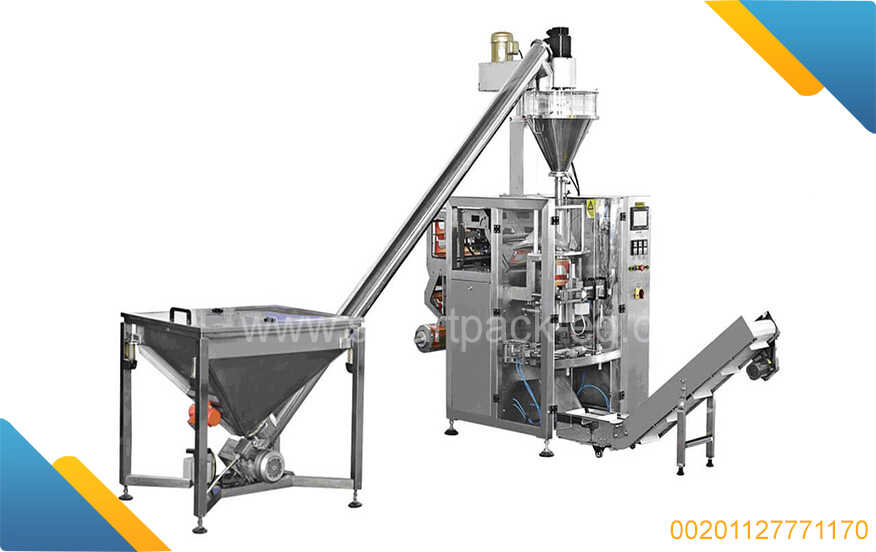
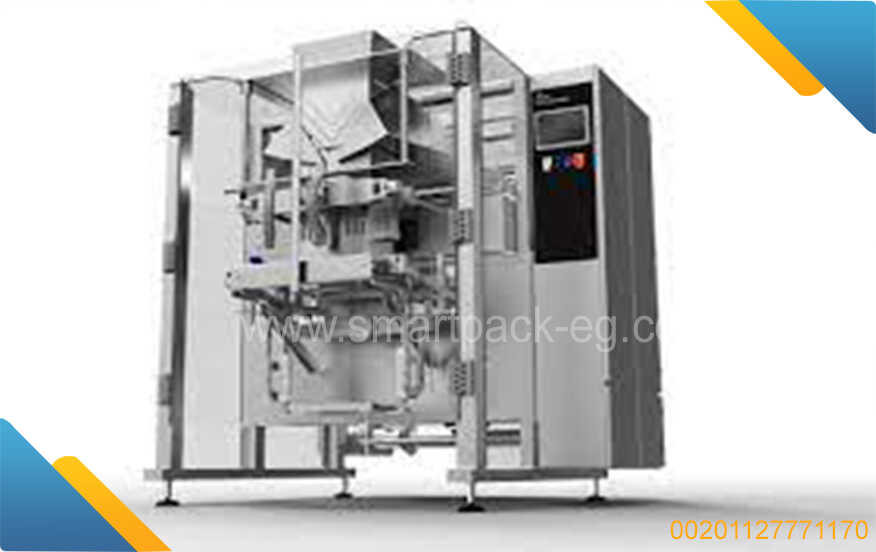
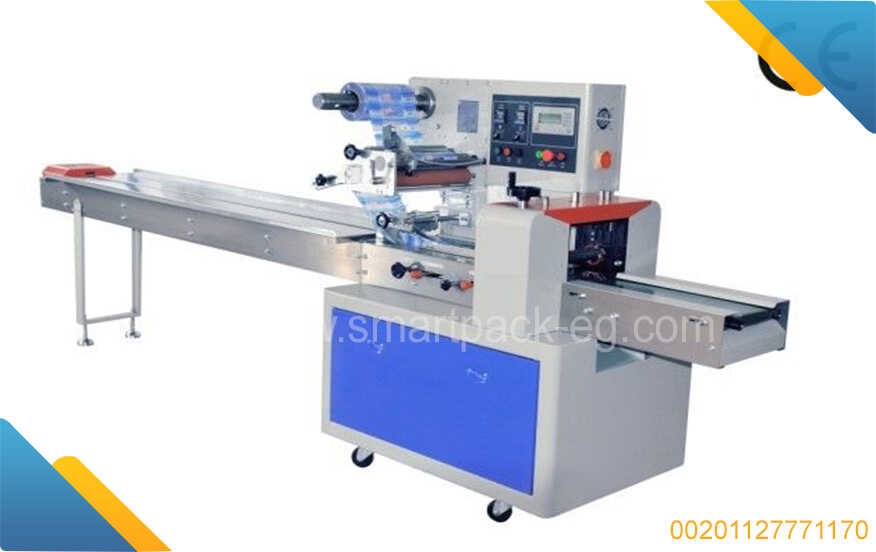
This stage represents the core of the premium solid soap packaging project in Egypt. Soap bars are fed into packaging machines that wrap them in plastic or paper, securely seal the packages, and optionally apply printing or labeling.
Types of Premium Solid Soap Filling and Packaging Machines
Manual Packaging Machines
Used in very small-scale projects, these machines rely heavily on manual labor, offer limited productivity, and provide lower quality consistency compared to automated systems.
Semi-Automatic Packaging Machines
These machines offer a balanced solution between cost and productivity, combining partial human intervention with automated wrapping and sealing systems. They are suitable for emerging or medium-sized factories.
Fully Automatic Packaging Machines
The ideal choice for factories targeting high and stable production volumes. These machines automatically feed, wrap, seal, and discharge soap bars, significantly reducing errors and increasing operational efficiency.
Comparison Table of Packaging Systems
| Comparison Factor | Manual | Semi-Automatic | Fully Automatic |
|---|---|---|---|
| Hourly capacity | Low | Medium | Very high |
| Weight accuracy | Weak | Good | Excellent |
| Labor dependency | High | Medium | Low |
| Package uniformity | Irregular | Relatively uniform | Perfectly uniform |
| Waste rate | High | Medium | Very low |
| Scalability | Limited | Moderate | High |
| Commercial market suitability | Weak | Good | Excellent |
Equipment Specifications and Requirements
The quality of the production line depends on selecting machines specifically designed for solid soap manufacturing. Key specifications include:
-
All product-contact parts made of stainless steel
-
Control systems that allow easy adjustment of speed and weight
-
Quick and easy cleaning to minimize downtime
-
Ability to operate continuously for long hours
Types of Solid Soap Packaging and Their Impact on Machine Selection
| Packaging Type | Application | Impact on Machine |
|---|---|---|
| Transparent plastic wrap | Retail markets | Requires heat-wrapping system |
| Printed paper wrap | Premium products | Requires high wrapping precision |
| Cardboard box | Hotels and gift sets | Requires secondary packaging machine |
The choice of packaging type directly affects the packaging machine model, line speed, and operating costs.
Economic Feasibility of the Project
This project is characterized by relatively low operating costs compared to many other industries, along with stable demand and easy market penetration. Increasing automation in filling and packaging reduces waste and steadily improves profit margins over time.
| Cost Item | Impact on the Project |
|---|---|
| Machines | Long-term investment |
| Labor | Reduced with automation |
| Maintenance | Stable with high-quality equipment |
| Marketing | Easier with professional packaging |
| Return | Stable and scalable |
Key Success Factors
Project success depends on selecting packaging machines suitable for production volume, maintaining consistent soap quality, focusing on attractive packaging design, performing regular equipment maintenance, and planning for future expansion.
Role of Smart Pack in Supplying Soap Packaging Lines
Smart Pack provides integrated solutions that include factory requirement analysis, selection of suitable premium solid soap filling and packaging machines, scalable production line design, and technical support with after-sales service to ensure stable operation and minimal downtime.
Frequently Asked Questions (FAQ)
Is the premium solid soap packaging project profitable?
Yes, due to continuous demand and lower risk compared to many other industrial projects.
Can the project start with a small line and expand later?
Yes, modular machines can be selected to allow upgrades and future expansion.
Does packaging design affect sales?
Significantly. Professional packaging increases perceived product value.
What is the difference between manual and automated packaging?
Automated systems provide higher consistency, better quality, and lower long-term costs.
Does the project require a large workforce?
Labor requirements decrease as automation levels increase.
Does Smart Pack provide technical support?
Yes, including technical support, professional consultation, and after-sales service.