
 Admin
Admin Pasta Production, Filling, and Packaging Line in Egypt
A Promising Food Industry Project with Strong Local and Regionald
Introduction
The pasta production, filling, and packaging line project in Egypt is one of the most promising industrial food projects, driven by the growing demand for pasta in local and regional markets and its continuous consumption in households, institutions, and restaurants. Converting pasta from its raw form into a ready-to-sell product requires high-precision machinery to ensure packaging quality, product safety, and shelf stability.
The importance of this project lies in its ability to serve diverse market needs, from small packs for household use to larger packs for commercial applications, with strong export potential. This guide provides a comprehensive overview covering manufacturing and packaging stages, suitable machine types, production line design, and how to select the right equipment with the support of Smart Pack.
First: Why Is Pasta Filling and Packaging Important in Egypt?
This project stands out for several profitability drivers:
1. Stable and Continuous Demand
Pasta is a staple food in Egypt, with sales increasing alongside population growth.
2. Product Variety
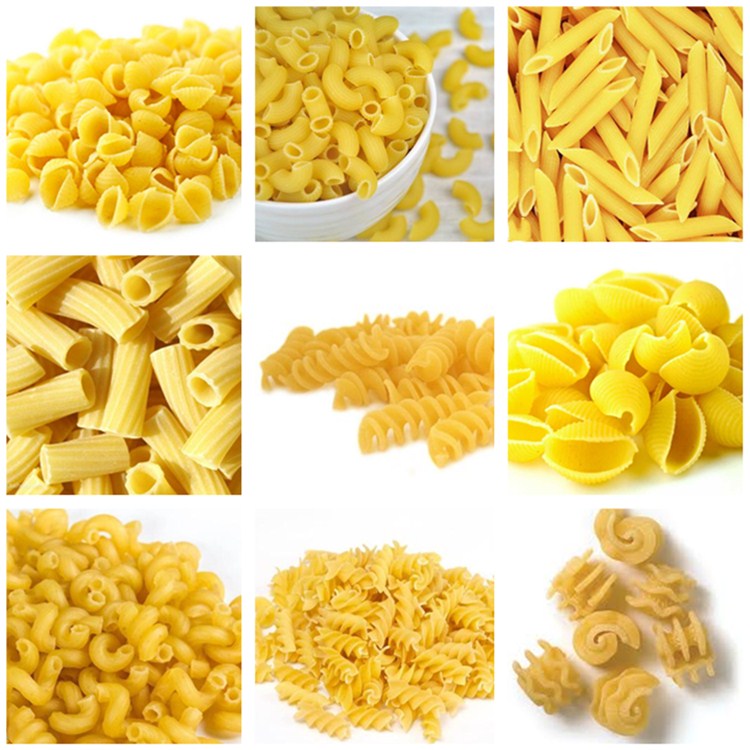
You can produce and package multiple pasta types (short, long, specialty, organic).
3. Strong Export Opportunities
Egyptian pasta is in demand across Arab and African markets.
4. Scalability
Successful operations can expand into instant pasta or colored pasta products.
Continuous demand makes pasta packaging an excellent investment for food industry entrepreneurs.
Second: Pasta Manufacturing Stages Before Packaging
Pasta manufacturing passes through several essential steps:
1. Mixing
Flour, water, and ingredients are mixed in industrial mixers to achieve the right dough consistency.
2. Extrusion and Shaping
The dough is fed into extrusion machines to form the desired pasta shapes.
3. Drying
Pasta is transferred to drying tunnels to control moisture and extend shelf life.
4. Cooling
Products are cooled to stabilize quality before packaging.
After these stages, the pasta is ready for filling and packaging.
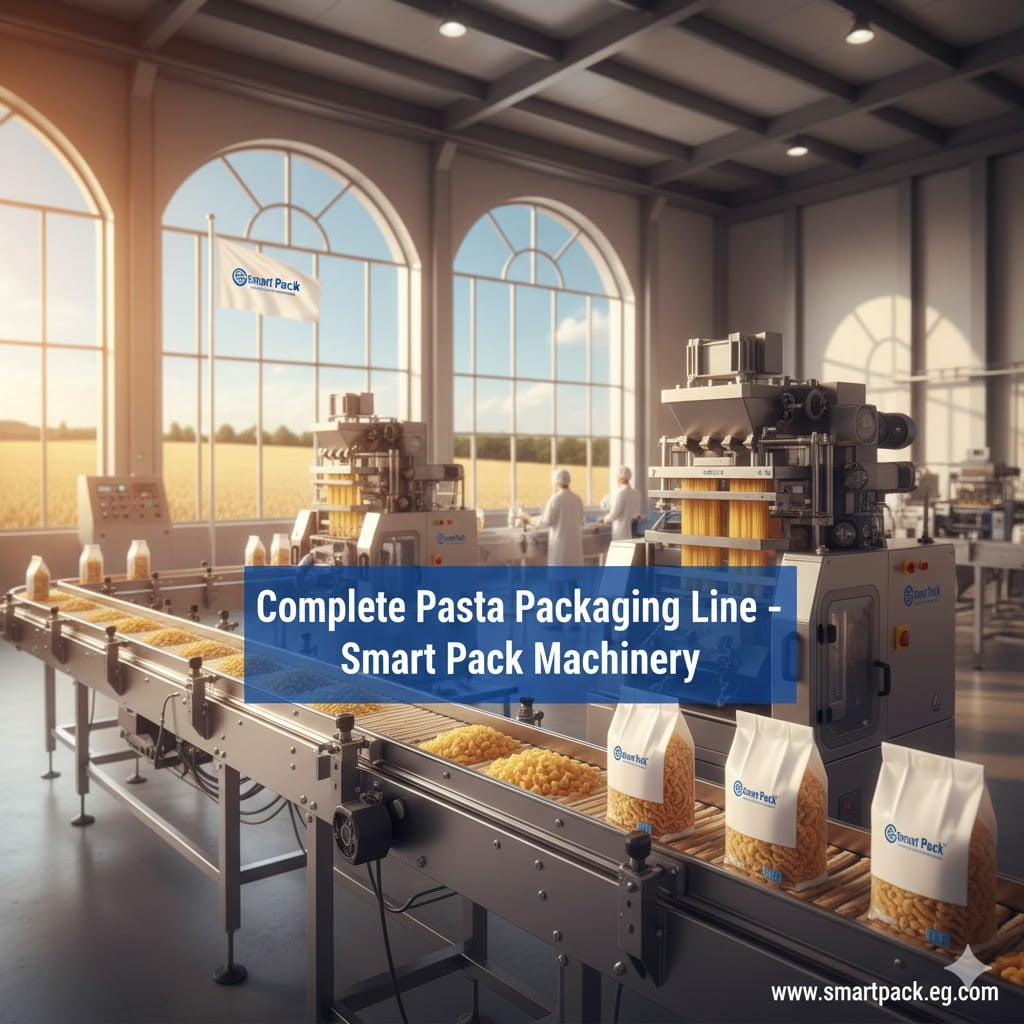
Third: Pasta Filling and Packaging Machines
Machine selection depends on production capacity and project scale. Key machines include:
-
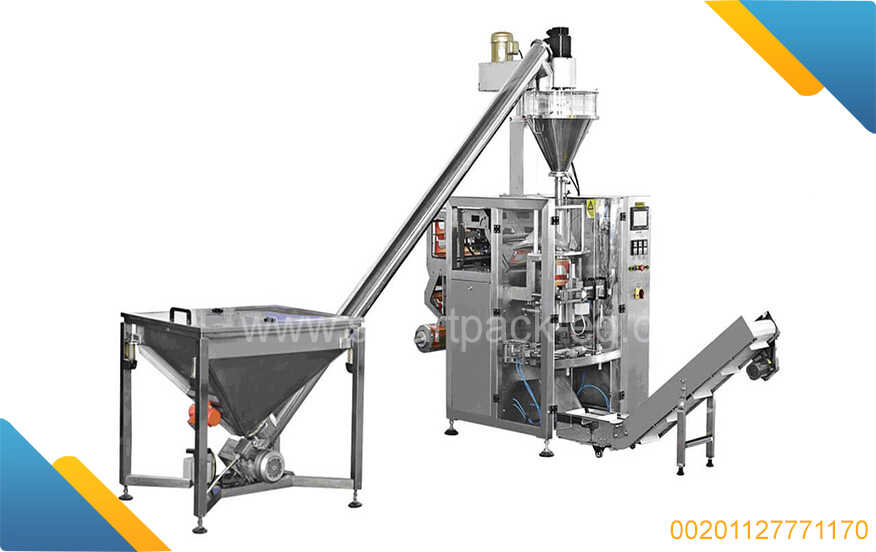
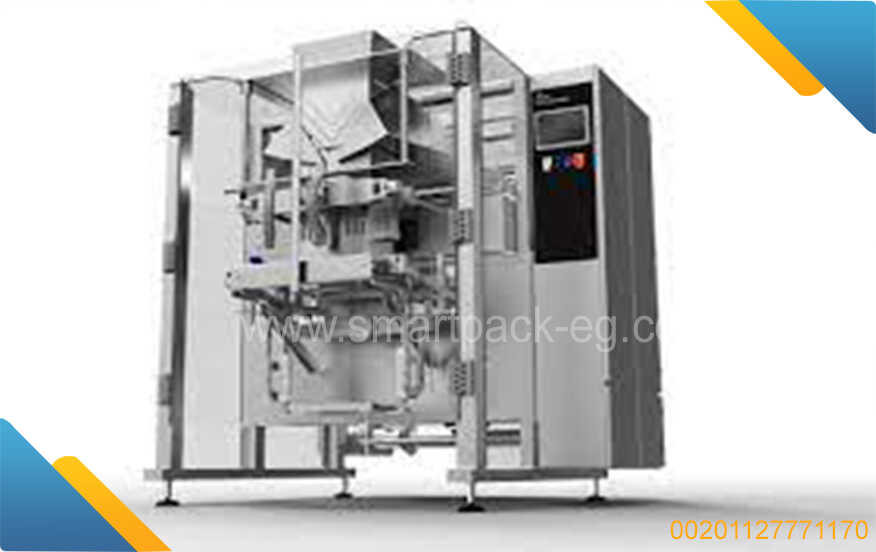
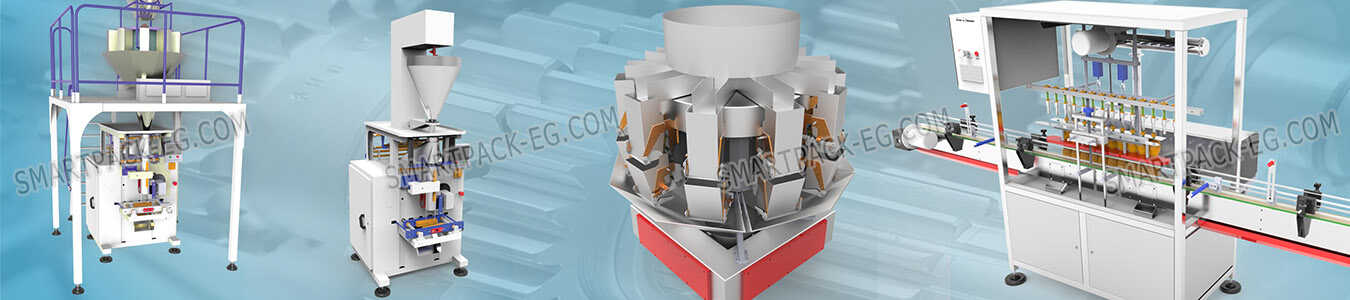
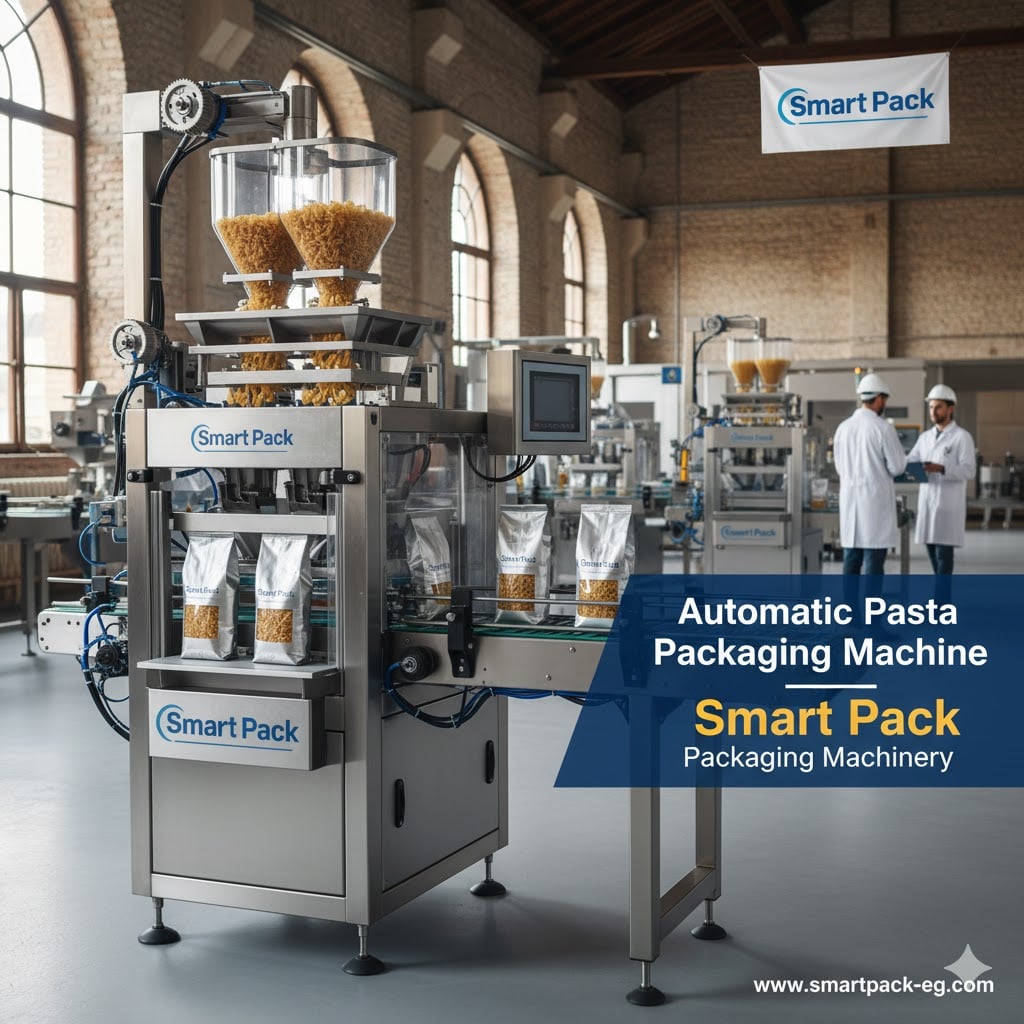
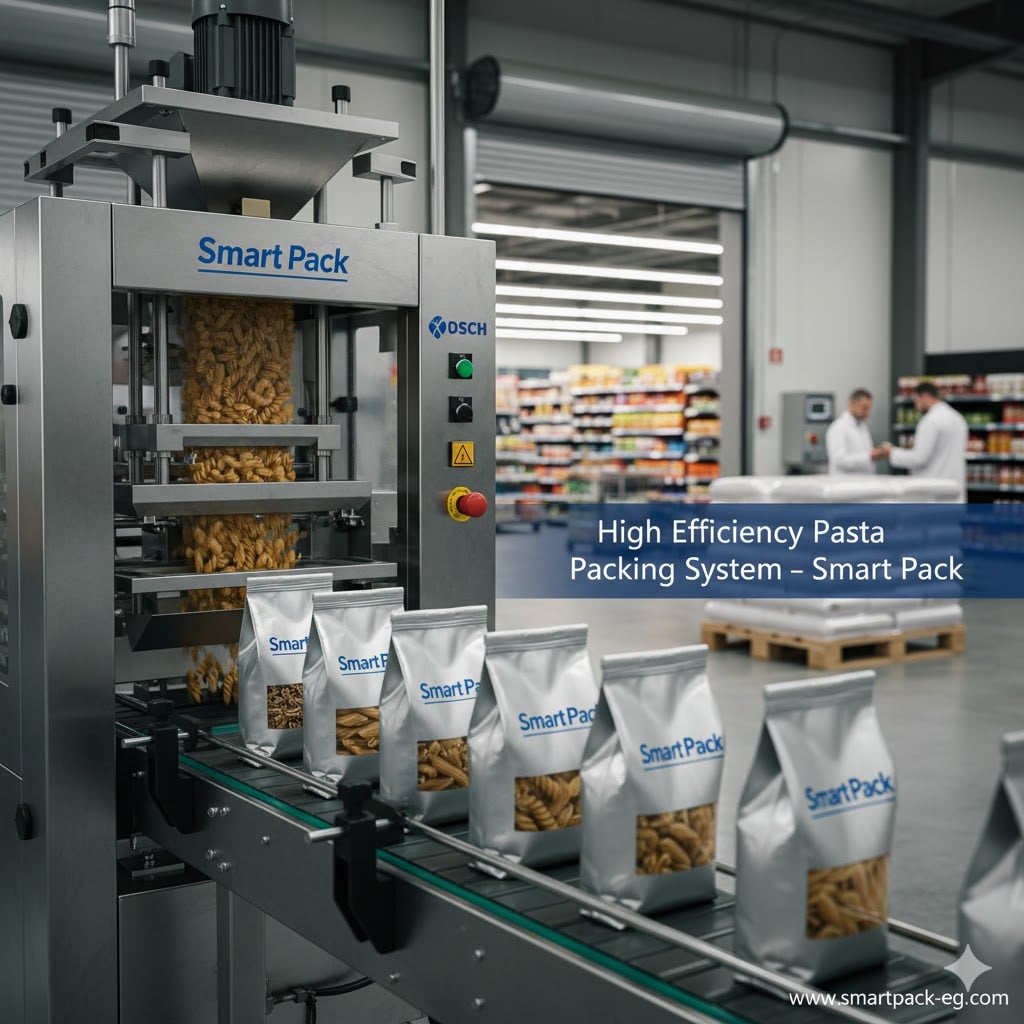
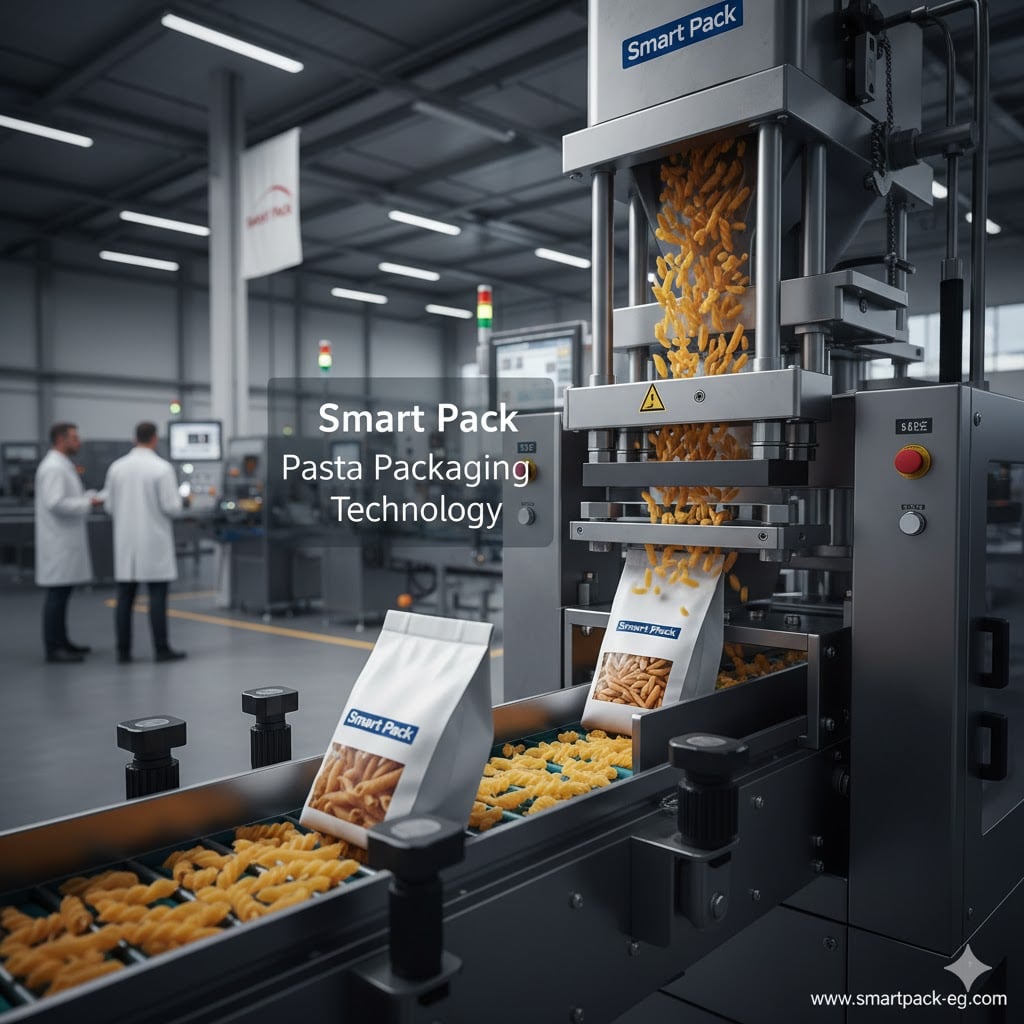
Vertical Form-Fill-Seal (VFFS) Machines
Ideal for flexible bags in multiple sizes. -
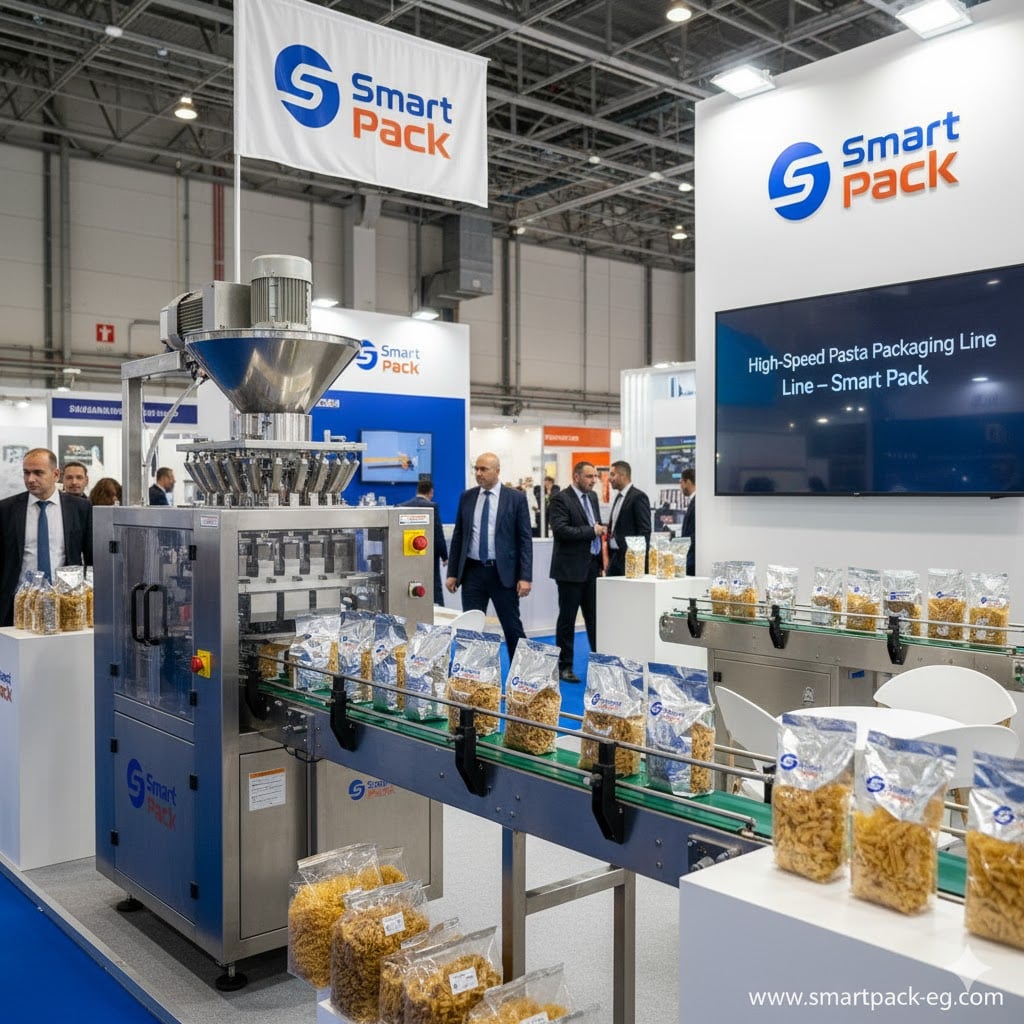
Multi-Head Weighing Machines
Provide high weight accuracy for medium and large factories. -
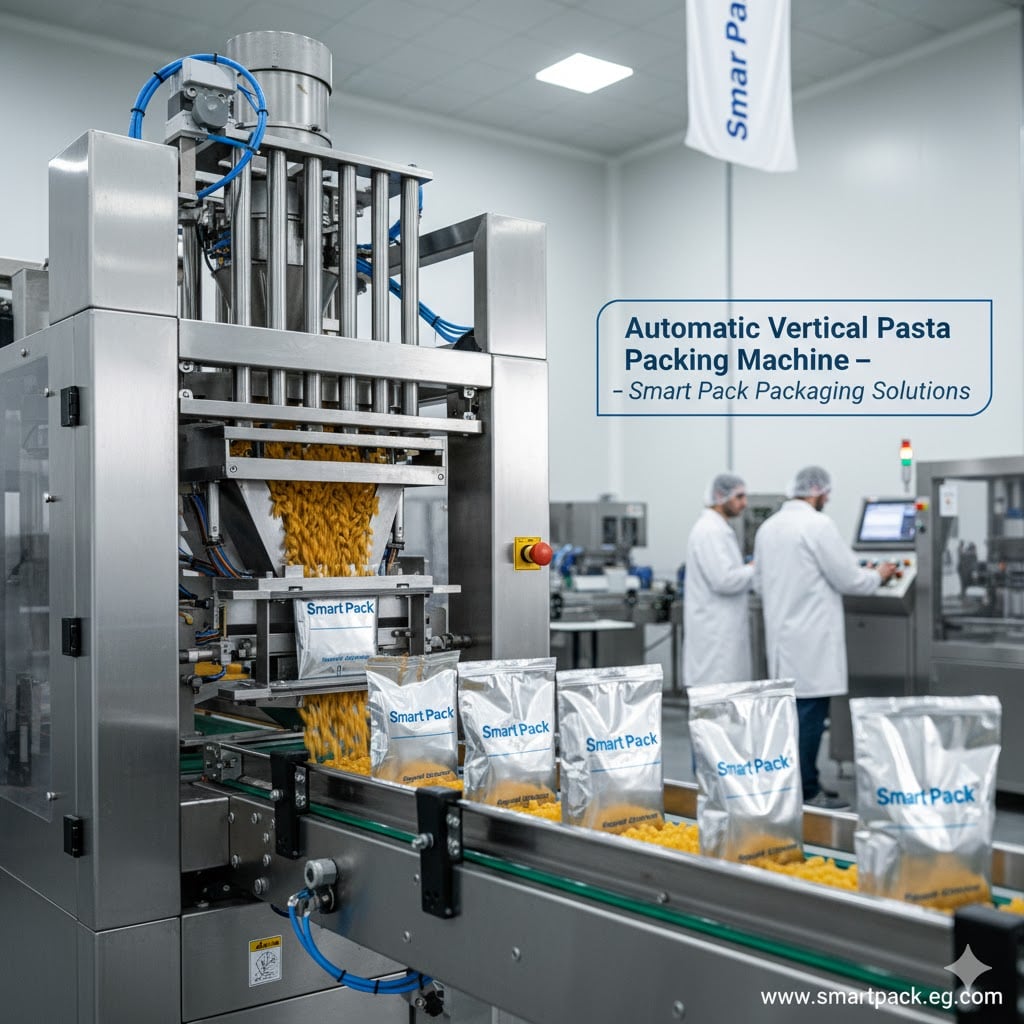
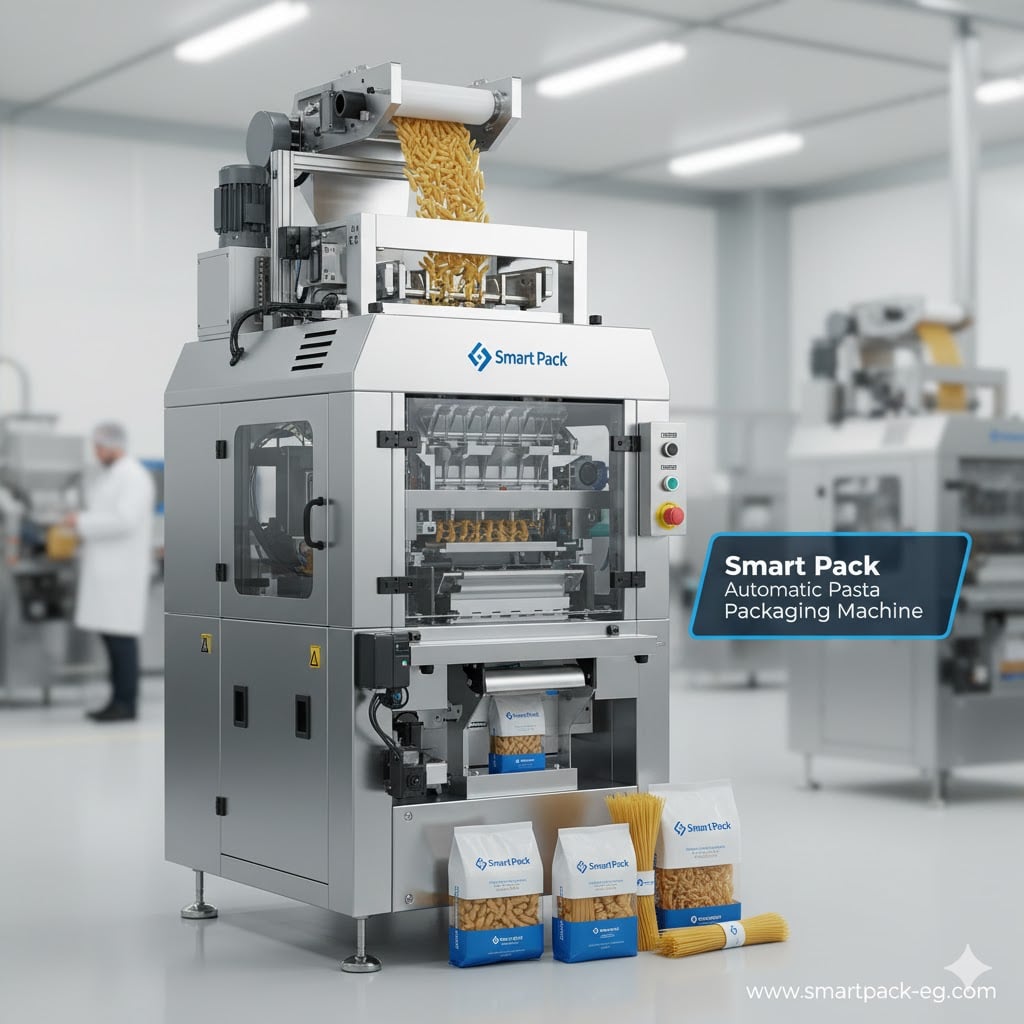
Fully Automatic Packaging Lines
Integrated systems from weighing to sealing with minimal labor. -
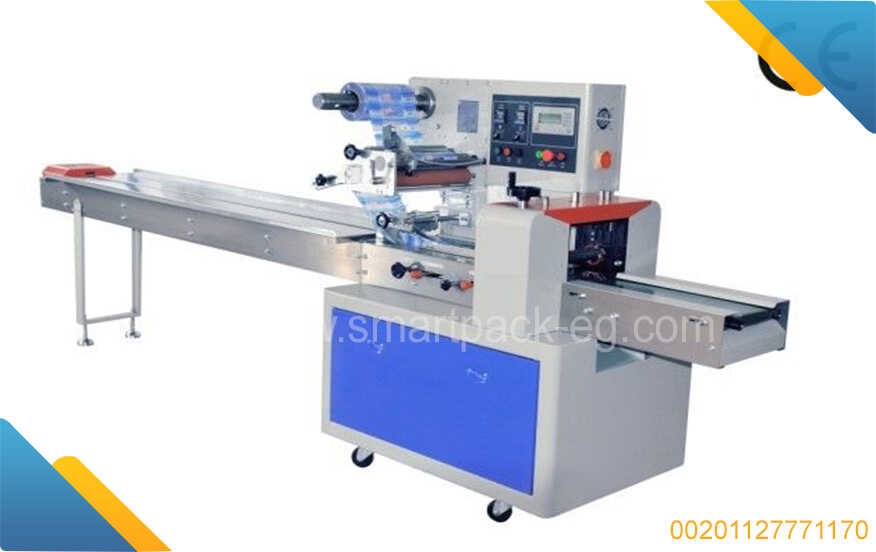
Shrink Wrapping Machines
Group multiple packs for easy transport and storage. -
Labeling Machines
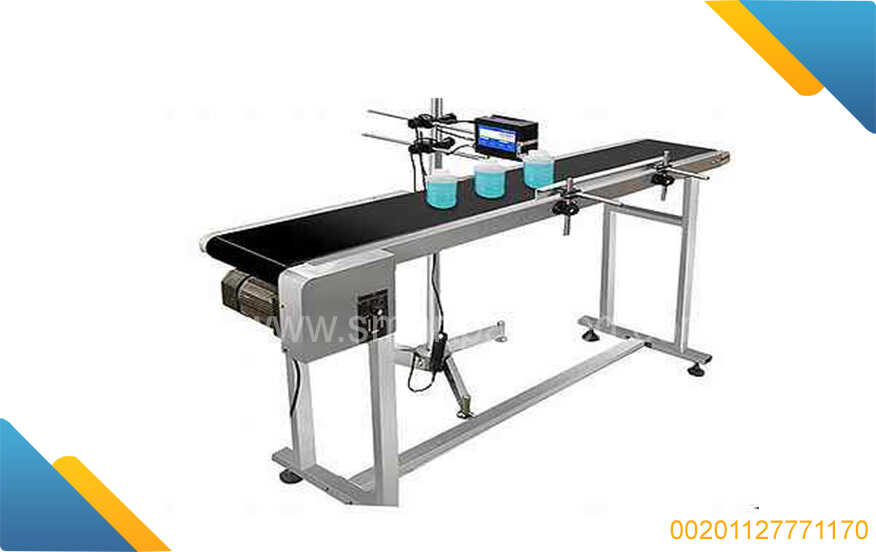
Apply branding and nutritional information accurately.
Machine Types and Applications
| Machine Type | Application | Suitable For |
|---|---|---|
| Vertical packaging | Flexible bags | Small & medium projects |
| Multi-head weighing | Precise weighing | Medium & large factories |
| Fully automatic lines | Complete packaging | High-output plants |
| Shrink wrapping | Group packaging | Transport & storage |
| Labeling | Data & branding | All project sizes |
Fourth: Designing an Integrated Pasta Production Line
A typical integrated production line includes:
-
Mixing and shaping unit
-
Drying and cooling unit
-
Weighing and filling unit
-
Sealing unit
-
Labeling unit
-
Secondary (outer) packaging unit
-
Conveyor systems
This integration boosts efficiency, reduces waste, and ensures consistent product quality.
Fifth: Choosing the Right Packaging for Pasta
Packaging directly impacts quality and market appeal:
-
Multi-layer bags
Protect pasta from moisture and contamination. -
Rigid plastic containers
Suitable for premium or specialty markets. -
Carton boxes
Used for secondary packaging and bulk handling.
Sixth: Project Investment Costs
Fixed Costs
| Item | Estimated Cost |
|---|---|
| Filling & packaging machines | High |
| Factory setup | Medium |
| Production line equipment | Medium |
| Operating licenses | Variable |
Operating Costs
| Item | Cost |
|---|---|
| Raw materials | Variable |
| Labor | Monthly |
| Electricity & water | Monthly |
| Maintenance | Usage-based |
Preparing a detailed financial study ensures accurate ROI projections.
Seventh: Pasta Sales and Distribution Channels
An effective distribution strategy includes:
-
Retail outlets (supermarkets & grocery stores)
-
Wholesale distributors
-
Supplying food factories
-
Export to Arab and African markets
-
Online and digital sales
Eighth: The Role of Smart Pack in Project Setup
Smart Pack provides end-to-end industrial solutions for pasta filling and packaging projects, including:
-
Accurate assessment of project needs
-
Recommendation of machines suited to product characteristics
-
Design of integrated production lines
-
After-sales technical support
-
Training operators on operation and maintenance
Partnering with a specialized company ensures success from design to full operation.
Ninth: Practical Tips for Project Success
-
Choose high-quality pasta raw materials to ensure customer satisfaction.
-
Test machines before purchase to verify performance.
-
Select packaging that protects the product and extends shelf life.
-
Plan a strong multi-channel distribution strategy.
-
Comply with food safety standards during packaging.
-
Invest in regular maintenance and staff training.
Frequently Asked Questions (FAQ)
1. Is pasta filling and packaging profitable in Egypt?
Yes, due to steady demand in local and regional markets.
2. What machines are best for medium-scale production?
Multi-head weighing machines with fully automatic systems.
3. Do machines require regular maintenance?
Yes, routine maintenance ensures efficiency and longevity.
4. Can different pasta types be packed on the same line?
Yes, with proper machine adjustments for shapes and sizes.
5. What packaging is most popular locally?
Multi-layer bags dominate the local market.
6. Does Smart Pack provide operator training?
Yes, training on operation and maintenance is included.
Conclusion
The pasta production, filling, and packaging line project in Egypt represents a strong investment opportunity when planned methodically, equipped with the right machinery, and focused on packaging quality. Collaborating with a specialized company like Smart Pack ensures a competitive, efficient, and scalable production line capable of succeeding in both local and regional markets.