 Admin
Admin Chips Manufacturing: From Potatoes and Corn to a High-Demand Industrial Business
Potato chips and snack products are a core segment of the ready-to-eat food market. They are widely consumed in homes, cafés, retail stores, schools, and public venues—making chips manufacturing a sustainable and scalable investment opportunity for factories aiming to grow in the snack food sector.
From Field to Bag: Industrial Chips Production Stages
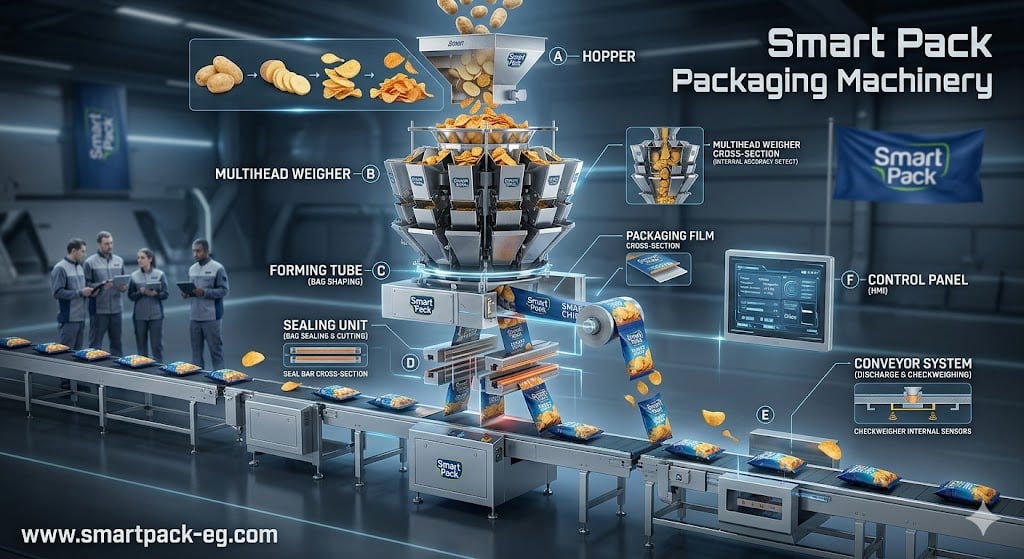
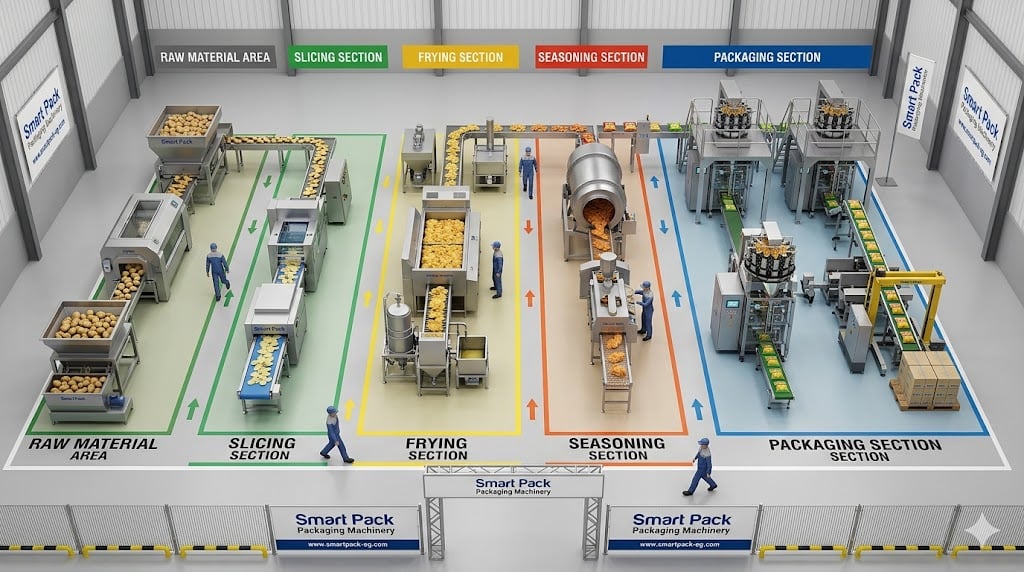
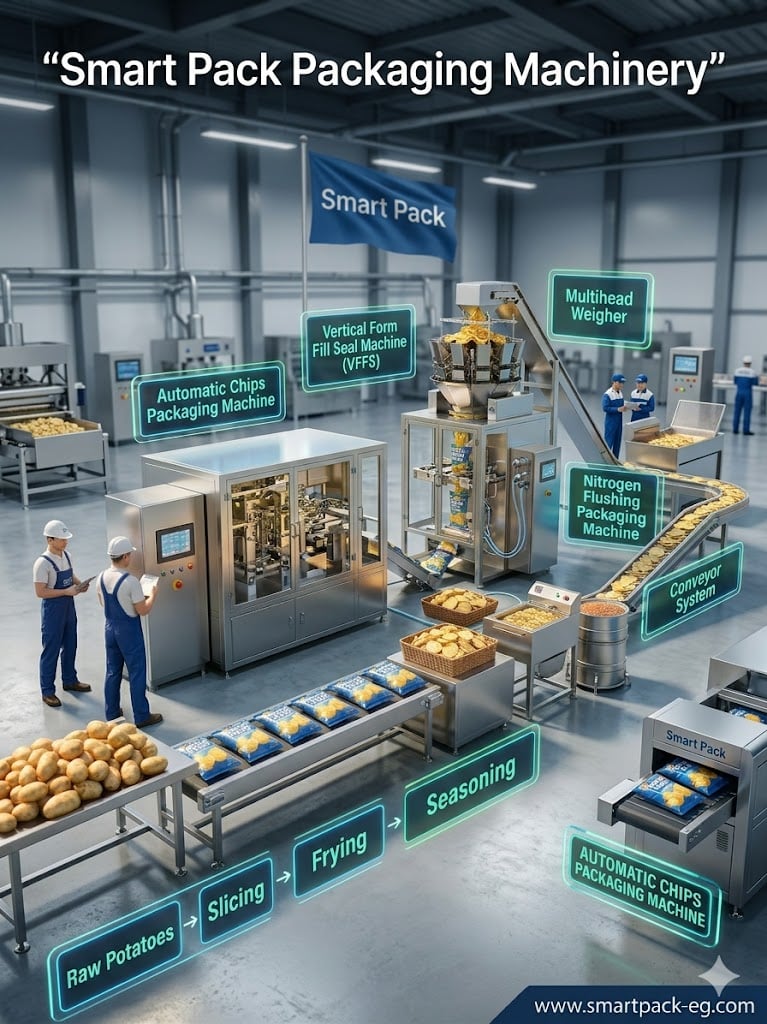
Modern chips manufacturing follows a controlled, end-to-end process to ensure quality, consistency, and market readiness:
1) Raw Material Selection
High-starch, low-sugar potatoes are selected for potato chips, while suitable corn varieties are chosen for crispy corn chips.
2) Washing and Cleaning
Raw materials are thoroughly cleaned to remove soil and impurities prior to processing.
3) Peeling, Cutting, or Milling
Potatoes are peeled and sliced into uniform thin chips. For corn chips, kernels are milled and prepared as dough or flakes to the required size.
4) Pre-Treatment
Optional steps such as blanching and moisture reduction improve texture before frying or baking.
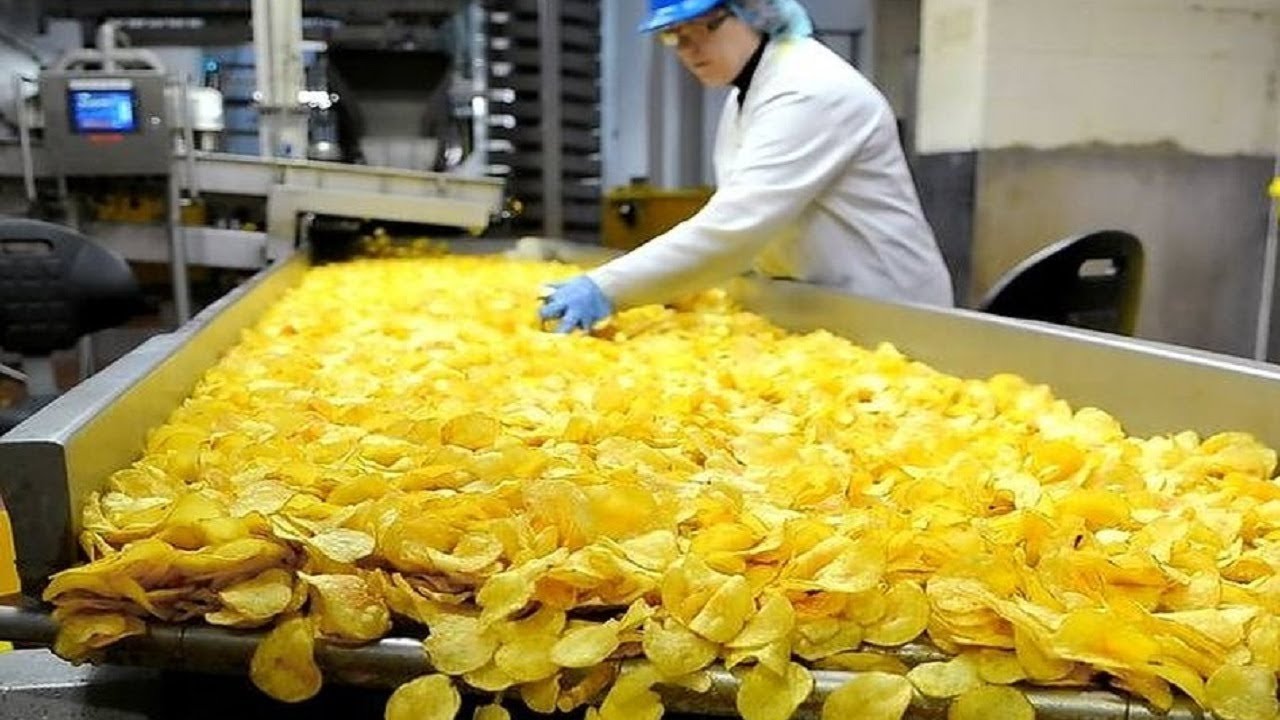
5) Frying or Thermal Extrusion
Potato chips are fried in controlled-temperature oils to achieve a consistent golden color and crisp texture. Modern corn chips often use thermal extrusion to form and cook the product efficiently.
6) De-Oiling and Seasoning
Excess oil is removed, then flavors and seasonings are evenly applied according to the final product formula.
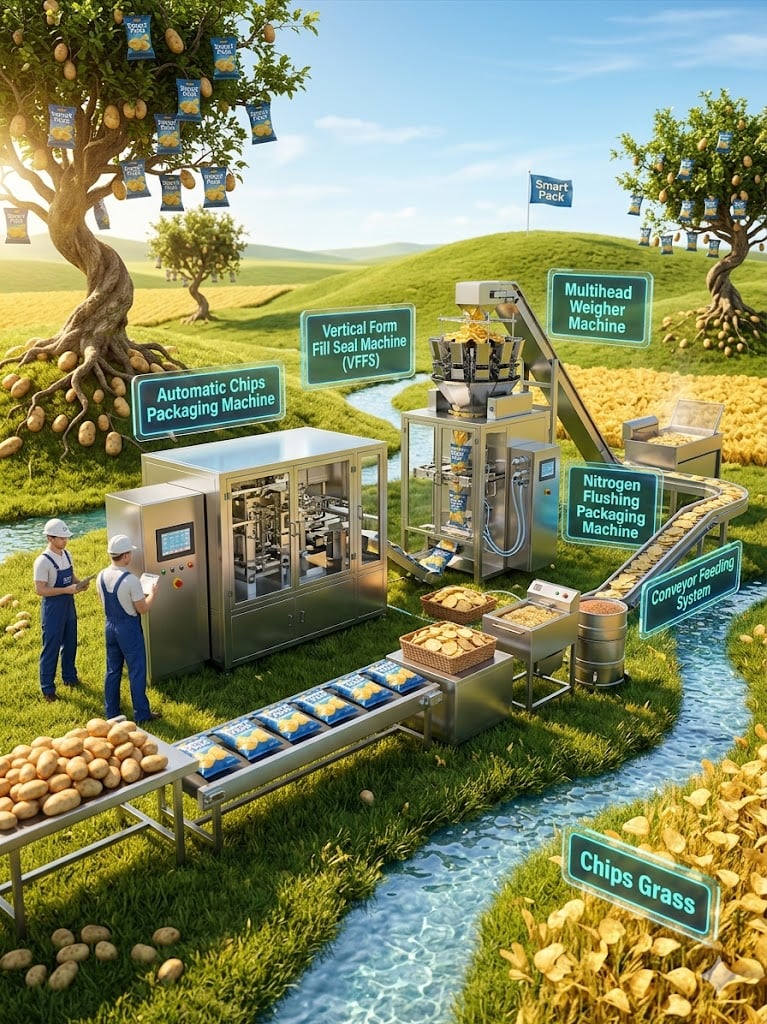
7) Filling and Packaging
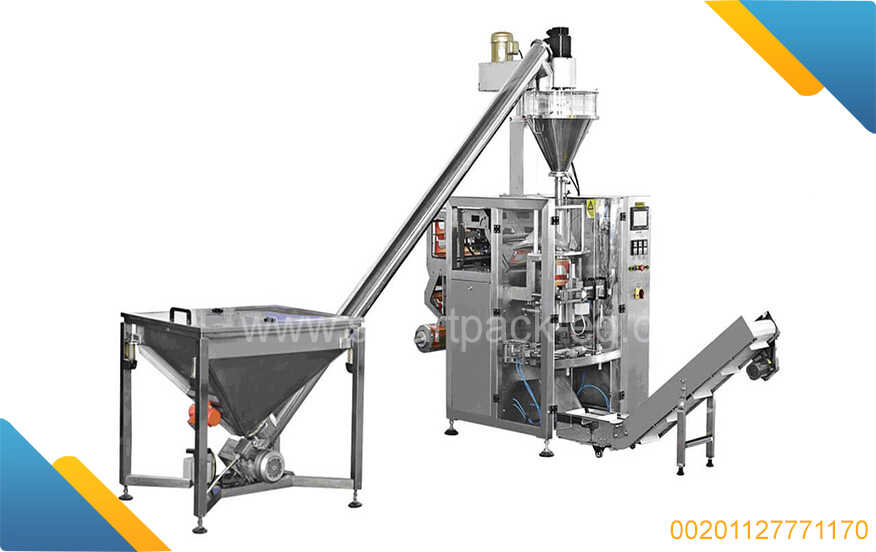
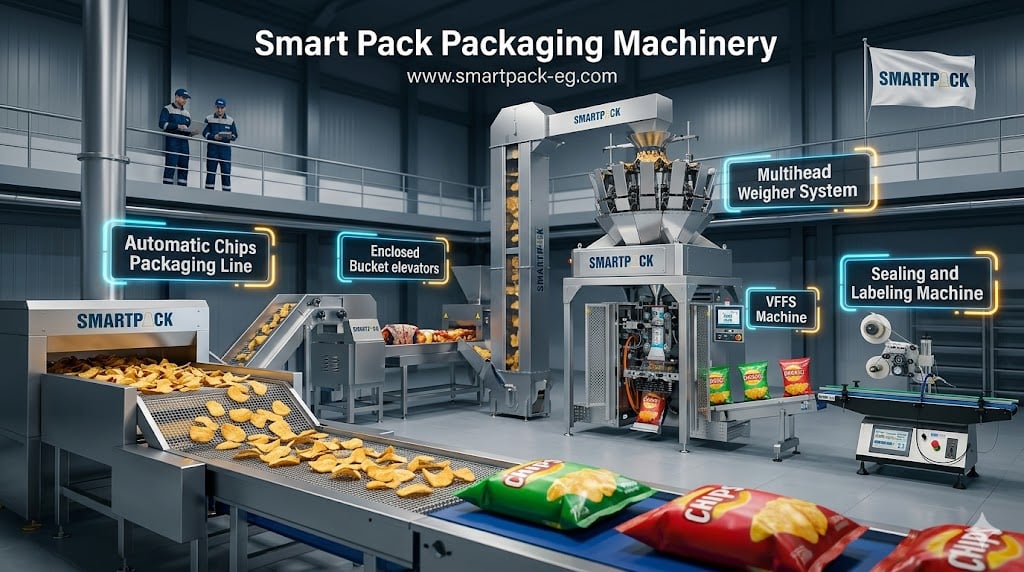
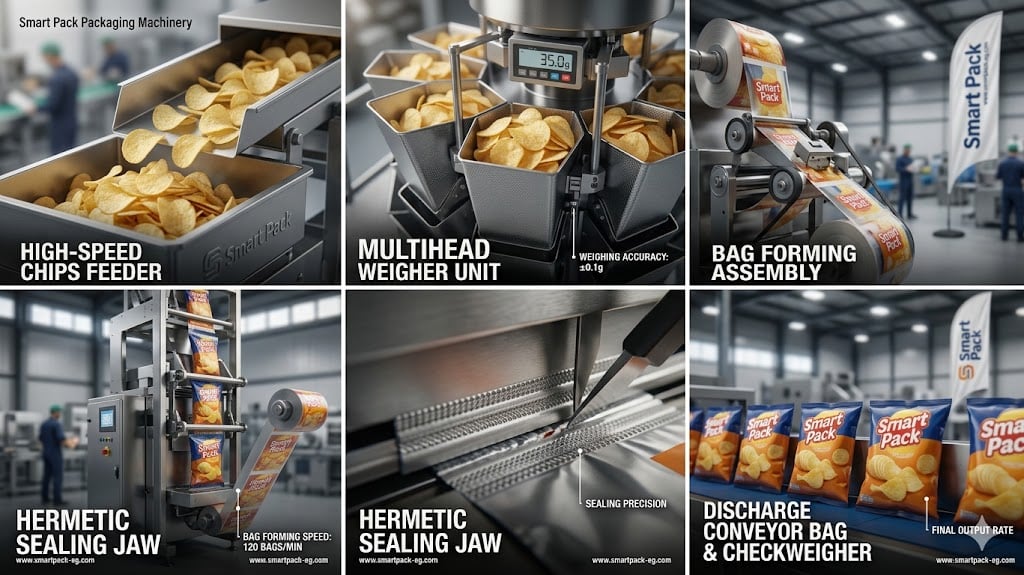
Products are packed on specialized lines that ensure tight sealing, accurate weights, and full food safety compliance.
Suitable Production Lines and Packaging Equipment
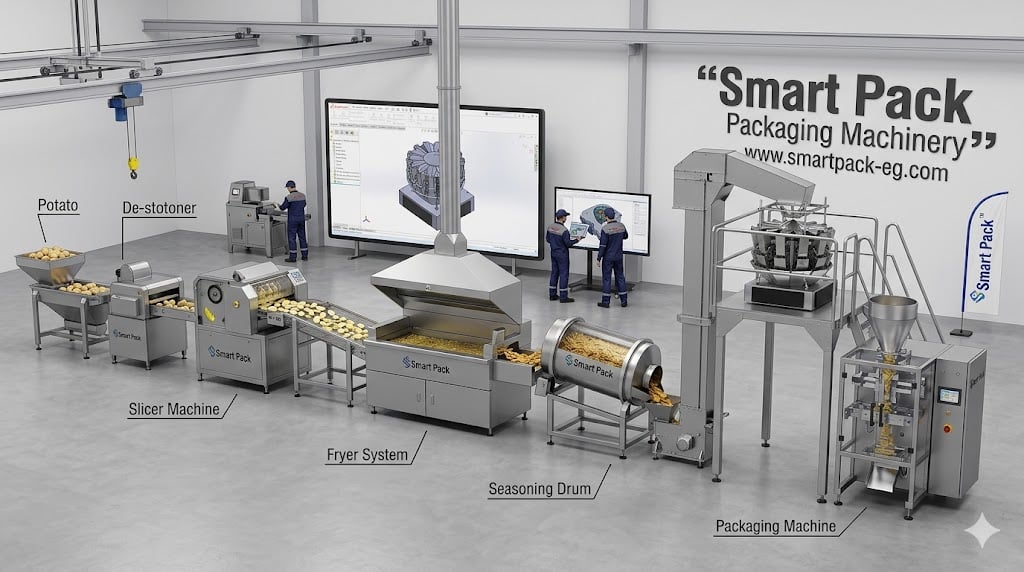
| Product Stage | Machine Type | Operational Notes |
|---|---|---|
| Potato chips | Peeling, slicing, frying, de-oiling machines | High-speed output with precise temperature & texture control |
| Corn chips | Corn processing line (mixing, extruder forming, frying/baking, de-oiling) | Ideal for crispy corn snacks |
| Flavoring | Automatic seasoning unit | Uniform distribution of flavors |
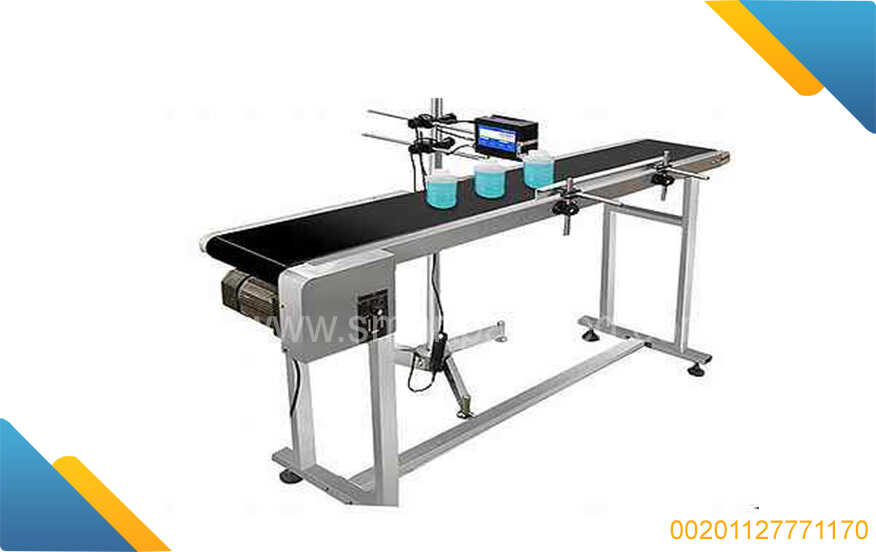
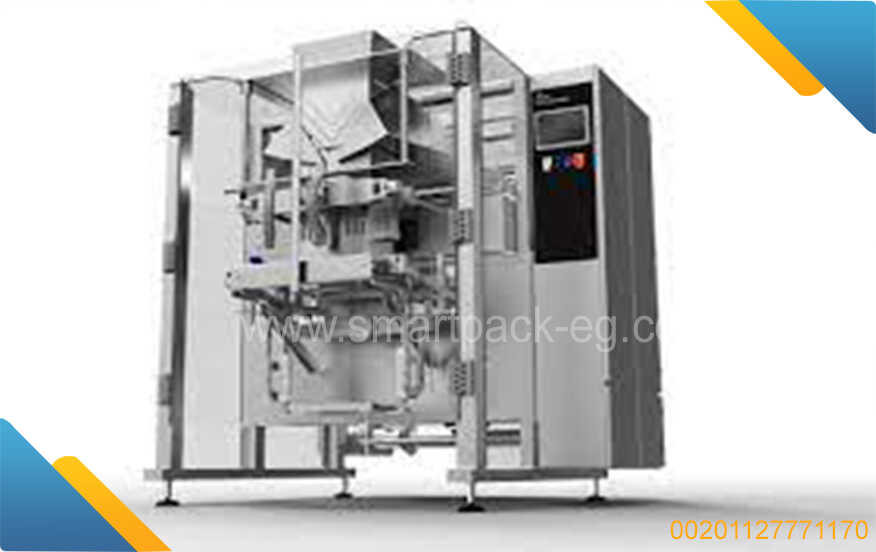
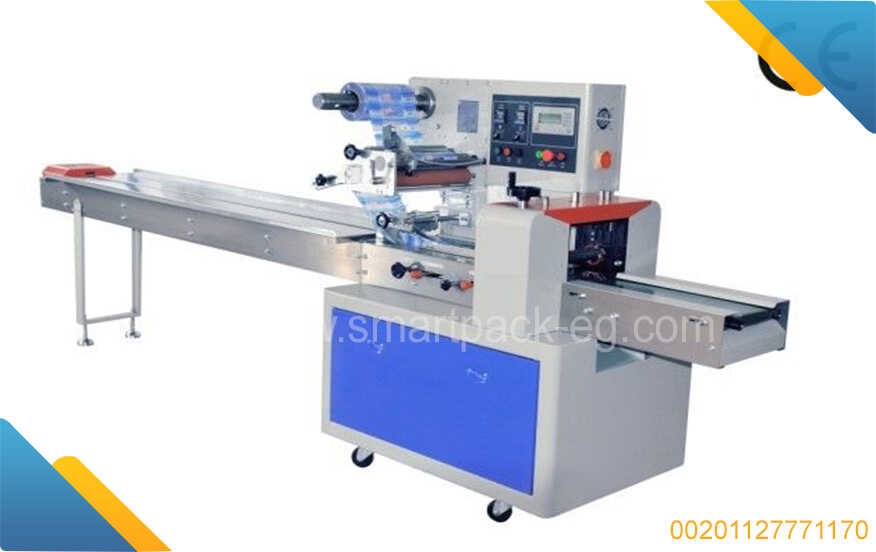
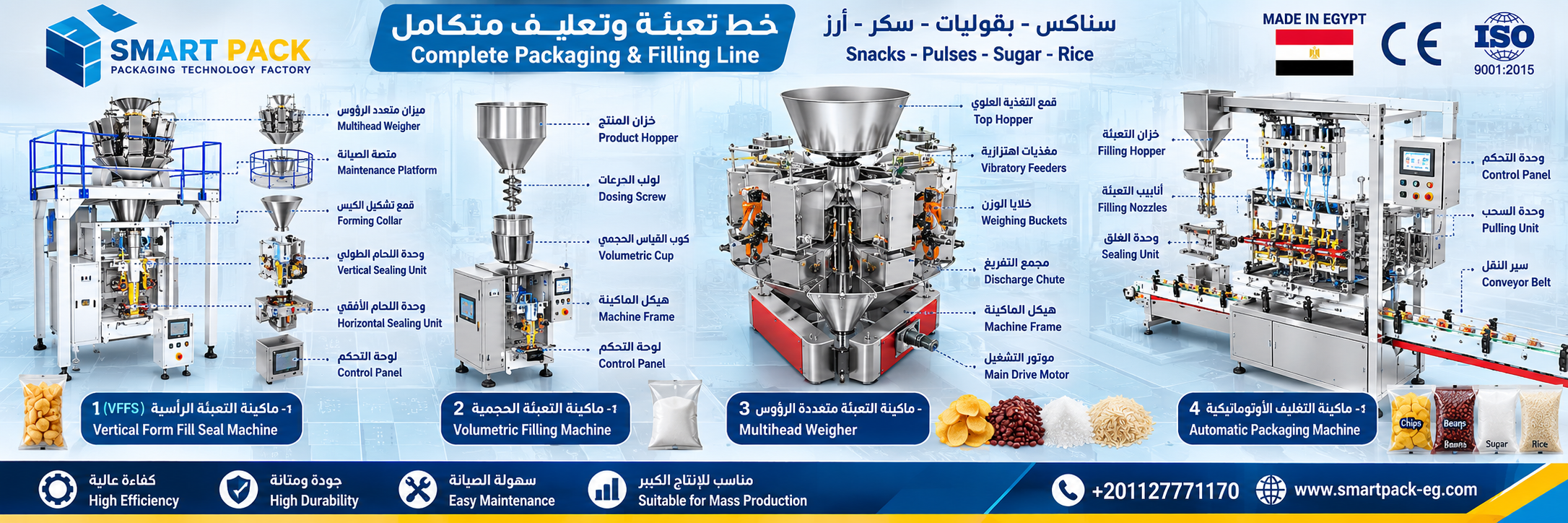
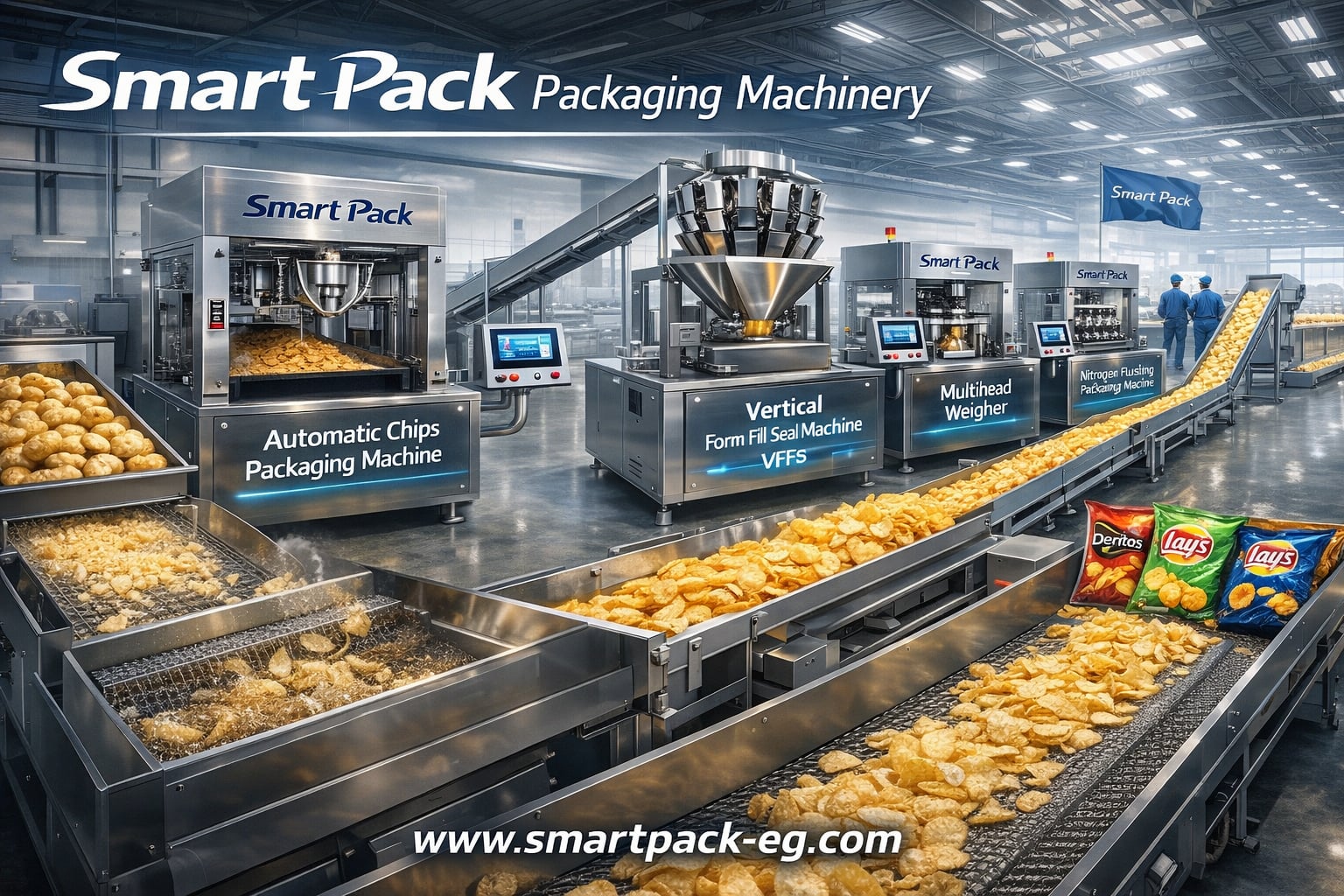
| Bag filling | Automatic packing machine with weighing & nitrogen flushing | Accurate weight and airtight sealing |
| Secondary packing | Complete cartoning line | Ready-for-shipment packaging |
Why Is Chips Manufacturing Highly Profitable?
Demand for crispy snacks and diverse flavors remains strong across local and regional markets, making the project:
-
Non-seasonal and stable, as snacks are part of everyday consumption
-
Scalable, with easy addition of new flavors or lines (corn chips, baked/low-oil options)
-
Broadly distributable, via retail chains, cafés, foodservice, and large supply contracts
Market Study and Profitability Outlook
The global snack market continues to grow due to:
-
Rising consumption of ready-to-eat crispy foods across age groups
-
Flavor innovation encouraging trial and repeat purchases
-
Expansion of modern retail and neighborhood outlets
With efficient line operation and cost control, factories can achieve healthy margins and a sustainable return on investment.
Smart Tips Before Setting Up a Chips Factory
-
Define your target market and consumer preferences
-
Select high-quality raw materials for consistent product excellence
-
Invest in expandable production lines to support future growth
-
Reduce waste and improve efficiency through automation and quality controls
-
Partner with experienced suppliers like Smart Pack, offering end-to-end solutions—from needs assessment to technical support for filling and packaging lines
Frequently Asked Questions
What are the core steps in chips manufacturing?
Cleaning/preparing potatoes or corn, slicing or forming, frying or extrusion, seasoning, then filling and packaging.
Can corn chips and multiple flavors be produced?
Yes. Production lines can be designed for corn chips with flexible flavor applications based on target markets.
What’s the difference between potato chips and corn chips?
Potato chips are sliced directly from potatoes, while corn chips are typically formed from corn dough or via extrusion.
Is ongoing technical support required?
Yes—especially for maintenance and reliable operation of filling and packaging machines.
What is the best packaging for chips?
High-barrier metallized bags are most common, preserving crispness and extending shelf life.
Conclusion: Chips Manufacturing Is a Real Industrial Opportunity
Manufacturing chips from potatoes or corn is a high-demand, scalable industrial project with strong market traction. Companies that invest in integrated production lines and modern filling and packaging systems can secure robust profitability and long-term competitiveness. Collaborating with seasoned partners like Smart Pack accelerates commissioning, ensures consistent quality, and supports sustainable growth.