 Admin
Admin From Field to Market: How Olive and Soybean Farming Becomes an Integrated Olive Oil Production Project
Olive and soybean farming has evolved from traditional agricultural practices into powerful industrial investment opportunities when connected to advanced production lines for high-quality olive oil manufacturing and marketing in local and international markets. This transformation is not limited to one region; it is part of the broader agro-food industrial system that delivers high-value products to consumers and manufacturing sectors alike.
Olive and Soybean Farming: The Foundation of Industrial Supply
Olives are not only a signature crop of Mediterranean climates; they are a strategic raw material within an integrated industrial system when processed into olive oil—a product in high demand across food and cosmetic markets. Olive trees typically require several years before reaching productive maturity, but once established, their economic value increases significantly.
Soybean cultivation is also an attractive option in modern agricultural systems. As a nutrient-rich legume, soybeans are widely used in multiple industries, including vegetable oils, animal feed, and food processing, making them a complementary crop within integrated oil production projects.
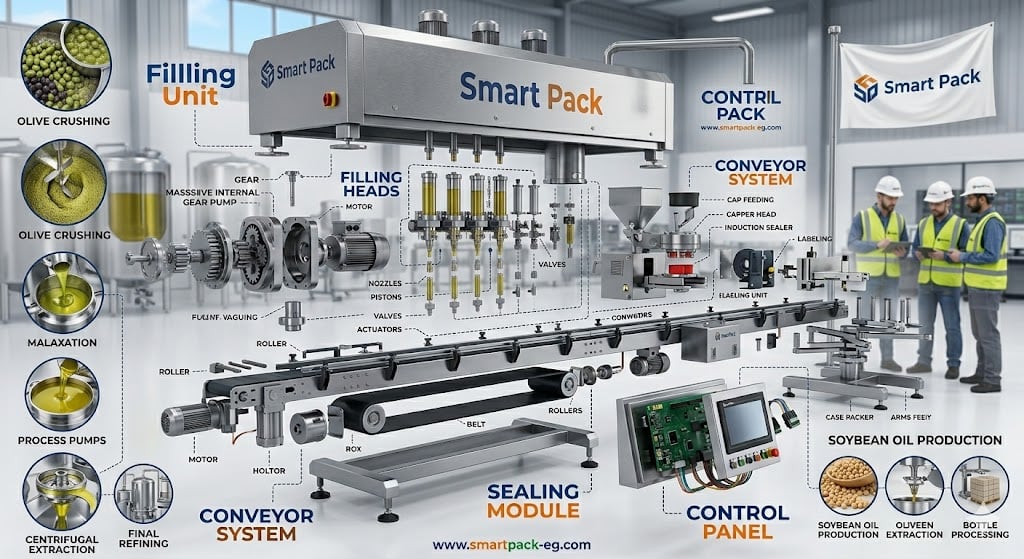
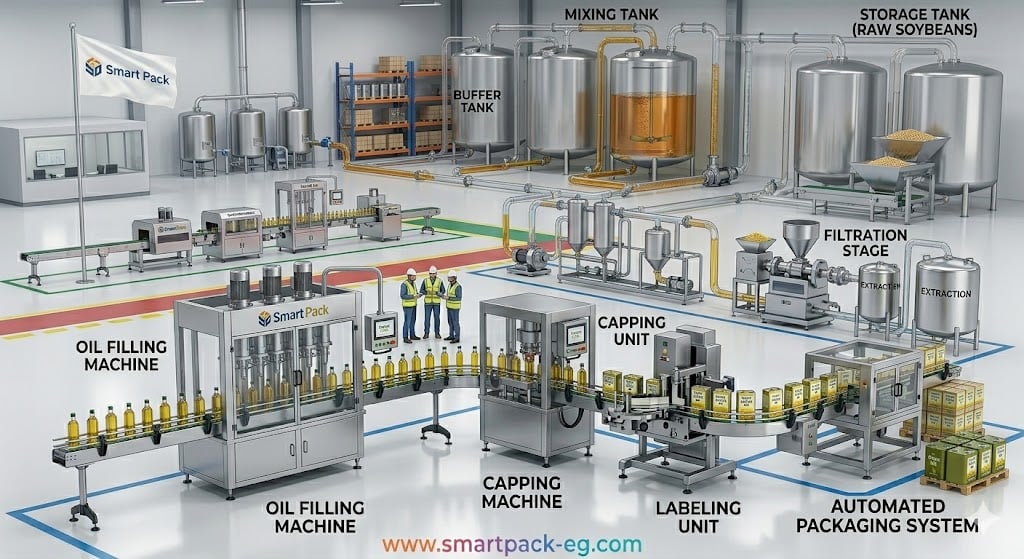
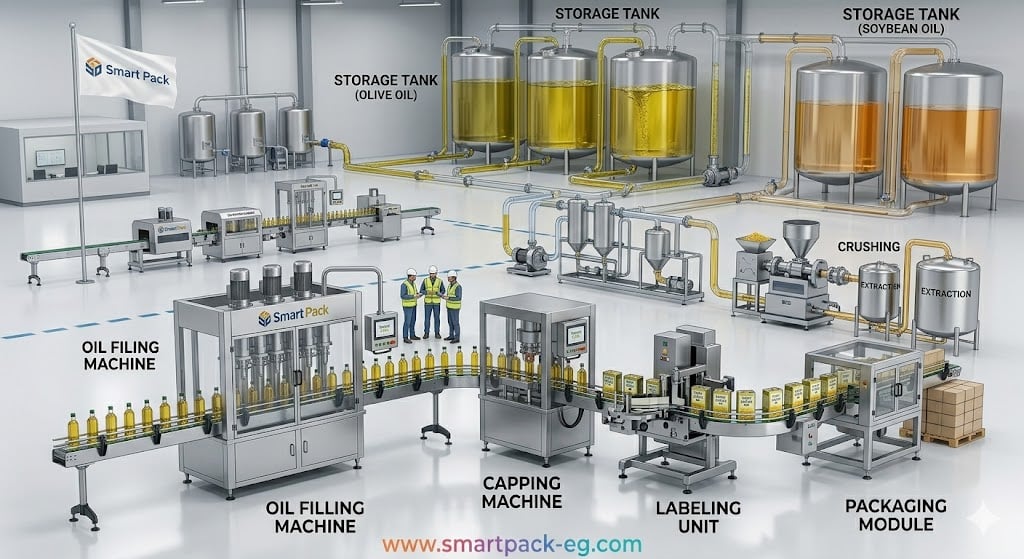
Industrial Olive Oil Production Stages
Transforming olives into high-quality olive oil requires precise industrial control and follows a series of structured stages:
Harvesting
Harvest timing is carefully selected when olives reach optimal ripeness to ensure maximum oil quality.
Washing and Cleaning
After harvesting, dust, leaves, and branches are removed to protect quality before processing.
Crushing and Extraction
Olives are crushed into a paste that allows oil separation. Modern production relies on mechanical extraction methods, such as centrifugal separation, which isolate the oil without chemicals—preserving purity and nutritional value.
Filtration and Final Clarification
After extraction, the oil is filtered to remove impurities and sediments, resulting in a clean, market-ready product.
Filling and Packaging as an Industrial Marketing Tool
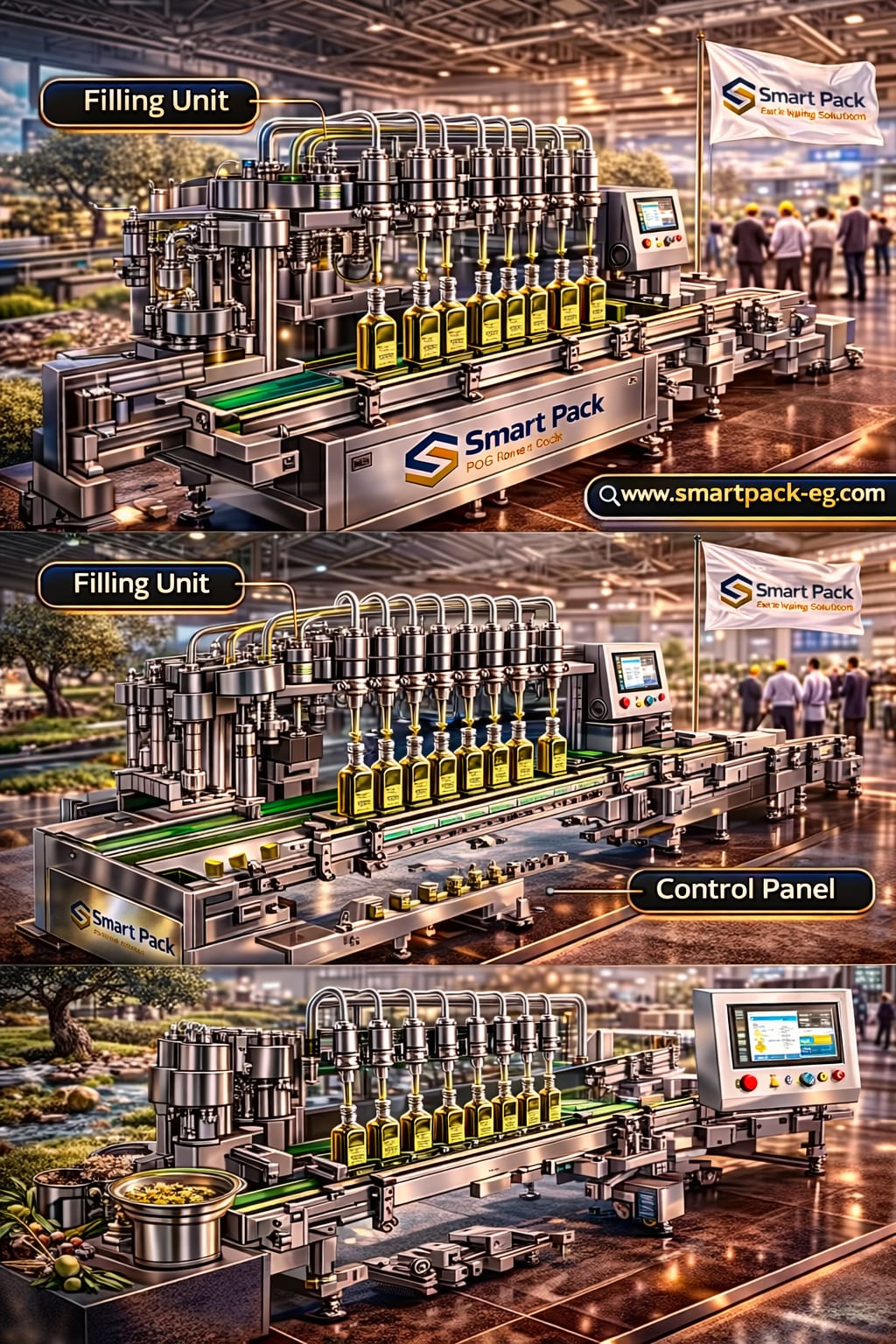
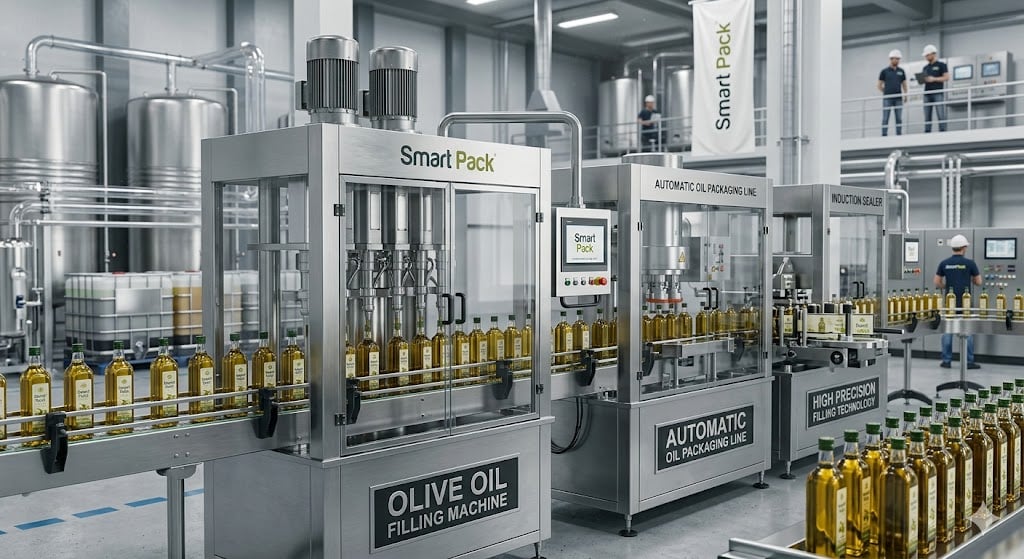
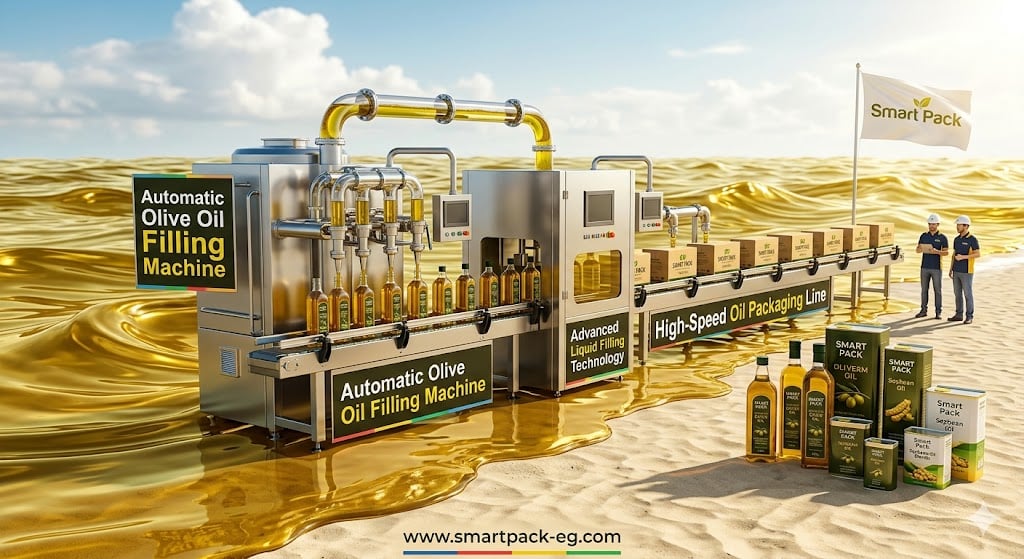
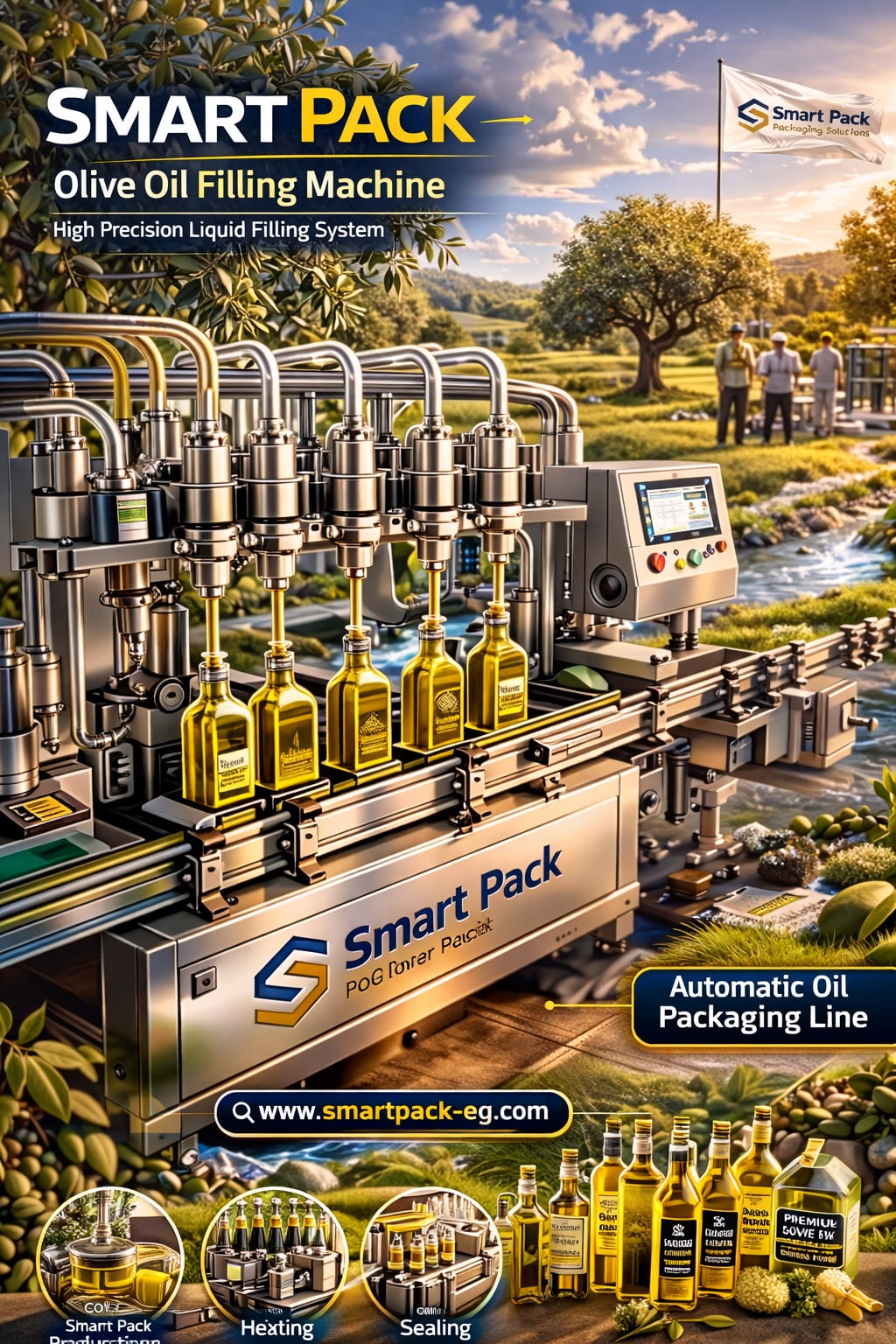
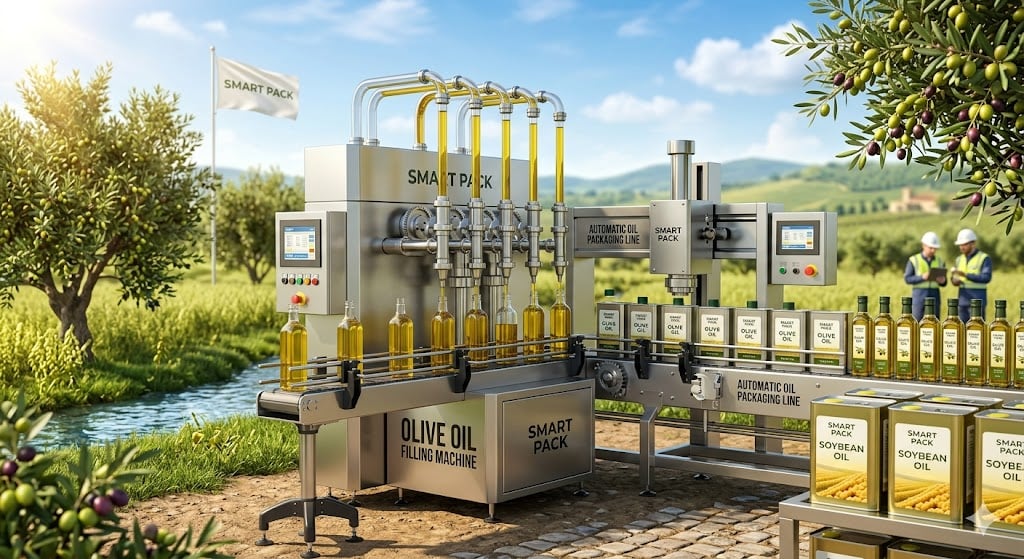
Filling and packaging represent a critical stage in transforming olive oil from a basic food product into a competitive commercial commodity. Selecting the right containers and high-precision filling machines ensures:
-
Protection against oxidation and spoilage
-
Preservation of flavor and nutritional value
-
Ease of transportation and storage
-
Enhanced brand value and market positioning
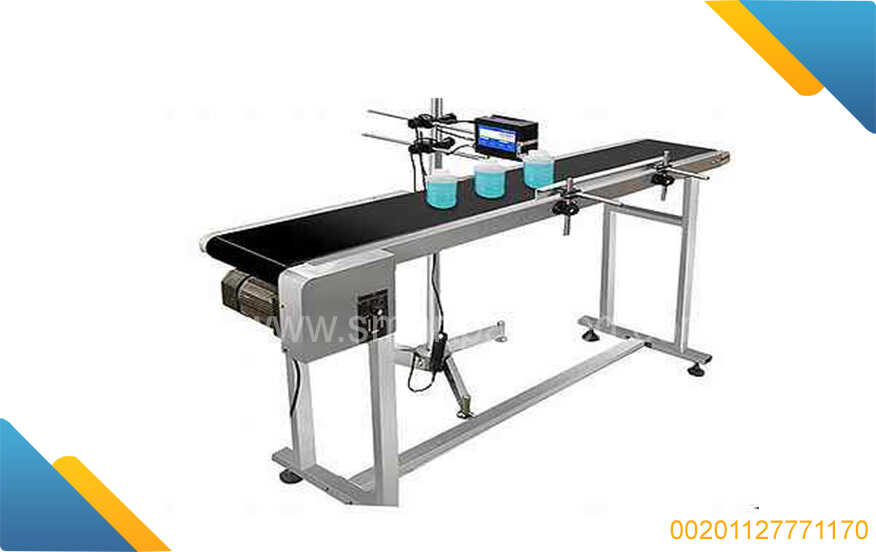
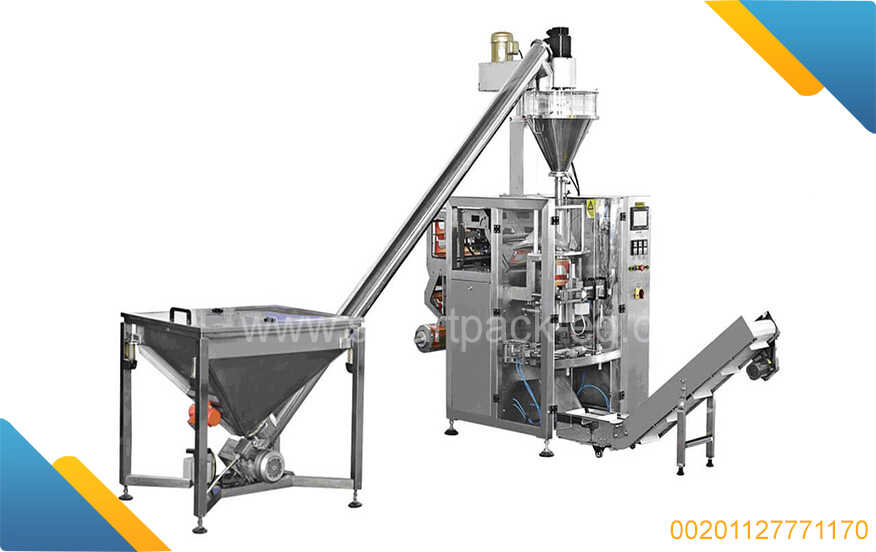
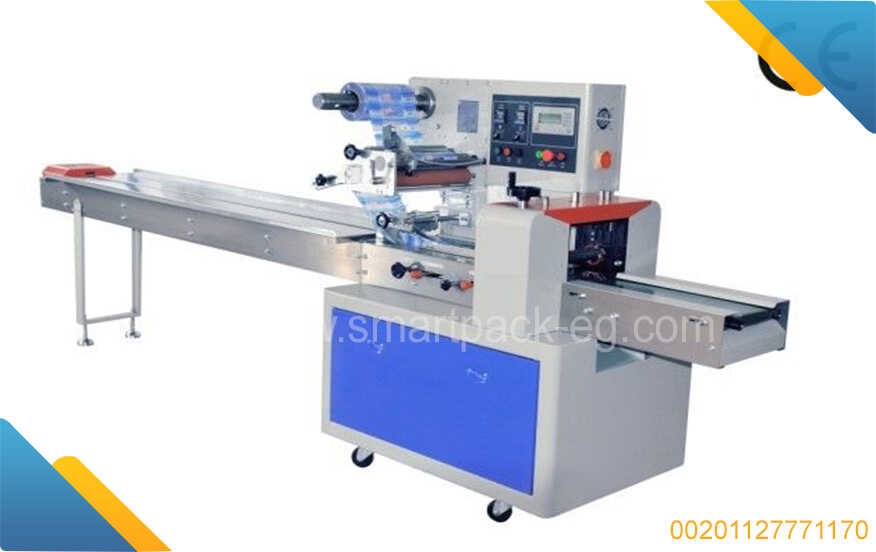
Suitable Filling Machines and Production Lines
| Final Product Type | Machine Type | Operational Notes |
|---|---|---|
| Olive oil in glass bottles | Liquid filling machine | Ideal for light protection and quality preservation |
| Olive oil in plastic containers | Fully automatic filling line | High output with fast and accurate packaging |
| Multiple container sizes | Multi-size filling machine | Flexible volumes for different market needs |
| Bulk industrial packaging | Industrial filling line with automatic capping | Suitable for large supply contracts |
Olive Oil Market Study: Demand and Competitiveness
Olive oil is among the most in-demand healthy oils worldwide, with growing demand across:
-
Local markets favoring natural products
-
Export destinations preferring Mediterranean-origin oils
-
Food industries and health-oriented products
The rising preference for high-quality, sustainably produced oils creates strong opportunities for new factories to enter the market with competitive advantages.
Integrating Soybean and Other Vegetable Oils
In addition to olive oil, manufacturers can leverage soybean cultivation—or sourcing—to produce soybean oil, which is widely used in both food and industrial applications. Combining olive oil with other vegetable oils within a multi-product production line increases operational flexibility and opens access to broader markets.
Smart Industrial Tips for Investing in Olive Oil Production
-
Study soil and climate characteristics before selecting farming locations
-
Choose high-precision filling and packaging machines suitable for olive and seed oils
-
Ensure compliance with food safety standards and required certifications
-
Define production capacity based on expected market demand
-
Partner with suppliers offering technical support and pre- and post-sale consulting
Investing in integrated solutions from professional suppliers of filling machines and production lines ensures higher operational efficiency and faster market entry.
Frequently Asked Questions
Does faster processing after harvest improve oil quality?
Yes. Rapid processing helps preserve flavor stability and nutritional value.
How long does it take for olive trees to produce high-quality oil?
Production typically begins several years after planting, but harvest timing and processing quality are critical.
What is the difference between traditional and modern extraction methods?
Modern methods such as centrifugal extraction deliver cleaner, higher-quality oil compared to traditional techniques.
Can olive oil be separated efficiently using industrial equipment?
Yes. Mechanical technologies enable efficient oil separation without chemical additives.
What is the best packaging for olive oil?
Dark glass bottles or light-protective containers help preserve quality for longer periods.
Industrial Summary
Transforming olive and soybean farming into a fully integrated industrial olive oil production operation represents a strong investment opportunity in both local and international markets. By carefully managing harvesting, applying advanced extraction technologies, and selecting modern filling and packaging lines, manufacturers can deliver high-quality, market-ready products.
Leveraging professional expertise in production lines and packaging systems helps reduce risk, improve efficiency, and maximize long-term success.