 Admin
Admin Coffee Manufacturing: From Green Beans to a Powerful Industrial Production Project
Coffee manufacturing is no longer a simple activity limited to preparing a daily beverage. It has evolved into a fully integrated industrial system that starts with green coffee beans and ends with professionally packaged products that meet the requirements of local, regional, and global markets.
In Arab countries, interest in this sector is growing rapidly—whether for premium Arabic coffee such as Khawlani coffee in Saudi Arabia and Yemen, or for imported green beans that are roasted and processed locally for sale. This makes coffee manufacturing a promising and scalable industrial investment.
The sector typically includes:
-
Roasting
-
Grinding
-
Filling and packaging
-
Distribution
-
Multiple product brands
This integration across production stages creates real added value for factories that invest strategically in every step.
Key Stages of Coffee Manufacturing in Modern Factories
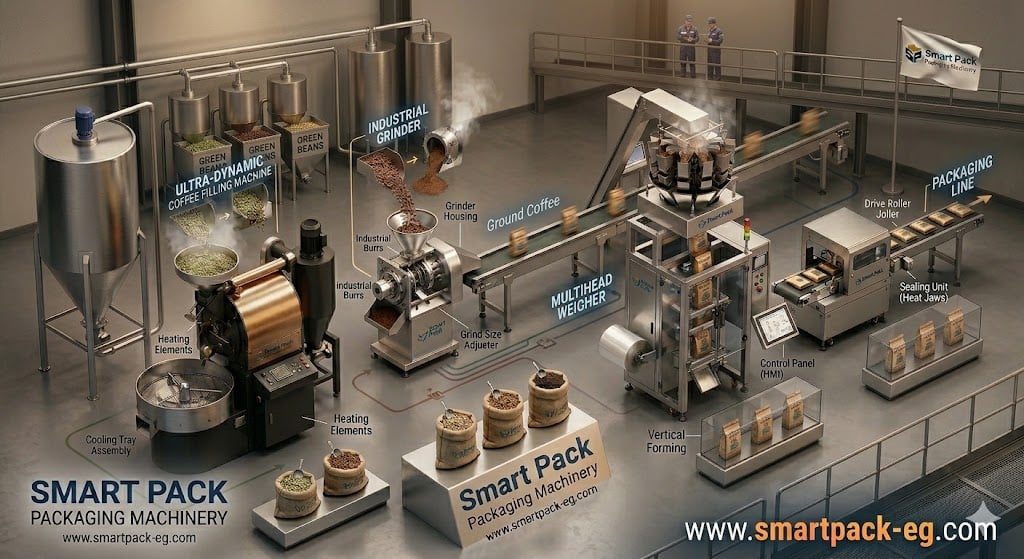
Transforming green coffee beans into a finished product involves several structured stages:
Roasting
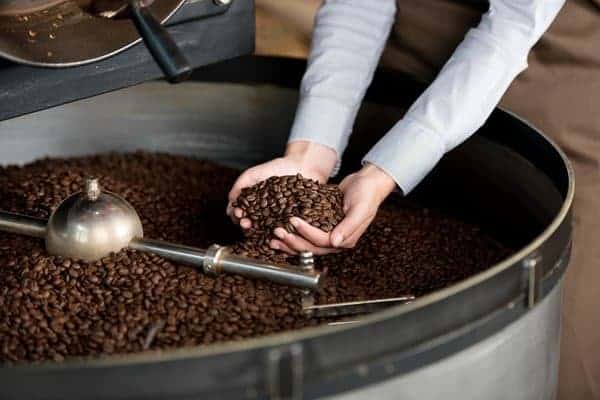
Roasting is the heart of coffee manufacturing. Flavor, color, and aroma are defined by the roasting profile. Industrial coffee roasters with different capacities are used to meet varying demand—from small batches for cafés to large-scale roasting for factories.
Sorting and Grinding
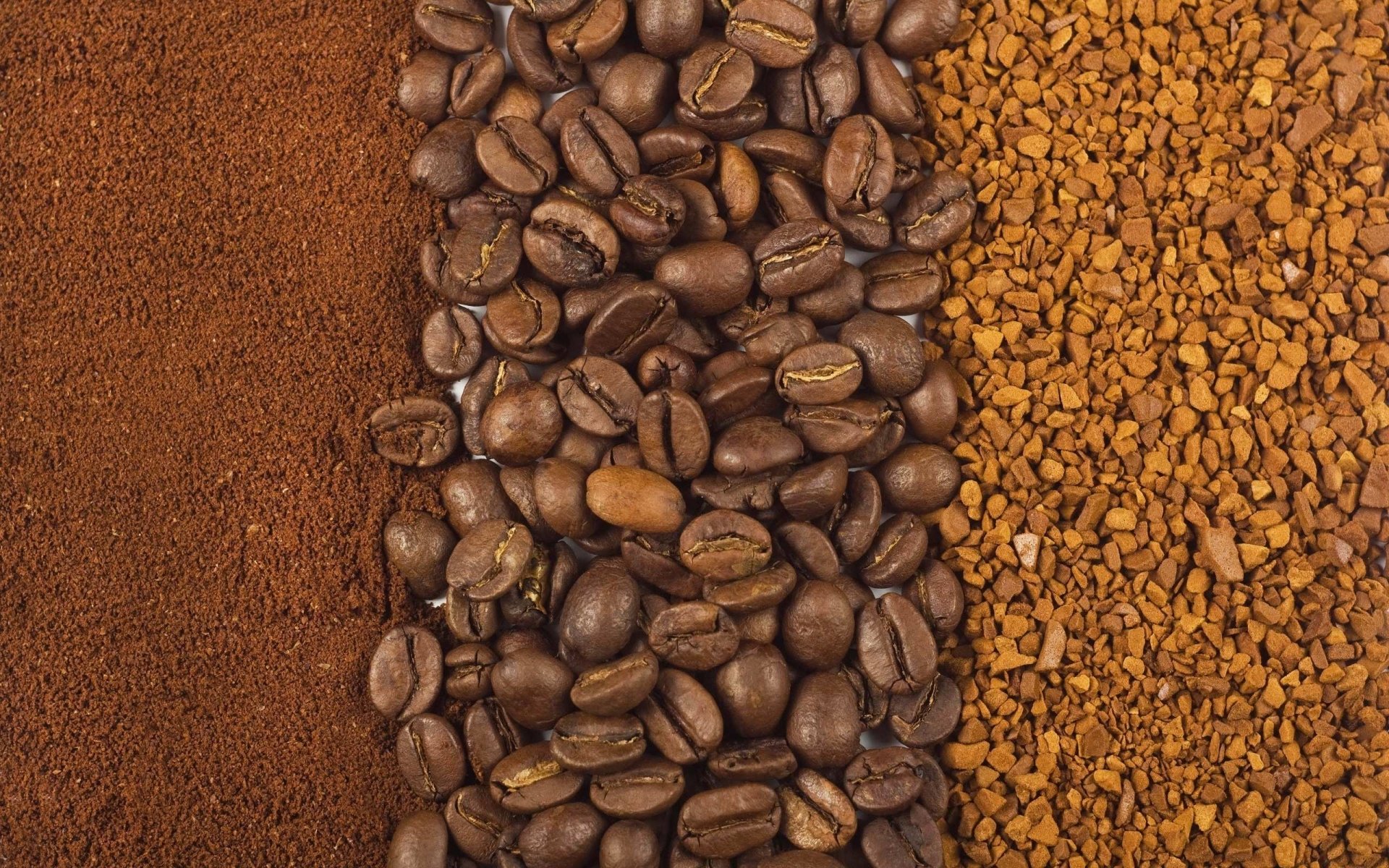
After roasting, coffee beans are sorted to ensure quality, then ground according to the target product—whether for espresso, Arabic coffee, or other market-specific blends.
Filling and Packaging
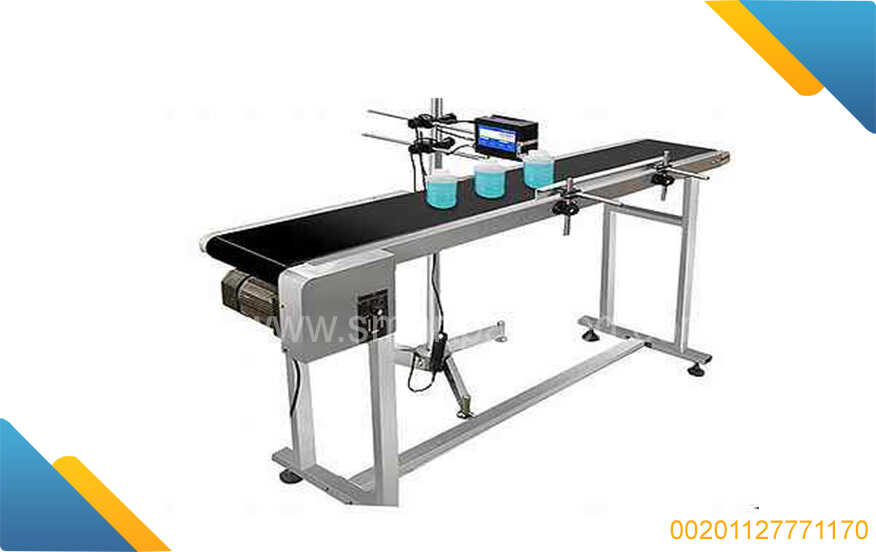
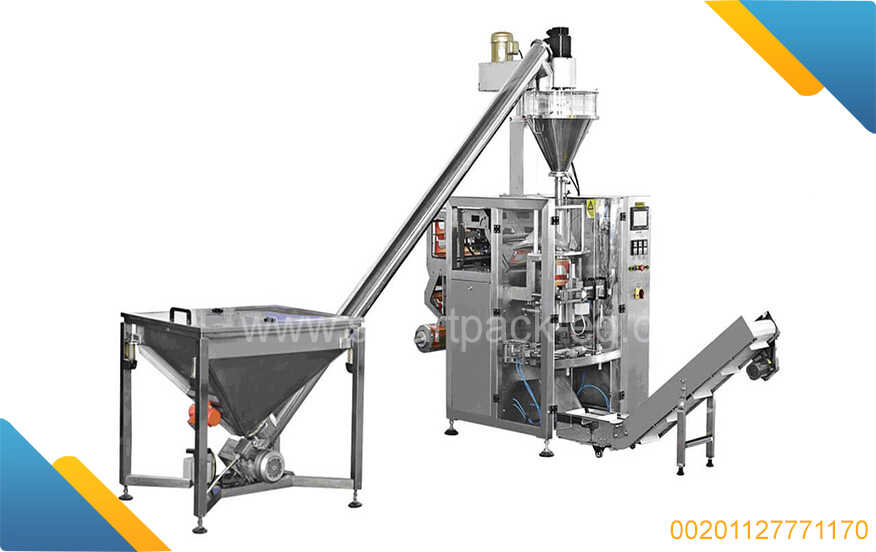
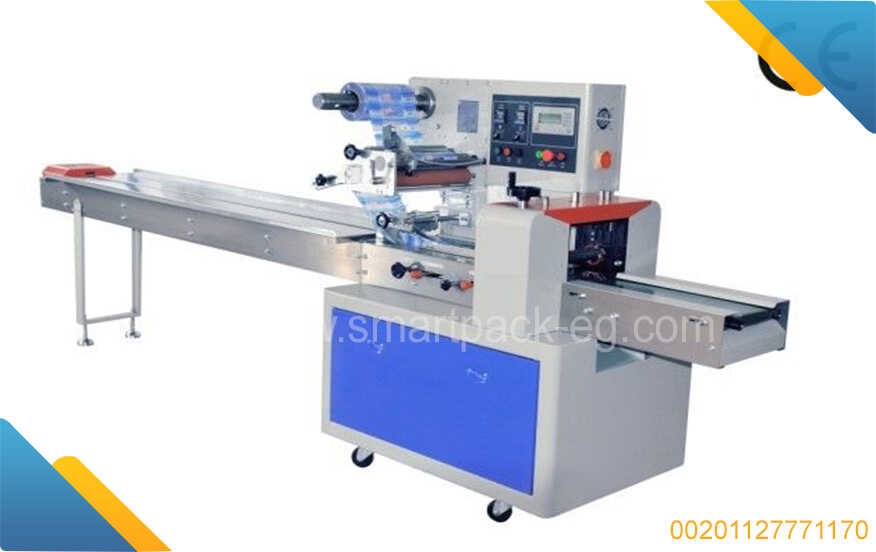
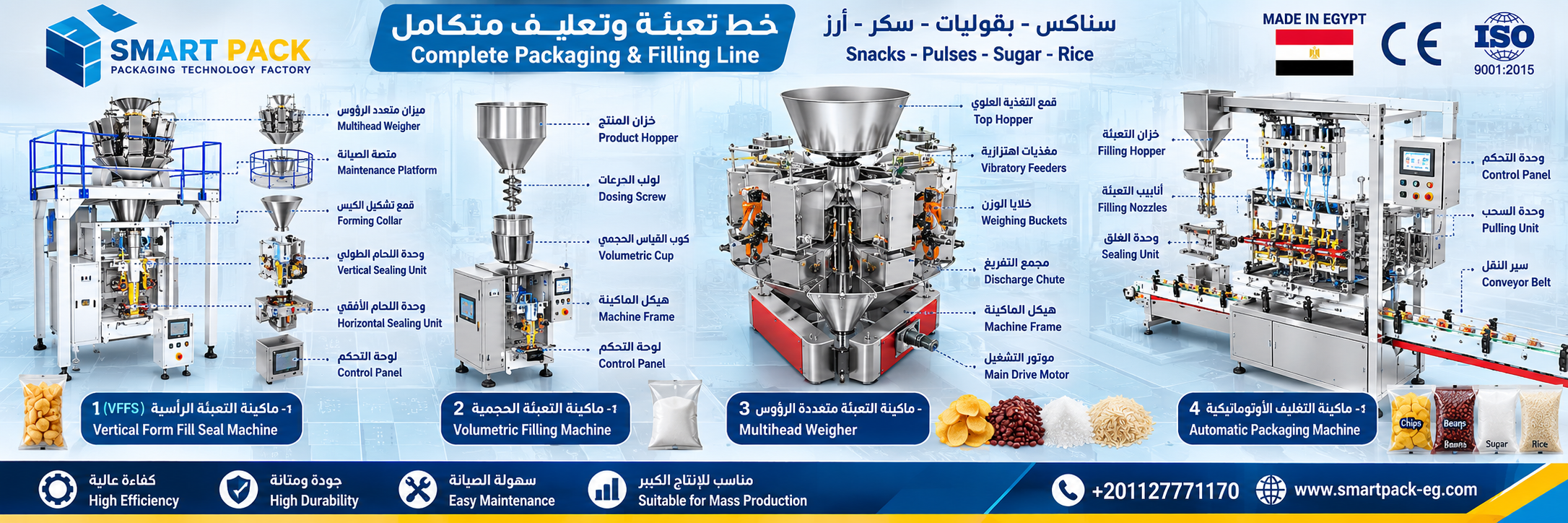
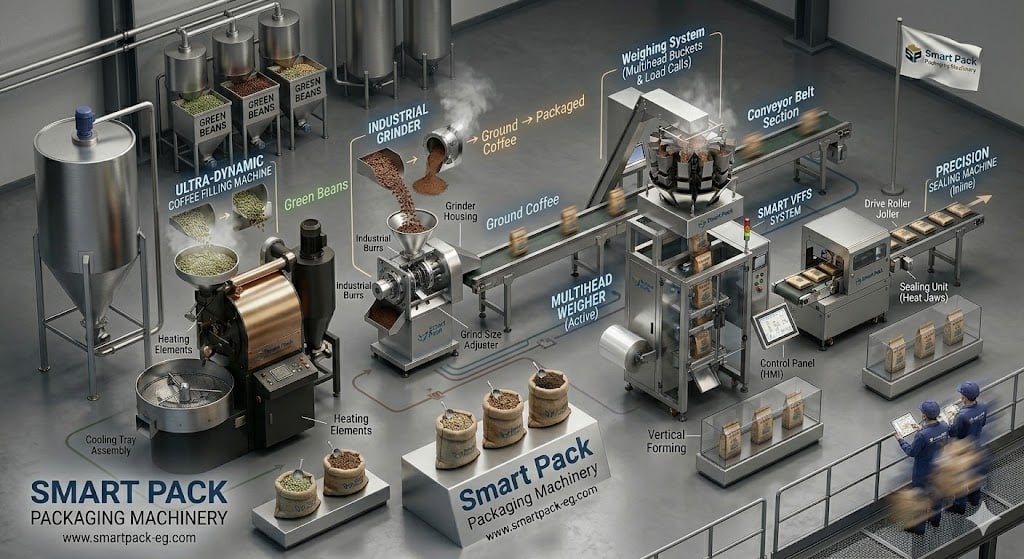
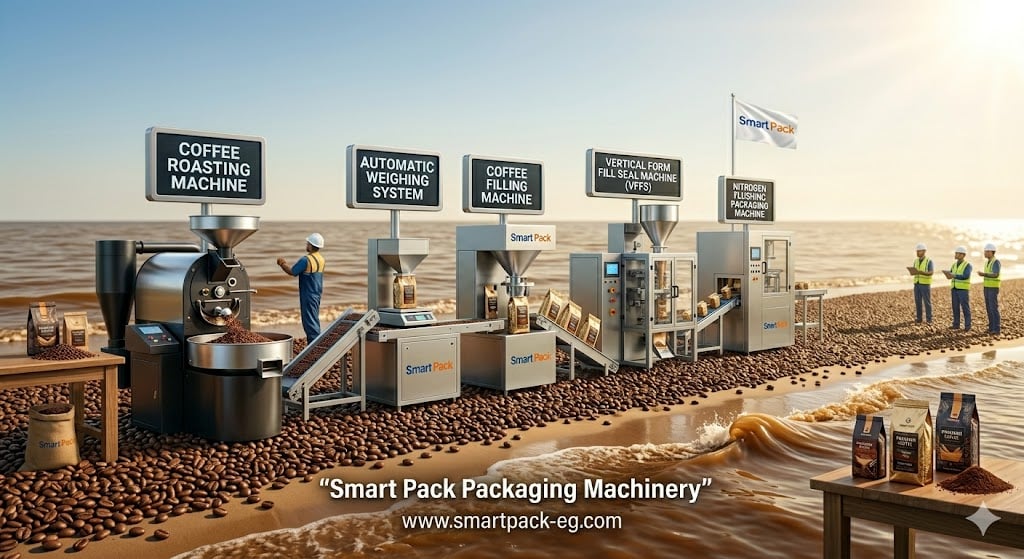
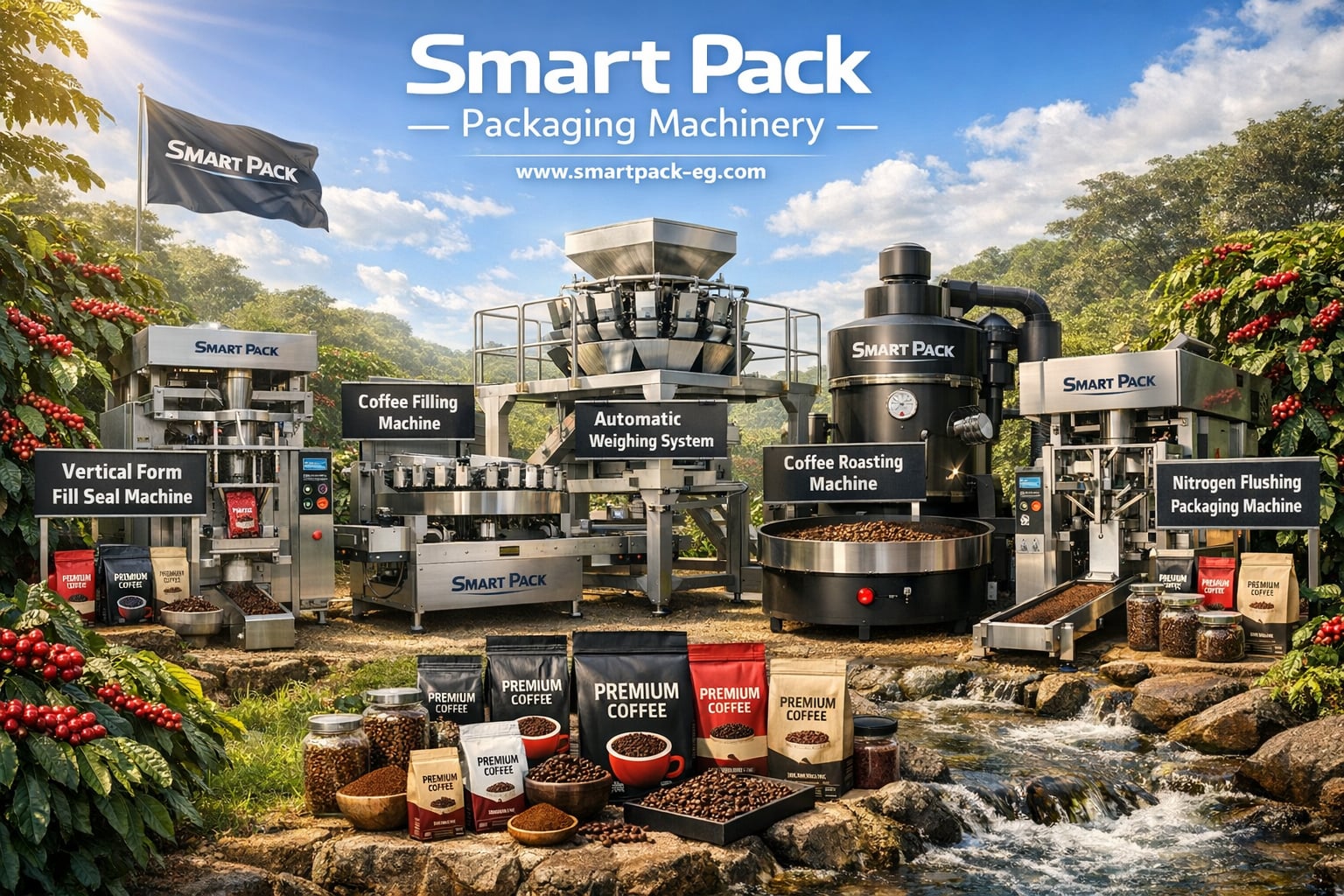
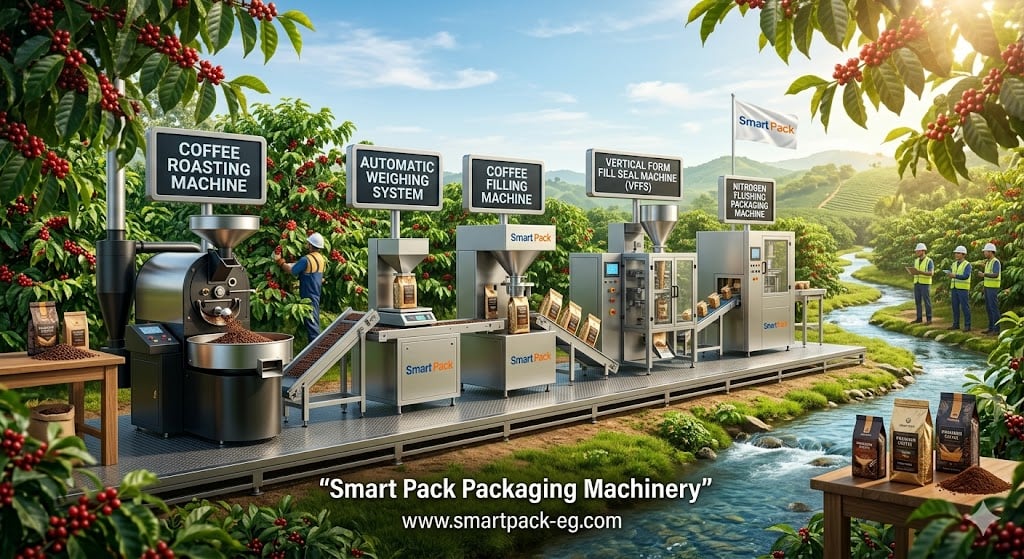
This is the most critical stage from a marketing perspective. Professional packaging preserves coffee freshness, protects aroma, and extends shelf life. Advanced filling and packaging machines are used to fill bags, containers, or cans with precise sealing.
Why Are Coffee Roasting and Manufacturing Projects Industrially Profitable?
Demand for coffee is driven by several strong factors:
-
Daily household consumption
-
Supply contracts with cafés and restaurants
-
Product diversification, including ground coffee, capsules, and organic coffee
-
Opportunities for long-term supply agreements
Arab countries represent a growing coffee market, supported by strong cultural demand for Arabic coffee, alongside increasing consumption of imported and locally roasted coffee produced using advanced industrial methods.
Suitable Machines for Coffee Production Lines
| Production Stage | Machine Type | Key Advantage |
|---|---|---|
| Roasting | Industrial coffee roasting machine | Uniform heat distribution and batch control |
| Grinding | Professional coffee grinder | Consistent particle size and precision |
| Bag packaging | Coffee bag filling machine | Airtight sealing that preserves aroma |
| Can packaging | Automatic filling and packaging machine | High speed, accuracy, and large output |
| Capsule filling | Coffee capsule filling line | High-value market product |
Machine selection depends on planned production capacity and target products (ground coffee, capsules, or traditional Arabic coffee).
How to Integrate Production Stages to Increase Profitability
Profitability in coffee manufacturing does not rely on a single stage, but on seamless integration across all stages:
-
Optimizing roasting quality to increase product value
-
Using advanced grinders to preserve flavor consistency
-
Professional packaging to maintain quality during transport
-
Strong marketing to boost consumer acceptance
-
Supply contracts with cafés and distribution chains
An integrated and automated production line reduces labor dependency, minimizes waste, and significantly increases productivity.
Market Study and Expected Costs
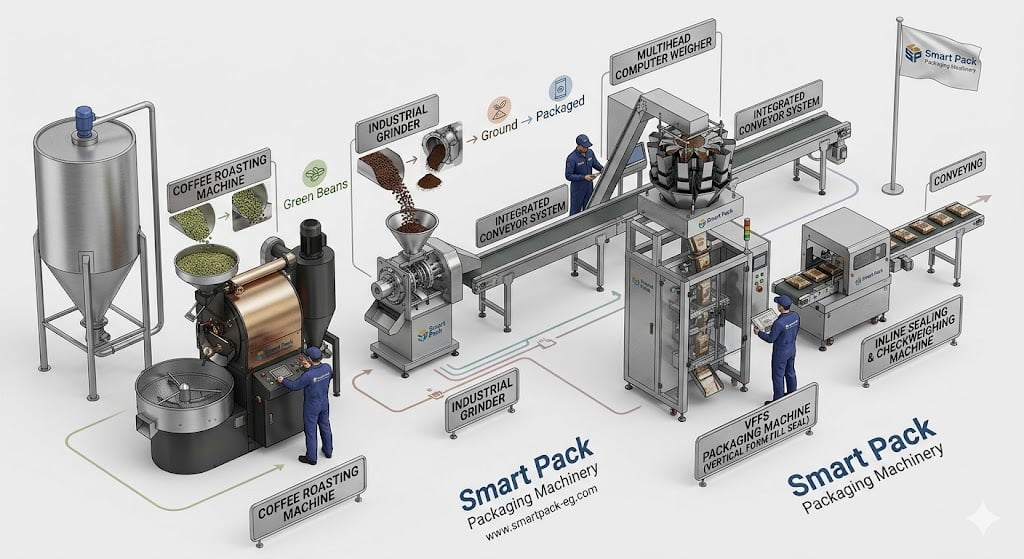
Many global factories now rely on ready-to-operate industrial coffee roasting lines that integrate roasting, grinding, and packaging—making them ideal for factories transitioning from traditional to industrial-scale production.
Main Cost Components:
-
Industrial roasting equipment
-
Coffee grinders
-
Filling and packaging machines
-
Storage and handling systems
-
Raw materials
-
Operating and maintenance costs
Financial Returns
Continuous global demand for coffee, combined with relatively high selling prices compared to raw material costs, results in attractive profit margins. Product diversification (ground coffee, capsules, Arabic coffee) further opens doors to distribution contracts and export opportunities.
Smart Tips Before Investing in Coffee Manufacturing
Before setting up a coffee factory, it is essential to:
-
Clearly define your target market (local, commercial, or export)
-
Choose machines designed for continuous industrial operation
-
Select scalable production lines that allow future expansion
-
Invest in professional filling and packaging to protect quality
-
Work with suppliers that offer technical consulting and after-sales support
Partnering with professional suppliers of filling, packaging, and production lines—such as Smart Pack—provides you with:
-
Pre-purchase technical consultation
-
Customized production line design based on project scale
-
Reliable after-sales technical support
This ensures smoother operations and faster access to profitability.
What Is the Difference Between Arabic Coffee and Imported Coffee in Manufacturing?
Arabic coffee is known for its distinctive flavor and higher market value, while imported coffee beans are used to produce a wide variety of blends tailored to different consumer preferences.
Why Is Packaging So Important for Coffee Products?
Packaging preserves flavor, extends shelf life, and directly influences consumer acceptance in the market.
Are There Strong Export Markets for Coffee?
Yes, especially for specialty products such as Arabic coffee and premium or specialty blends.
Does a Coffee Project Require Full Automation?
Automation significantly reduces operating costs and increases productivity, particularly in filling and packaging stages.
What Type of Technical Support Should Be Considered?
Pre- and post-sales support, spare parts availability, and the ability to upgrade production lines as demand grows.
The Industrial Opportunity in Coffee Manufacturing
Coffee roasting and manufacturing projects represent a real industrial opportunity that combines strong local culture with continuous global demand. When planned and executed using integrated production lines—from roasting to packaging—coffee manufacturing can become a powerful and sustainable revenue stream for factories investing with a long-term vision.