 Admin
Admin Flour Factories and Mills in Arab Countries: From a Traditional Activity to a High-Return Industrial Investment
Flour factories and mills in Arab countries are no longer merely traditional facilities producing a basic commodity. Over recent years, they have evolved into one of the main pillars of food security and stable industrial investment—especially with rising demand for essential food products and the growing need for efficient, reliable local supply chains.
This reality has positioned flour as a strategic product that is largely immune to sharp market fluctuations. It has opened the door for investors and factory owners to enter low-risk industrial projects with clear financial returns—provided that the entire production system is managed professionally, from milling to final packaging.
Why Is the Flour Milling Sector One of the Most Stable Industries in Arab Countries?
Flour is a core food product used in:
-
Bread production
-
Bakery goods
-
Food manufacturing industries
-
Restaurants and hotels
-
Daily household consumption
This wide range of applications means demand is daily, continuous, and non-seasonal, making flour mills among the least crisis-sensitive industries.
In addition, most Arab countries rely on a mix of local production and imports, creating strong opportunities for modern flour mills that can compete in both quality and cost.
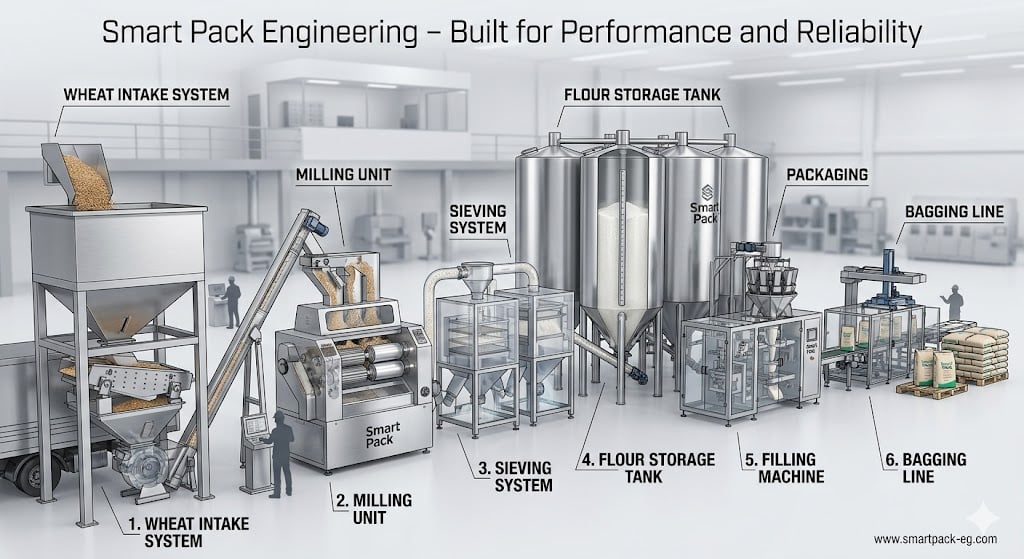
From Wheat to Flour: Where Does Real Industrial Value Begin?
Economic value is not created simply by receiving wheat, but by managing it industrially through:
-
Professional cleaning and sorting
-
Milling at different fineness levels
-
Quality standardization
-
Producing flour tailored for multiple sectors
Controlling these stages allows factories to produce:
-
Bakery flour
-
Household-use flour
-
Specialized flour for food industries
-
Ready-made flour blends
Each category carries a different market value and profit margin.
Industrial Flour Storage: A Critical Element in Protecting Profitability
Improper flour storage can lead to:
-
Product spoilage
-
Quality degradation
-
Direct financial losses
-
Marketing and distribution problems
Modern mills therefore rely on:
-
Sealed silos and controlled storage systems
-
Humidity and ventilation management
-
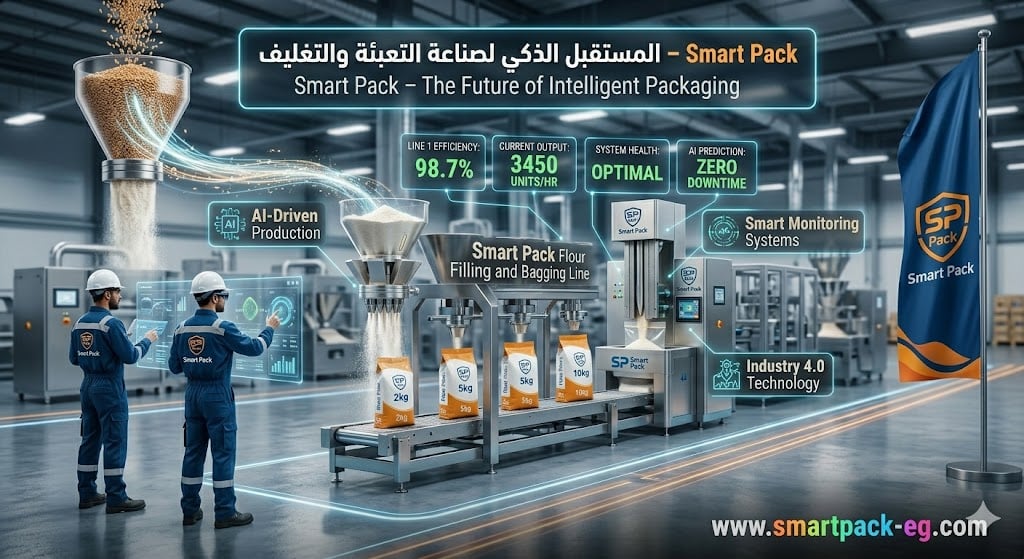
Direct integration between storage and packaging lines
This integration minimizes waste and accelerates capital turnover.
Packaging Is Not the Final Step—It Is an Investment Decision
In flour factories, packaging is not a cosmetic step—it is:
-
A product protection method
-
A powerful marketing tool
-
A trust factor for the market
-
A key requirement for export
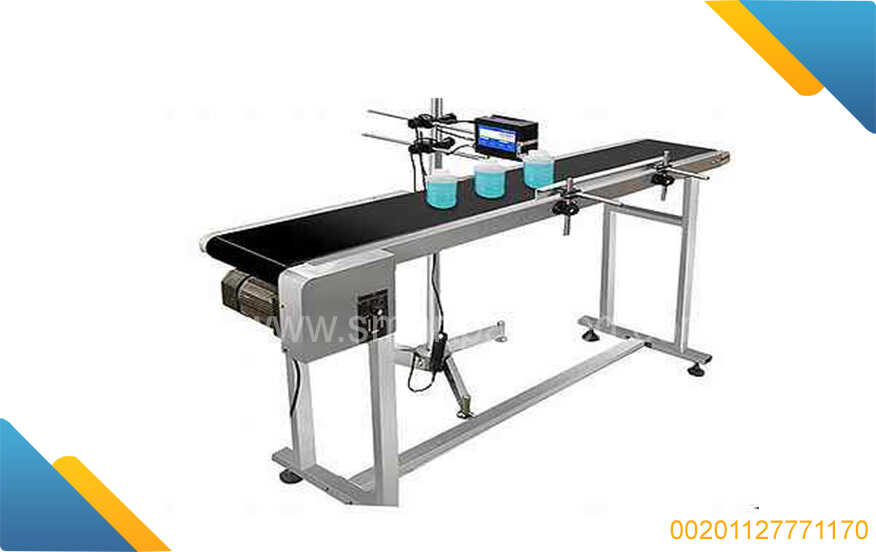
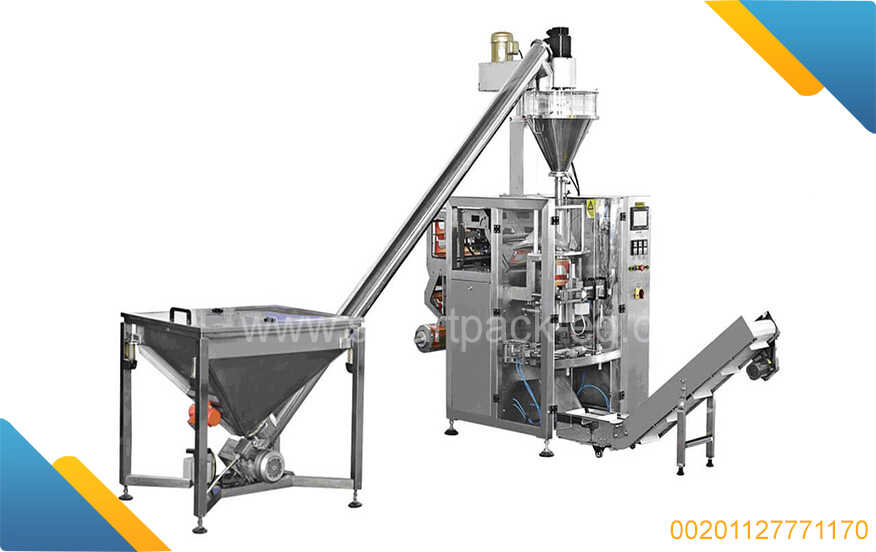
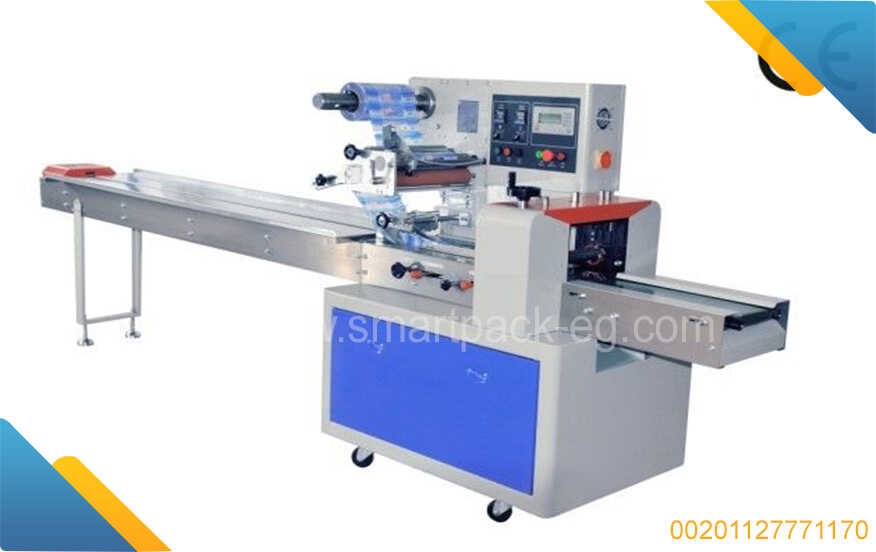
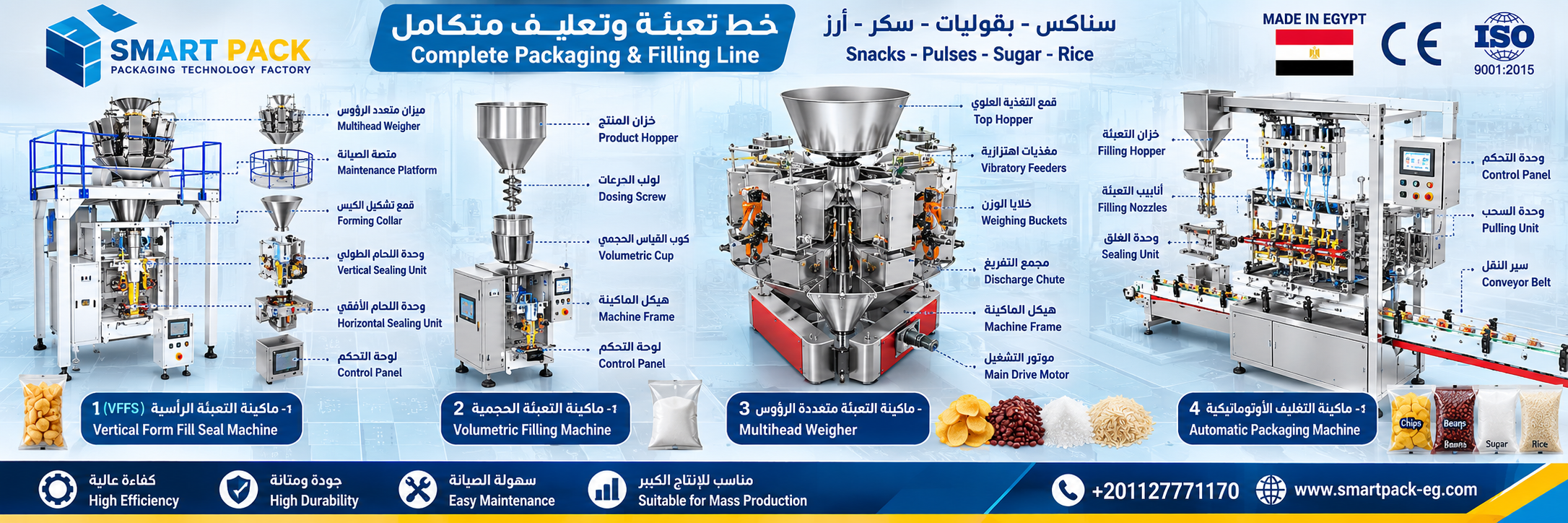
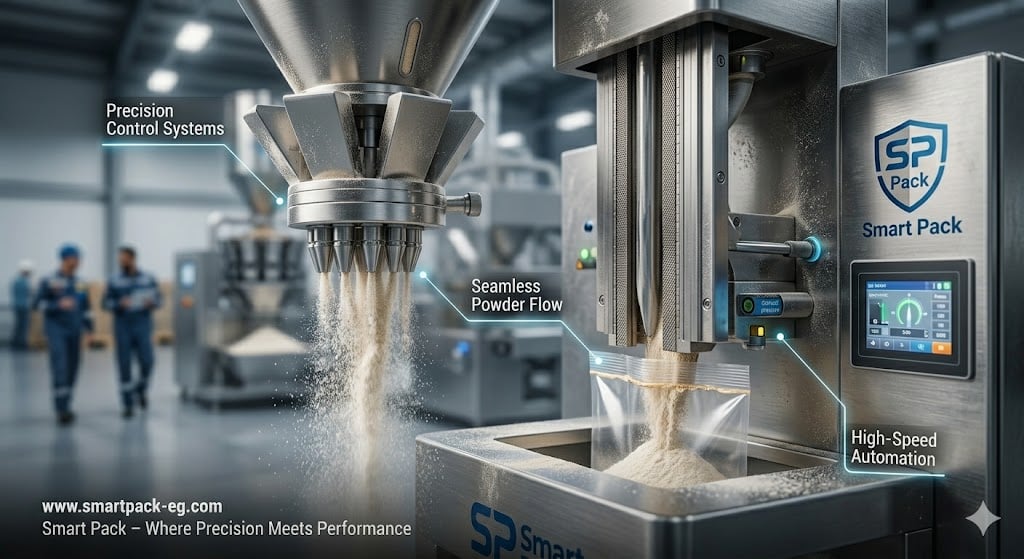
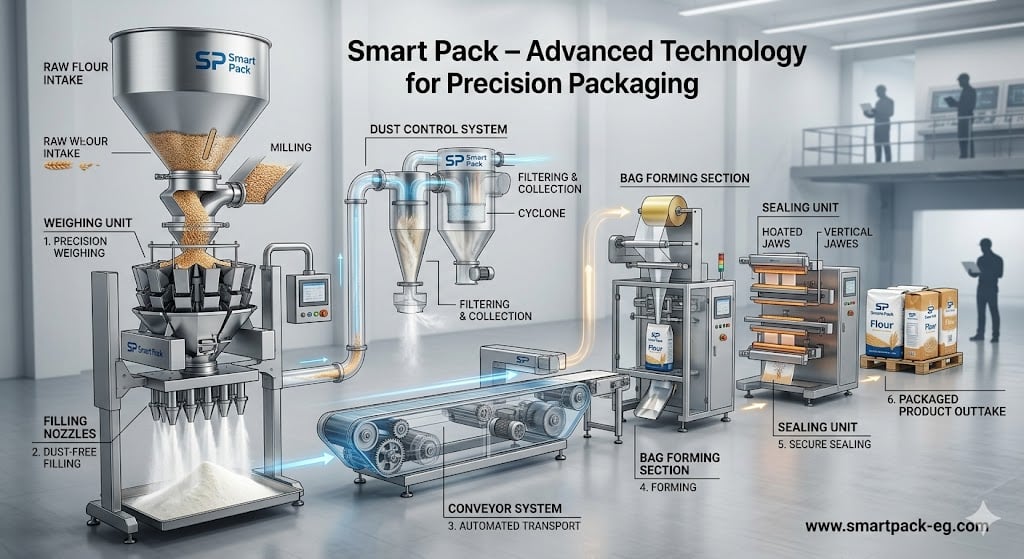
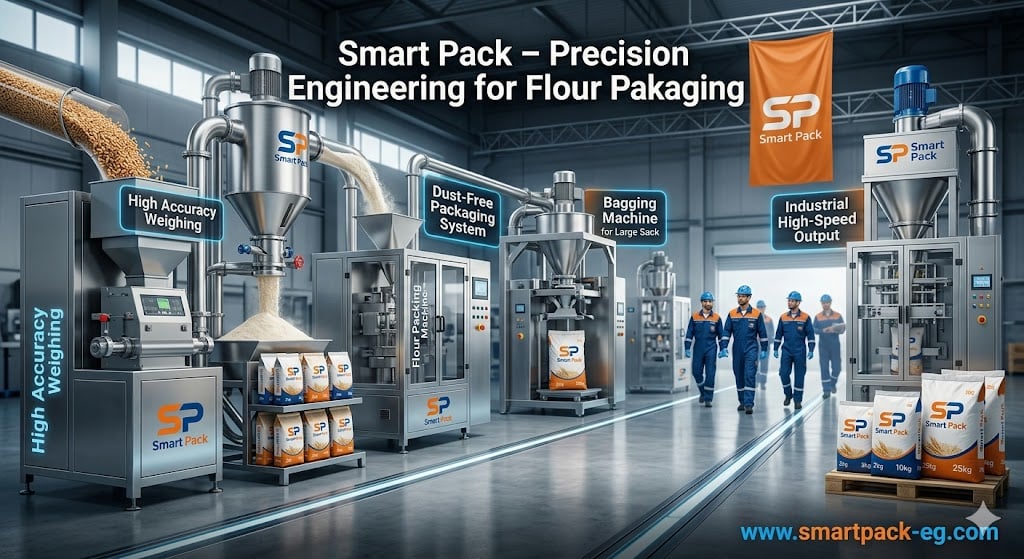
Modern filling and packaging machines ensure:
-
Accurate weight control
-
High production speed
-
Reduced labor dependency
-
Consistent quality
-
Minimal product loss
Suitable Packaging Machines for Flour Factories and Mills
| Factory Size | Machine Type | Key Advantage |
|---|---|---|
| Small factory | Semi-automatic powder filling machine | Flexibility and lower cost |
| Medium factory | Automatic filling machine | Speed and consistency |
| Large factory | Integrated filling and packaging line | High-volume production and scalability |
Choosing the right machine directly impacts operating costs and annual returns.
Integrated Production Lines: The Fastest Way to Reduce Costs and Increase Profit
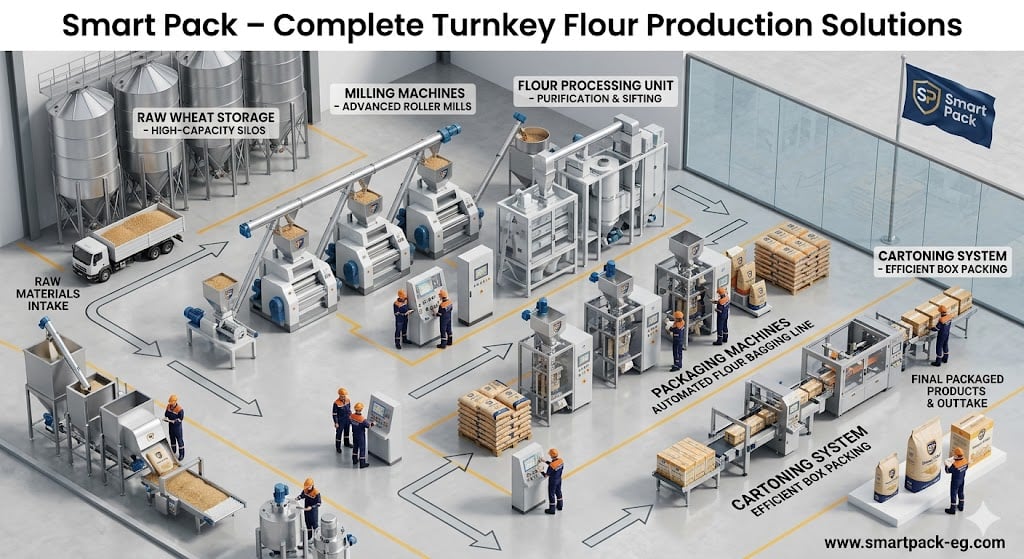
Factories that adopt integrated production lines—from milling to packaging—achieve:
-
Lower unit production costs
-
Reduced technical downtime
-
Faster response to market demand
-
Easy future expansion
This highlights the importance of working with suppliers who have real expertise in designing food production lines, not just selling standalone machines.
Approximate Cost Study for a Medium-Scale Flour Mill Project
Estimated Initial Setup Costs:
-
Milling and processing equipment
-
Filling and packaging machines
-
Storage facilities
-
Operational infrastructure
Monthly Operating Costs:
-
Raw materials
-
Labor
-
Energy
-
Maintenance
Expected Revenue Sources:
-
Packaged flour sales
-
Supply contracts
-
Export opportunities
With proper management, a strong return on investment can be achieved within a reasonable timeframe.
Smart Investment Tips Before Purchasing Filling and Packaging Machines
-
Do not choose machines based on price alone
-
Think about production capacity in two years—not only today
-
Ensure long-term technical support and spare parts availability
-
Select a supplier that understands the flour milling industry
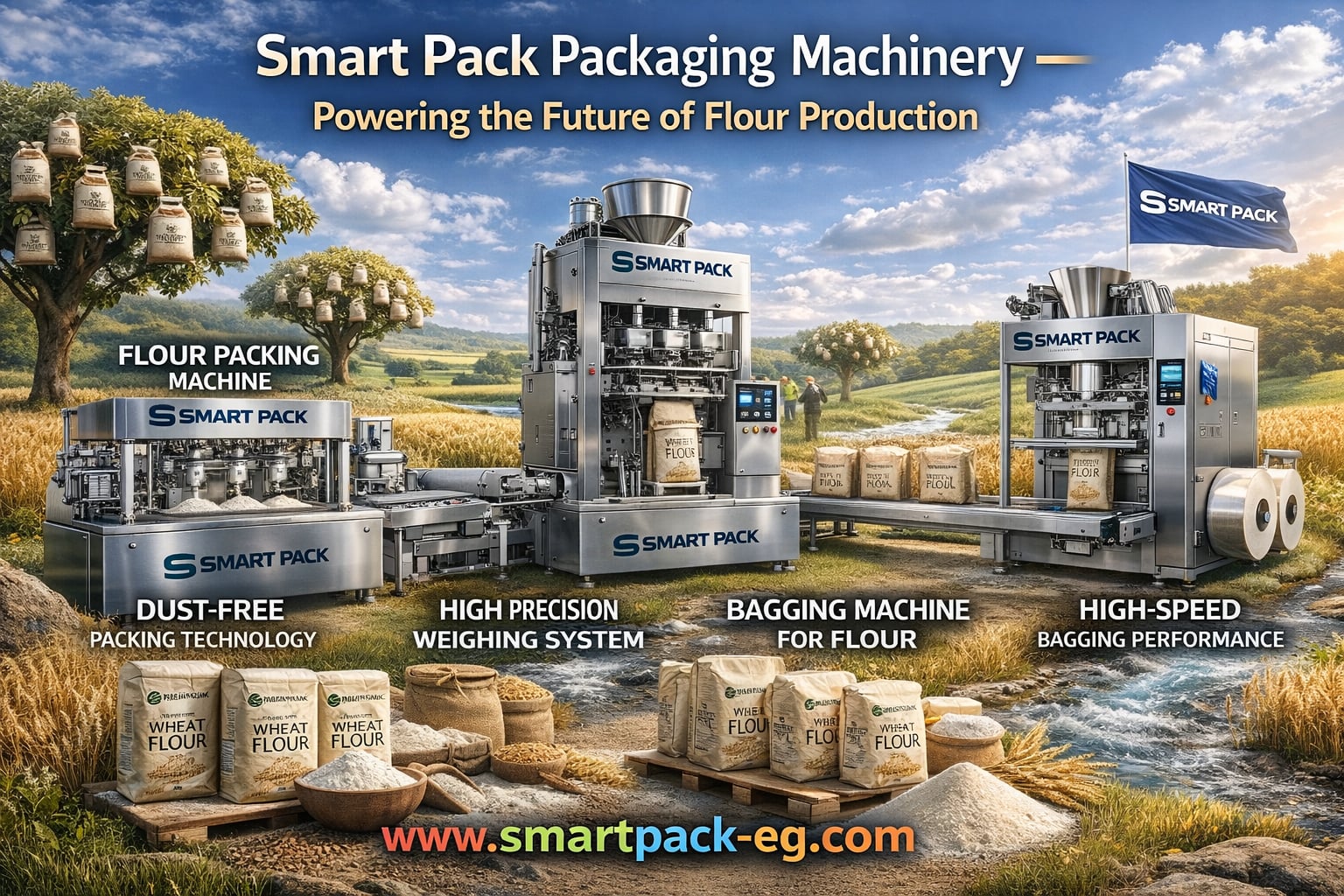
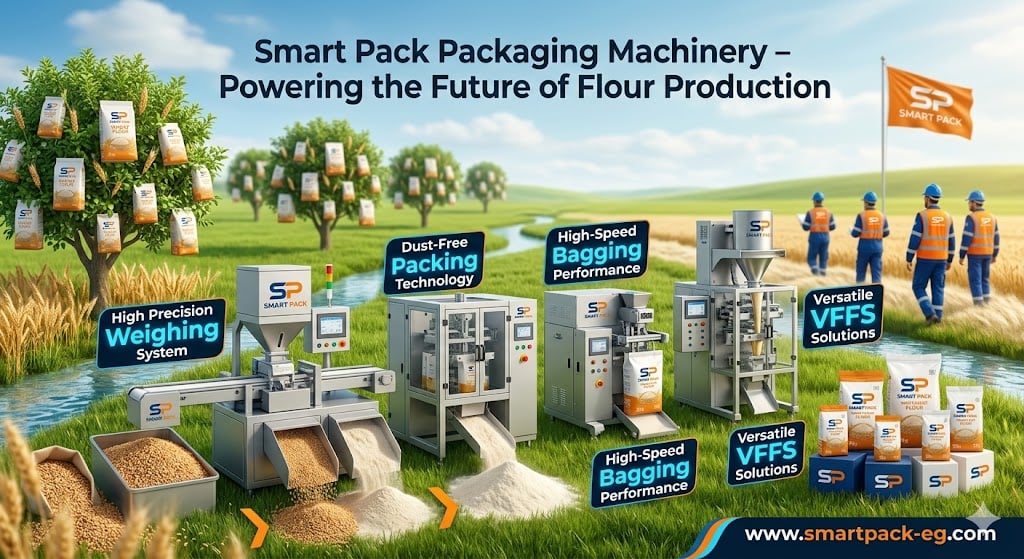
At this stage, smart factories tend to work with specialized companies such as Smart Pack, as they offer more than just machines. They provide:
-
Factory needs assessment
-
Customized production line design
-
Reliable filling and packaging solutions
-
Long-term technical support
This type of partnership significantly reduces risk and increases the chances of success.
Is Investing in Flour Mills Suitable at the Present Time?
Yes, because demand is stable and directly linked to essential food consumption.
What Is the Most Important Success Factor for a Flour Factory?
Consistent quality combined with professional packaging.
Is Expansion Easy?
Yes, when scalable production lines are selected from the beginning.
Does Packaging Affect Export Opportunities?
Directly—it is a core requirement for entering international markets.
When Does ROI Typically Begin?
Within a relatively short period when management and equipment selection are done correctly.
The Smart Industrial Decision Starts with Choosing the Right Partner
Flour factories and mills in Arab countries represent a real industrial investment opportunity. However, success depends not only on wheat availability or market demand, but on production line efficiency and packaging quality.
That is why selecting a reliable supplier for filling and packaging machines and integrated production lines—such as Smart Pack—is a strategic decision that minimizes risk and accelerates profitability.