
 Admin
Admin Grains: From a Strategic Agricultural Crop to a High-Profit Food Industry System
4
Grain cultivation—such as wheat, corn, and barley—is no longer a traditional agricultural activity limited to supplying basic food needs. Today, it represents the foundation of an integrated food manufacturing system relied upon by governments and factories to achieve food security and build stable, high-return production projects.
This shift has made flour and dry food products among the most demanded and stable commodities in the market, opening the door for factories to invest in a complete value chain that starts with farming and ends with a fully packaged, market-ready product for local and export markets.
Factories that approach this sector with an investment mindset understand that real value is not created at a single stage, but through smart integration between grain cultivation, industrial milling, and professional packaging.
Grain Cultivation as the Starting Point of a Strong Food Production Chain
Staple grains such as wheat, corn, and barley are among the most stable agricultural crops in terms of production and demand. They serve as the primary raw materials for a wide range of food industries.
Managing this stage in an organized way—through direct farming or supply contracts—gives factories:
Stable raw material quality
Better cost control
Continuous production flow
Protection from market volatility
This stability is the backbone of any successful industrial system in the flour and dry food sector.
4
From Grains to Flour: Where Real Industrial Value Begins
The economic value of grains increases significantly when they are transformed from raw crops into processed industrial products such as flour.
Industrial milling enables manufacturers to:
Produce flour with multiple fineness grades
Control quality and composition
Serve bakeries and food processing industries
Open new supply and export markets
Shifting from selling raw grains to selling packaged flour multiplies market value and strengthens competitive positioning.
Industrial Milling: A Critical Stage for Flour Factory Success
Milling is not merely a mechanical operation; it is a precision industrial process that directly impacts final product quality.
Successful flour factories rely on:
Modern milling lines
Advanced separation and purification systems
Controlled fineness and moisture levels
Consistent production specifications
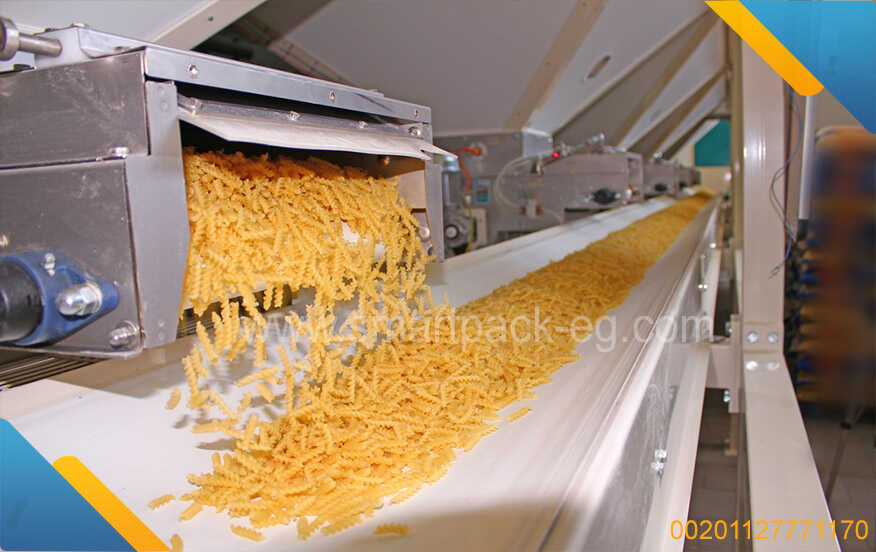
This stage determines flour suitability for diverse food applications such as bread, pasta, confectionery, and dry food products.
4
Packaging and Filling: The Commercial Differentiator
Regardless of flour quality, packaging and filling are decisive for commercial success.
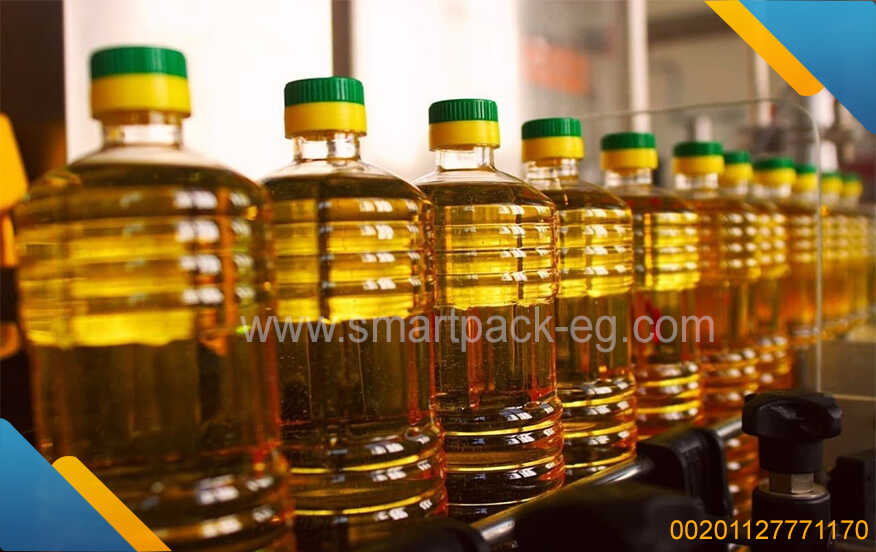
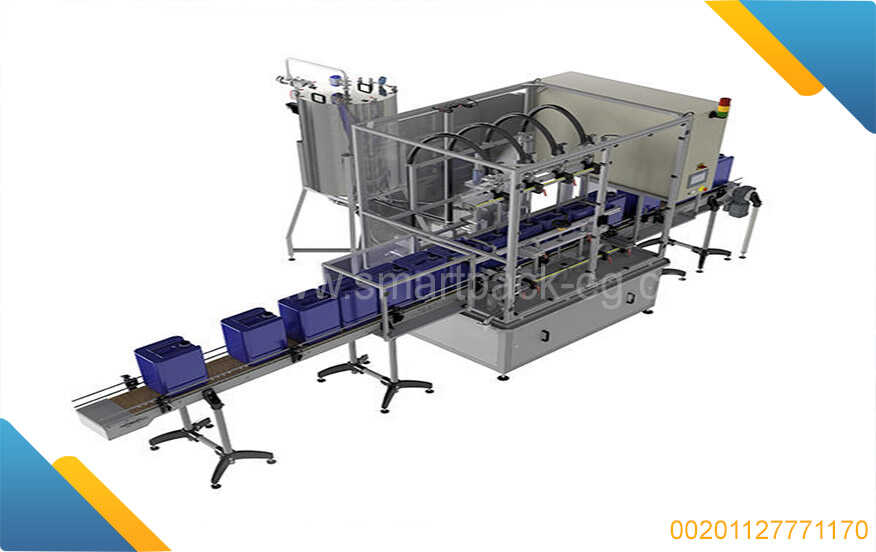
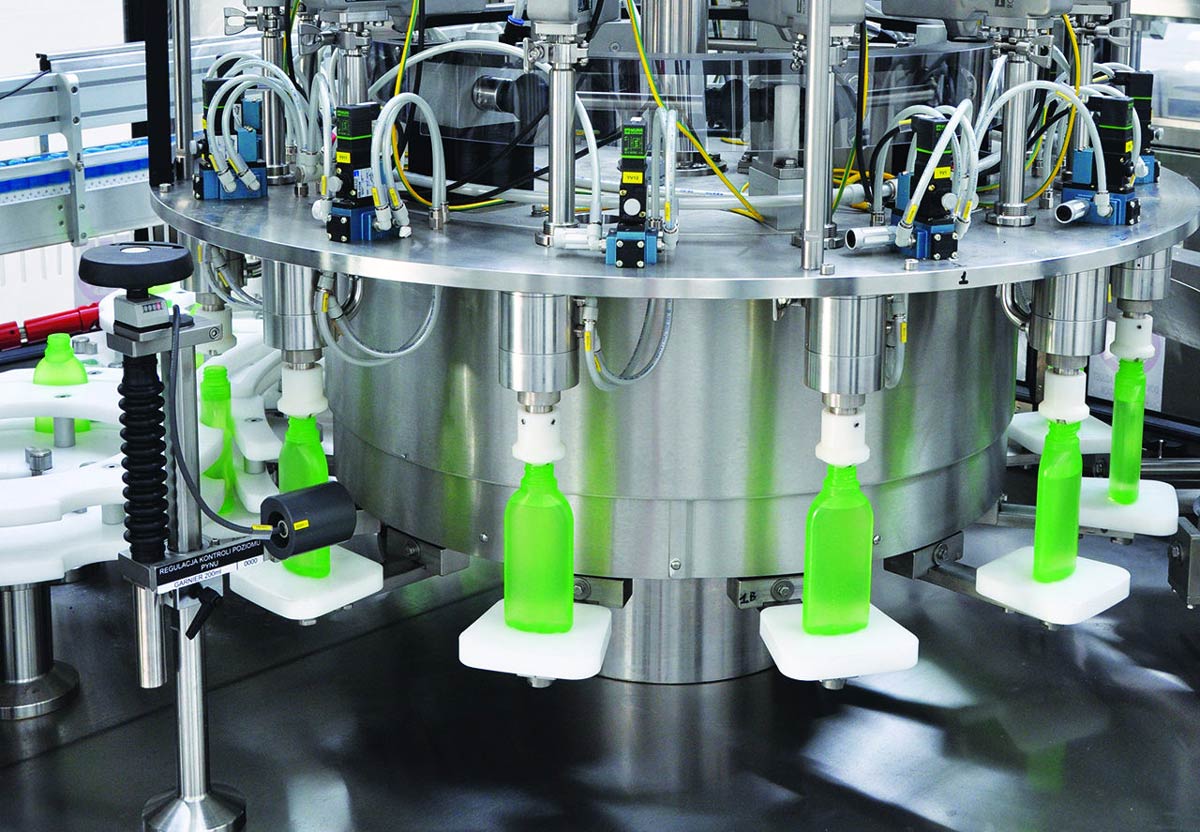
Professional filling and packaging machines ensure:
Accurate weight
Protection against moisture and contamination
Extended shelf life
Easy transport and storage
A professional appearance that builds market trust
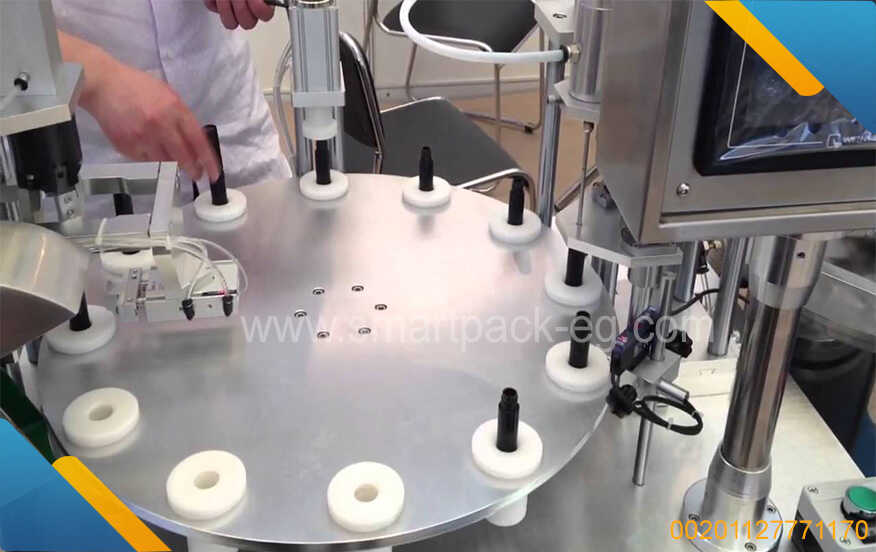
Choosing the right equipment at this stage transforms flour from a standard product into a strong commercial commodity.
4
Suitable Filling Machines for Flour and Dry Food Products
| Product Type | Machine Type | Operating Mode |
|---|---|---|
| Wheat flour | Powder filling machine | High precision |
| Corn flour | Bag filling machine | Continuous production |
| Flour blends | Integrated filling line | Flexible operation |
| Dry food products | Complete filling & packaging line | Industrial scalability |
Machine selection should align with future expansion plans and target market size, not current needs alone.
Integrated Production Lines: The Fastest Way to Build a Strong Food Factory
Factories that rely on integrated production lines—from milling to packaging— achieve:
Reduced product loss
Consistent quality
Faster market response
Lower operating costs
Easy addition of new products
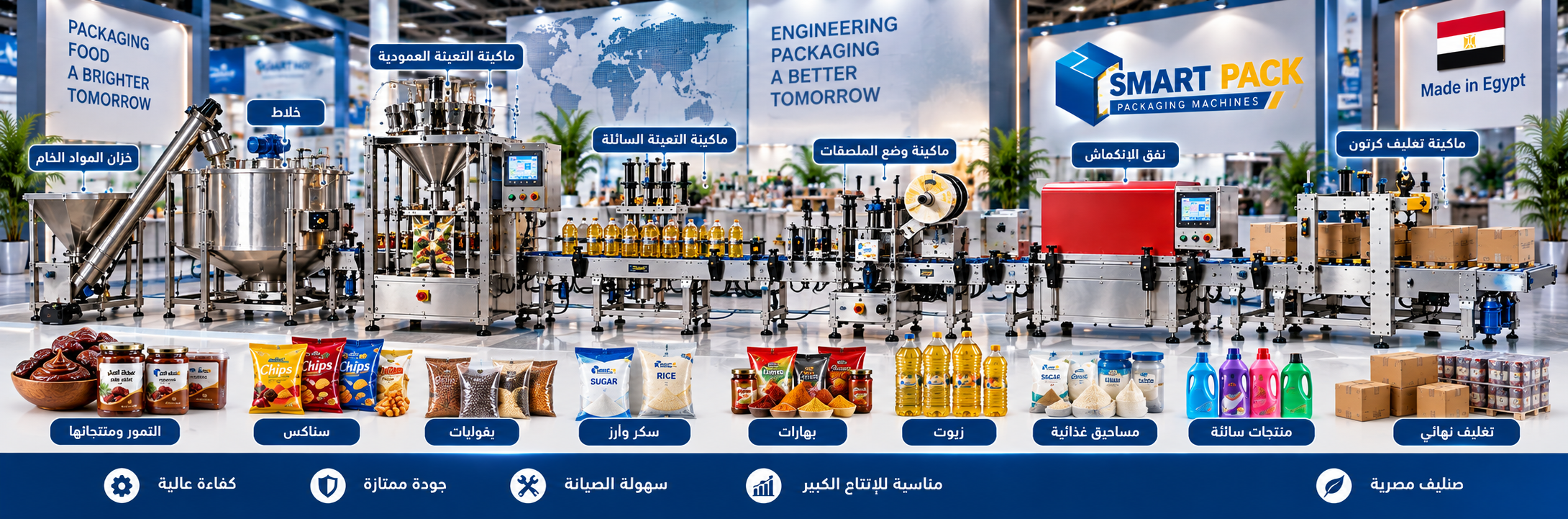
For this reason, serious projects turn to specialized solutions in filling and packaging machinery provided by experienced companies such as Smart Pack.
4
Market Outlook and Profitability of Flour and Dry Food Systems
The flour and dry food market is among the most stable food markets due to:
Continuous daily demand
Its link to staple food consumption
Ease of storage and distribution
Strong export potential
This stability makes ROI highly attractive, especially when manufacturers:
Control the full production chain
Diversify product offerings
Use filling and packaging machines that reduce waste and increase productivity
Investment Tips Before Entering This Industrial Sector
Do not limit operations to grain milling alone—focus on finished products
Design production lines to be scalable
Adhere strictly to food safety and quality standards
Treat packaging as a key marketing component
Success in this sector comes from an integrated, well-planned industrial system, not a single production step.
Frequently Asked Questions
Is flour manufacturing suitable for medium-scale factories?
Yes, it can start with a mid-scale line and expand gradually based on demand.
What is the difference between selling grains and selling packaged flour?
Packaged flour offers significantly higher added value and profitability.
Does packaging affect export opportunities?
Directly—professional packaging is essential for entering foreign markets.
Can multiple products be produced in the same factory?
Yes, such as flour blends and other dry food products.
When does ROI typically begin?
Within a relatively short period with proper management and equipment selection.
The Smart Industrial Decision Starts Here
Grain cultivation, milling, and flour packaging are no longer traditional activities—they form a fully integrated food industry system capable of delivering stable profits and long-term growth.
Factories that invest today in professional filling and packaging machines and advanced production lines secure a strong position in a food market that never stops.