 Admin
Admin Spice Manufacturing: From a Traditional Activity to a Highly Profitable Industrial Project
4
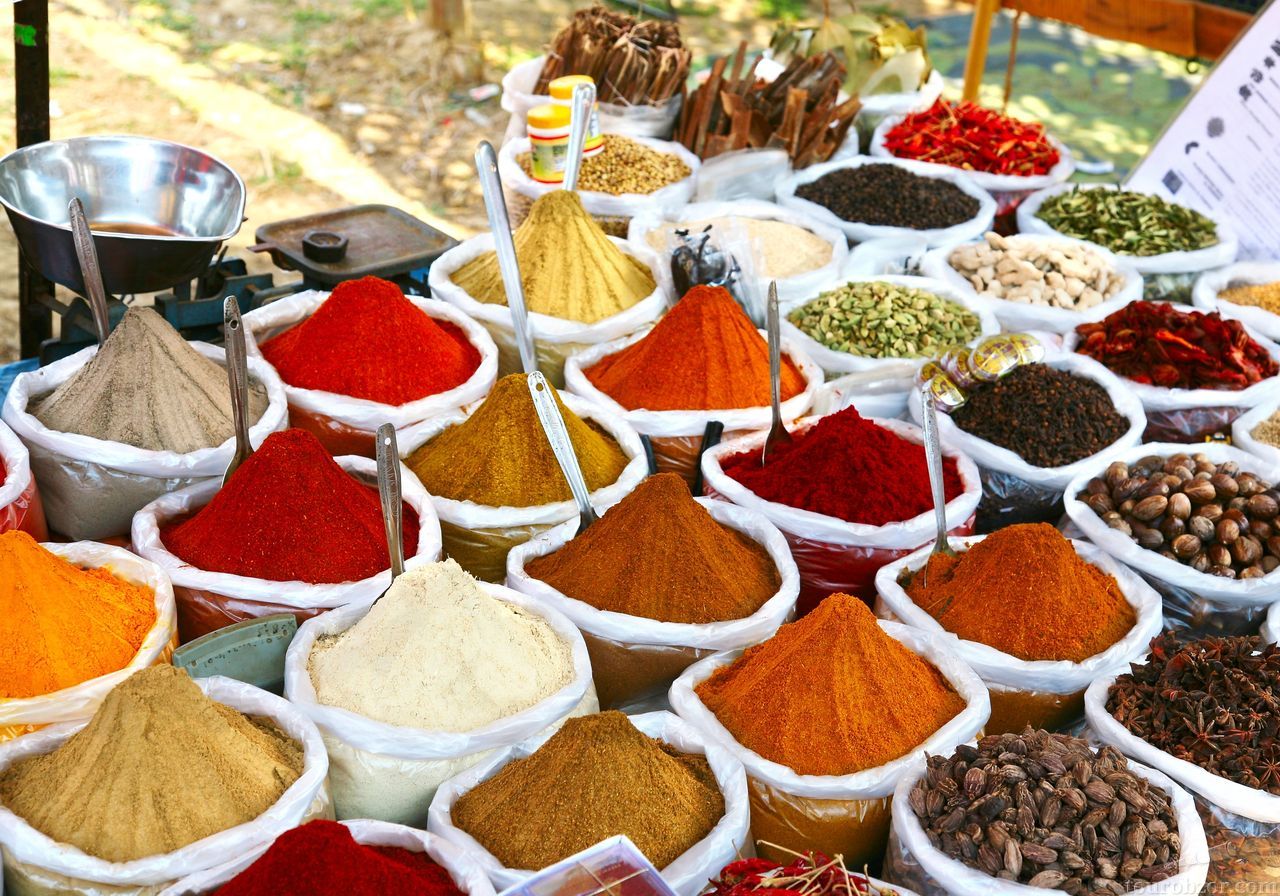
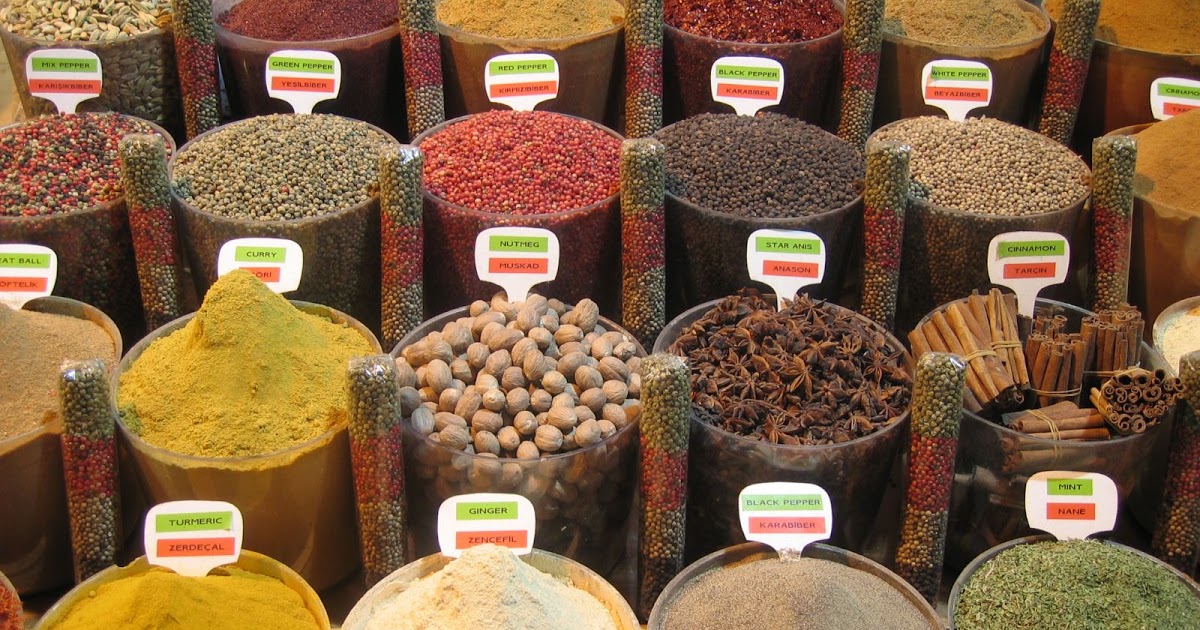
Spices are no longer simple food ingredients used only to enhance flavor. In recent years, they have evolved into a fully integrated industrial sector that serves multiple industries, including food processing, pharmaceuticals, cosmetics, and dietary supplements. This transformation has positioned spices among the most in-demand products in both local and global markets.
This shift has created real opportunities for factories seeking stable, high–value-added production projects—especially when spice grinding and processing are combined with oil extraction, followed by professional filling and packaging capable of competing in modern markets.
Why Is Spice Manufacturing One of the Most Successful Industrial Projects?
Spice manufacturing offers several advantages that make it highly attractive for factories:
Continuous, non-seasonal demand
Wide variety of finished products
Ability to operate multiple production lines
Ease of storage and transportation
Strong export potential
These factors make investment in spice manufacturing safer and more stable than many other industries, particularly when supported by a well-planned, integrated production system.
From Raw Spices to Value-Added Industrial Products
The real value of spices is not achieved when sold as raw materials, but when they are processed into manufactured products, such as:
Ready-to-use spice powders
Blended spice mixes
Natural oils and extracts
Food and health products based on spices
At this stage, profitability increases significantly, as processed products give factories greater control over pricing, branding, and target markets.
4
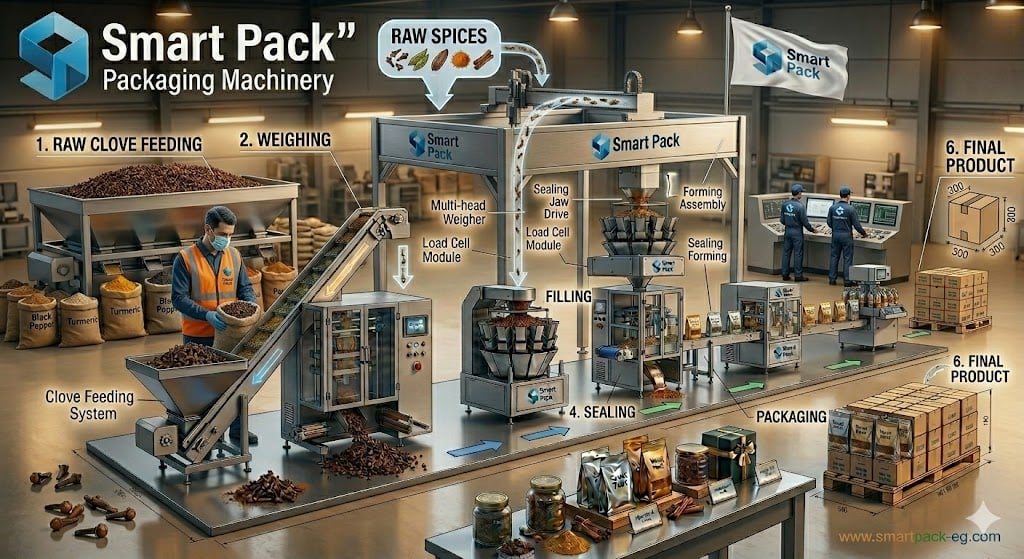
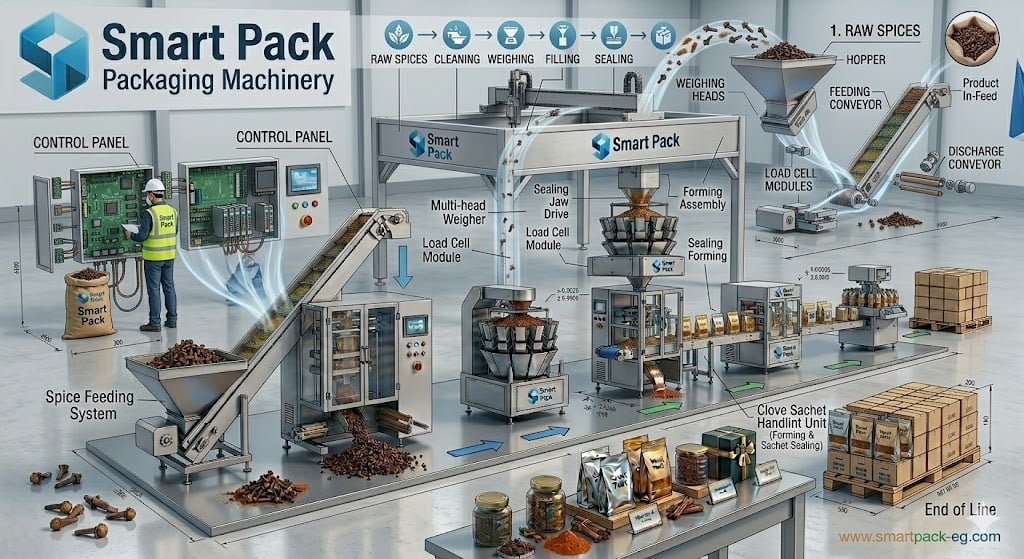
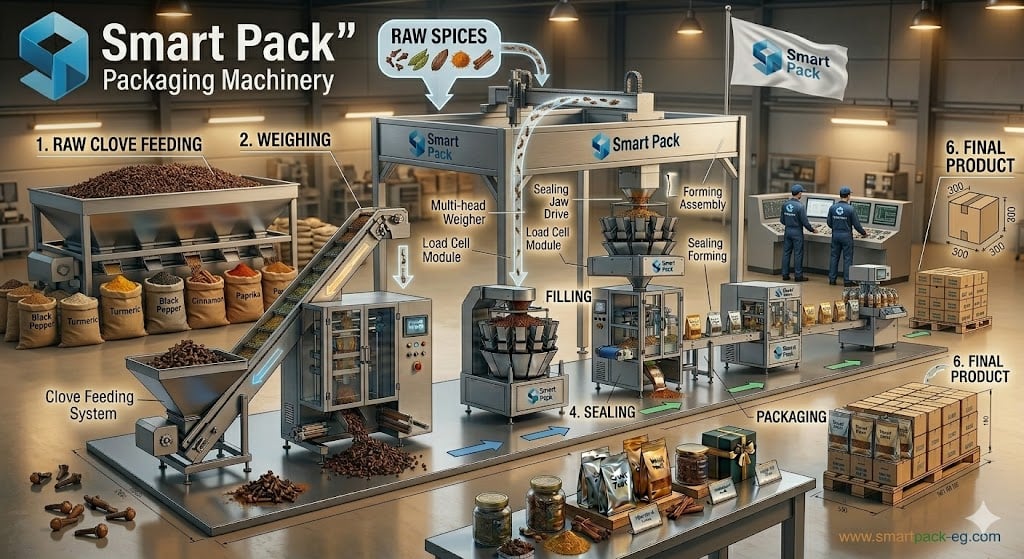
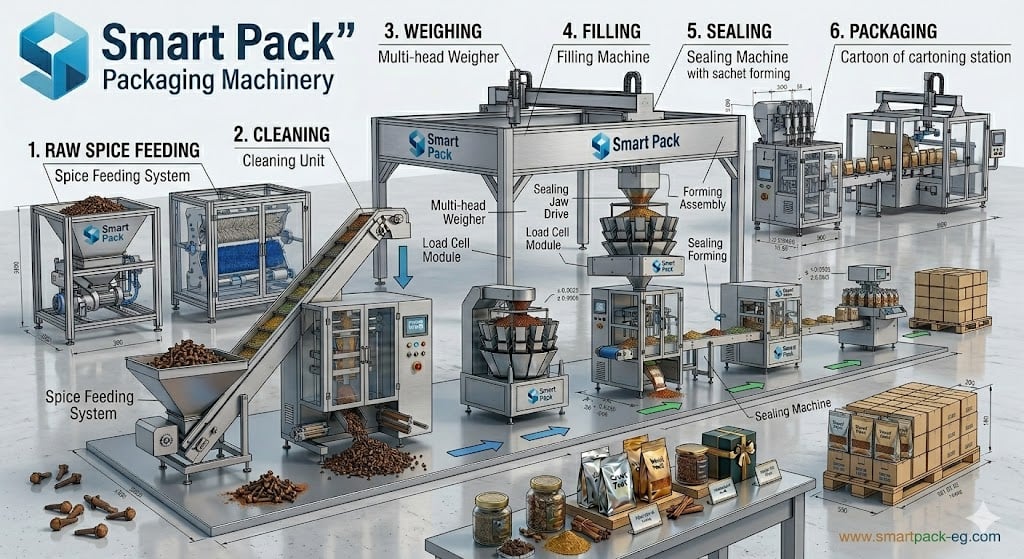
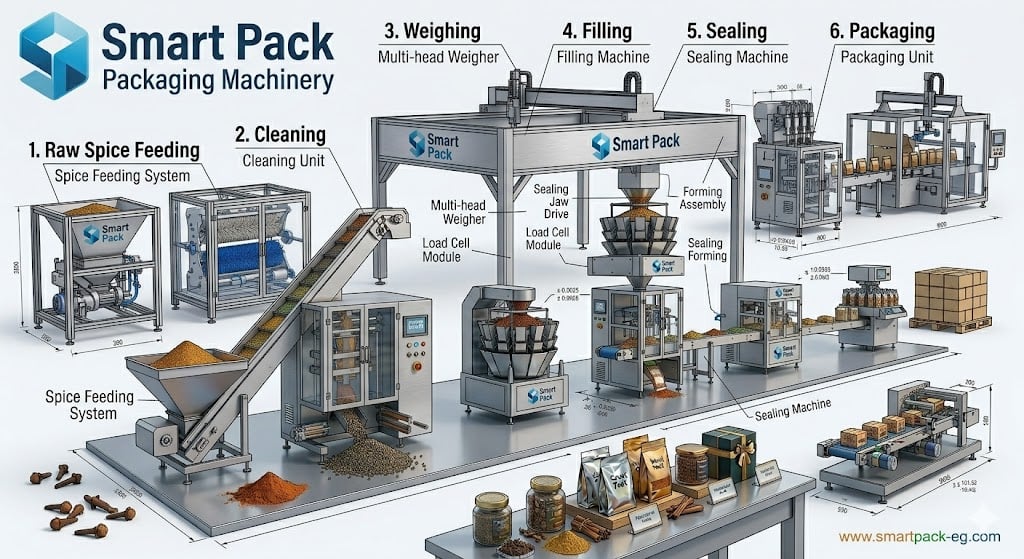
Stages of Spice Grinding and Manufacturing Inside Factories
Spice manufacturing follows a series of interconnected stages, each playing a critical role in final product quality.
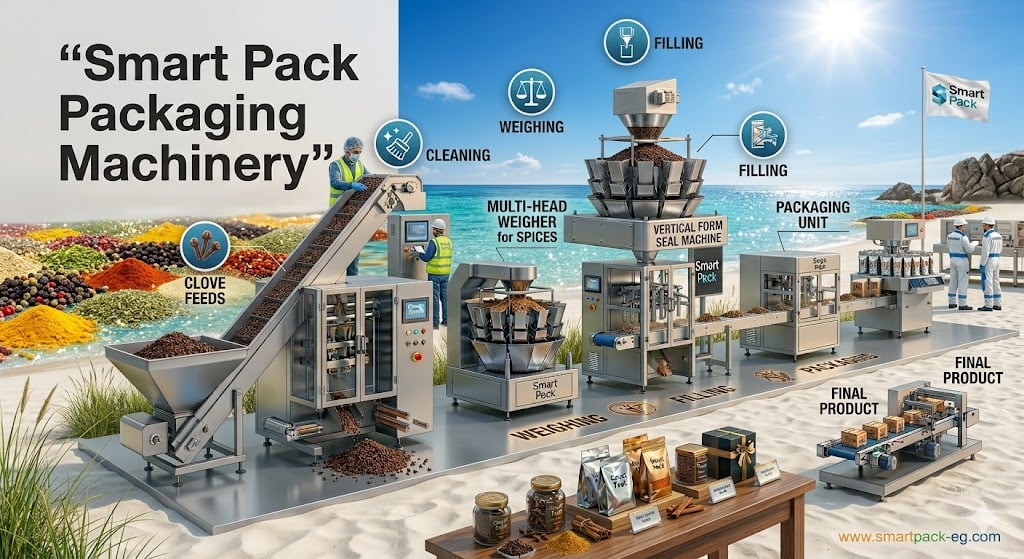
Sorting and Cleaning
High-quality spices are selected and impurities removed to ensure a clean, uniform product.
Drying and Treatment
Industrial drying preserves natural properties and prepares spices for grinding or extraction.
Grinding and Blending
Spices are ground into fine powders or blended in precise ratios to produce ready-made mixes.
Extraction (for Oils and Extracts)
Natural oils and active compounds are extracted for use in various industries.
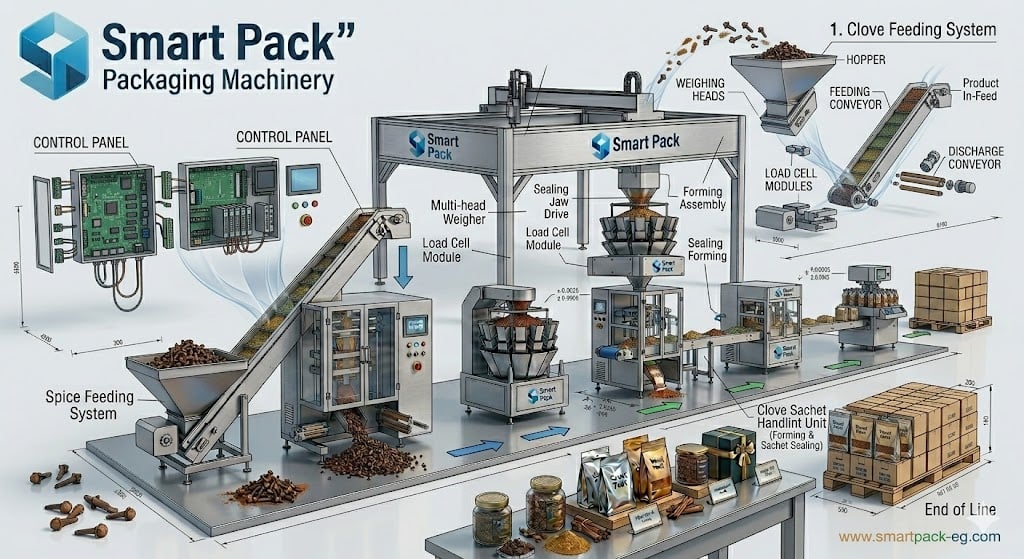
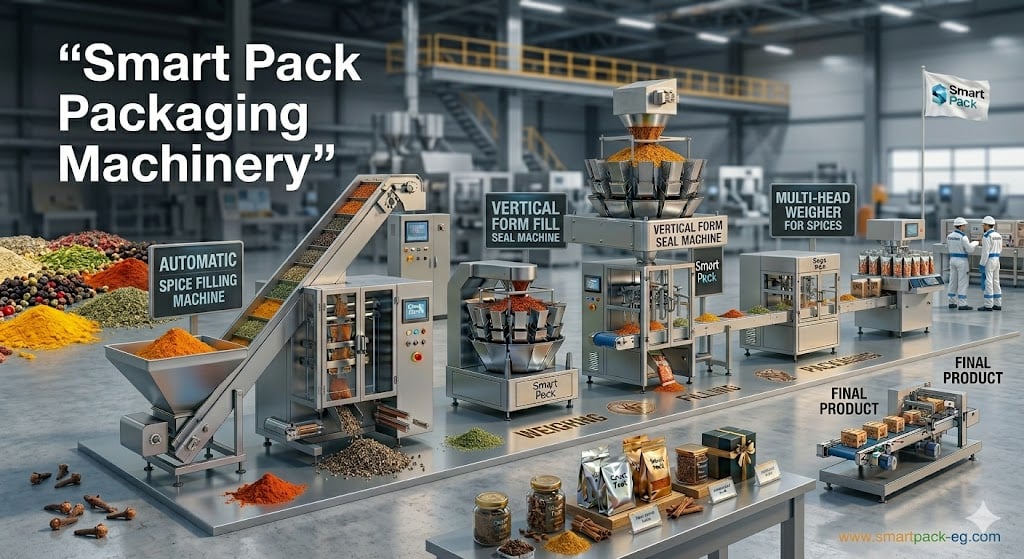
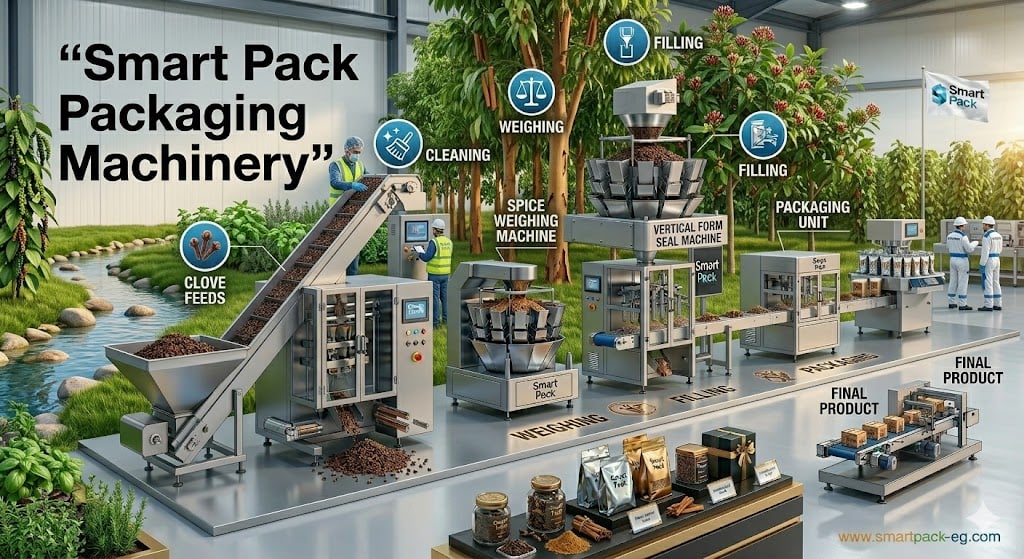
Filling and Packaging
The decisive stage where the product becomes ready for sale and distribution.
Filling and Packaging: A Critical Success Factor in Spice Products
Regardless of product quality, filling and packaging play a decisive role in purchasing decisions—especially in competitive markets.
Professional filling and packaging machines ensure:
Accurate weight and dosing
Protection from moisture and air
Preservation of flavor and quality
A professional appearance that builds brand trust
Whether producing powder, oil, or extracts, selecting the right machinery determines a factory’s ability to scale and succeed.
4
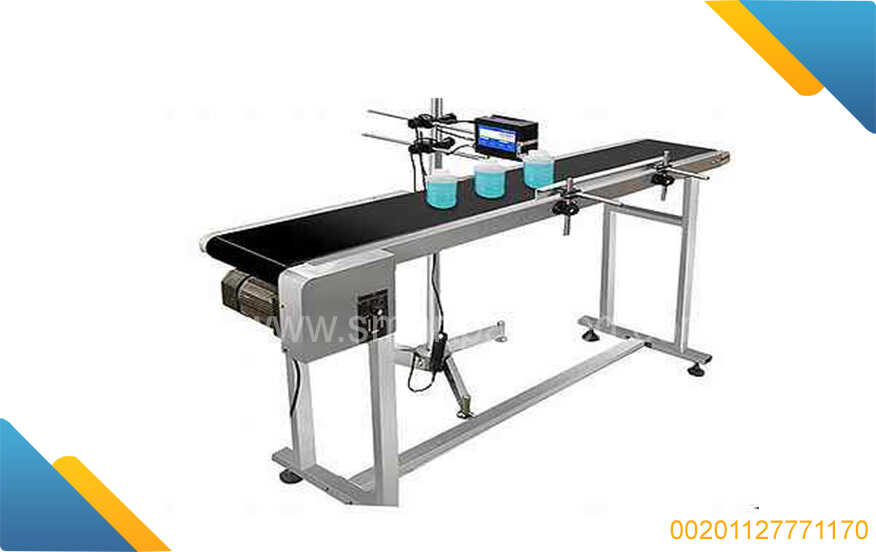
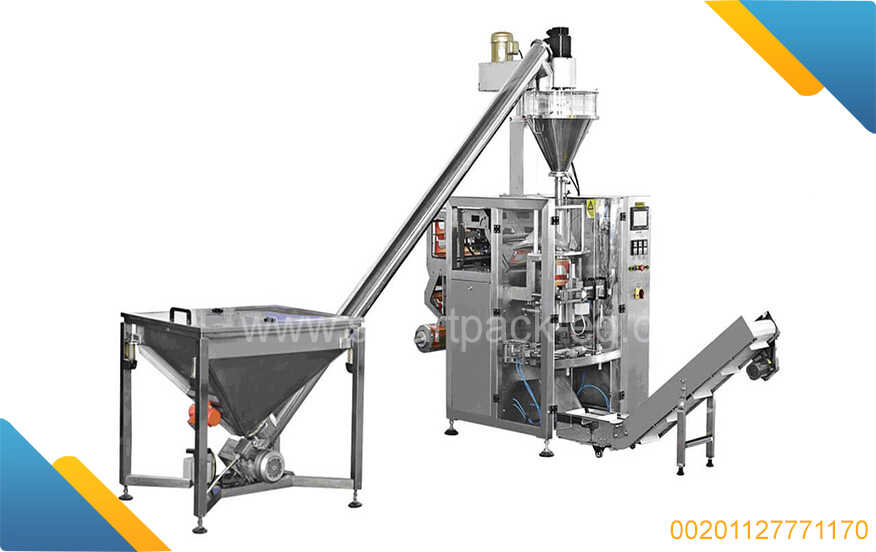
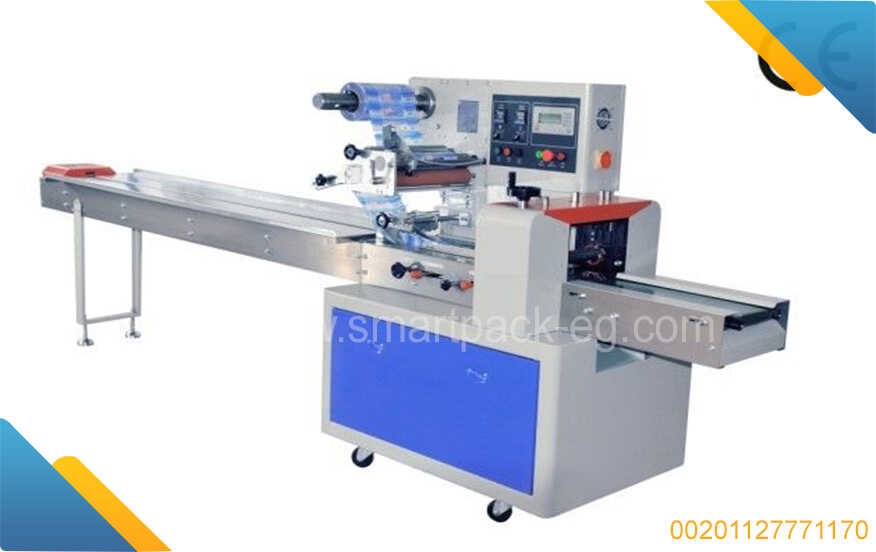
Types of Filling Machines Suitable for the Spice Industry
| Product Type | Machine Type | Operating Characteristics |
|---|---|---|
| Spice Powders | Powder Filling Machine | High precision |
| Spice Blends | Multi-purpose Filling Machine | Operational flexibility |
| Oils & Extracts | Liquid Filling Machine | Secure sealing |
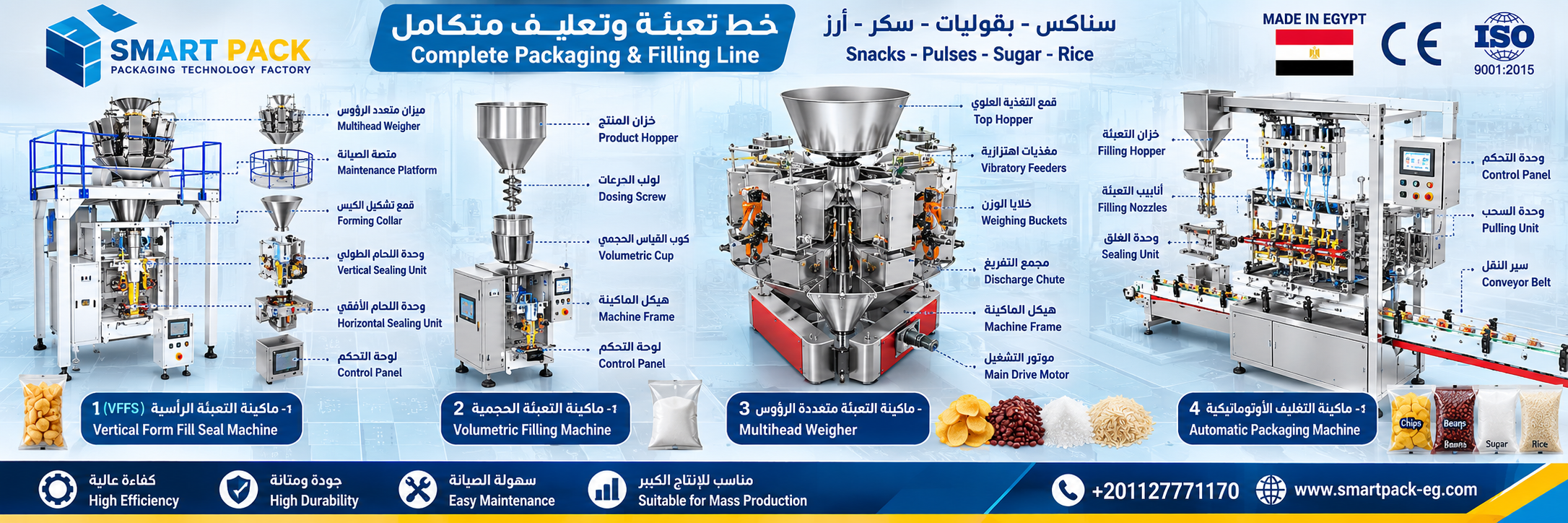
| Integrated Production | Complete Filling & Packaging Line | Continuous output |
Machine selection should be based on product type and future growth plans, not price alone.
Integrated Production Lines: The Fastest Path to Industrial Growth
Factories that rely on integrated production lines in spice manufacturing achieve:
Consistent product quality
Reduced material waste
Faster response to market demand
Easy scalability
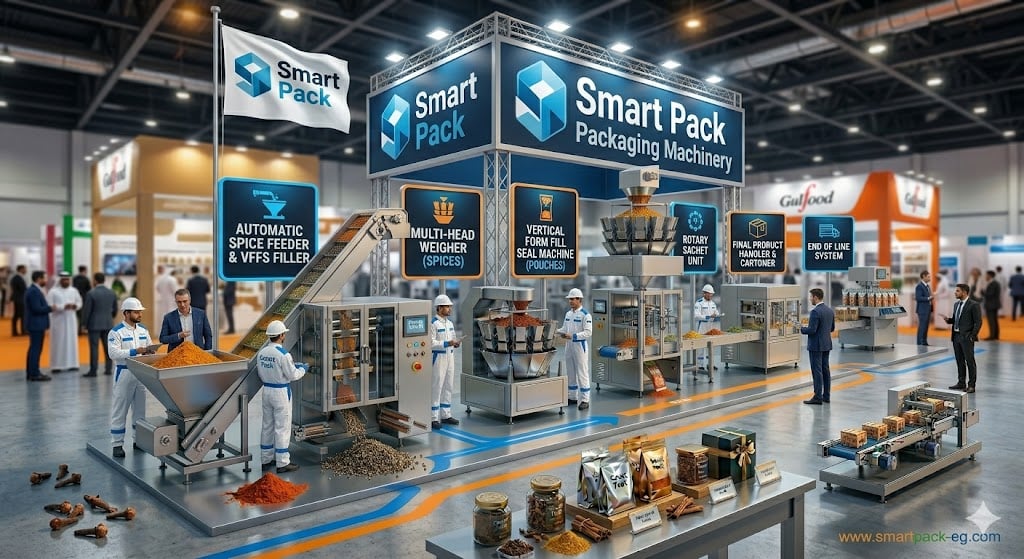
For this reason, serious industrial projects depend on specialized filling and packaging solutions provided by experienced companies such as Smart Pack, which offer tailored systems for spice processing and packaging.
4
Market Growth and Profitability of the Spice Industry
The global spice market continues to grow due to:
Rising demand for processed foods
Increasing preference for natural products
Expansion of export markets
This growth results in a high return on investment (ROI), especially when factories:
Produce value-added spice products
Maintain control over production stages
Use efficient machinery that minimizes waste and maximizes productivity
Investment Tips Before Entering the Spice Manufacturing Sector
Do not limit operations to grinding only—consider blending and extraction
Prioritize quality and health standards
Choose scalable machinery
Treat packaging as part of the product itself
Success in this field depends on a comprehensive industrial vision, not a single production step.
Frequently Asked Questions
Is spice manufacturing suitable for medium-sized factories?
Yes, it can start with a medium-scale line and expand based on demand.
Which spice products are most profitable?
Spice blends, oils, and extracts deliver the highest added value.
Does packaging really affect sales?
Absolutely—it is a key factor in marketing and customer trust.
Can processed spice products be exported?
Yes, global demand is strong when quality and standards are met.
When does ROI typically begin?
Within a relatively short period with proper management and machinery selection.
The Smart Industrial Decision Starts Here
Spice manufacturing is no longer a simple activity—it is a fully integrated industrial project capable of generating stable profits and long-term growth when properly planned.
Factories that invest today in professional filling and packaging machines and advanced production lines position themselves strongly in a large and rapidly expanding global market.