





 Admin
Admin Clove Manufacturing Inside Factories: A High-Value Industrial Opportunity for Smart Projects
4
Cloves are no longer just an aromatic plant grown for decoration or limited household use. In recent years, they have become a high-value industrial raw material used across multiple sectors, including food processing, pharmaceuticals, cosmetics, and the production of natural oils and extracts.
This transformation has driven growing demand for processed clove products, opening the door for factories and industrial projects to enter a stable production sector based on value addition rather than raw material sales alone.
Factories that approach cloves with an investment mindset do not stop at sourcing raw cloves. Instead, they focus on industrial processing followed by professional filling and packaging, as these stages are what multiply product value and unlock broader local and export markets.
Why Are Cloves an Ideal Raw Material for Industrial Manufacturing?
Cloves offer several characteristics that make them highly suitable for factory-based processing:
High concentration of essential oils and active compounds
Wide applications across multiple industries
Ability to be stored and processed without rapid deterioration
Consistent, non-seasonal market demand
These factors make investment in clove product manufacturing a smart and scalable choice for factories seeking long-term stability and growth.
From Raw Cloves to Value-Added Products
The true value of cloves is not realized when sold as a raw commodity, but when transformed into industrial products, such as:
Clove powder
Natural clove oil
Clove extracts
Food and cosmetic products based on cloves
This is where real profitability begins. Processed clove products can be marketed with higher profit margins and allow factories to build independent, competitive brands.
4
Stages of Clove Manufacturing in Modern Factories
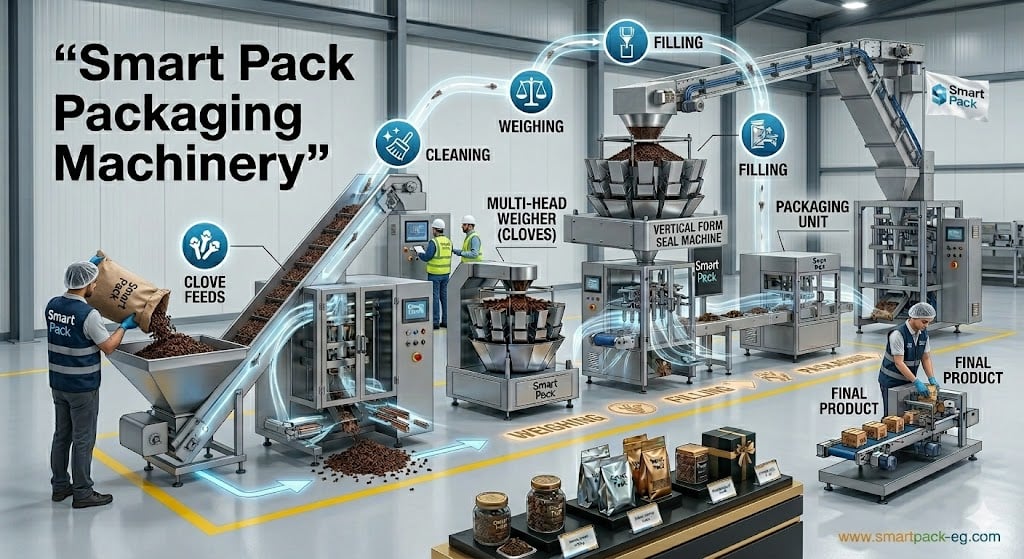
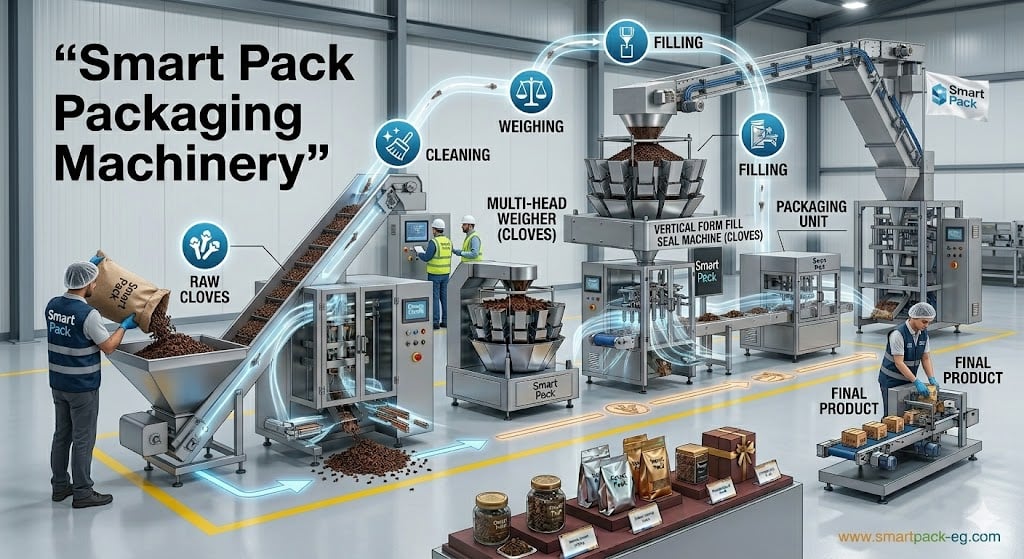
Clove processing follows a connected sequence of stages, each requiring appropriate equipment to ensure quality and consistency.
Sorting and Cleaning
High-quality cloves are selected and impurities removed to ensure a clean raw material.
Drying and Treatment
Industrial drying preserves the active properties of cloves and prepares them for processing.
Grinding or Extraction
Cloves are either ground into fine powder or processed to extract oils and active compounds, depending on the final product.
Filling and Packaging
The stage where the product becomes market-ready, ready for distribution and sale.
The Role of Filling and Packaging in the Success of Clove Products
In markets driven by quality, appearance, and trust, packaging is inseparable from product success.
Professional filling and packaging machines ensure:
Accurate weight and volume
Preservation of product properties
Extended shelf life
A professional appearance that supports purchasing decisions
Whether producing clove powder, oil, or extracts, selecting the right filling and packaging machines is a critical step toward commercial success.
4
Types of Filling Machines Suitable for Clove Products
| Product Type | Machine Type | Operating Characteristics |
|---|---|---|
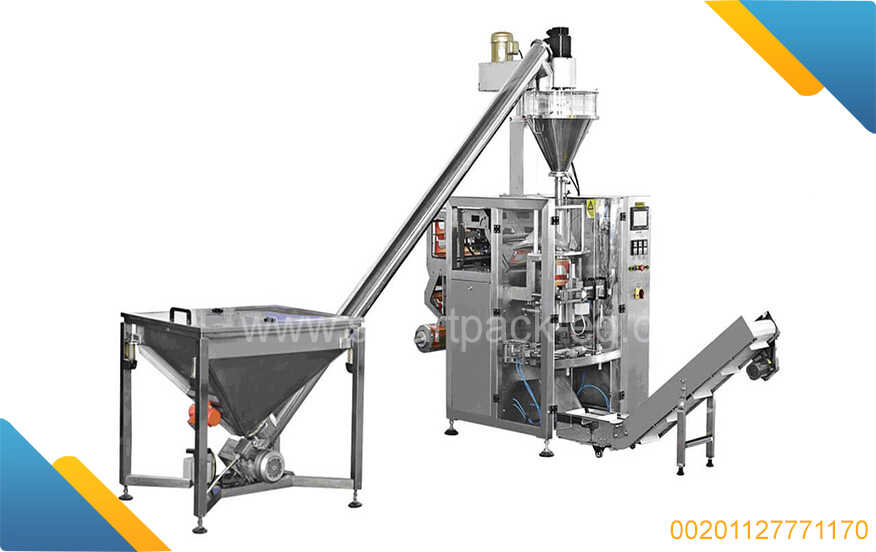
| Clove Powder | Powder Filling Machine | High precision |
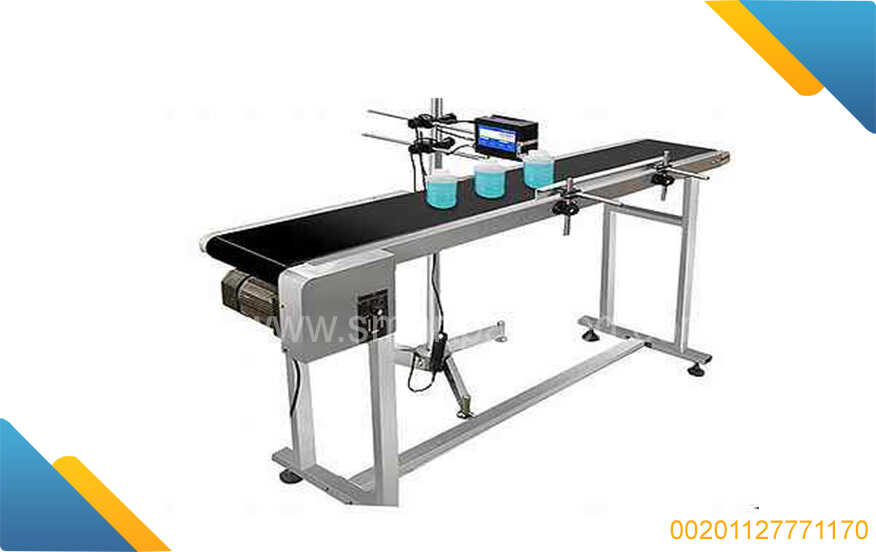
| Clove Oil | Liquid Filling Machine | Secure sealing |
| Clove Extracts | Integrated Filling Line | Continuous production |
Machine selection should be based on product type and future expansion plans—not price alone.
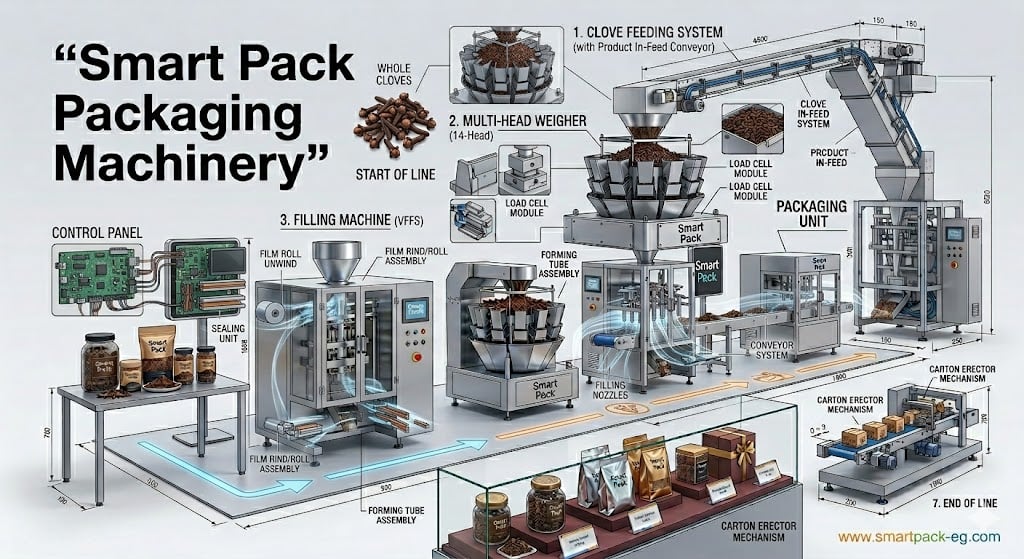
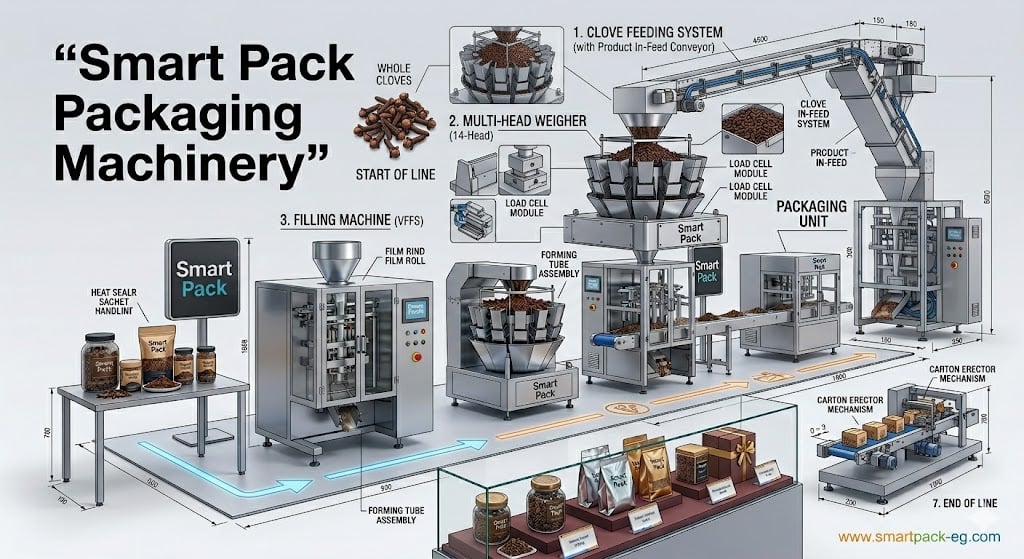
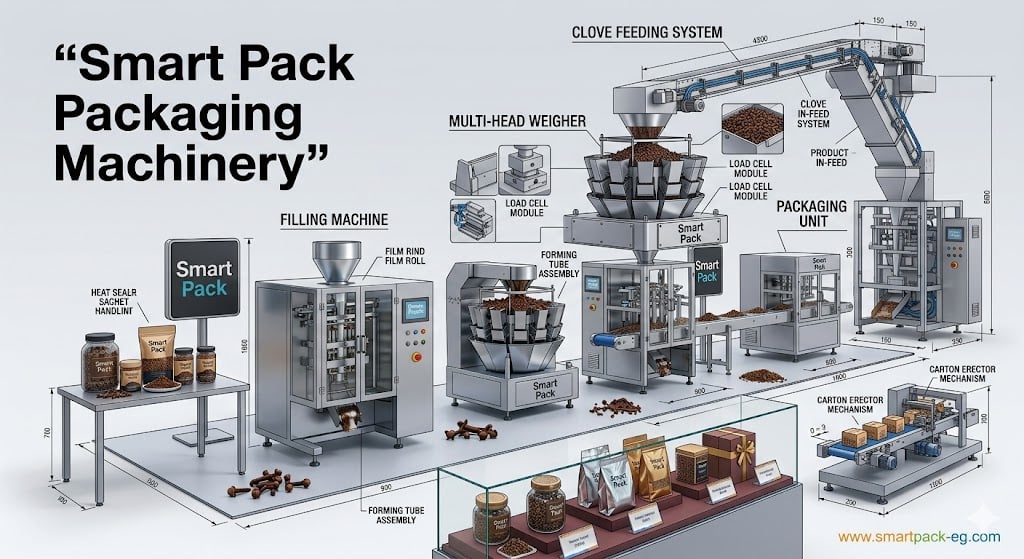
Integrated Production Lines: The Key to Industrial Expansion
Factories that rely on integrated production lines for clove manufacturing achieve:
Operational stability
Reduced material waste
Consistent product quality
Easy scalability
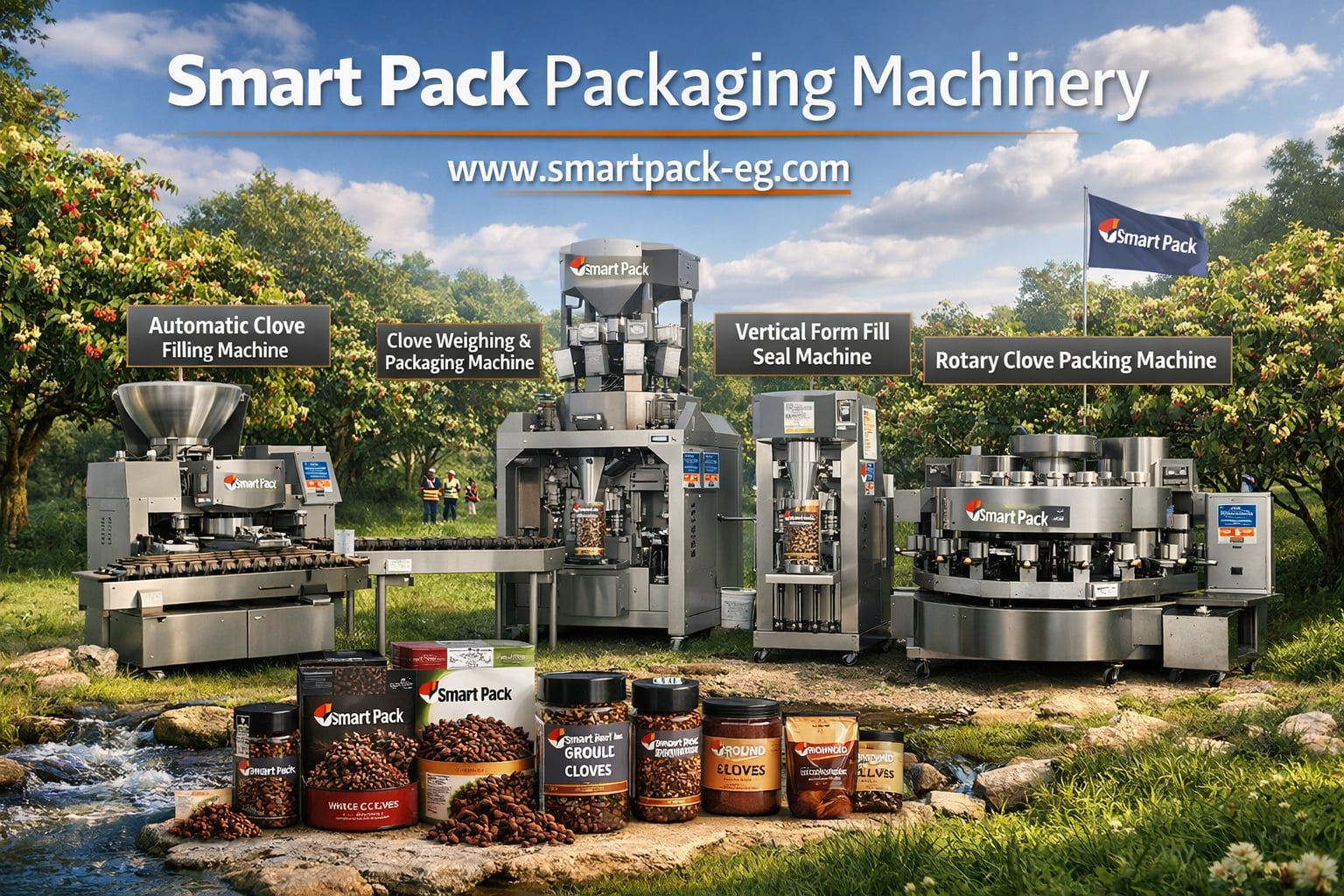
For this reason, serious industrial projects depend on specialized filling and packaging solutions offered by experienced companies such as Smart Pack, which provide integrated systems tailored to product characteristics and production capacity.
4
Market Demand and Profitability of Clove Manufacturing
The global market for clove-based products continues to grow due to:
Rising demand for natural products
Expansion of food, health, and cosmetic industries
Increasing use of essential oils and plant extracts
This results in a high return on investment (ROI), especially when factories:
Control the manufacturing process
Reduce dependence on external suppliers
Use efficient filling and packaging machines to minimize waste and increase productivity
Investment Tips Before Entering Clove Manufacturing
Do not limit your strategy to buying and reselling raw cloves
Focus on processing and value addition
Choose scalable production lines
Treat packaging as a core marketing and quality element
Success in this field depends on an integrated industrial system, not a single production step.
Frequently Asked Questions
Is clove product manufacturing profitable for factories?
Yes, due to consistent demand and high added value compared to raw clove sales.
What are the most profitable clove products to manufacture?
Clove powder and clove oil are among the most in-demand and profitable.
Does the project require large production lines from the start?
No, it can begin with a medium-scale line and expand based on market demand.
What role does packaging play in marketing clove products?
It is essential for quality preservation and increasing market value.
When does ROI usually begin?
Within a relatively short period with proper management and the right machinery.
The Industrial Decision Starts Here
Manufacturing clove products inside factories is no longer a side idea—it is a real industrial project capable of generating stable profits and sustainable growth when properly planned.
Factories that invest today in professional filling machines and integrated production lines position themselves strongly in a rapidly expanding global market.