
 Admin
Admin Preventive Practices Inside Factories Have Become an Essential Production Sector
4
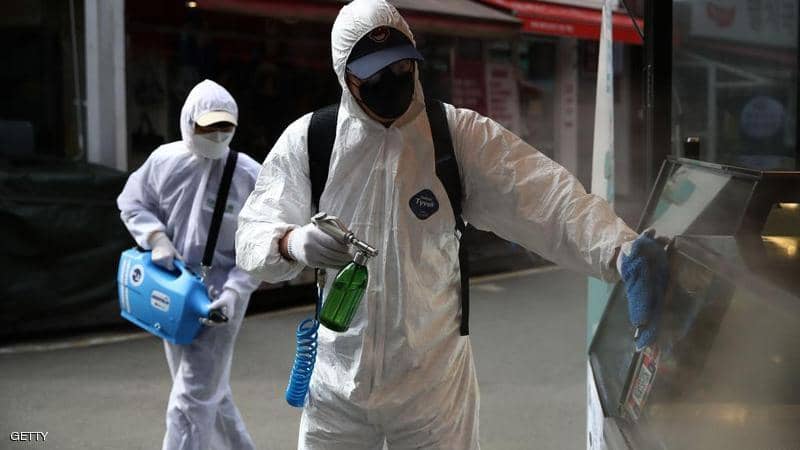
Preventive practices inside factories are no longer temporary precautionary measures or instructions applied only during emergencies. Today, they have become a core component of modern industrial operations and an essential factor for any factory seeking continuity, stability, and compliance with safety and quality standards.
This transformation has reshaped market demand and created a real, ongoing need for industrial prevention and disinfection products such as surface disinfectants, hand sanitizers, and industrial cleaners—opening the door to a strong production and investment opportunity for factories capable of meeting this demand in an organized and professional manner.
Factories that understand this shift no longer view prevention as a cost, but as a fully integrated production sector capable of generating stable profits when supported by the right filling machines, packaging systems, and production lines designed for industrial use.
Why Has Prevention Inside Factories Become a Permanent Operational Requirement?
Modern occupational health and safety standards now require factories to:
Provide disinfectant products on a continuous basis
Use specialized sanitizers for industrial surfaces
Apply daily cleaning procedures across production lines
Protect workers and the operating environment from health risks
This reality has created constant, non-seasonal demand for prevention products—a type of demand that is not affected by traditional market fluctuations. As a result, it represents a guaranteed and sustainable opportunity for factories with efficient production and filling capabilities.
From Operational Need to an In-House Manufacturing Opportunity
Instead of relying solely on external suppliers, many factories are now moving toward:
Manufacturing prevention products internally
Establishing dedicated disinfection production lines
Expanding production and supplying other factories
This approach not only reduces operating costs, but also opens a new door for production, filling, and packaging as an independent profit-generating sector within the factory—provided the right equipment is chosen from the beginning.
Filling and Packaging Machines: The Cornerstone of Industrial Prevention Products
For products used inside factories, there is no room for error or inconsistency. Any defect in filling or sealing can lead to:
Reduced product effectiveness
Operational risks
Loss of trust within the working environment
That is why filling and packaging machines are a decisive factor in the success of industrial prevention production. They ensure:
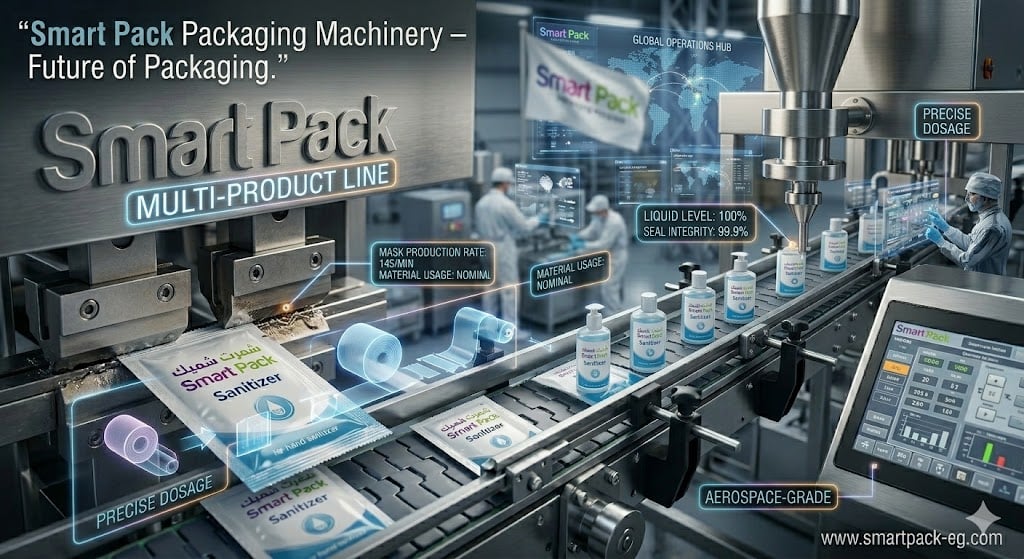
High-precision liquid filling
Consistent volume in every container
Production speeds suitable for industrial demand
Reduced waste and material loss
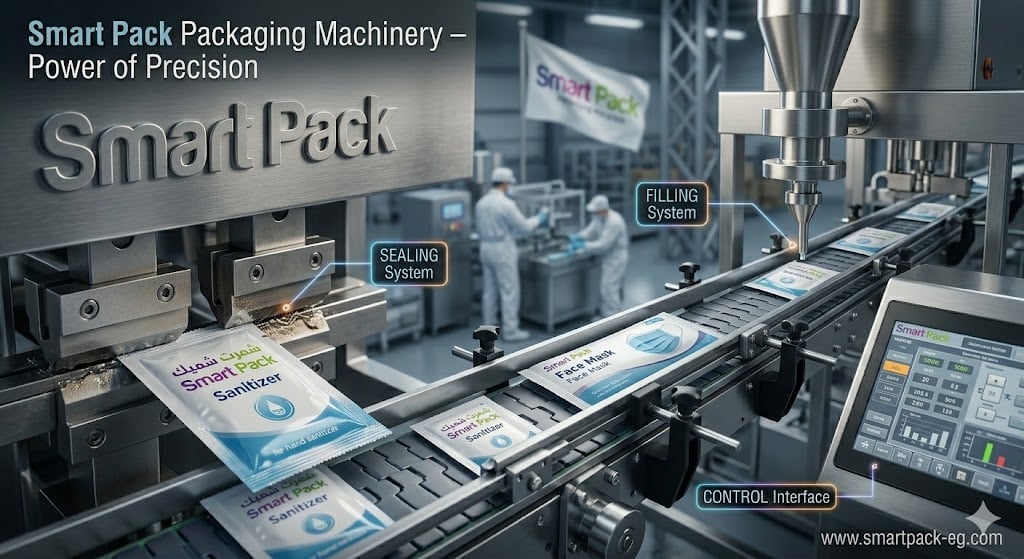
Secure and reliable packaging
4
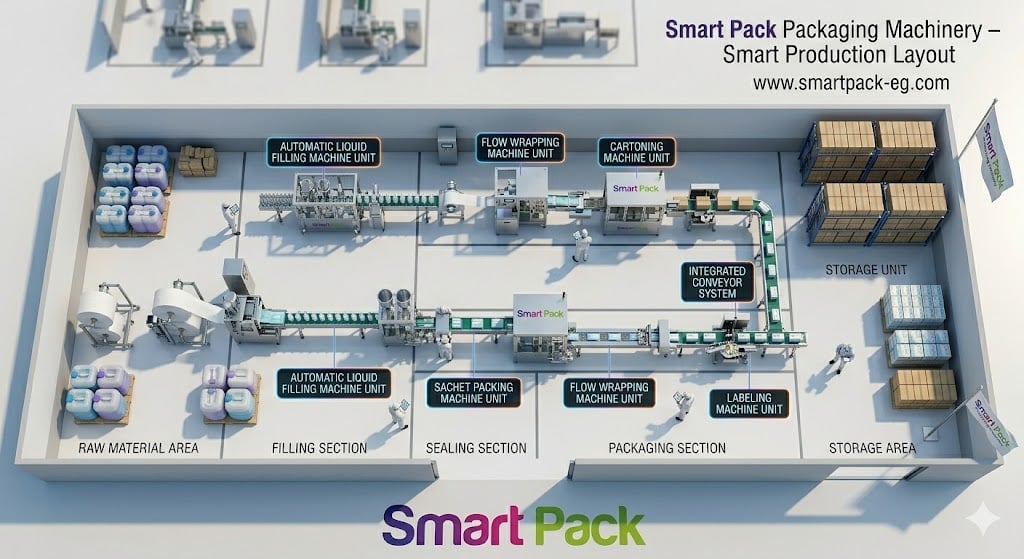
How Do Prevention and Disinfection Factories Operate with an Organized Production Line?
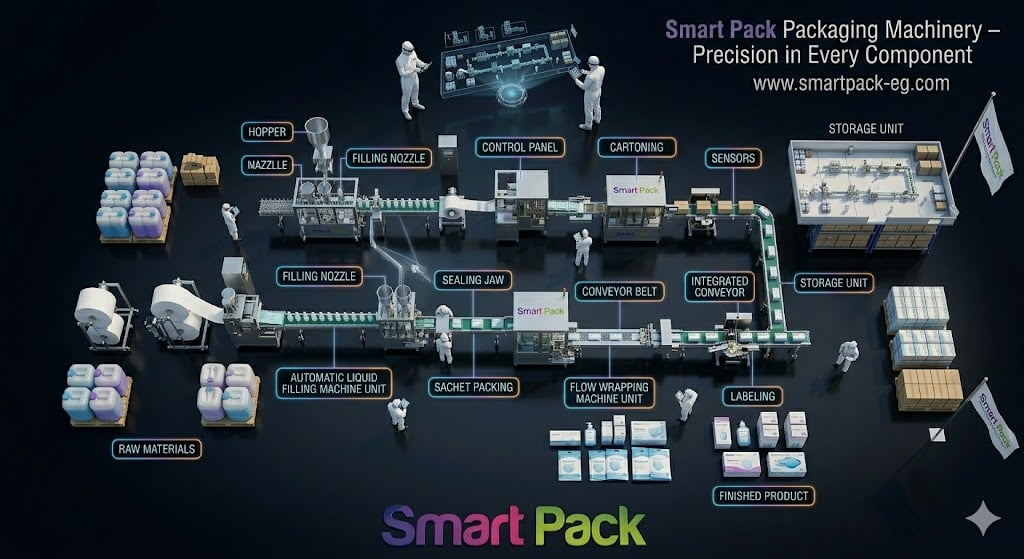
The production process follows clear, interconnected stages, with each stage directly influencing the next to ensure stable final quality.
Industrial Raw Material Preparation
Active substances and base components are prepared according to standards suitable for industrial environments.
Mixing and Homogenization
A critical stage that ensures formula consistency and stable effectiveness.
Precision Filling
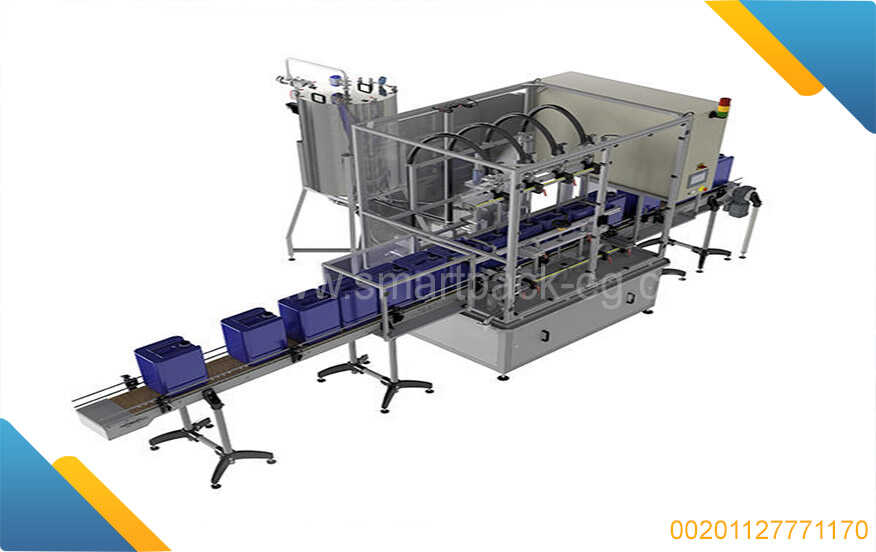
This is where detergent and disinfectant filling machines play a central role, handling industrial liquids efficiently and accurately.
Packaging and Preparation for Use
Secure packaging that ensures easy storage, handling, and use within factory environments.
Filling Machine Types Suitable for Industrial Prevention Products
| Machine Type | Operation Mode | Production Capacity | Best Use |
|---|---|---|---|
| Semi-Automatic Filling Machine | Flexible operation | Medium | Small factories |
| Automatic Filling Machine | Continuous operation | High | Medium-sized factories |
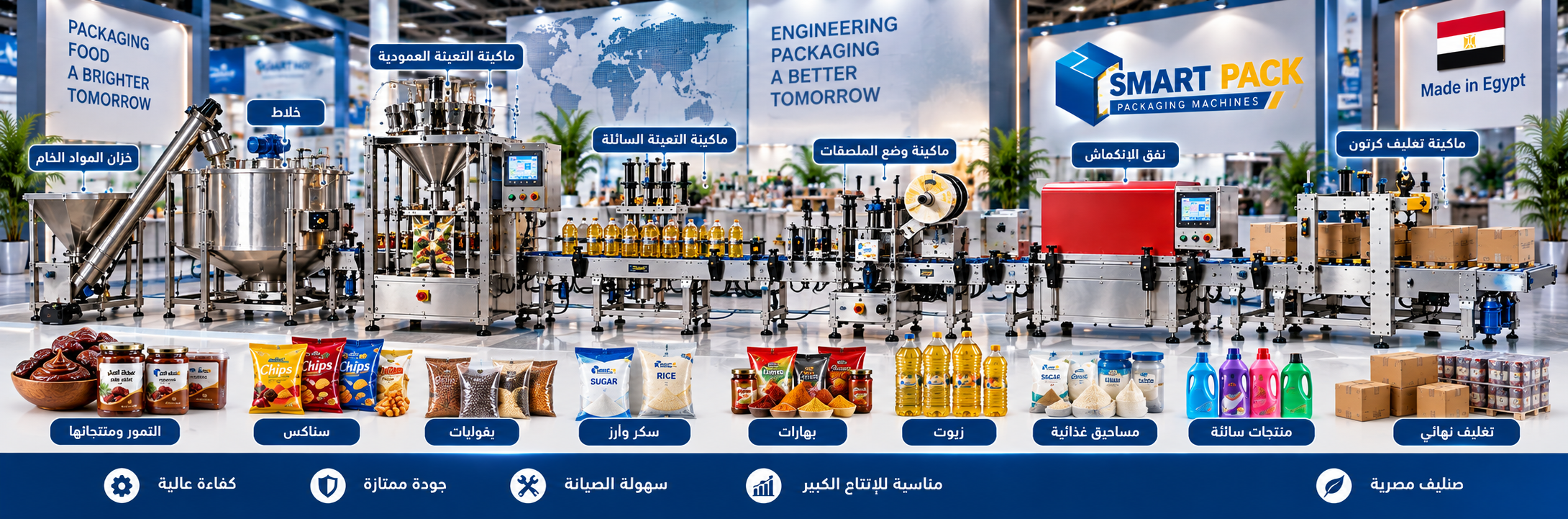
| Integrated Production Line | Heavy industrial operation | Very high | Large factories |
Choosing the right type ensures production stability, minimizes breakdowns, and increases overall efficiency.
Integrated Production Lines: The Ideal Solution for Large Factories
Factories that rely on integrated production lines achieve:
Full coordination between operating stages
Higher production speed
Reduced human error
Lower long-term operating costs
For this reason, serious manufacturers depend on specialized filling and packaging solutions offered by companies such as Smart Pack, whose expertise aligns with the real requirements of industrial production sectors.
4
Market Demand and Profitability of Industrial Prevention Products
Demand for prevention products inside factories is:
Stable
Non-seasonal
Directly linked to daily operations
This makes return on investment (ROI) relatively high—especially when efficient filling and packaging machines are used to reduce waste, increase productivity, and enable expansion without major new investments.
Investment Tips Before Entering Industrial Prevention Manufacturing
Do not start without studying actual factory usage demand
Choose machines designed for continuous operation
Ensure easy maintenance and reliable technical support
Plan for expansion from day one
The right equipment choices are what transform prevention from an operational burden into a profitable production sector.
Frequently Asked Questions About Industrial Prevention Production
Is prevention inside factories a real manufacturing opportunity?
Yes, because it is linked to daily operations and not seasonal demand.
Can medium-sized factories enter this sector?
Yes, with a suitable and scalable production line.
Why are filling machines critical in this field?
They ensure quality consistency, safety, and risk reduction.
Are integrated production lines necessary?
Yes for large factories aiming for maximum efficiency.
When does ROI usually begin?
Within a relatively short period with proper management and the right machinery.
The Smart Industrial Decision Starts Here
Prevention inside factories is no longer optional—it has become a complete production ecosystem.
Factories that invest today in the right filling machines, packaging systems, and production lines are the ones that will secure long-term stability, consistent quality, and sustainable profitability.