 Admin
Admin The Integrated Industrial Perspective on Sterilization Systems
Practical Framework for Understanding Sterilization Types and Selecting the Right Method for Each Material and Industry
A Professional Vision for Extending Equipment and Product Lifespan Through Proper Sterilization
Linking Sterilization to Product Quality and Operational Continuity in Manufacturing Facilities
Sterilization has become a core operational element in modern industrial activities, especially in sectors where quality, safety, and continuity are critical, such as food, pharmaceutical, and chemical industries.
Today, sterilization is no longer just a preventive measure—it is a strategic operational tool that protects products, preserves equipment, and ensures stable performance across production lines.
This article presents a comprehensive industrial view of sterilization, explaining its different types and their direct impact on preserving assets, equipment, and products inside and outside manufacturing environments.
What Does Sterilization Mean from an Industrial Perspective?
In industrial contexts, sterilization is a controlled and systematic process aimed at the complete elimination of unwanted microorganisms from surfaces, equipment, tools, or products using thermal, chemical, or physical methods, under strict standards that ensure both safety and quality.
In production environments, sterilization protects not only people, but also:
-
Raw materials
-
Production lines
-
Industrial machinery
-
Finished products before and after packaging
The Importance of Sterilization in Preserving Assets Inside Factories
Proper sterilization has a direct and measurable impact on the lifespan of assets used daily in industrial facilities, including metal equipment, processing surfaces, and packaging materials.
Key industrial benefits include:
-
Reducing equipment corrosion caused by contamination
-
Protecting surfaces from harmful biological reactions
-
Extending product shelf life
-
Reducing spoilage and waste rates
-
Maintaining production line efficiency
Sterilization vs Disinfection in Industrial Environments
Although often confused, the difference between sterilization and disinfection is fundamental in industrial operations.
| Comparison Factor | Disinfection | Sterilization |
|---|---|---|
| Objective | Reduce microorganisms | Complete elimination of microorganisms |
| Safety level | Moderate | Very high |
| Industrial use | Routine cleaning | Sensitive production environments |
| Impact on quality | Limited | Direct and strong |
| Dependency | Temporary | Essential in production lines |
Types of Sterilization and Their Industrial Applications
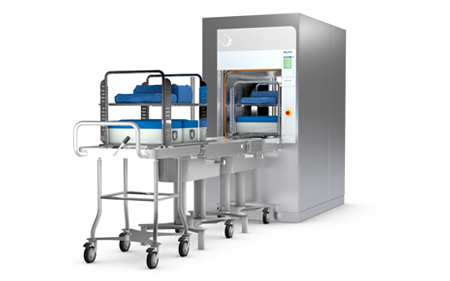
Moist Heat Sterilization (Steam)
One of the most widely used industrial methods, especially for metal equipment, pipes, and tanks.
It offers high effectiveness and penetrates complex internal structures.
Dry Heat Sterilization
Used for glass and metal tools that tolerate high temperatures without moisture. Preferred in certain sensitive production lines.
Chemical Sterilization
Relies on strong chemical agents for heat-sensitive surfaces and equipment, widely used in food and chemical industries.
Radiation Sterilization
An advanced method applied to packaged products and sensitive tools, especially in high-standard medical and food industries.
How Sterilization Method Selection Affects Equipment Preservation
Choosing the wrong sterilization method can lead to:
-
Surface corrosion
-
Damage to sensitive components
-
Reduced equipment efficiency
-
Increased maintenance costs
While the correct choice ensures:
-
Long-term equipment protection
-
Stable operational performance
-
Reduced unexpected breakdowns
Extended Comparison of Sterilization Methods and Their Impact
| Sterilization Type | Suitable Materials | Impact on Assets | Industrial Use |
|---|---|---|---|
| Moist heat | Metals – Tanks | Preserves durability | Food & pharmaceutical plants |
| Dry heat | Glass – Metals | Safe when controlled | Precision production lines |
| Chemical | Sensitive surfaces | Requires precise dosing | Chemical industries |
| Radiation | Packaged products | No visual impact | Medical & food industries |
The Relationship Between Sterilization and Final Product Quality
Products that undergo proper sterilization:
-
Retain their properties for longer periods
-
Are safer for handling and distribution
-
Gain higher market trust
-
Face fewer rejections or returns
This directly strengthens factory reputation and competitiveness.
The Role of Packaging After Sterilization in Asset Preservation
Sterilization alone is not enough if it is not followed by secure and controlled packaging.
A sterilized product packaged improperly can lose all sterilization benefits.
This highlights the importance of:
-
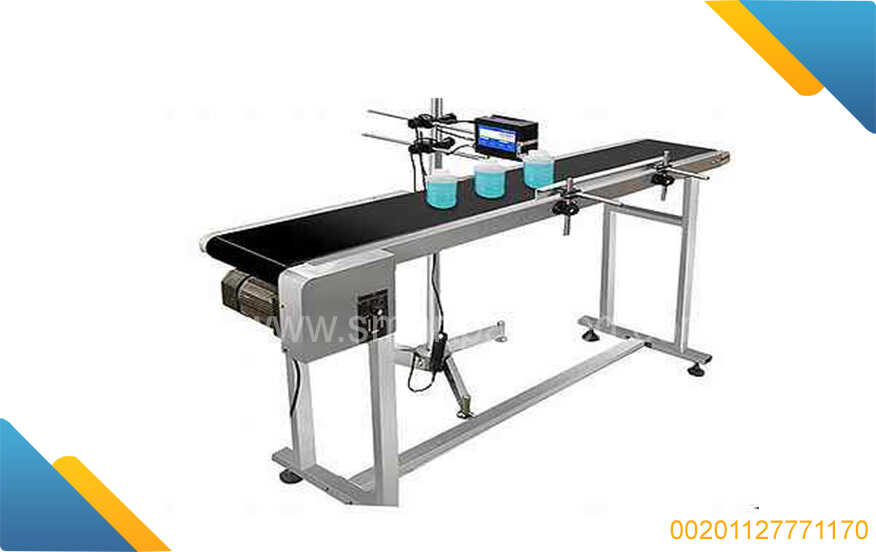
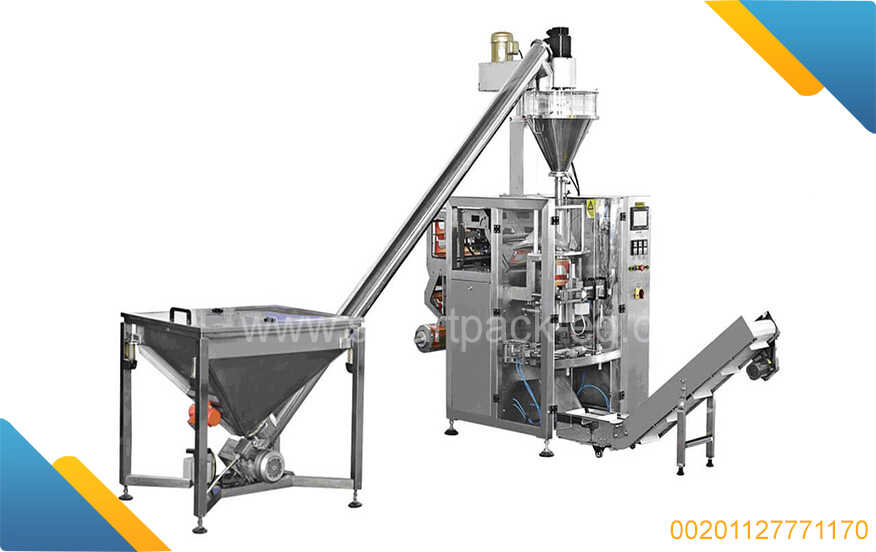
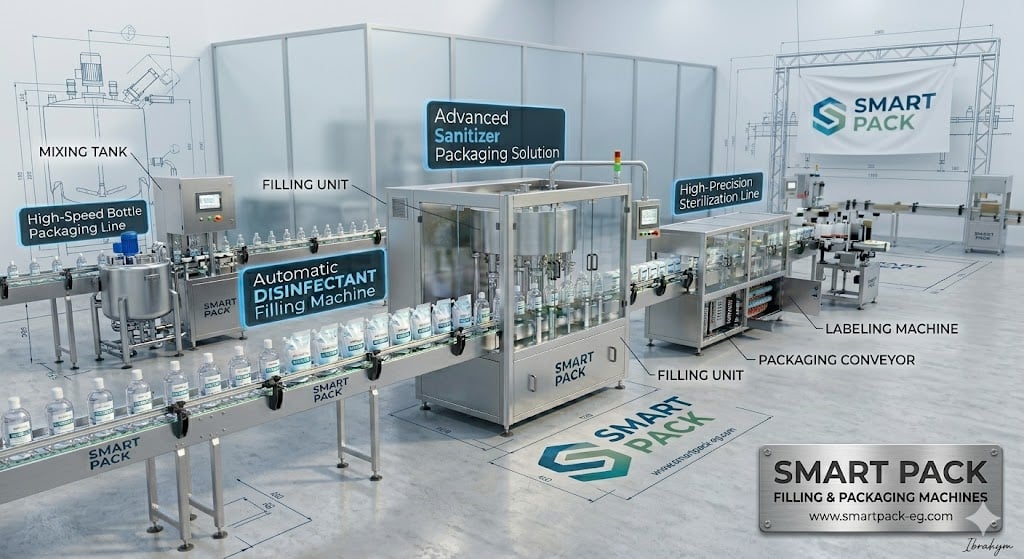
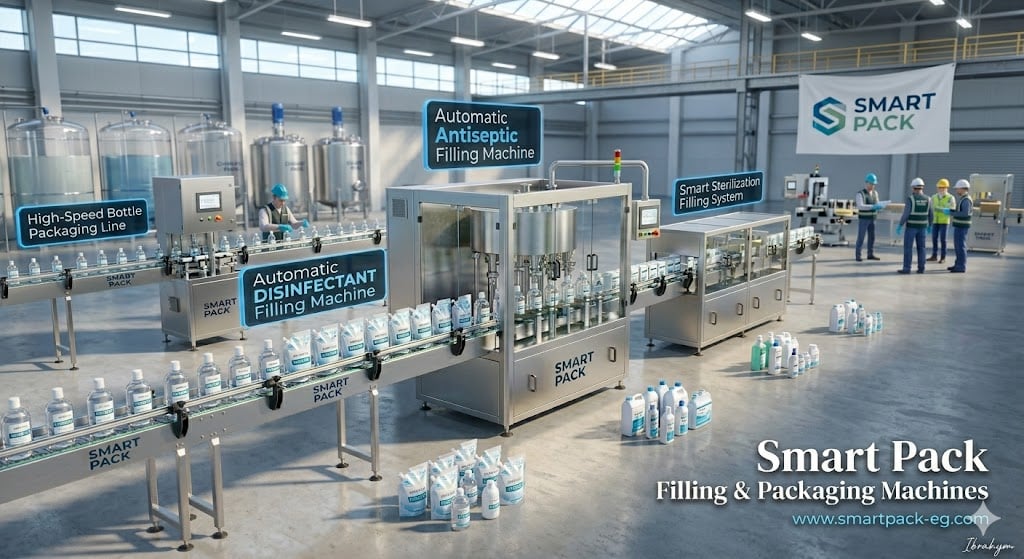
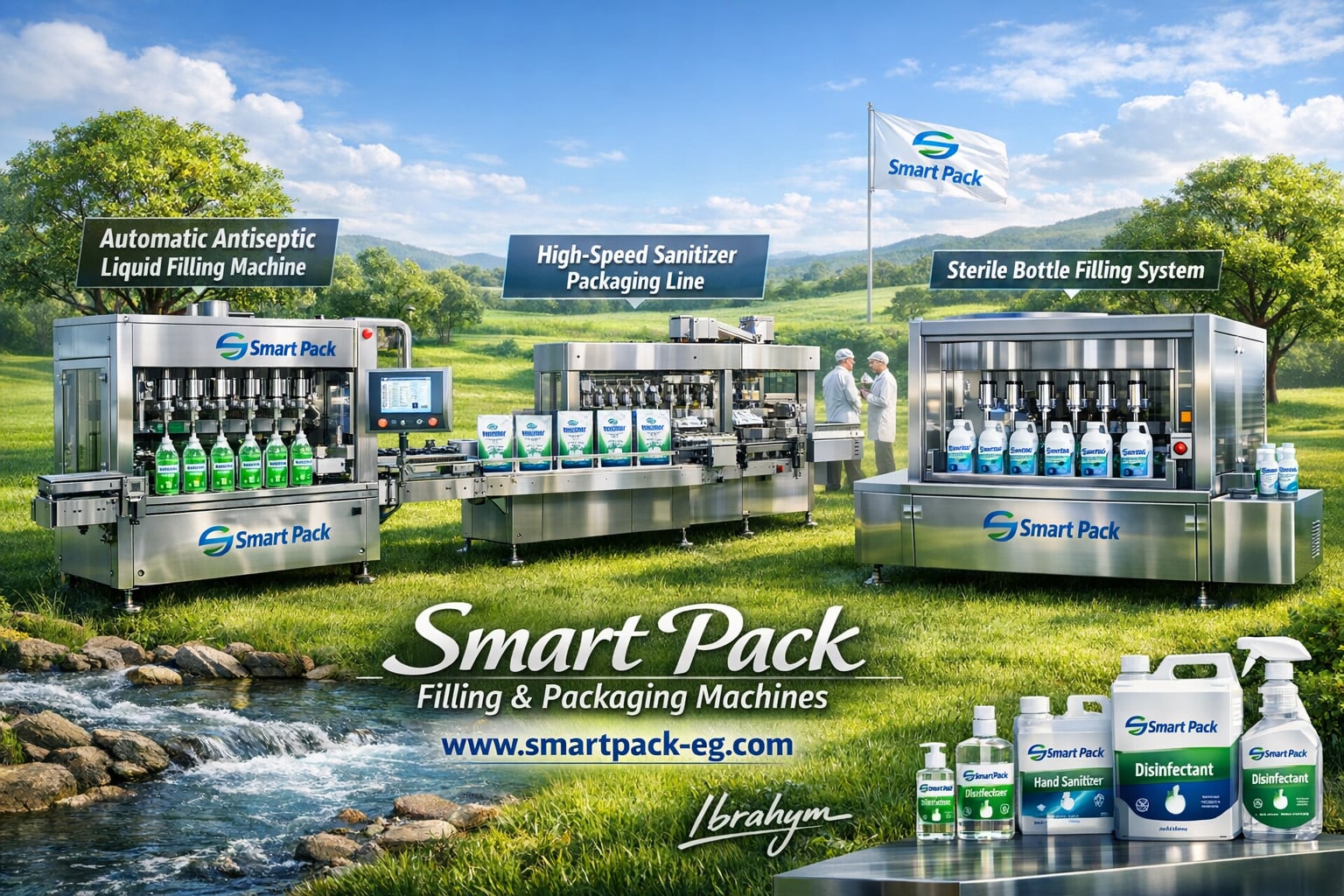
Precision liquid filling machines
-
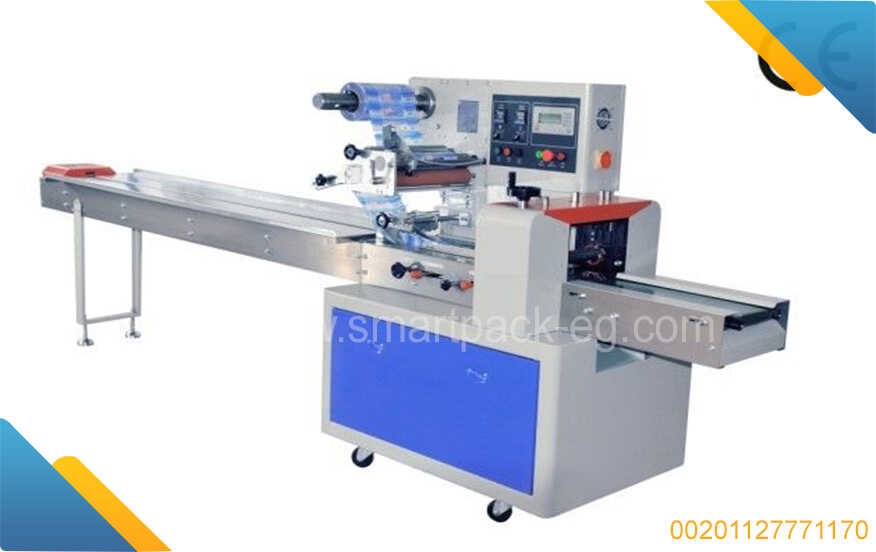
Airtight sealing systems
-
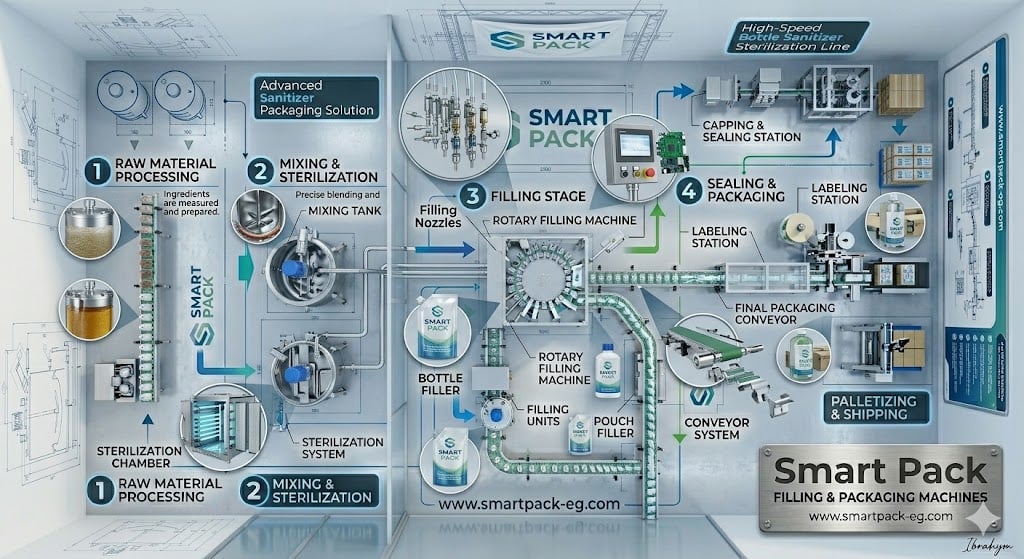
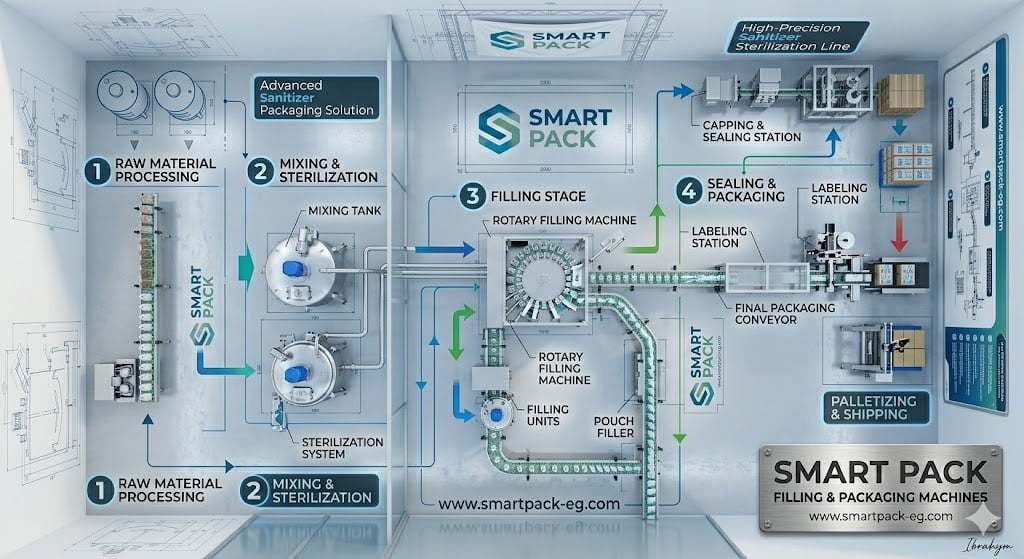
Integrated production lines operating in controlled environments
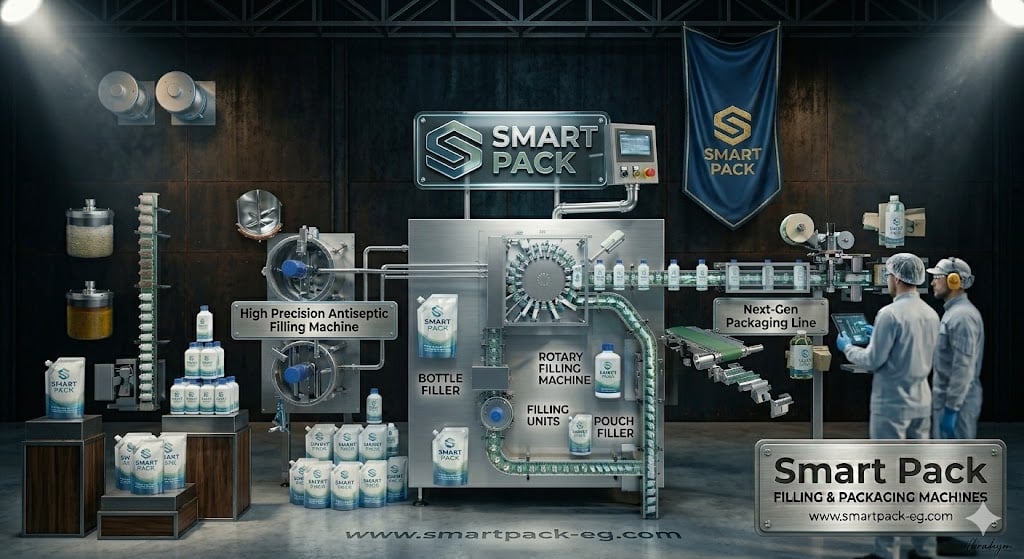
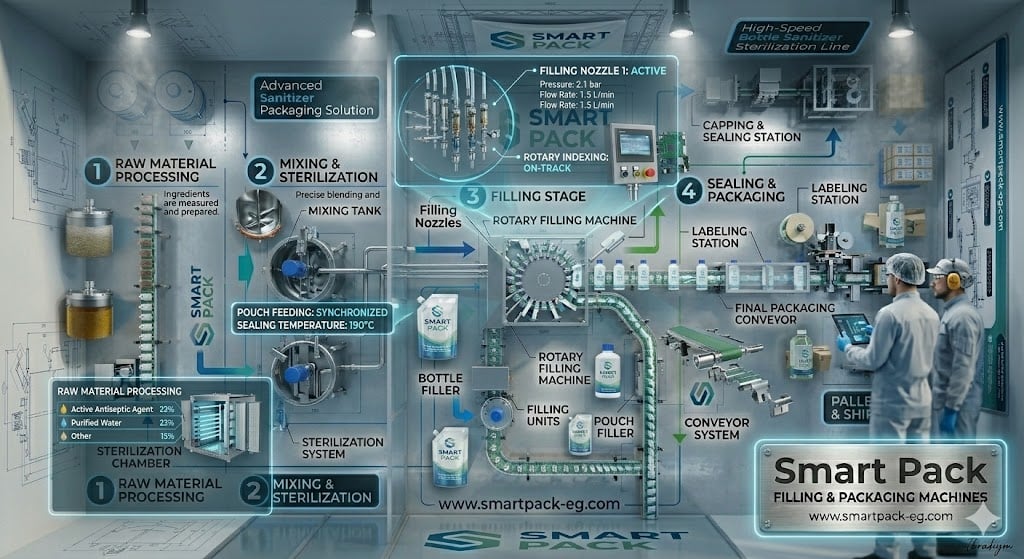
Why Do Factories Rely on Professional Filling Machines After Sterilization?
Advanced filling systems ensure:
-
No recontamination
-
Consistent product quality
-
Accurate dosing
-
High production speed
-
Reduced material loss
Packaging is therefore not a secondary step, but an essential extension of the sterilization system.
Choosing a Reliable Filling and Packaging Machinery Supplier
The success of sterilization and packaging systems depends on partnering with a supplier who understands industrial operations, not just equipment sales.
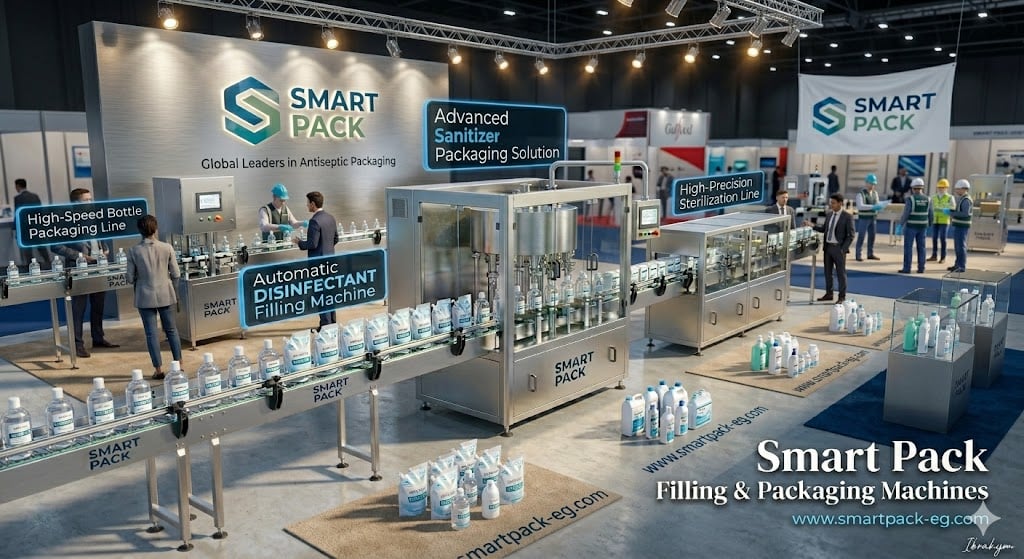
Working with Smart Pack provides:
-
Filling machines matched to product characteristics
-
Scalable production lines
-
Technical and operational support
-
Practical experience across diverse industrial environments
Sterilization and Its Impact on Industrial Assets – FAQs
Why is sterilization important for equipment preservation?
Because it prevents contamination that leads to corrosion and premature wear.
Do all products require the same sterilization method?
No. The method depends on product type and material composition.
Does sterilization affect product appearance?
When properly selected, it preserves rather than damages the product.
What is the role of packaging after sterilization?
It protects sterilized products from recontamination and maintains quality.
Why are filling machines essential?
They ensure sterilization results remain intact until the product reaches the market.
Final Industrial Insight
Sterilization and its various methods are no longer optional procedures—they are strategic pillars for preserving assets inside factories, from equipment to final products.
When proper sterilization is fully integrated with professional filling and packaging systems, manufacturers achieve the highest levels of quality, durability, and operational continuity.