 Admin
Admin Post-Extraction Olive Oil Filling and Packaging Project in Palestine
with Modern Production Lines for Marketing and Export
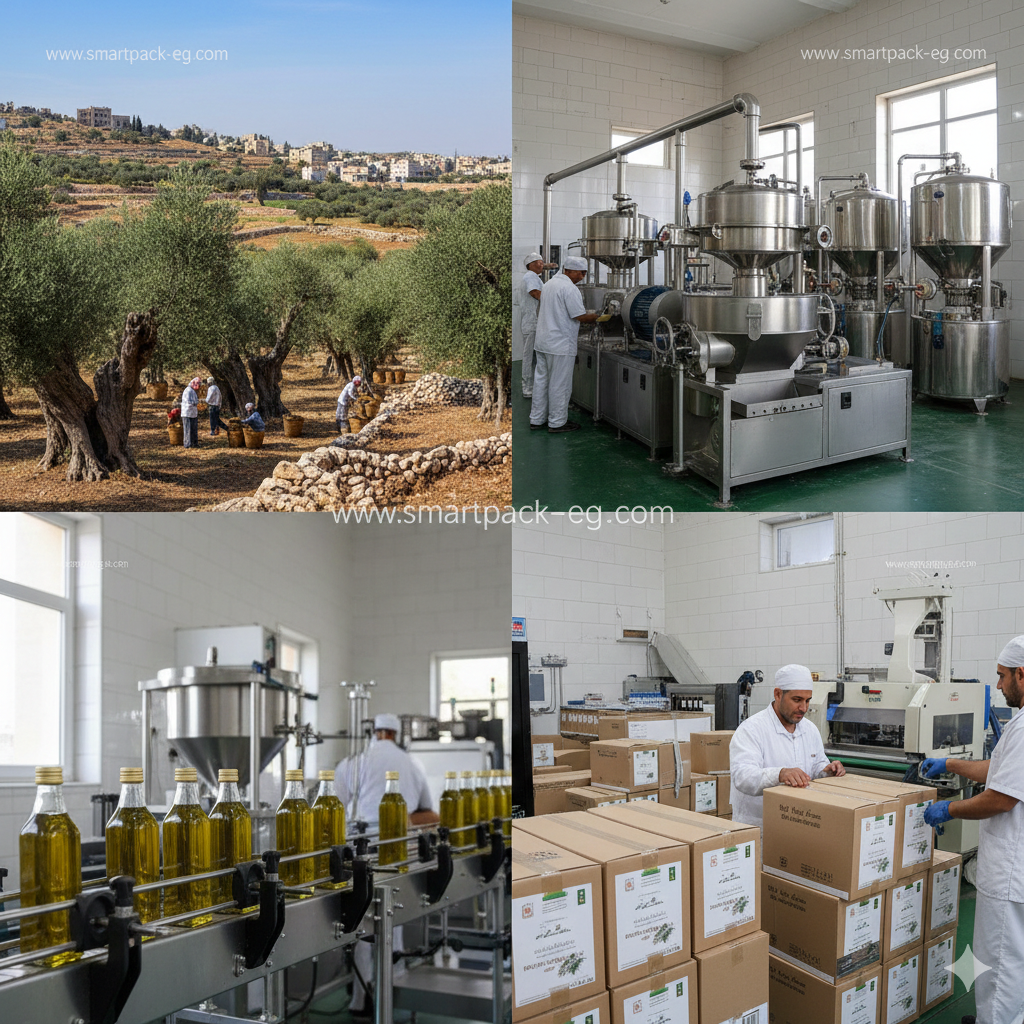
The post-extraction stage of olive oil is where the real difference in product value and profitability is made. In Palestine, where olive oil enjoys a strong reputation and well-known quality, maximum value is achieved only when the oil is properly refined, accurately filled, and professionally packaged using high-precision filling machines, advanced packaging machines, and integrated production lines that ensure consistency, quality, and a competitive market appearance—both locally and for export.
Moving from bulk olive oil sales to a structured filling and packaging project is a strategic step that increases profit margins, opens new markets, and transforms agricultural production into a sustainable industrial business.
The Importance of the Post-Extraction Stage in Olive Oil Production
Olive oil is a sensitive product affected by air, light, and handling methods. Proper post-extraction management is critical to project success.
Key benefits:
-
Correct oil filtration preserves color, flavor, and nutritional value
-
Accurate filling prevents weight loss and ensures consistent quality
-
Airtight packaging extends shelf life
-
Professional presentation builds trust with buyers and importers
Olive Oil Processing Stages After Extraction
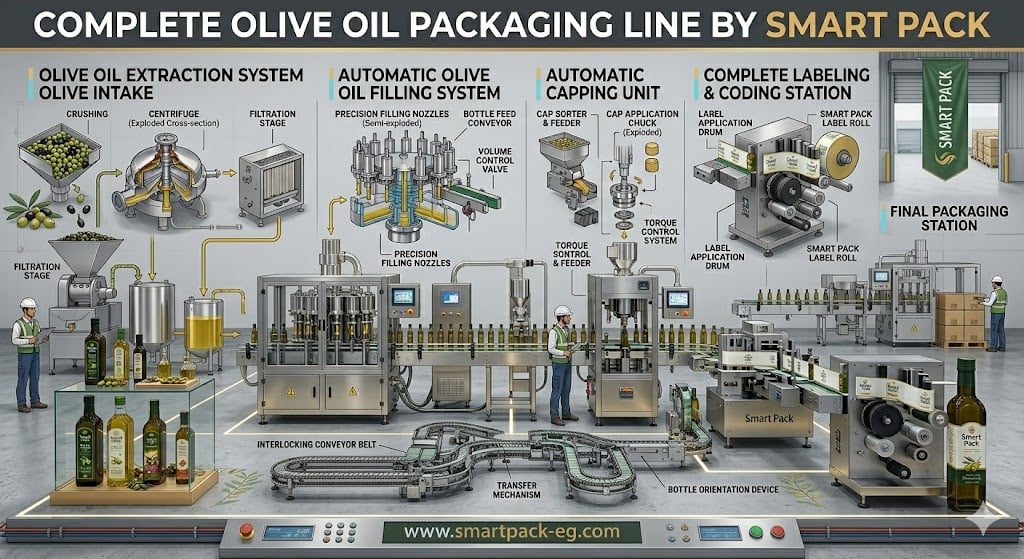
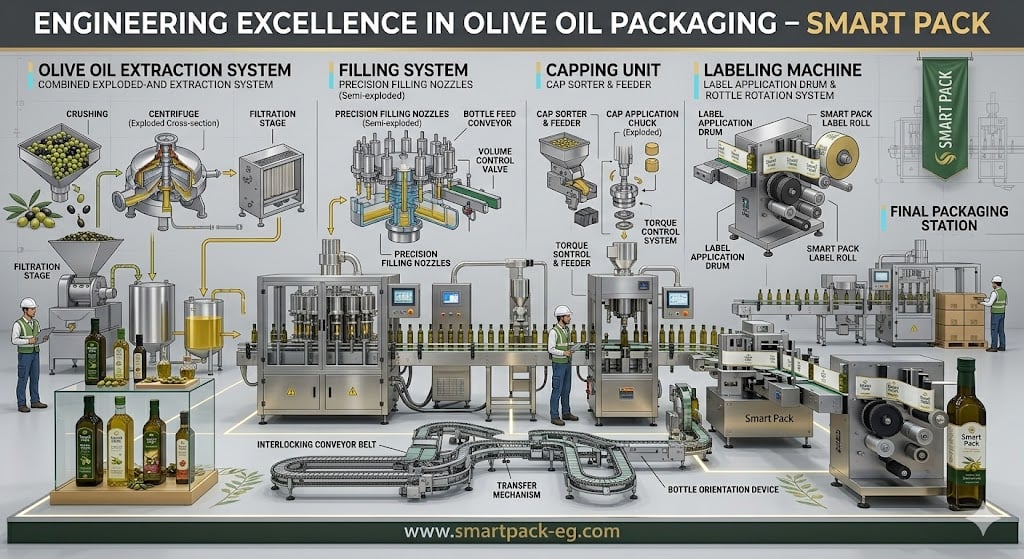
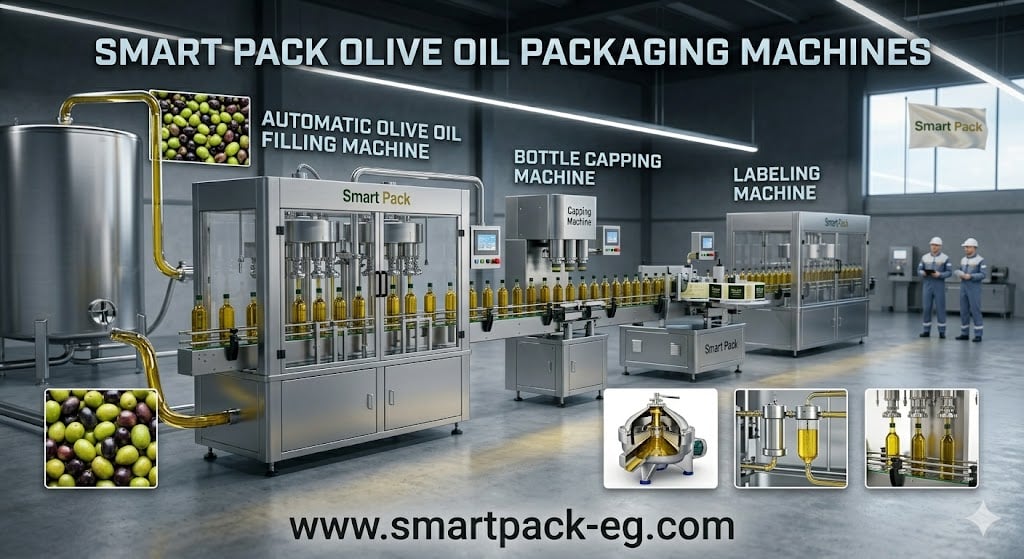
From storage tanks to the final package
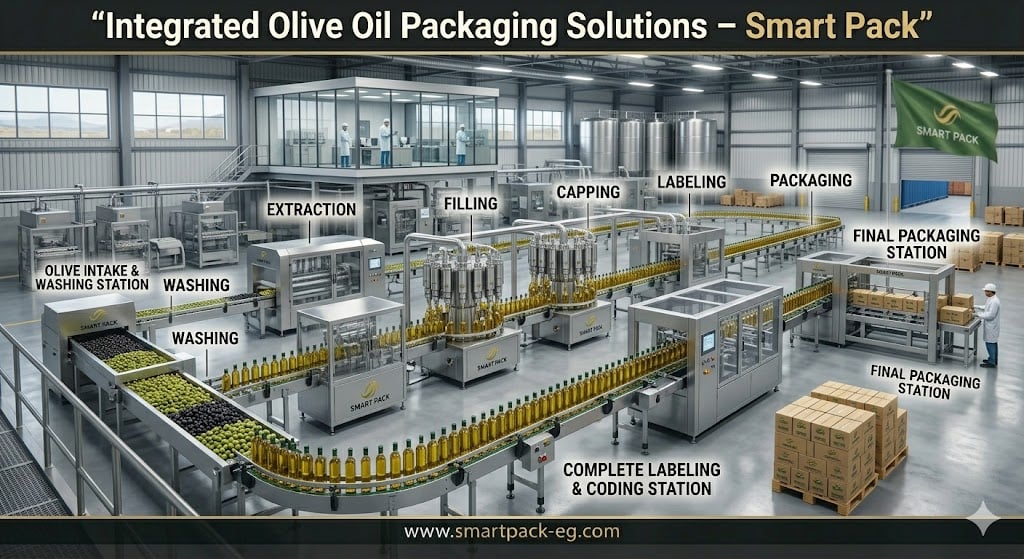
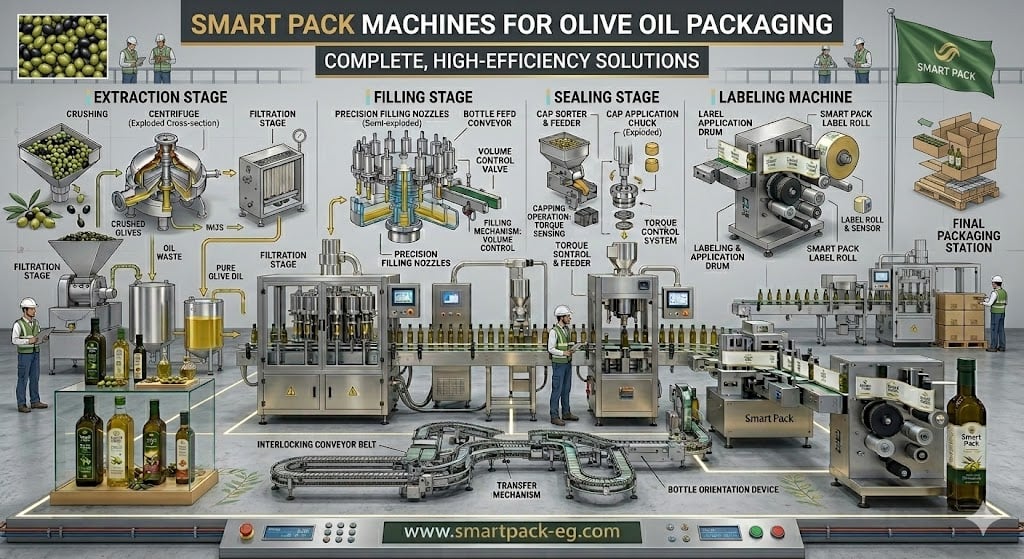
An olive oil filling and packaging project relies on a well-organized industrial sequence that minimizes losses and stabilizes quality:
-
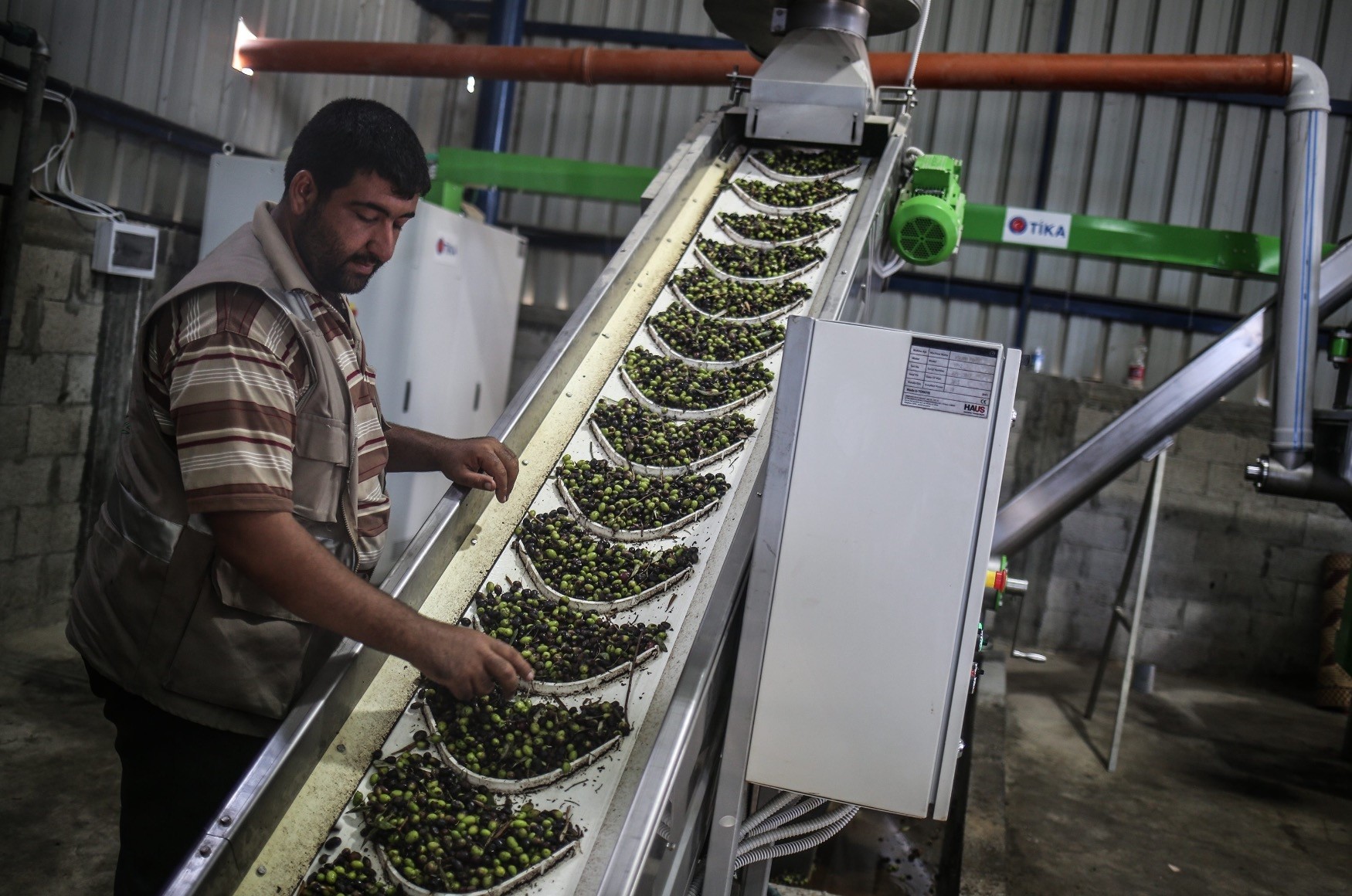
Receiving oil from extraction units
-
Filtering and refining to remove impurities
-
Storing oil in suitable food-grade tanks
-
Filling according to container type and weight
-
Sealing and final packaging
The Role of Olive Oil Filling Machines in Improving Efficiency
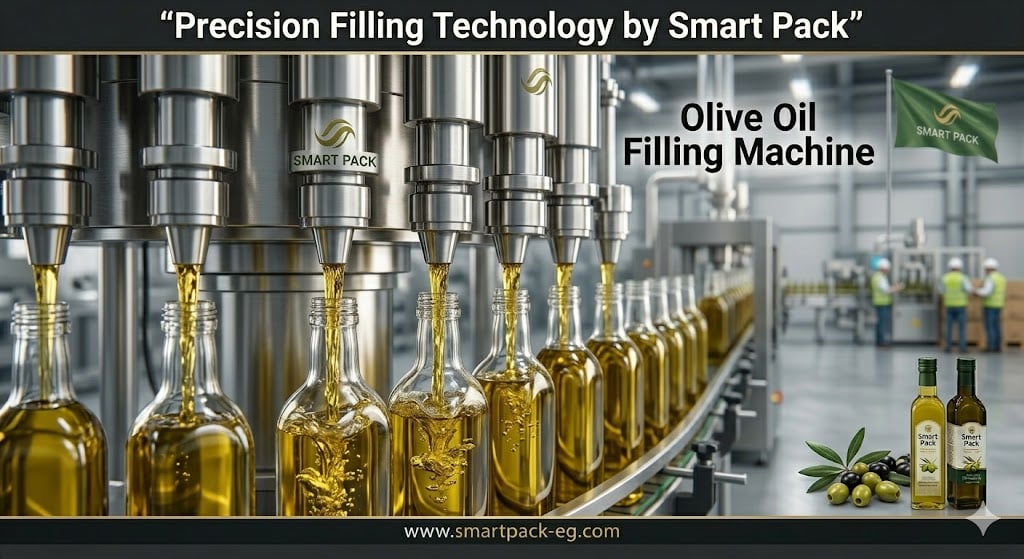
Olive oil filling machines are the backbone of the post-extraction stage, determining production accuracy and speed.
Main advantages:
-
High-precision filling ensures correct weight in every bottle
-
Reduced waste compared to manual filling
-
Production speed aligned with commercial demand
-
Ability to fill multiple container sizes
The Role of Olive Oil Packaging Machines in Protection and Shelf Life
Why professional packaging is essential for marketing
Packaging protects olive oil from external factors and preserves its properties during storage and transportation.
Key functions:
-
Tight sealing prevents air penetration
-
Protection from light and oxidation
-
Enhanced visual appeal of the product
-
Compliance with export market requirements
Filling and Packaging as an Integrated System in Olive Oil Plants
Why integrated systems deliver better results
Operating with a fully integrated system reduces operational errors and increases overall line efficiency.
Benefits include:
-
Smooth coordination between filling, sealing, and packaging
-
Easier control of quality and production output
-
Reduced operational downtime
-
Stable performance throughout the season
Olive Oil Production Lines and Building a Scalable Project
Modern production lines offer flexibility for medium and large olive oil projects.
Key advantages:
-
Easy capacity expansion based on demand
-
Simple changeover between different bottle sizes
-
Readiness for large export orders
-
Lower long-term operating costs
Industrial Expansion Within Olive Oil Filling Projects
How production lines multiply return on investment
The post-extraction stage allows for product expansion without major changes to infrastructure:
-
Premium olive oil in luxury packaging
-
Diversified packaging for retail and wholesale
-
Export-specific packaging formats
-
Addition of derivative oil products based on market demand
Bulk Olive Oil Sales vs. Filling and Packaging
| Comparison Factor | Bulk Sales | Filling & Packaging |
|---|---|---|
| Market Value | Low | High |
| Shelf Life | Shorter | Longer |
| Export Opportunities | Limited | Strong |
| Quality Consistency | Unstable | Consistent |
| Profit Margin | Lower | Higher |
Palestinian Olive Oil and Export Opportunities
Palestinian olive oil is highly demanded in many markets, but acceptance depends on packaging quality.
Export requirements:
-
Containers compliant with international standards
-
Airtight sealing to preserve quality
-
Professional appearance reflecting brand identity
-
Readiness for long-term storage and shipping
Why Choose Smart Pack for Olive Oil Filling Plants?
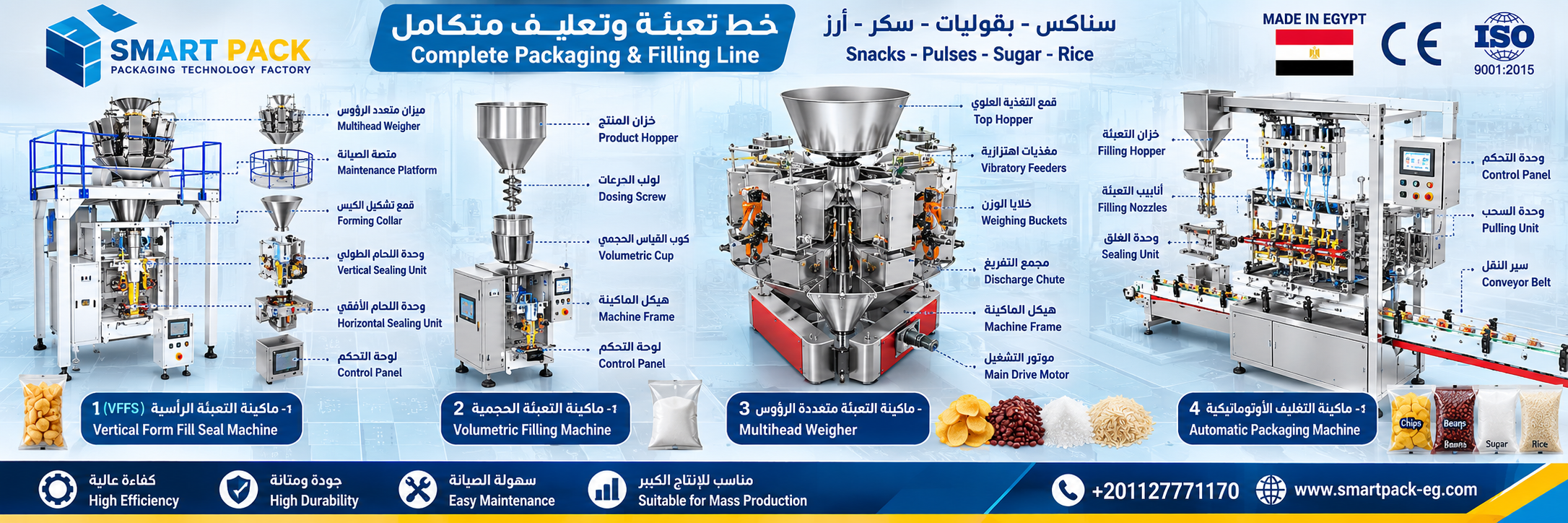
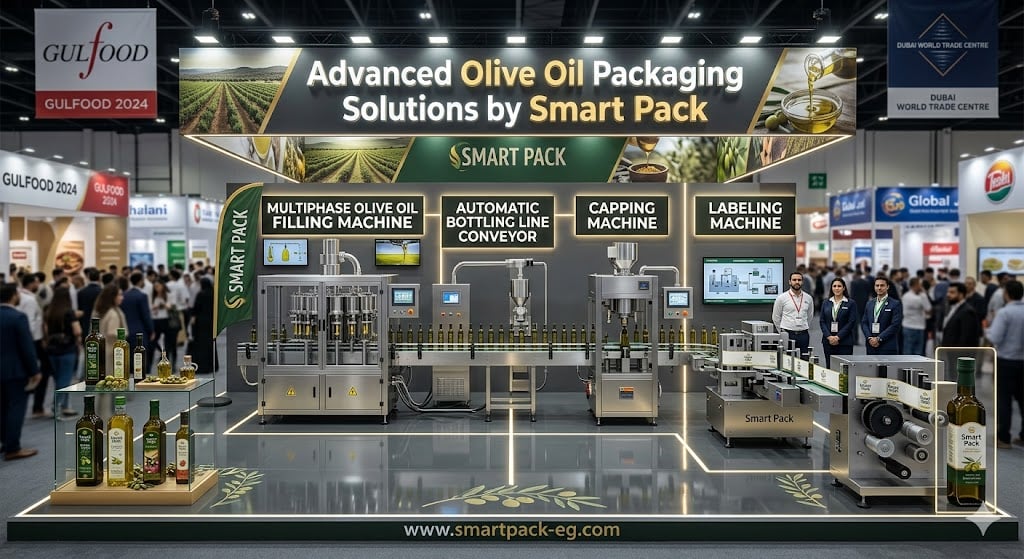
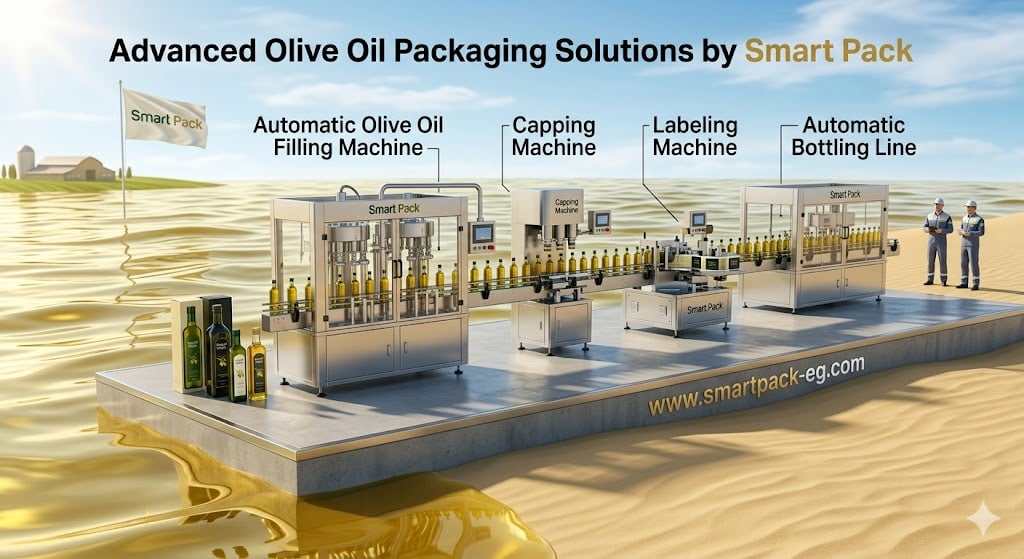
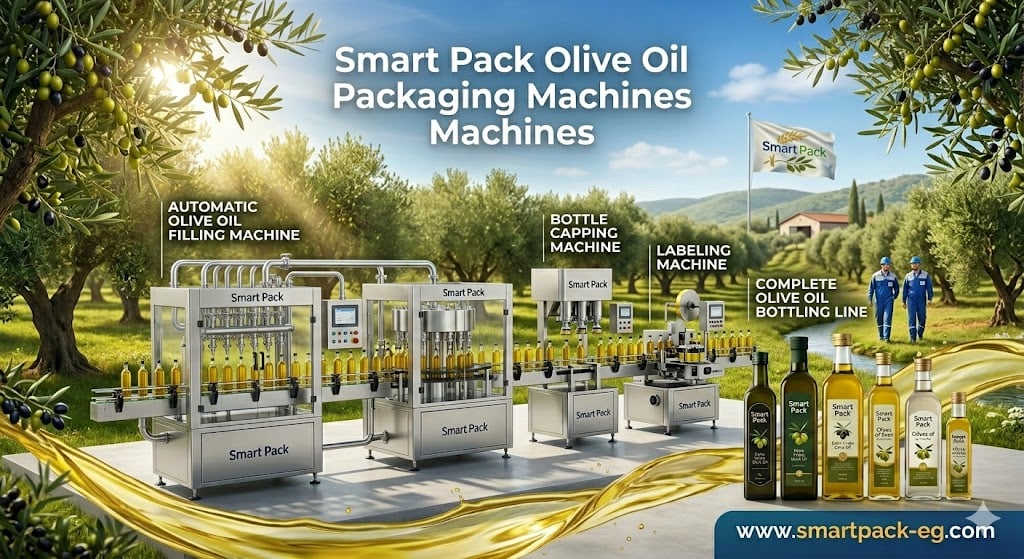
Smart Pack specializes in designing and manufacturing olive oil filling machines, packaging machines, and complete production lines for olive oil projects and food packaging factories.
Key strengths:
-
Integrated solutions from filling to final packaging
-
Machines built for continuous industrial operation
-
Customizable lines based on project scale
-
Strong technical support and hands-on experience in oil projects
Key Tips Before Investing in an Olive Oil Filling Project
-
Choose containers that protect oil from light
-
Invest in high-precision machines to reduce losses
-
Focus on packaging design for stronger market appeal
-
Work with a reliable industrial supplier
Frequently Asked Questions About Olive Oil Filling and Packaging
Does filling olive oil increase profitability compared to bulk sales?
Yes. Filling and packaging significantly increase market value.
Can different bottle sizes be filled on the same line?
Yes. Modern production lines allow easy size changes.
Does packaging affect olive oil quality?
Absolutely. Proper packaging preserves flavor and nutritional value.
Are production lines scalable?
Yes. Capacity can be expanded without major modifications.
Does Smart Pack provide complete olive oil solutions?
Yes. Solutions are available for both small and large projects.
Investing in a post-extraction olive oil filling and packaging project in Palestine is the step that transforms olive oil from a raw commodity into a high-value, export-ready food product.
Choosing Smart Pack’s filling machines, packaging machines, and production lines gives your project quality, operational stability, and a strong competitive position in both local and global markets.