 Admin
Admin A Feasibility Guide for Sorting, Filling, and Packaging Fava Beans for Retail Markets in Egypt
Fava beans are considered a basic food commodity in Egypt and offer several advantages:
-
Stable and continuous demand
-
Easy distribution to groceries, bakeries, and supermarkets
-
High scalability potential
-
Steady income due to constant consumption
-
Suitable for investors entering the food processing sector
These factors make the project ideal for investors seeking low-risk, food-based industrial ventures.
Market Study and Demand Estimation
Before launching the project, understanding the market is essential. Market analysis includes:
Local Demand
Egypt has a large and diverse consumer base for fava beans across urban and rural areas, with strong demand for clean, well-packaged products.
Market Competition
Although many brands exist, there is always room for competition when the product offers superior quality, cleanliness, and professional packaging.
Growth Opportunities
The project can expand to include:
-
Cooked fava beans
-
Peeled or split fava beans
-
Mixed legumes products
There are also export opportunities, especially to Gulf countries, depending on packaging standards and demand.
Determining the Project Scale
| Project Size | Daily Capacity (Packs) | Suitable For |
|---|---|---|
| Small | 2,000 – 5,000 | Small groceries & mini-markets |
| Medium | 5,000 – 15,000 | Cafés, bakeries, wholesalers |
| Large | 15,000+ | Large distributors & chains |
Choosing the right scale directly affects machine type, labor needs, and operating costs.
Processing Stages Before Packaging
Before packaging, fava beans pass through several processing stages:
1. Cleaning and Sorting
Removing impurities, broken beans, and foreign materials.
2. Washing
Thorough washing to eliminate dust and residual contaminants.
3. Boiling or Pre-Treatment (Optional)
Some projects boil the beans before packaging, while others focus on dry beans prepared directly for retail.
4. Drying
Ensuring proper ventilation and moisture control to prevent spoilage.
These steps help maintain product quality and reduce waste.
Choosing Filling and Packaging Machines
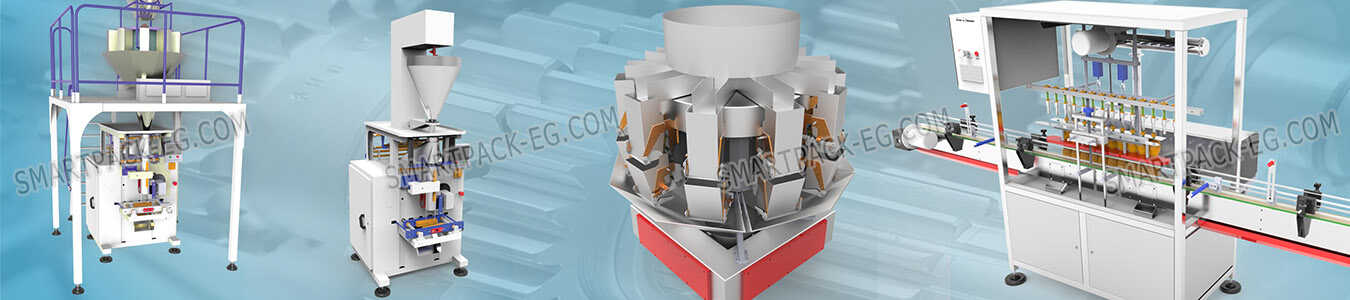
The most critical stage of the project is selecting accurate and reliable filling and packaging machines, including:
Required Machine Types
-
Weighing filling machines – precise weight control
-
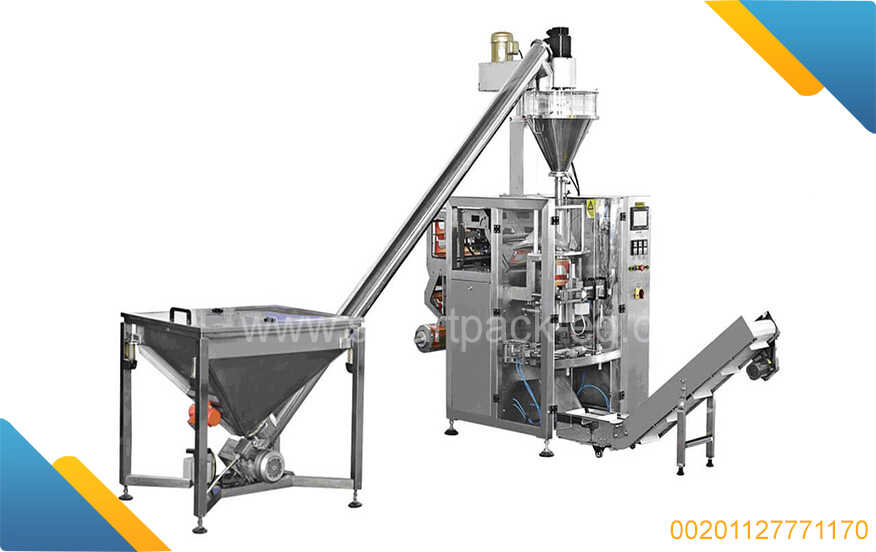
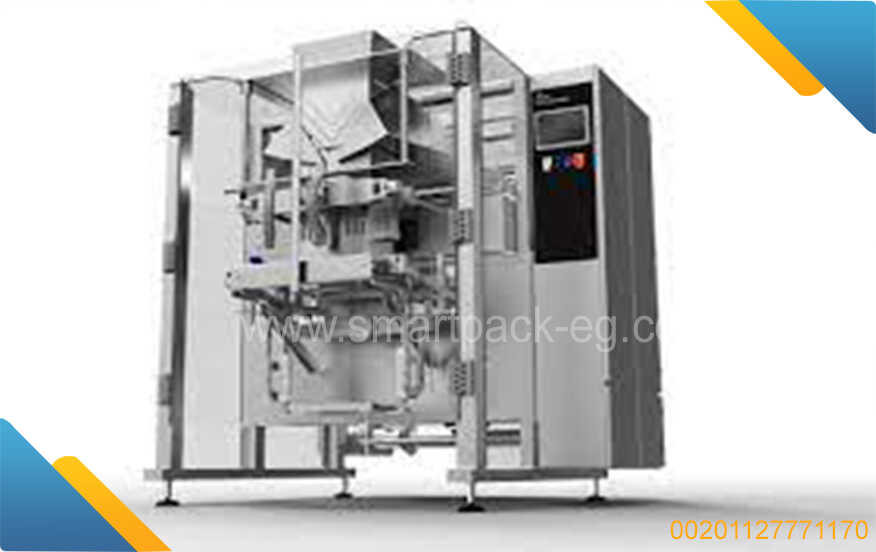
Vertical packaging machines (VFFS) – forming, filling, and sealing bags
-
Small bag packaging machines – for 250 g to 2 kg packs
-
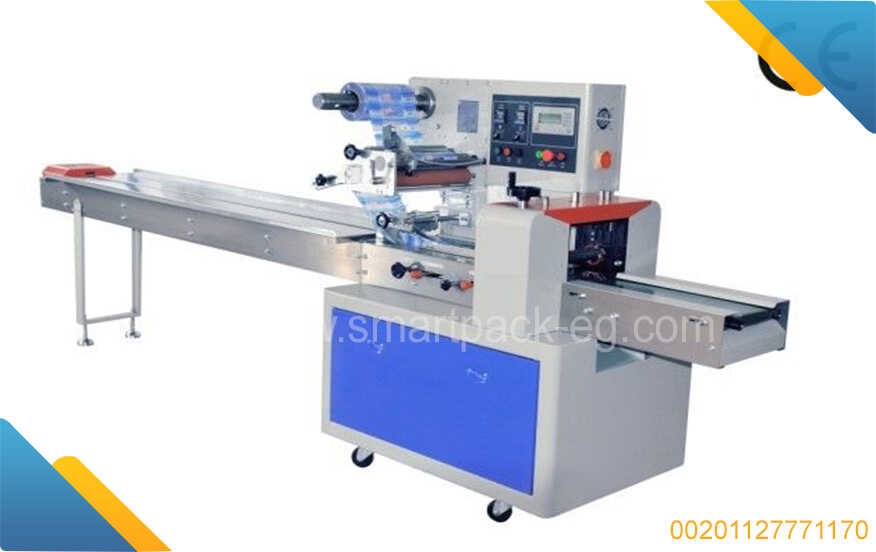
Shrink wrapping machines – grouping packs for transport
-
Sealing and closing machines – airtight bag closure
Sample Machinery Overview
| Machine Type | Main Use |
|---|---|
| Weighing filler | Accurate retail packs |
| Vertical packer | Bag forming & sealing |
| Shrink wrapper | Group packaging |
| Sealing unit | Secure bag closure |
Designing a Complete Production Line
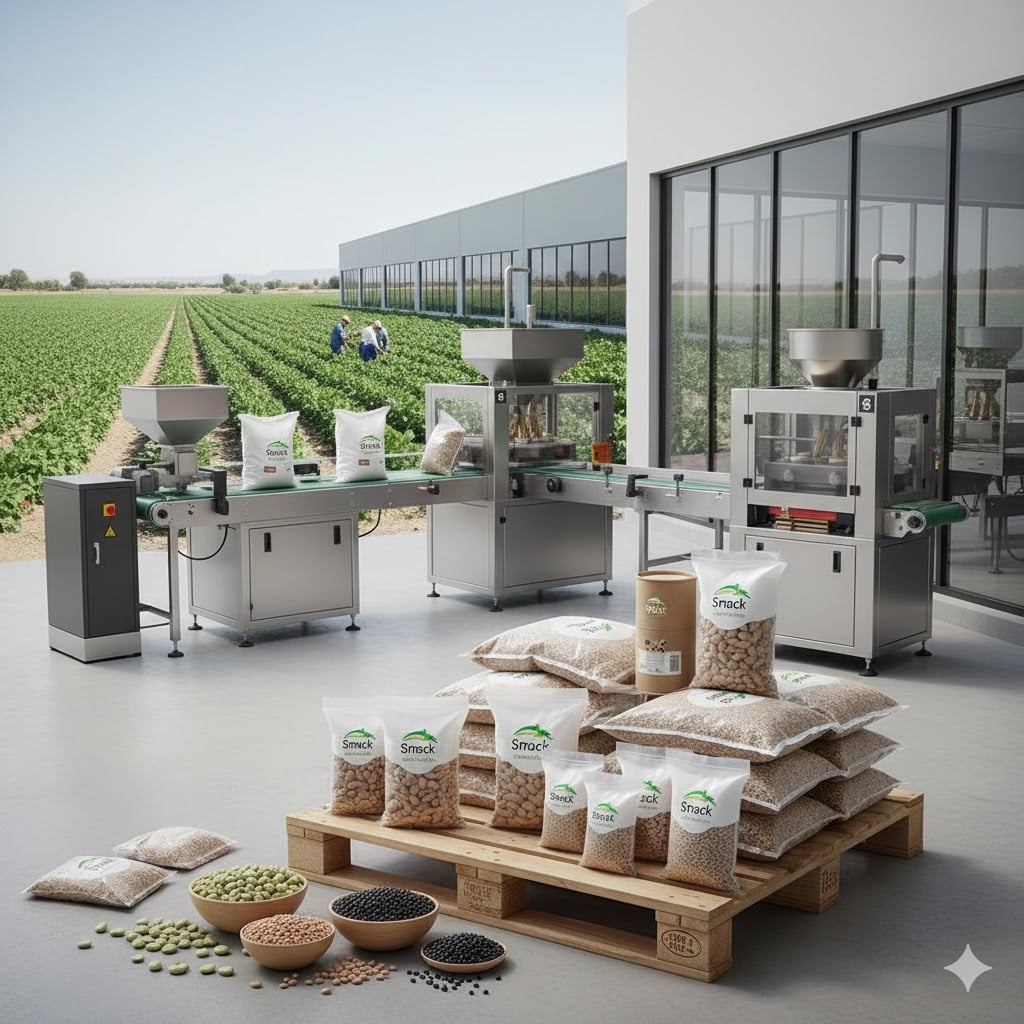
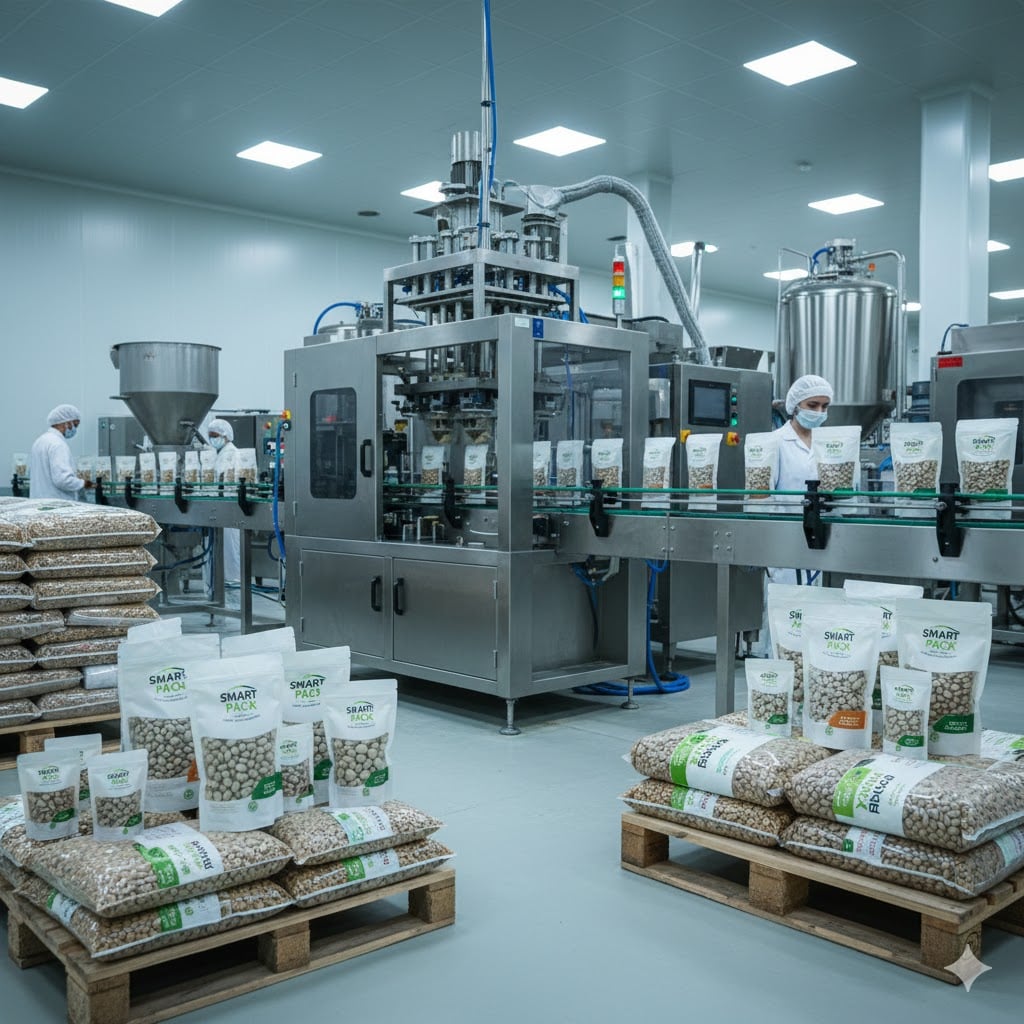
A typical production line includes:
-
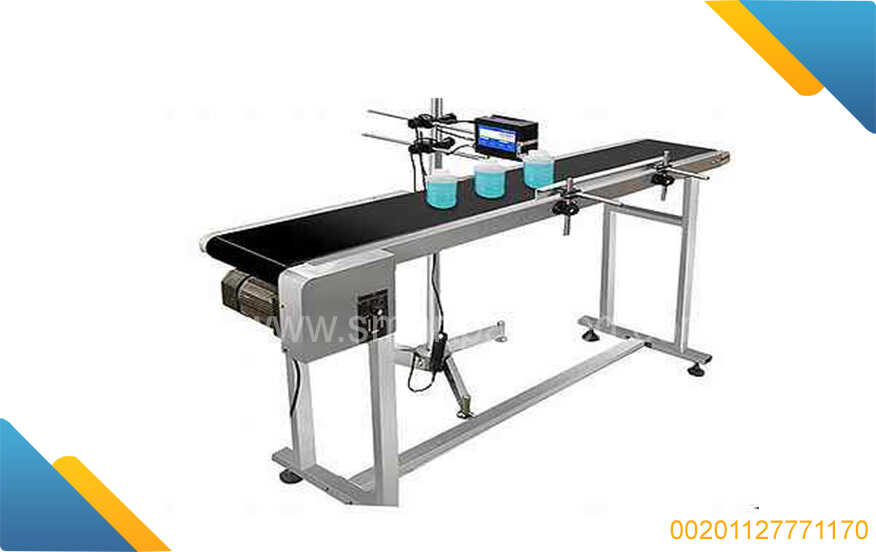
Conveyor belt
-
Sorting and weighing unit
-
Filling machine
-
Sealing and packaging unit
Correct equipment arrangement ensures smooth workflow and minimal operational errors.
Marketing and Distribution Channels
The product can be distributed through:
-
Local groceries
-
Supermarkets
-
Bakeries
-
Wholesale markets
Strong branding and consistent quality play a key role in building customer trust.
Practical Tips for Project Success
-
Choose machines suitable for the product type (dry or cooked beans)
-
Use high-quality raw materials
-
Train staff on operation and basic maintenance
-
Build an efficient distribution network
-
Monitor product quality and customer feedback
Frequently Asked Questions (FAQ)
1. Is this project profitable in Egypt?
Yes, especially with proper planning and quality-focused production.
2. What are the most popular package sizes?
Common sizes range from 250 g to 2 kg.
3. Can the project be expanded later?
Yes, by selecting scalable machines.
4. Do the machines require regular maintenance?
Yes, routine maintenance is essential for stable operation.
5. What is the difference between automatic and semi-automatic machines?
Automatic machines are faster and reduce labor needs; semi-automatic machines have lower initial costs.
6. Does Smart Pack provide operator training?
Yes, training is included as part of their services.
Conclusion
The fava beans sorting, filling, and packaging project for retail markets represents a strong investment opportunity in Egypt when supported by proper planning, a clear feasibility study, and high-quality machinery from a specialized supplier such as Smart Pack.
With correct execution and effective management, this project can deliver sustainable profits and establish a solid production line within the Egyptian food market.