

 Admin
Admin Table Salt Production, Filling, and Packaging Project in Egypt: A High-Return Industrial Opportunity
Introduction
Table salt is an essential commodity used daily in every home, restaurant, and factory. With the continuous growth in household and industrial salt consumption, table salt production, filling, and packaging projects have become among the most economically viable industrial investments in Egypt.
The success of this project depends on three main pillars:
-
A well-prepared feasibility study
-
Selecting advanced filling and packaging machines
-
Implementing an integrated production line capable of competing in the market
This guide walks you through the project stages in detail—from market sizing to machinery selection—and explains how the project can deliver attractive financial returns.
First: Why Invest in a Table Salt Packaging Project?
Salt is a daily-consumption product used in:
-
Homes
-
Restaurants and hotels
-
Food factories
-
Chemical industries
Key advantages of the project:
-
Continuous, stable demand
-
Easy marketing and distribution
-
Flexible package sizes
-
High scalability
For these reasons, this project is ideal for investors seeking a simple yet consistently profitable industrial business.
Second: Market Study and Demand Estimation
Local Consumption
Salt consumption is largely unaffected by economic fluctuations. Every individual consumes salt daily, ensuring steady demand.
Market Competition
While multiple brands exist, demand remains strong—especially for products with high quality and professional packaging.
Export Opportunities
There is growing demand in Arab and African markets, particularly when packaging meets international quality standards.
Third: Choosing the Right Project Scale
| Project Size | Daily Capacity | Target Segment |
|---|---|---|
| Small | 1,000 – 5,000 packs | Small retail projects |
| Medium | 5,000 – 20,000 packs | Factories & distributors |
| Large | 20,000+ packs | Major distribution companies |
Selecting the right scale helps determine equipment type, workforce needs, and total costs.
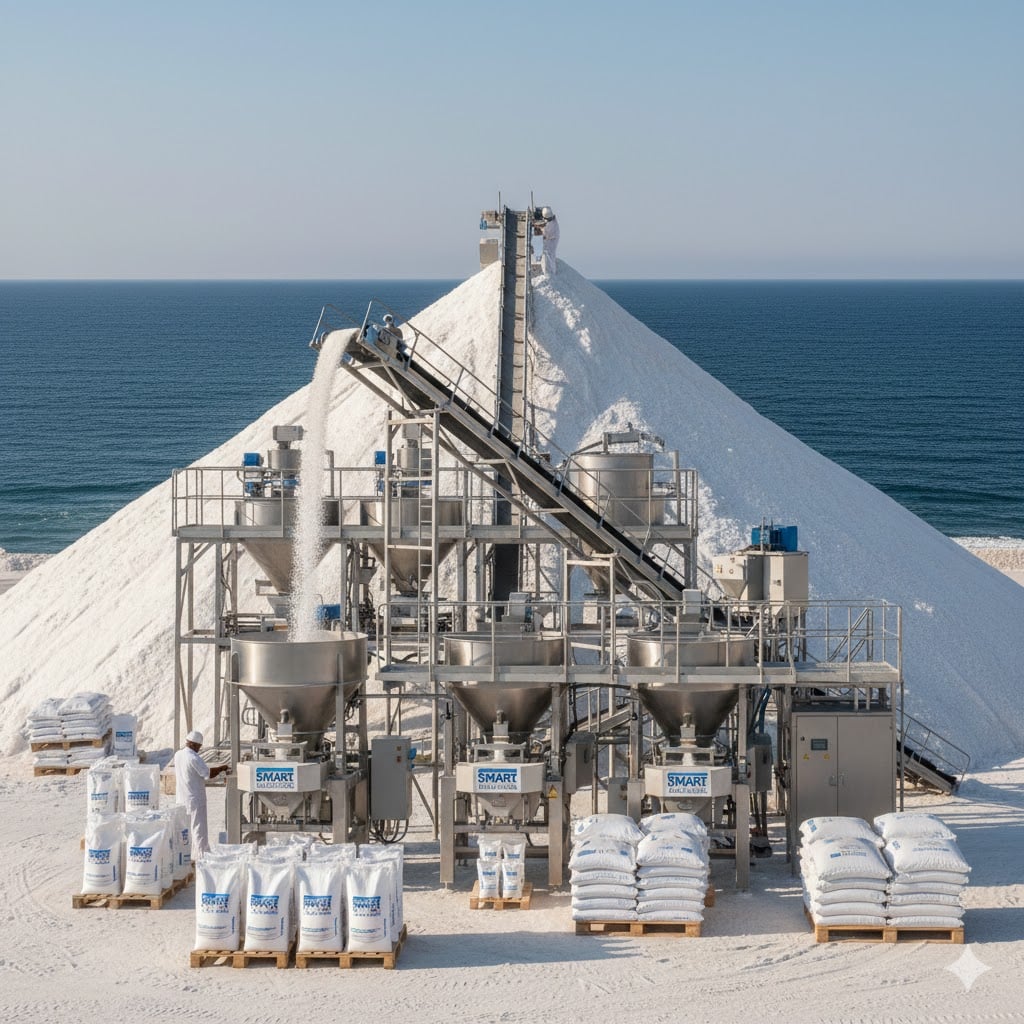
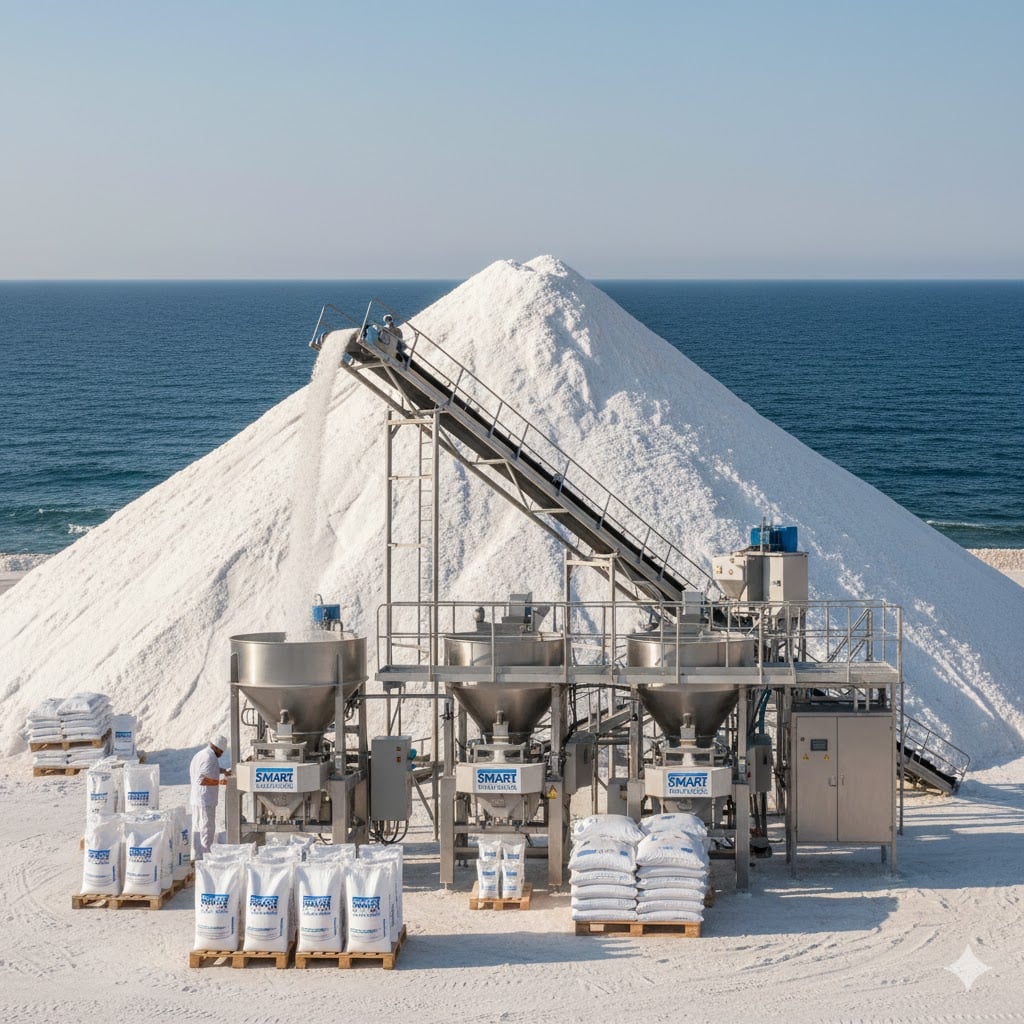
Fourth: Salt Processing Stages Before Packaging
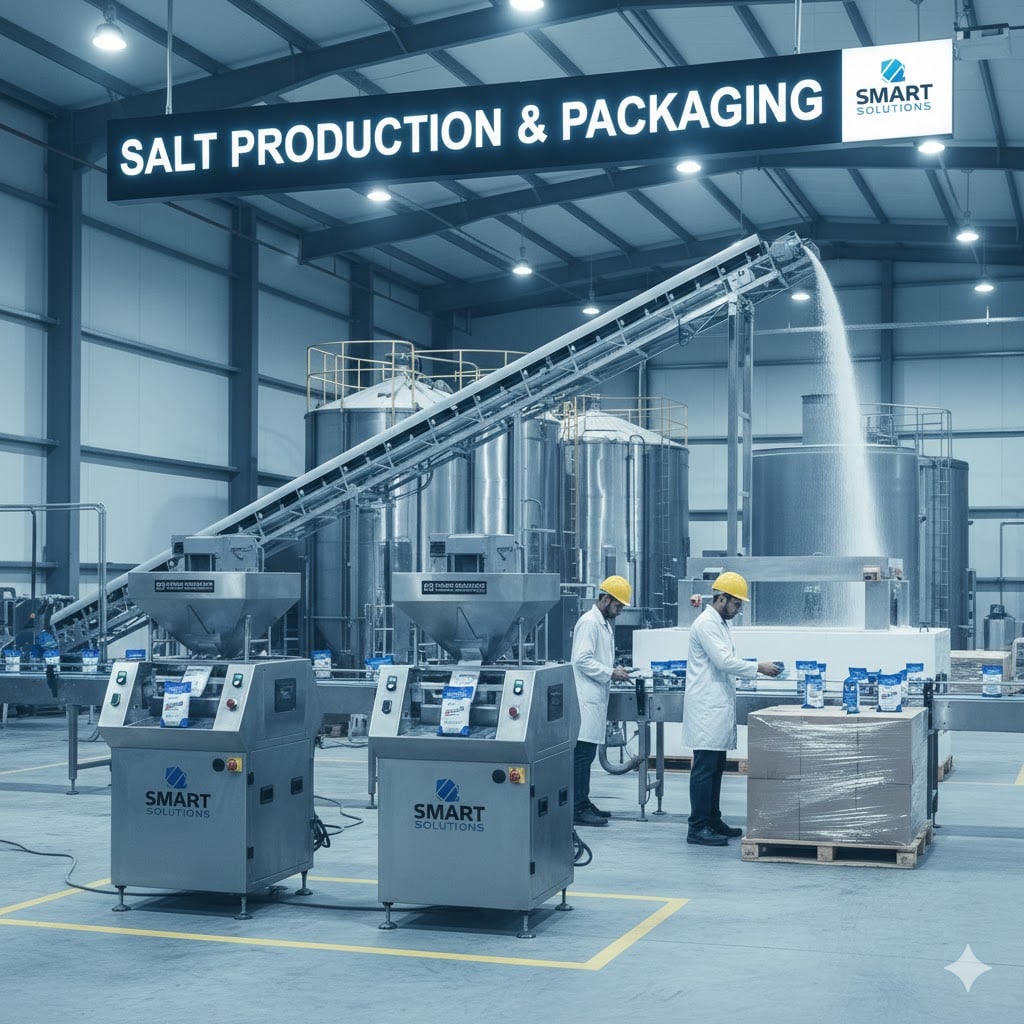
Before packaging, salt undergoes several preparation stages:
-
Raw material preparation – Selecting salt and removing harmful impurities
-
Washing and purification – Ensuring high purity and quality
-
Drying – Eliminating excess moisture
-
Grading – Sorting grains by required size
These steps ensure a high-quality, consumer-ready product.
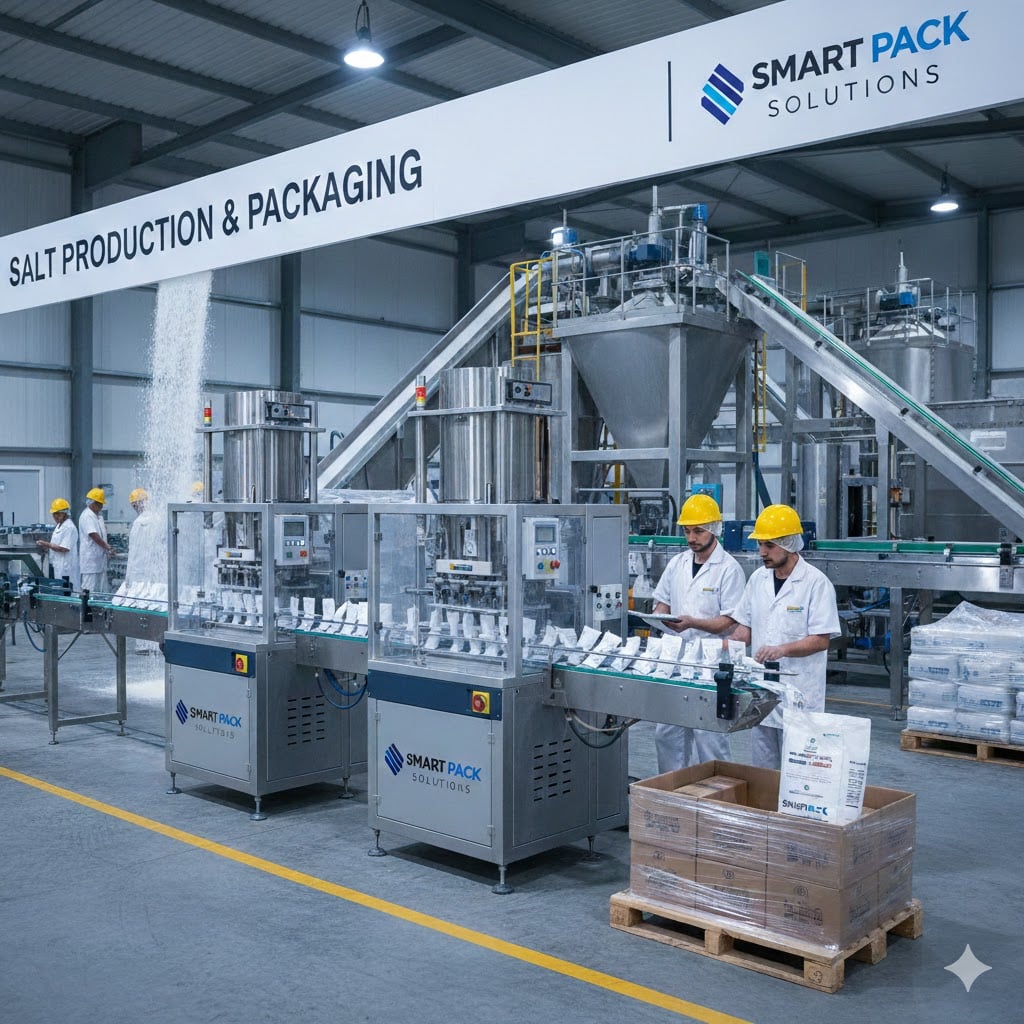
Fifth: Types of Table Salt Filling and Packaging Machines
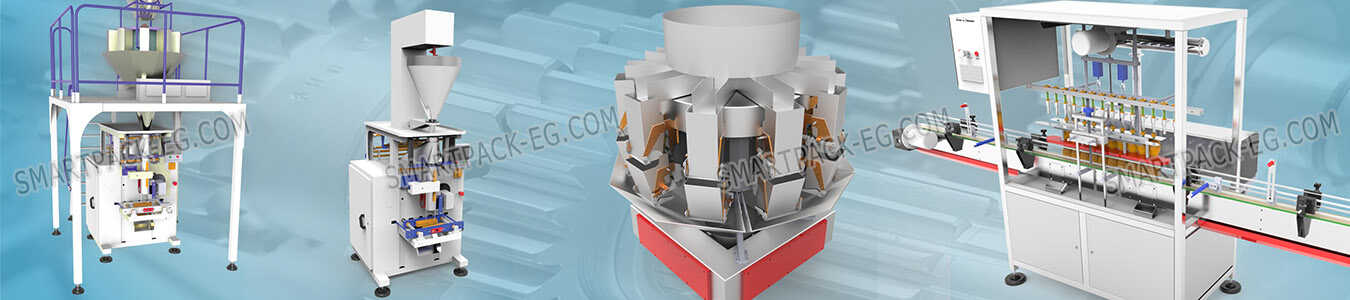
Machine selection depends on production volume and package type. Common options include:
-
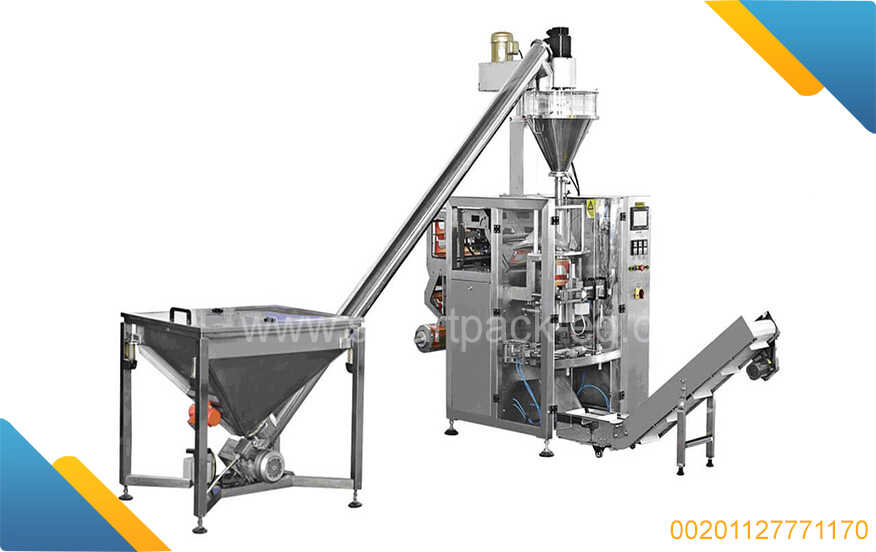
Weighing filling machines for accurate bag weights
-
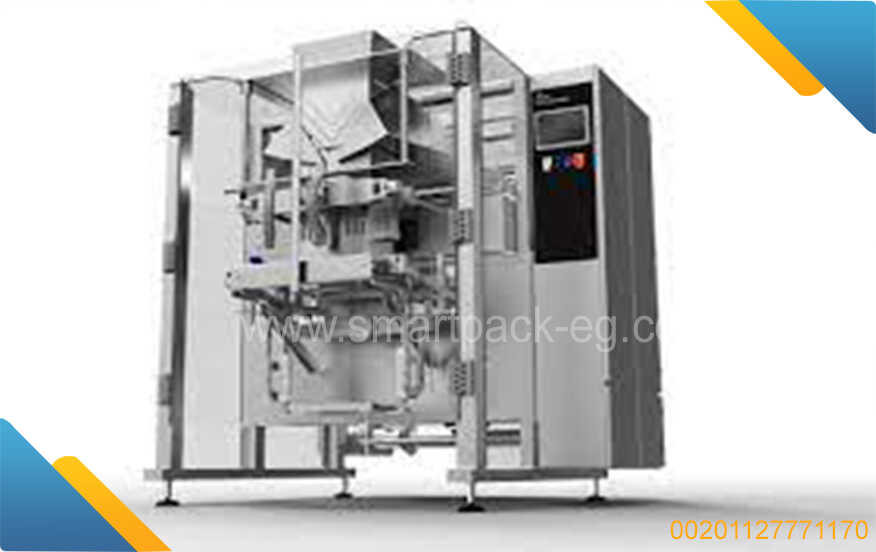
Vertical packaging machines (form–fill–seal in one cycle)
-
Semi-automatic machines for small-scale operations
-
Fully automatic machines for medium and large factories
-
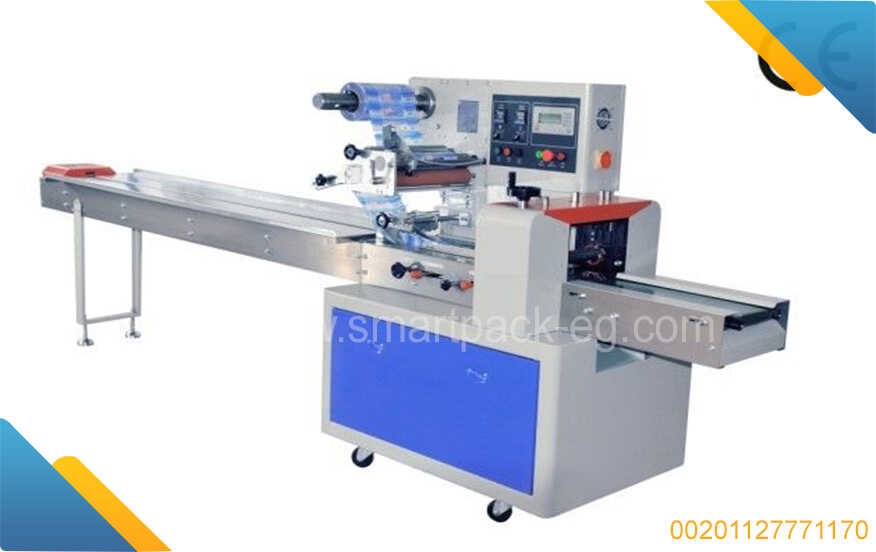
Shrink-wrapping machines for bundling packs for transport and storage
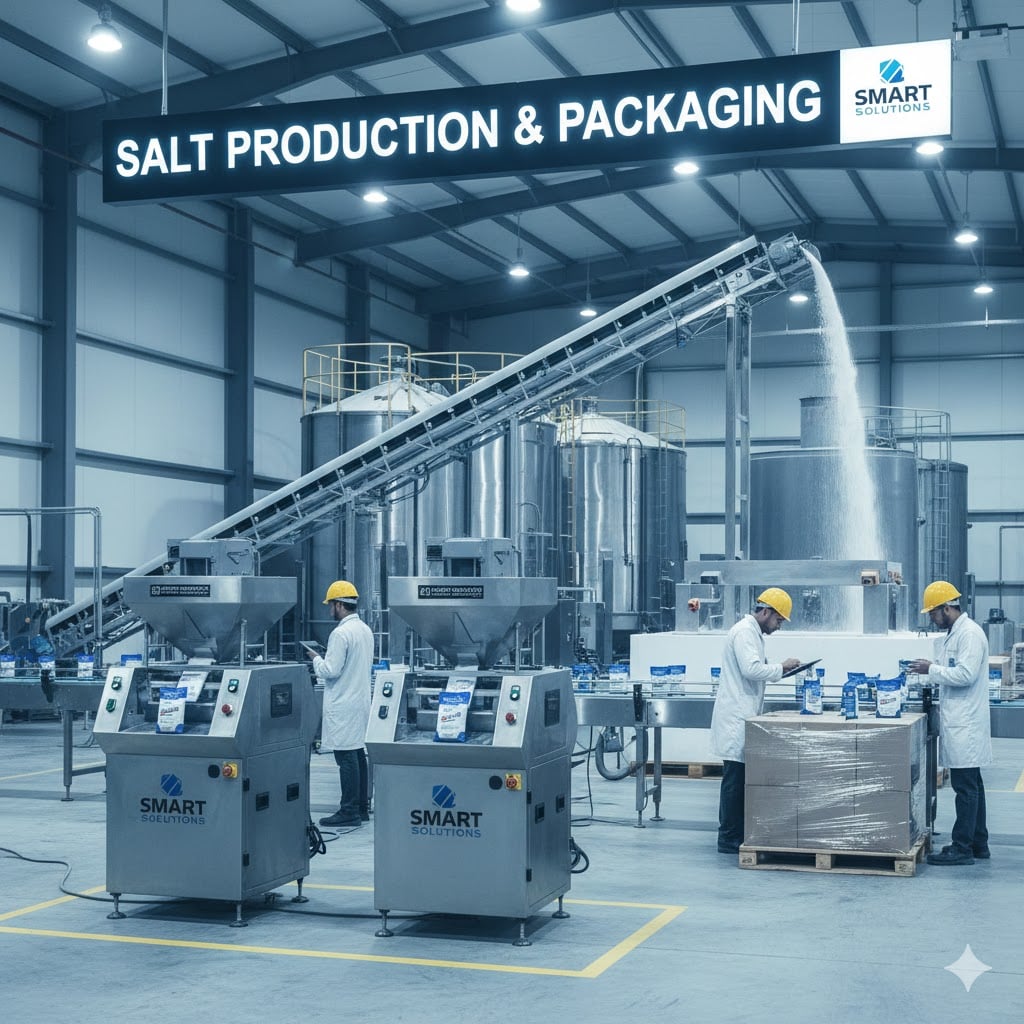
Sixth: Designing a Complete Production Line
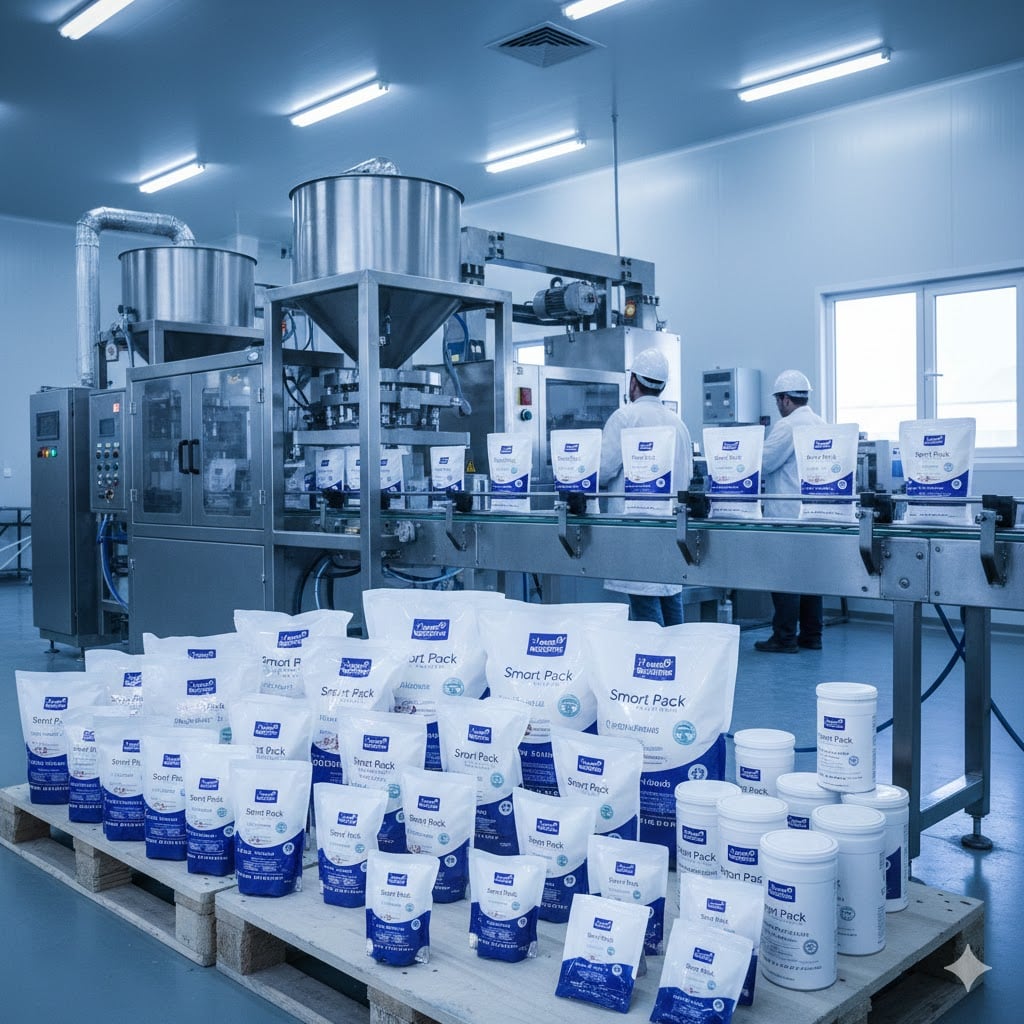
A typical table salt production line includes:
-
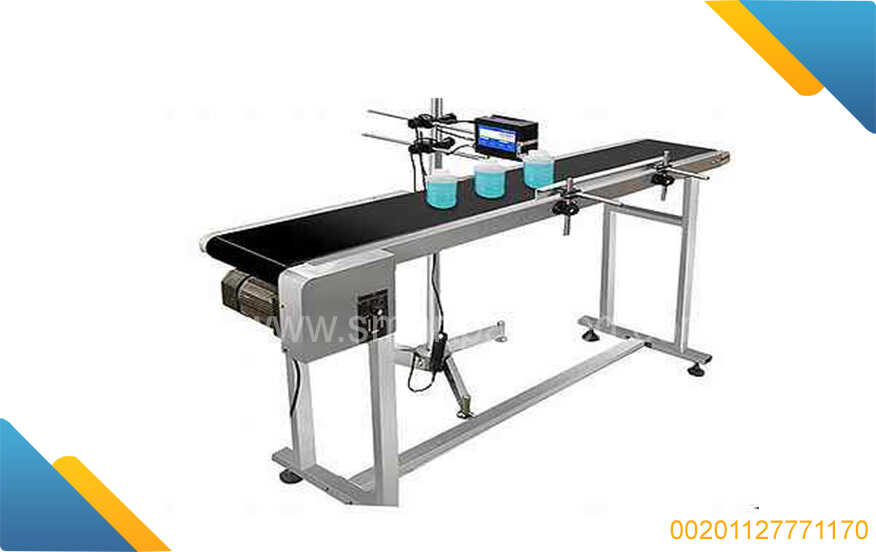
Conveyor belt
-
Weighing & filling machine
-
Sealing/closing machine
-
Labeling & coding unit
-
External packaging (shrink wrap)
Proper layout ensures smooth workflow and higher productivity.
Seventh: Estimating Investment Costs
Capital Expenditures
-
Filling & packaging machines
-
Production line equipment
Factory Setup
-
Construction, electrical work, ventilation, industrial flooring
Licensing & Registration
-
Industrial permits and regulatory registrations
Initial Operating Costs
-
Raw materials, labor, energy, and training
Eighth: Revenue and Return on Investment (ROI)
Revenue estimation depends on:
-
Daily production volume
-
Market selling price
-
Product quality and packaging
Professional packaging with accurate weight and consistent appearance enables premium pricing and higher profit margins.
Ninth: Practical Tips for Choosing the Ideal Packaging Machines
-
Automation level: Semi-automatic vs. fully automatic based on output
-
Package weights: Support for 1 kg, 2 kg, 5 kg, etc.
-
Durability: High-quality materials for long-term operation
-
After-sales support: Technical service and fast spare parts
Tenth: Why Choose Smart Pack
Smart Pack provides end-to-end solutions for salt filling and packaging projects, including:
-
Full project needs analysis
-
Production line design to specifications
-
High-precision filling machines
-
Complete pre- and post-sales technical support
-
Operator training for correct operation
Working with a specialized partner reduces operational errors and boosts production efficiency.
Frequently Asked Questions (FAQ)
1. Is a salt packaging project profitable in Egypt?
Yes—especially with proper market study and suitable equipment.
2. What is the approximate investment size?
It depends on capacity and automation level; ranges from medium to high.
3. Can the project be expanded later?
Yes, by choosing scalable machines.
4. Best machine for small packs?
Automatic vertical machines offer the best efficiency.
5. Are licenses required?
Yes—industrial permits and registrations are mandatory.
6. Does Smart Pack provide periodic maintenance?
Yes, including after-sales technical support and maintenance services.
Conclusion
A table salt production, filling, and packaging project in Egypt offers strong growth potential and attractive ROI when planned carefully, located properly, and equipped with high-quality machinery. With the support of a specialized partner like Smart Pack, the project can evolve from an idea into a sustainable, profitable factory ready to compete locally and export regionally.