 Admin
Admin Animal Feed and Grain Trading Project | Profitable Business with Packaging Solutions
Animal feed and grain trading is considered one of the most profitable and sustainable business projects in Egypt, especially with the growing demand in rural areas and farms. Poultry and livestock production relies heavily on large quantities of feed, making this sector a stable and continuous market.
When feed trading is combined with professional packaging and bagging solutions, the product’s market value increases significantly, opening wider opportunities for local distribution and export expansion.
First: Why Is the Feed and Grain Trading Business Profitable?
Market Demand in Egypt
Animal feed and grains represent a major cost component in livestock and poultry projects, sometimes accounting for up to 70% of total operating expenses. This makes feed trading an essential activity for farmers, breeders, and traders alike.
Expansion and Sustainability Opportunities
-
Continuous demand for feed and grains throughout the year
-
Ability to sell to industrial farms, retail stores, wholesalers, and agricultural projects
-
Easy expansion into packaging and value-added services
Second: How to Start an Animal Feed and Grain Trading Business
1. Choosing the Location and Space
-
Select a strategic location close to farms or agricultural communities
-
A spacious warehouse is recommended to store feed and grains properly, away from moisture
2. Licensing and Legal Procedures
-
Register the business with the relevant authorities
-
Comply with veterinary and health regulations for feed storage
-
Obtain all required local permits
3. Bulk Sourcing of Feed and Grains
-
Purchasing directly from feed factories ensures lower prices and higher profit margins
-
Dealing with reliable suppliers guarantees consistent quality and competitive pricing
Third: Key Tips for Business Success
| Aspect | Practical Advice |
|---|---|
| Location selection | Choose areas close to farms and agricultural hubs |
| Storage & ventilation | Ensure good ventilation to prevent moisture and spoilage |
| Product quality | High-quality feed builds customer trust |
| Pricing strategy | Maintain competitive pricing aligned with quality |
| Inventory management | Monitor stock flow to avoid shortages or waste |
Proper storage and protection from moisture and heat are critical for preserving feed quality and maintaining strong customer demand.
Fourth: Essential Packaging Machines for Feed and Grains
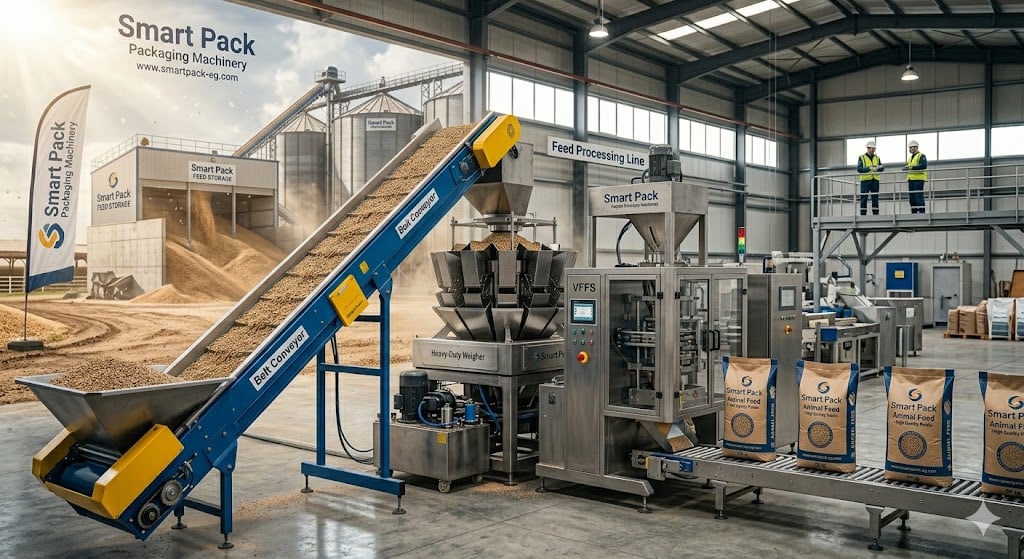
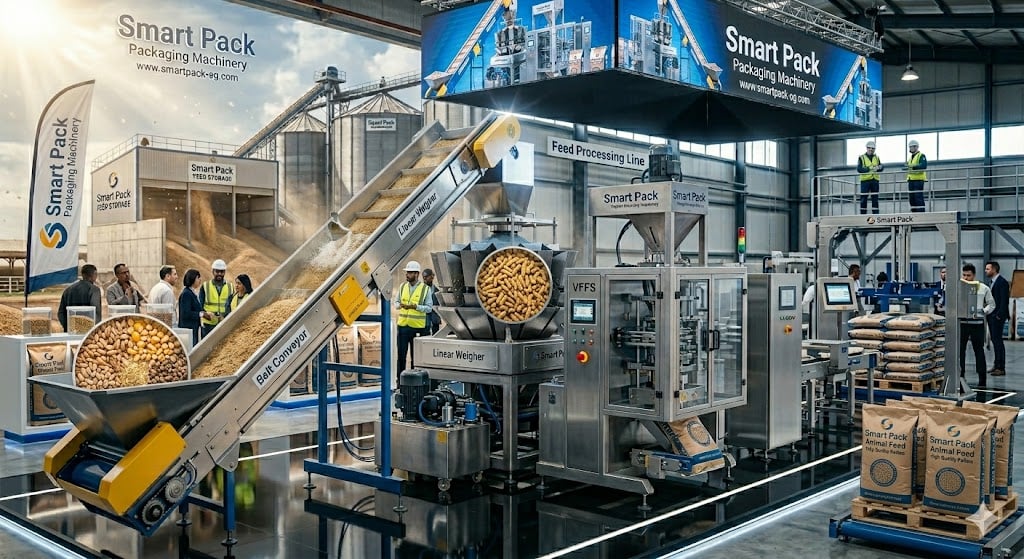
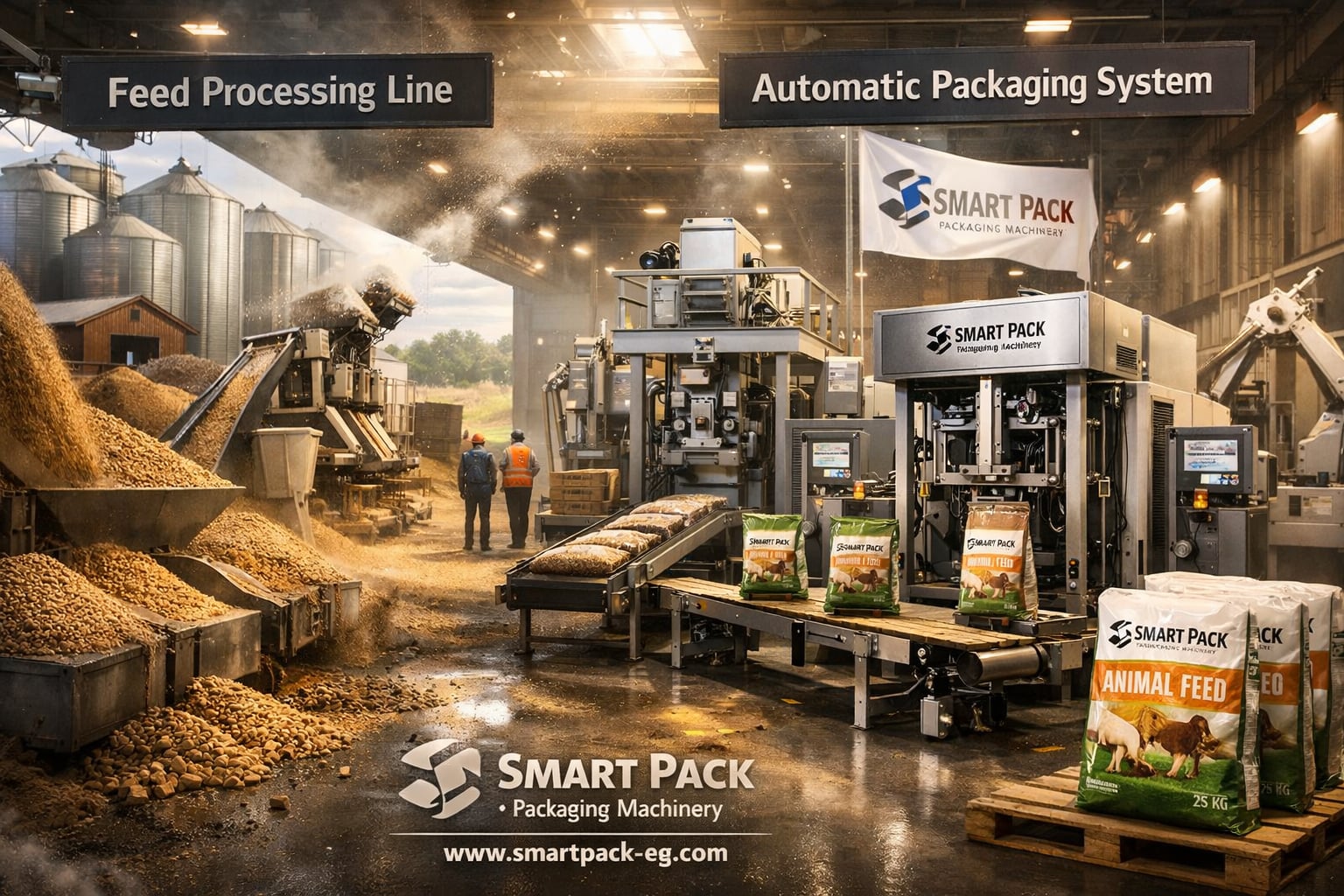
Entering the feed trade allows you to expand into packaging and bagging services, which significantly increases product value and provides a strong competitive advantage.
Suitable Types of Packaging Machines
| Machine Type | Application |
|---|---|
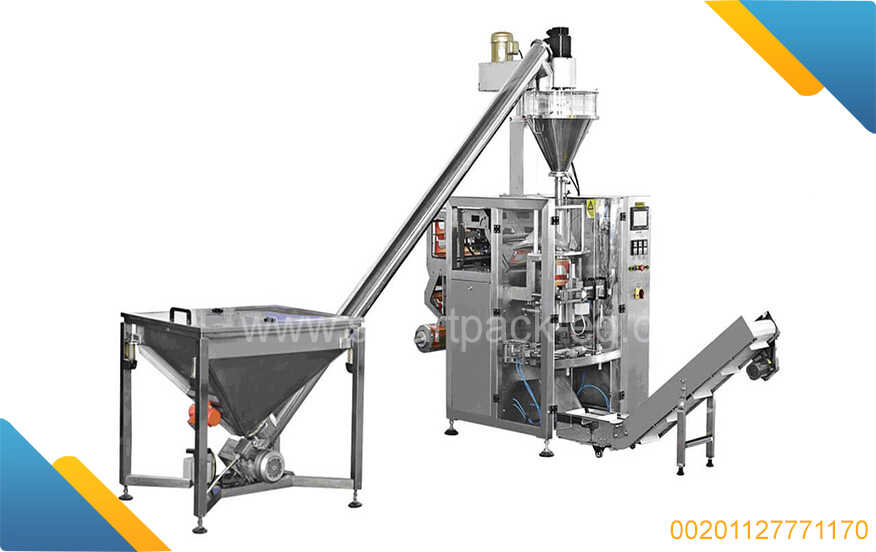
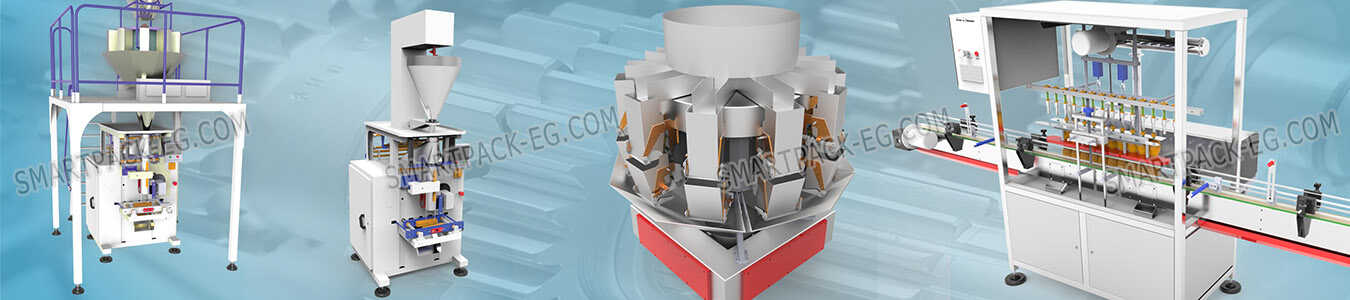
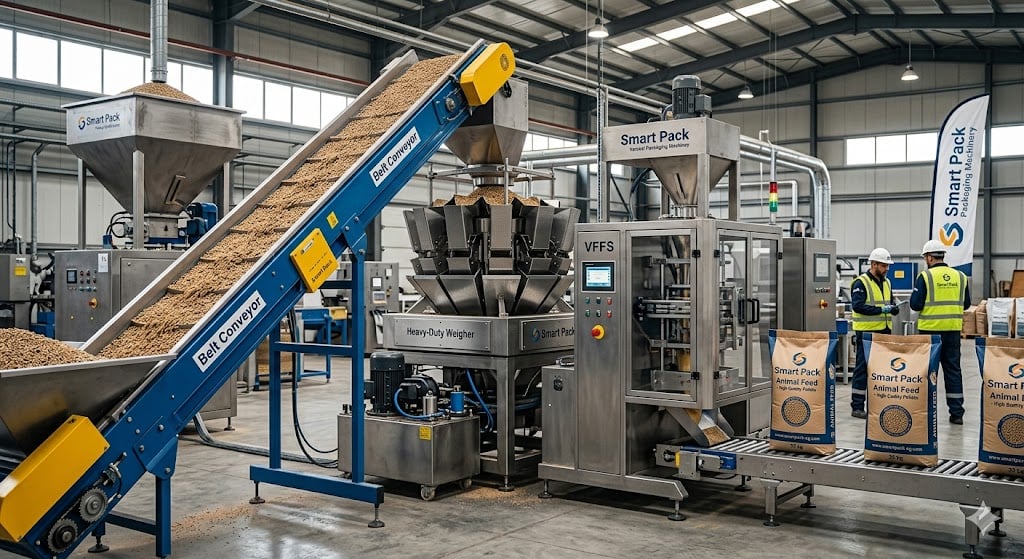
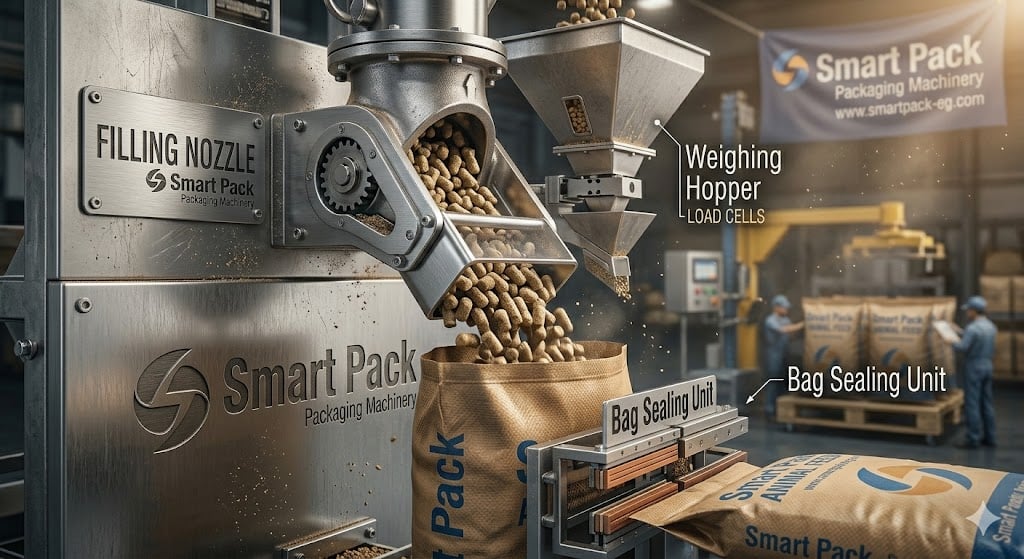
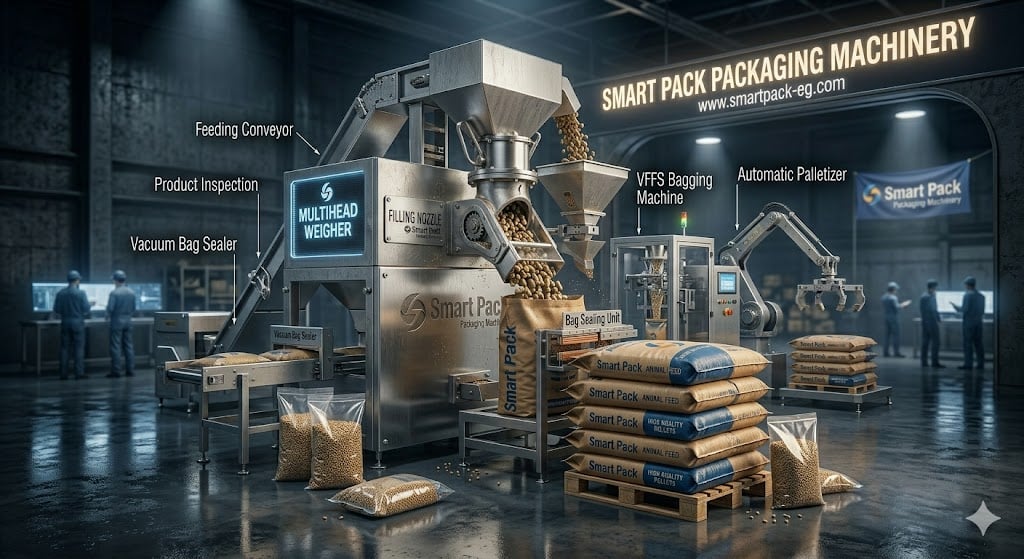
| Grain & feed weighing and bagging machines | Accurate filling of feed and grains into bags with fixed weights |
| Premade bag filling machines | Automatic filling and sealing of ready-made bags |
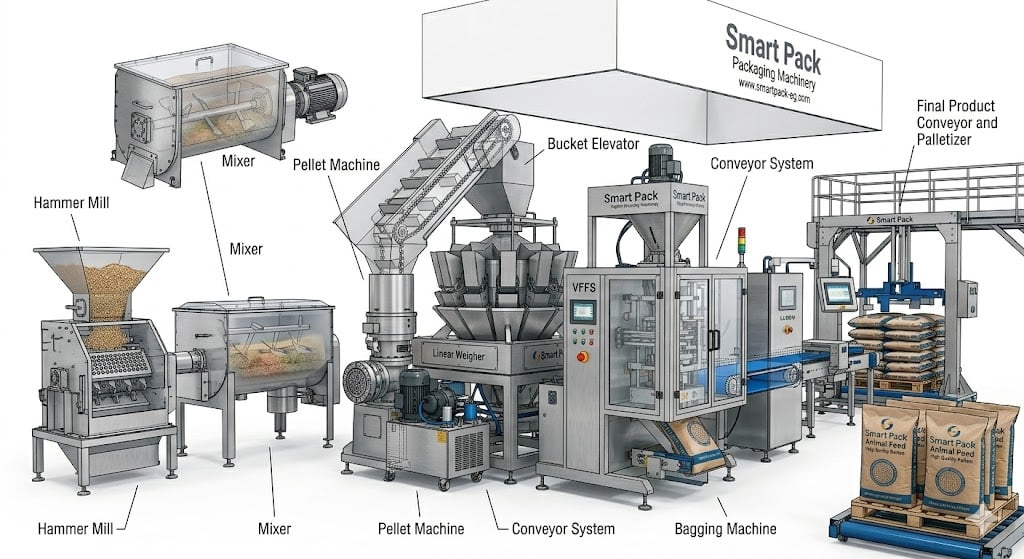
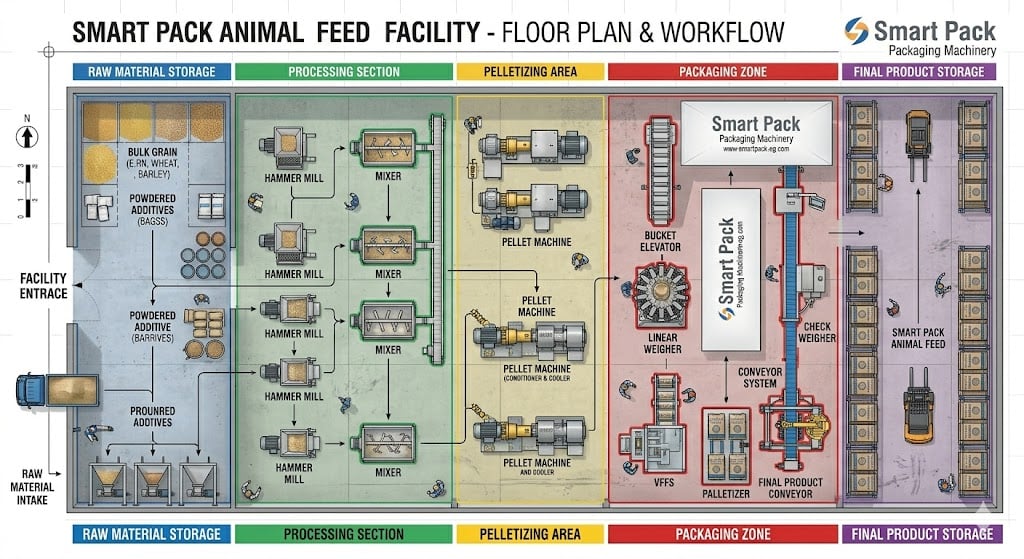
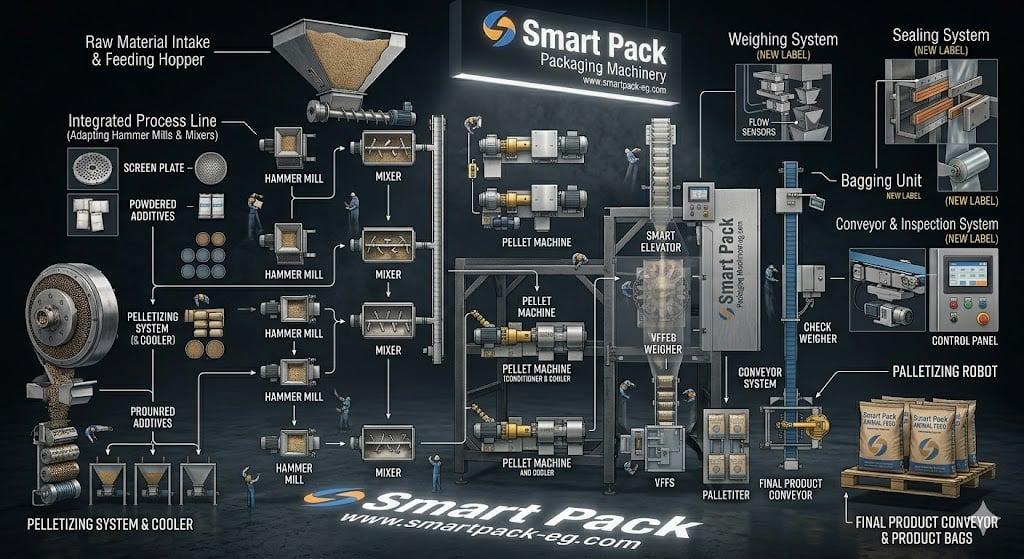
| High-capacity packaging lines | Integrated production lines for large factories |
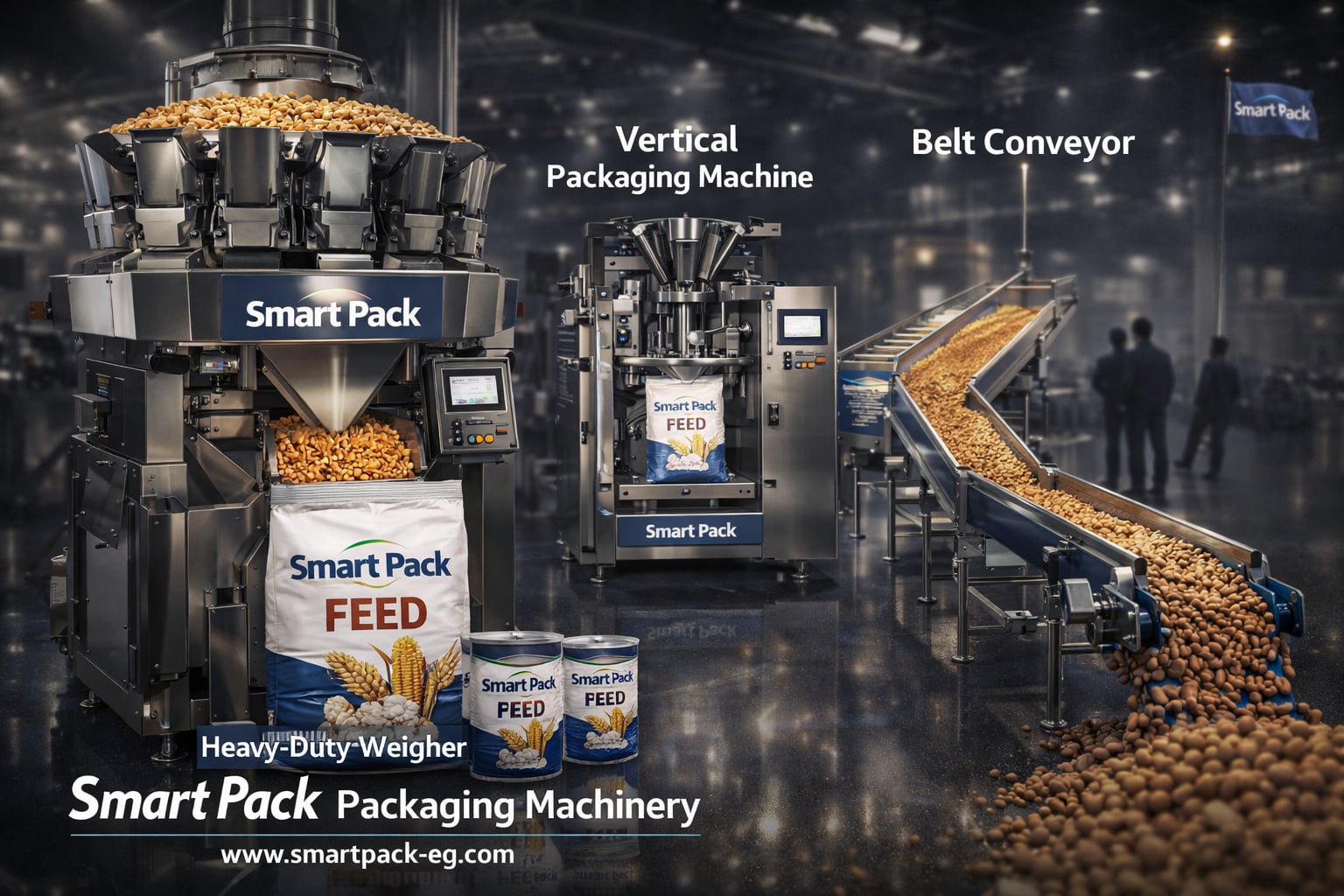
Smart Pack specializes in manufacturing feed and grain packaging machines and offers solutions tailored to:
-
Small projects (semi-automatic systems)
-
Medium-scale operations
-
Large factories with fully integrated production lines
Tips Before Purchasing Packaging Machines
-
Define the required production capacity based on your business volume
-
Choose machines with high-precision electronic weighing systems to reduce waste
-
Ensure availability of technical support and after-sales service
-
Consult specialized manufacturers for customized machine designs
Fifth: How to Link Feed Trading with Packaging to Increase Profit
Once you have a warehouse and stable product flow, you can:
-
Offer machine-based packaging services for wholesale and retail customers
-
Produce ready-packed feed in multiple weights based on market demand
-
Expand into high-value packaged feed products
This approach increases overall profitability and attracts customers seeking convenience, quality, and consistency.
Cost Analysis and Expected Returns
Estimated Startup Costs
| Item | Approximate Cost |
|---|---|
| Shop / warehouse | Depends on location |
| Bulk purchase of feed and grains | Depends on quantity |
| Warehouse preparation (ventilation & shelving) | Additional cost |
| Packaging machines | Depends on production capacity |
Expected Returns
With continuous demand from farms and breeders, feed trading offers stable and recurring profits, especially when combined with professional packaging services.
Operational and Investment Advice
Including professional feed packaging machines in your project is not a luxury—it is a direct investment in:
-
Improving product quality
-
Reducing waste
-
Increasing production capacity
-
Targeting larger and more profitable markets
Before purchasing equipment, seek a technical consultation to accurately define your project requirements and work with a specialized manufacturer of packaging and bagging lines.
Make the right decision now to build a more organized, profitable, and scalable business, and connect with a trusted manufacturer to supply integrated packaging solutions that match your current operations and future ambitions.
Frequently Asked Questions (FAQ)
1. What is the difference between trading feed and packaging it?
Trading focuses on selling bulk products, while packaging adds value by offering standardized weights and branded products.
2. Is it necessary to buy a packaging machine at the beginning?
Not initially, but as the business grows, investing in packaging reduces costs and increases profitability.
3. How can I ensure feed quality?
By selecting reliable suppliers and applying proper storage practices.
4. Can packaged feed be exported?
Yes, especially when packaged according to quality and safety standards.
5. Why is choosing a reliable machine manufacturer important?
A trusted manufacturer ensures machine quality, compatibility with your needs, and effective after-sales support.