 Admin
Admin Milk Powder Packaging and Packing Project | Feasibility Study for a Profitable Industrial Investment
The milk powder and dried dairy packaging project is considered one of the most promising industrial projects in Egypt, due to strong and stable local demand, continuous consumption, and solid opportunities in regional export markets.
A well-prepared feasibility study helps clarify the technical, economic, and market requirements that determine the project’s success.
What Is Milk Powder and Why Is It a Profitable Product?
Definition of Milk Powder
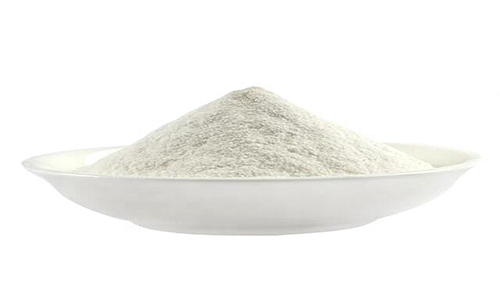
Milk powder is fresh milk from which most of the water content has been removed through evaporation, resulting in a dry powder with very low moisture content (approximately 3–5%). This significantly extends shelf life and reduces contamination risks.
Key Advantages of Milk Powder in the Market
| Advantage | Impact on the Project |
|---|---|
| Long shelf life | Reduces spoilage and storage losses |
| Easy transportation & storage | Lower logistics costs |
| Multiple applications | Higher revenue from diverse sectors |
| High nutritional value | Continuous consumer demand |
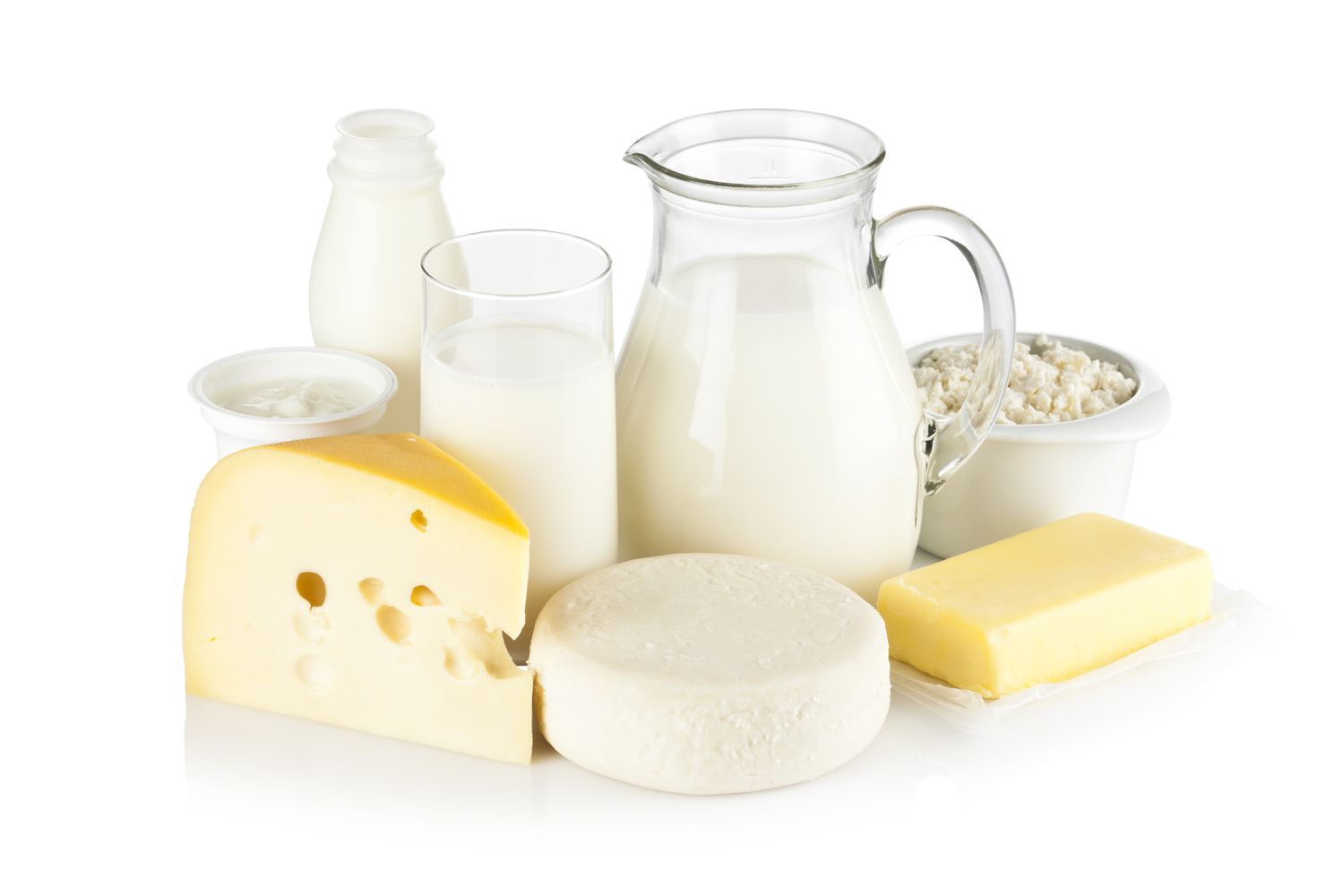
Milk powder is widely used in bakeries, confectionery, beverages, ready-to-eat food industries, and even in pharmaceutical and infant nutrition products.
Market Study: Demand, Competition, and Consumption
Before launching the project, comprehensive market analysis is essential:
Demand
Demand for dried dairy products in Egypt is increasing, especially as a practical alternative to fresh milk in remote and underserved areas.
Competition
Several local companies already produce and package milk powder, making quality differentiation and competitive pricing crucial for successful market entry.
Export Opportunities
Milk powder is highly exportable to Gulf countries and African markets, due to its nutritional value, long shelf life, and ease of storage.
Core Project Requirements
Location and Space
Selecting a suitable location close to milk suppliers and easily accessible to distributors is essential. Costs vary depending on the governorate and required factory space.
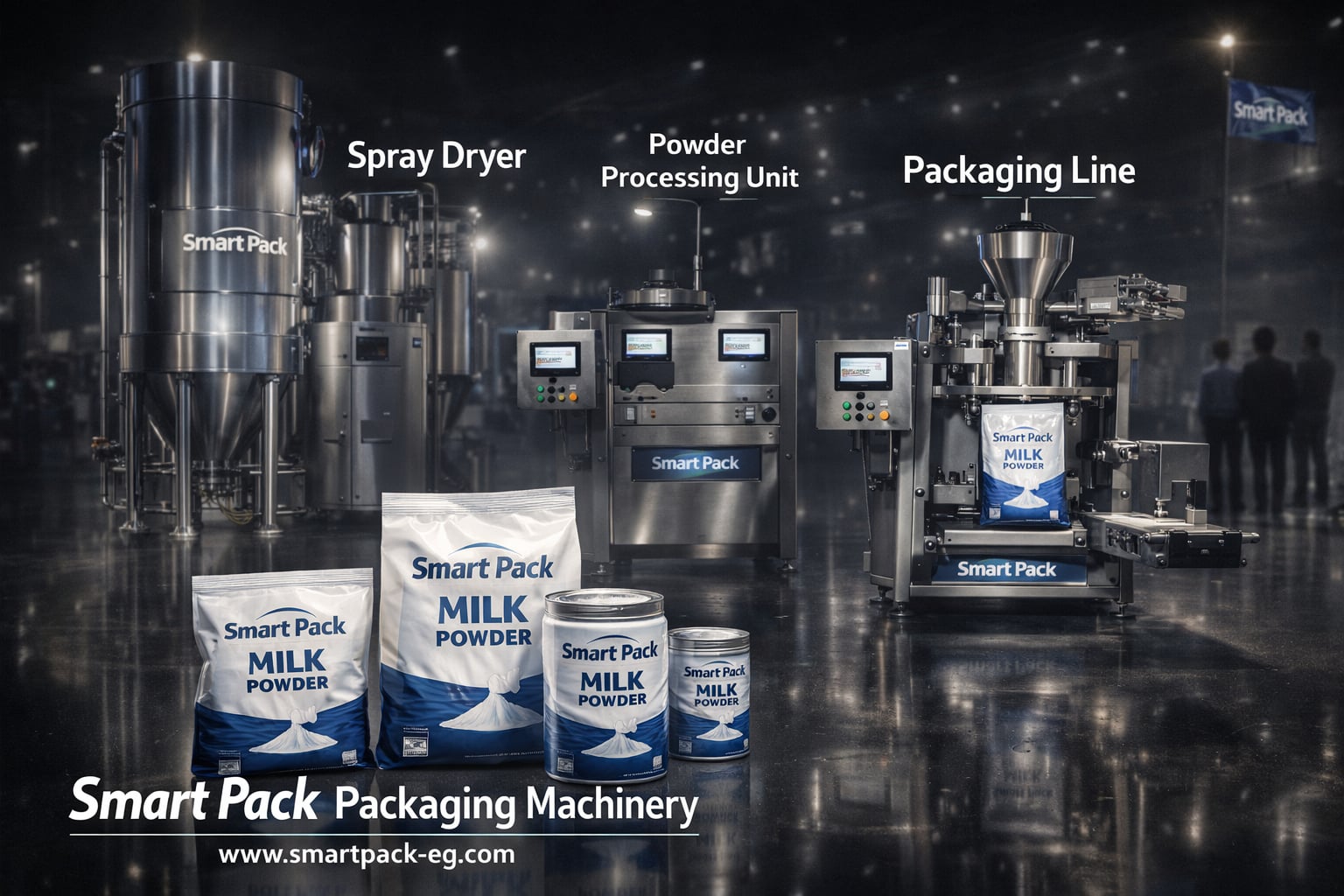
Required Equipment
| Equipment | Function |
|---|---|
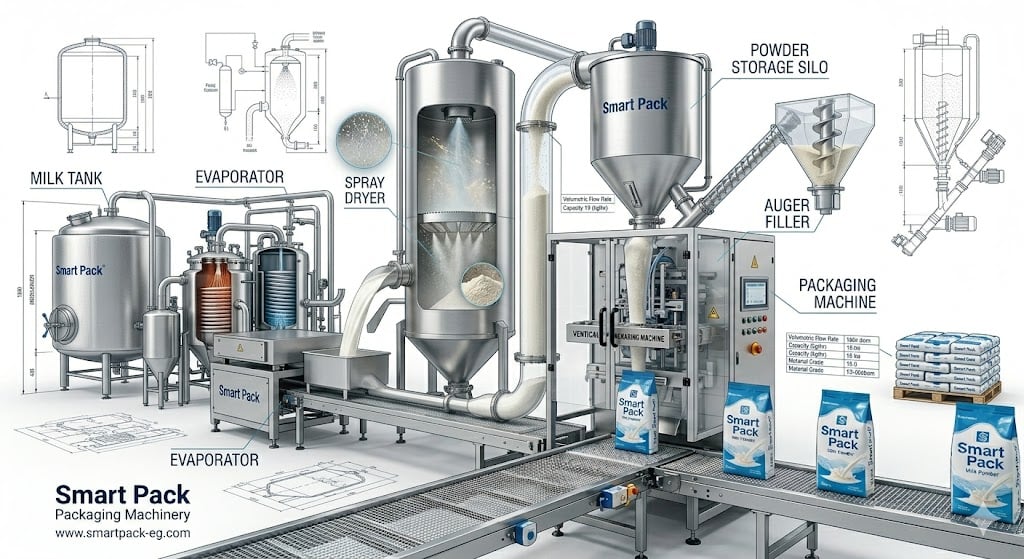
| Milk sterilization and purification unit | Removes impurities and ensures raw material quality |
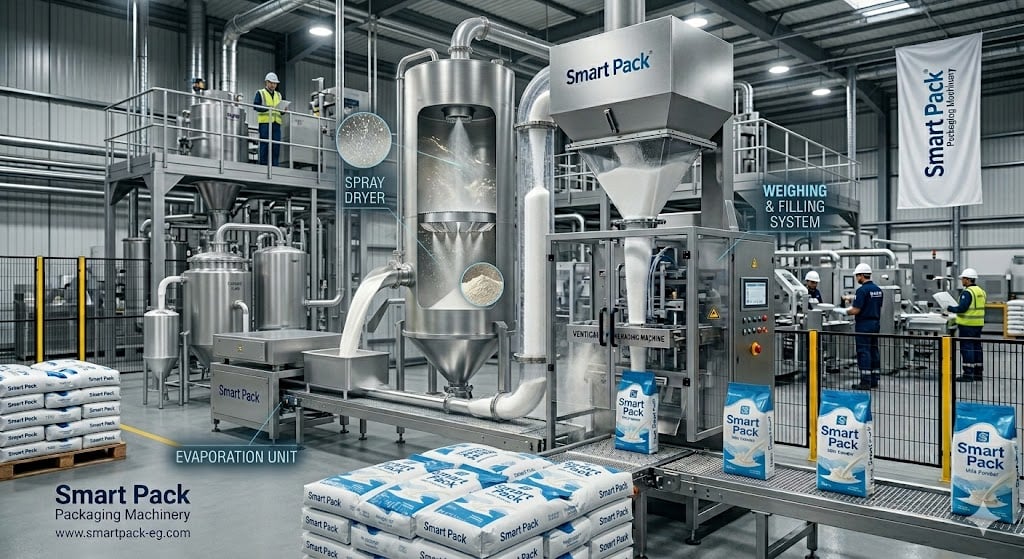
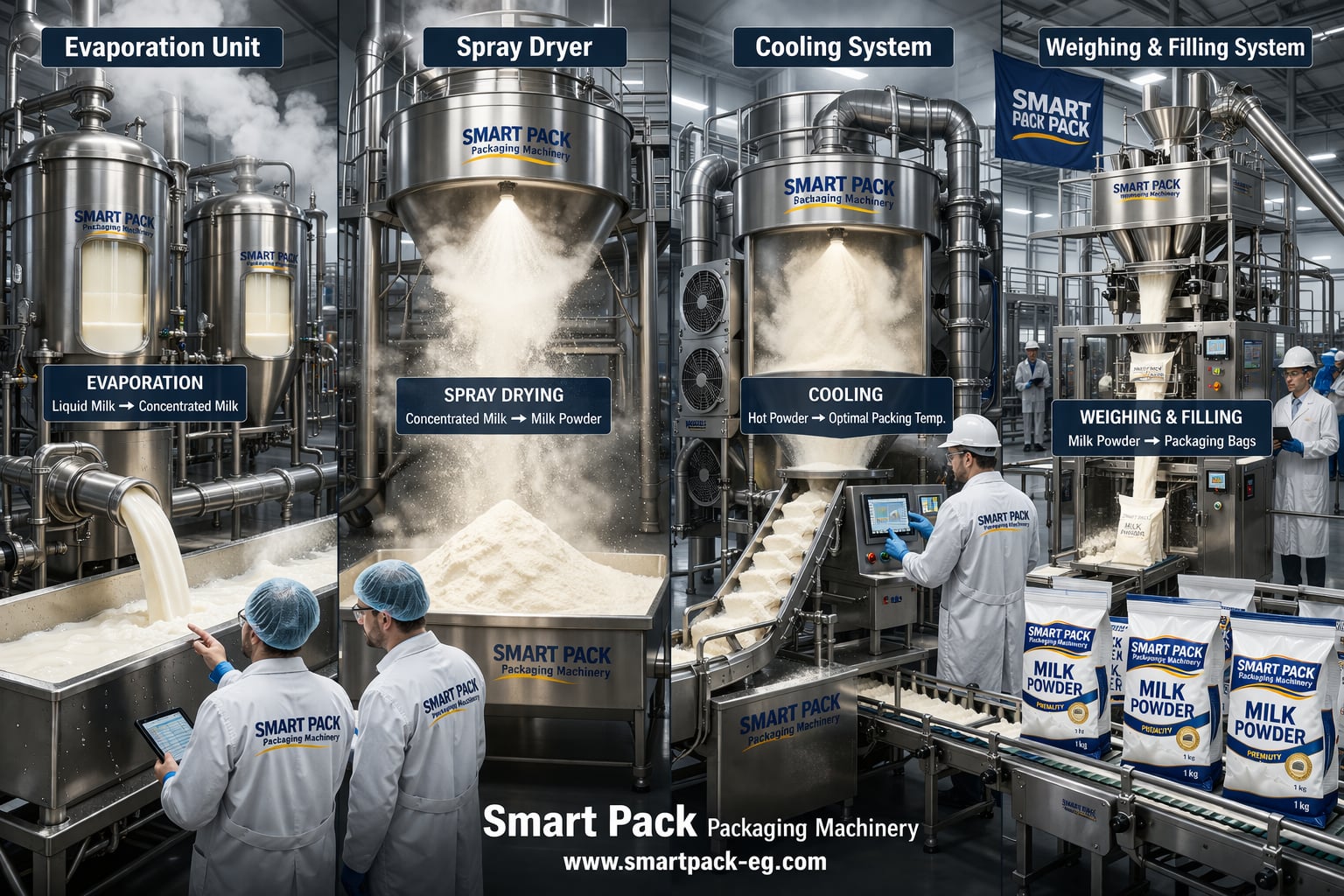
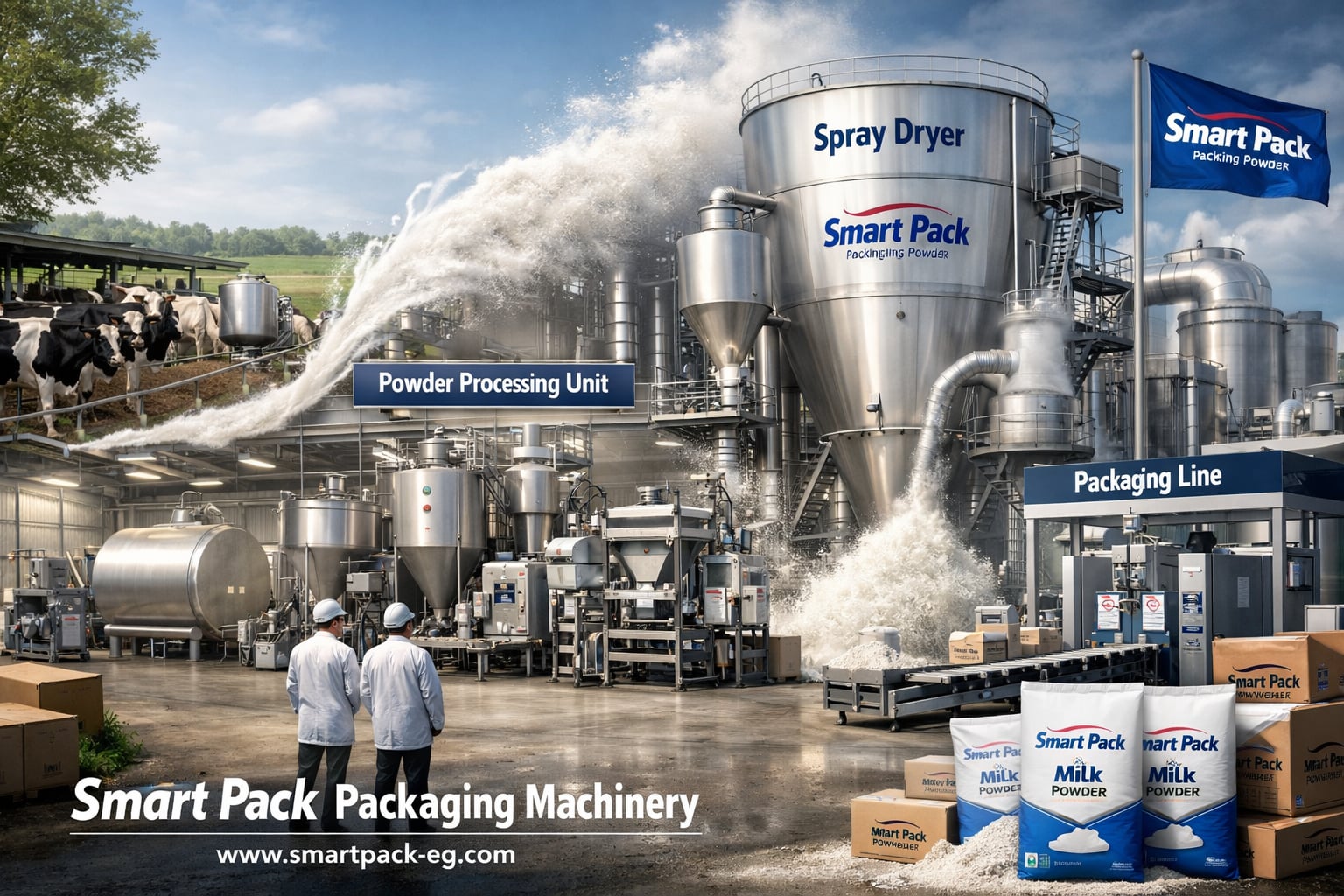
| Spray or steam milk dryer | Converts liquid milk into powder |
| Final drying & ventilation systems | Ensures minimal moisture content |
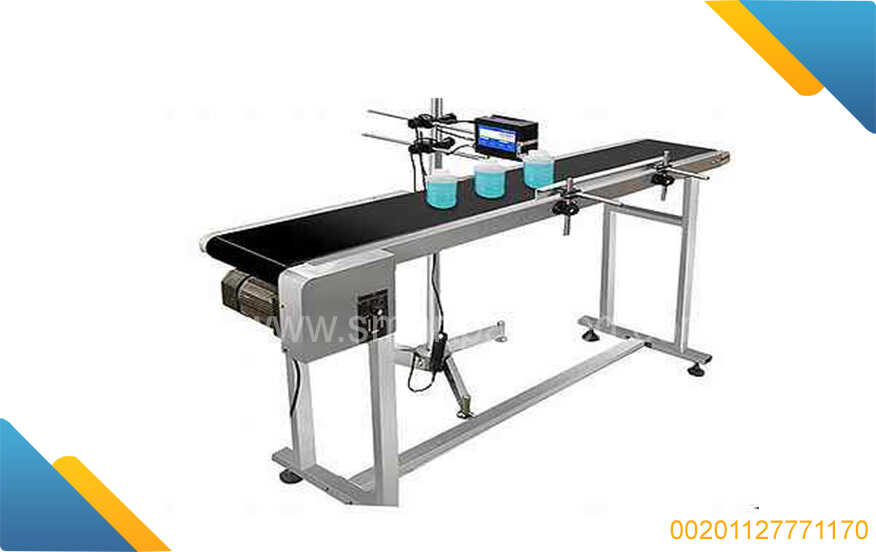
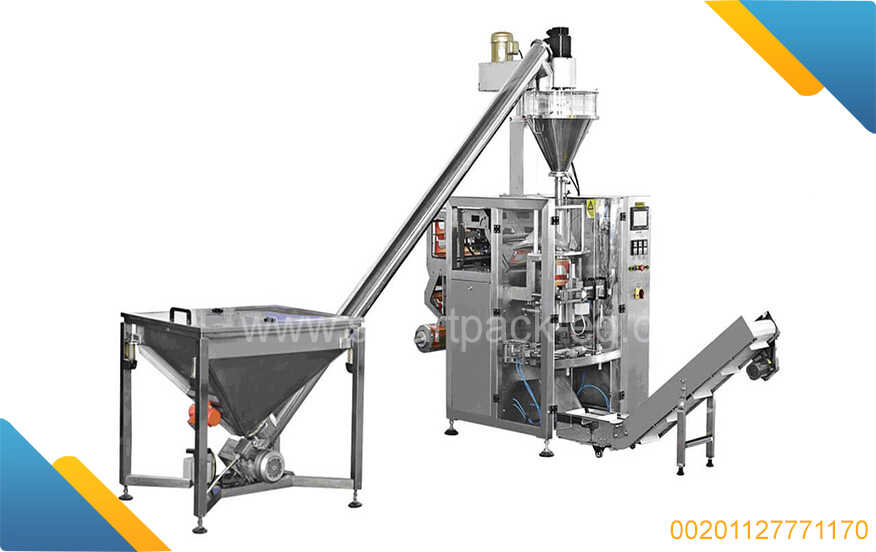
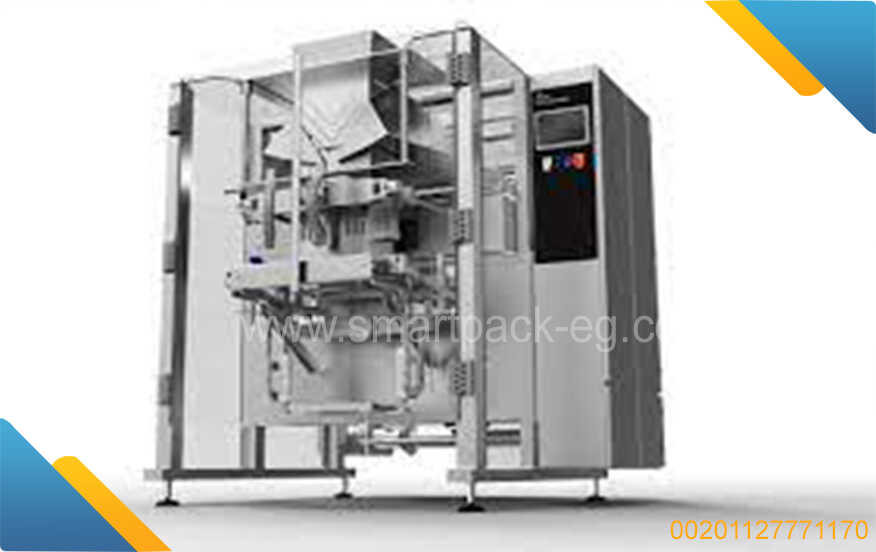
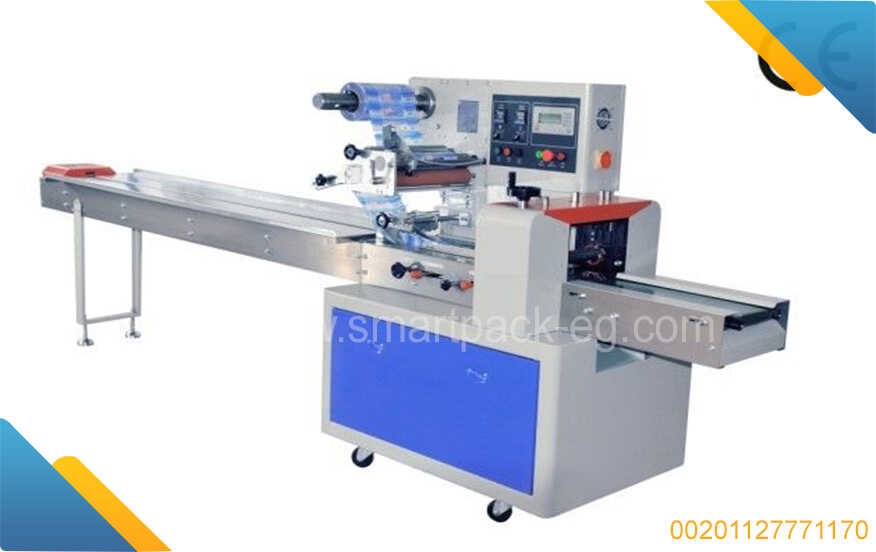
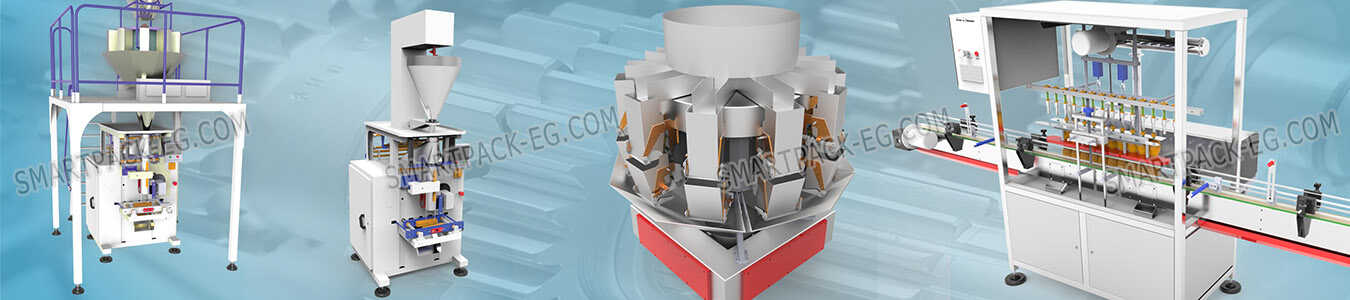
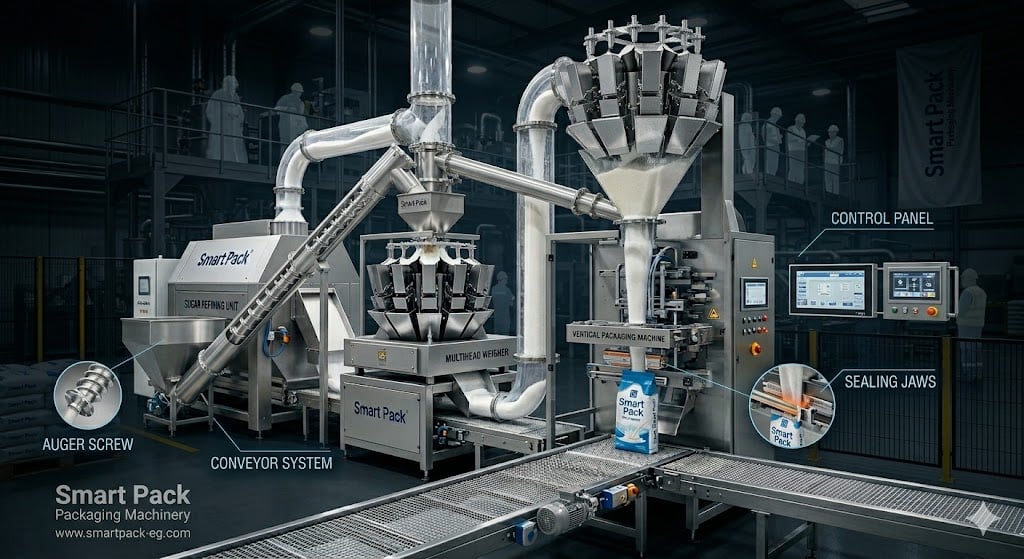
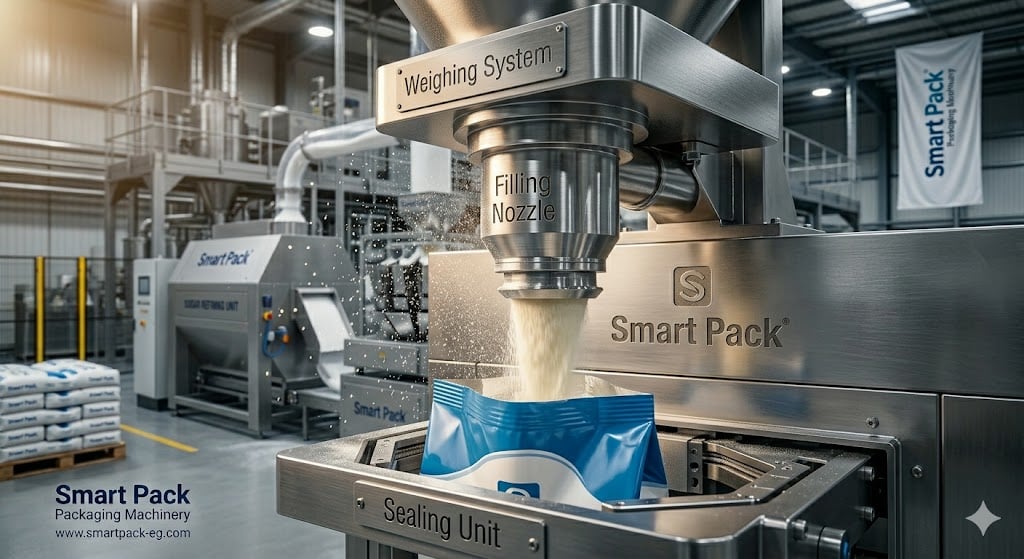
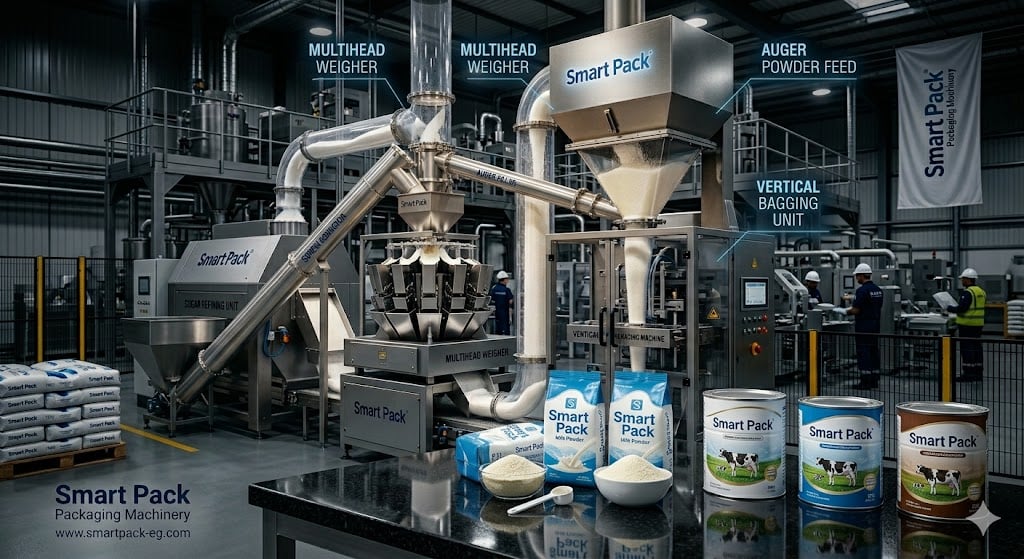
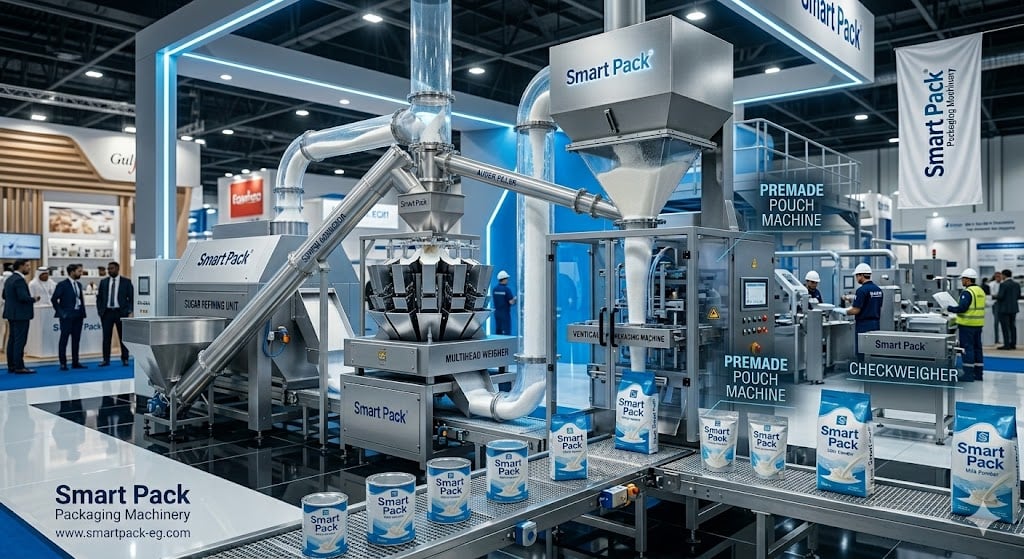
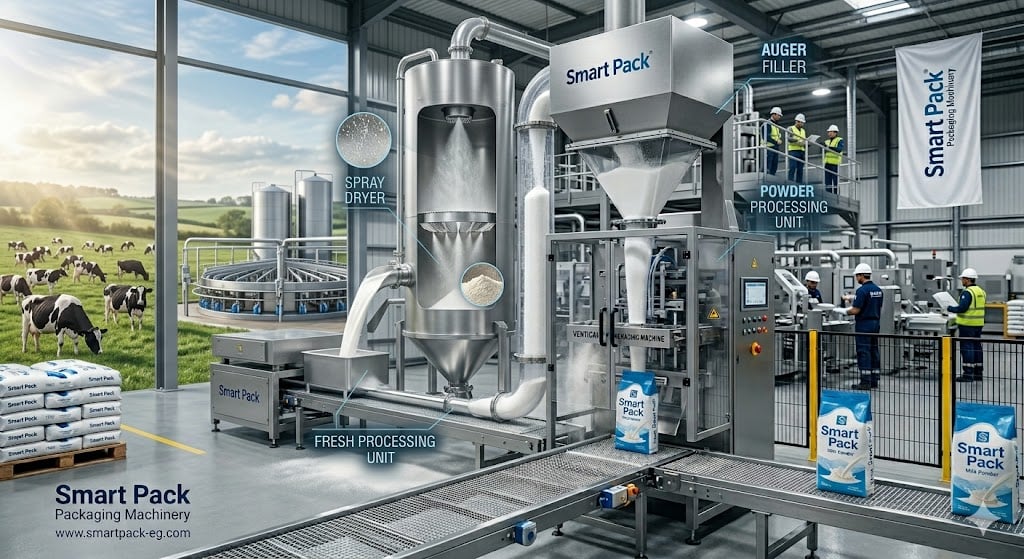
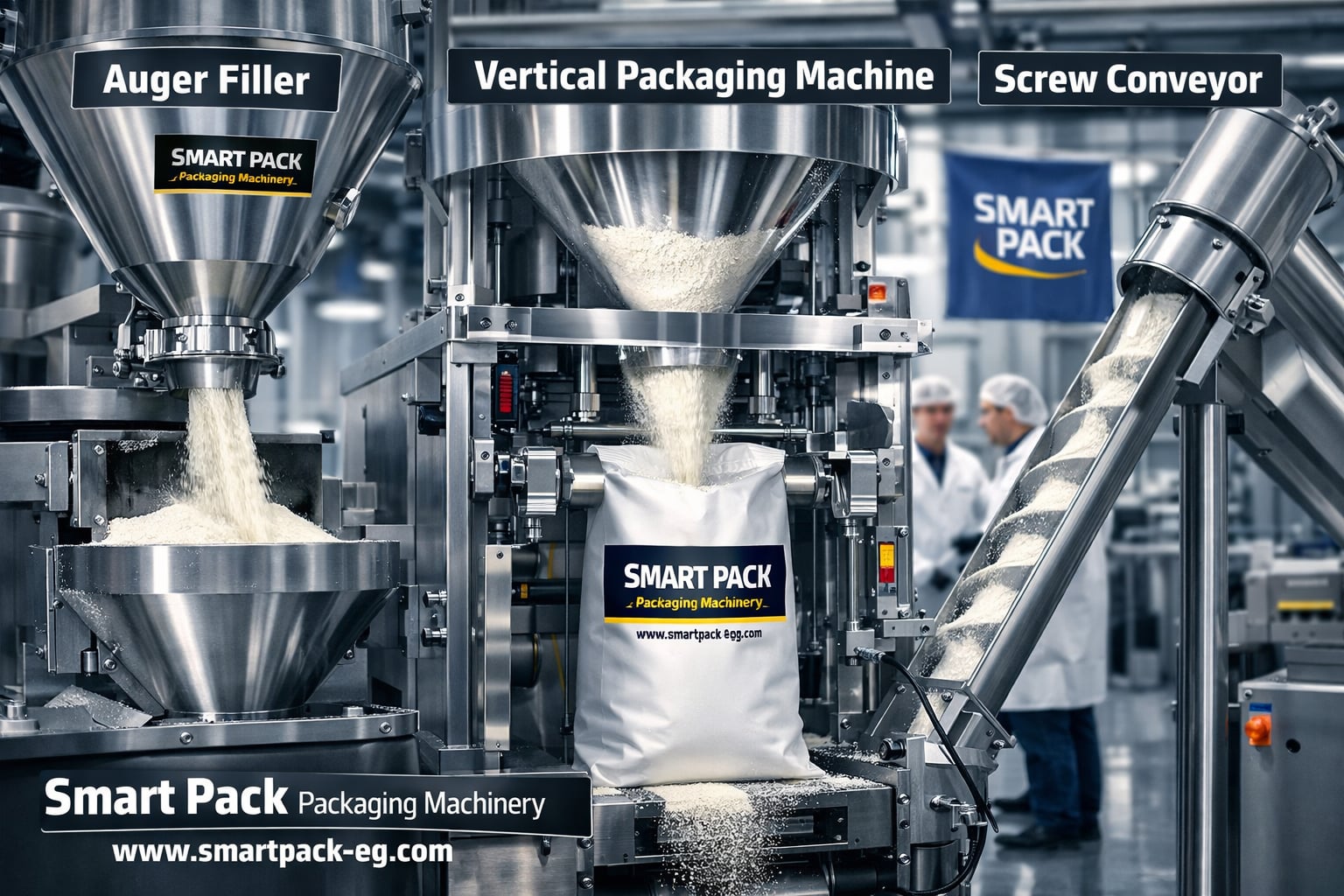
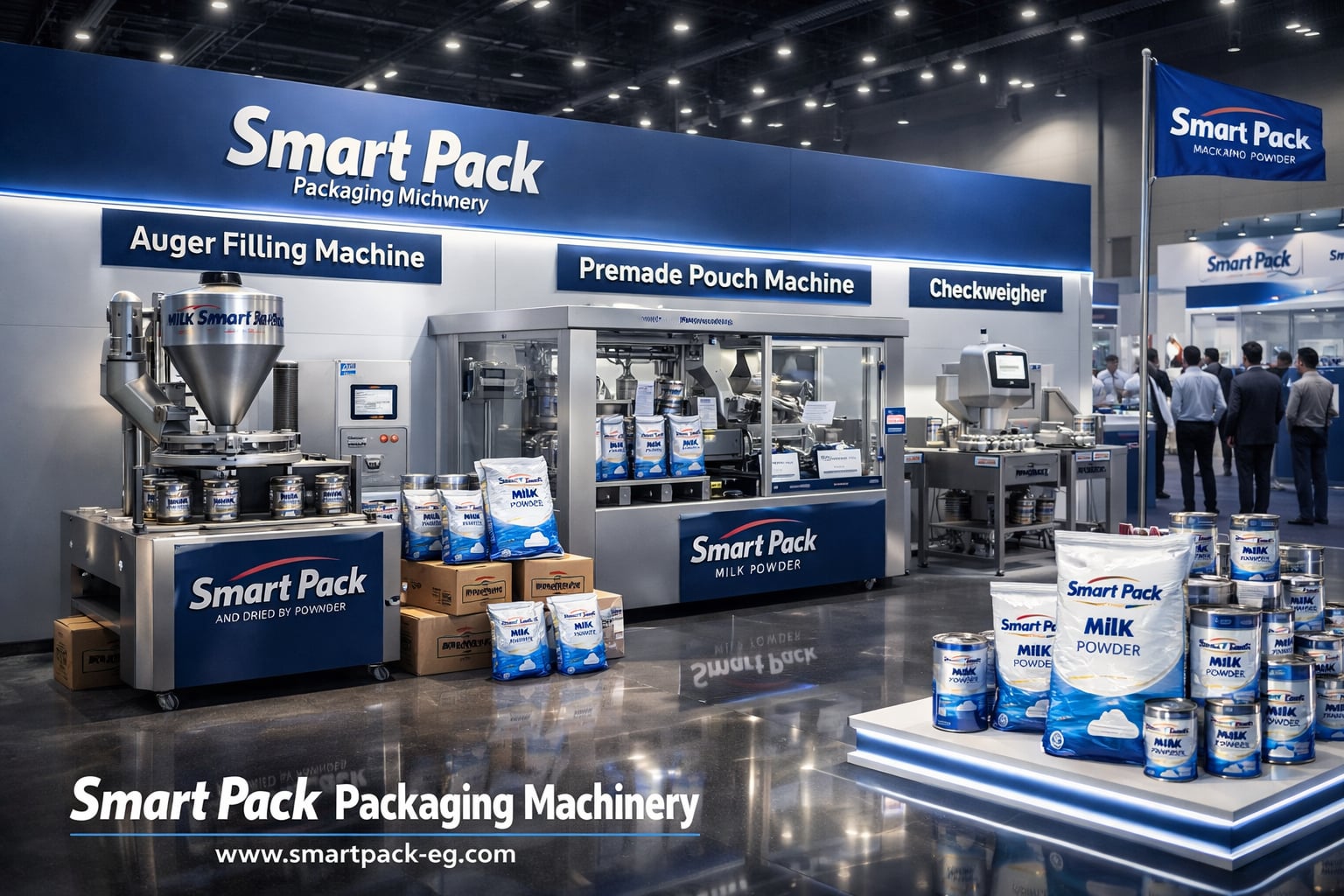
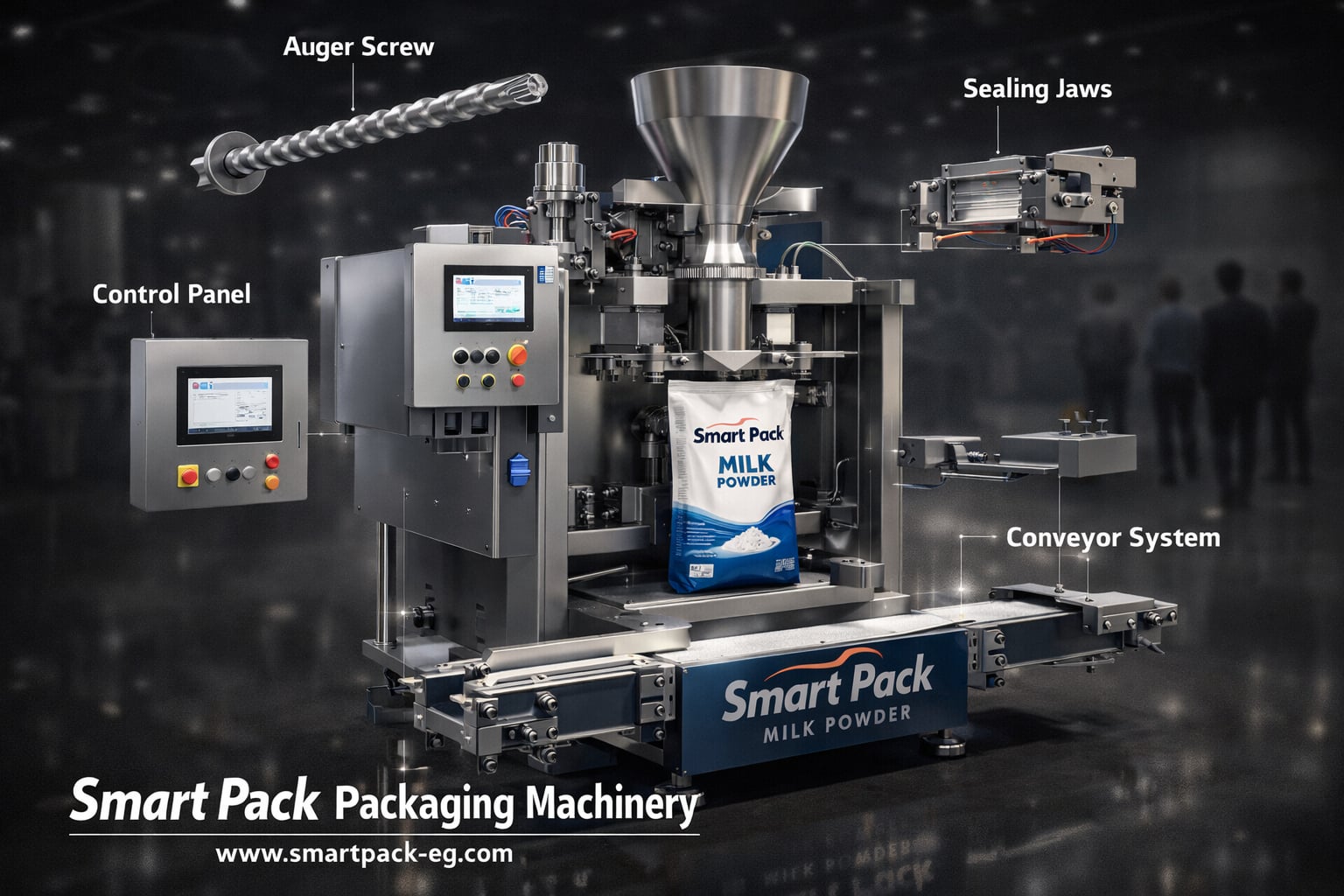
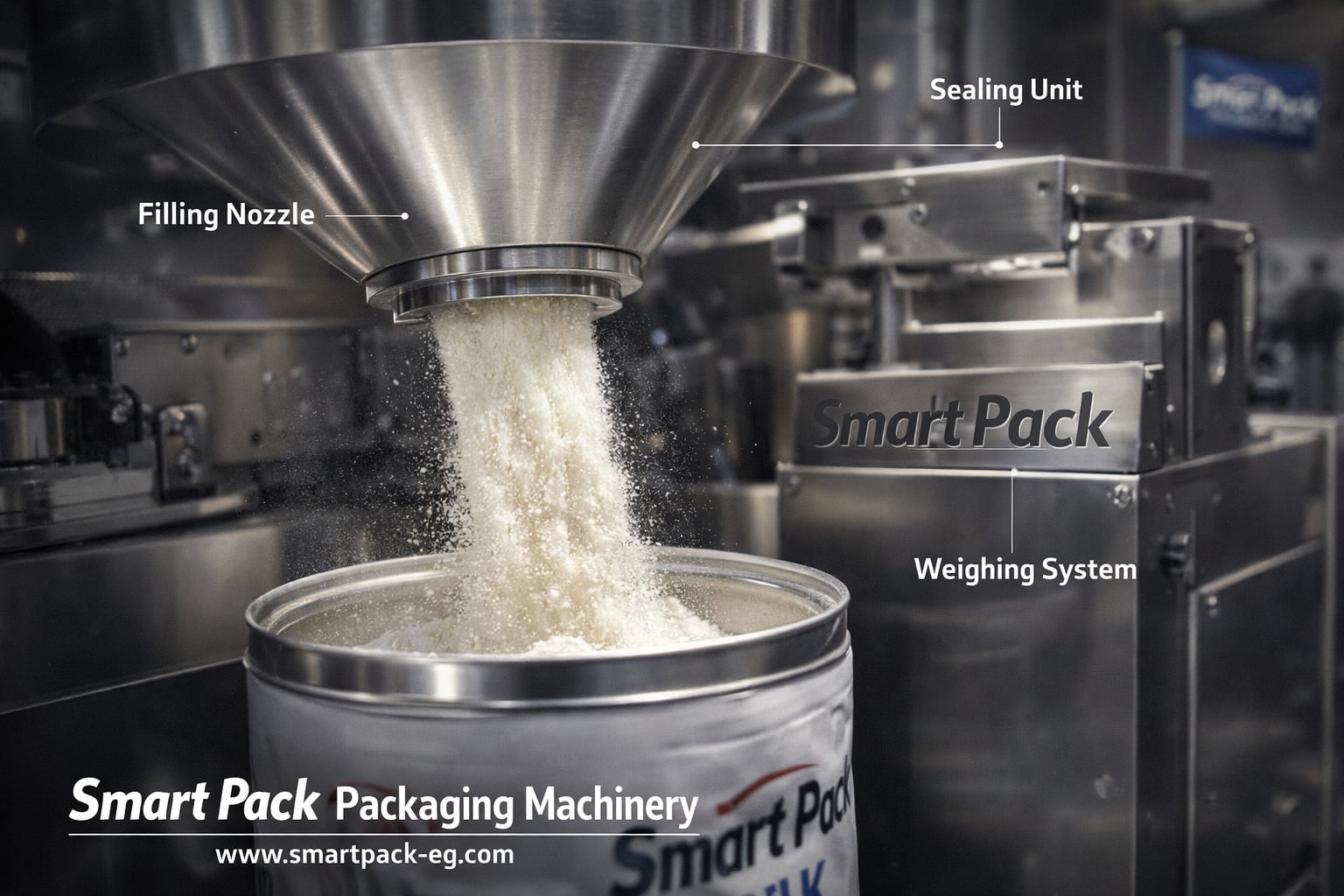
| Milk powder packaging machines | Fill powder into bags or containers of various weights |
| High-precision electronic weighing systems | Ensure accurate and consistent pack weights |
Production quality at this stage depends heavily on choosing machines that match product characteristics, production capacity, and food safety standards.
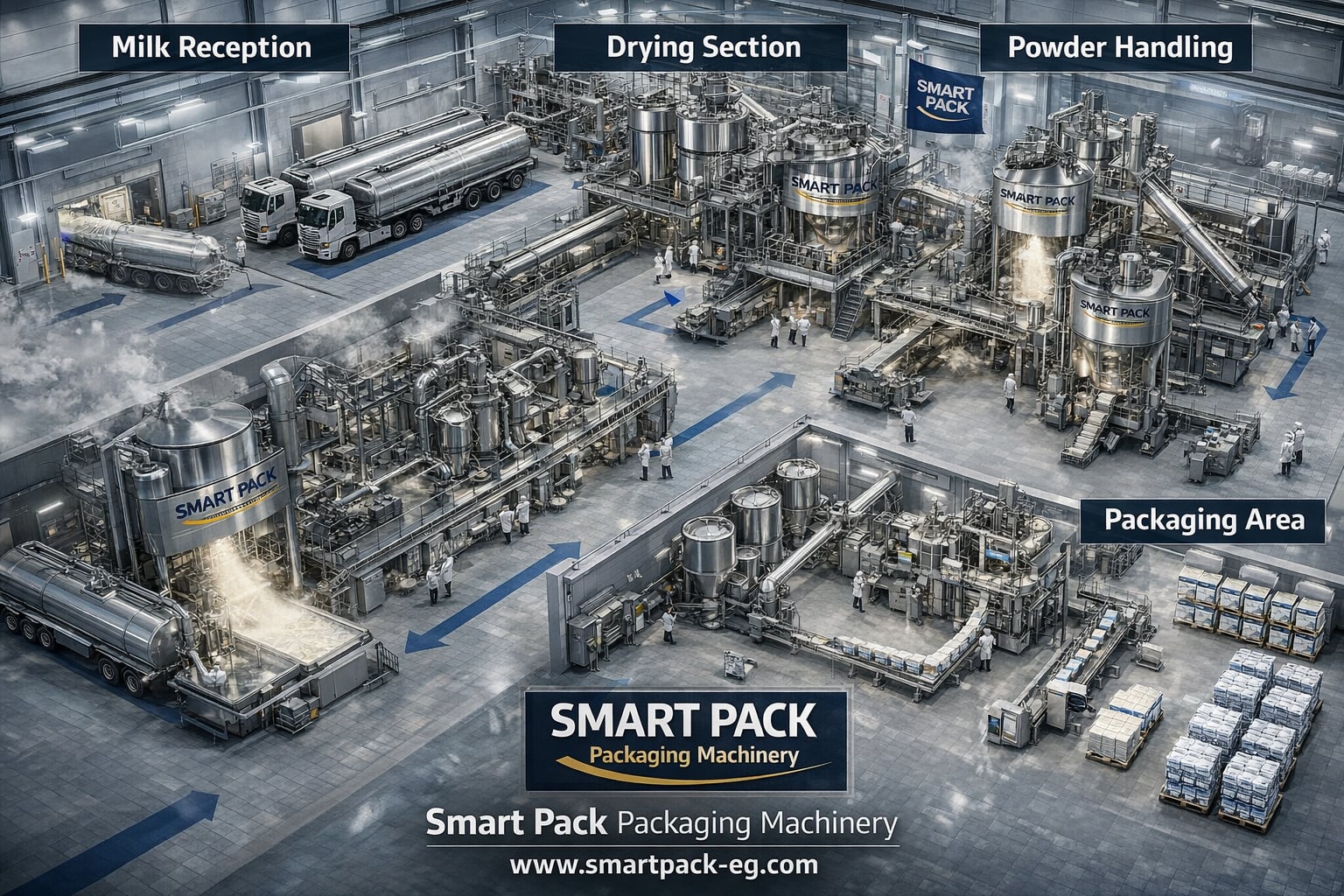
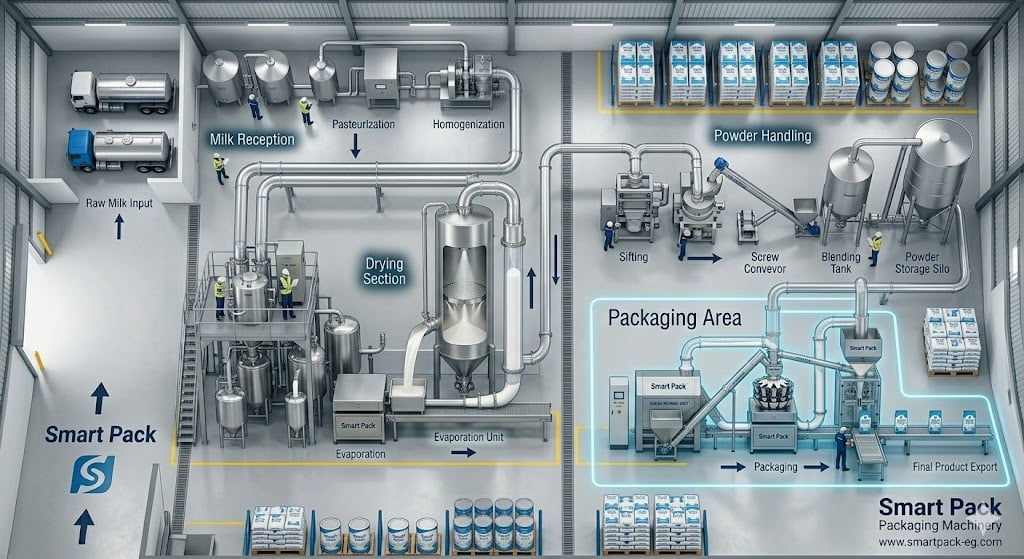
Milk Powder Manufacturing and Packaging Process
1. Raw Milk Reception and Inspection
Fresh milk is received from suppliers and thoroughly inspected. Raw material quality directly affects the final product quality.
2. Thermal Processing
Milk is heated to specific temperatures to eliminate microorganisms and improve drying efficiency.
3. Spray / Steam Drying
The milk passes through controlled drying stages designed to remove water while preserving nutritional value.
4. Packaging and Packing
Once milk powder is produced, it is transferred to specialized packaging machines to ensure weight consistency, package integrity, and product safety.
Project Cost and Expected Returns
Estimated Core Costs
| Item | Estimated Cost |
|---|---|
| Factory setup & location | Depends on size and location |
| Main equipment purchase | From drying systems to packaging lines |
| Initial operating costs | Labor, raw materials, utilities |
(A detailed financial feasibility study is required to determine exact costs based on production scale.)
Expected Returns
Annual profitability depends on production volume, manufacturing cost, and market selling price. While dairy prices may fluctuate, milk powder maintains steady long-term demand.
Milk Powder Packaging: Why Choose Professional Machines?
Selecting the right milk powder packaging machines directly determines:
-
Weight accuracy and package uniformity
-
High-speed production and operational continuity
-
Compliance with food safety standards
-
Reduced product loss and higher market value
Modern machines with advanced electronic systems minimize human error, improve consistency, and enhance product competitiveness.
Risk Analysis and Management
| Risk Type | Impact | Management Strategy |
|---|---|---|
| Raw milk price fluctuations | Increased production cost | Long-term supplier contracts |
| Food contamination | Quality loss | Strict sterilization & quality control |
| Operational inefficiency | Higher costs | Integrated, balanced production lines |
Investment Decision Tips
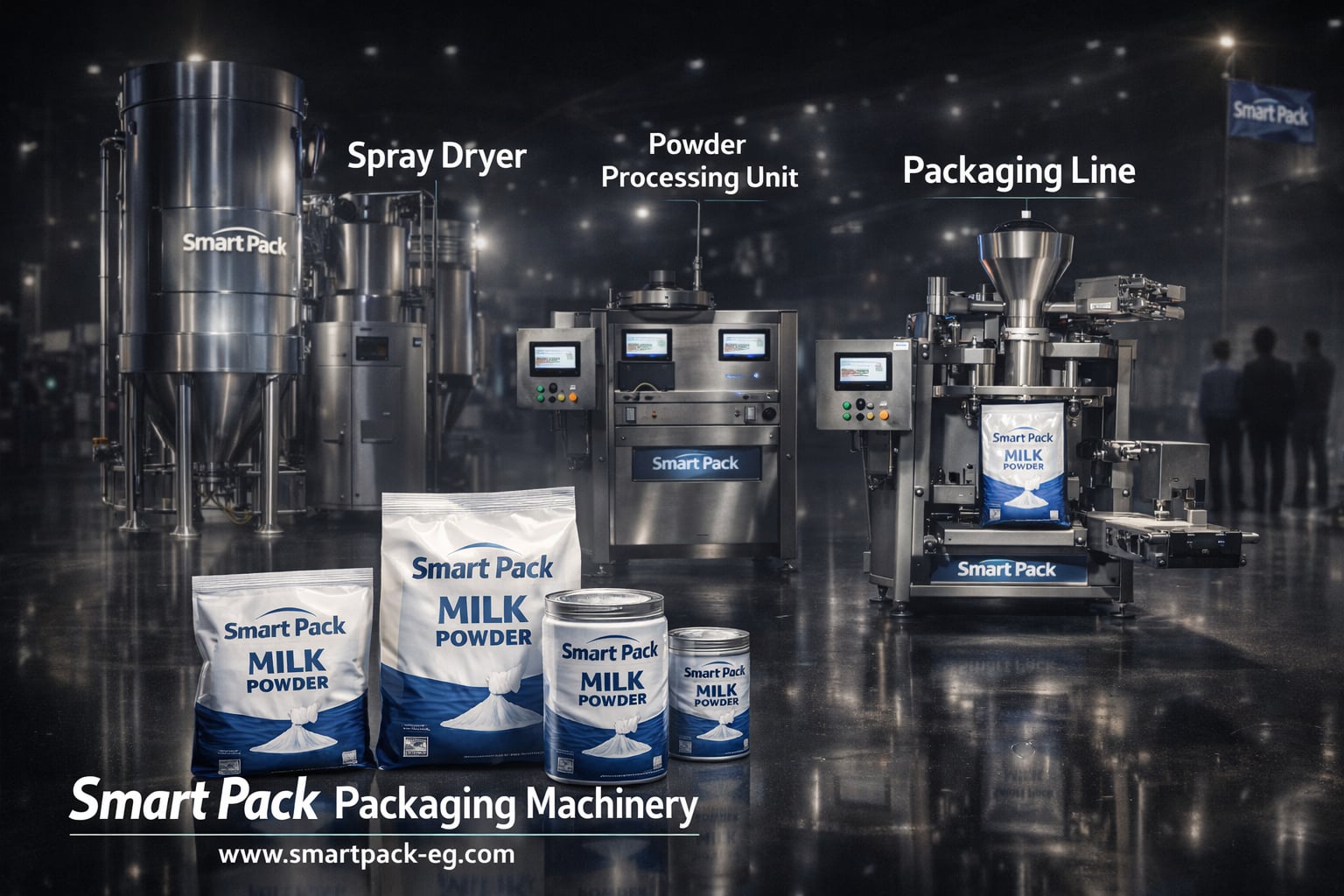
If you plan to enter the milk powder and dried dairy packaging industry, the right decision starts with selecting a complete production line, including professional packaging machines suited to your capacity and quality targets.
Choosing high-performance filling and packaging machines is essential to ensure product quality, stable operation, and strong investment returns.