 Admin
Admin Organic Fertilizer Manufacturing Project: An Integrated Industrial Line for Sustainable Profitability
Organic fertilizer manufacturing is one of the most successful agricultural and industrial projects, as it connects natural production with the rapidly growing market demand for environmentally friendly products.
Factories that rely on integrated production lines and appropriate filling and packaging machines achieve high-quality organic fertilizer, opening opportunities for local distribution, export markets, and strong profit margins.
In this article, we present a complete industrial production line for organic fertilizer, including a detailed explanation of the required filling and packaging machines and how to organize the project to be efficient and profitable.
What Is Organic Fertilizer and Why Is It a Profitable Business Opportunity?
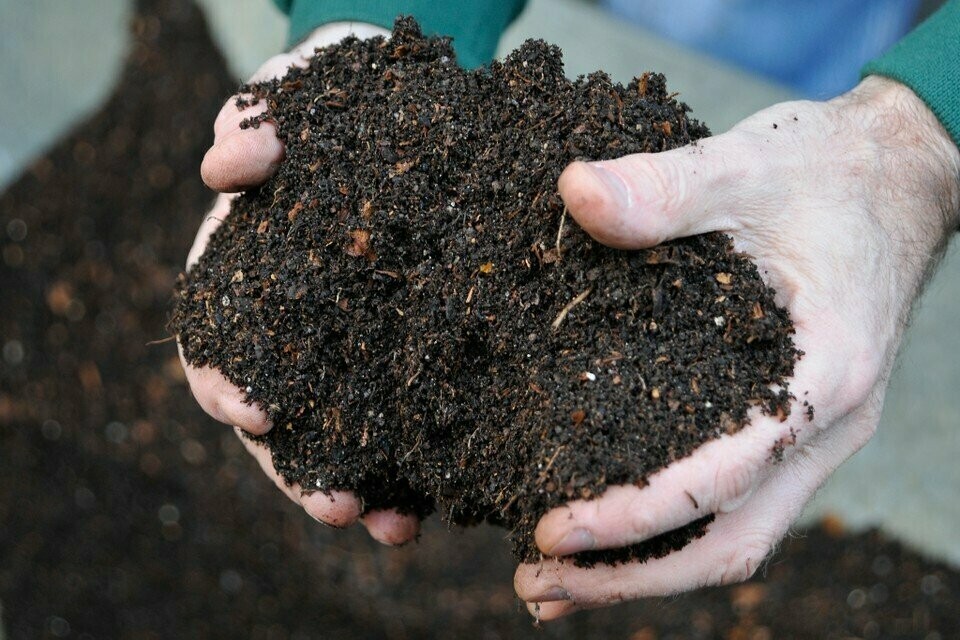
Organic fertilizer is a natural material used to improve soil fertility and enhance its ability to retain water and nutrients. It is produced through the decomposition of organic materials such as plant residues, animal waste, and other organic by-products.
Organic fertilizer is an eco-friendly product with strong demand in organic farming, vegetable farms, and high-quality agricultural production. As sustainable agriculture expands in Egypt and internationally, demand for organic fertilizer continues to grow steadily.
Stages of Organic Fertilizer Production in Factories
Modern organic fertilizer factories follow an integrated sequence of processes to ensure product quality and suitability for packaging and marketing. These stages include:
Raw Material Preparation
Production begins with collecting organic materials such as plant residues, agricultural waste, animal manure, and other organic components.
Cutting and Shredding
Large raw materials are reduced into smaller pieces using industrial shredding machines to accelerate the decomposition process.
Fermentation and Turning
The mixture is placed in fermentation pits or composting units, with regular turning to ensure proper decomposition and organic fertilizer formation.
Maturing and Screening
After fermentation, the material is left to mature, improving texture and removing impurities from the fertilizer.
Drying
The fertilizer is dried in industrial dryers to remove excess moisture and prepare the product for packaging.
Organic Fertilizer Production Line and Machinery
To transform organic fertilizer production into a successful industrial project, a set of essential machines is required:
Shredding and Crushing Machine
Used to cut and crush large organic materials, preparing them for decomposition.
Compost Turning Machine
An automated turning unit that maintains proper aeration of the mixture during fermentation.
Industrial Drying Ovens
Used to remove moisture and prepare the fertilizer for the filling stage.
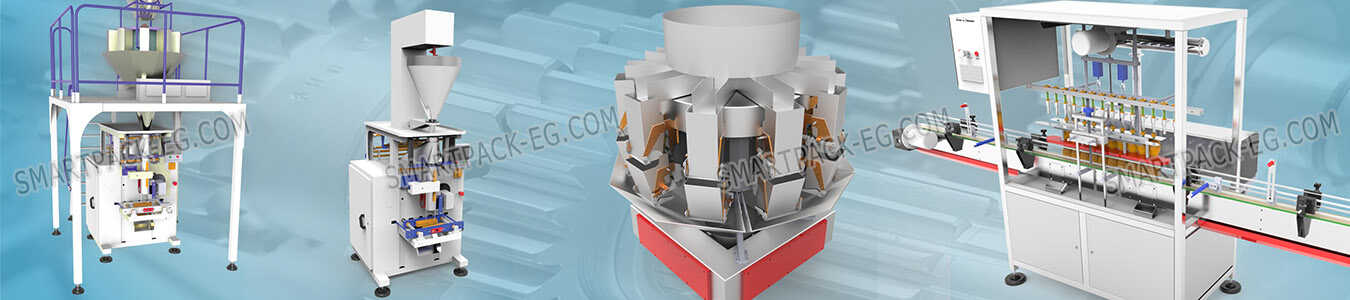
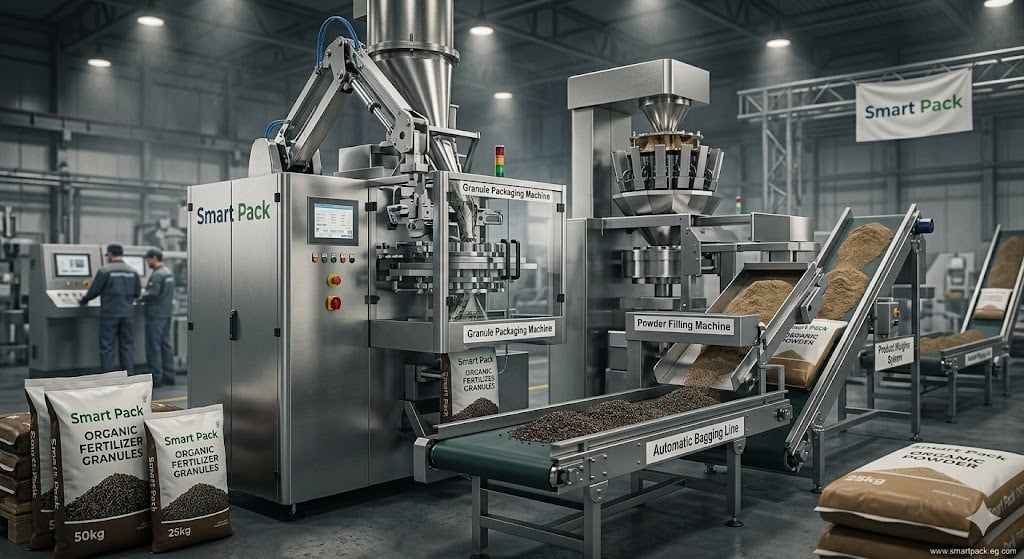
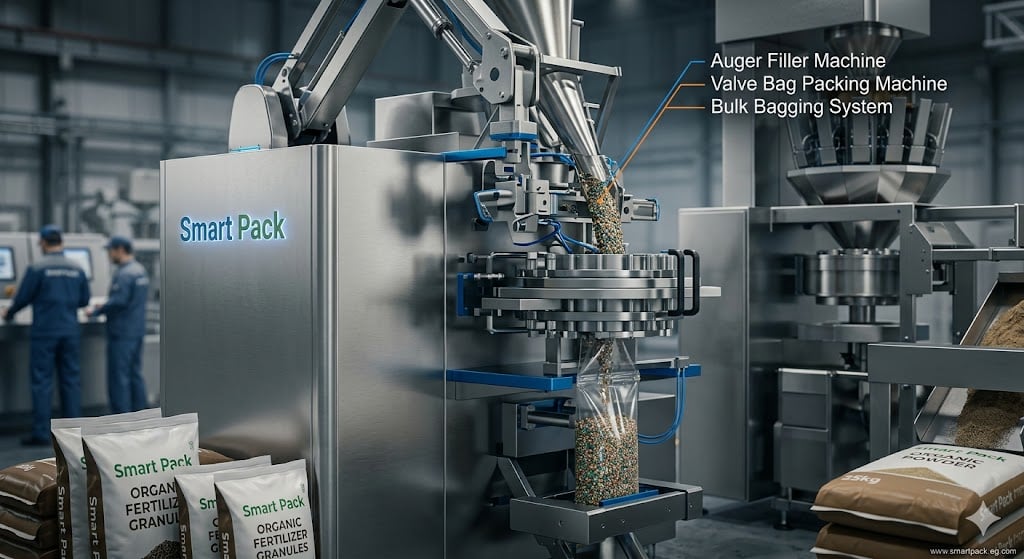
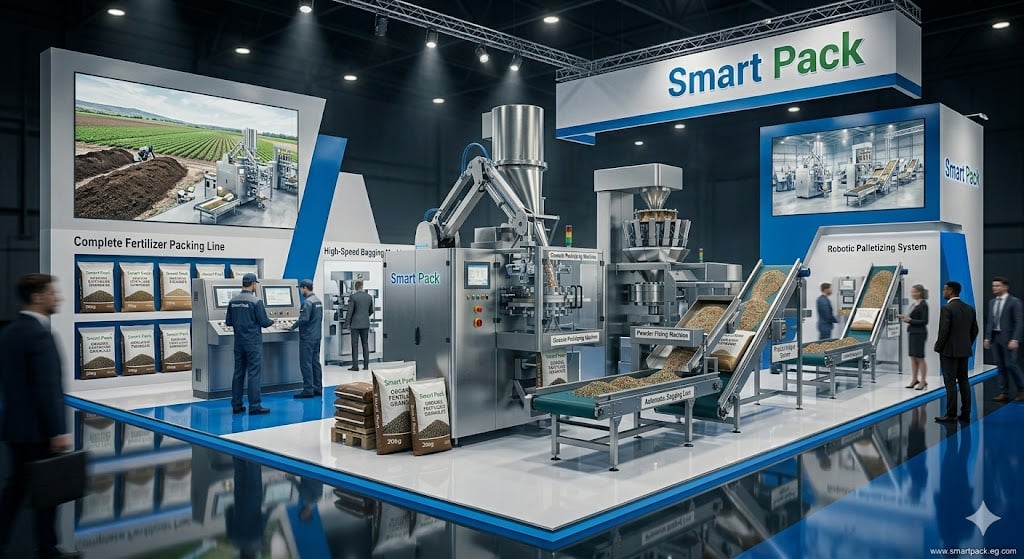
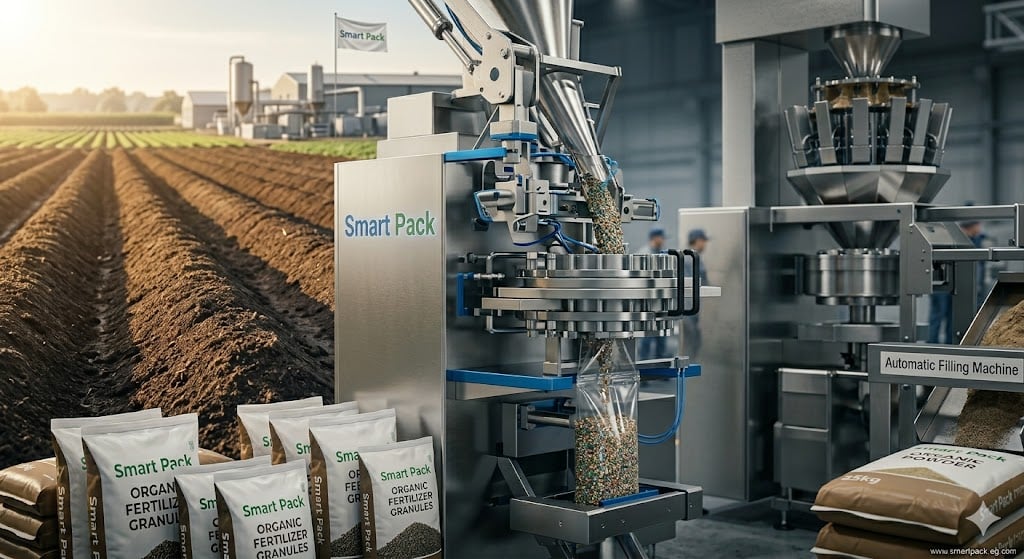
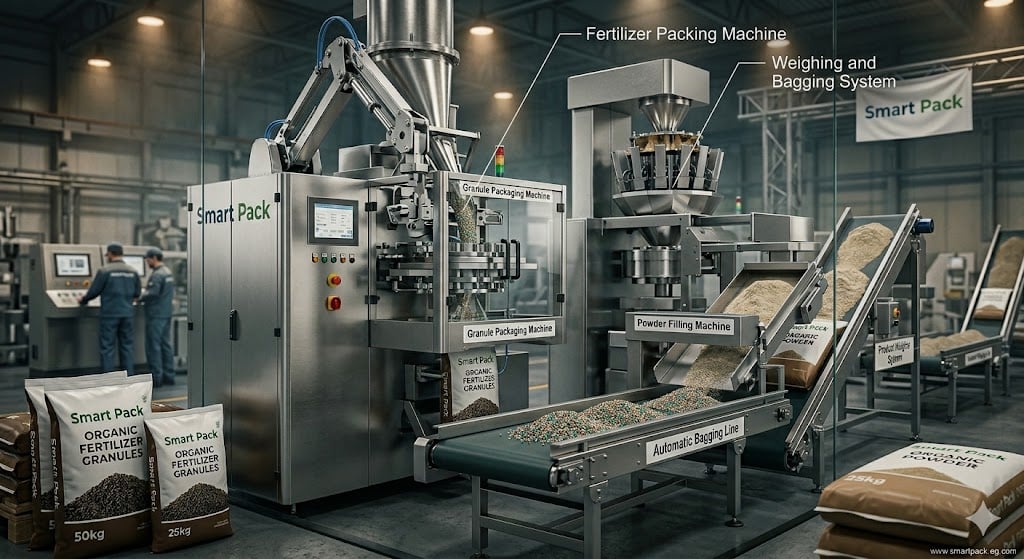
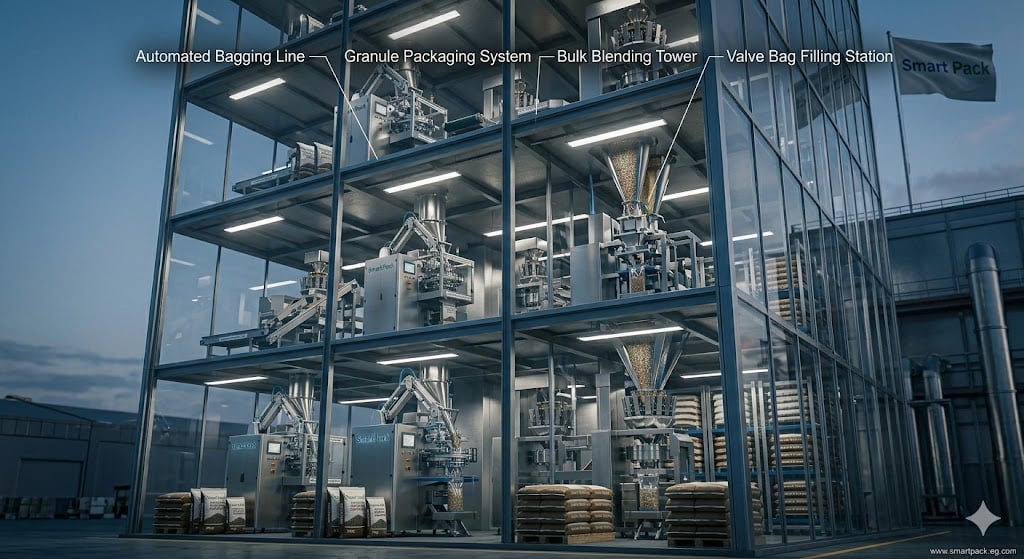
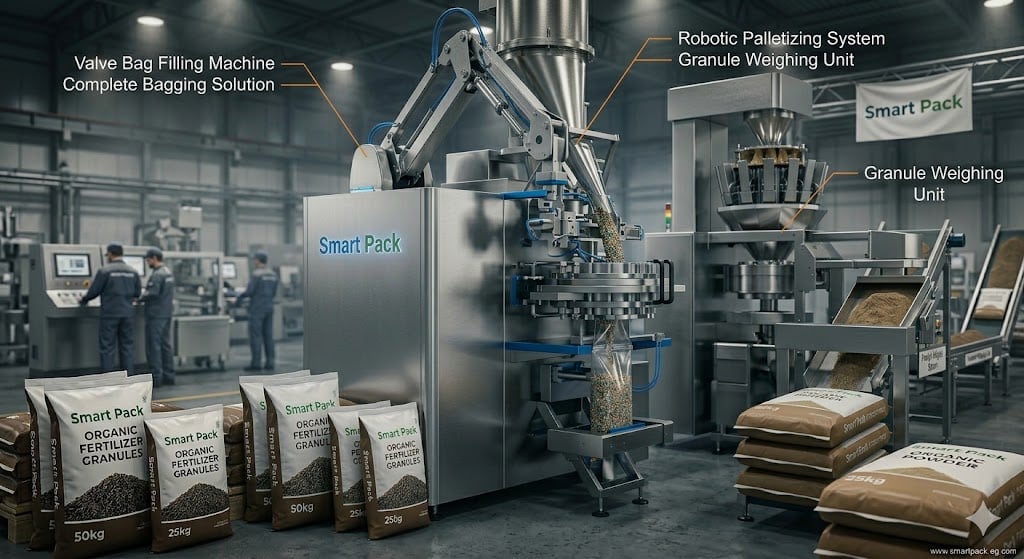
Organic Fertilizer Filling and Packaging Machines
After fertilizer production, drying, and quality improvement, the filling and packaging stage determines market acceptance and product classification. This stage includes:
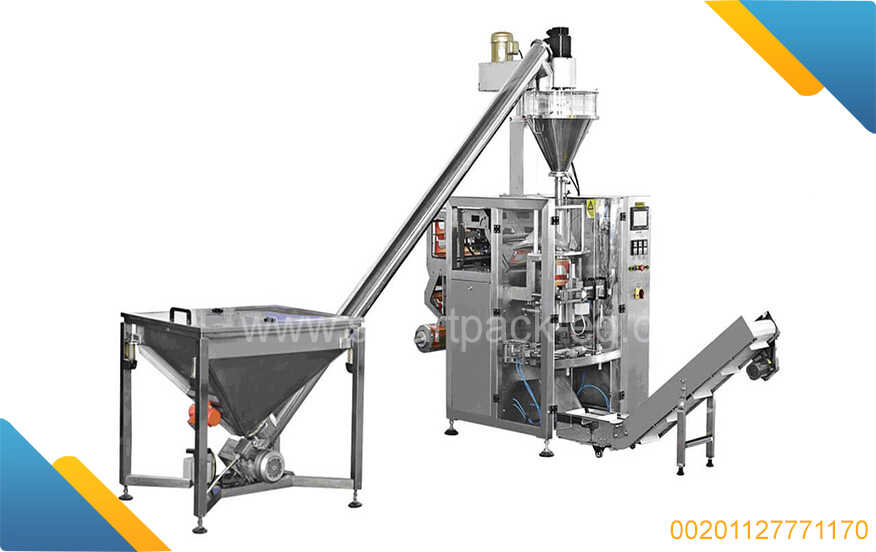
Granular Bag Filling Machines
Automatic machines designed to fill organic fertilizer into bags with precise, fixed weights.
Jumbo Bag Filling Machines
Suitable for wholesale and export markets, where large quantities are filled into big bags or sacks.
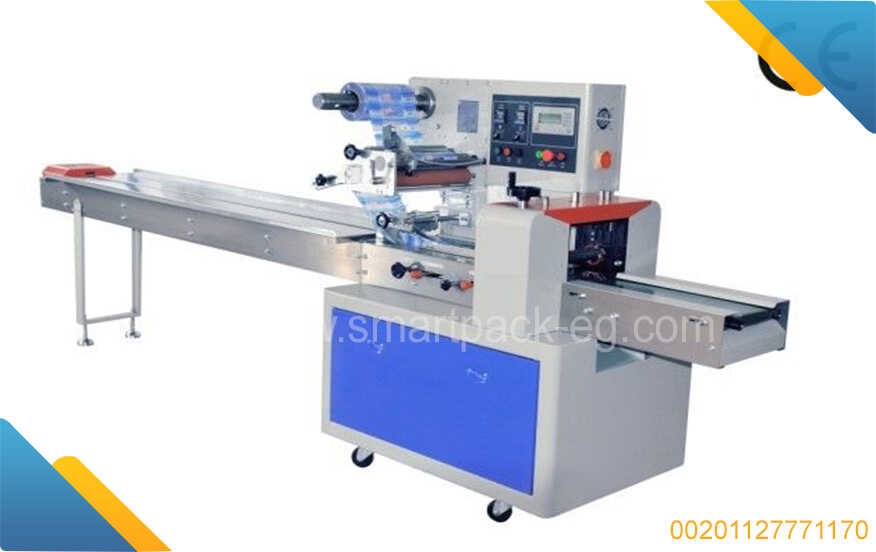
Shrink Wrapping Machines
Used to group fertilizer bags and wrap them with heat-shrink film for protection during transportation.
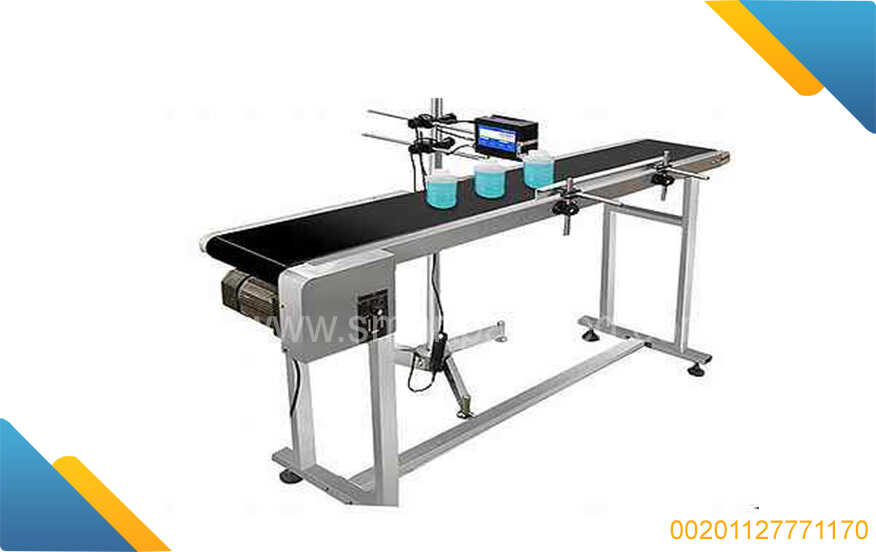
Date Coding and Printing Machines
For printing production dates, expiration dates, and traceability information on packages.
Filling and Packaging Machines Overview
| Machine Type | Application | Benefit for the Factory | Suitable For |
|---|---|---|---|
| Small Bag Filling Machine | Filling fixed fertilizer weights | Accurate weighing and reduced waste | Retail sales |
| Big Bag Filling Machine | Filling large sacks | Faster bulk production | Commercial markets |
| Shrink Wrapping Machine | Grouping fertilizer bags | Product protection during transport | Export |
| Date Coding Machine | Printing product information | Compliance with standards | Global markets |
How to Achieve Maximum Profitability from an Organic Fertilizer Project
-
Conduct a detailed market study before starting to determine demand size and target pricing.
-
Choose a production location that allows easy access to raw materials and transportation.
-
Rely on machines from a specialized supplier to ensure high performance and operational integration.
-
High-quality packaging and accurate labeling significantly increase export opportunities.
-
Build an efficient distribution network covering local markets and agricultural distributors.
Tips for Purchasing Production Lines from Smart Pack
-
Request a free technical evaluation of the production line to define the most suitable specifications.
-
Ensure long-term after-sales service and technical support are available.
-
Choose machines that allow future expansion as demand grows.
-
Verify that filling equipment complies with food and environmental safety standards for the target market.
-
Obtain on-site operator training to ensure safe operation and high efficiency.
Market and Export Opportunities
Organic fertilizer combines strong and growing local demand from farmers and organic agriculture with increasing global demand for environmentally friendly agricultural products.
This creates a real export opportunity, especially to markets with high environmental awareness.
Conclusion
Organic fertilizer manufacturing in Egypt, supported by an integrated production line and modern filling and packaging machines, is an excellent investment opportunity that delivers stable demand and higher profitability when professionally organized.
By selecting the right equipment, structuring production stages efficiently, and focusing on packaging quality and distribution, factories can transform this project into a successful local product and a strong export