 Admin
Admin
Liquid Soap Manufacturing: From Preparation to Final Packaging
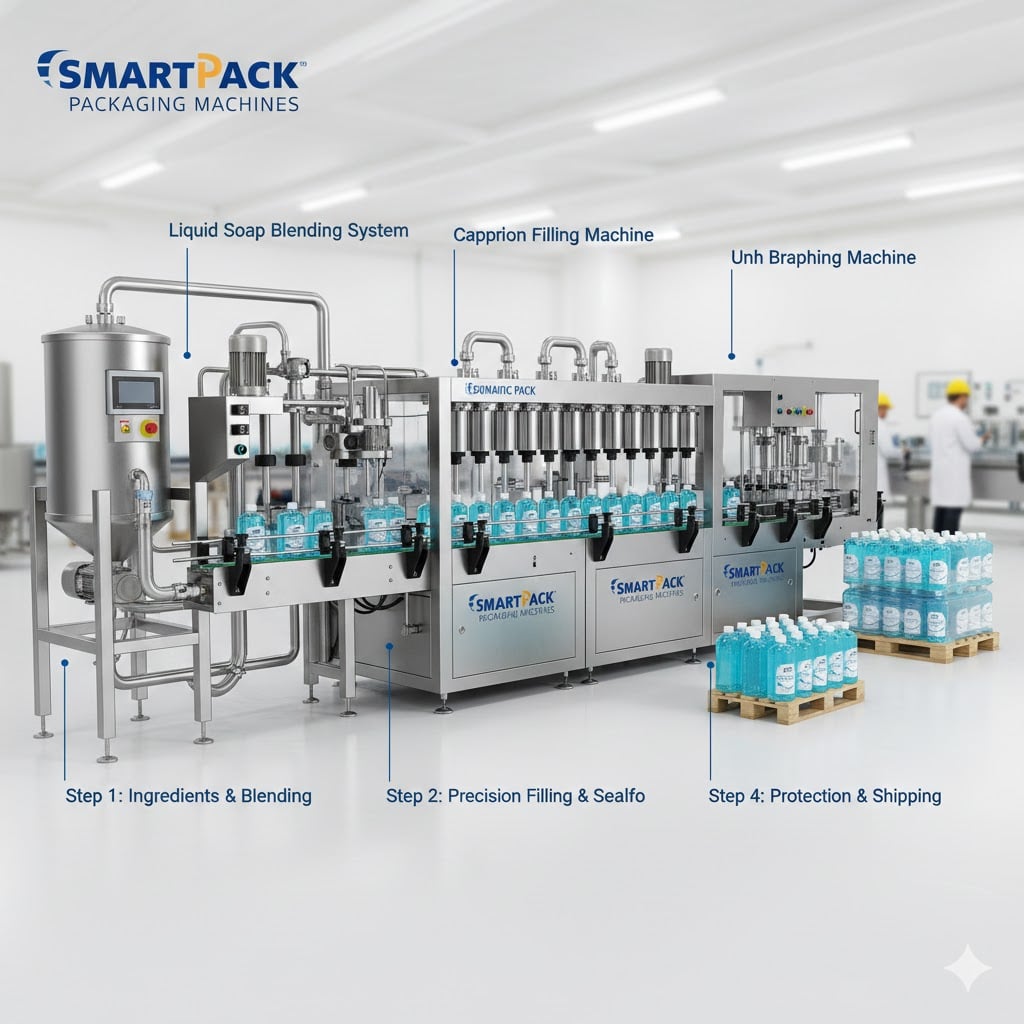
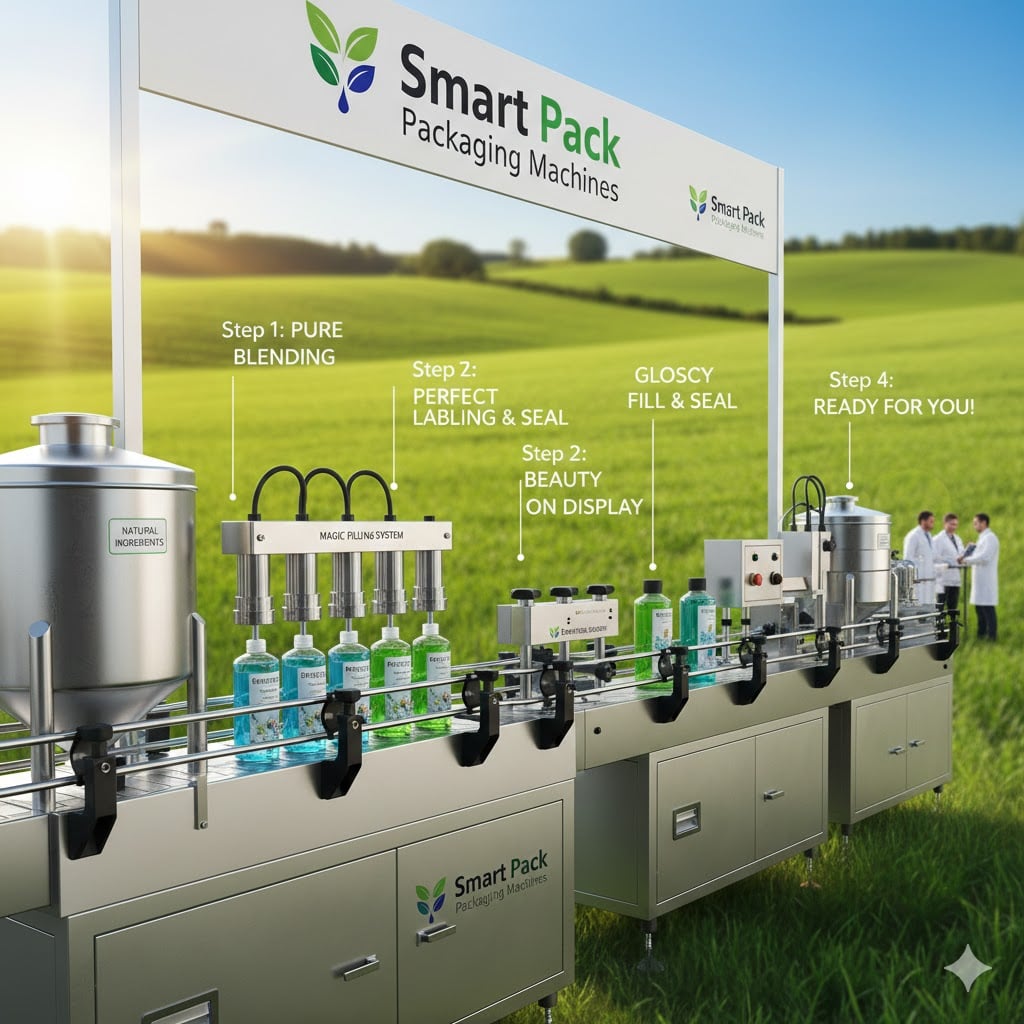
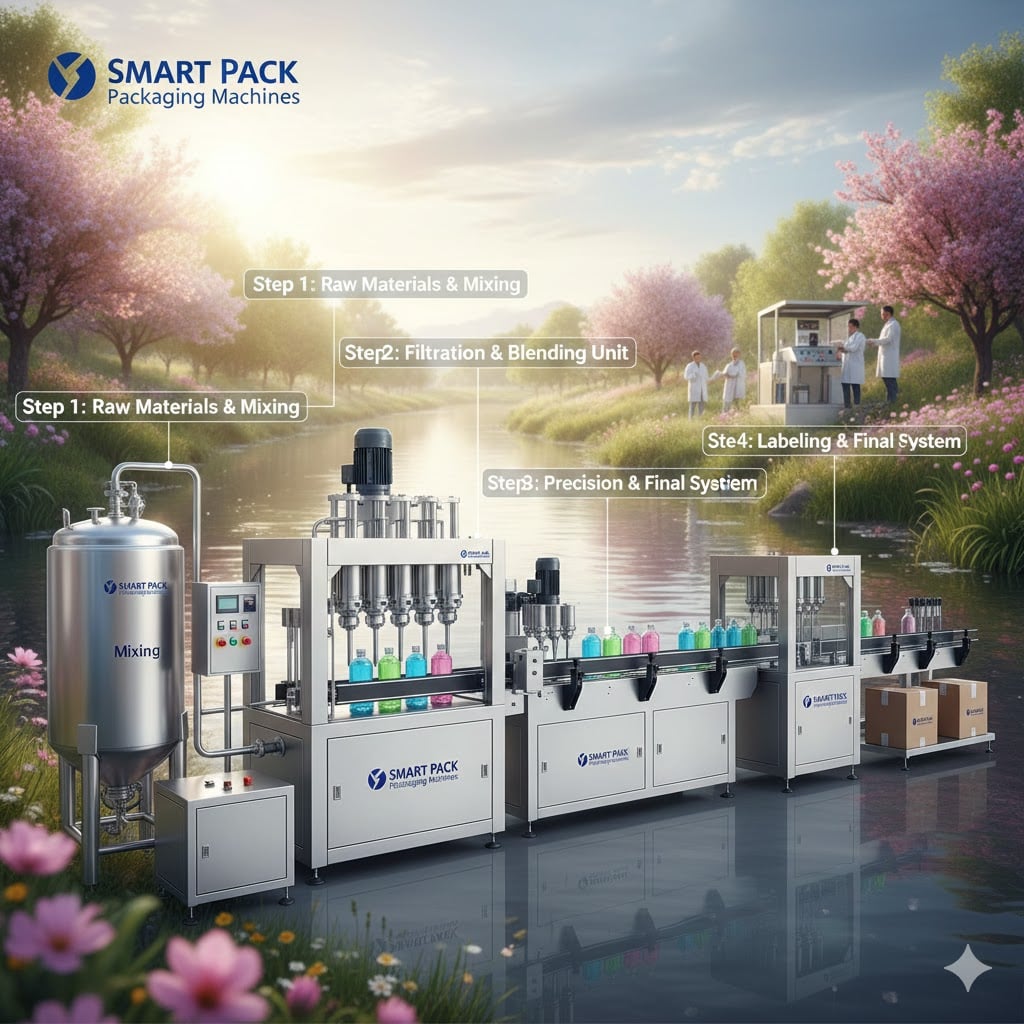
Liquid soap manufacturing requires a fully integrated production line that starts with preparation and ends with final packaging.
Investing in the right filling and packaging machines significantly improves product quality and market efficiency.
Proper technical planning ensures sustainable operation and minimizes waste at every production stage.
The Importance of Machinery in Liquid Soap Production
Filling and packaging machines play a vital role in the liquid soap industry by ensuring accurate, efficient, and consistent operation.
Selecting the right machinery helps achieve stable filling volumes and optimized production time.
Integrated filling lines enable manufacturers to compete in high-quality and demanding markets.
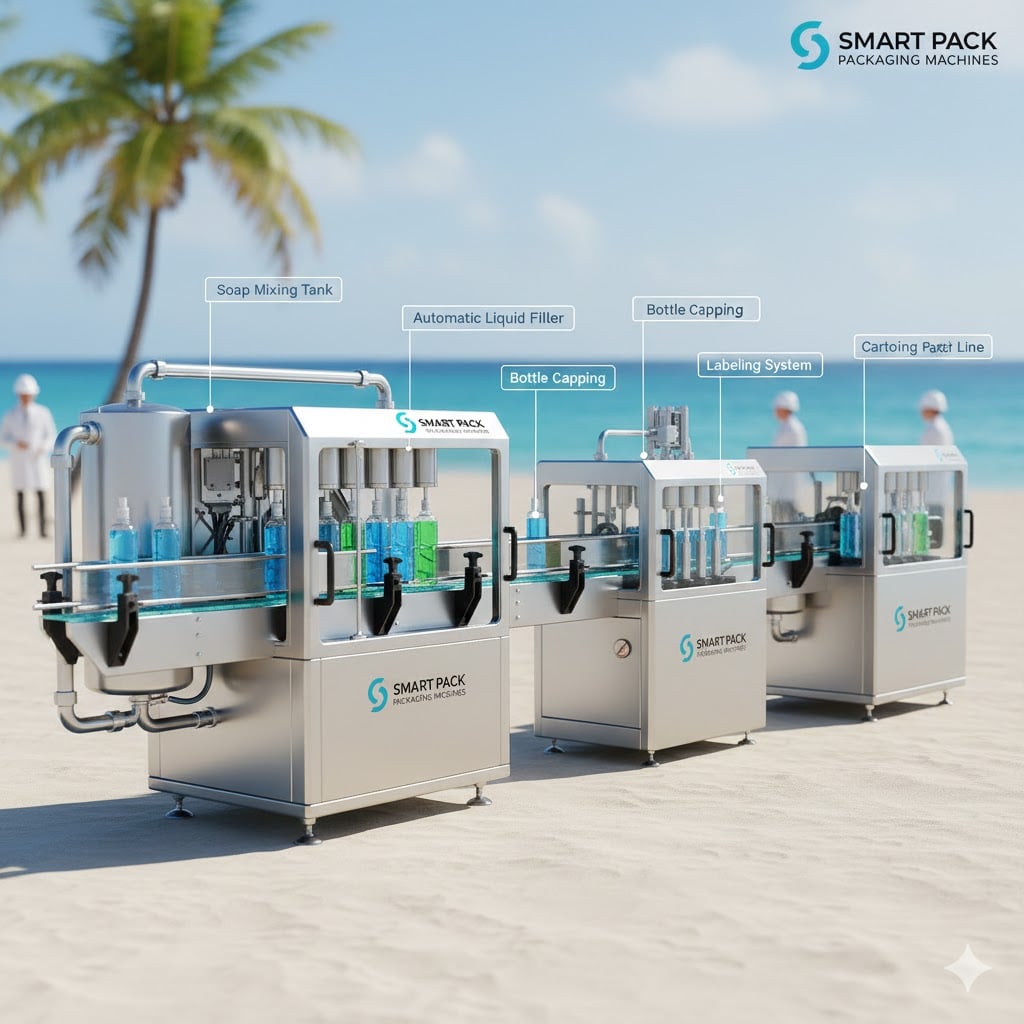
In this guide, we explain machine types, how they are built, and how they work together within a production line to deliver optimal performance.
Types of Machines Used in Liquid Soap Filling Lines
High-Precision Liquid Measuring and Filling Machines
These machines accurately measure and fill liquid soap into containers, reducing waste and increasing productivity.
Filling technologies vary between volumetric filling and pressure-based systems, depending on soap viscosity.
Key Functions of Filling Machines:
-
Precise liquid measurement before filling
-
Leak-free and splash-free container filling
-
Compatibility with multiple container sizes
Cap Closing Machines After Filling
After filling, containers move to the capping stage using specialized machines.
These machines ensure tight and secure closure to prevent leakage or air entry.
Common Capping Mechanisms:
-
Automatic screw capping
-
Press-on caps based on container material
-
Fully integrated systems synchronized with filling lines
Labeling Machines for Accurate Product Identification
Labeling machines apply product labels precisely after capping.
Labels display essential information such as product name, weight, and production date.
Advantages of Labeling Machines:
-
Accurate label positioning
-
Support for various label types
-
High-speed operation in automatic lines
Additional Machines for Final Packaging
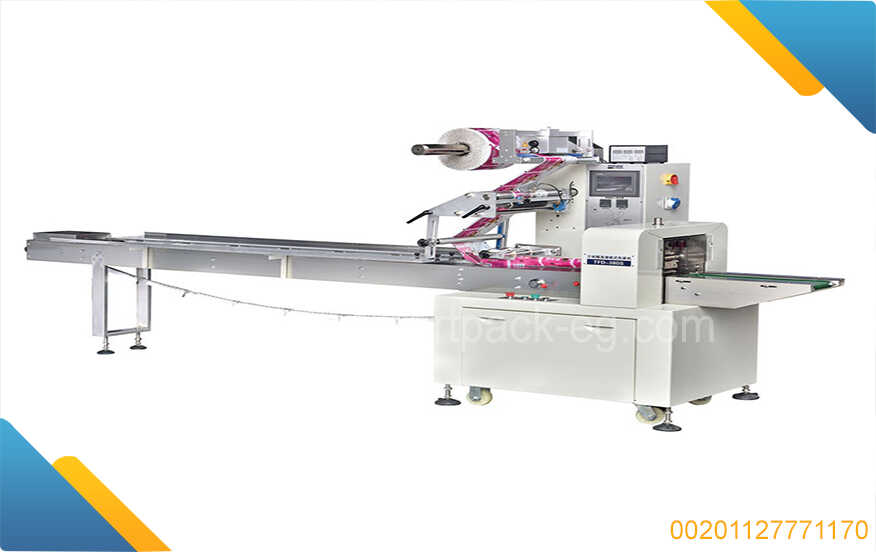
In some production lines, secondary packaging machines are added, such as shrink wrapping or carton packaging systems.
These machines provide extra protection and simplify storage and shipping operations.
Key Stages in Manufacturing Filling and Packaging Machines
Engineering Design of the Machine
Machine design begins by defining production requirements and liquid soap characteristics.
This stage includes detailed capacity calculations, operating systems, and required sensors.
Manufacturing and Assembly of Components
After design approval, core components such as frames, motors, and dosing systems are manufactured.
Sensors, pumps, and control systems are installed during this phase.
Assembly and Testing
All parts are assembled and tested to verify correct operation of filling, capping, and labeling functions.
Speed adjustments and safety systems are fine-tuned to meet performance requirements.
On-Site Installation and Commissioning
After testing, machines are installed at the factory and integrated into the production line.
Suppliers typically provide operator training and maintenance guidance.
How Liquid Soap Filling Machines Work – Step by Step
Preparing the Main Liquid Soap Tank
Before filling, liquid soap is stored in a main tank that supplies material continuously.
Pumps transfer the soap to filling nozzles at a controlled and consistent flow rate.
Setting Filling Volumes Using Measuring Systems
Volumetric or piston filling systems ensure each container receives the correct quantity.
The system is selected based on soap viscosity and required accuracy.
Automatic Filling and Conveyor Feeding
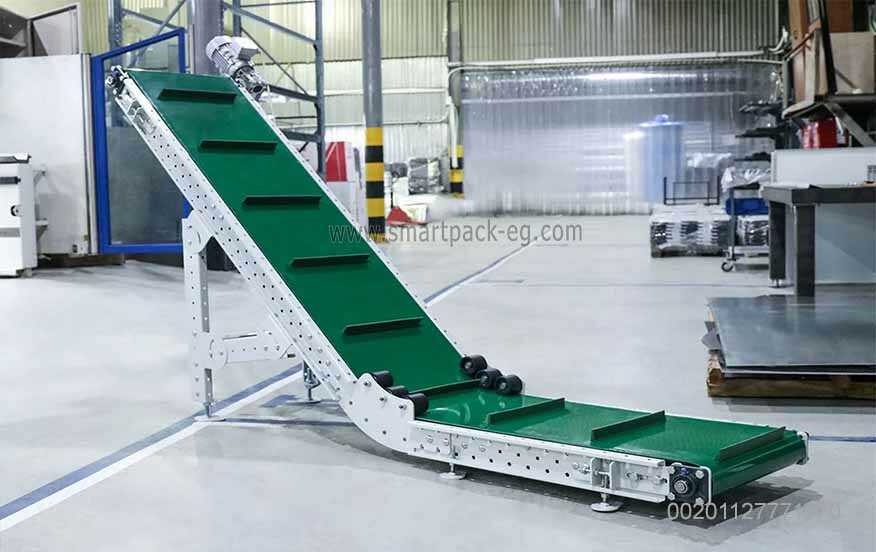
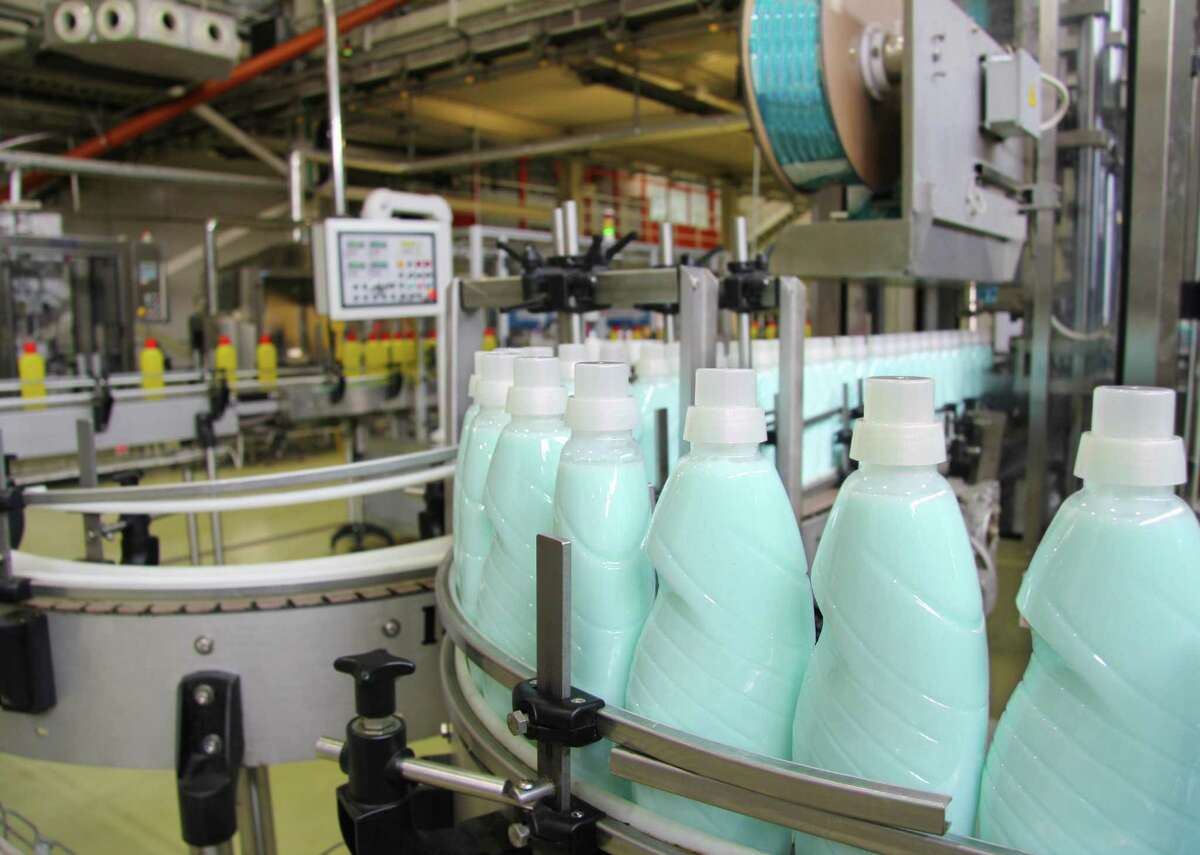
Containers move on a conveyor belt under filling nozzles and are filled sequentially.
Production speed can reach thousands of bottles per hour depending on machine capacity.
Capping and Sealing
After filling, containers are capped using screw or press systems to secure closures.
Proper sealing prevents leakage and protects product quality during transport.
Labeling and Printing
Labels containing product data are applied immediately after capping.
Labeling can be automatic or semi-automatic depending on production scale.
Comparison of Common Liquid Soap Filling Systems
| Filling System Type | Ideal Use | Key Advantages |
|---|---|---|
| Volumetric Filling | Low-viscosity liquids | Simple design, lower cost |
| Piston Filling | High-viscosity liquids | High accuracy and consistency |
| Pump Filling | Large industrial lines | High speed and productivity |
System selection depends on soap viscosity, market size, and required output speed.
Tips Before Purchasing Liquid Soap Filling and Packaging Machines
-
Define product specifications clearly before comparing offers
-
Choose a system compatible with soap viscosity and container types
-
Ensure technical support and maintenance services are available
-
Request a live machine trial before final decision
-
Compare multiple suppliers before making an investment
Why Choose Machines from Smart Pack for Liquid Soap Production
By working with Smart Pack for filling and packaging machines and production lines, you benefit from:
-
Comprehensive technical studies before purchase
-
Machine selection tailored to liquid soap characteristics
-
Complete installation and commissioning
-
Workforce training on operation and maintenance
-
Reliable after-sales technical support
Partnering with a specialized manufacturer reduces operational errors and significantly improves market productivity.
Frequently Asked Questions About Liquid Soap Filling and Packaging Machines
What types of machines are used in liquid soap filling lines?
Liquid filling machines, capping machines, labeling machines, and final packaging machines.
Can the machines operate fully automatically?
Yes, fully automated solutions are available with minimal manual intervention.
What is the difference between piston filling and volumetric filling?
Piston filling suits high-viscosity liquids, while volumetric filling is ideal for lighter liquids.
Do systems support printing product information on containers?
Yes, labeling and printing machines handle all required product data accurately.
How important is after-sales support?
Critical—it ensures continuous operation and minimizes unplanned downtime.
Can the production line be expanded later?
Yes, machines can be upgraded or additional units integrated as market demand grows.
Conclusion
Liquid soap filling and packaging machines are an essential part of any modern production line, ensuring product quality and operational efficiency.
Proper planning and correct machine selection enhance competitiveness in the market.
Choosing a specialized supplier like Smart Pack provides a complete, efficient, and scalable production line capable of meeting market challenges.