 Admin
Admin Plastic Container and Bottle Manufacturing: A High-Profit Industrial Opportunity
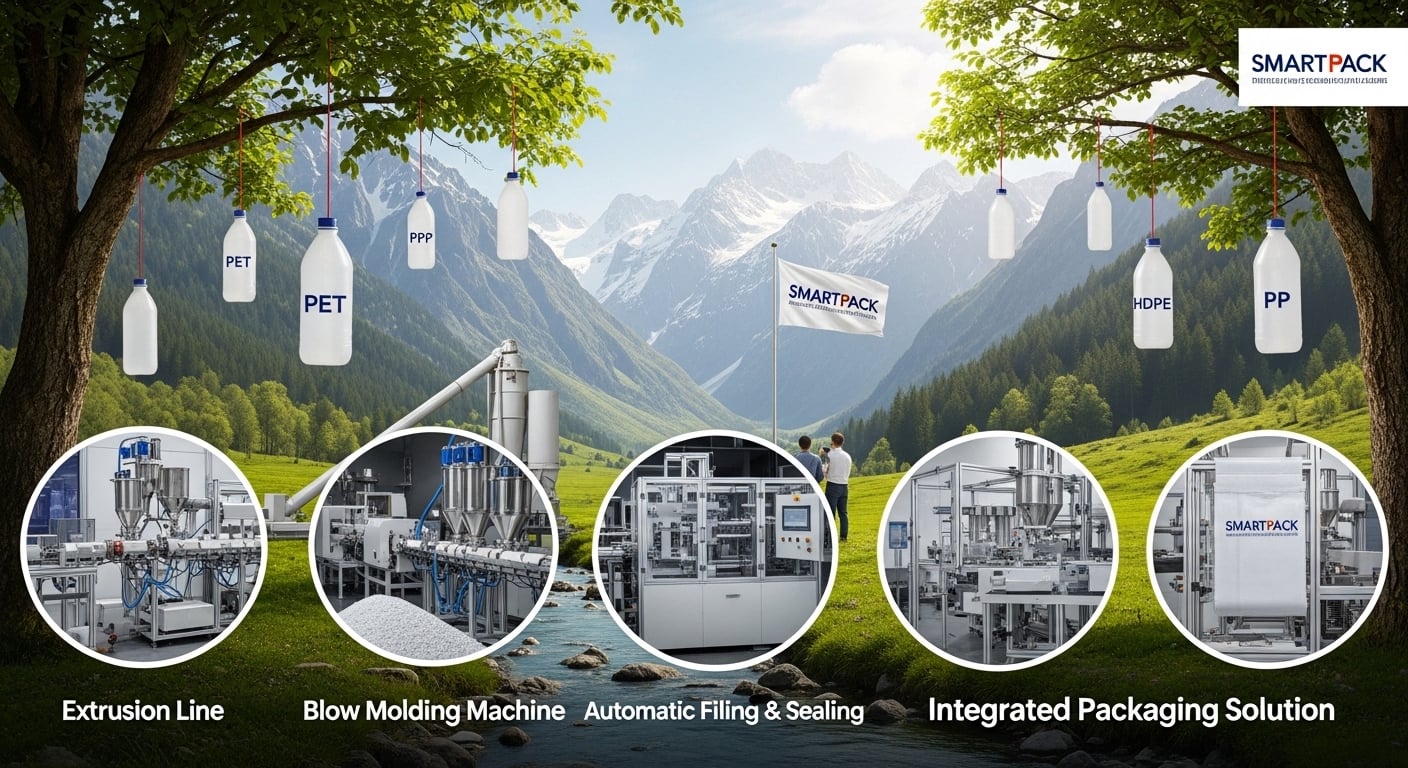
Plastic container and bottle manufacturing is no longer a traditional production activity. Today, it is a high-growth industrial sector capable of generating strong and sustainable profits when built on the right raw materials and an efficient production line.
Success in this industry starts with understanding the type of plastic material used, followed by selecting forming, filling, and packaging machines that deliver stable performance and consistent quality meeting both local market and export requirements.
When the right raw material is matched with the right machinery, the factory transforms into a competitive production project capable of scaling, expanding, and achieving long-term returns.
The Importance of Knowing Plastic Types in Container and Bottle Factories
Understanding the type of plastic used is not merely a technical detail; it is a strategic production decision that directly impacts manufacturing cost, container quality, shelf life, and market acceptance locally and internationally.
Each plastic type has unique properties in terms of rigidity, transparency, heat resistance, and chemical interaction. Choosing the wrong material can result in operational issues, quality failures, and significant marketing losses.
Most Common Plastic Types Used in Bottle and Container Manufacturing
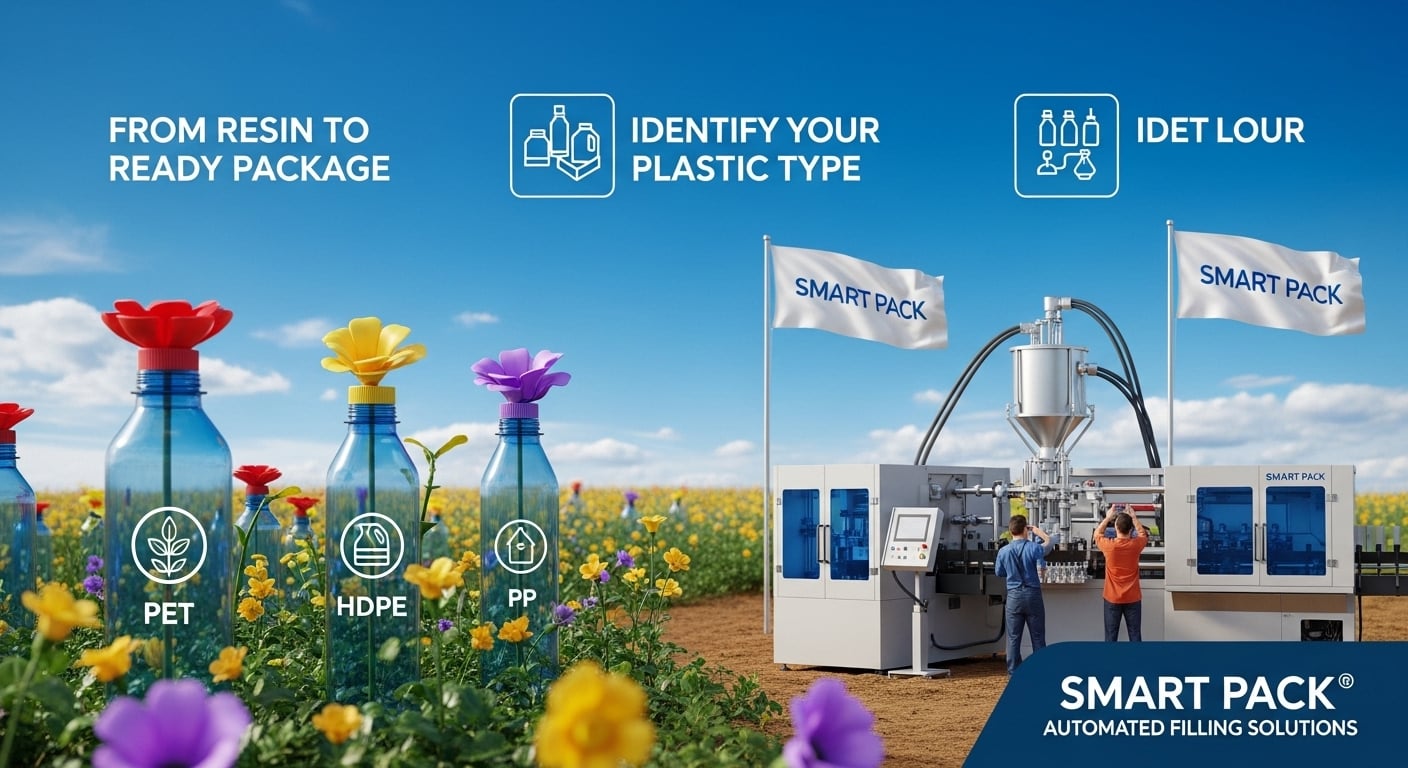
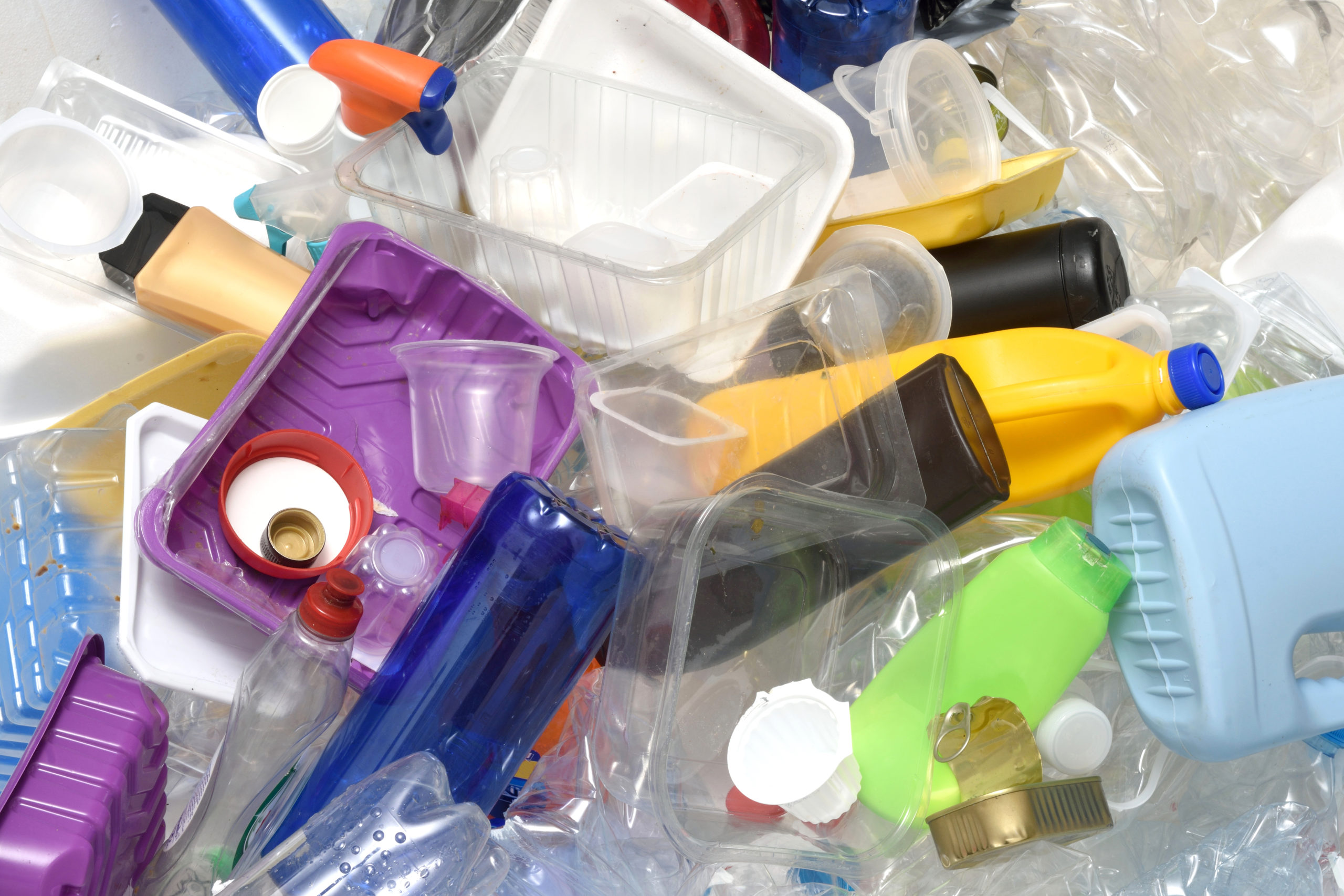
Polyethylene Terephthalate (PET)
The most widely used material for water, juice, and carbonated beverage bottles. It offers high transparency, lightweight structure, and excellent product preservation.
High-Density Polyethylene (HDPE)
Commonly used for detergent, oil, and chemical containers. It is known for its strength, impact resistance, and chemical durability.
Polypropylene (PP)
Used mainly for bottle caps and specialized containers. It provides flexibility and strong heat resistance.
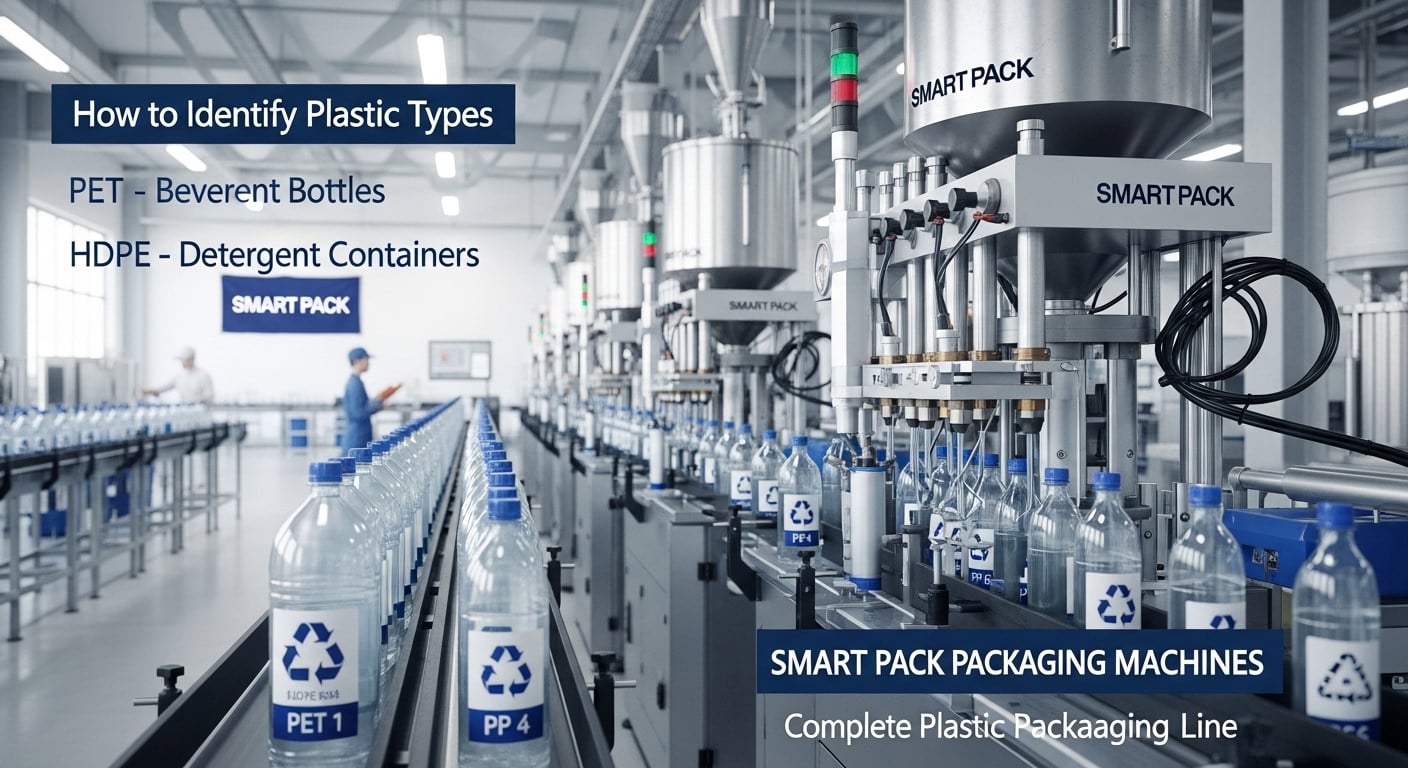
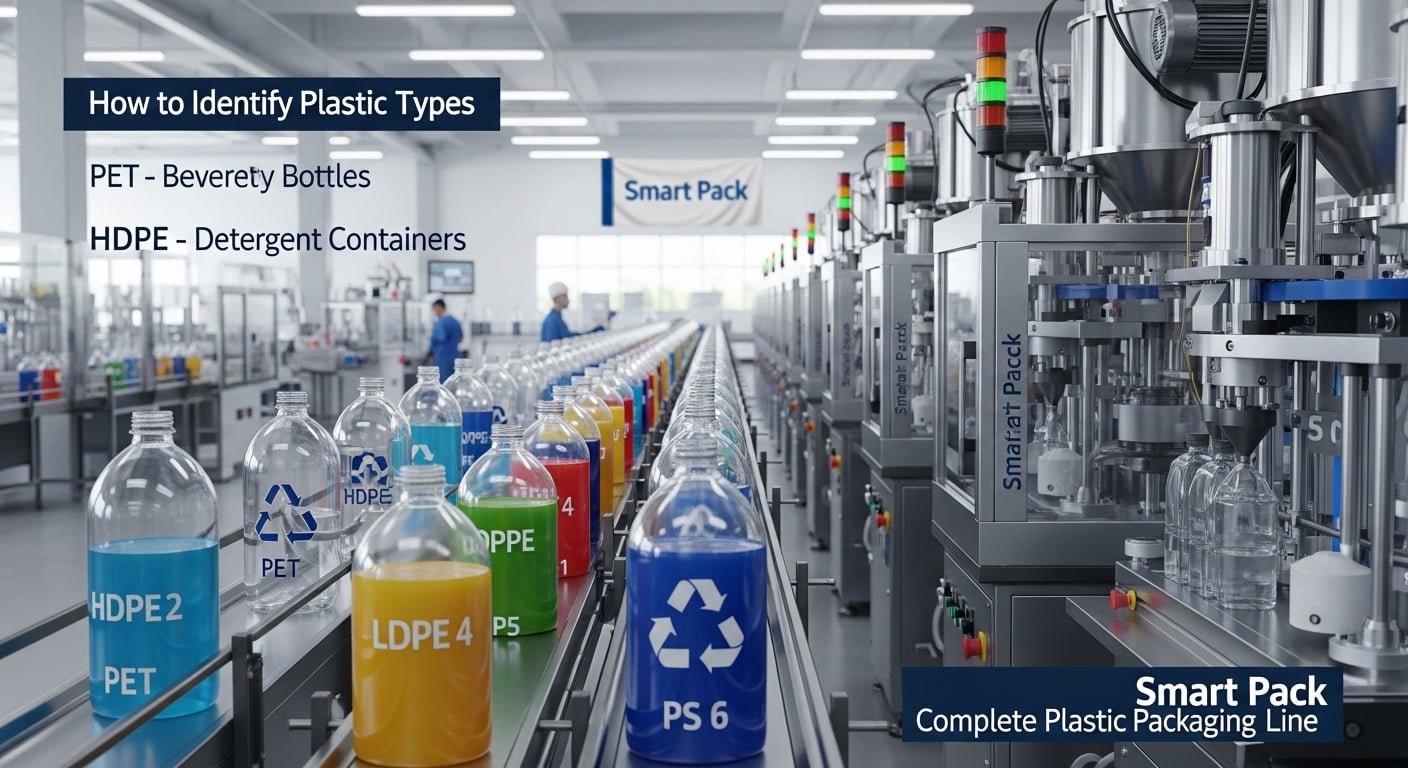
How to Identify the Plastic Type Used in Containers
Factories can identify plastic types through recycling codes located at the bottom of containers, physical characteristics such as rigidity and clarity, or certified supplier material specifications.
Early identification helps in selecting the correct forming machine, setting accurate temperature ranges, and optimizing production speed.
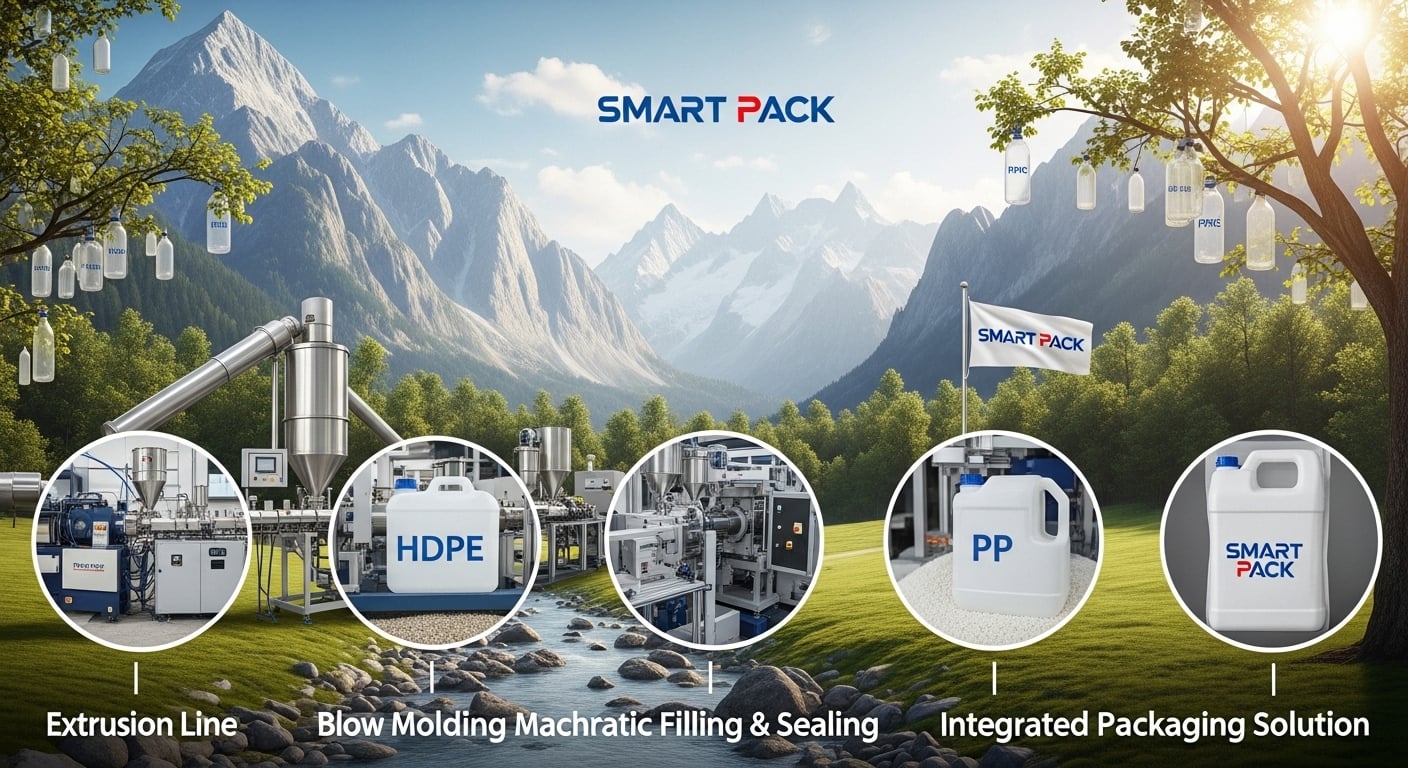
Stages of Plastic Bottle and Container Manufacturing Inside Factories
Raw Material Preparation
Plastic pellets are fed into the system after ensuring dryness and purity, as moisture negatively affects final bottle quality.
Melting and Thermal Processing
The material is heated under precise temperature control to ensure homogeneity before forming.
Blow Molding
The core stage where plastic is blown inside molds to achieve the final bottle shape.
Cooling and Inspection
The bottle shape is stabilized, then inspected to ensure it is free from cracks or defects before filling.
Plastic Bottle Forming Machines and Their Specifications
Blow Molding Machines
These are the backbone of bottle manufacturing and vary based on production capacity and material type.
Industrial Blow Molding Machine Specifications
-
Continuous operation suitable for large production lines
-
High precision in wall thickness distribution
-
Ability to produce multiple bottle sizes
-
Easy integration with filling lines
Overview of Forming Machines Used in Container Factories
| Machine Type | Industrial Application | Actual Production Capacity | Market Suitability |
|---|---|---|---|
| Automatic Blow Molding Machine | Commercial-scale water and beverage bottles | High and stable output during operating hours | Local and export markets |
| Semi-Automatic Blow Molding Machine | Startup factories or limited production lines | Medium output with partial manual control | Ideal for phased growth |
| Multi-Mold Blow Molding Machine | Large and specialized factories | High-density production with size flexibility | Export-oriented and competitive markets |
Filling Machines for Plastic Containers and Bottles
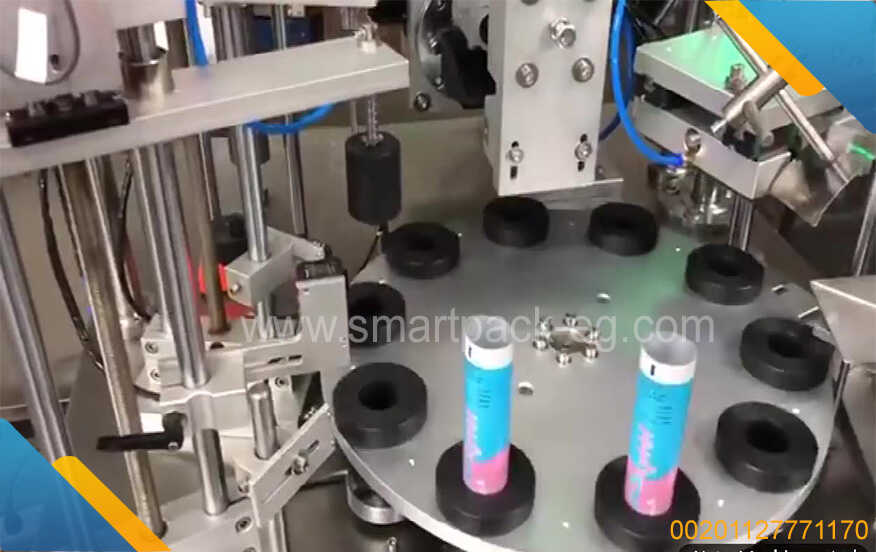
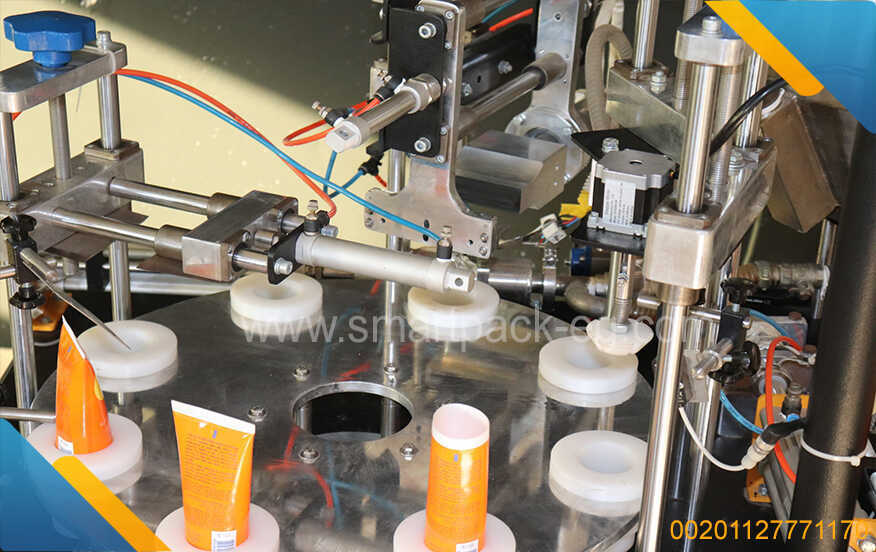
After bottle manufacturing, filling becomes the commercial core of the product. Final product quality depends on filling accuracy, volume consistency, and operational speed.
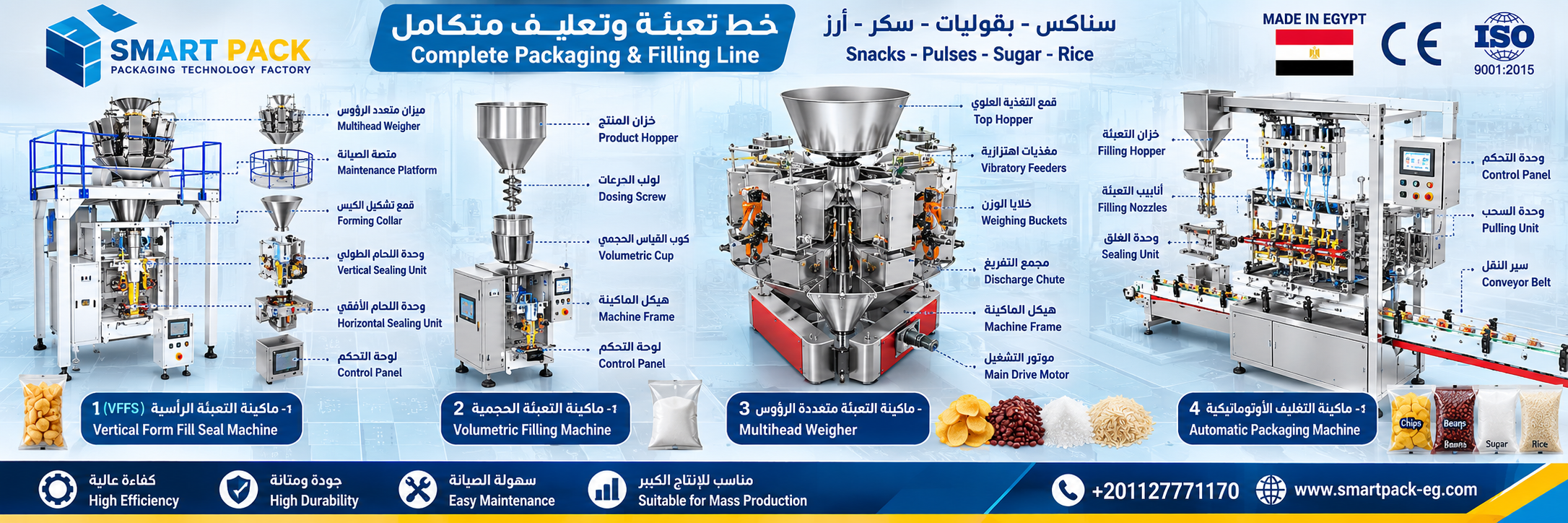
Types of Filling Machines
-
Automatic liquid filling machines
-
Volumetric and weight-based filling machines
-
High-speed filling systems for large production lines
Filling Machine Capabilities Overview
| Filling Machine Type | Product Application | Factory Operating Capacity | Market Value |
|---|---|---|---|
| Automatic Liquid Filling Machine | Water, juices, liquid products | High speed with consistent accuracy | Ready for local and export sales |
| Volumetric Filling Machine | Homogeneous products | Precise volume control | Reduced waste and higher profit |
| Multi-Head Filling Machine | Large-scale production lines | Continuous non-stop operation | Supports bulk orders |
Packaging Machines and Their Role in Market Readiness
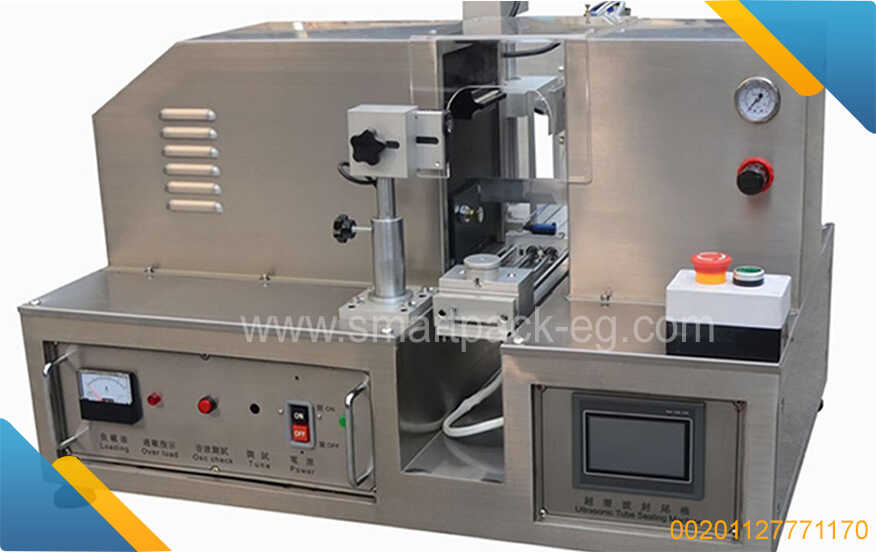
Proper packaging protects bottles during transportation, enhances brand presentation, and is a critical factor for acceptance in export markets.
Types of Packaging Machines
-
Shrink wrapping machines for bottle grouping
-
Carton packaging machines for shipping and export
Industrial Packaging Machine Overview
| Packaging Machine Type | Primary Industrial Purpose | Operational Benefit | Export Impact |
|---|---|---|---|
| Shrink Wrapping Machine | Grouping bottles into sales units | Protection and easy handling | Required for export markets |
| Carton Packaging Machine | Preparing bulk shipments | Reduced transport damage | Essential for exporting |
How to Choose a Profitable Bottle and Container Production Line
Selecting a production line should be based on market size analysis, export requirements, and factory expansion capacity—not machine price alone.
When the line is properly designed and integrated with suitable filling and packaging machines, operational costs decrease, production efficiency increases, and profit margins improve.
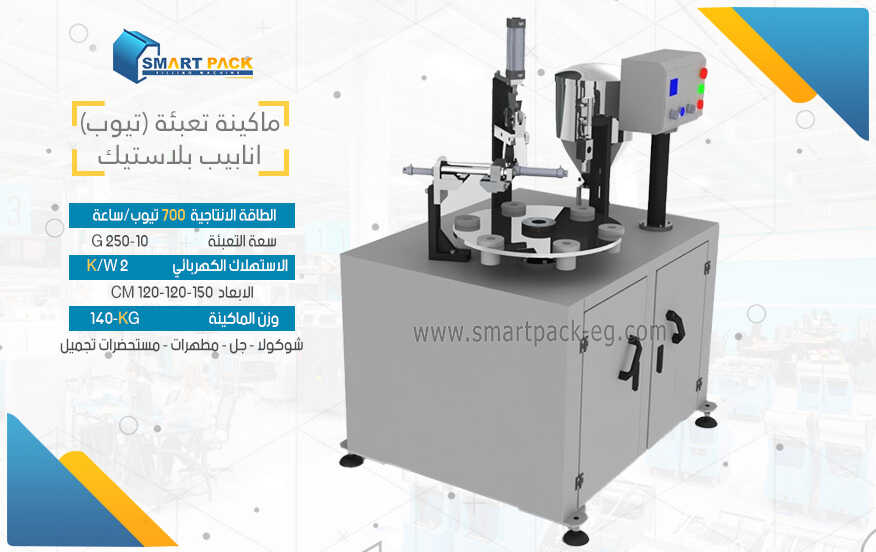
At this stage, factories often rely on specialized companies such as Smart Pack to provide turnkey solutions—from machine selection to full production startup.
Frequently Asked Questions
What is the best plastic type for water bottles?
PET is the best choice due to its safety, clarity, and strong market acceptance.
Can one production line handle multiple bottle sizes?
Yes, when machines are designed for easy mold changes.
Does packaging affect export opportunities?
Yes, directly. Export markets require proper protection and organized packaging.
What is the most important factor in factory profitability?
Correct alignment between raw material, machinery, and production capacity.
Why work with a specialized company?
To reduce operational errors and accelerate commercial production.
Successful plastic bottle and container factories do not rely on raw materials alone. They depend on an integrated production system that starts with material selection, moves through forming machinery, and ends with filling and packaging ready for market and export.
When the right decisions are made from the beginning, the factory becomes a profitable, scalable, and stable production investment.