
 Admin
Admin Success in the Plastics Industry
From Raw Material Knowledge to Integrated Production Lines
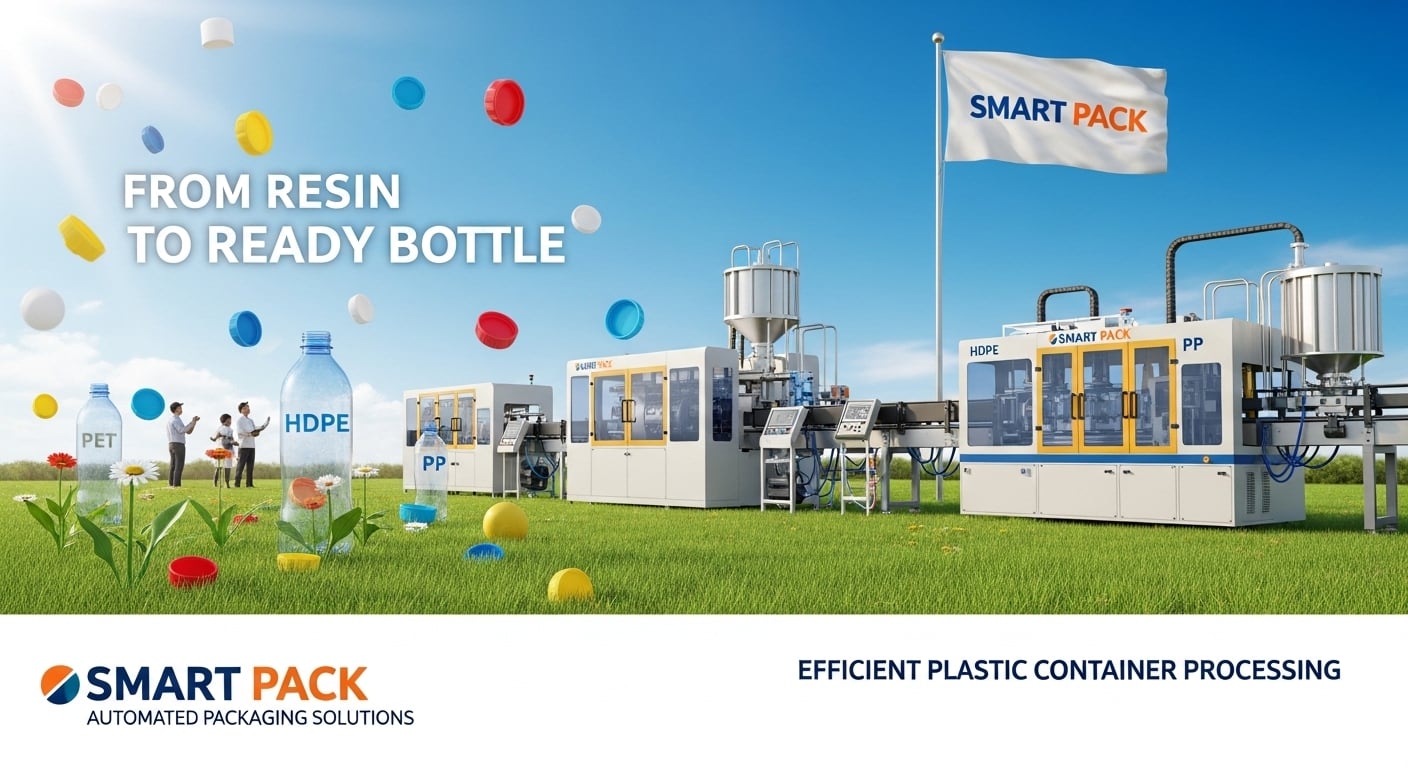
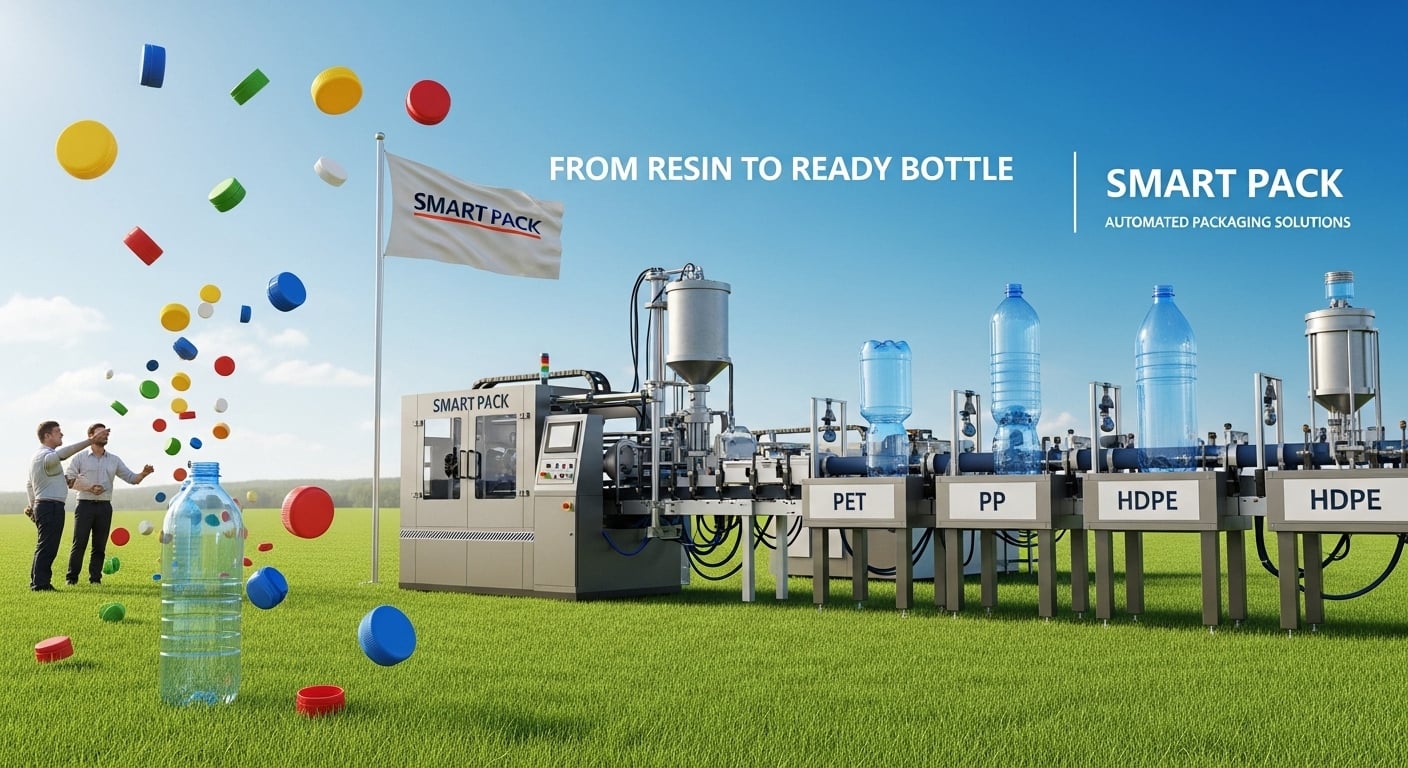
Success in the plastics industry does not depend only on knowing the type of raw material. It requires a deep understanding of manufacturing methods inside factories, along with selecting machines capable of operating at stable production capacity, delivering consistent quality, and maintaining controlled operating costs. This combination ensures a product that can compete effectively in both local and export markets.
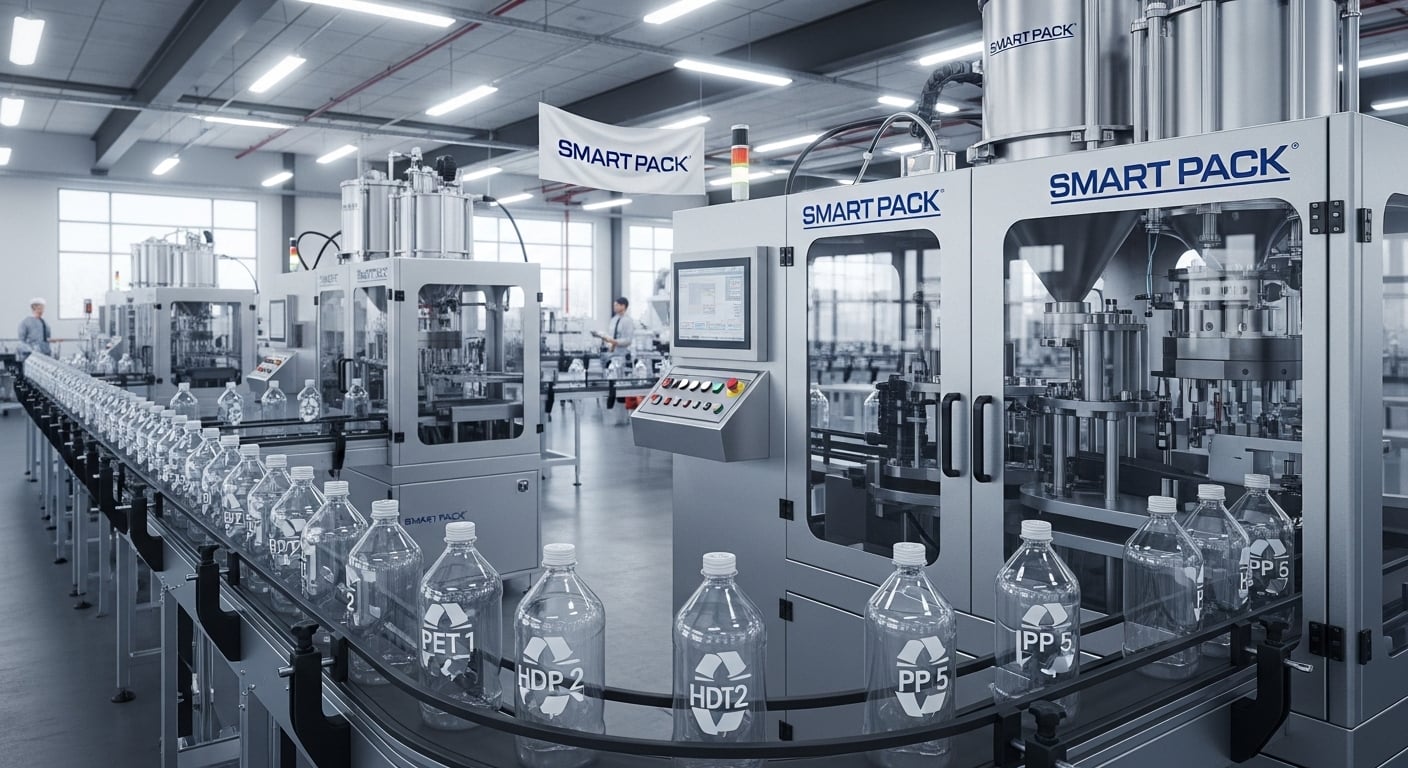
When the forming stage is properly integrated with filling and packaging machines that match the nature of the product, the factory evolves from a simple production unit into a fully integrated industrial system that serves the market efficiently and profitably.
The Importance of Understanding Plastic Types Before Choosing Machines
Different types of plastics vary in their physical and thermal properties, which directly affects the type of machines used for forming and packaging. Choosing machinery that does not match the raw material often leads to poor quality, higher waste, and increased operating costs.
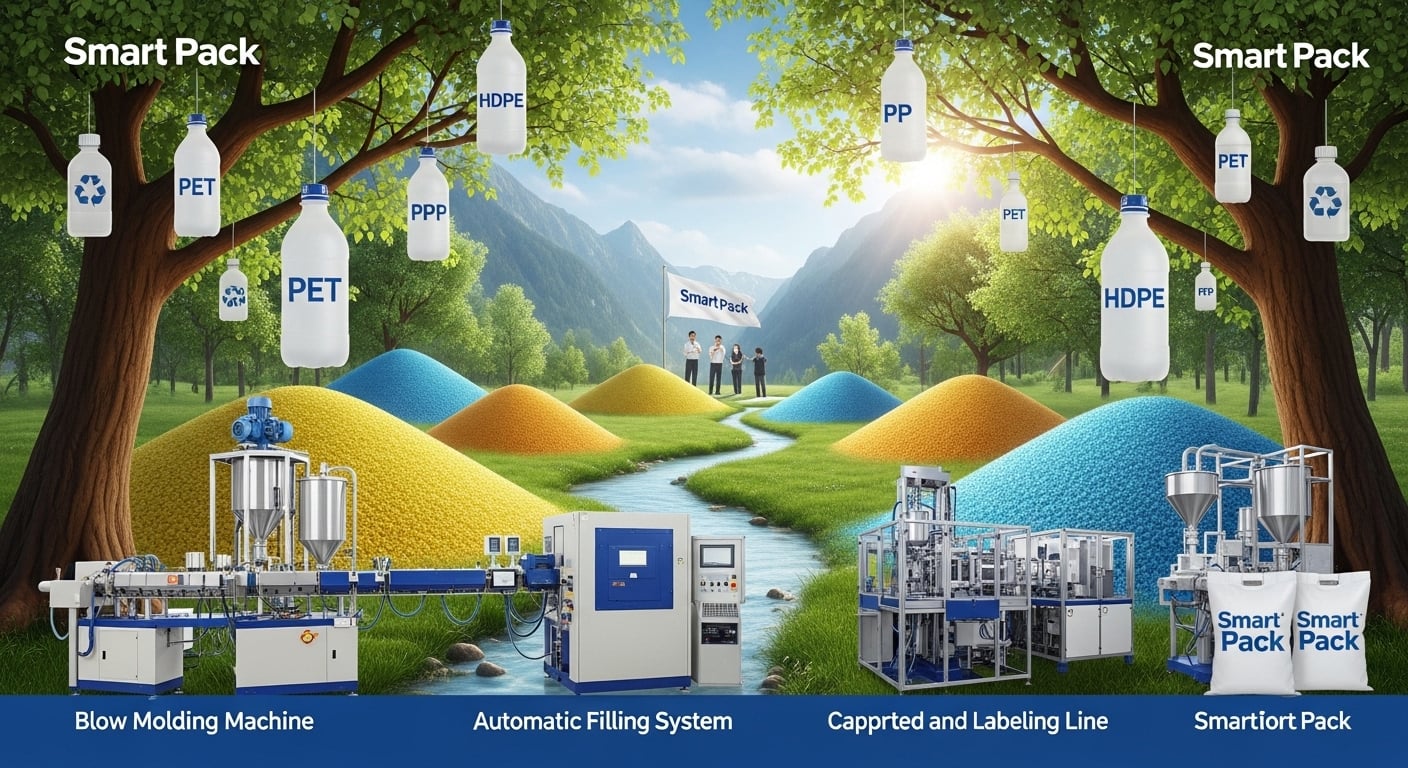
Common Plastic Types Used in Industrial Production
-
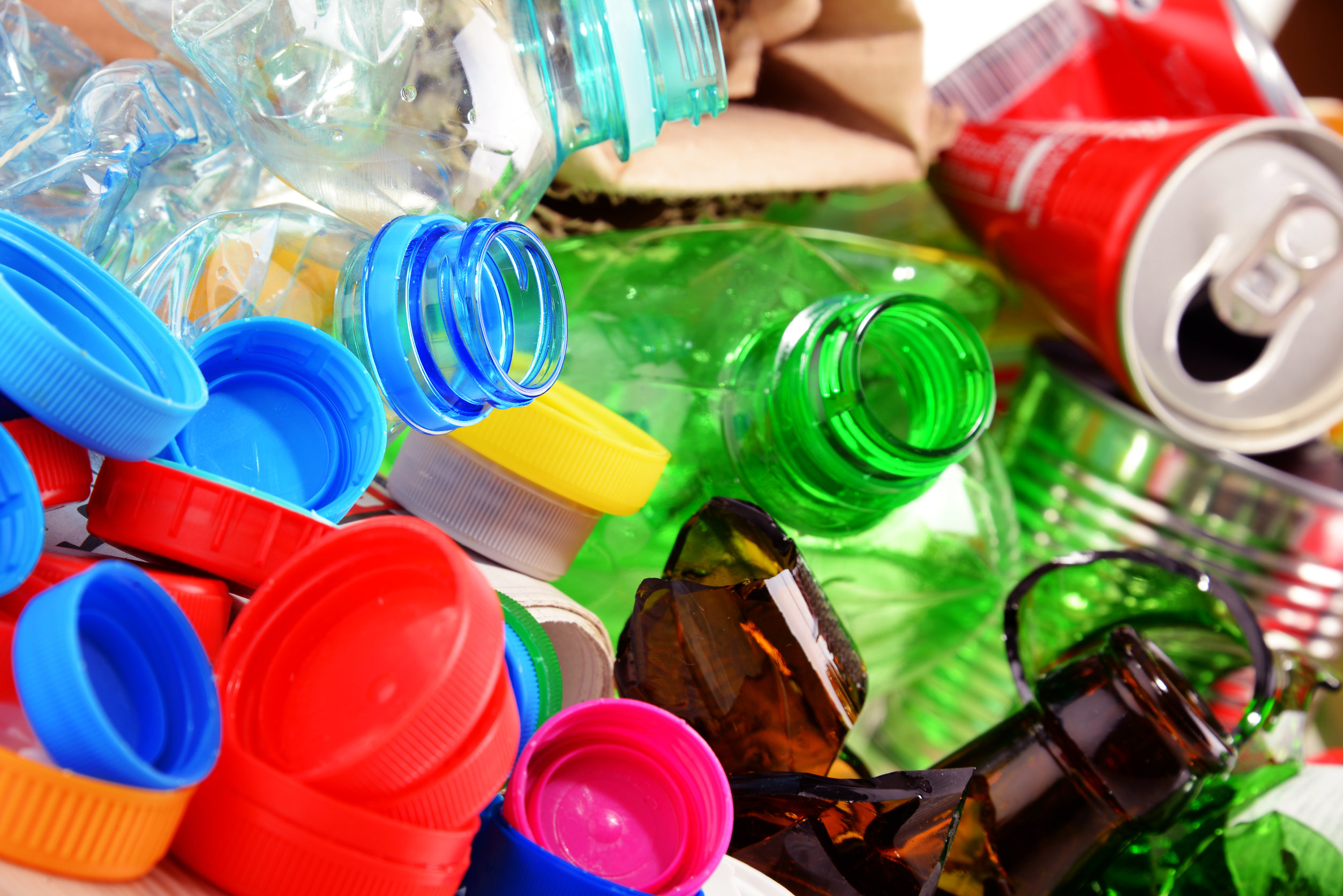
Low- and High-Density Polyethylene (LDPE / HDPE) used for bags and containers
-
Polypropylene (PP) used for rigid containers and caps
-
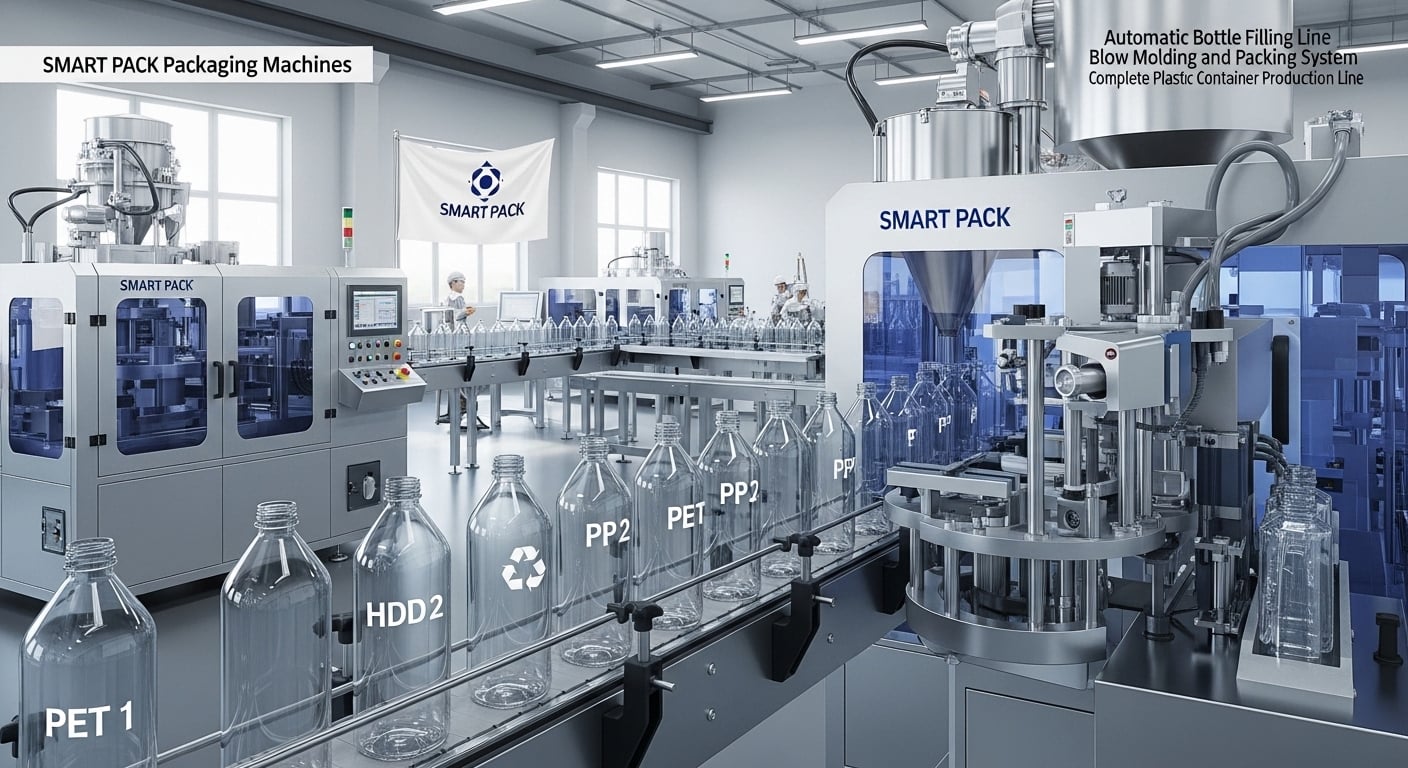
Polyethylene Terephthalate (PET) used for water and beverage bottles
-
Polystyrene (PS) used for lightweight products
Plastic Manufacturing Stages in Industrial Production Lines
Raw Material Feeding
The process starts by feeding plastic raw material into feeding units. At this stage, material quantity and moisture are controlled to ensure stable machine operation.
Melting and Processing
The raw material is heated inside melting units at temperatures specific to each plastic type, with precise control over pressure and rotation speed to achieve uniform material consistency before forming.
Industrial Forming
This is the core stage that defines the final product shape. The forming method is selected based on the product type and target market.
Cooling and Calibration
The final shape is stabilized and deformation is prevented. This stage is essential to ensure dimensional accuracy according to commercial specifications.
Preparation for Filling
After inspection, the product is prepared for transfer to the filling and packaging stage.
Plastic Forming Methods and Dedicated Machines
Injection Molding
Used to produce precise parts such as caps and plastic components.
Injection Machine Features
-
High and stable operating power
-
High mold accuracy
-
Fast production speed
-
Suitable for mass production
Blow Molding
Used to produce plastic bottles and containers.
Blow Molding Machine Features
-
Very high productivity
-
Low raw material consumption
-
Ideal for liquid containers
-
Easy integration with filling lines
Extrusion
Used to produce pipes, rolls, and continuous profiles.
Extrusion Machine Features
-
Continuous operation
-
Consistent thickness
-
Suitable for long-term production
Comparison Table of Forming Methods and Production Capacity
| Forming Method | Machine Type | Production Capacity | Market Type |
|---|---|---|---|
| Injection | Injection Machine | High | Precision parts |
| Blow Molding | Blow Machine | Very High | Containers |
| Extrusion | Extruder | Continuous | Pipes & profiles |
Filling Machines Suitable for Plastic Products
After forming, the filling stage organizes the product, protects it, and speeds up handling and distribution.
Types of Filling Machines in Plastic Factories
-
Counting filling machines for small parts
-
Group filling machines for containers
-
Weighing filling machines for bundled products
Key Features of Industrial Filling Machines
-
High accuracy in counting or weighing
-
Operating speed synchronized with the production line
-
Reduced human intervention
-
Easy maintenance
Filling Machine Types and Capacities
| Machine Type | Operating Method | Capacity | Application |
|---|---|---|---|
| Counting Filling | Automatic counting | Stable | Caps |
| Weighing Filling | Weight-based | Medium | Bundled products |
| Group Filling | Unit grouping | High | Containers |
Packaging Machines and Market Readiness
Packaging is the stage that makes the product ready for sale or distribution. It plays a key role in product protection and brand image enhancement.
Packaging Machines Used in Factories
-
Shrink wrapping machines for grouped products
-
Bag packaging machines for individual items
-
Carton packaging machines for shipping
Packaging Machine Overview
| Packaging Type | Machine Type | Purpose | Target Market |
|---|---|---|---|
| Shrink | Heat-based | Grouping | Distribution |
| Bags | Automatic | Direct sales | Local market |
| Cartons | Automatic | Shipping | Export |
How to Choose the Right Production Line for Your Factory and Market
Choosing a production line should not be based only on maximum capacity. It must consider market demand, product type, and future expansion without requiring a complete overhaul of the industrial structure.
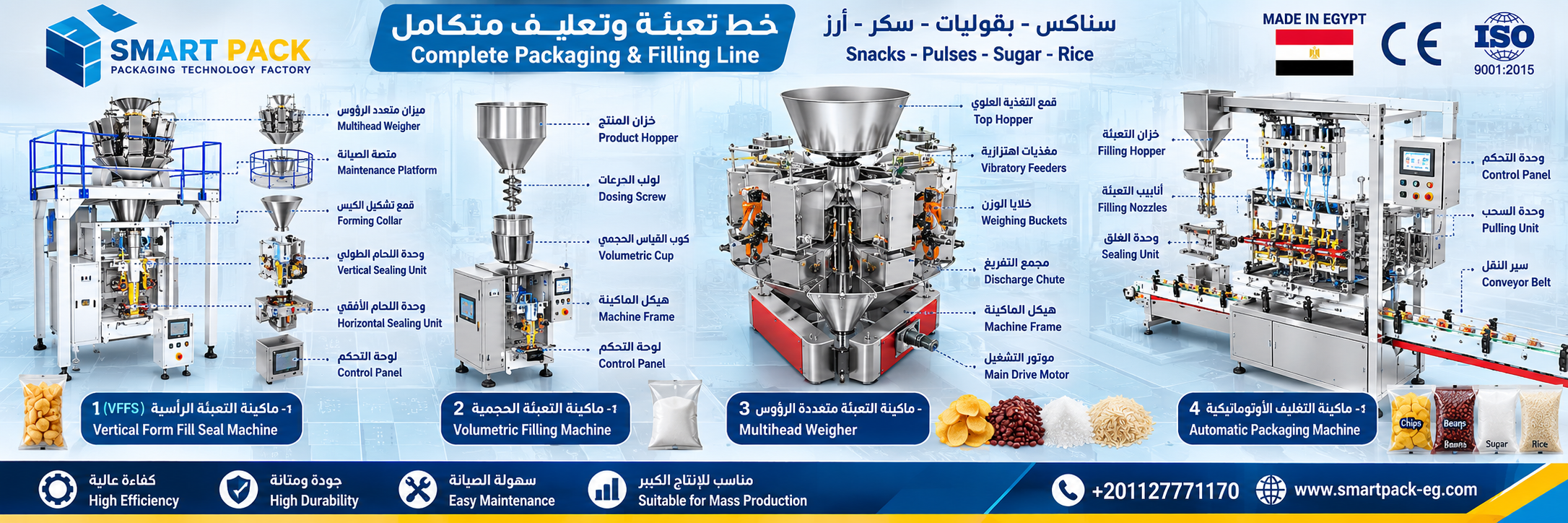
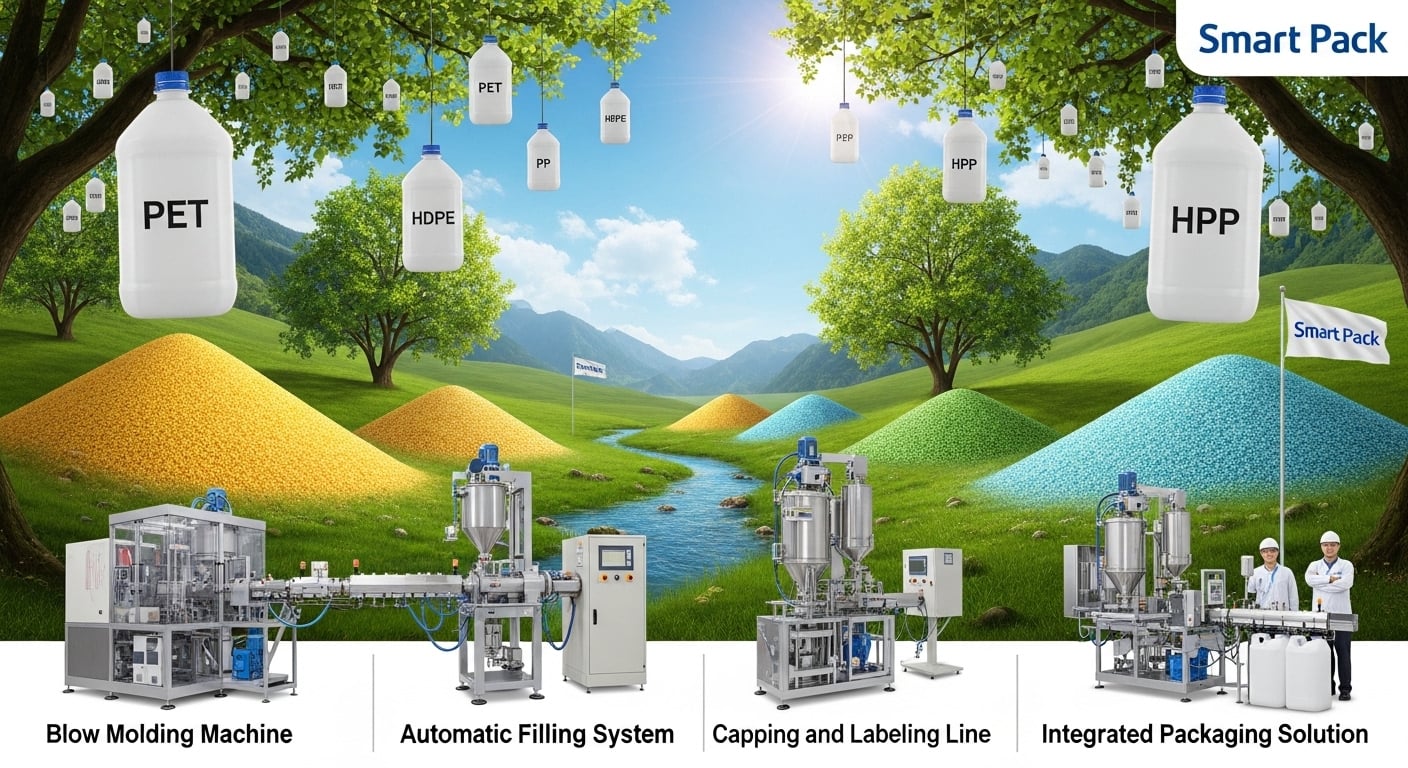
At this stage, working with a specialized production line designer becomes critical. Companies like Smart Pack provide integrated industrial solutions, including machine selection, system integration, commissioning, and support aligned with production goals and market needs.
Operational Tips Before Investing in a Plastic Factory
-
Define the product type and target market precisely
-
Select machines with realistic, not excessive, operating capacity
-
Ensure availability of maintenance and technical support
-
Integrate forming, filling, and packaging stages
-
Plan for expansion from the beginning
Frequently Asked Questions
What is the most important factor in the success of a plastic factory?
Choosing the right machines and integrating them into a complete production line that serves the market efficiently.
Can more than one product be produced on the same machine?
Yes, when flexible machines and interchangeable molds are used.
Is filling necessary for plastic products?
Yes, it helps organize production, protect products, and speed up distribution.
What is the difference between machines for local markets and export markets?
Mainly in operating speed and packaging accuracy.
Why is it better to work with a specialized company?
To reduce errors and ensure stable operation from the start.
Conclusion
When a plastic factory is built on sound industrial principles, with strong forming machines and compatible filling and packaging systems tailored to the product and market, the project becomes a competitive and scalable production unit.
Smart investment starts with the production line, not the product alone.