 Admin
Admin Corn Oil Is No Longer Just a Household Product – It Is a Strategic Industrial Opportunity
Corn oil is no longer just a vegetable oil for household use. It has become a strategic industrial product integrated into large supply chains serving food industries, restaurants, industrial food processing, and export markets.
Real success in a corn oil project does not rely solely on oil quality, but on production line efficiency, filling accuracy, and strong packaging that protects the product and builds market trust.
In this comprehensive guide, we take you step by step to understand corn oil, its manufacturing process, production line design, and how to choose the right filling and packaging machines to achieve maximum return on investment.
What Is Corn Oil and Why Is It in High Market Demand?
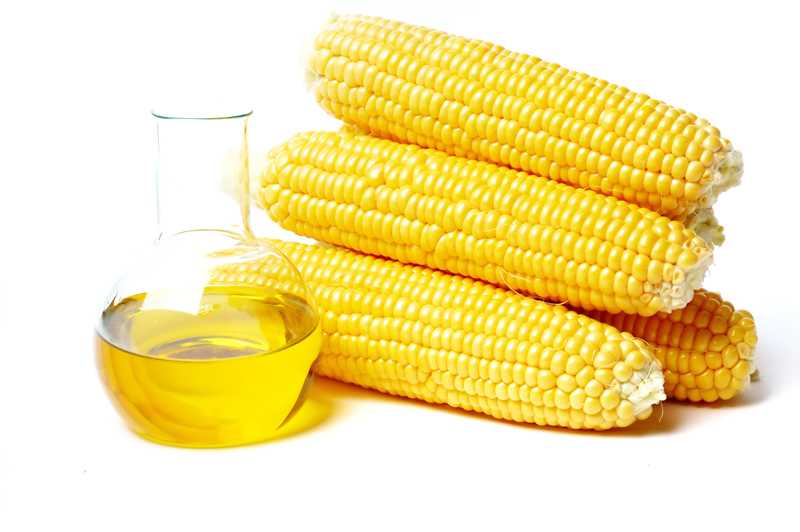
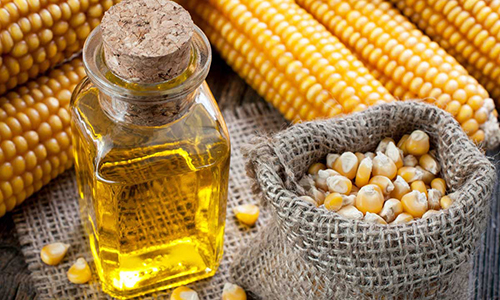
Corn oil is a vegetable oil extracted from the germ of corn kernels. It is characterized by its light color, mild flavor, and high smoke point, making it ideal for frying and daily use in homes and restaurants.
The strong demand for corn oil is driven by several factors:
-
Suitable for deep frying and repeated heating
-
Competitive pricing compared to other oils
-
Widely used in food industries
-
Strong demand in both local and export markets
Nutritional Value of Corn Oil and Its Impact on Marketing
Corn oil contains:
-
Beneficial unsaturated fats
-
Vitamin E
-
Fatty acids that help stabilize the oil during heating
These nutritional benefits are heavily leveraged in marketing strategies, especially when targeting:
-
Household consumers
-
Restaurants
-
Food processing factories
-
Export markets
Food and Industrial Uses of Corn Oil
Food Applications
-
Deep frying
-
Cooking
-
Mayonnaise production
-
Ready-to-eat food manufacturing
Industrial Applications
-
Food processing plants
-
Fast-food production lines
-
Snack and chips factories
Corn Oil Manufacturing Process Inside Factories
The corn oil production process goes through several essential stages within the production line:
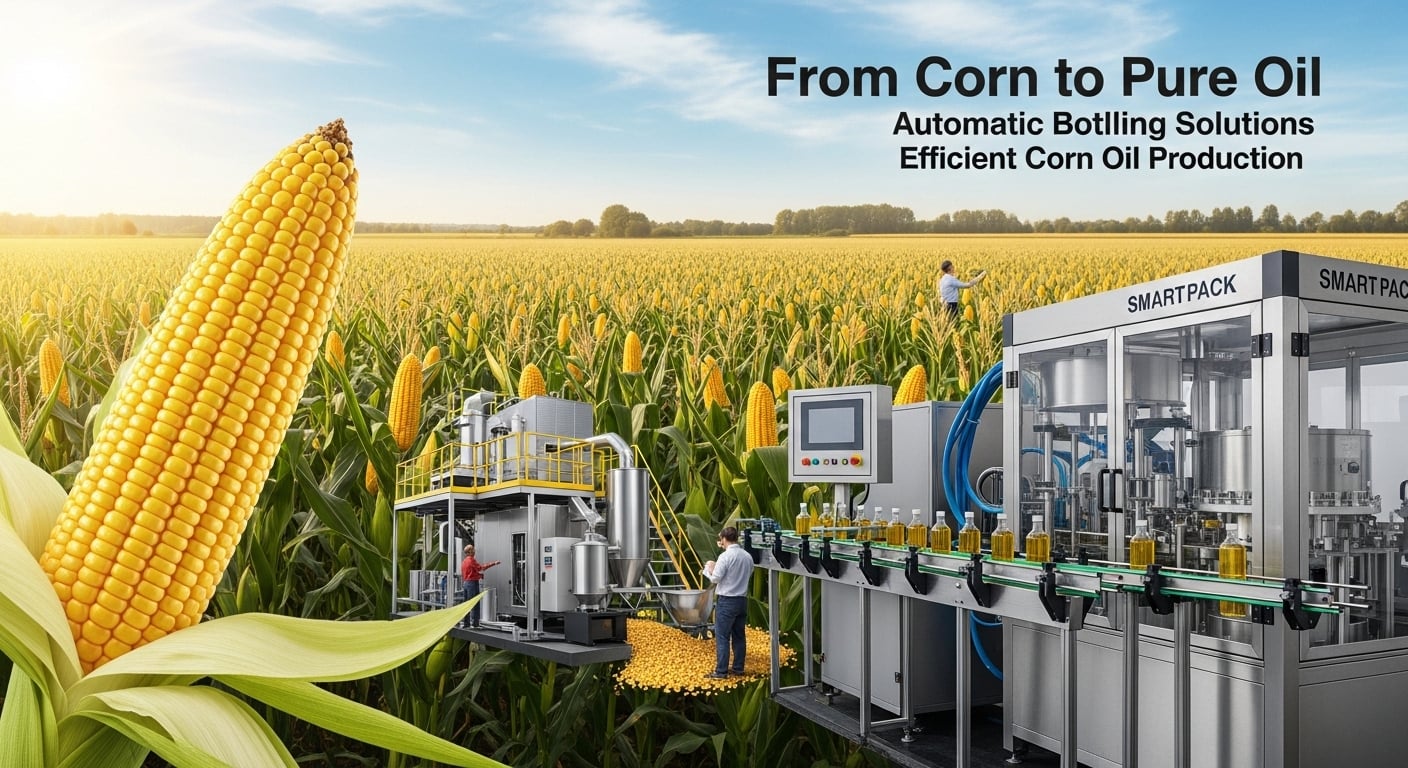
Corn Cleaning and Preparation
Foreign materials and impurities are removed to ensure high-quality oil extraction.
Corn Germ Separation
The germ, which contains the highest oil concentration, is mechanically separated.
Oil Extraction
Extraction is carried out either by:
-
Mechanical pressing
-
Solvent extraction in large-scale factories
Oil Refining
This stage removes impurities and improves color, taste, and odor.
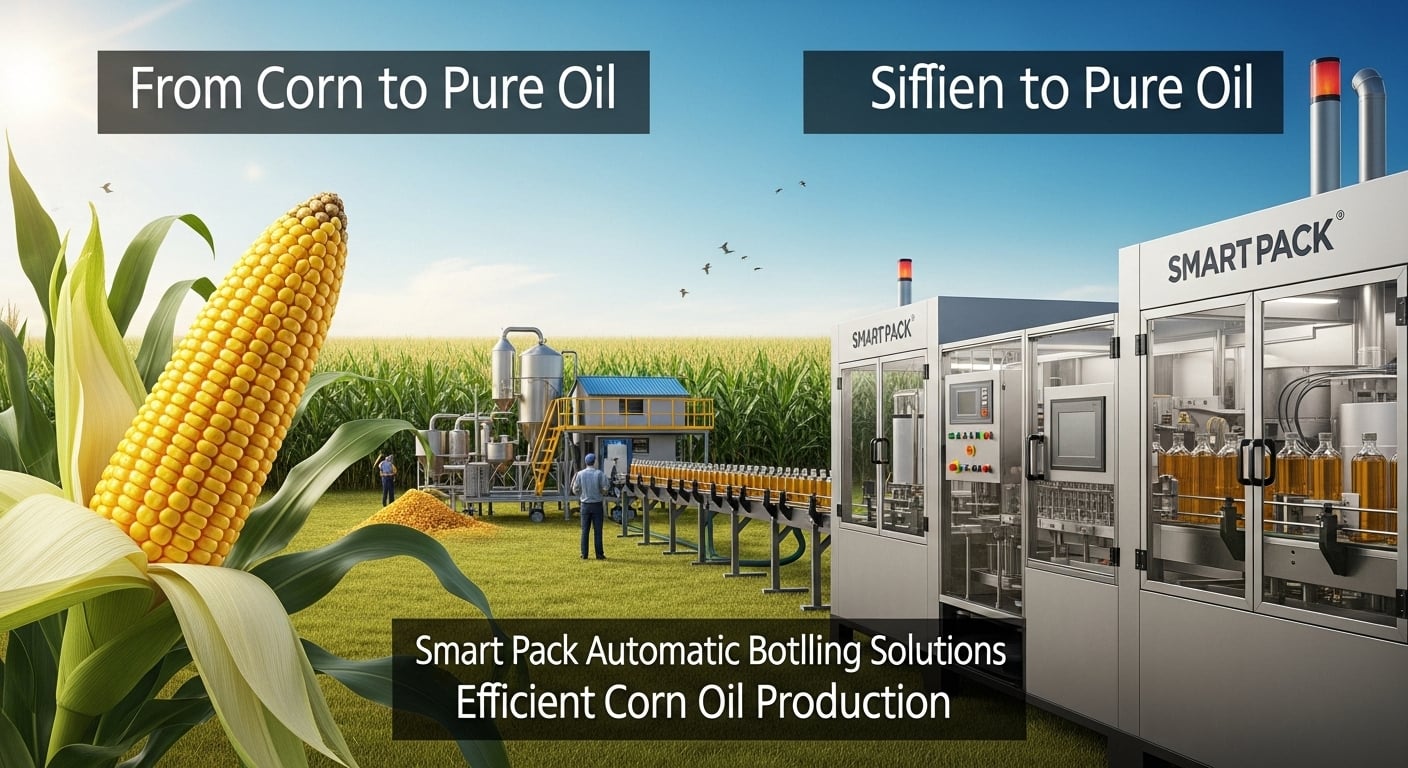
From Corn Kernel to Market-Ready Oil with Competitive Quality
Every stage of the production line directly affects the final oil quality. A well-integrated production line reduces waste, improves efficiency, and ensures consistent output.
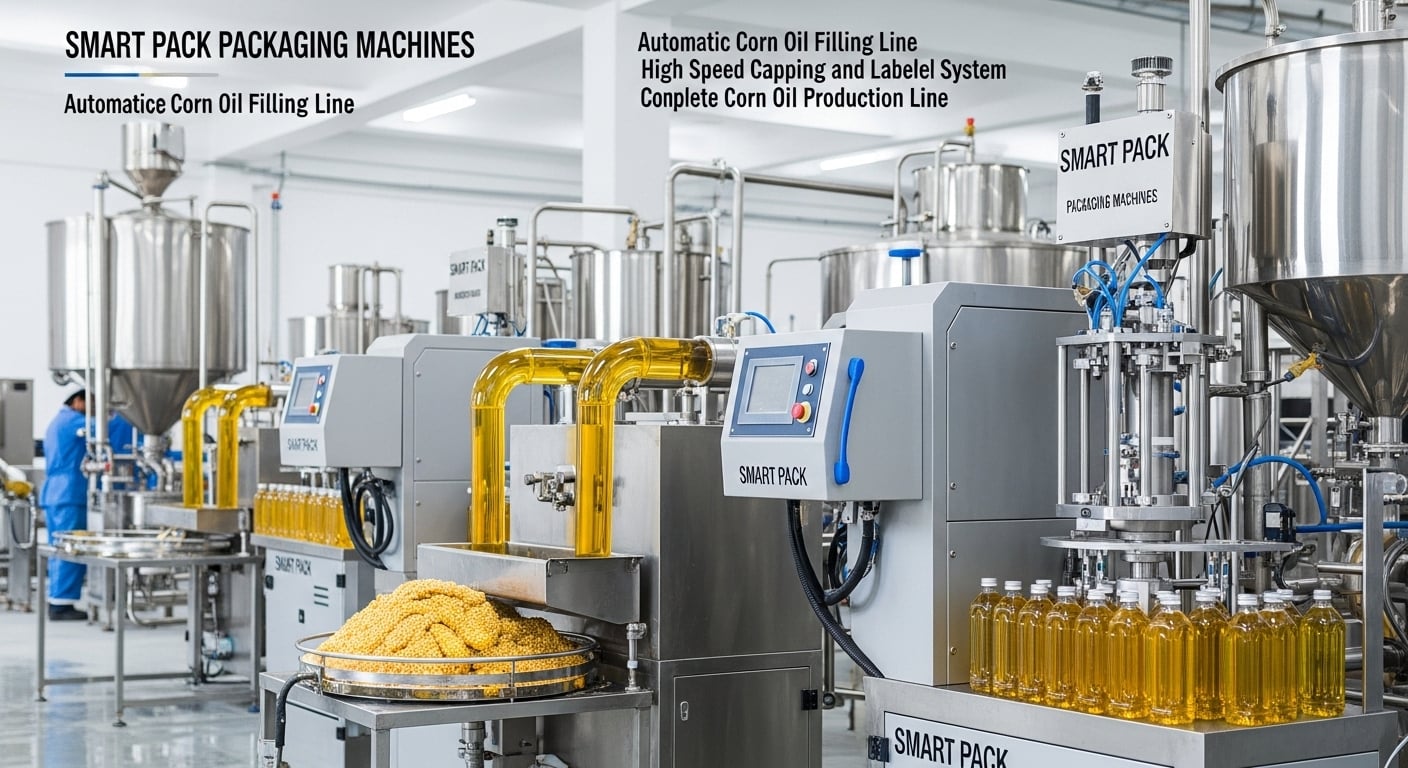
Components of a Complete Corn Oil Production Line
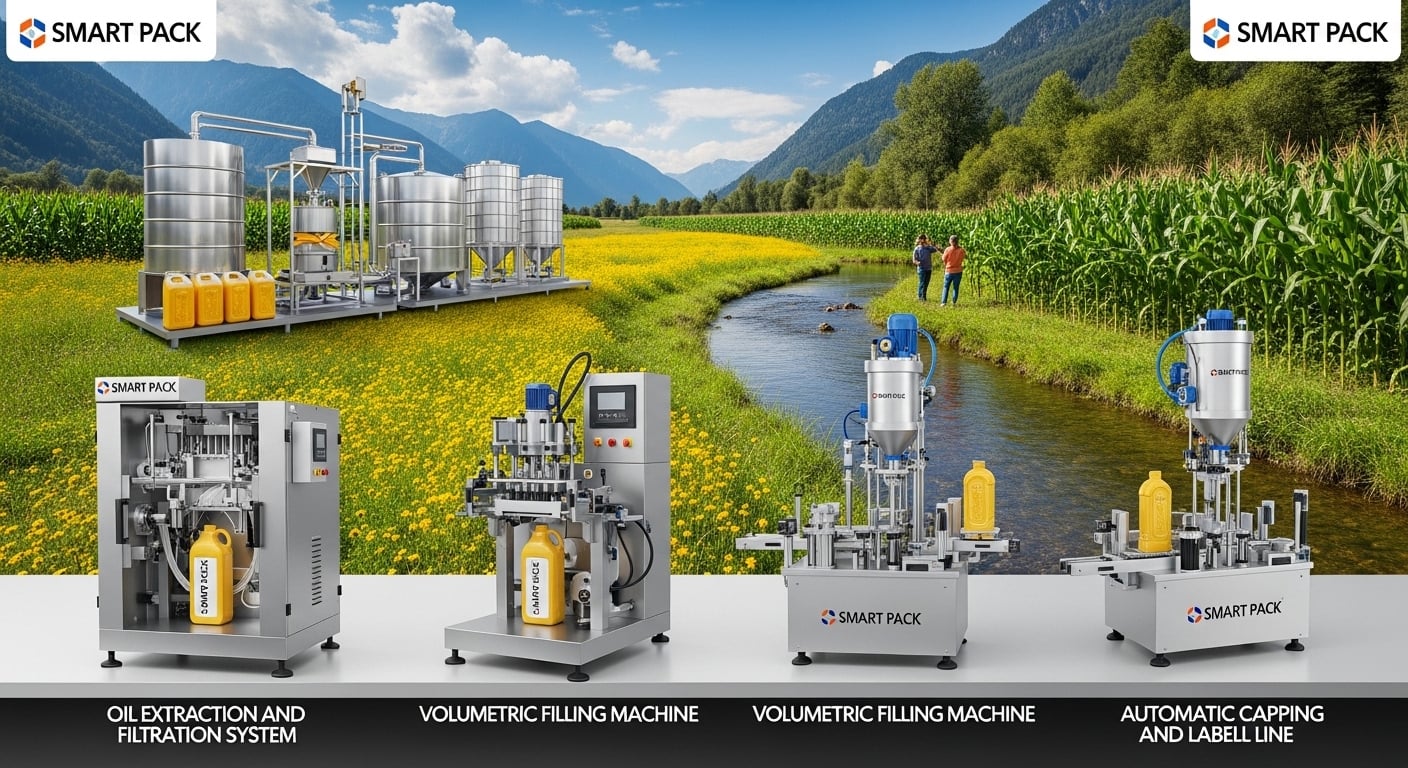
A fully integrated corn oil production line includes:
-
Cleaning and sorting units
-
Oil extraction units
-
Refining units
-
Storage tanks
-
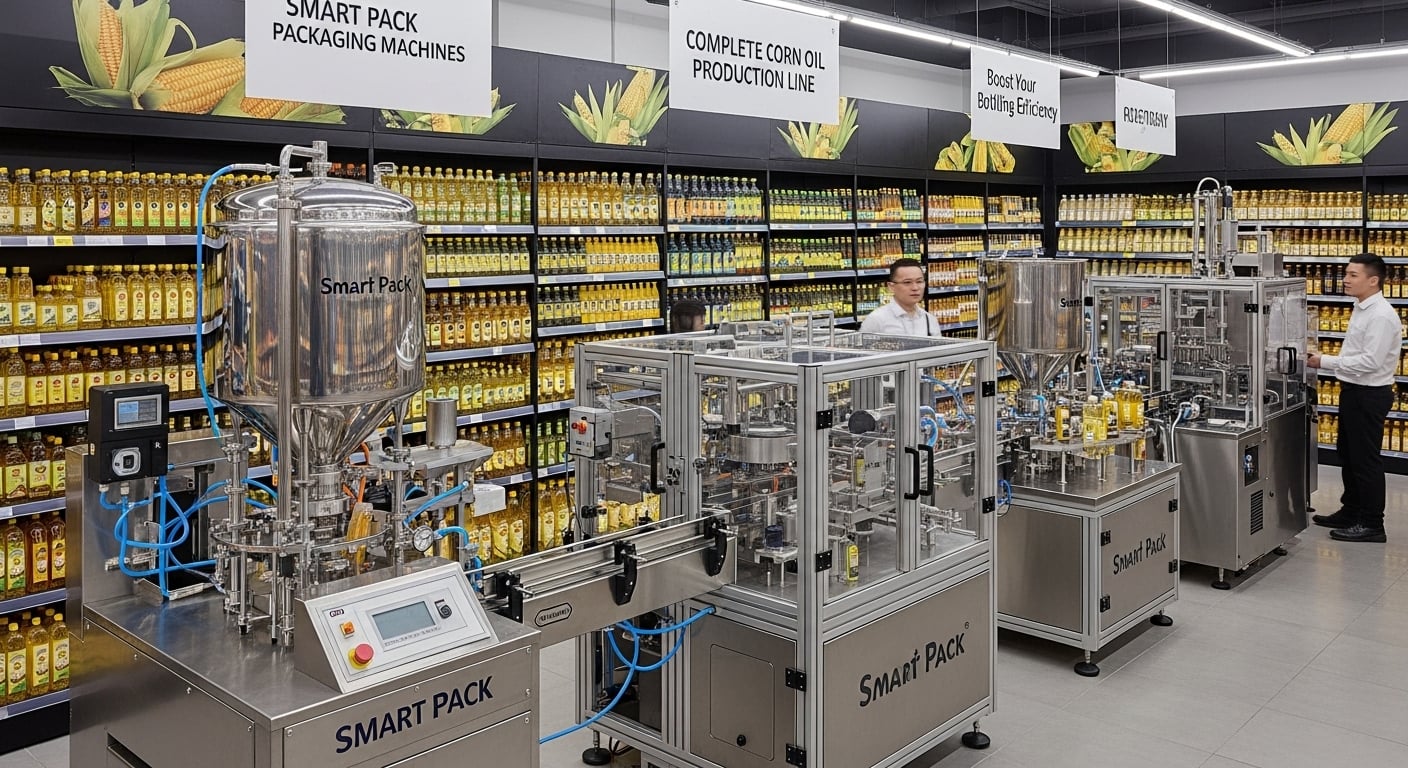
Filling and packaging machines
Relying on an integrated system delivers:
-
Stable product quality
-
High production speed
-
Easy scalability
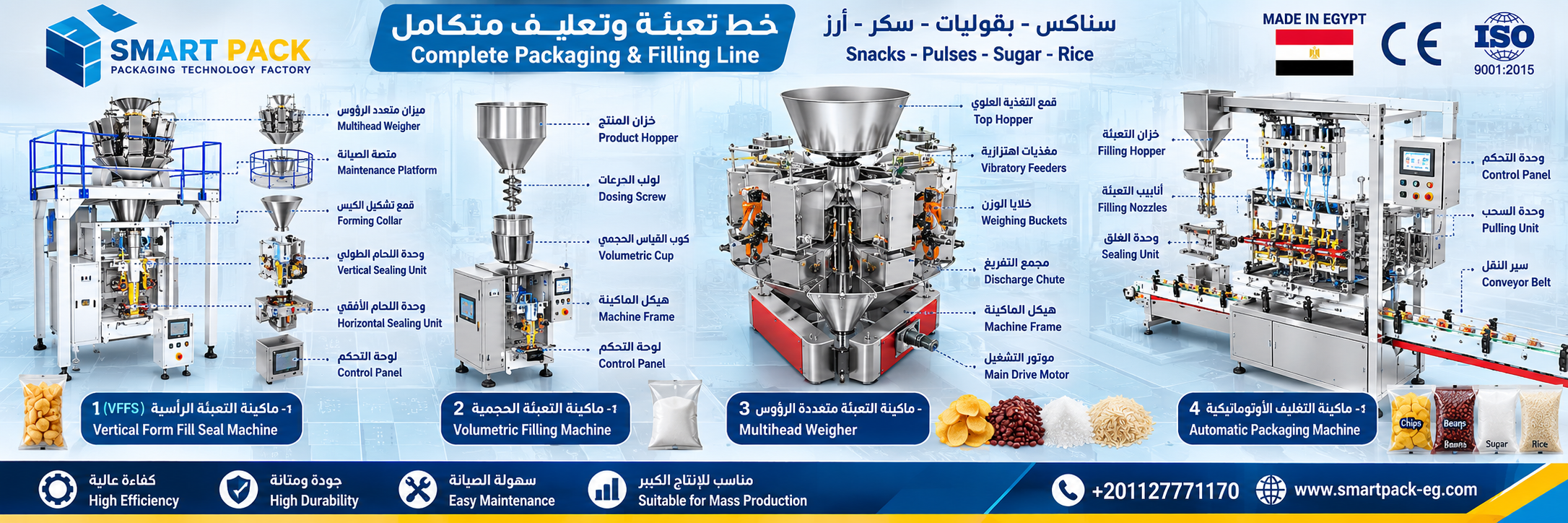
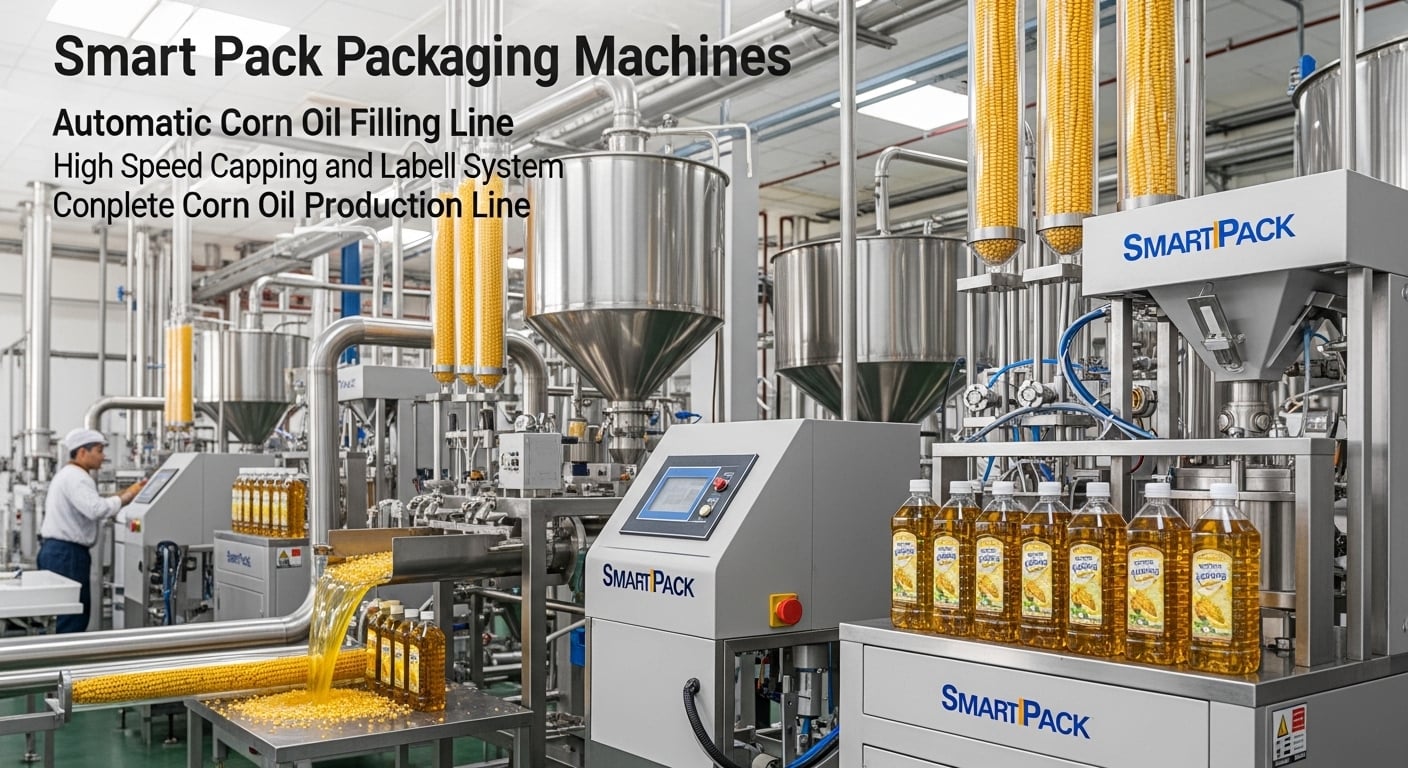
Corn Oil Filling and Packaging Machines and Their Role in Project Success
The filling stage is just as critical as oil processing because it:
-
Preserves oil quality
-
Prevents leakage
-
Gives the product its market-ready appearance
Types of Corn Oil Filling Machines
-
Automatic liquid filling machines
-
Semi-automatic filling machines
-
Complete filling lines with capping and printing
Manual vs Automated Corn Oil Filling – A Quick Comparison
| Comparison Factor | Manual Filling | Automated Filling |
|---|---|---|
| Production Speed | Low | High |
| Filling Accuracy | Inconsistent | Precise |
| Product Waste | High | Low |
| Market Appearance | Traditional | Professional |
| Scalability | Difficult | Easy |
Professional Filling Is the Key to Entering Major Markets
A high-quality product without professional packaging loses a significant part of its market value—especially when dealing with:
-
Retail chains
-
Export operations
-
Wholesale distribution
Choosing the Right Corn Oil Packaging for Each Market
-
Plastic bottles for household use
-
Large jerry cans for restaurants
-
Specialized packaging for export markets
The packaging choice directly affects:
-
Cost structure
-
Marketing strategy
-
Transportation and storage
-
Export compliance
Export Requirements and International Market Standards
To export corn oil successfully, you must ensure:
-
Consistent net weight
-
Secure sealing
-
Clear labeling
-
Compliance with target market specifications
The Right Production Line Choice Makes the Profit Difference
Working with a specialized company in designing and implementing production lines gives you a strong competitive edge.
Cooperating with Smart Pack provides:
-
Customized solutions based on project size
-
Full integration between processing and filling
-
Technical support and hands-on expertise
-
Flexibility for future expansion
Investment Tips Before Starting a Corn Oil Project
-
Start with a well-calculated production capacity
-
Choose machines that can be upgraded
-
Focus on long-term value, not just price
-
Invest in high-quality packaging
-
Plan for export from the early stages
Start Your Corn Oil Project with the Right Industrial Foundation
If you are planning to establish a corn oil factory or upgrade an existing production line, selecting the right manufacturing line and filling machines is the decisive factor for success.
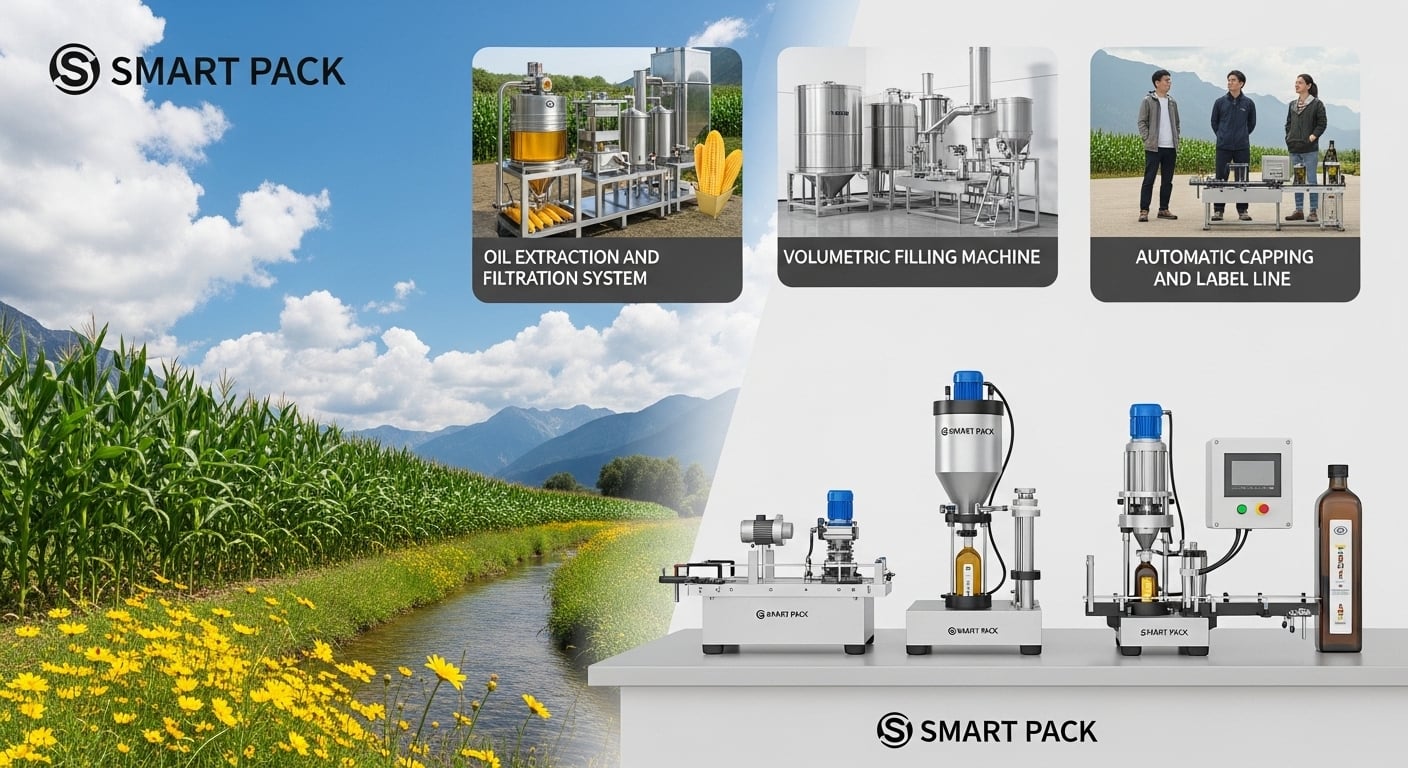
At Smart Pack, we offer complete solutions covering production line design, filling machines, and packaging systems tailored for both local and export markets.
You can now request a professional technical consultation to help you choose the optimal solution with maximum efficiency and the best cost structure.
Start today and transform corn oil from a traditional product into a profitable and sustainable industrial project.
Frequently Asked Questions About Corn Oil Manufacturing and Filling
Is corn oil suitable for export?
Yes, provided that packaging and quality standards are met.
Can container sizes be changed on the same filling machine?
Yes, most modern machines allow easy size adjustments.
What is the difference between automatic and semi-automatic filling?
Automatic systems are faster, more accurate, and ideal for large-scale production.