
 Admin
Admin Why Tahini Filling and Packaging Is a Critical Step for the Success of Any Factory
Tahini is one of the most essential food products with consistently high demand in both local and export markets. As competition among manufacturers continues to grow, success is no longer defined by product quality alone. Today, efficiency of the production line, filling accuracy, packaging appearance, and waste reduction play a decisive role in determining market leadership.
This is where tahini filling and packaging machines become the backbone of any factory aiming for growth and long-term profitability. Choosing the right machinery directly impacts production speed, operating costs, and the brand image of the final product.
What Is Tahini Filling and Packaging?
Tahini filling and packaging represents the final and most sensitive stage of the production process, which includes:
-
Transferring tahini from storage tanks
-
Filling containers with precise weights or volumes
-
Securely sealing the containers
-
Applying professional labels
-
Preparing products for storage or distribution
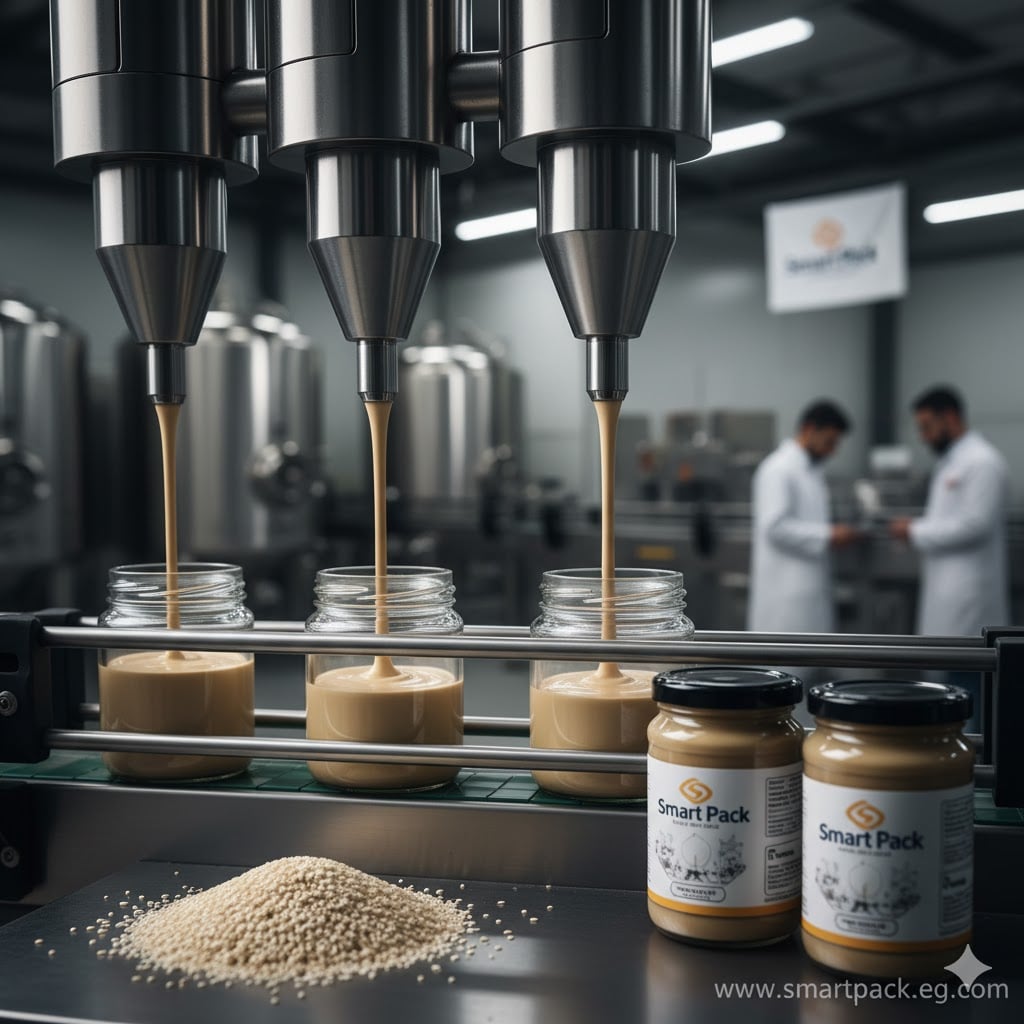
Since tahini is a high-density, viscous product, it requires specially engineered machines to ensure smooth filling without leakage, dripping, or product loss.
The Importance of Filling and Packaging Machines in Tahini Factories
Modern filling and packaging machines significantly enhance factory performance by:
-
Increasing daily production capacity
-
Ensuring uniform container weight and appearance
-
Reducing waste and product loss
-
Enhancing the final visual appeal of the product
-
Complying with food safety and hygiene standards
For this reason, advanced factories rely on automated solutions rather than manual or traditional methods.
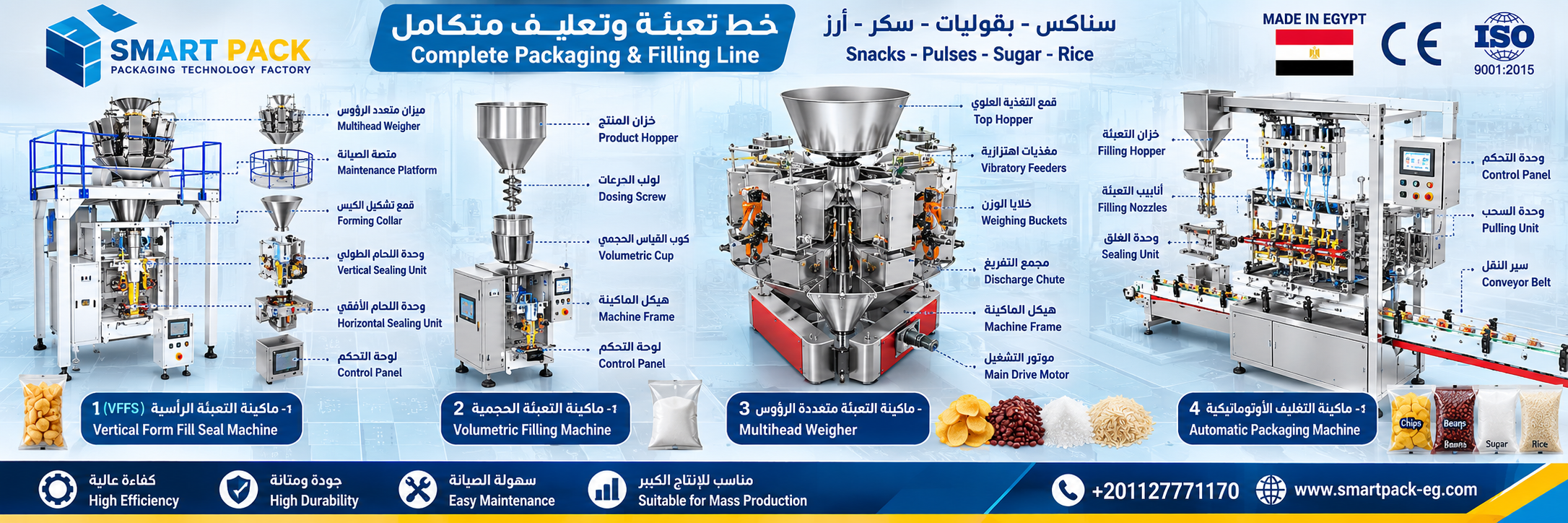
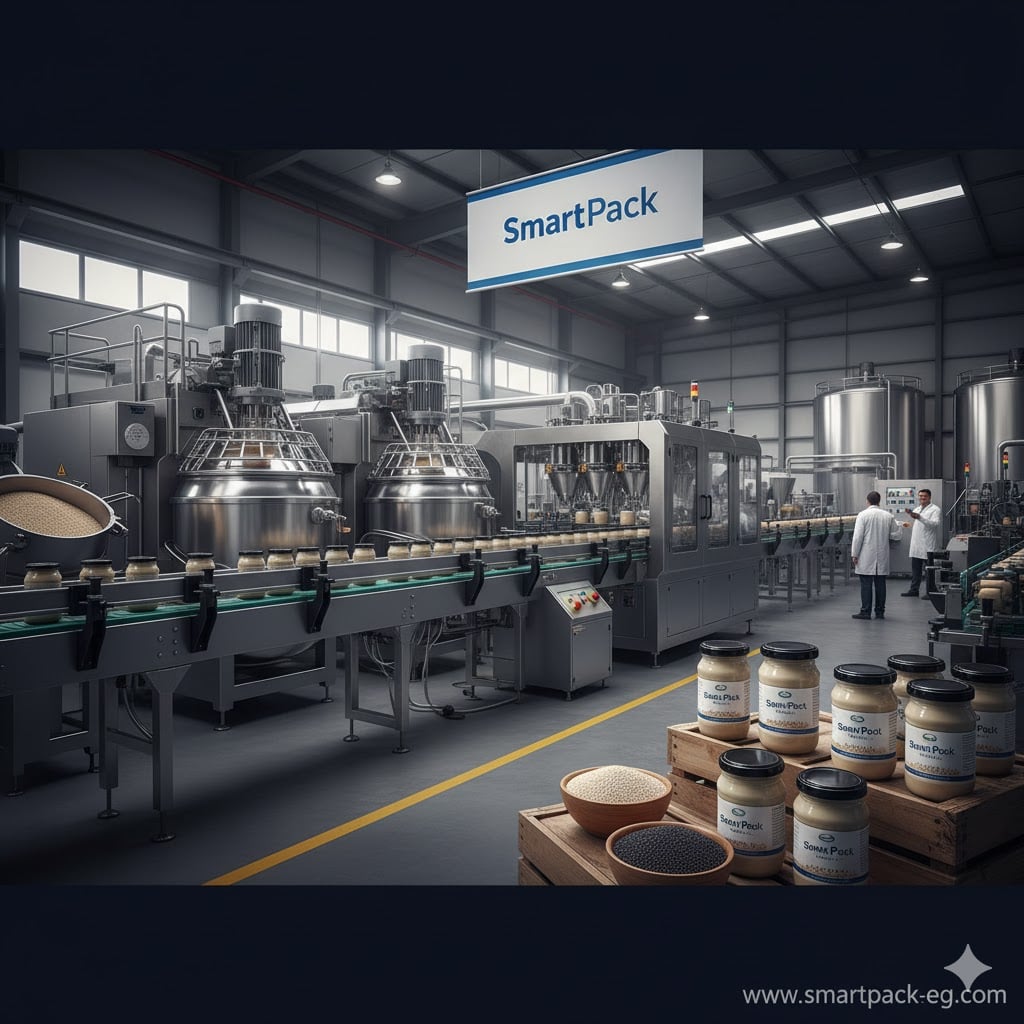
Components of a Complete Tahini Production Line
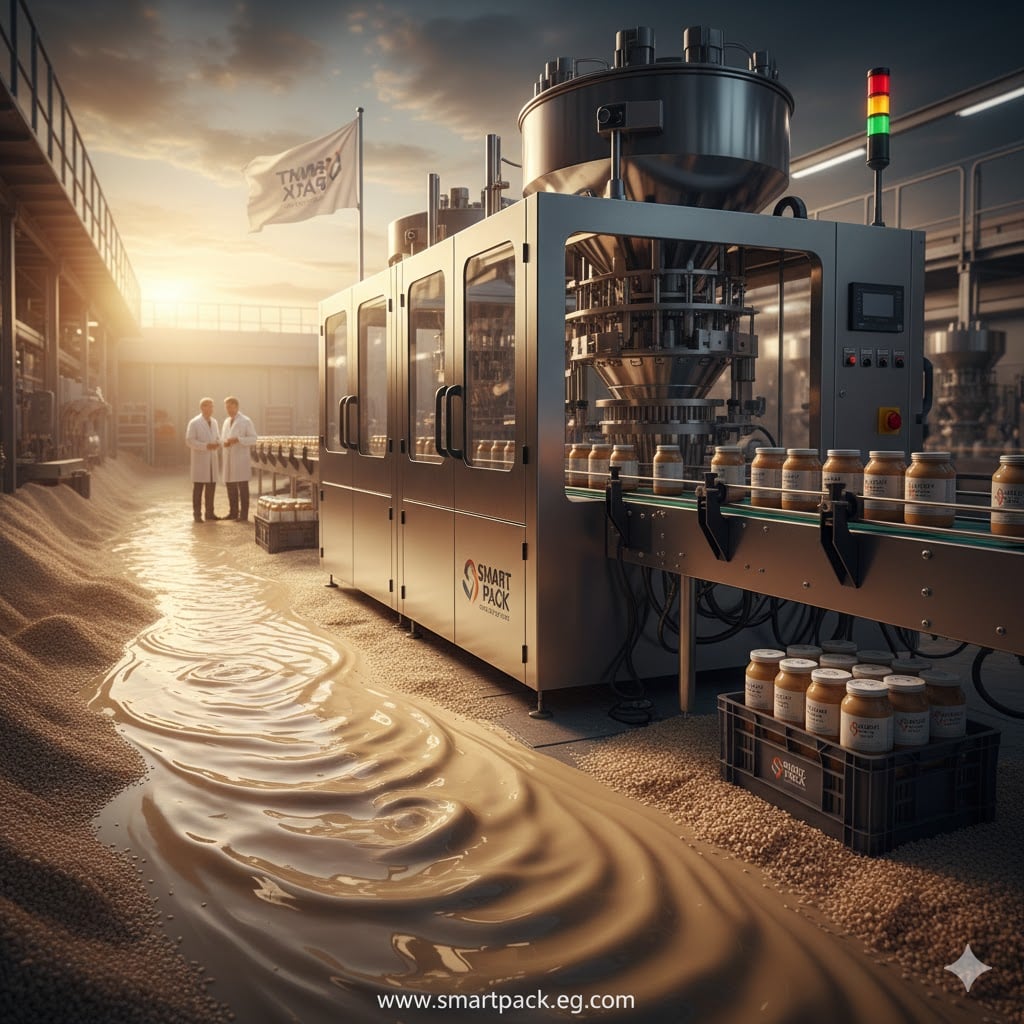
A professional tahini production line consists of integrated stages working seamlessly together:
1. Storage Tanks
Maintain tahini consistency while controlling temperature and texture stability.
2. Feeding Unit
Transfers tahini from tanks to the filling machine using heavy-duty pumps designed for viscous materials.
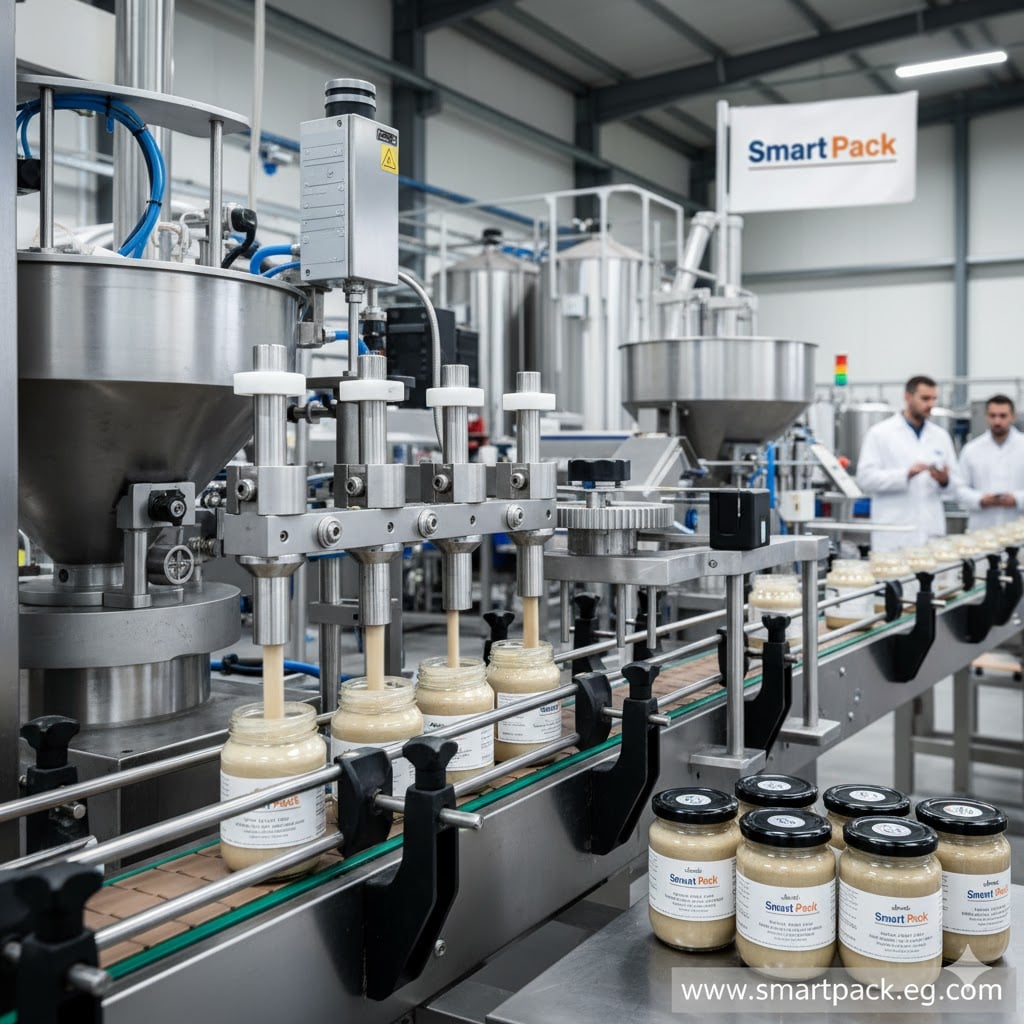
3. Tahini Filling Machine
The most critical component, featuring:
-
High filling accuracy
-
Anti-drip nozzles
-
Easy cleaning and maintenance
4. Sealing Unit
Ensures airtight sealing using plastic or metal lids.
5. Labeling Machine
Applies branding labels accurately and consistently.
6. Final Packaging
Packs containers into cartons or applies shrink wrapping for transport and storage.
Types of Tahini Filling and Packaging Machines
| Machine Type | Usage | Factory Size |
|---|---|---|
| Semi-Automatic | Limited production | Small factories |
| Fully Automatic | Continuous production | Medium & large factories |
| Volumetric Filling | Standard containers | Local markets |
| Weighing Filling | High precision | Export markets |
How to Choose the Right Tahini Filling Machine for Your Factory
1. Product Nature
Because tahini is viscous, the machine must include:
-
Powerful pumps
-
Anti-drip filling systems
2. Production Capacity
Define:
-
Required containers per hour
-
Future expansion plans
3. Automation Level
-
Semi-automatic: Ideal for startups
-
Fully automatic: Reduces labor costs and increases profitability
4. Available Space
Selecting machinery that fits your factory layout ensures smooth workflow.
Why Do Manufacturers Choose Smart Pack?
Because Smart Pack doesn’t just sell machines — it delivers complete industrial solutions, from project planning to full operational launch.
What Makes Smart Pack Different?
-
Precise technical studies tailored to each factory
-
Custom-designed production lines
-
Food-grade materials compliant with safety standards
-
Fast technical support
-
Readily available spare parts
-
Professional staff training
Key Tips Before Purchasing a Tahini Filling and Packaging Machine
-
Don’t rely on price alone
-
Verify after-sales service quality
-
Ask about future upgrade options
-
Request a live machine demonstration
-
Choose a company with proven industry experience
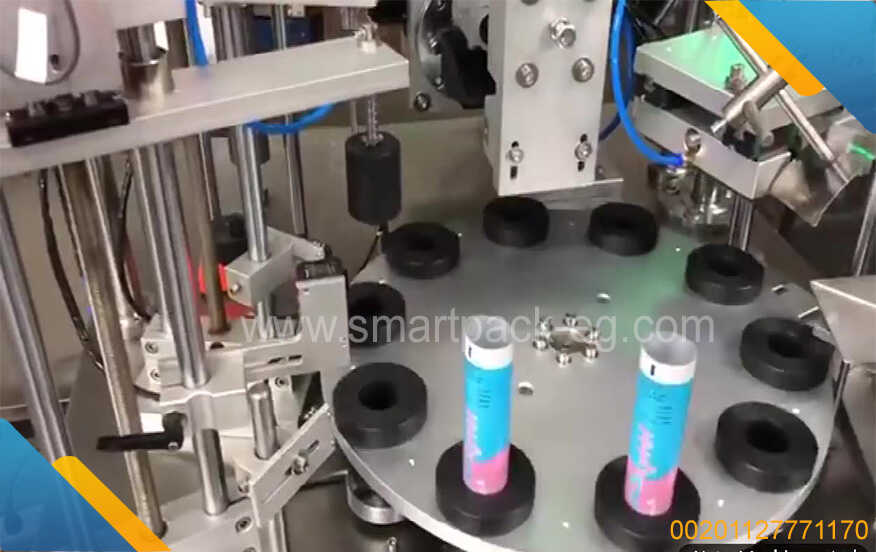
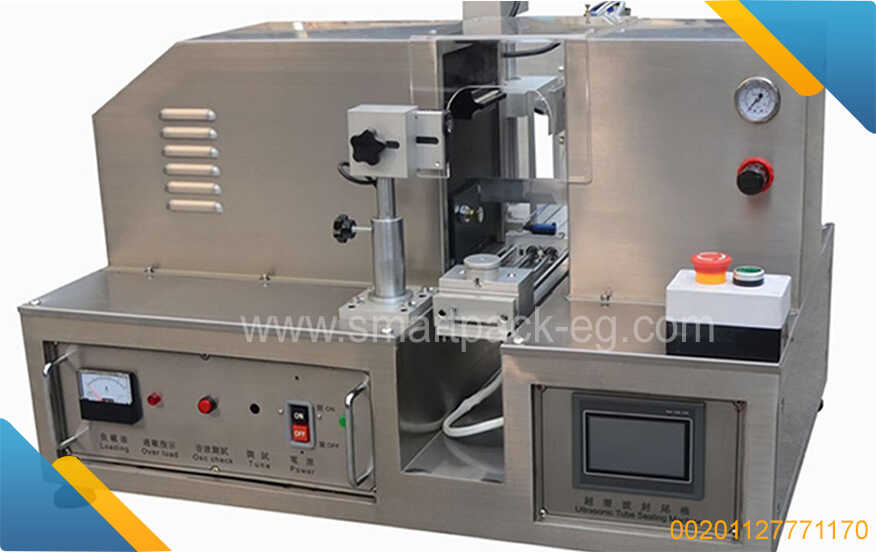
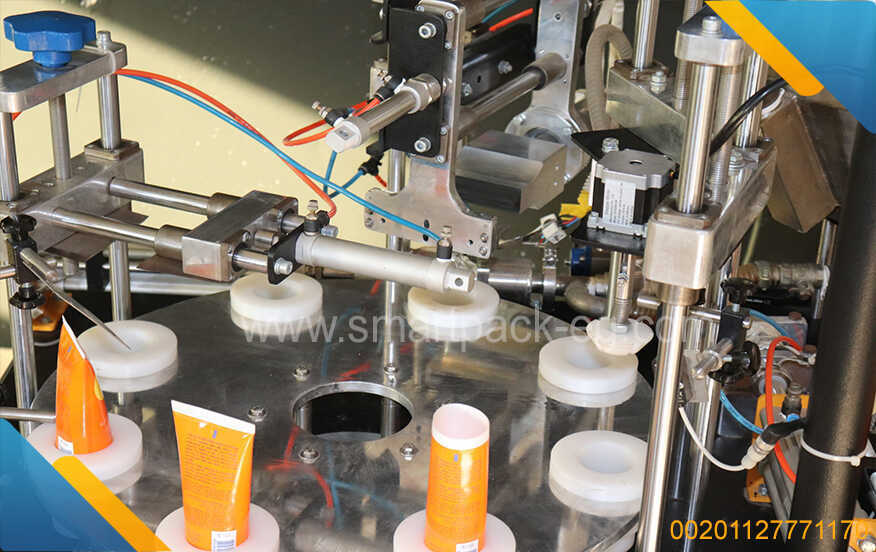
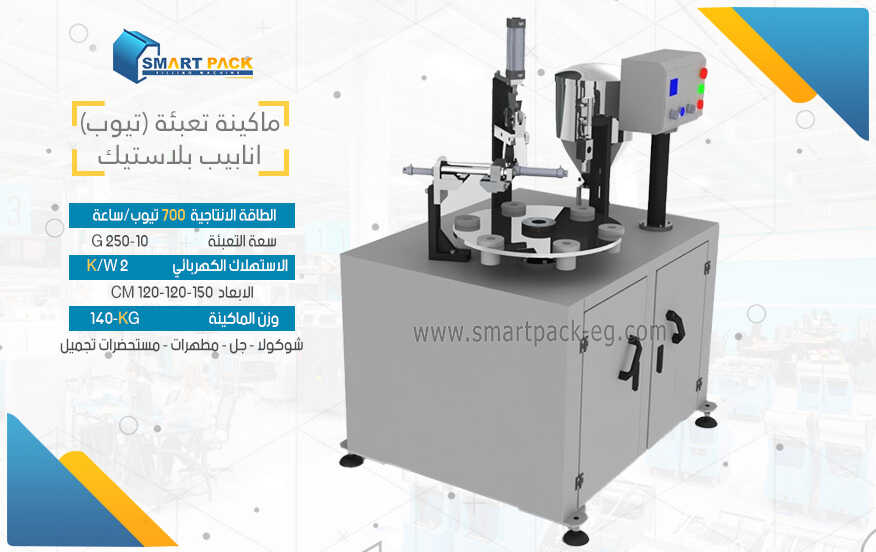
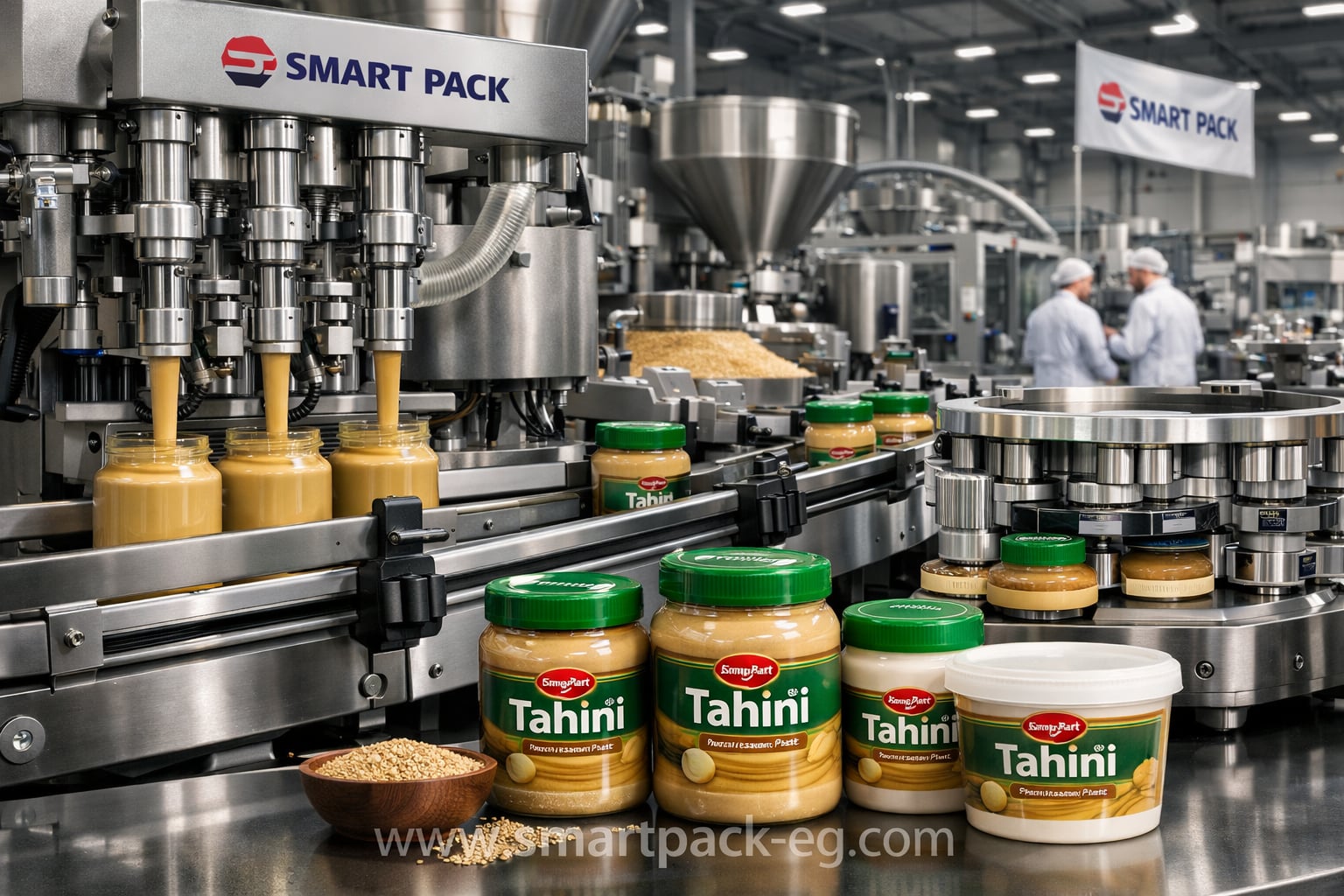
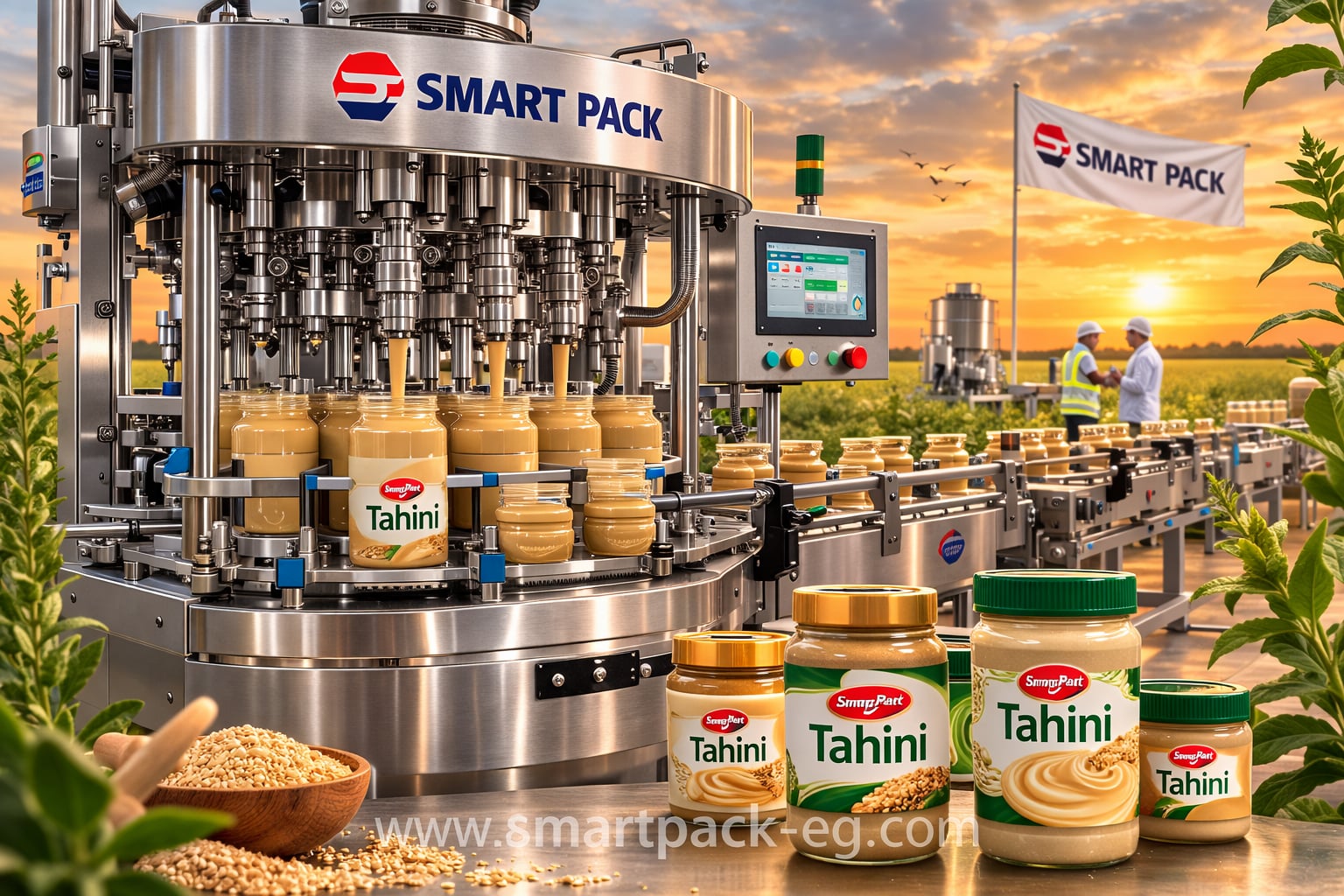
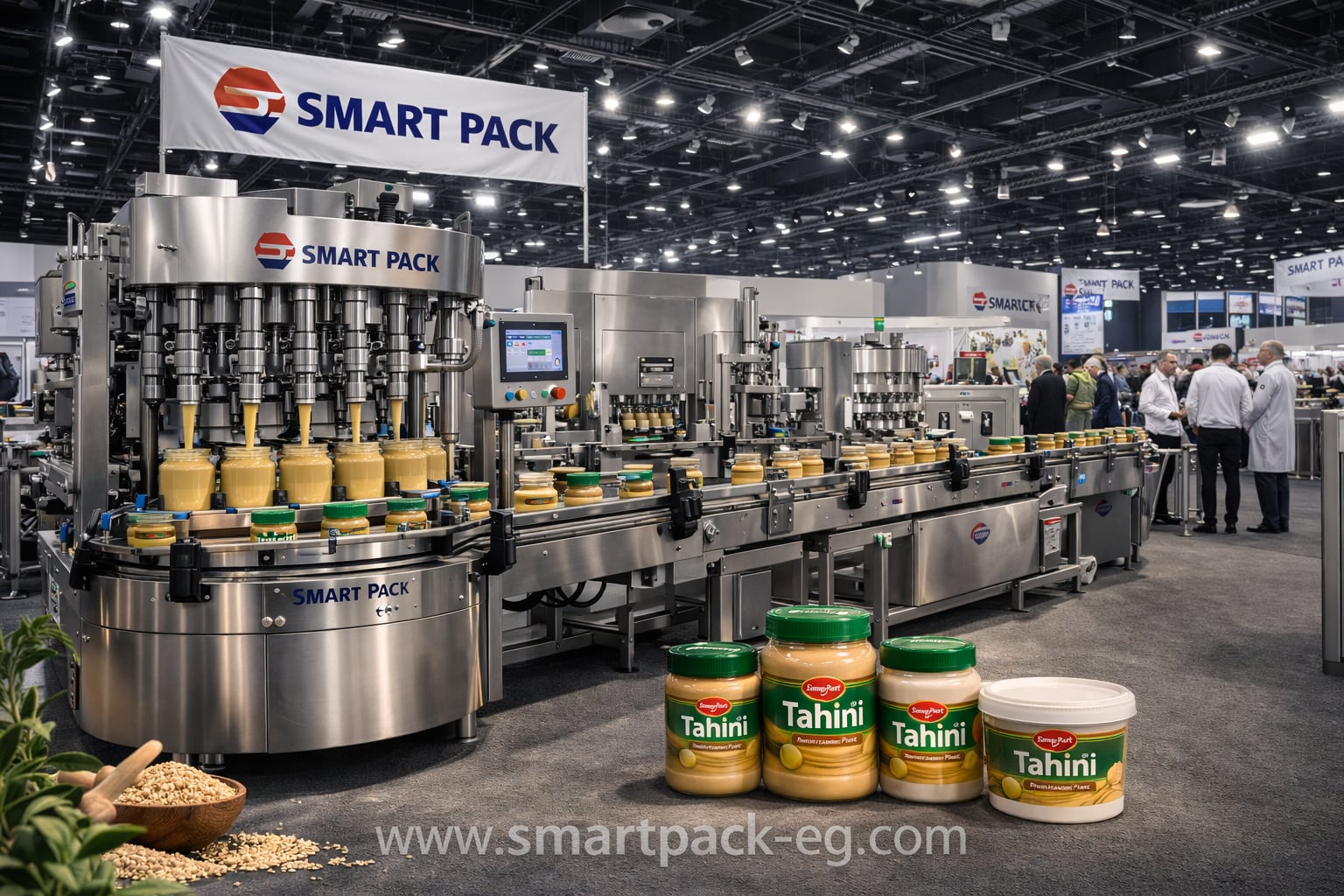
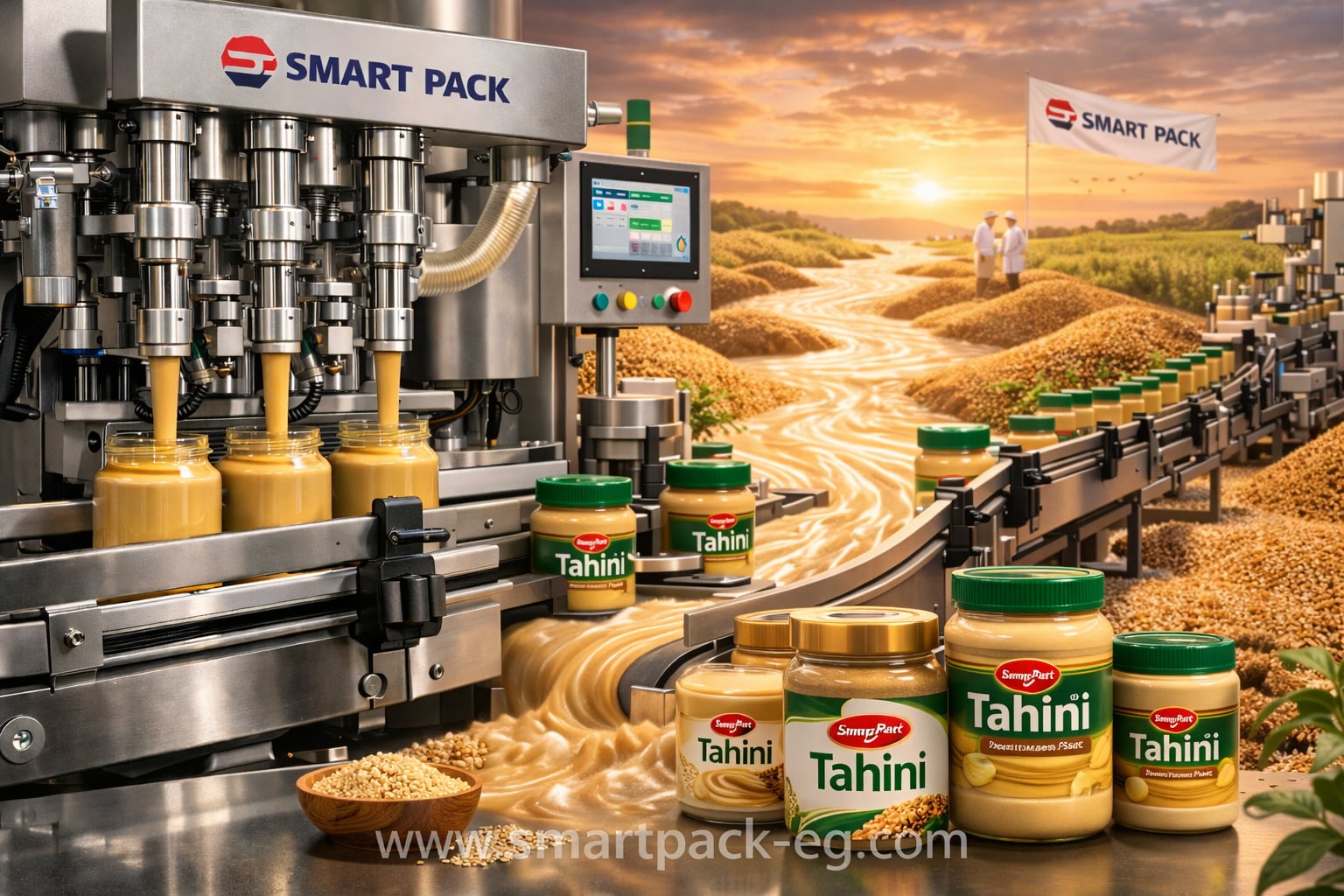
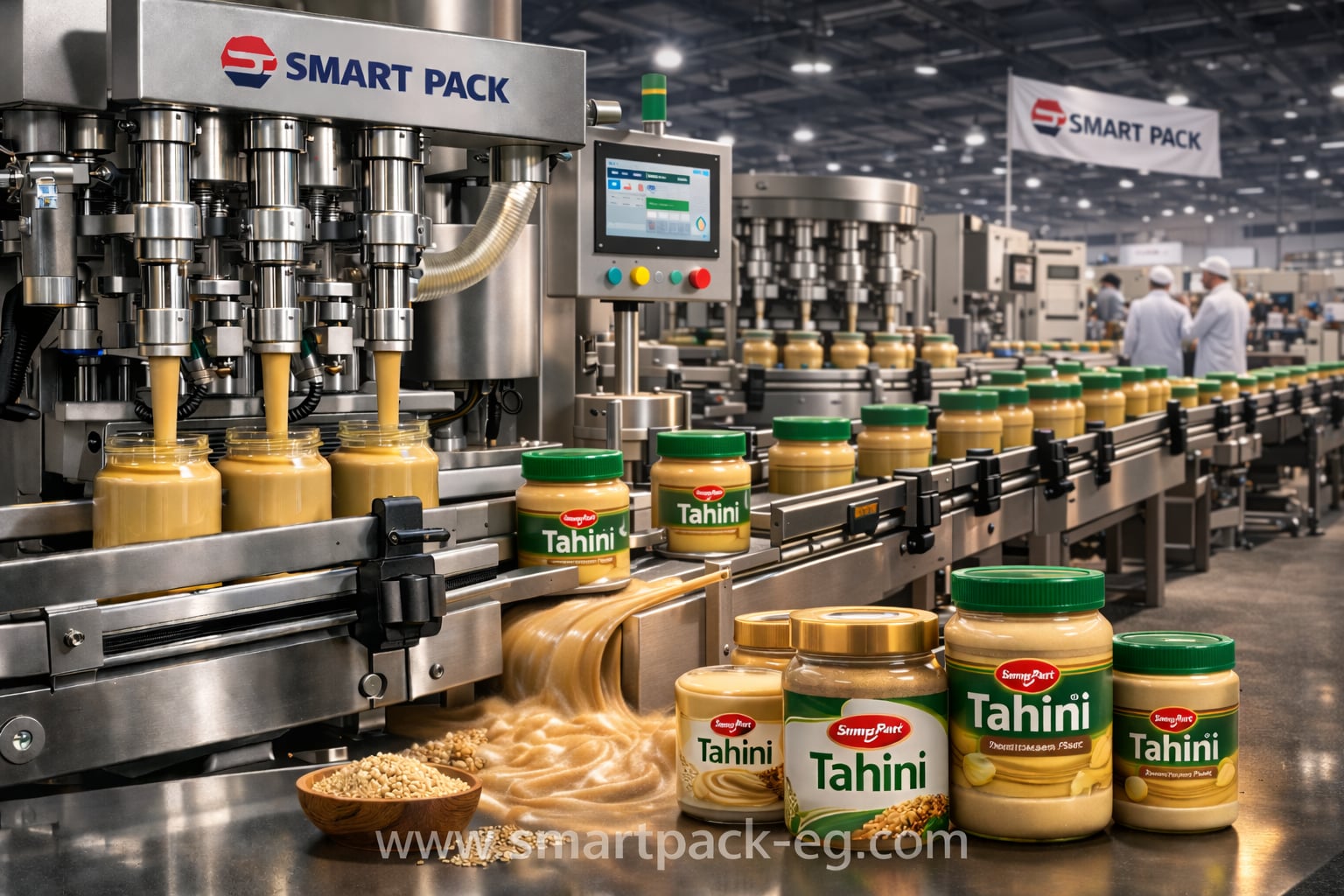
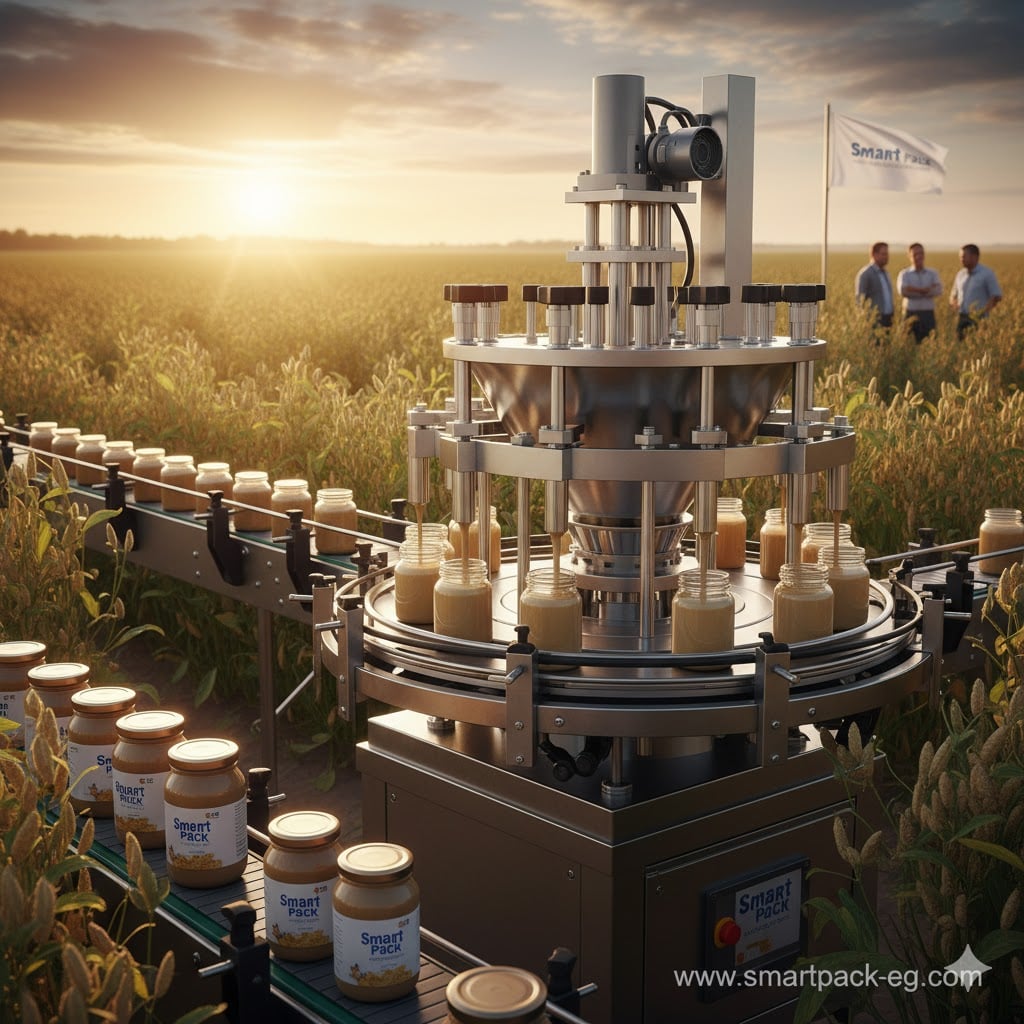
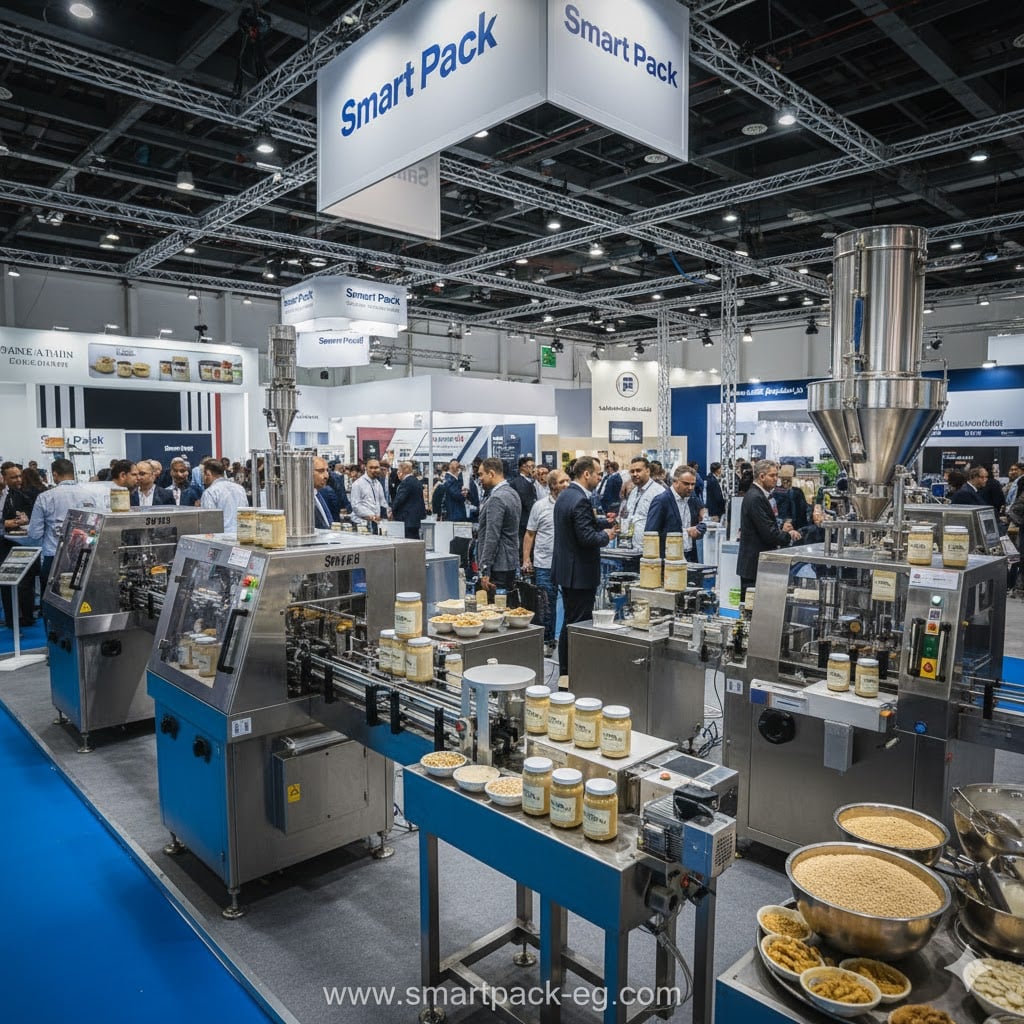
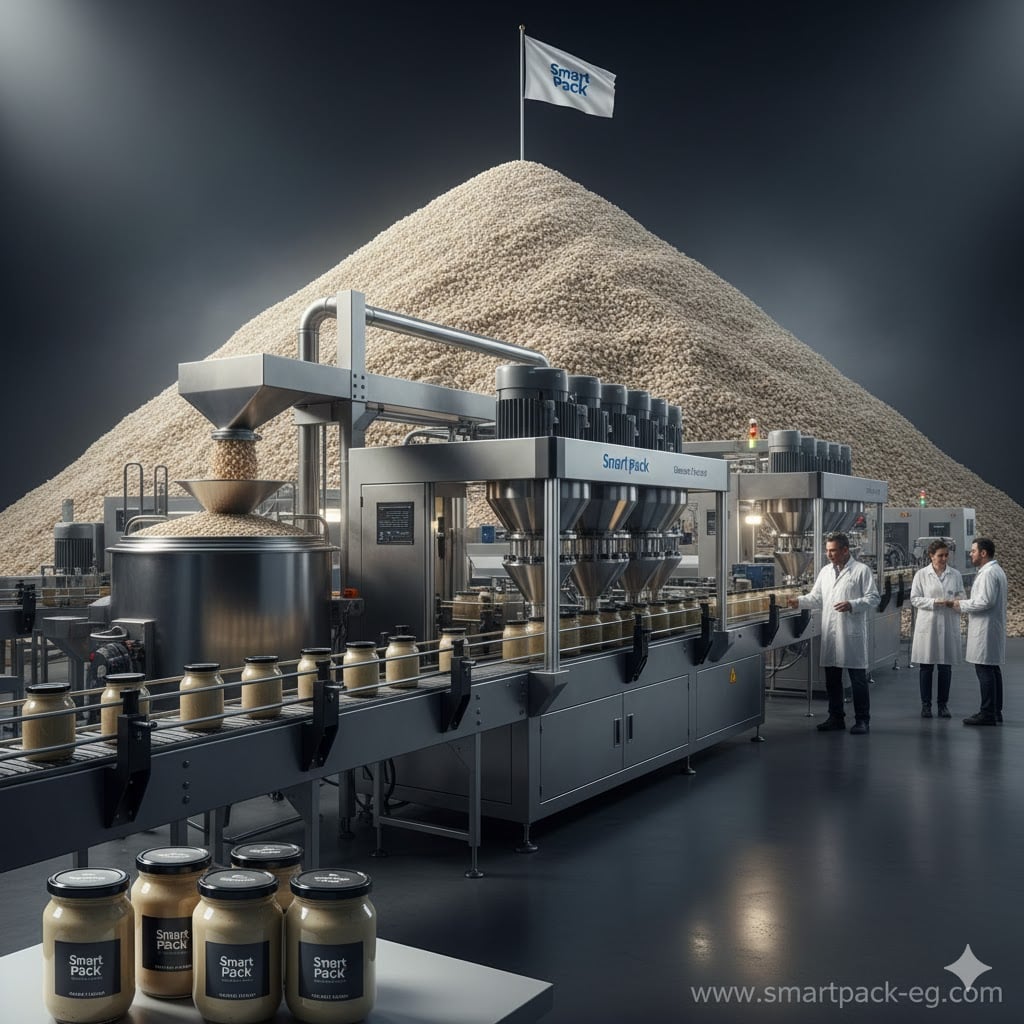
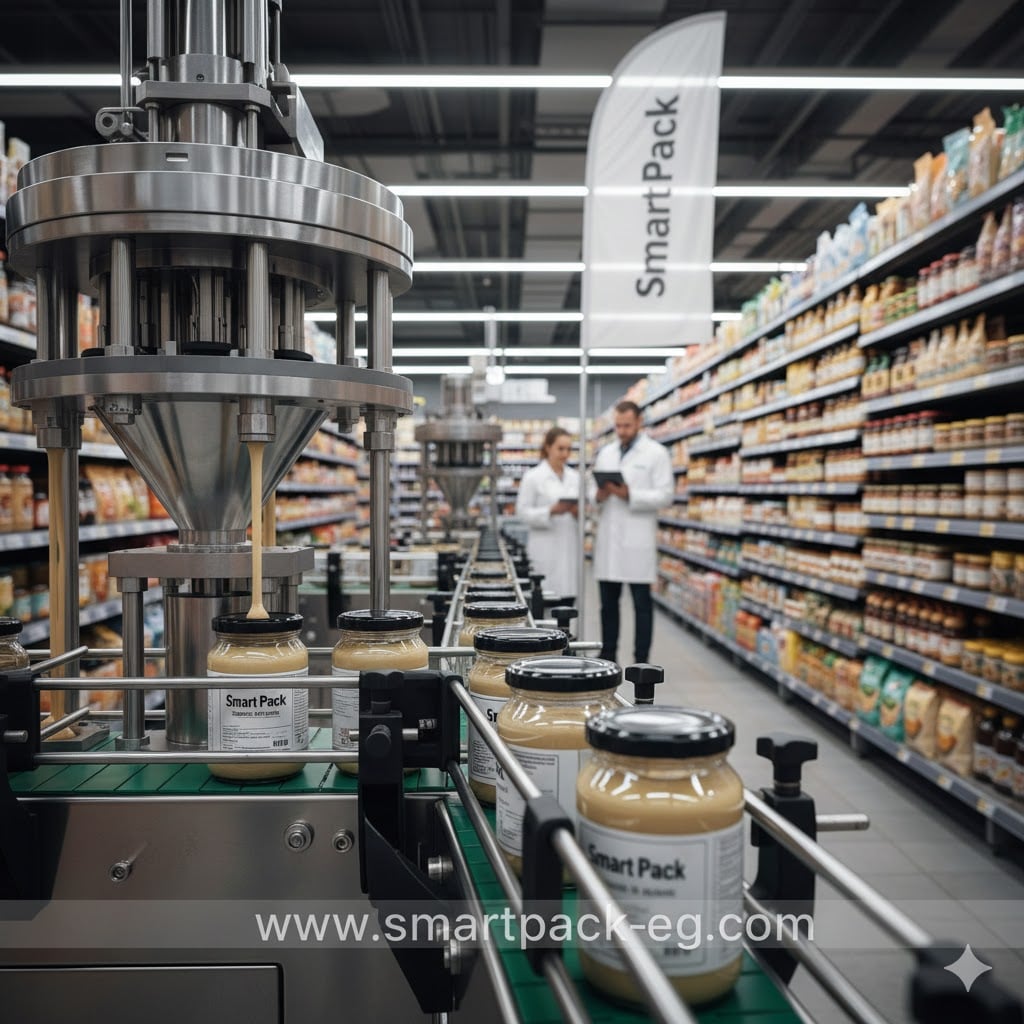
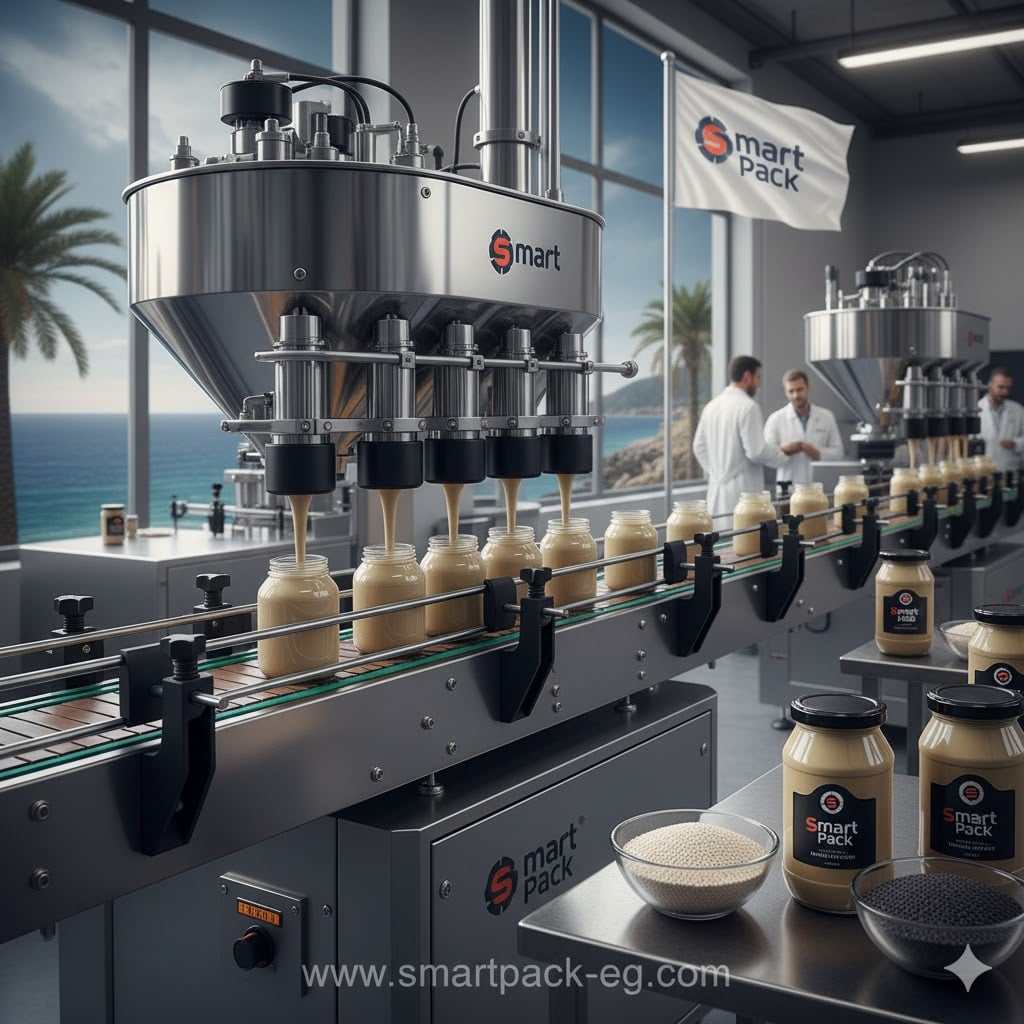
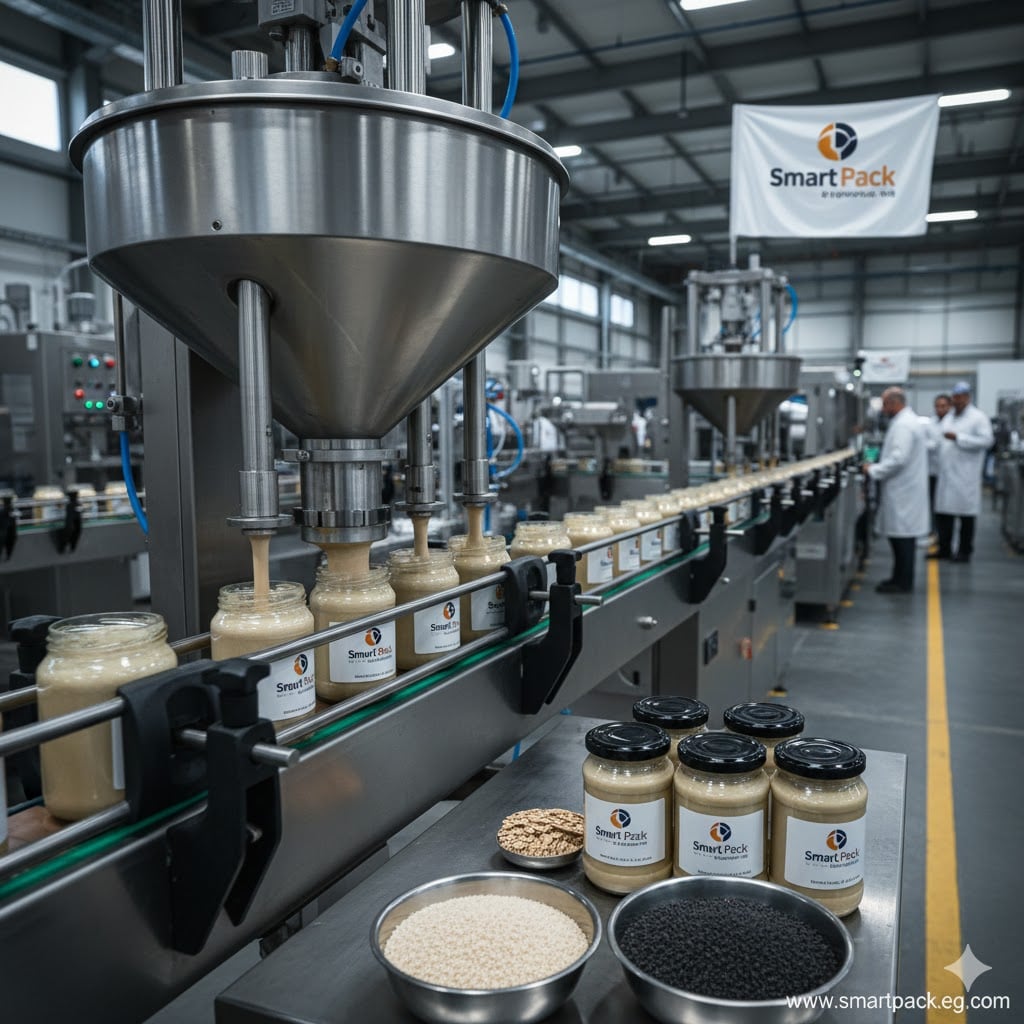
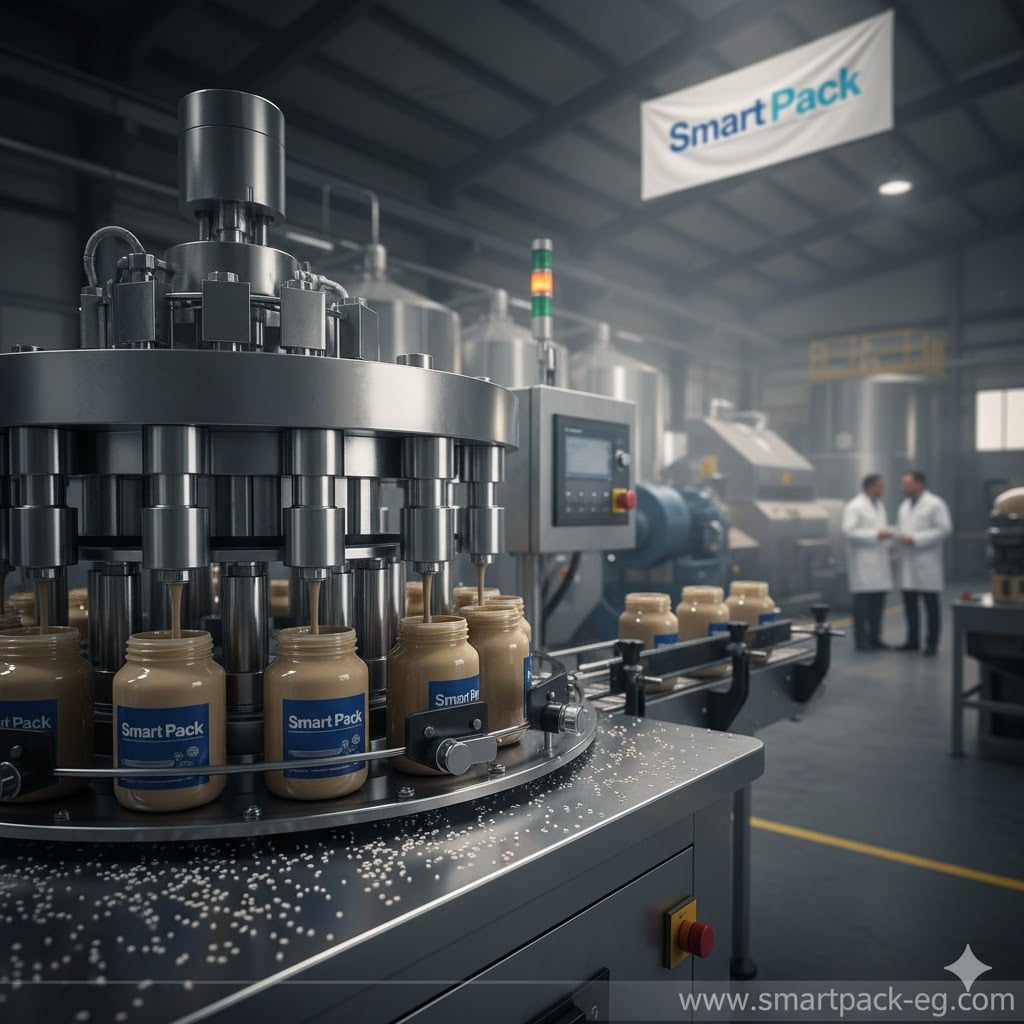
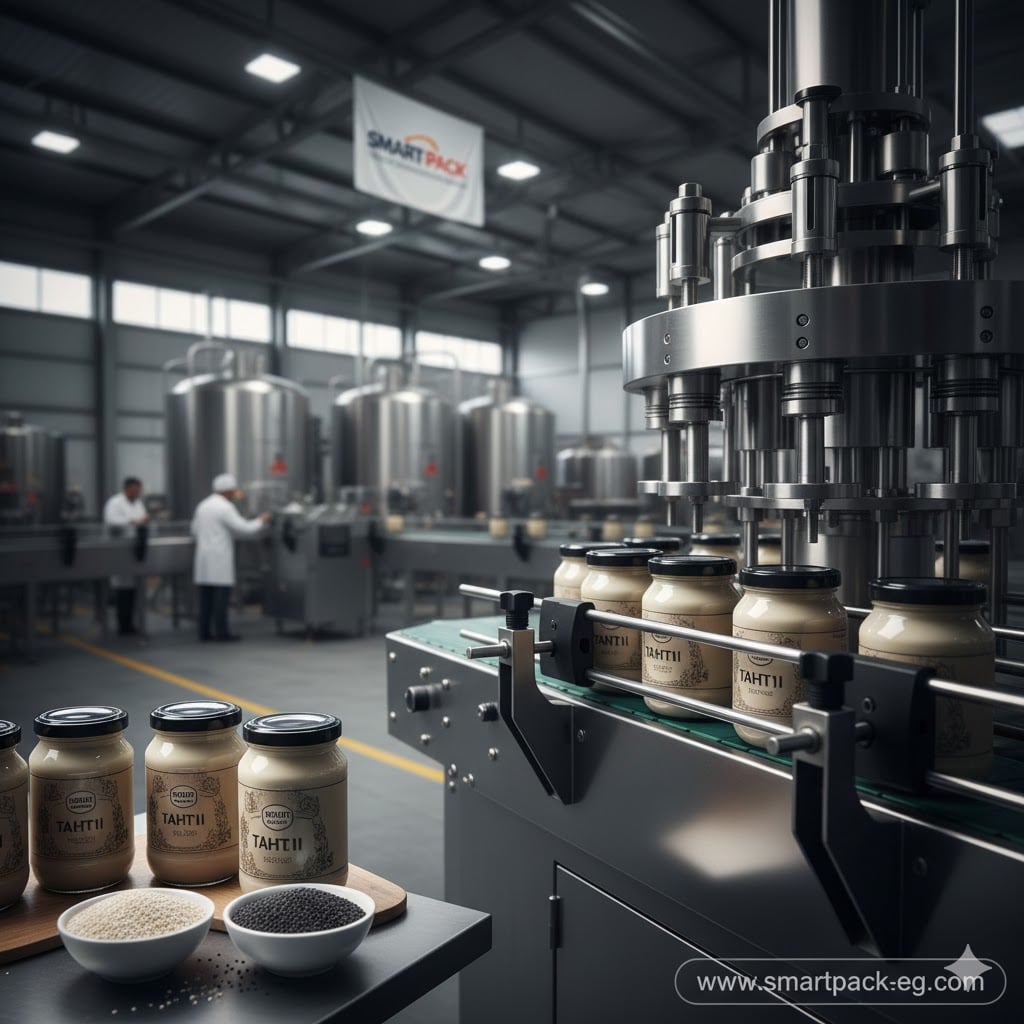
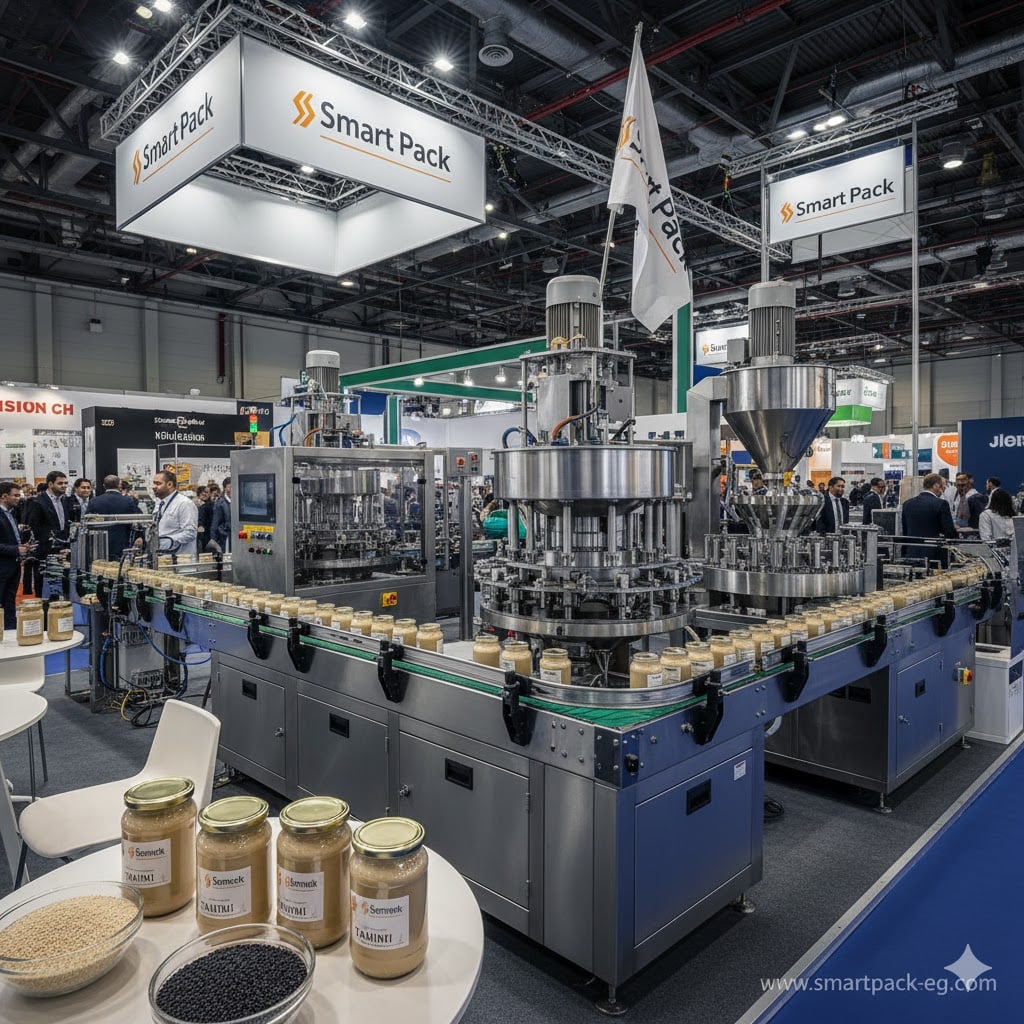
Visual Examples of Tahini Filling and Packaging Lines
Frequently Asked Questions About Tahini Filling and Packaging (FAQ)
1. Can tahini and other products be filled using the same machine?
Yes, provided the products have similar viscosity and the machine is easy to clean.
2. Do tahini filling machines require regular maintenance?
Yes, routine maintenance ensures accuracy and long-term performance.
3. Are these machines suitable for export production?
Absolutely, when they meet international food safety standards.
4. Can the production line be expanded in the future?
Professional machines allow additional units to be integrated easily.
5. What’s the difference between volumetric and weighing filling?
Weighing systems offer higher accuracy, while volumetric systems are faster and more cost-effective.
6. Does Smart Pack provide consultation before purchase?
Yes, a complete feasibility and technical study is provided before implementation.
Final Thought
Investing in the right tahini filling and packaging machines is a direct investment in your factory’s success and stability. With proper planning and a trusted industrial partner like Smart Pack, any manufacturer can build a powerful production line capable of competing locally and expanding confidently into global markets