 Admin
Admin The Most Powerful Industrial Packaging Machine for Your Factory
Invest smarter in fully integrated production lines that double your operational capacity, reduce costs, and increase profits in 2026.
Packaging factories can no longer afford random decisions. Markets are moving faster, competition is tougher, and profit margins belong to manufacturers equipped with professional packaging machines and fully automated production lines.
If you are planning to expand your factory or launch a new industrial project, choosing the right packaging machine is the decision that will define your success for years to come.
A Motivational Message to Packaging Factory Owners
-
Factories relying on manual operations lose time and money every single minute.
-
Factories investing in industrial packaging machines and automated production lines achieve higher output, lower costs, and stronger profit margins.
-
The real question is not “Should I buy a machine?” but “Which packaging line will multiply my factory’s profits?”
Why Choosing a Packaging Machine Is an Investment Decision — Not Just a Technical One
4
Many factory owners focus only on price — and that is the biggest mistake.
The cheapest machine may cost you daily downtime, raw material waste, and production losses.
Professional industrial packaging machines mean:
-
Higher production speed
-
Reduced labor dependency
-
Superior packaging quality
-
Lower material waste
-
Longer operational lifespan
-
Faster return on investment
Simply put:
The right production line equals multiplied annual profits.
1. What Are Industrial Packaging Machines and Integrated Production Lines?
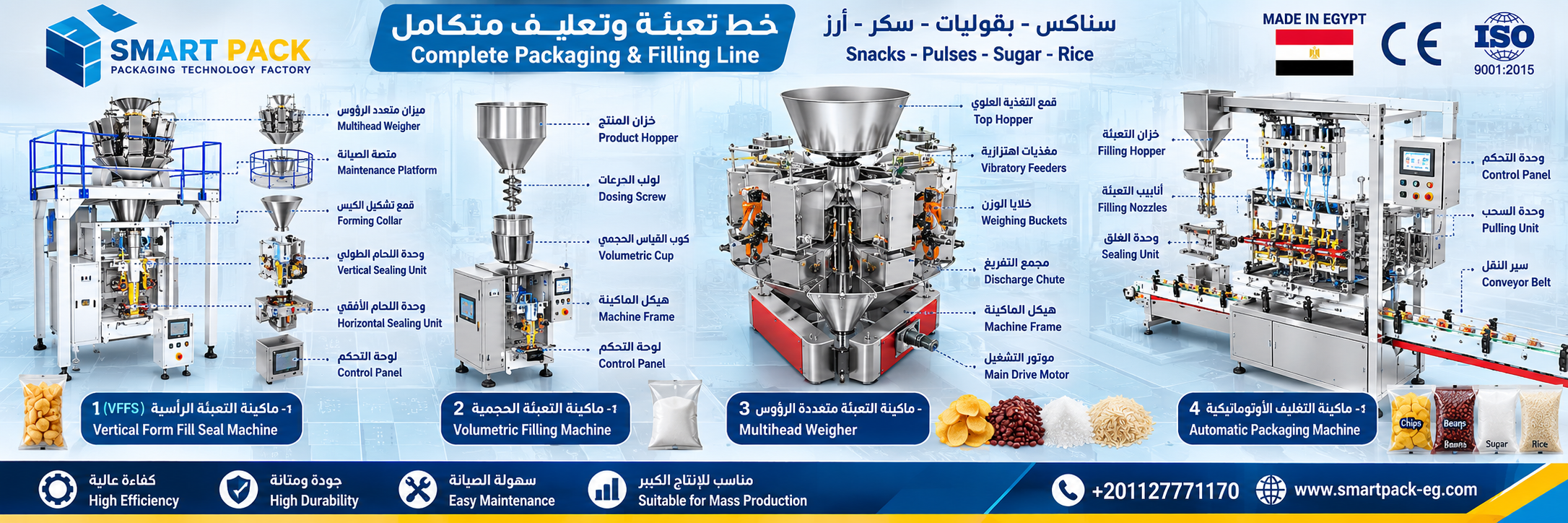
Industrial packaging machines are mechanical and electrical systems designed to control filling, sealing, and packaging processes with high precision and minimal manual intervention.
They include:
-
Detergent filling machines
-
Liquid filling machines
-
Powder filling machines
-
Heat shrink packaging machines
-
Fully automatic integrated production lines
-
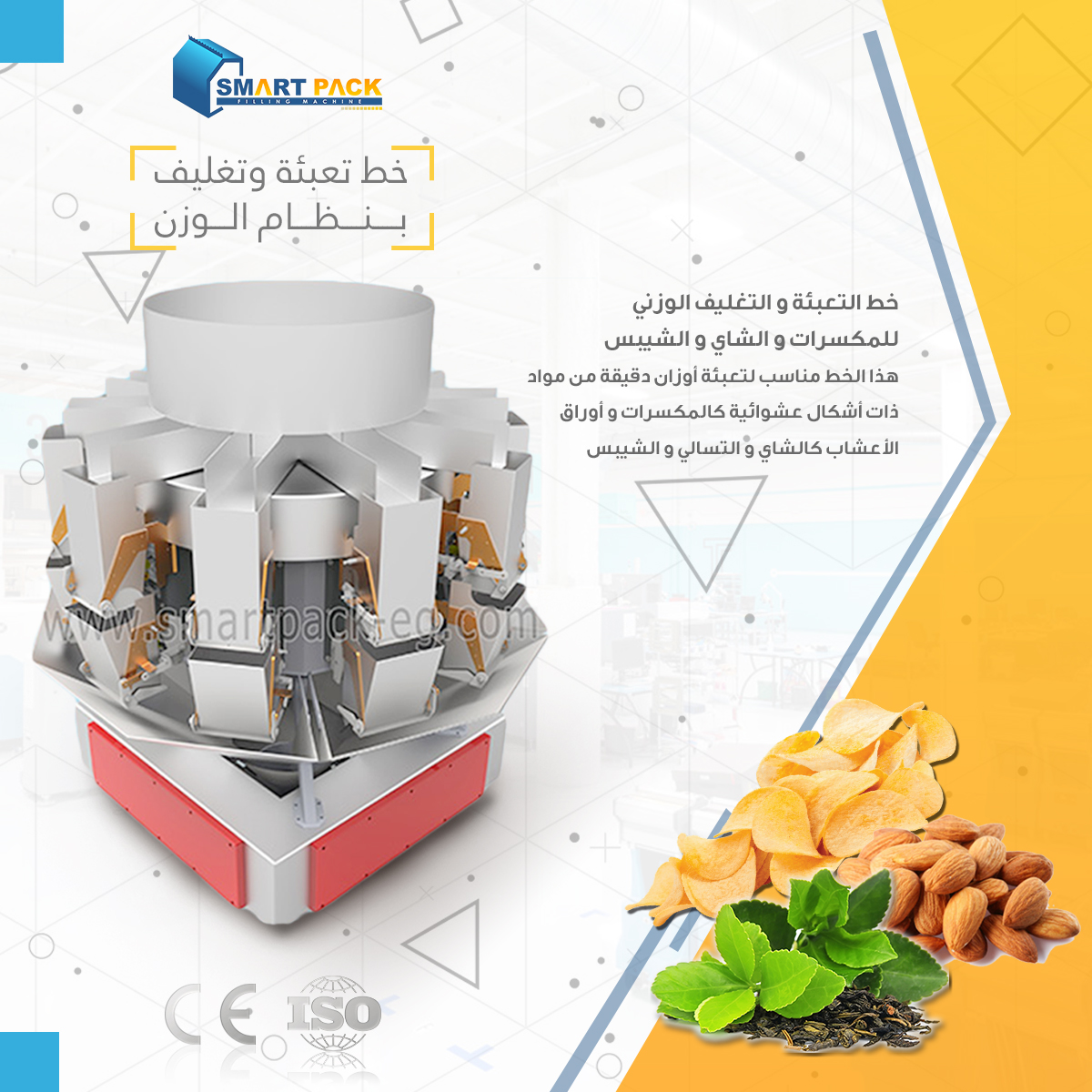
Multihead weighing systems
-
Conveyor, collection, and final packaging systems
These systems allow factories to produce thousands of units daily with consistent quality and maximum efficiency.
2. Types of Packaging Machines for Large Industrial Projects
4
Detailed Comparison Table for Choosing the Right Packaging Machine
| Machine Type | Product Type | Production Capacity Per Hour | Automation Level | Ideal Industrial Use |
|---|---|---|---|---|
| Liquid Filling Machine | Oils – Detergents – Juices – Chemicals | 2,000–8,000 bottles | Fully Automatic | Continuous high-speed production with precise filling and minimal waste |
| Powder Filling Machine | Spices – Flour – Detergent Powder | 1,500–6,000 packs | Semi or Fully Automatic | Ideal for fine powders requiring accurate screw dosing systems |
| Vertical VFFS Machine | Bags – Snacks – Grains | 40–120 bags/min | Fully Automatic | Cost-effective solution for large-scale production in limited spaces |
| Cartoning Machine | Final packed products | Up to 40 cartons/min | Fully Automatic | Essential for final packaging, export, and shipping stages |
3. Professional Production Line Components
A high-performance packaging production line typically includes:
-
Product preparation tank or mixing unit
-
Filling machine
-
Sealing or wrapping machine
-
Date and batch coding printer
-
Conveyor and collection systems
-
Quality inspection system
-
Final cartoning or palletizing system
The higher the automation level, the greater:
-
Production speed
-
Quality consistency
-
Reduction in human error
-
Lower labor costs
4. Operational Workflow Inside the Factory
4
Real Production Steps
-
Raw material preparation
-
Pumping or transferring product to the filling machine
-
Accurate filling by weight or volume
-
Sealing and packaging
-
Quality inspection
-
Carton packing
-
Storage or direct shipment
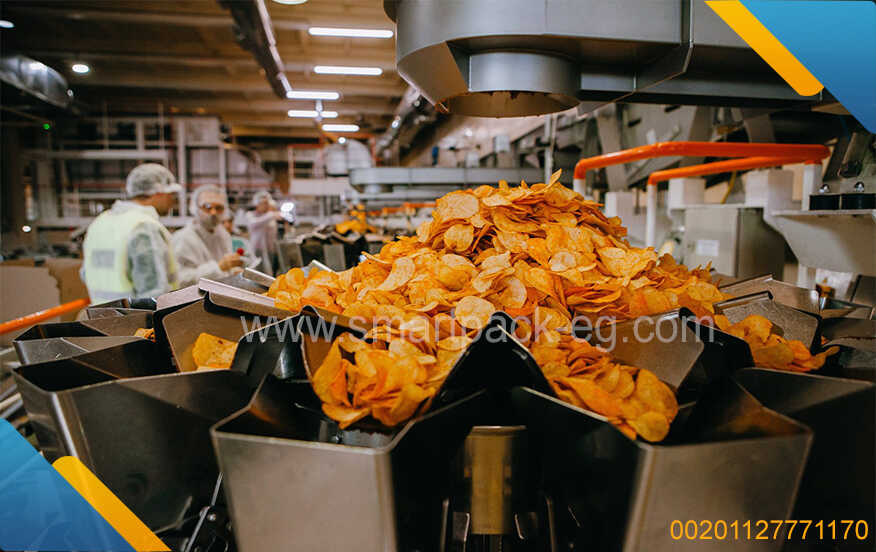
This automated system enables the production of thousands of units daily with minimal human intervention.
5. Market Study, Costs, Profits & ROI — Why 2026 Is a Golden Opportunity
2026 represents a strong investment opportunity in packaging industries due to:
-
Growth in food, detergent, and chemical sectors
-
Rising demand for ready-packaged products
-
Expanding export markets
-
Increasing manual labor costs
Example Profitability Model: Detergent Filling Factory
| Item | Estimated Monthly Value |
|---|---|
| Production Line Investment | 2,500,000 EGP |
| Daily Production Capacity | 20,000 bottles |
| Profit Margin per Bottle | 2.5 EGP |
| Net Monthly Profit | 1,500,000 EGP |
| Capital Payback Period | Less than 18 months |
This demonstrates that a professional packaging production line can recover its investment within 12 to 18 months.
6. Smart Buying Tips for Packaging Machines from Smart Pack
-
Choose a supplier offering a complete integrated production line, not just a standalone machine
-
Ensure local spare parts availability
-
Request operator training
-
Confirm strong after-sales service
-
Test the machine with your actual product before purchase
-
Work with a specialized industrial packaging machinery manufacturer
Partnering with Smart Pack provides:
-
Customized production line design
-
Local manufacturing with European-level quality
-
Fast technical support
-
Lower cost compared to importing equipment
7. Strategic Investment Advice for Factory Owners
-
Do not start with a small production line if high demand is expected
-
Calculate downtime costs before focusing on machine price
-
Automation directly increases profitability
-
High packaging quality enhances export potential
-
Focus on selecting the right packaging machine type for your project — not the cheapest option
8. Frequently Asked Questions
What is the best packaging machine for large factories?
Fully automatic high-speed production lines are the best choice because they reduce labor costs and maximize output.
Do detergent filling machines require special specifications?
Yes. They must be corrosion-resistant and made of industrial-grade stainless steel.
What is the difference between buying a standalone machine and a complete line?
A complete line ensures synchronization, higher speed, and lower material waste.
How long does it take to recover the investment cost?
Typically between 12 and 24 months depending on production volume.
Why choose Smart Pack?
Because it offers customized solutions, strong technical support, long-term warranty, and deep expertise in packaging factories.
The Decision Is Now Yours
If you want to double your factory’s production, reduce operational costs, and secure a strong and stable return on investment, the solution is clear:
Start with a professional integrated packaging production line.
Contact the team at Smart Pack today for a free consultation and customized production line design.
Every day of delay means lost profits.
The decision you make today defines your factory’s success tomorrow.