 Admin
Admin Choosing the Best Date Filling Equipment
A Dual Strategy to Maximize ROI in Your Date Production Line
Invest smarter and scale faster.
Select the right date filling and packaging machines — from sorting to cartoning — to reduce cost per pack, increase productivity, and accelerate capital recovery.
A well-planned equipment strategy can transform your factory into a high-efficiency, high-margin operation.
1. Why the Right Filling Equipment Doubles Your ROI
4
• Higher filling speed = more output per hour → higher sales
• Greater weighing accuracy = less giveaway and lower cost per pack
• Premium packaging quality = access to retail chains and higher pricing
• Scalability = upgrade instead of costly replacement
• Lower operating and maintenance costs = stronger long-term margins
The right machine is not an expense — it is a profit multiplier.
2. Practical Buying Checklist Before Selecting Machines
Before signing any purchase order, review these decision pillars:
• Product type: whole dates / pitted / stuffed / tray-packed
• Required speed (packs per minute) — define real production targets
• Weighing accuracy tolerance (± grams) — smaller deviation = higher savings
• Automation level: semi-automatic → automatic → fully integrated
• Material durability: food-grade stainless steel (contact parts)
• Packaging flexibility: bags, trays, premium boxes, windows, valves
• Ease of maintenance and local spare parts availability
• Operating cost: electricity, compressed air, lubricants, labor
• Factory space and future expansion capability
• Certifications: ISO, HACCP, food compliance standards
3. Core Machines in a Date Packaging Line & Their Functions
4
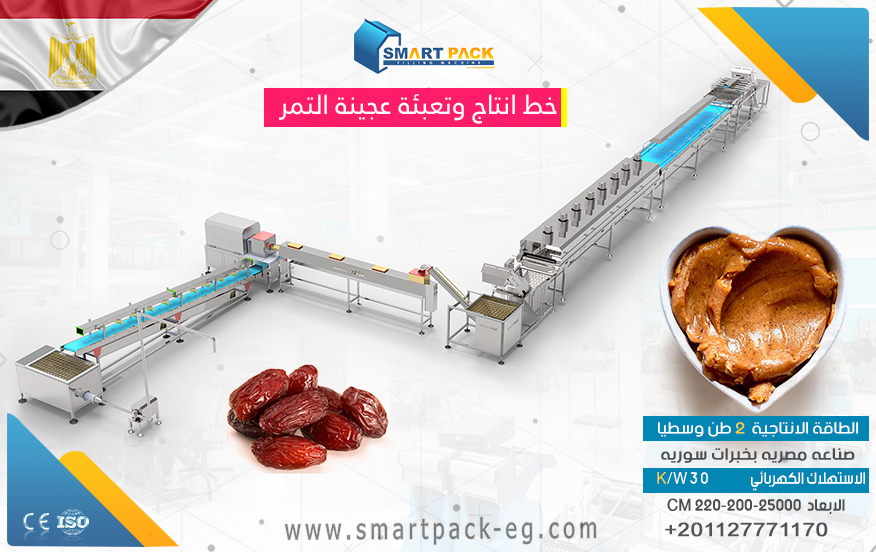
• Sorting & grading line — removes defects and classifies sizes
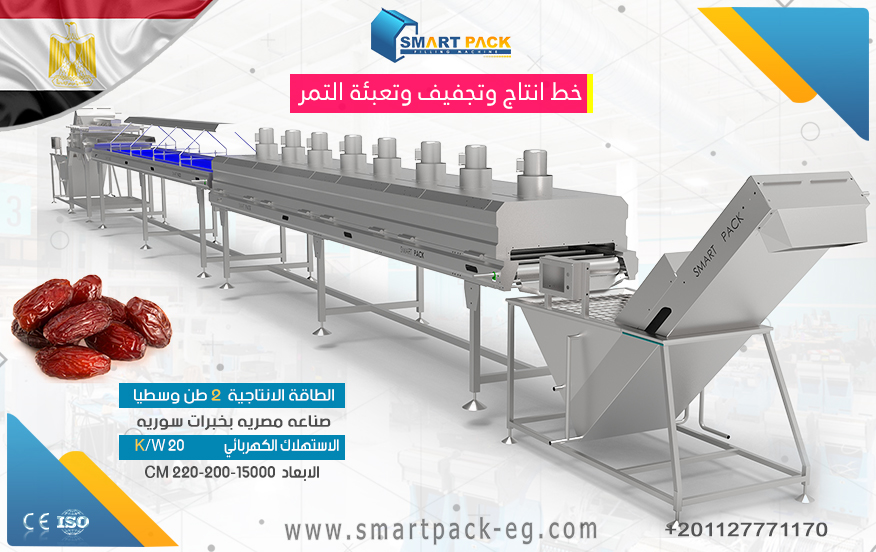
• Washing & drying system — improves hygiene and shelf life
• Pitting machine — for seedless or stuffed products
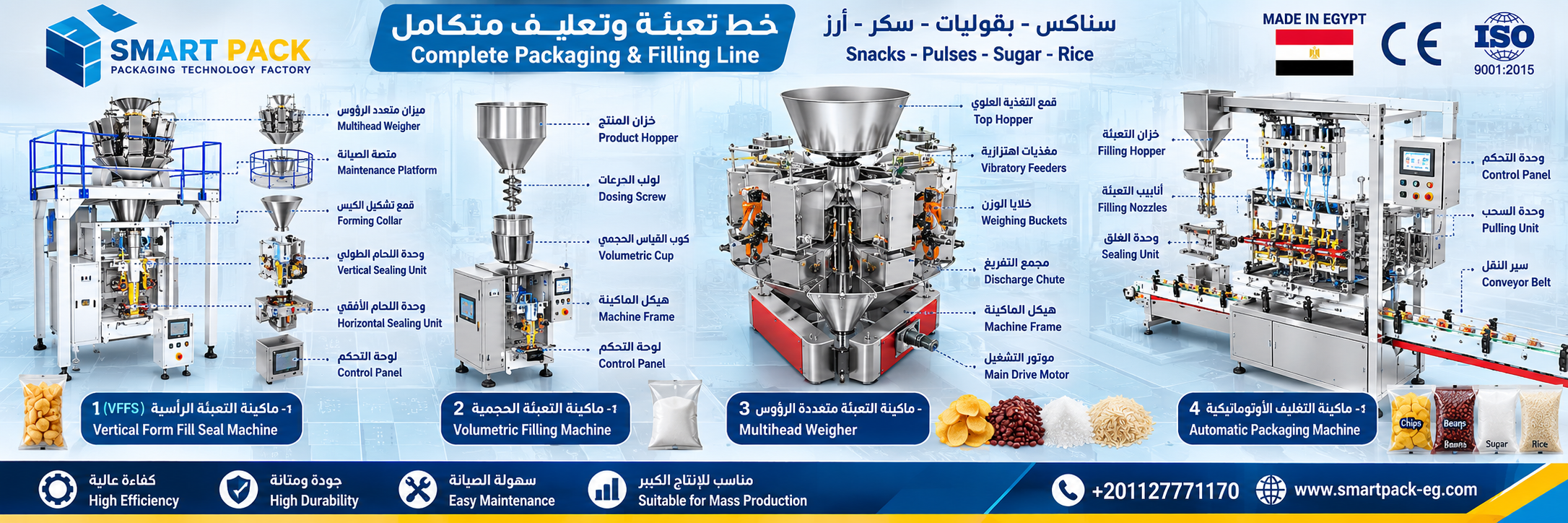
• Multihead weigher — high-speed, precise portioning
• VFFS / Tray Sealer / Flow Pack — depending on pack format
• Sealing or shrink wrapping machine — product protection
• Coding & labeling system — traceability and branding
• Cartoning & palletizing systems — distribution readiness
• Vision inspection system — quality control and reduced returns
4. Technical Specifications That Directly Impact ROI
Focus on measurable performance indicators:
• Capacity at least 20–30% above current demand for expansion
• Weighing accuracy: ±1–2 g (small packs), ±5 g (larger packs)
• MTBF (Mean Time Between Failures) ≥ 5,000 hours preferred
• Mold changeover time ≤ 30 minutes
• Energy consumption per 1,000 packs — request data from supplier
• PLC control + touchscreen + daily production tracking
• Food-grade materials (SS 304/316), easy-to-clean surfaces (CIP/SIP)
5. Example Layout of a Complete Date Packaging Line
4
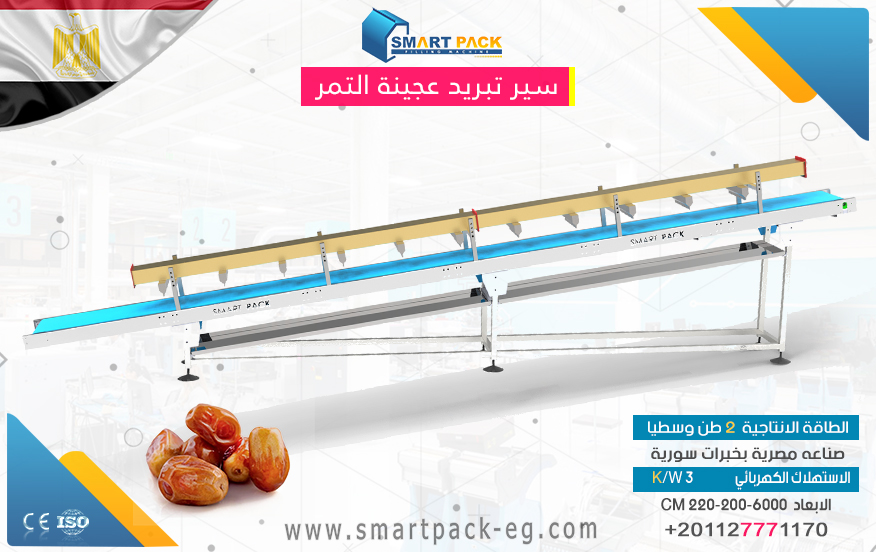
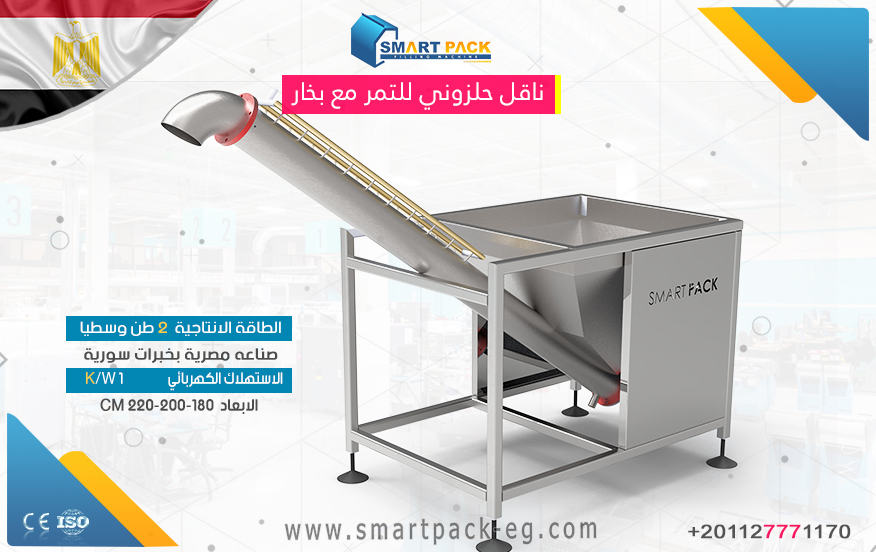
Receiving & sorting → Washing/Drying → Pitting → Conveyor → Multihead Weigher → VFFS or Tray Sealer → Coding/Labeling → Cartoning → Palletizing
Add a vision inspection stage before final packing to ensure export-grade quality.
6. How to Reduce Operating & Maintenance Costs
• Maintain critical spare parts inventory (bearings, belts, sensors)
• Sign annual service contracts with local support
• Train 2–3 technicians on preventive maintenance
• Implement daily OEE monitoring
• Optimize energy consumption and peak-hour scheduling
Proactive maintenance prevents expensive downtime.
7. Key Performance Indicators to Measure Profit Impact
• Actual output (packs/hour)
• Good product rate (%) after inspection
• Cost per pack = (raw + packaging + operation) ÷ units
• OEE = Availability × Performance × Quality
• Monthly unplanned downtime (%)
Tracking these metrics reveals real ROI performance.
8. Practical ROI Example (Illustrative Numbers)
Investment in automatic filling machine: 600,000 (currency units)
Current production: 5,000 packs/day
Average selling price: 10 per pack
Current cost per pack: 6
After upgrade:
Production increases 50% → 7,500 packs/day
Cost per pack drops to 5.2
Before upgrade:
Revenue = 5,000 × 10 = 50,000
Cost = 5,000 × 6 = 30,000
Profit = 20,000
After upgrade:
Revenue = 7,500 × 10 = 75,000
Cost = 7,500 × 5.2 = 39,000
Profit = 36,000
Daily profit increase = 16,000
Profit growth = 80%
Estimated payback period:
600,000 ÷ 16,000 ≈ 38 working days
This simplified model demonstrates how automation accelerates capital recovery.
9. Smart Purchasing Tips to Maximize ROI
• Request detailed energy and MTBF data
• Invest in a high-precision multihead weigher
• Add vision inspection for export markets
• Choose modular systems for future upgrades
• Negotiate local spare parts and maintenance agreements
Working with experienced suppliers such as Smart Pack ensures supply, installation, training, and technical support under one integrated solution.
10. Final Criteria Before Signing the Contract
• Minimum 12-month warranty on critical components
• Spare parts availability within 7–14 days
• Factory Acceptance Test (FAT) before shipment
• On-site operator and technician training
• Flexible payment or leasing options if available
Frequently Asked Questions
Is a Multihead Weigher better than manual scale systems?
Yes, for factories exceeding 1,000 packs/day — it increases speed and reduces giveaway.
Do I need a pitting line for whole dates?
If targeting stuffed or seedless markets, yes — it increases product value.
What automation level is ideal?
For medium factories, 50–80% automation balances CAPEX and OPEX.
How do I evaluate a machine supplier?
Request references, verify real OEE data, and inspect a working facility if possible.
Is premium packaging important for export?
Absolutely. High-end packaging increases price positioning and retail access.