
 Admin
Admin Industrial Apricot Jam Manufacturing: Turning Seasonal Fruit into a High-Value Product
Apricots are a seasonal fruit with strong demand over a short period, yet their true value emerges when they are industrially processed into a stable, high-return product. Manufacturing apricot jam in factories enables efficient crop utilization, reduces seasonal waste, and creates a product that can be stored and marketed year-round.
Using professional food production lines ensures consistent quality, fast turnover, and access to local and export sales channels with solid profit margins.
This industrial model suits small, medium, and large factories, and can be implemented with flexible, scalable lines based on demand growth.
Why Is Apricot Jam a Profitable Industrial Choice for Converting Seasonality into Sustainable Value?
Fresh apricots are highly perishable and subject to seasonal price fluctuations, limiting profitability when sold raw. Industrial processing solves this by:
-
Extending shelf life
-
Multiplying market value
-
Reducing seasonal waste
-
Standardizing quality and pricing
-
Opening export opportunities
As a result, apricot jam is among the most stable and profitable products in the food processing sector.
What Is Apricot Jam and How Is It Manufactured Industrially?
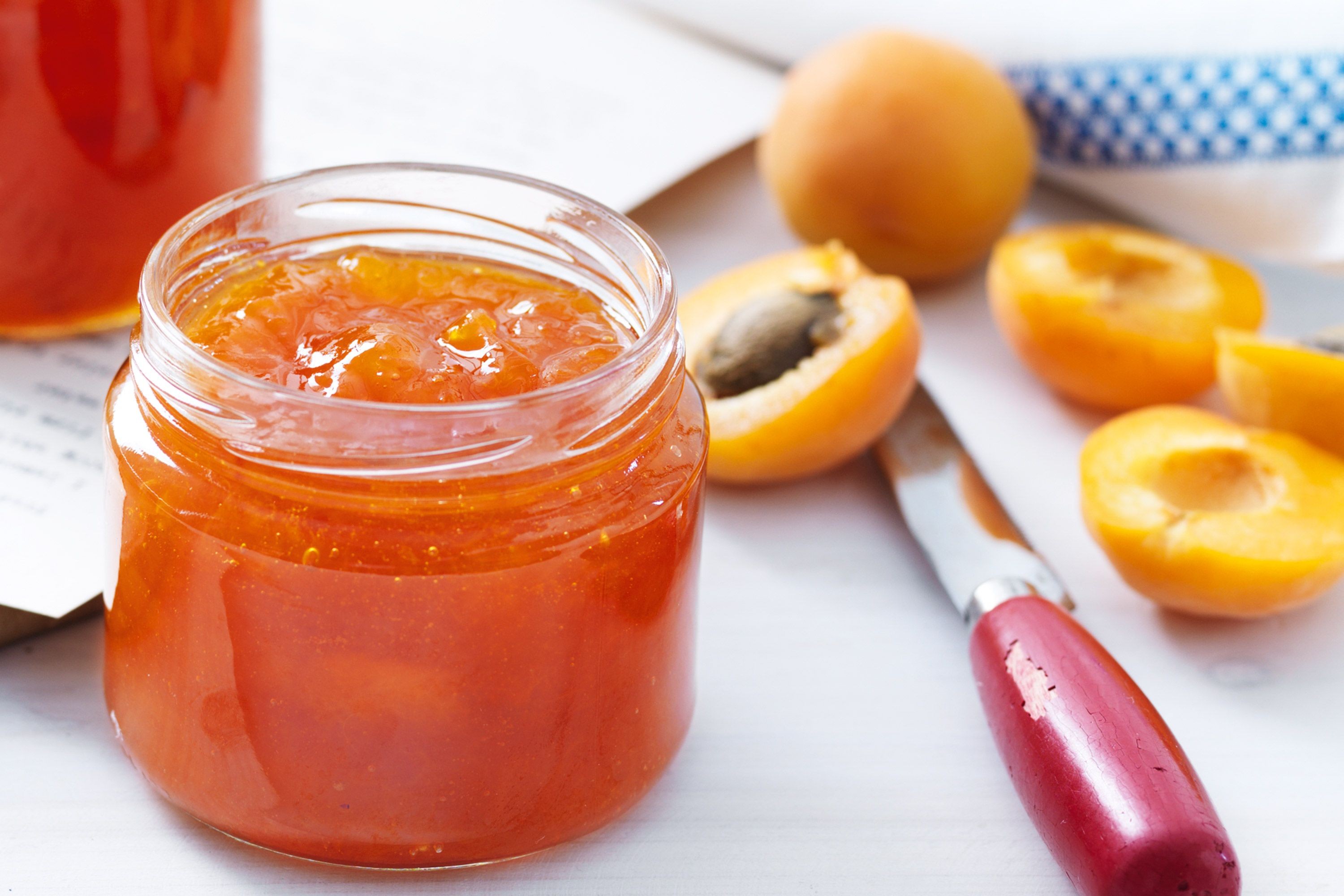
Apricot jam is a food product made from ripe apricots after washing, pitting, and cooking with carefully calculated sugar ratios to achieve a uniform texture and appealing natural color.
Industrial production relies on precise control of temperature, time, and solids ratios to ensure consistent texture and flavor across batches.
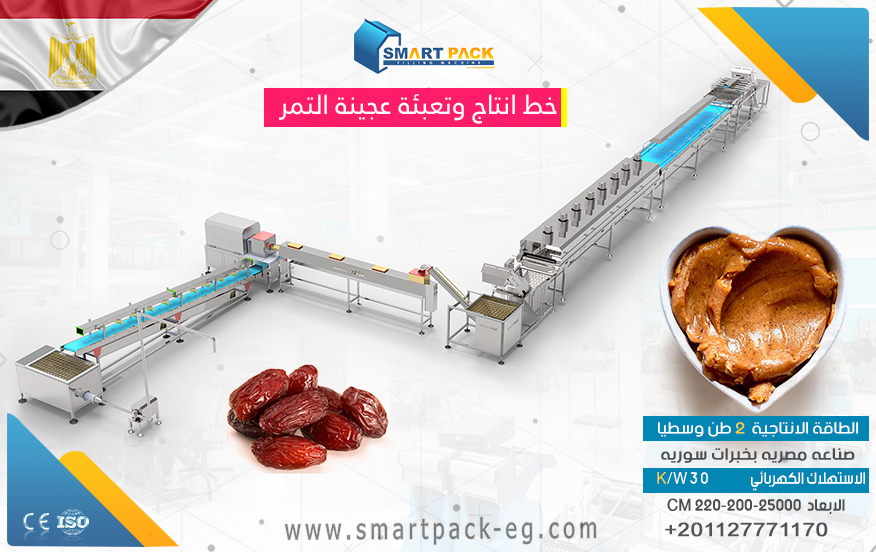
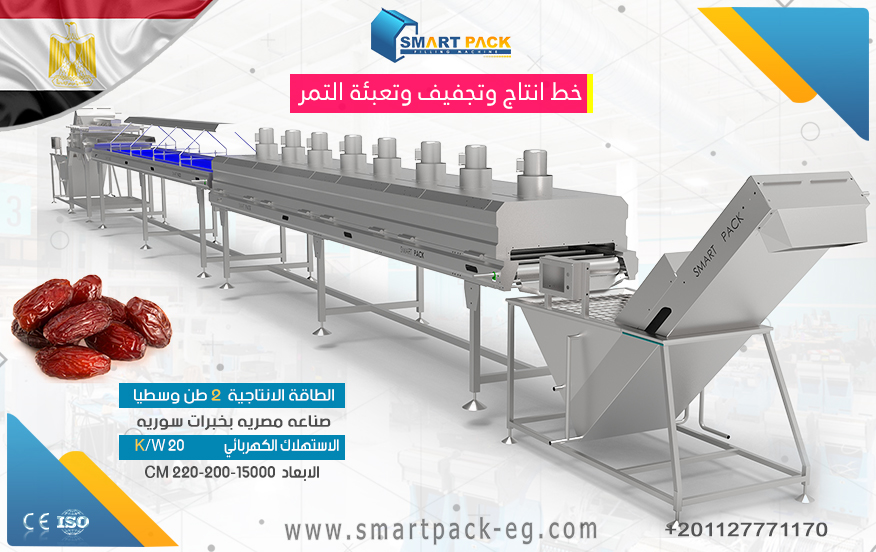
Apricot Jam Production Line Specifications in Factories
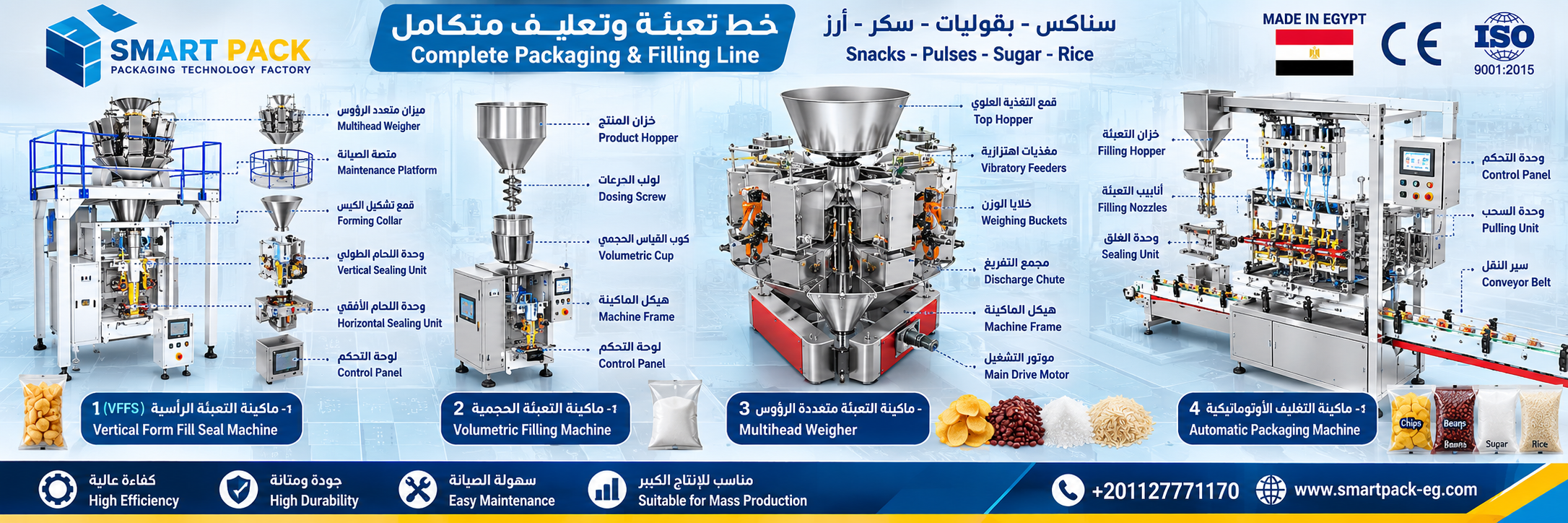
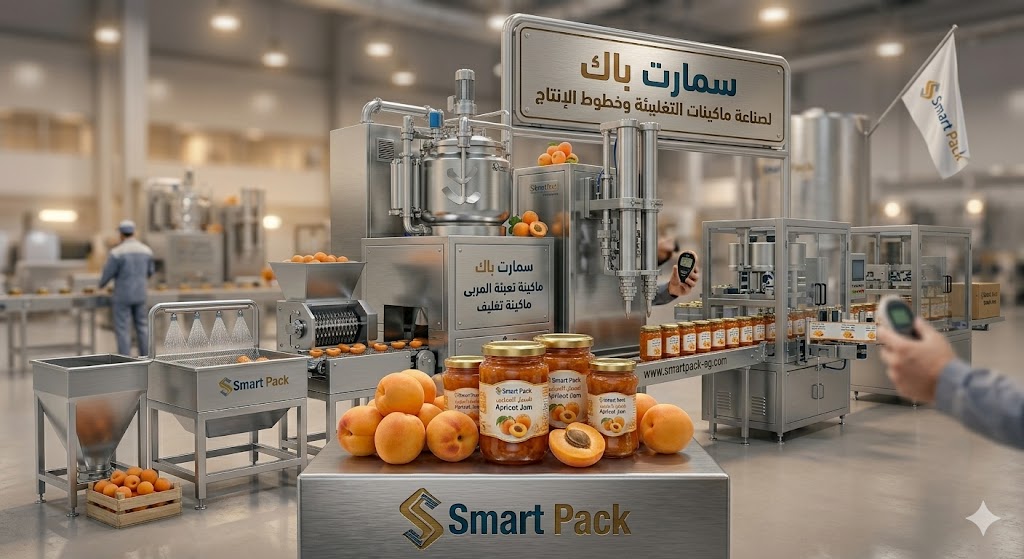
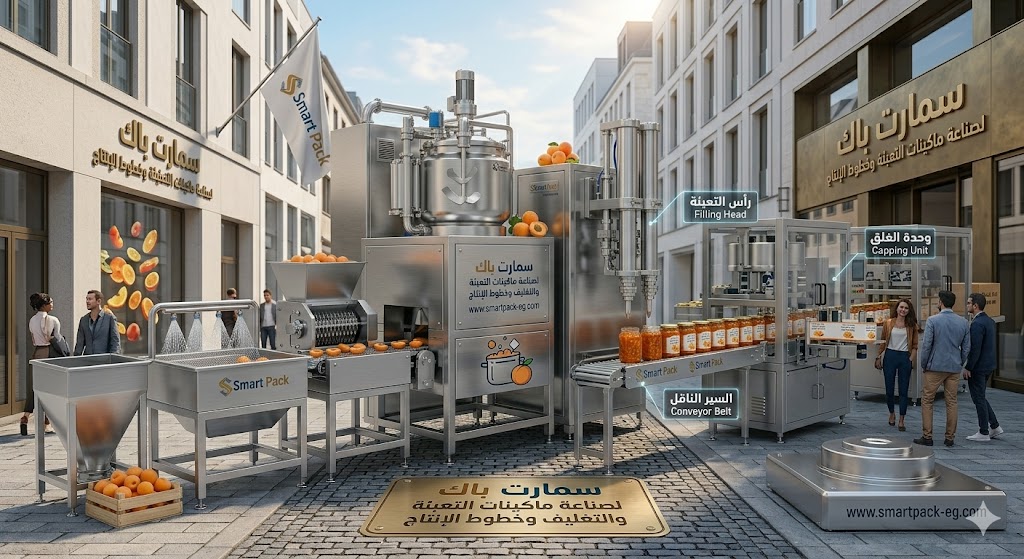
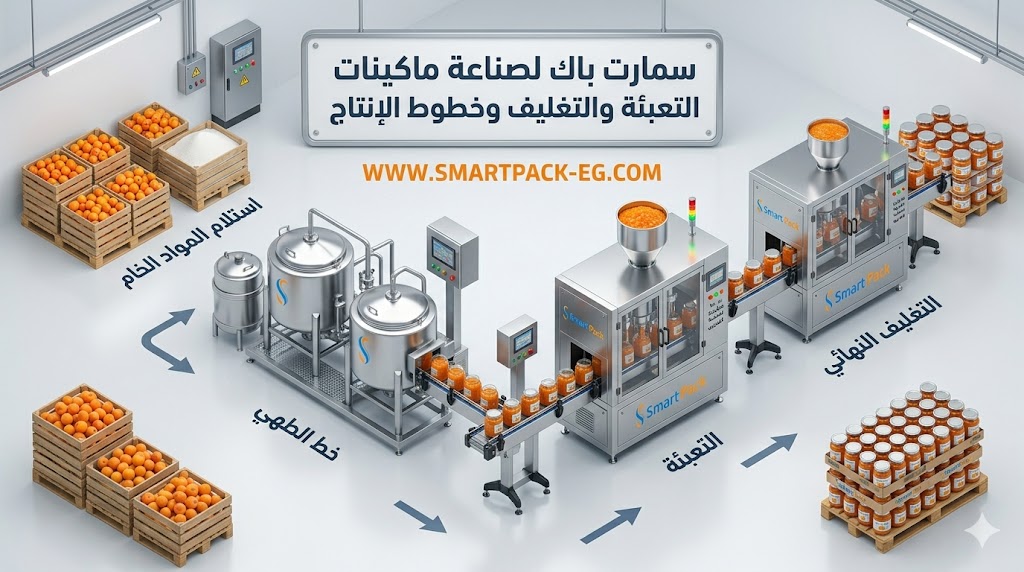
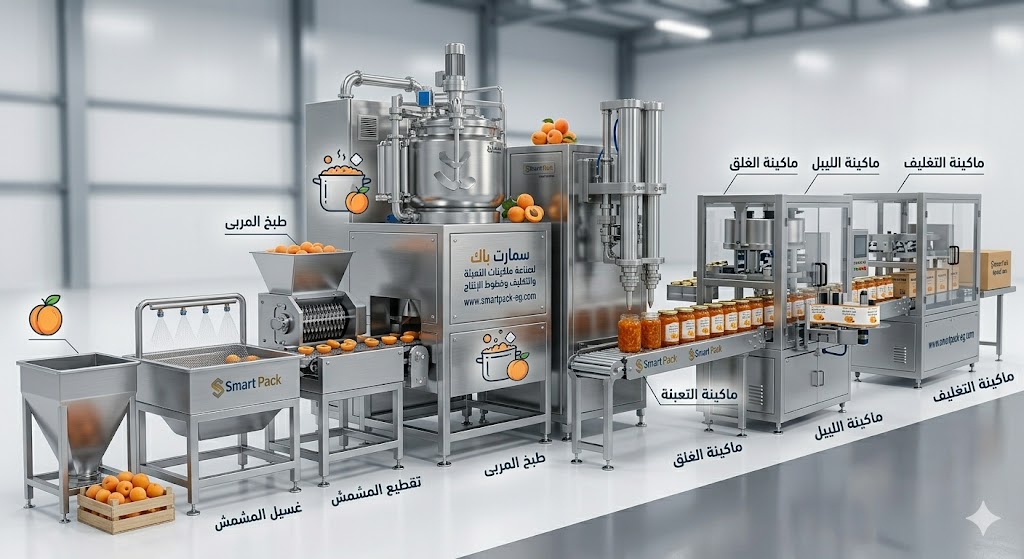
Production lines are designed according to target capacity and available space and typically include:
-
Apricot washing and sorting machines
-
Pitting and cutting machines
-
Grinding machines to convert fruit into pulp
-
Industrial cooking kettles with heating and mixing systems
-
Holding and conditioning tanks
-
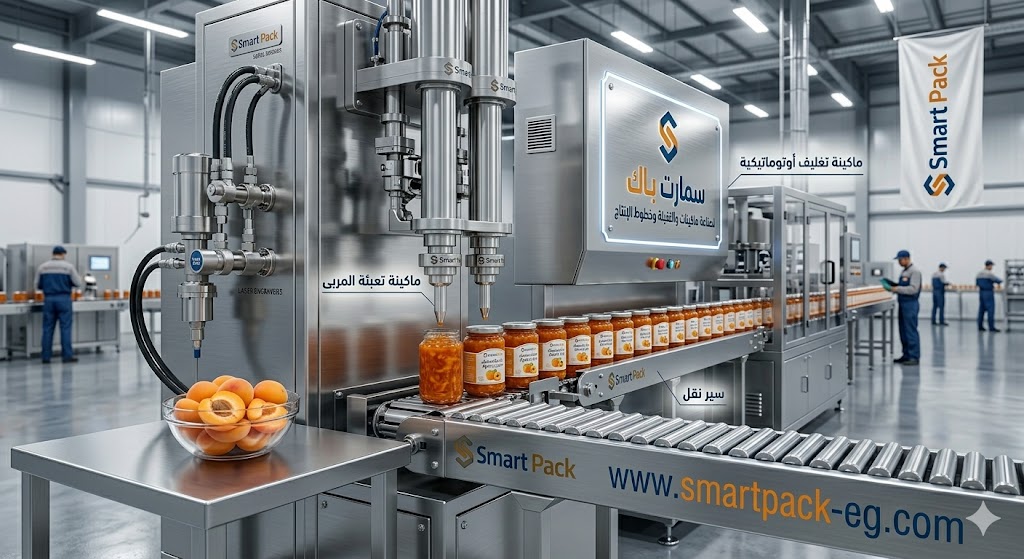
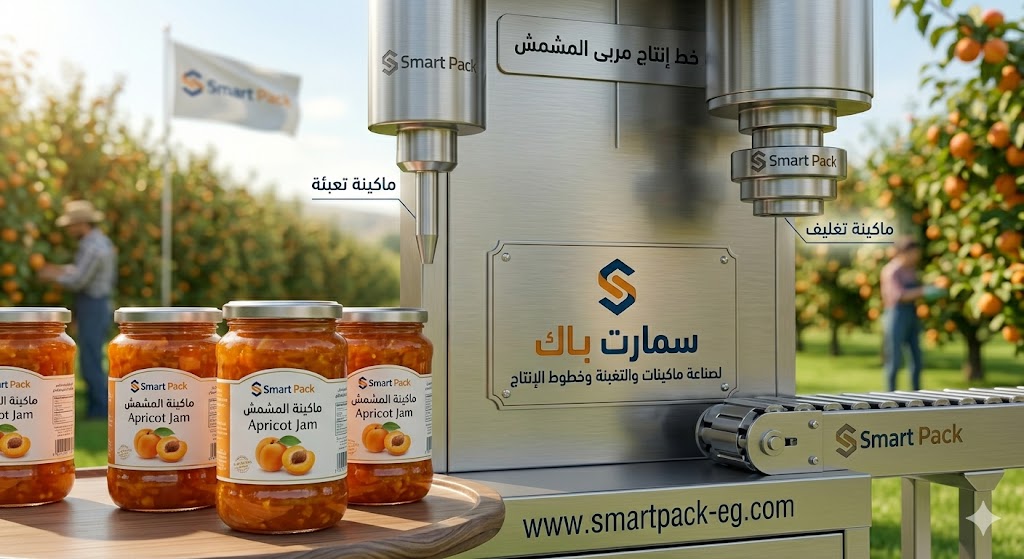
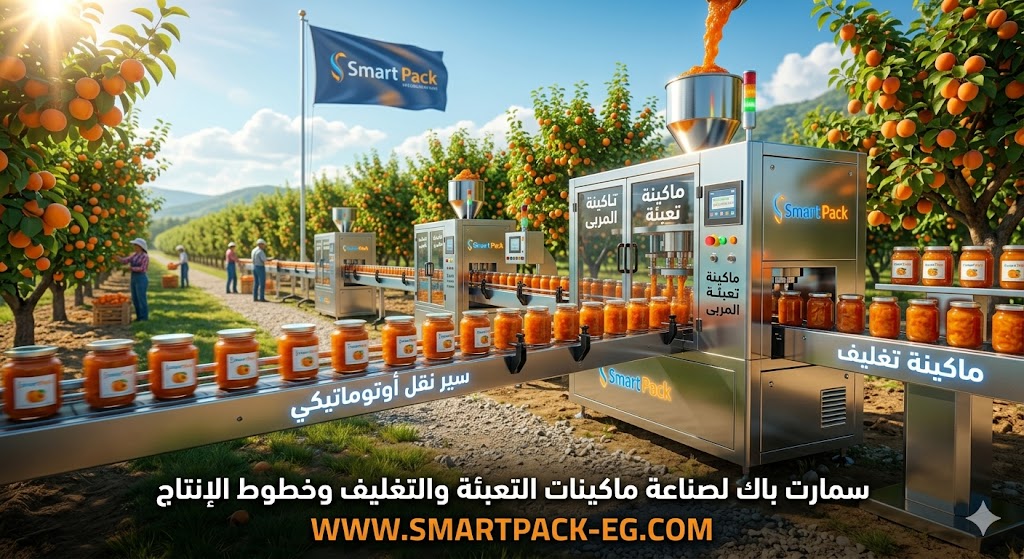
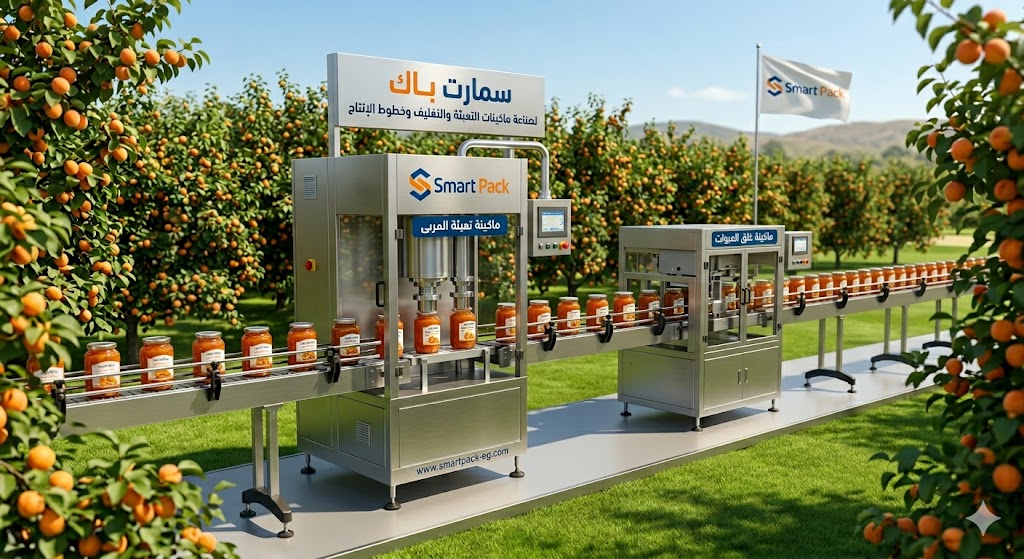
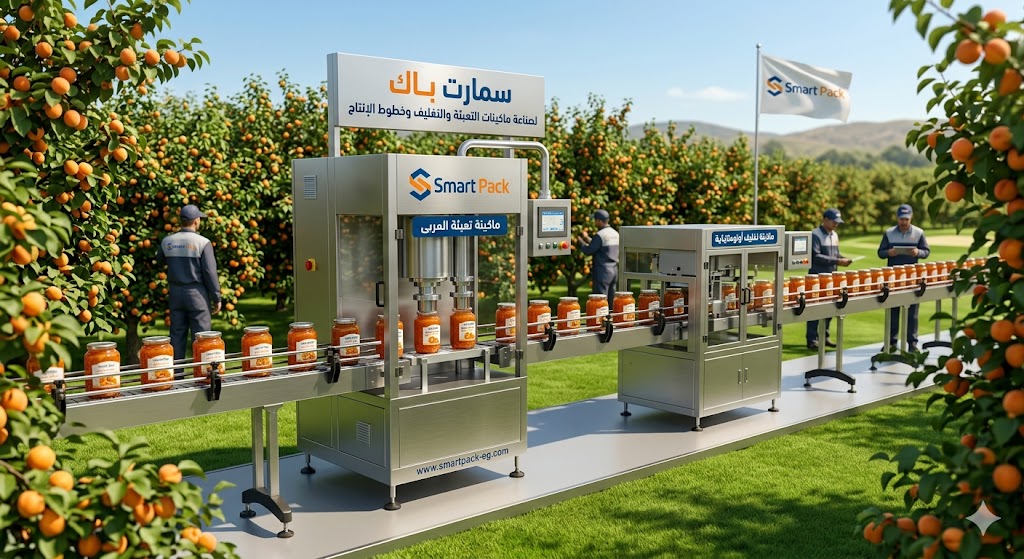
Filling and packaging machines
All equipment should be made of food-grade stainless steel to ensure safety, hygiene, and easy cleaning and maintenance.
Operating Stages Inside an Apricot Jam Factory
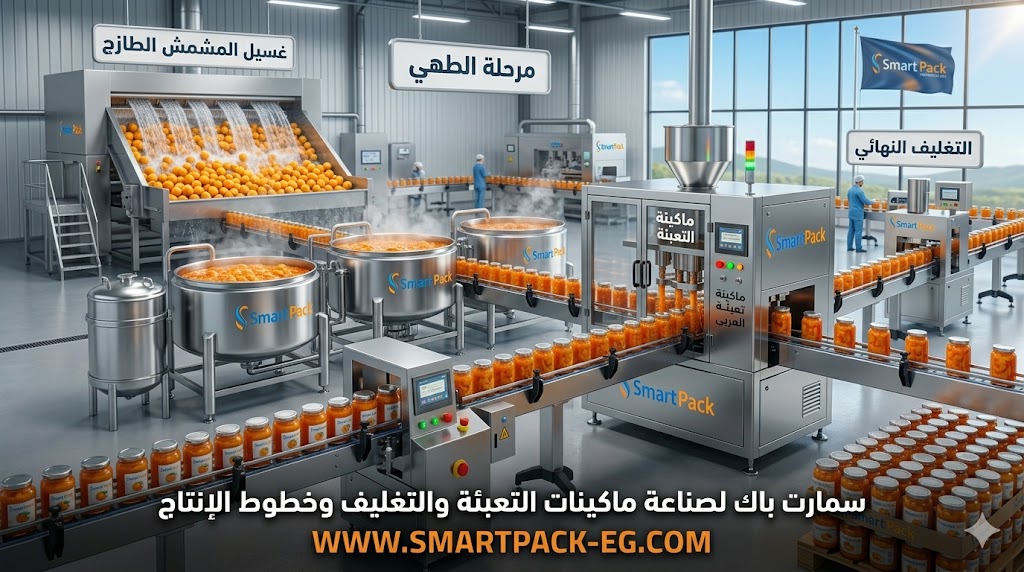
The process begins with receiving and sorting apricots to select sound fruit. After washing, the pits are removed, the fruit is cut, and then ground to obtain a uniform pulp.
The pulp moves to the cooking stage, where sugars are added and temperature and cooking time are precisely controlled to achieve the desired consistency and concentration while preserving natural color.
After cooling, the product is transferred to filling tanks for accurate filling and packaging.
Suitable Filling and Packaging Machines for Apricot Jam
Apricot jam is a semi-viscous product, either smooth or containing fruit pieces. Recommended options include:
-
Viscous liquid filling machines
-
Semi-viscous filling machines with fruit pieces
-
Semi-automatic machines for start-up factories
-
Fully automatic machines for medium and large production lines
Choosing the right filling and packaging equipment reduces waste, increases line efficiency, and enhances the final product’s appearance.
Comparison Tables: Production Capacities and Equipment Options
Production Capacity Comparison
| Daily Capacity | Factory Size | Investment Cost | Profit Margin |
|---|---|---|---|
| 300 kg/day | Small | Low | Good |
| 1 ton/day | Medium | Medium | Strong |
| 3 tons/day | Large | High | Very Strong |
Filling Machine Options
| Machine Type | Automation Level | Suitable For |
|---|---|---|
| Manual | Low | Limited production |
| Semi-automatic | Medium | Start-up factories |
| Automatic | High | Commercial production & export |
Apricot Jam Market Study
Demand for apricot jam remains stable across:
-
Local markets
-
Supermarket chains
-
Bakeries and confectionery factories
-
Restaurants and hotels
-
Arab and African markets
Wide consumer acceptance enables long-term planning and consistent sales performance.
Cost, Profitability, and Return on Investment
Project costs typically include:
-
Production lines
-
Filling and packaging machines
-
Raw apricot supply
-
Operating and energy expenses
With efficient management, net profit margins of 30–45% are achievable, and capital recovery can occur within 12–18 months, depending on capacity and turnover speed.
Industrial Tips for Consistent Quality and Higher Value
-
Select ripe, uniform apricots
-
Control cooking parameters precisely to preserve color
-
Use attractive packaging that reflects product quality
-
Start with flexible capacity that can scale
-
Minimize waste with high-precision filling machines
Why Choose Integrated Solutions from Smart Pack?
Successfully transforming seasonal fruit into a high-value product depends on equipment integration and reliability. Smart Pack provides:
-
Custom-designed production lines based on space and capacity
-
Filling and packaging machines for viscous and semi-viscous products
-
Technical support and after-sales service
-
Flexible solutions for future expansion
Working with a trusted supplier ensures stable operations and consistent final product quality.
Frequently Asked Questions
Is apricot jam suitable for export?
Yes, thanks to its shelf life and stable quality.
Can production start with a small line?
Yes, factories can start with a semi-automatic line and expand later.
What is the best packaging for apricot jam?
Sealed glass jars enhance trust and market value.
What is the most important quality factor?
Precise control of temperature and concentration, along with accurate equipment.
Is the project fast-moving?
Yes, stable demand supports quick turnover and regular sales.
If you aim to transform a seasonal crop into a stable, high-value industrial product, apricot jam manufacturing to industrial standards is a smart choice.
Start with a professional production line, invest in high-quality filling and packaging machines, and position your factory for strong year-round sales and consistent quality.
Contact Smart Pack for a technical consultation and a customized production line design that delivers the best possible return on investment.