 Admin
Admin How to Manufacture Apricot Jam According to Industrial Standards for Consistent Quality and Strong Sales
Apricot jam is one of the most essential food products with stable year-round demand in both local and export markets. It is considered one of the most successful industrial food products for achieving consistent quality and strong commercial sales.
Transforming apricots from a highly perishable seasonal fruit into a reliable industrial jam product gives manufacturers a clear competitive advantage and converts seasonal fluctuations into sustainable profit opportunities.
Industrial production ensures uniform texture, color, and flavor, allowing the product to confidently enter major retail chains and international markets.
This project is suitable for small, medium, and large factories, and can be implemented using flexible production lines that expand with market growth.
Why Is Apricot Jam a Successful Industrial Product for Strong Sales?
Apricots are widely accepted fruits used in households, bakeries, and food manufacturing. However, their short shelf life limits fresh marketing opportunities. Industrial processing solves this issue and creates high added value.
Key factors behind the industrial success of apricot jam:
-
Stable demand throughout the year
-
Easy standardization of industrial quality
-
Competitive pricing with strong profit margins
-
Suitable for both domestic sales and export
-
Efficient storage and transportation
These advantages make apricot jam a core product in profitable food production lines.
What Is Apricot Jam and How Is It Manufactured Industrially?
Apricot jam is a food product made from carefully selected apricot fruits that are washed, pitted, cooked with controlled sugar ratios, and processed to achieve a balanced taste, smooth consistency, and attractive natural color.
Industrial manufacturing relies on:
-
Precise temperature control
-
Accurate solids concentration ratios
-
Consistent texture across production batches
-
Preservation of natural color and flavor
-
Strict food safety standards
Using industrial production lines guarantees repeatable commercial quality and long-term brand reliability.
Industrial Apricot Jam Production Line Specifications
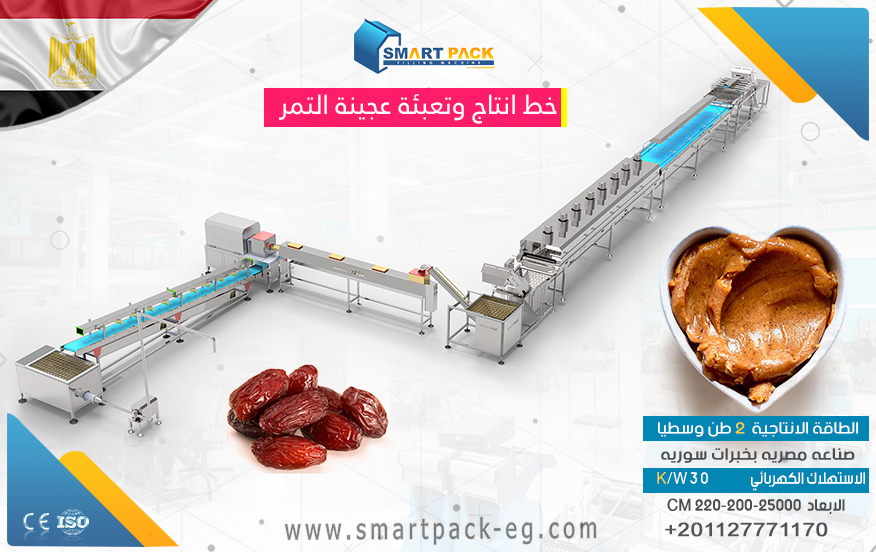
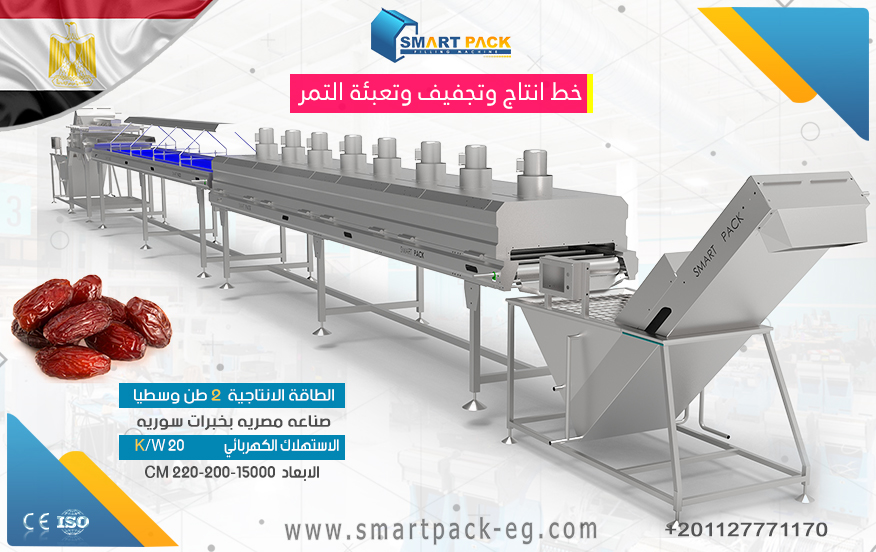
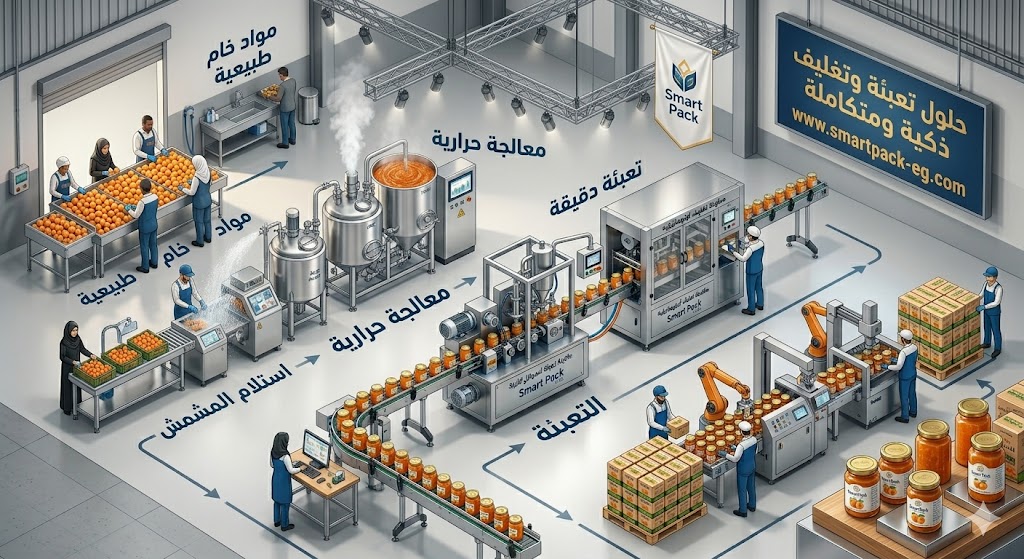
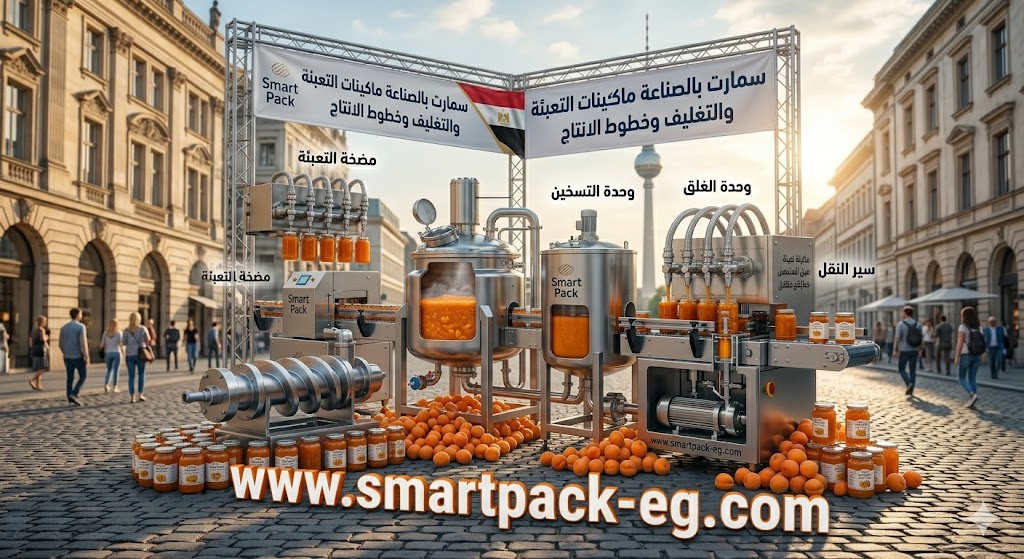
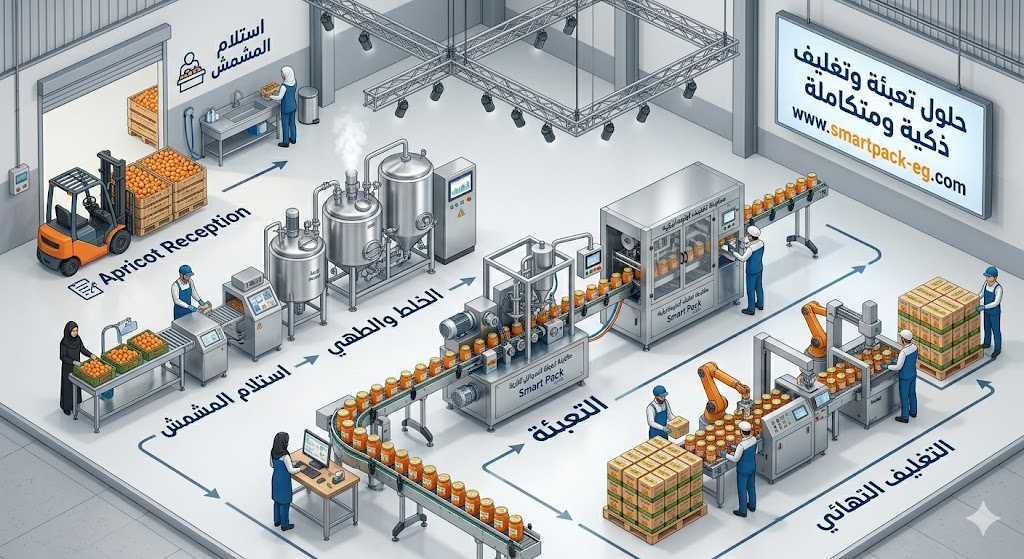
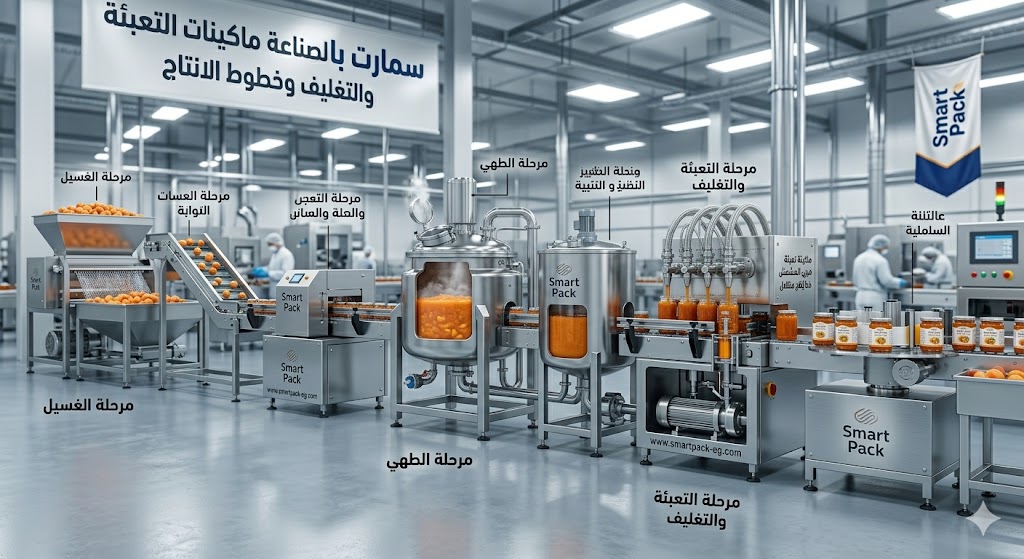
An apricot jam production line consists of integrated equipment designed according to target production capacity and factory layout.
Main components of the production line:
-
Apricot washing and sorting machines
-
Pitting and cutting machines
-
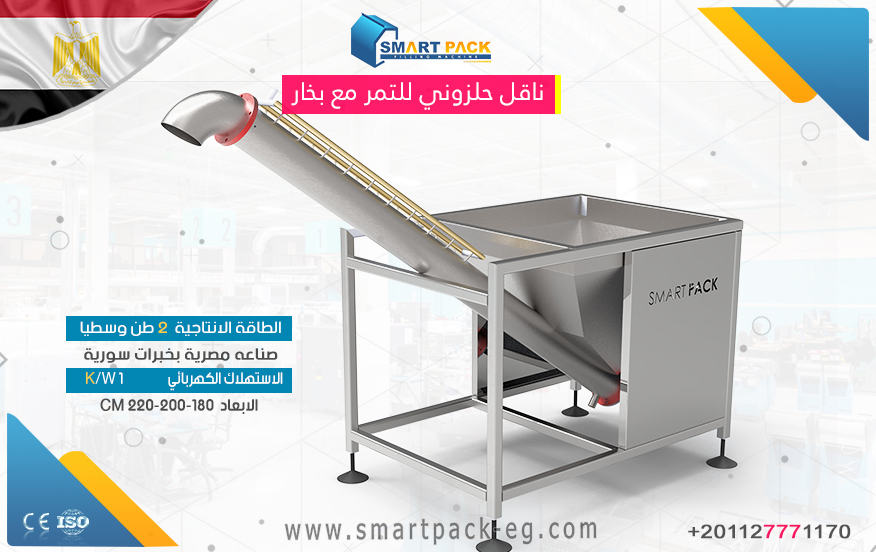
Fruit crushing and pulp preparation machines
-
Industrial cooking kettles with heating and mixing systems
-
Holding and conditioning tanks
-
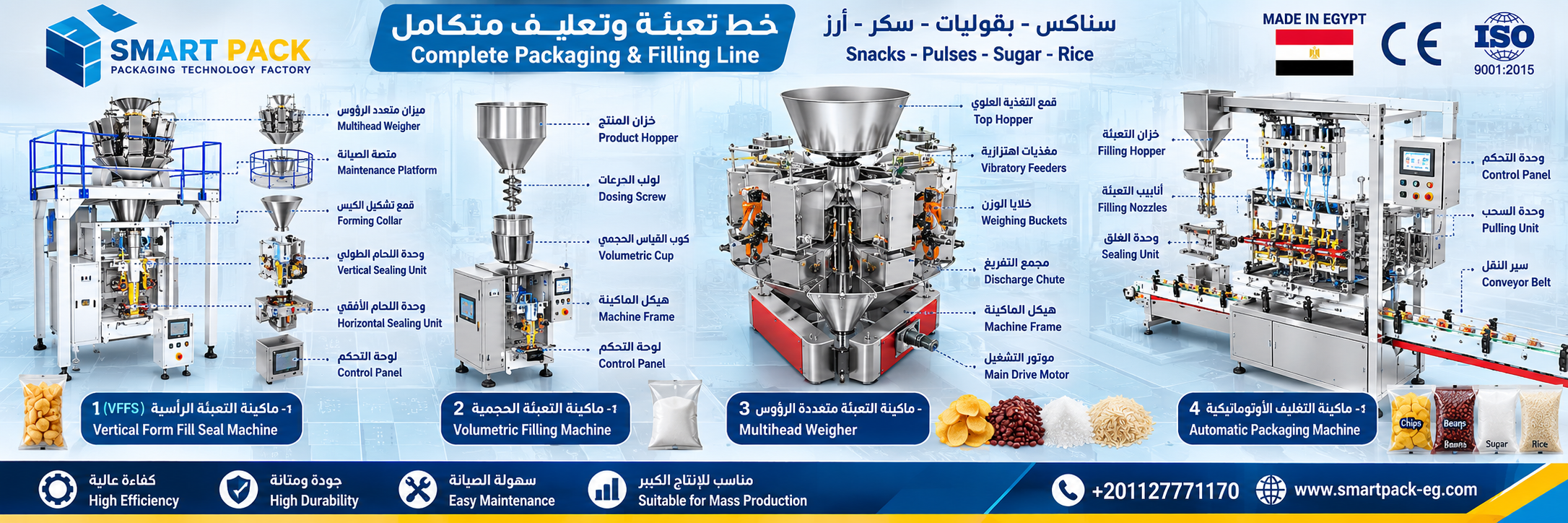
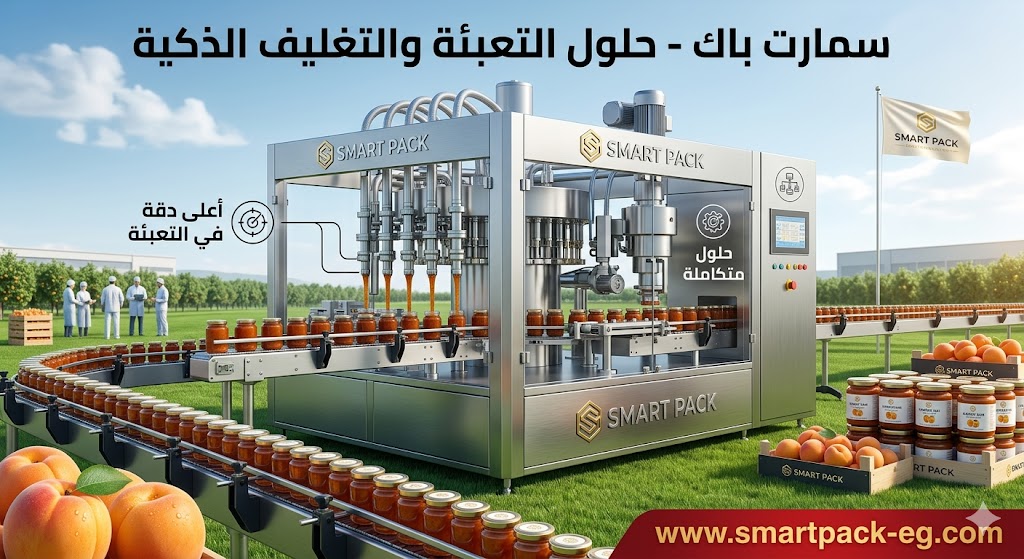
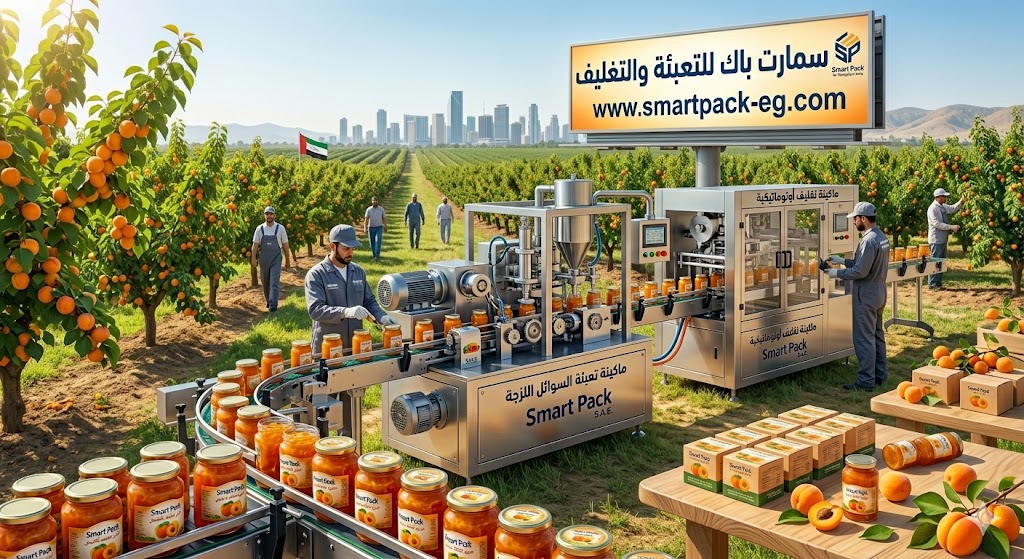
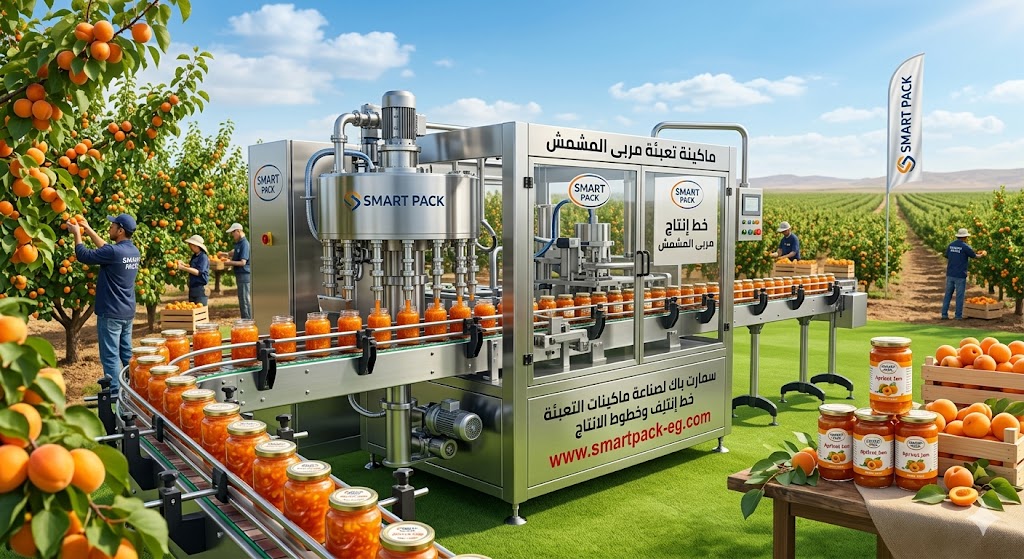
Filling and packaging machines
All equipment must be manufactured from food-grade stainless steel to ensure hygiene, easy cleaning, and long operational life.
Operating Stages Inside an Apricot Jam Factory
The process begins with receiving and sorting apricots to select healthy fruits. After washing, the fruits are pitted, cut, and crushed to produce uniform pulp.
The pulp is transferred to industrial cooking kettles, where sugar is added and temperature and cooking time are precisely controlled to reach the desired consistency and concentration while maintaining natural color.
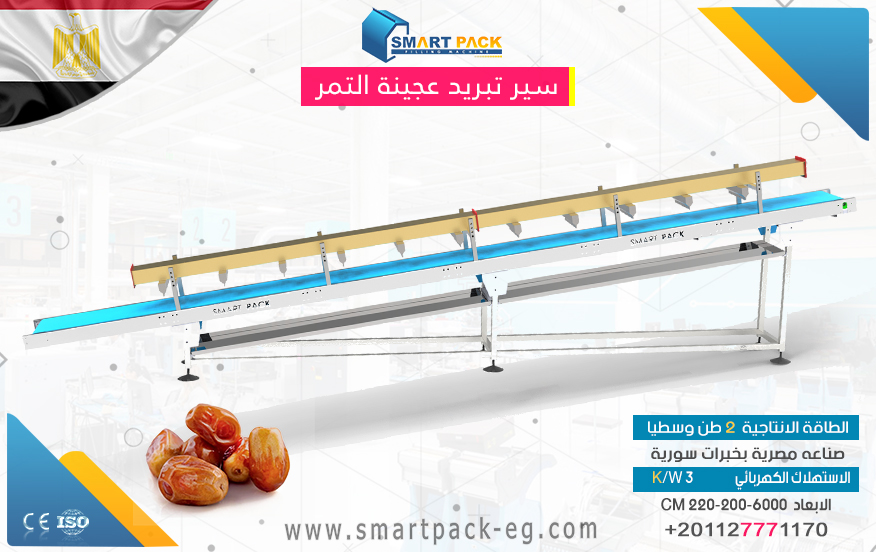
After cooking, the product is cooled and transferred to filling tanks in preparation for accurate filling and packaging operations.
Suitable Filling and Packaging Machines for Apricot Jam
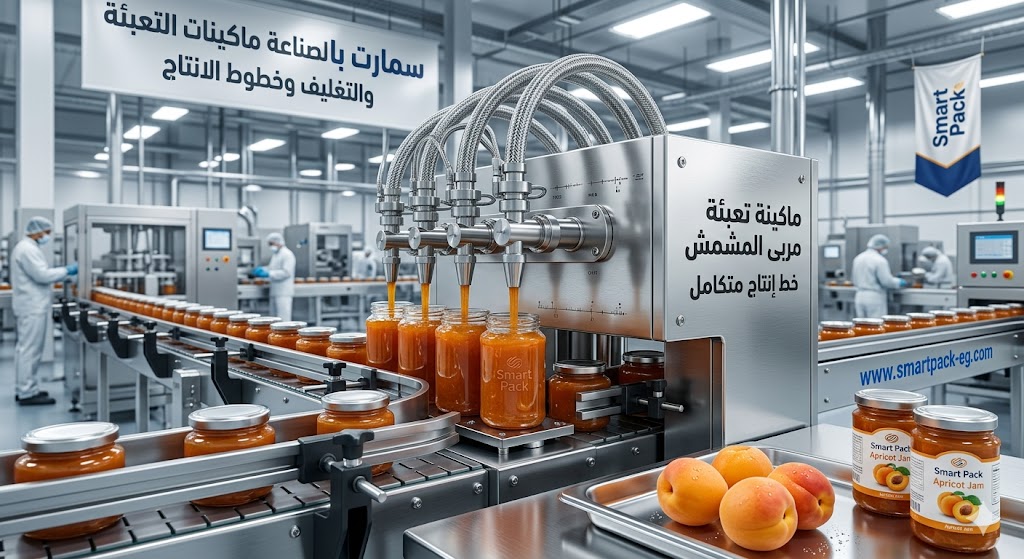
Apricot jam is a semi-viscous product, sometimes smooth and sometimes containing fruit pieces, which requires selecting the right filling technology.
Suitable filling machine options include:
-
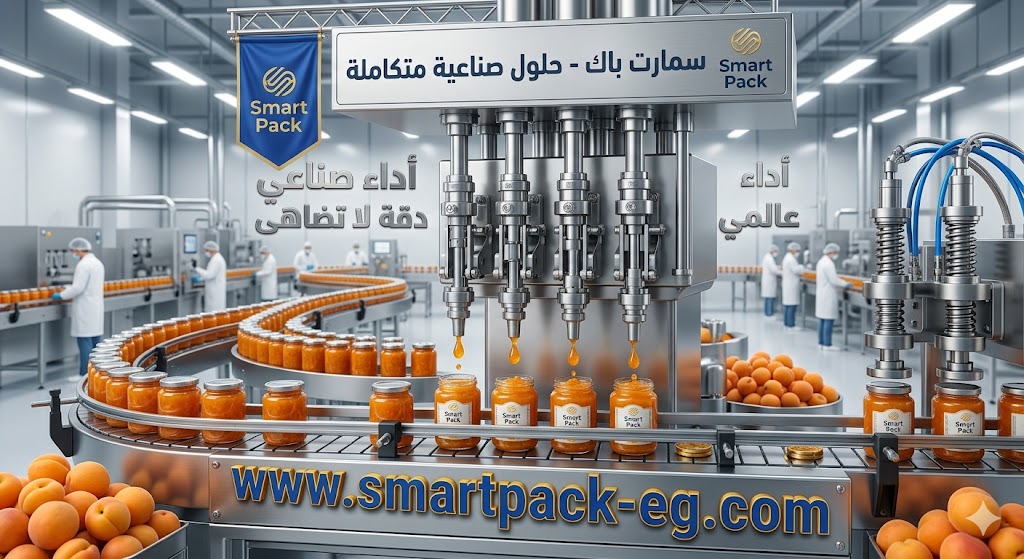
Viscous liquid filling machines
-
Semi-viscous filling machines with fruit pieces
-
Semi-automatic filling machines for glass jars
-
Fully automatic filling and packaging machines for medium and large production lines
The correct filling solution reduces product loss, increases line efficiency, and enhances the final product appearance.
Production Capacity and Equipment Comparison Tables
Production Capacity Options
| Production Capacity | Factory Size | Investment Cost | Sales Strength |
|---|---|---|---|
| 300 kg per day | Small | Low | Good |
| 1 ton per day | Medium | Medium | Strong |
| 3 tons per day | Large | High | Very Strong |
Filling Machine Options
| Machine Type | Automation Level | Suitable For |
|---|---|---|
| Manual machine | Low | Limited production |
| Semi-automatic machine | Medium | Start-up factories |
| Automatic machine | High | Commercial production factories |
Apricot Jam Market Study
The apricot jam market enjoys strong stability due to its widespread consumption and consumer familiarity. The product is in demand across:
-
Local retail markets
-
Supermarket chains
-
Bakeries and confectionery factories
-
Restaurants and hotels
-
Arab and African export markets
Stable demand enables factories to plan production efficiently and achieve consistent sales volumes.
Cost, Profitability, and Return on Investment
Project costs typically include:
-
Production line equipment costs
-
Filling and packaging machine costs
-
Raw apricot costs
-
Operating and energy expenses
On average, an apricot jam factory can achieve a net profit margin between 30% and 45%. With effective management and fast product turnover, capital recovery is usually possible within 12 to 18 months.
Industrial Tips for Consistent Quality and Strong Sales
-
Precise control of apricot ripeness
-
Maintaining natural color as a marketing advantage
-
Using attractive and practical packaging
-
Starting with flexible capacity that allows expansion
-
Minimizing waste through accurate filling machines
Why Choose Production Lines and Machines from Smart Pack?
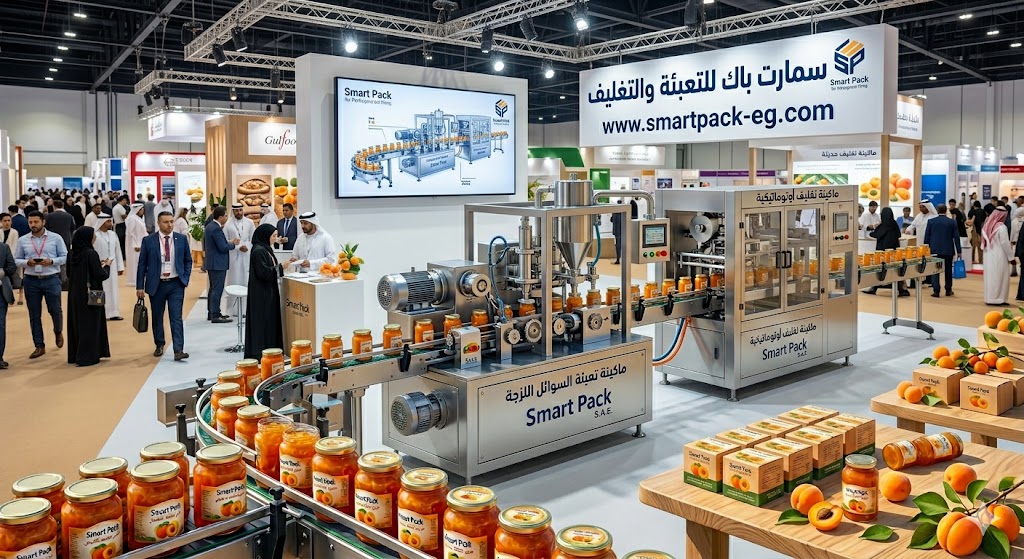
Successful industrial jam manufacturing depends directly on equipment quality and system integration. Smart Pack provides complete solutions in food production and packaging, including:
-
Customized production line design based on space and capacity
-
Filling machines for viscous and semi-viscous products
-
Technical support and after-sales service
-
Flexible solutions for future expansion
Relying on a single professional supplier ensures stable operation and consistent final product quality.
Frequently Asked Questions
Is apricot jam suitable for export?
Yes, apricot jam is ideal for export due to its long shelf life and stable quality.
Can production start with a small line?
Yes, factories can start with a semi-automatic line and expand as demand grows.
What is the best filling machine for apricot jam?
Viscous or semi-viscous filling machines with fruit-piece handling capability are ideal.
What is the most important factor for quality consistency?
Accurate temperature control, concentration ratios, and precise equipment.
Is apricot jam a fast-moving product?
Yes, it is one of the most widely consumed and stable jam products in the market.
If you are targeting a high-demand food product that is easy to manufacture and capable of generating strong sales with consistent quality, industrial apricot jam production is a smart investment choice.
Start building a professional production line today, invest in high-quality filling and packaging machines, and position your factory as a reliable supplier for local and export markets.
Contact Smart Pack now to receive a technical consultation and a customized production line design that maximizes your return on investment.