
 Admin
Admin Tomato Jam Manufacturing: Turning a Low-Value Crop into a High-Demand, High-Profit Food Product
4
In the modern food industry, real value no longer lies in the raw material itself, but in your ability to transform it into an innovative, high-demand, fast-moving product. Tomato jam is a smart example of this industrial transformation, where tomatoes shift from a low-priced, volatile crop into a distinctive food product with strong profit margins and wide marketing potential.
Investing in tomato jam manufacturing according to industrial standards enables food factories and startups to enter a growing market with confidence and long-term sustainability.
Tomato jam is not merely a traditional product—it is widely used in professional kitchens, hotels, restaurants, and selected food industries, making it a year-round, high-demand product.
Why Tomato Jam Is a Promising Industrial Project
Tomatoes are among the most abundant agricultural crops, yet they suffer from high losses due to rapid spoilage and seasonal price fluctuations. Industrial processing solves this challenge entirely.
Converting tomatoes into jam creates high added value, extends shelf life, and provides manufacturers with a stable-quality product that is easy to transport and store.
Demand for tomato jam is driven by:
-
Growing reliance on ready-to-use food products
-
Expansion of the restaurant and hotel sector
-
Rising interest in innovative food items
-
Competitive export opportunities
These factors make the project suitable for small and medium factories as well as large-scale production lines.
What Is Tomato Jam and How Is It Produced Industrially?
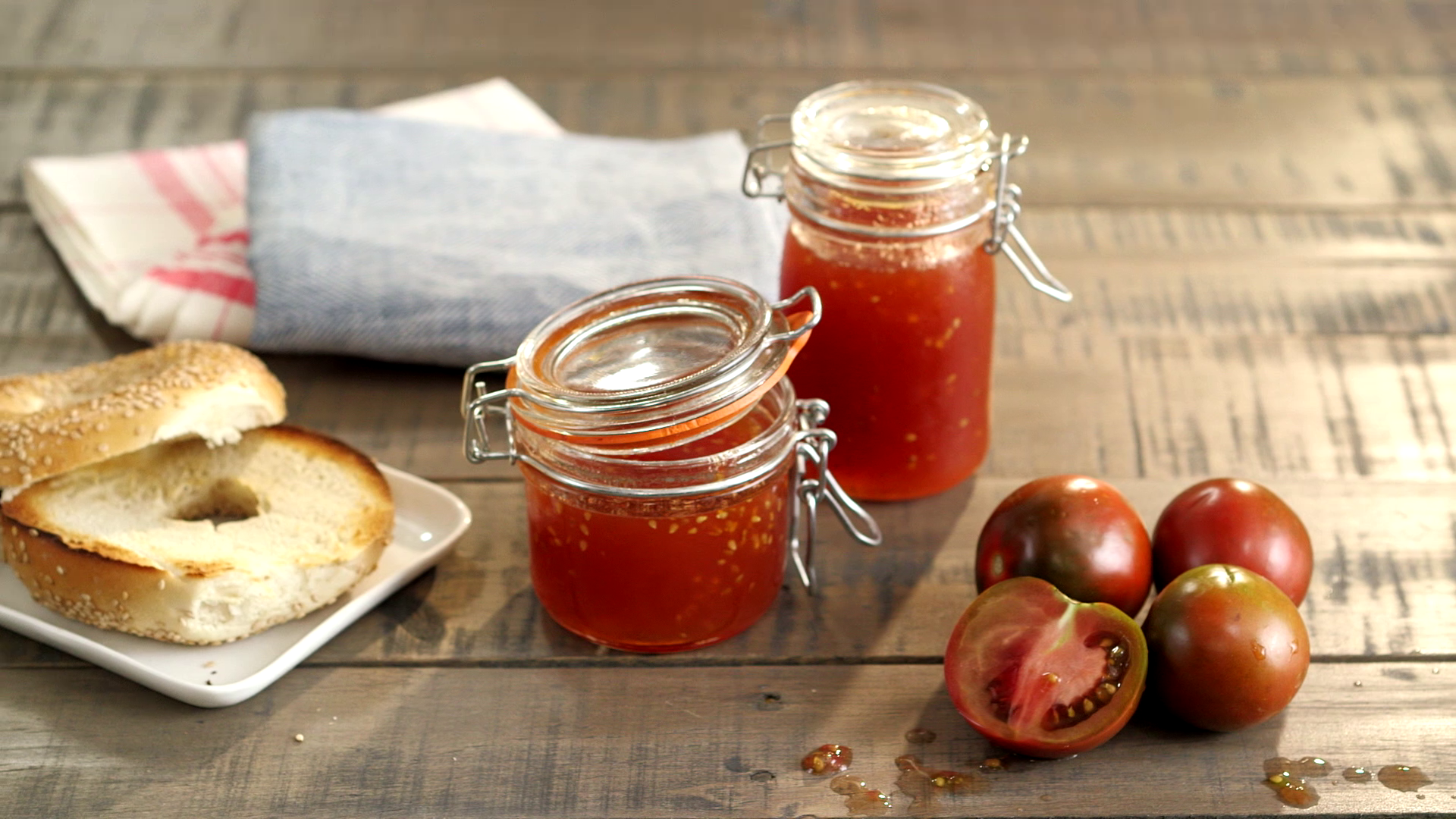
Tomato jam is a food product made by peeling, grinding, and cooking tomatoes with sugar and selected natural ingredients, using precise ratios to achieve a firm texture and a balanced sweet-and-tangy flavor.
Industrial production differs significantly from home processing and relies on:
-
Precise temperature control
-
Accurate concentration management
-
Uniform texture and flavor consistency
-
Strict food safety standards
Using industrial production lines ensures consistent quality and large-scale commercial output.
Industrial Tomato Jam Production Line Specifications
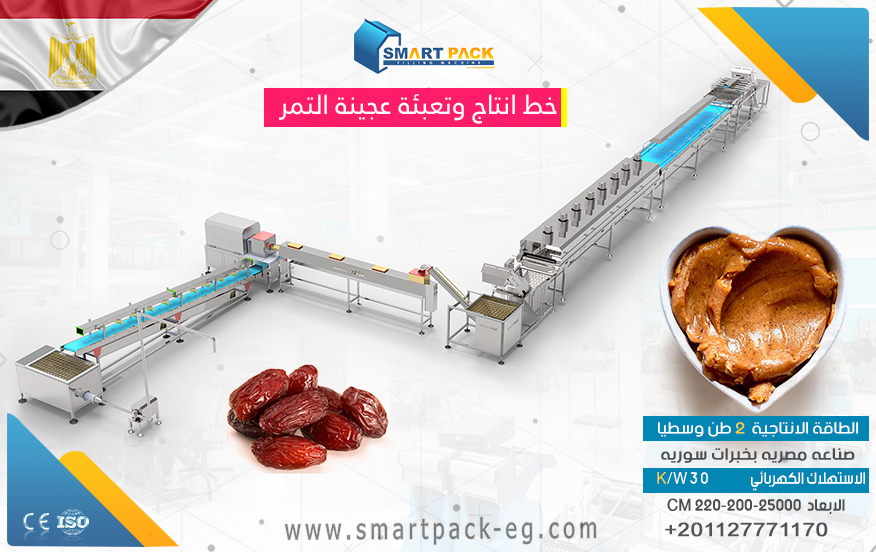
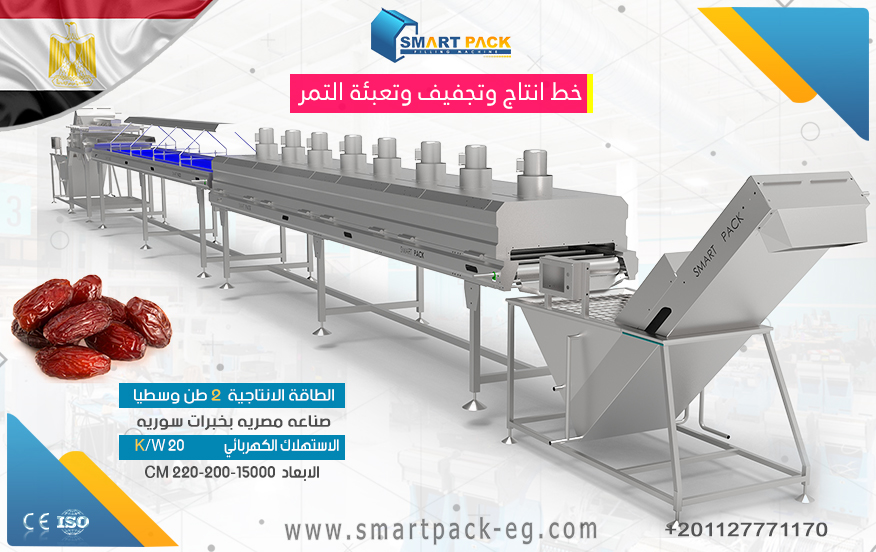
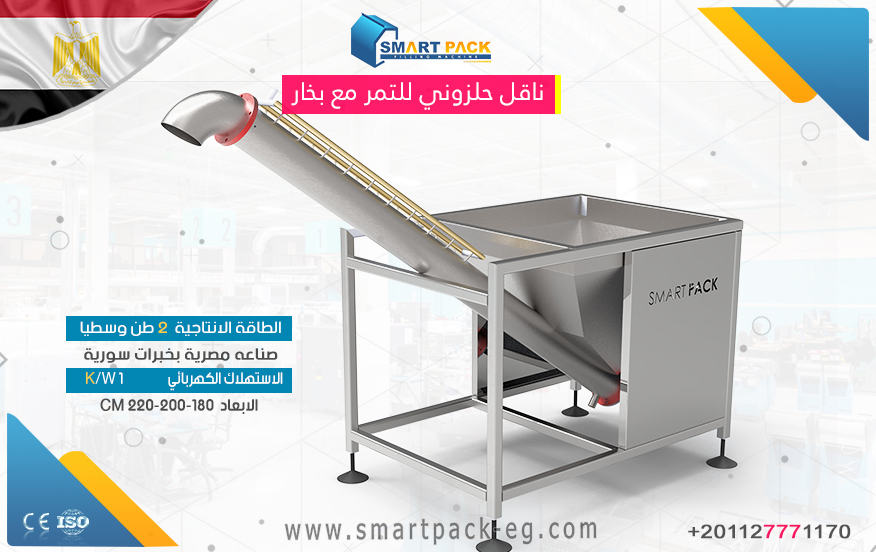
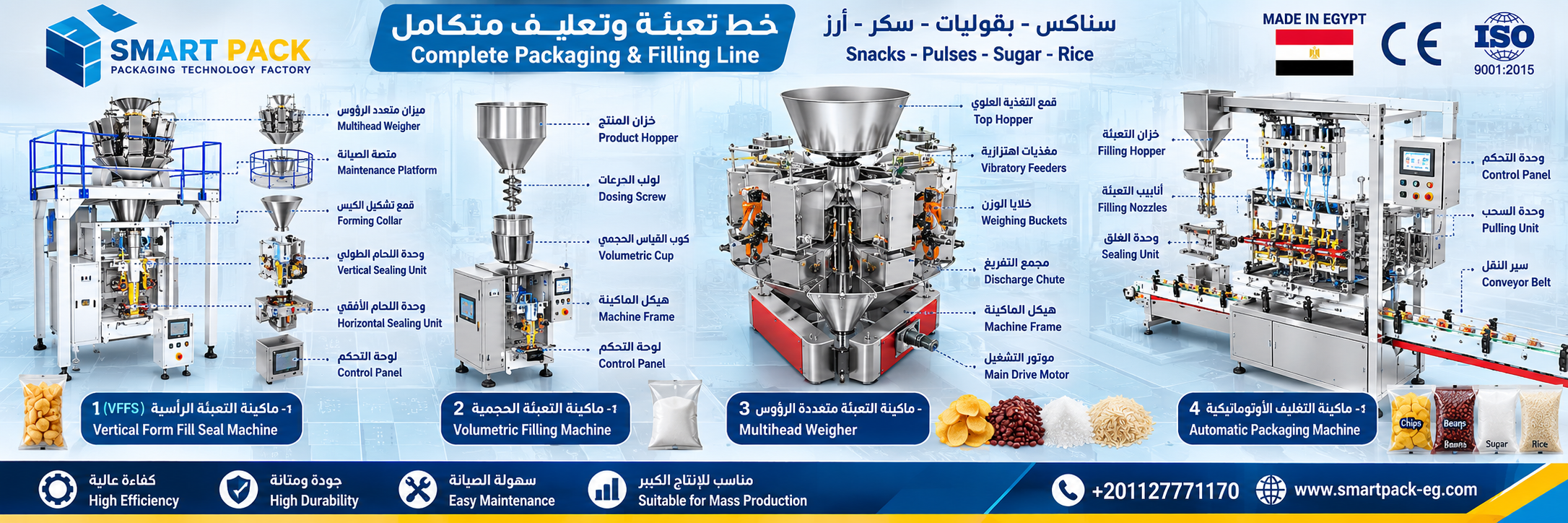
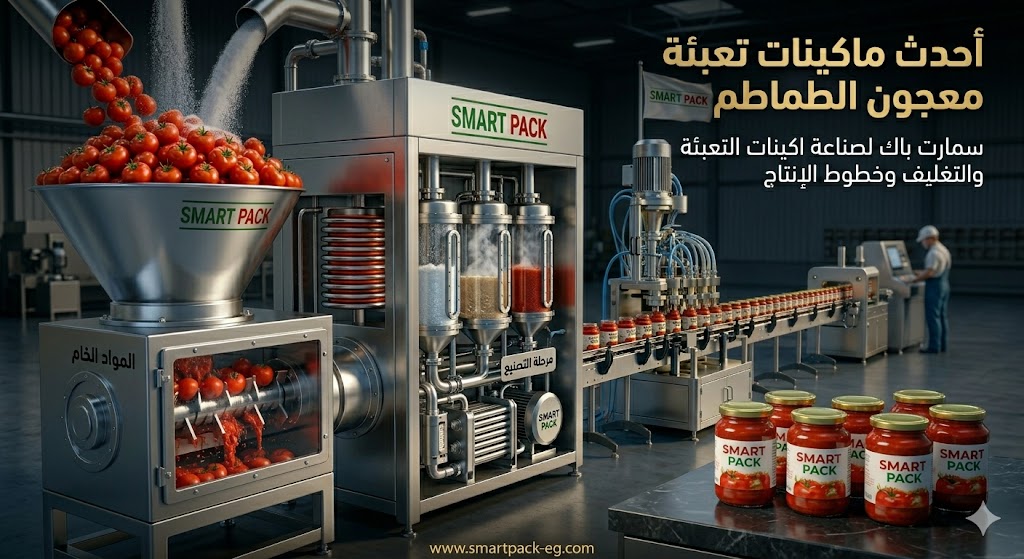
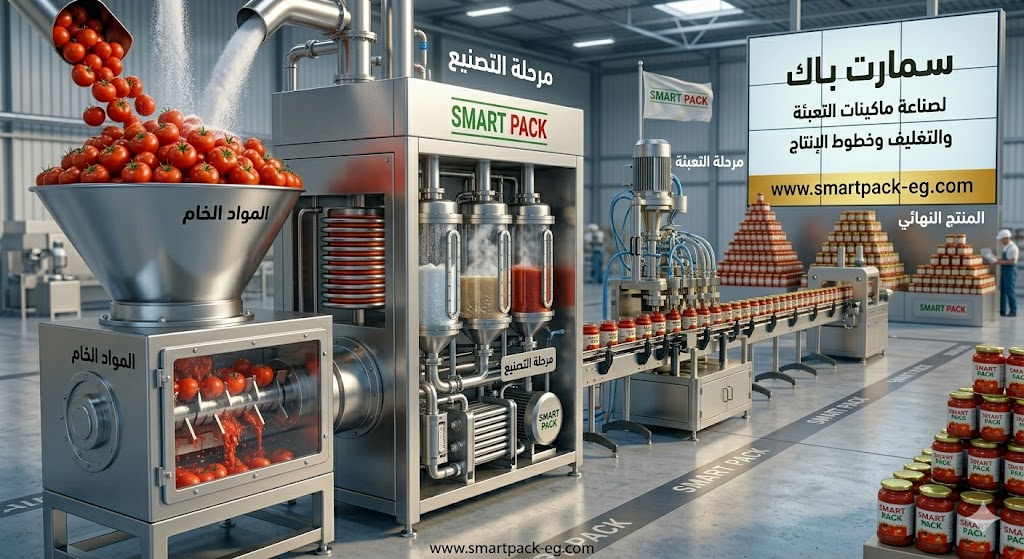
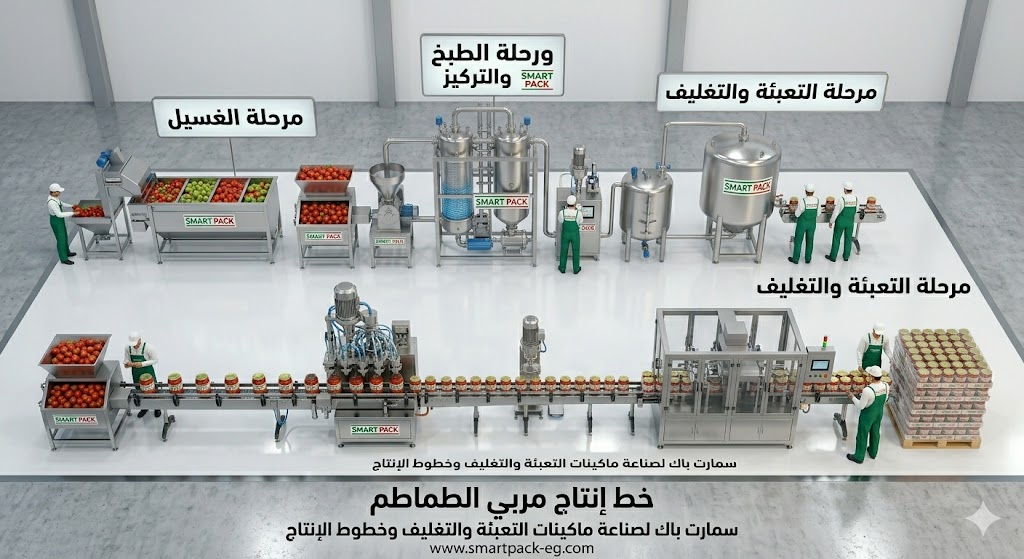
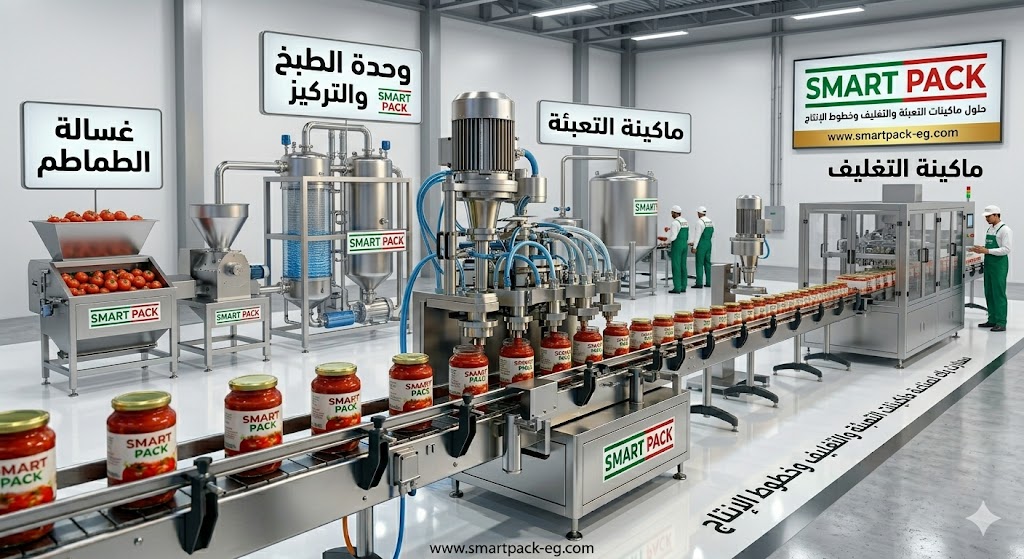
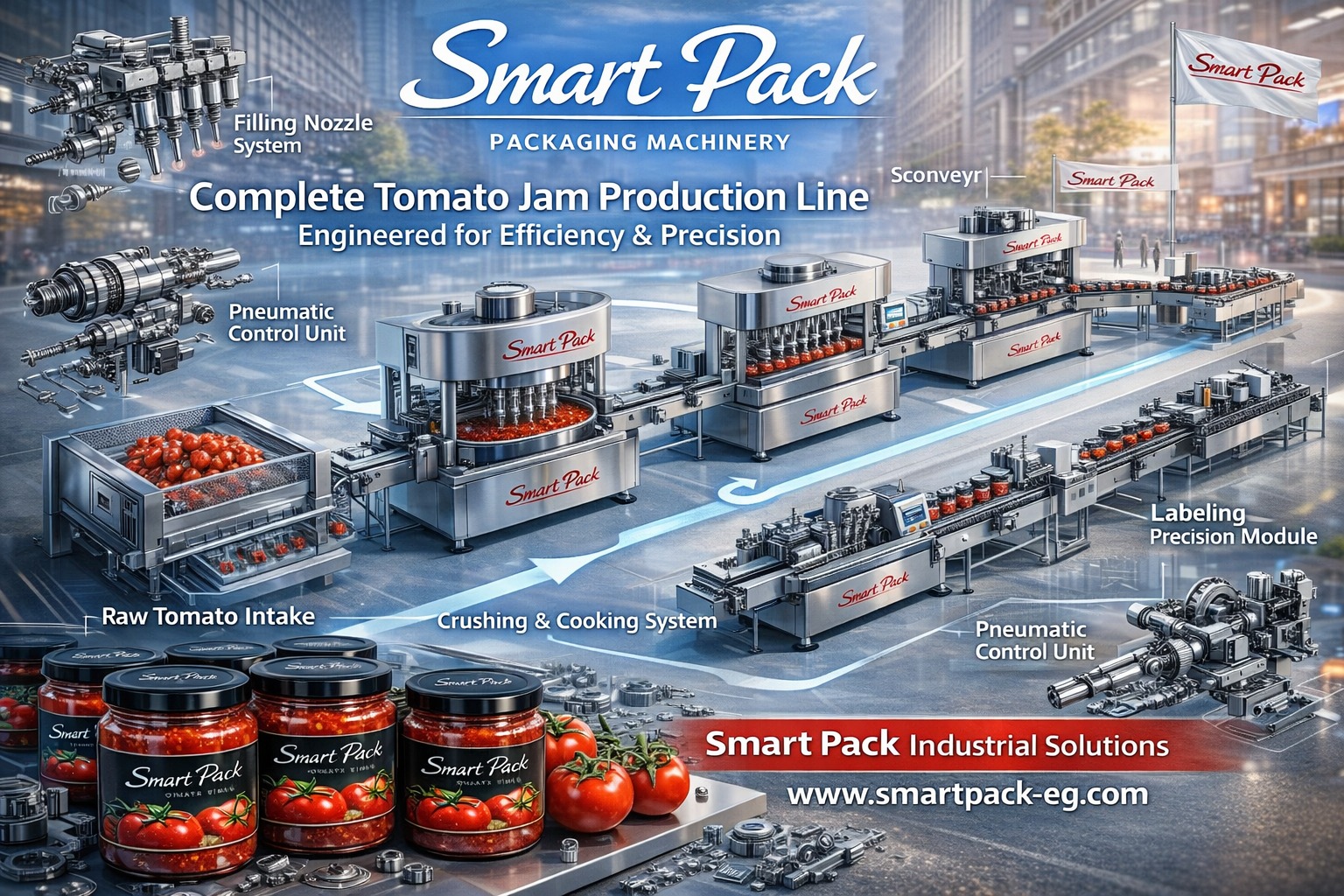
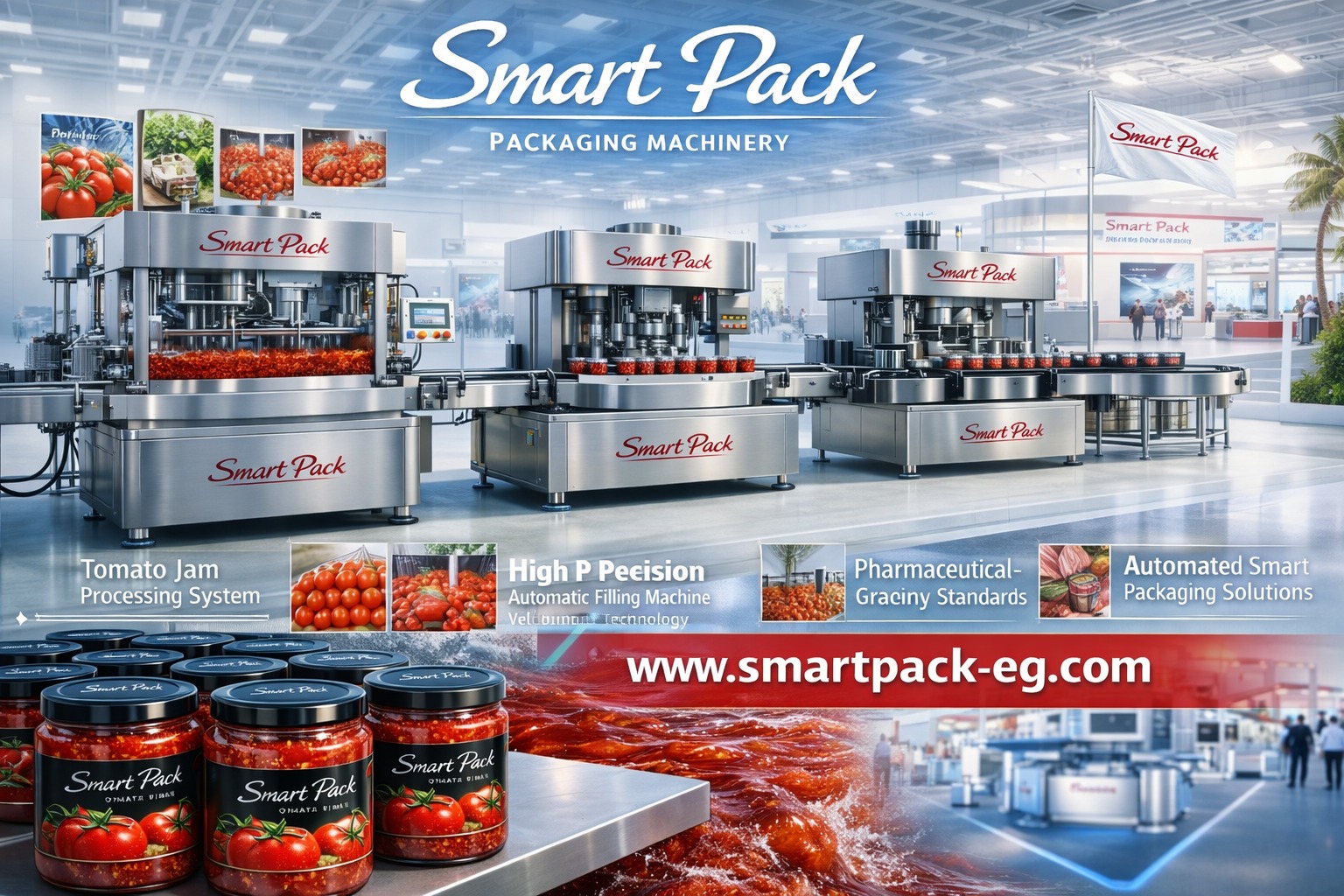
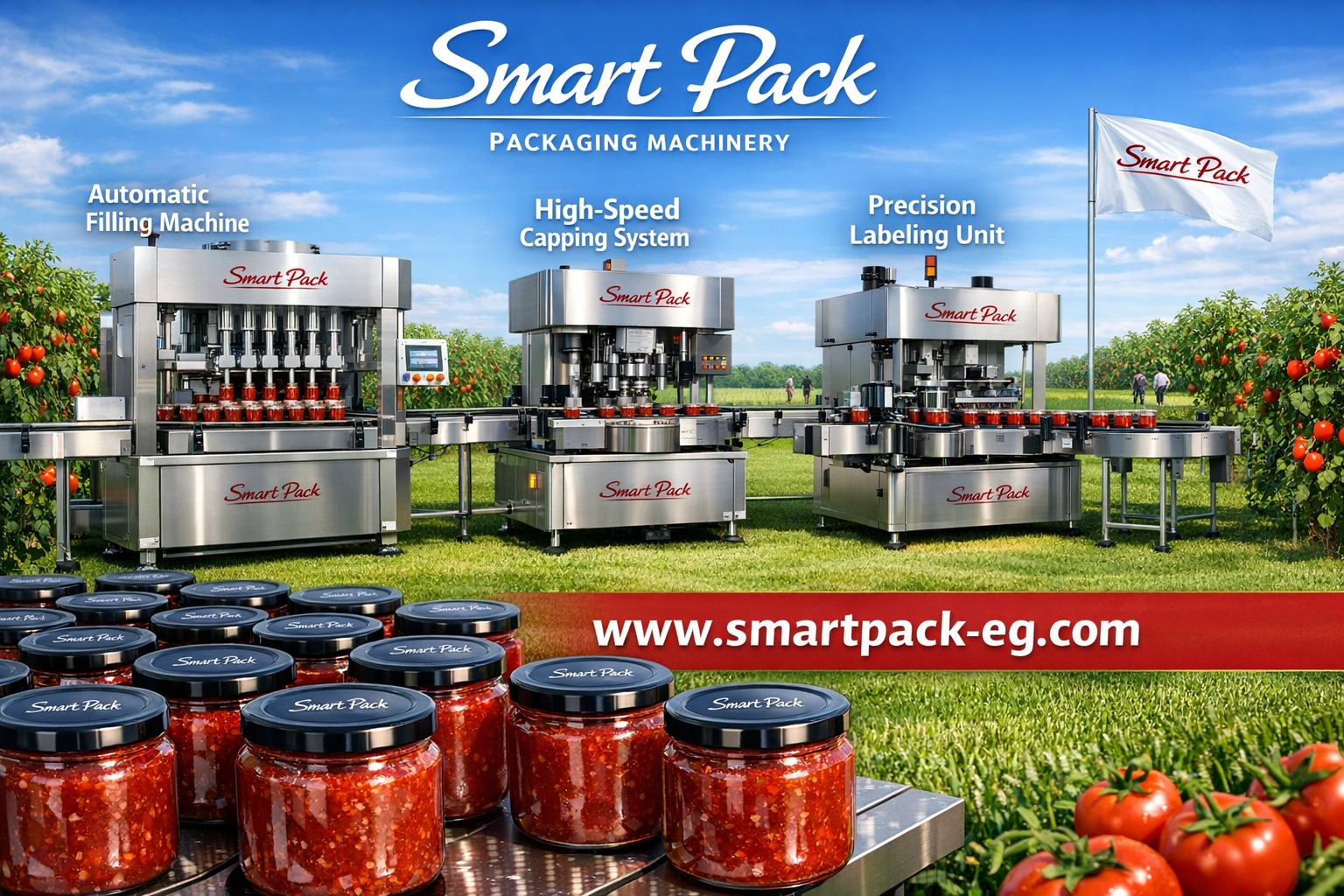
A tomato jam production line consists of an integrated set of machines designed for high efficiency and minimal product loss.
Main components of the production line include:
-
Tomato washing and sorting machines
-
Peeling and skin/seed separation machines
-
Grinding machines to produce smooth tomato pulp
-
Industrial cooking kettles with mixing and heating systems
-
Storage and balancing tanks
-
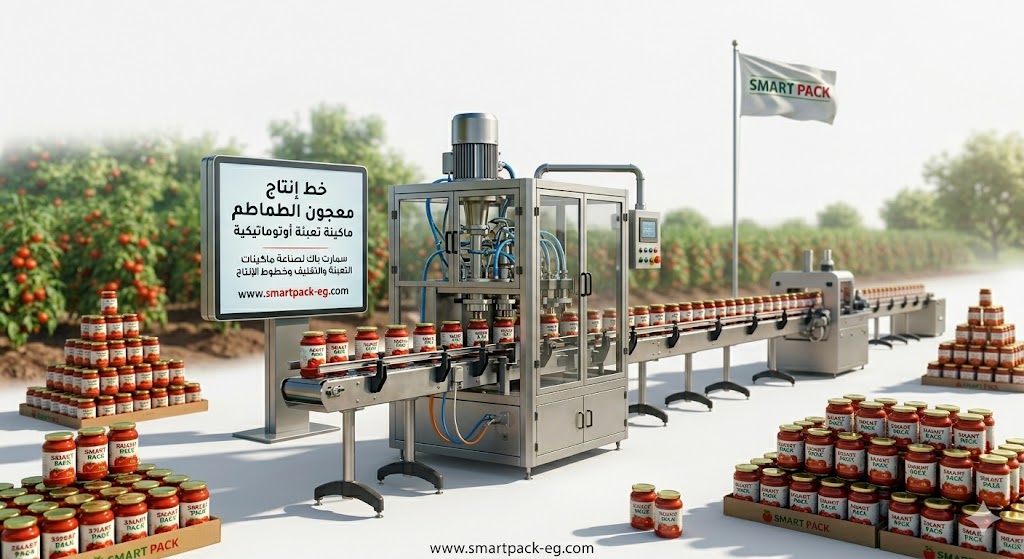
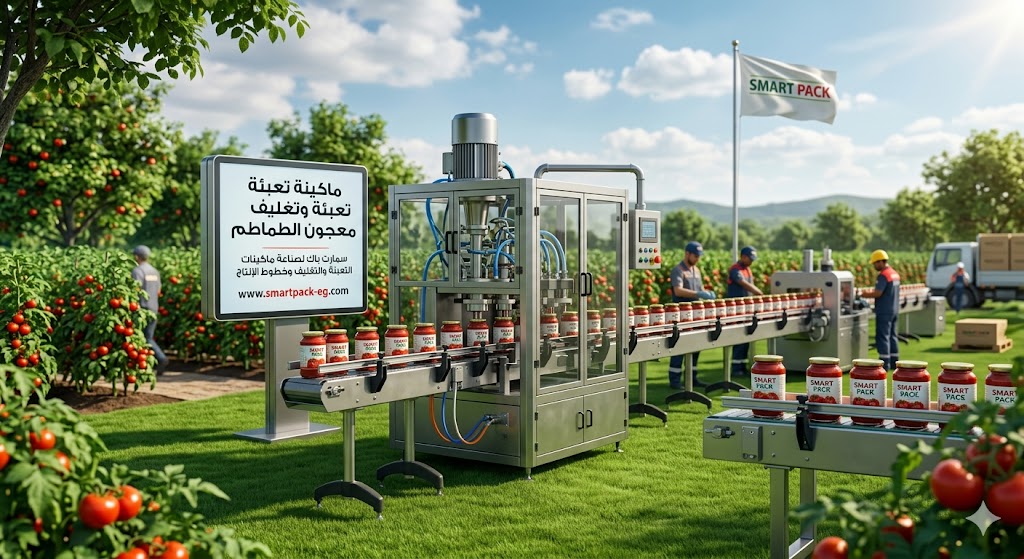
Filling and packaging machines
Selecting food-grade stainless steel equipment ensures hygiene compliance and easy cleaning.
Production Stages Inside a Tomato Jam Factory
The process begins with receiving fresh tomatoes and sorting out damaged fruit. Tomatoes then pass through washing, peeling, and separation stages.
Next, tomatoes are ground into a homogeneous pulp and transferred to industrial cooking kettles. Cooking and concentration take place with sugar addition, precise heat control, and optimized cooking time until the desired consistency is achieved.
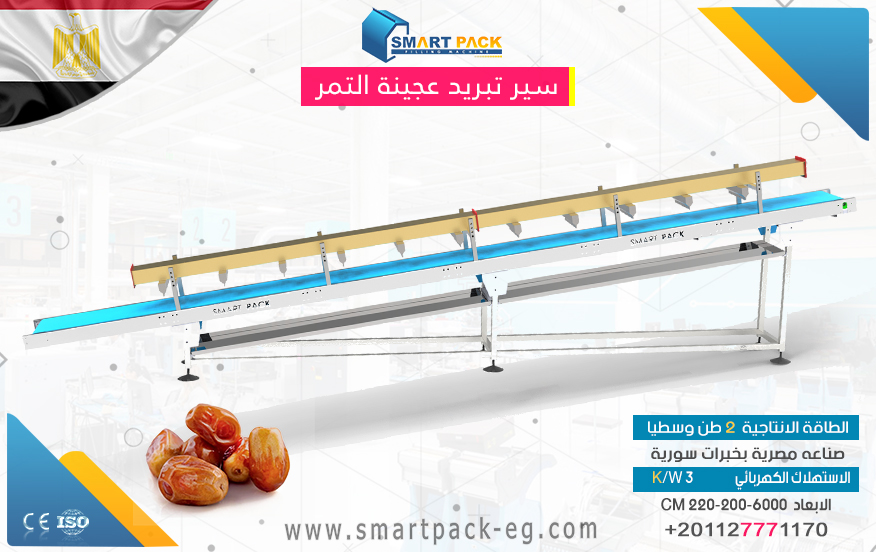
After cooking, the product is cooled and transferred to filling tanks, preparing it for the final production and filling stage using high-precision filling and packaging machines.
Filling and Packaging Machines Suitable for Tomato Jam
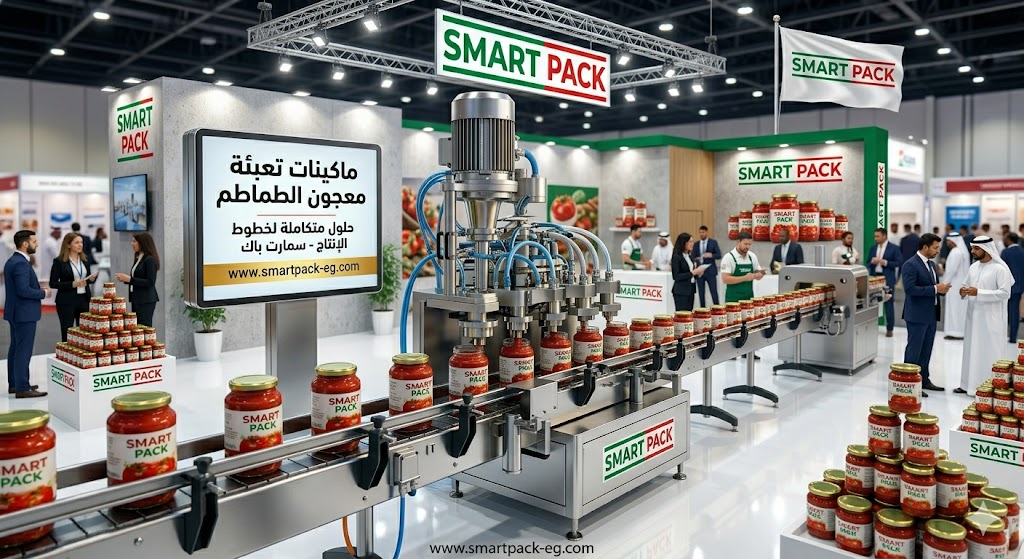
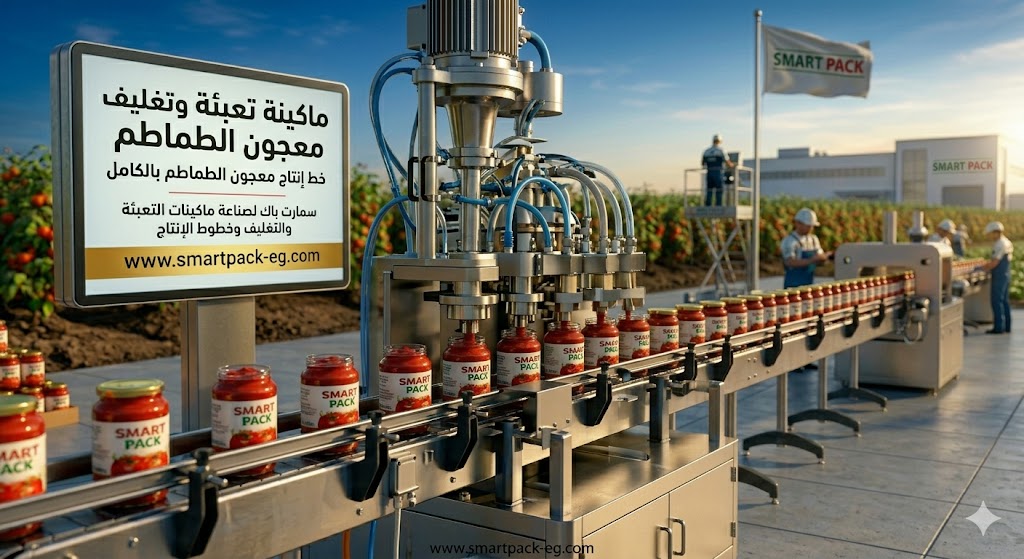
Tomato jam is a semi-viscous product, requiring specialized filling machines to ensure accurate weight and product safety.
Suitable filling solutions include:
-
Viscous liquid filling machines
-
Semi-automatic jar filling machines
-
Automatic filling and packaging machines for medium and large lines
-
Heat sealing or adhesive packaging machines
Choosing the right filling and packaging equipment reduces waste and directly improves production efficiency.
Production Capacity and Equipment Comparison
Production Capacity Options
| Daily Capacity | Factory Type | Approx. Investment | Target Market |
|---|---|---|---|
| 300 kg/day | Small | Low | Local |
| 1 ton/day | Medium | Medium | Local & Export |
| 3 tons/day | Large | High | Export |
Filling Machine Options
| Machine Type | Automation Level | Suitable For |
|---|---|---|
| Manual machine | Low | Pilot projects |
| Semi-automatic | Medium | Startup factories |
| Automatic | High | High-volume production |
Tomato Jam Market Analysis
The market for tomato-based products continues to grow due to their essential role in professional kitchens. Tomato jam is a niche yet in-demand product used by:
-
Restaurants and hotels
-
Food manufacturing companies
-
Retail chains
-
Regional export markets
Its key advantage lies in competitive pricing combined with healthy profit margins, driven by low raw material costs.
Cost Structure, Profitability, and ROI
Project costs include:
-
Production line investment
-
Filling and packaging machinery
-
Raw material costs
-
Operating and energy expenses
On average, a tomato jam factory can achieve net profit margins between 30% and 45%, with capital recovery typically within 12 to 18 months under stable operation and effective marketing.
Smart Investment Tips for Project Success
-
Start with a production capacity aligned with market demand
-
Focus on consistent texture and balanced flavor
-
Use attractive packaging to enhance market value
-
Reduce losses with precise filling machines
-
Take advantage of seasonal tomato price drops
Why Choose Machines and Production Lines from Smart Pack?
Selecting the right equipment supplier is critical to industrial success. Smart Pack offers integrated solutions in food production lines and filling & packaging machinery, including:
-
Customized production line design based on space and capacity
-
Filling machines for viscous and semi-viscous products
-
Technical support and after-sales service
-
Flexible, scalable solutions for future expansion
Working with a reliable industrial partner reduces risk and ensures operational stability.
Direct Investment and Marketing Call to Action
If you are looking for an innovative, low-risk, high-demand food manufacturing project, tomato jam production under industrial standards is a smart choice. Start today with a professional production line, invest in high-quality filling and packaging machines, and position your factory for both local and export success.
Contact Smart Pack now to receive specialized technical consultation and a production line design that delivers maximum return on investment in the competitive food industry market.