





 Admin
Admin How Cosmetic Factories Comply with Quality Standards When Using Dates and Milk
Date and Milk Face Masks Between Cosmetic Effectiveness and Commercial Success
The Role of Production and Packaging Lines in Mask Stability and Quality
Investing in Date and Milk Masks as a Profitable Product for Manufacturers
How to Manufacture Date and Milk Face Masks According to Quality Standards in Cosmetic Factories
4
Today, cosmetic factories are required to deliver natural, effective, and safe skincare products capable of competing in a market driven by increasingly informed consumers. Among the most in-demand formulations, date and milk face masks stand out for combining deep skin nourishment with strong market appeal.
The success of this product does not rely on the formula alone, but on strict adherence to quality standards, as well as the use of advanced production, filling, and packaging lines that preserve the effectiveness and stability of natural ingredients throughout the product’s shelf life.
Raw Material Selection and Quality Assurance Before Manufacturing
4
The first stage in manufacturing date and milk masks begins with selecting high-quality raw materials.
-
Using natural dates free from impurities and compliant with specifications
-
Relying on cosmetically processed date extracts rather than raw pulp
-
Using milk derivatives designed specifically for cosmetic applications
-
Ensuring all raw materials meet safety and regulatory standards
Raw material quality forms the foundation of the final product’s performance and the factory’s reputation.
Processing Dates for Cosmetic Use
4
Dates are not used in cosmetics in their raw form, but after precise processing steps.
-
Extracting active compounds from dates
-
Purifying extracts to remove excess sugars
-
Adjusting concentrations for cosmetic applications
-
Ensuring color and fragrance stability
This stage requires precise equipment and specialized extraction systems to ensure consistent quality.
Preparing Milk Derivatives for Cosmetic Applications
4
Milk is used industrially in optimized forms to ensure safety and stability.
-
Incorporating active milk proteins
-
Using controlled concentrations of lactic acid
-
Applying treatments that prevent microbial contamination
-
Conducting chemical stability testing
These steps ensure milk delivers skin benefits without compromising safety.
Mixing and Homogenization Within Production Lines
4
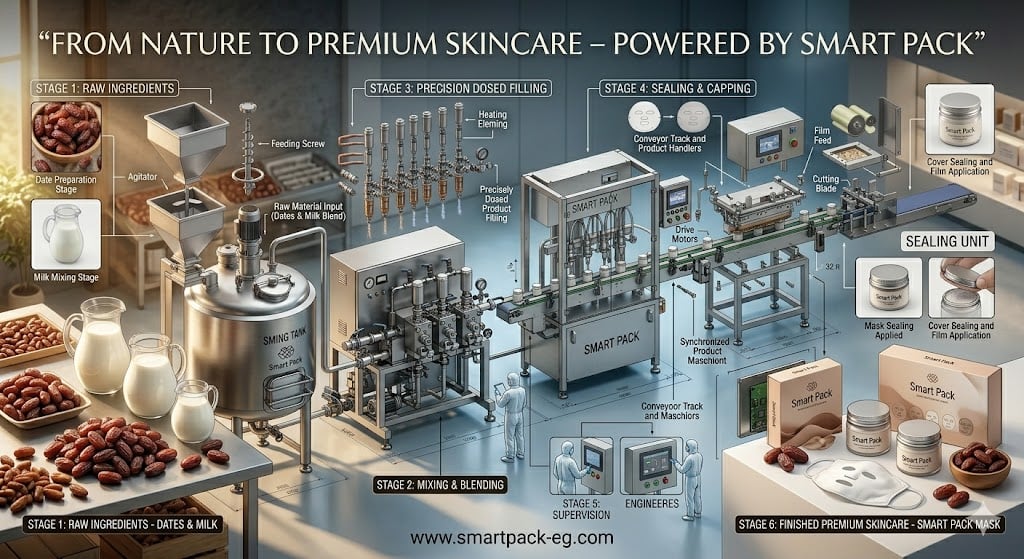
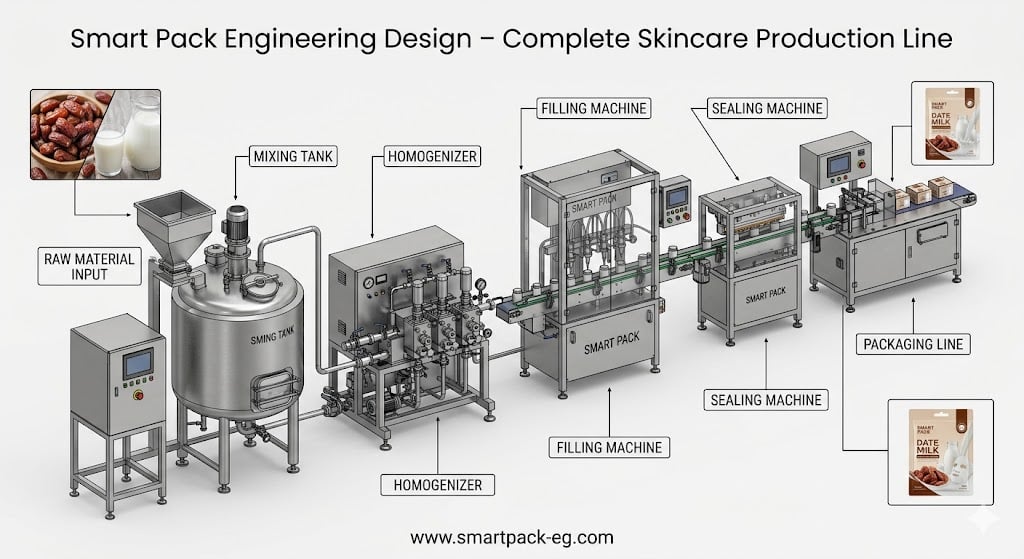
Mixing is the core industrial stage in producing date and milk masks.
-
Adding date and milk extracts in precise ratios
-
Using homogeneous mixing systems
-
Controlling temperature during mixing
-
Adding natural preservatives when required
Accurate control at this stage preserves the active properties of the ingredients.
Adjusting Texture and Physical Properties of the Mask
4
A date and milk mask must have a stable, user-friendly texture.
-
Adjusting viscosity for topical application
-
Ensuring even distribution of ingredients
-
Testing stability during storage
-
Confirming ease of application on the skin
Proper texture enhances user experience and product ratings.
Quality and Safety Testing Before Filling
4
No product is released without comprehensive testing.
-
Microbiological testing
-
Skin sensitivity and irritation testing
-
Thermal stability testing
-
Verification of compliance with cosmetic standards
These tests protect consumers and safeguard the brand’s credibility.
Filling and Packaging and Their Role in Preserving Mask Quality
4
Filling and packaging are just as critical as formulation.
-
Protecting the mask from air and contamination
-
Preserving the activity of natural ingredients
-
Extending shelf life
-
Presenting the product in a professional, premium format
Using specialized cosmetic filling and packaging machines significantly increases market value and consumer trust.
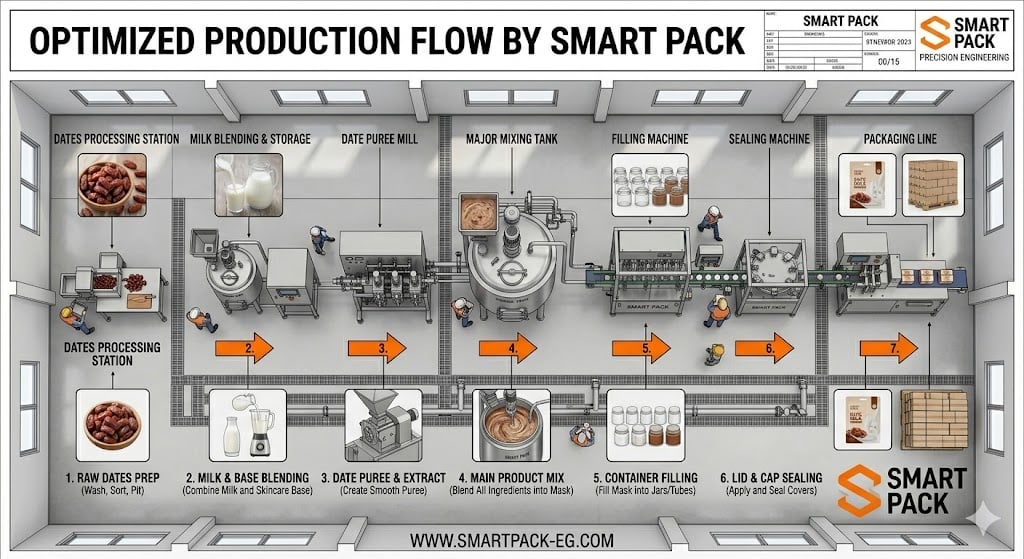
Manufacturing Stages of Date and Milk Face Masks
Industrial Production Overview
| Stage | Industrial Objective | Quality Impact |
|---|---|---|
| Raw material selection | Purity assurance | Product safety |
| Extraction | Concentrated effectiveness | Better results |
| Mixing | Ingredient homogeneity | Mask stability |
| Testing | Product safety | Market trust |
| Packaging | Product protection | Consistent quality |
Organized vs Unstructured Manufacturing
| Aspect | Standard-Compliant Production | Uncontrolled Production |
|---|---|---|
| Stability | High | Low |
| Safety | Guaranteed | Unreliable |
| Market acceptance | Strong | Limited |
| Profitability | Sustainable | Short-term |
Market Value of High-Quality Date and Milk Face Masks
Commitment to quality standards has a direct market impact.
-
Ability to command premium pricing
-
Easier entry into export markets
-
Building a trusted brand
-
Higher repeat purchase rates
-
Increased long-term profitability
Quality is not a cost—it is a direct investment in product success.
Smart Tips for Cosmetic Manufacturers
-
Avoid using food-grade ingredients without cosmetic processing
-
Strictly adhere to quality testing protocols
-
Invest in specialized production lines
-
Choose packaging that protects and markets the product simultaneously
-
Focus on the natural product story in marketing strategies
The Role of Smart Pack in Supporting Date and Milk Mask Manufacturing
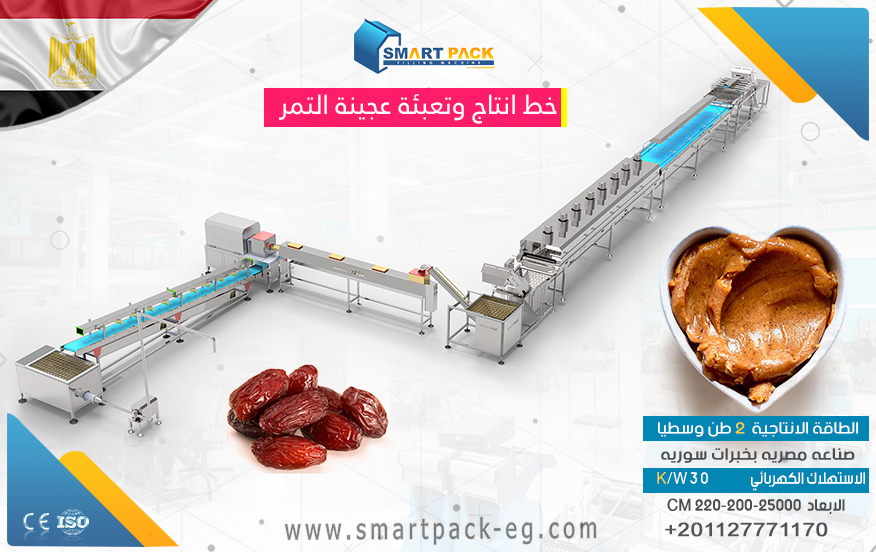
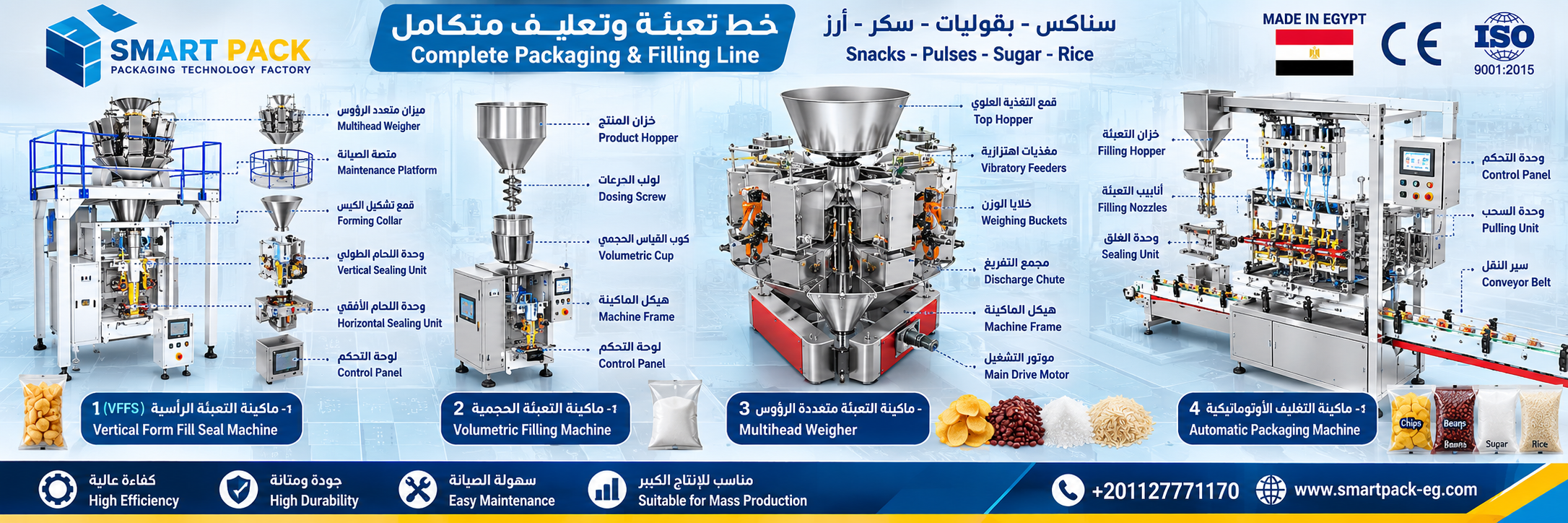
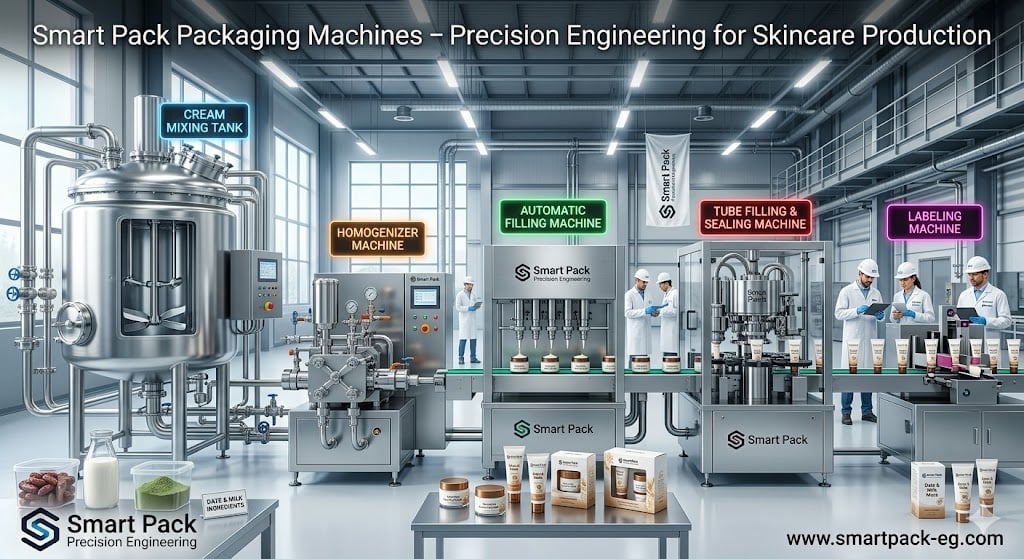
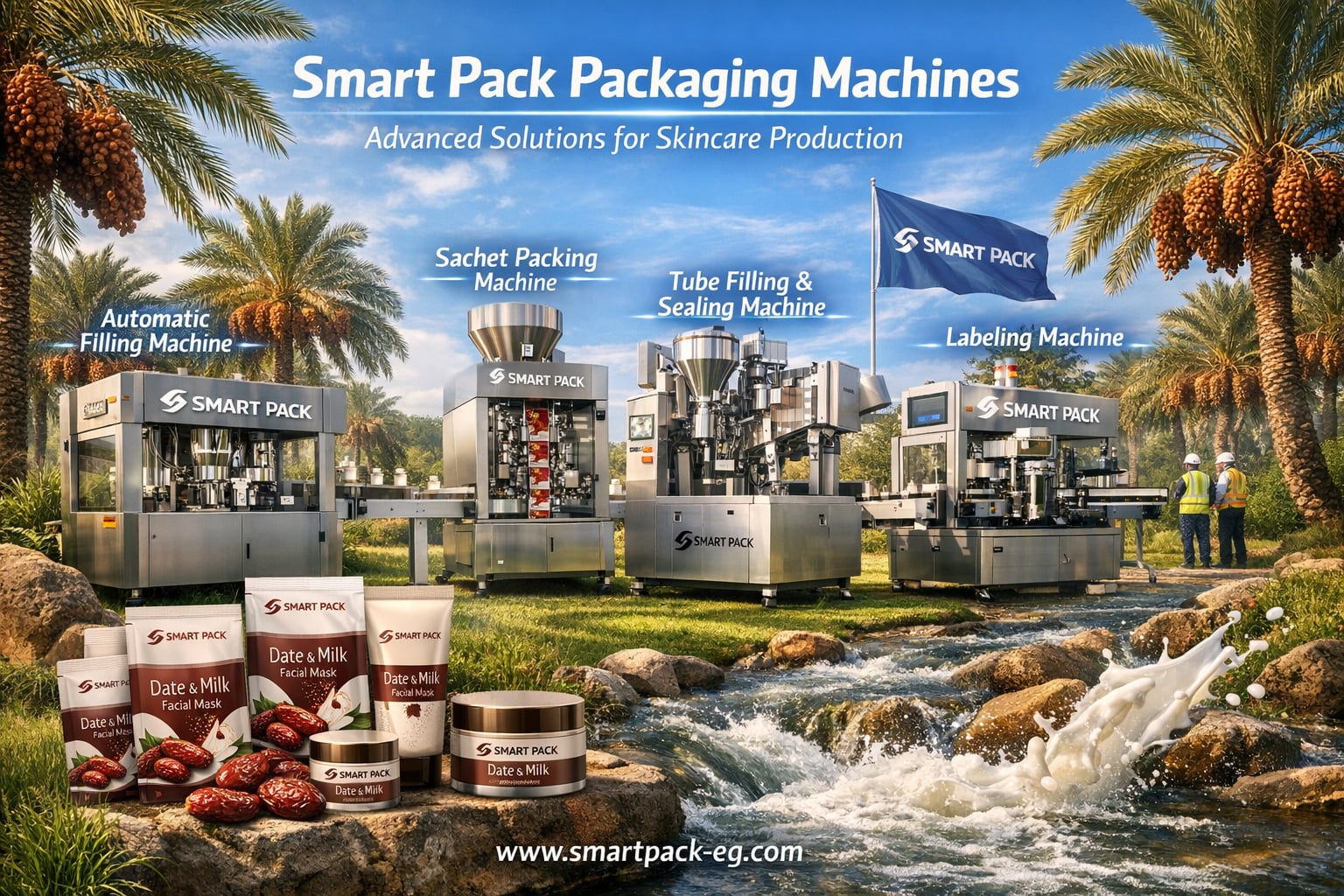
The success of date and milk face masks depends on professional presentation as much as formulation. Smart Pack’s solutions in filling, packaging, and production lines help cosmetic factories execute precise manufacturing processes, preserve natural mask quality, and deliver a market-ready product with strong visual and commercial appeal.
Frequently Asked Questions About Manufacturing Date and Milk Masks
Can raw dates be used directly?
No, cosmetically processed extracts are required.
Does milk require special processing?
Yes, to ensure stability and skin safety.
Are natural masks profitable?
Yes, when produced and packaged to high quality standards.
Does packaging affect mask effectiveness?
Directly and critically.
Can mask production lines be expanded easily?
Yes, with properly designed production systems.
Conclusion
Manufacturing date and milk face masks according to quality standards is not just a production process—it is a complete industrial project that combines cosmetic effectiveness with high market value. Factories that commit to quality from raw material selection through final packaging secure a strong position in the rapidly growing natural skincare market.
Investing in professional production lines and advanced filling and packaging solutions from specialized providers such as Smart Pack is the most direct path to building a successful, reliable, and highly profitable product in a market where quality is the ultimate competitive advantage.