

 Admin
Admin How Factories Benefit from Milk’s Skin Advantages to Develop High-Performance Skincare Products
Milk as an Effective Cosmetic Ingredient That Enhances Product Quality and Market Value
From Raw Material to Successful Product: Industrial Use of Milk in Skincare
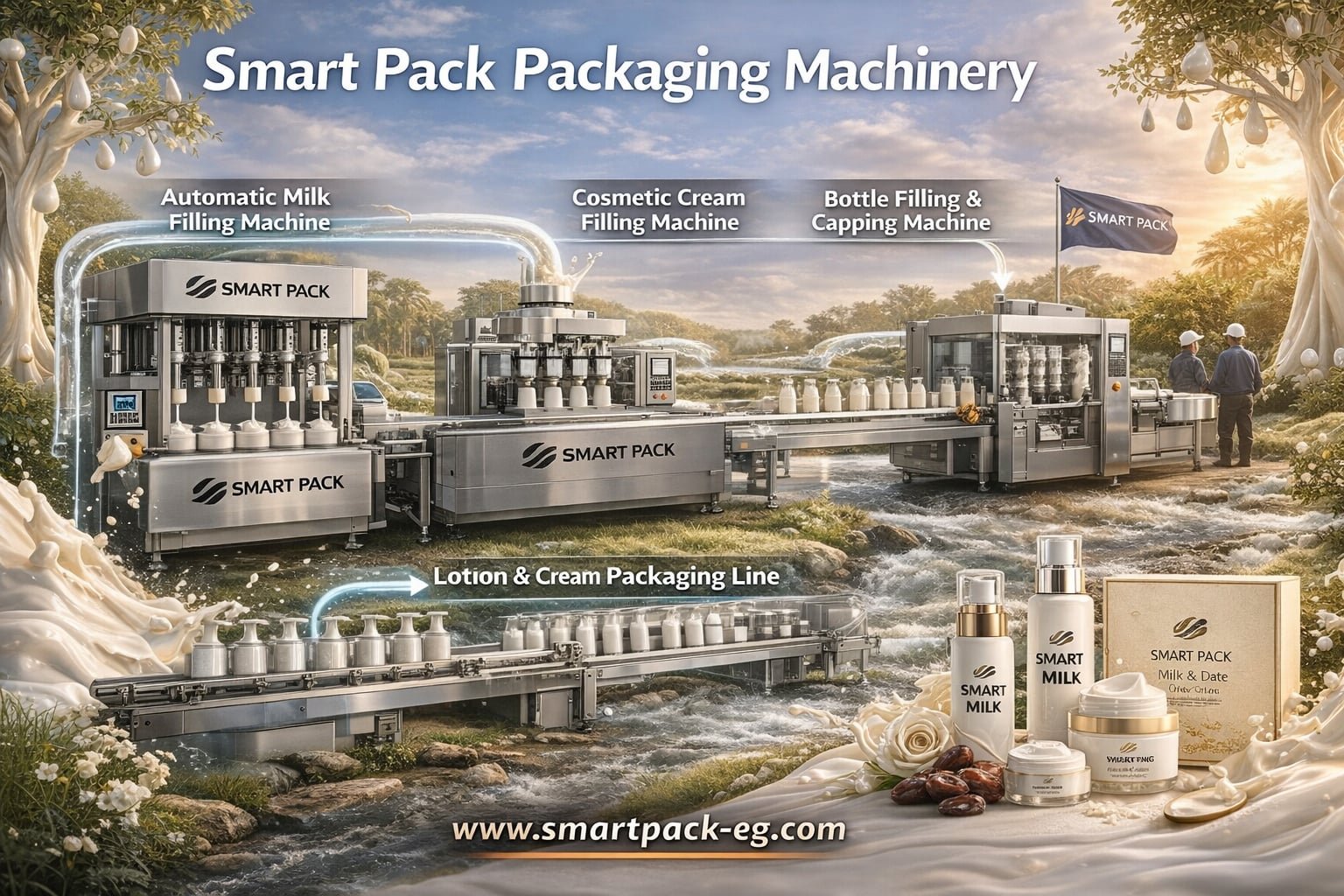
The Role of Production and Packaging Lines in Preserving Milk’s Effectiveness
Investing in Milk-Based Skincare as a Sustainable and Profitable Path for Manufacturers
4
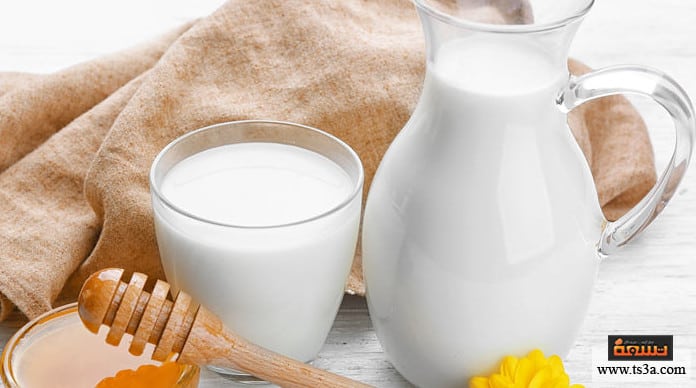
In recent years, factories have increasingly reformulated skincare products based on natural ingredients with proven effectiveness and strong consumer acceptance, with milk emerging as one of the most prominent components. This shift is not only driven by milk’s historical reputation in skincare, but also by its rich composition, which allows manufacturers to develop effective, stable, and premium-priced products.
True industrial value from milk begins with understanding its properties and is fully realized through precise production lines and professional filling and packaging systems that preserve its effectiveness until it reaches the consumer.
Milk Benefits for the Skin from an Industrial Perspective
4
Milk is not a traditional cosmetic ingredient, but a multi-functional active component within industrial formulations.
-
Contains lactic acid that provides gentle and safe exfoliation
-
Rich in proteins that support skin nourishment and improve elasticity
-
Contributes to deep hydration without clogging pores
-
Helps brighten skin tone and improve texture with regular use
These properties allow factories to produce skincare products with visible results without relying on harsh chemical compounds.
Why Skincare Manufacturers Rely on Milk as a Core Ingredient
4
The adoption of milk in cosmetic factories is driven by clear operational and marketing advantages.
-
A natural ingredient suitable for most skin types
-
Easy to combine with other natural ingredients
-
Increases the final product’s marketing value
-
Supports the growing demand for natural skincare
-
Facilitates entry into export and premium markets
Milk enables manufacturers to build a complete product line with a clear message of quality and natural care.
Industrial Forms of Using Milk in Skincare Products
4
In industrial applications, manufacturers do not rely solely on raw milk, but on enhanced and stabilized derivatives.
-
Concentrated milk extracts
-
Cosmetic-grade milk powder
-
Active milk proteins
-
Extracted lactic acid compounds
These forms allow better formulation control and ensure higher stability and consistent quality across production lines.
Skincare Products That Can Be Developed Using Milk
4
Milk’s skin benefits enable the development of a wide range of products.
-
Moisturizing and nourishing creams
-
Natural face masks
-
Gentle facial cleansers
-
Body lotions
-
Soaps and spa products
Product diversity increases revenue opportunities and reduces dependence on a single product category.
The Role of Production Lines in Preserving Milk’s Effectiveness
4
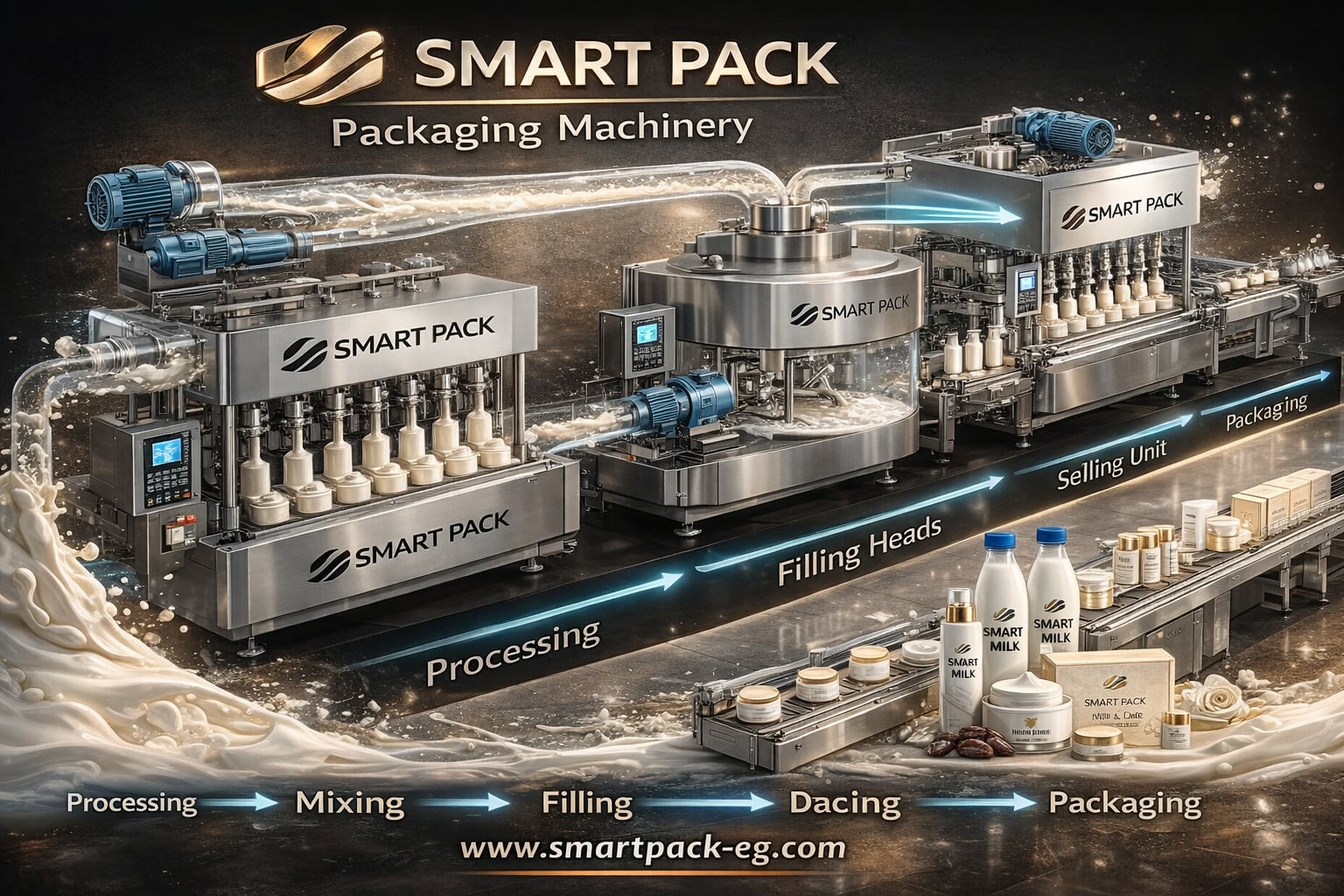
Preserving milk’s benefits requires carefully designed production systems.
-
Temperature control to prevent protein degradation
-
Homogeneous mixing systems
-
Processing methods that maintain active properties
-
Seamless integration between manufacturing and filling stages
Any weakness in these stages can compromise the product’s core advantage.
The Importance of Filling and Packaging in the Success of Milk-Based Skincare
4
Even the most effective formulation loses its value without proper packaging.
-
Protects products from contamination and light
-
Maintains the stability of natural ingredients
-
Enhances the product’s premium image
-
Builds consumer trust
-
Supports higher final retail pricing
Investing in professional filling and packaging machinery directly impacts market value and profitability.
Comparison: Natural Milk-Based Skincare vs Conventional Products
Effectiveness and Market Value
| Aspect | Milk-Based Skincare | Conventional Skincare |
|---|---|---|
| Ingredient type | Natural and active | Chemical-based |
| Consumer acceptance | High | Moderate |
| Marketing value | High | Lower |
| Profit margin | Higher | Limited |
How Milk-Based Skincare Increases Factory Profitability
Relying on milk adds not only cosmetic value, but also clear economic benefits.
-
Ability to price products at a premium level
-
Higher consumer trust and brand loyalty
-
Easy expansion into new product lines
-
Improved export potential
-
Strong positioning as a natural brand
These factors make milk a strategic industrial ingredient, not just a cosmetic choice.
Smart Tips for Factories Using Milk in Skincare Products
-
Choose milk derivatives specifically designed for cosmetic use
-
Conduct stability testing before commercial production
-
Invest in suitable production lines
-
Focus on packaging that reflects natural value
-
Build a strong marketing story around milk’s skin benefits
The Role of Smart Pack in Supporting Milk-Based Skincare Factories
The success of milk-based skincare products depends as much on presentation as on formulation. The filling, packaging, and production line solutions provided by Smart Pack help manufacturers deliver consistent-quality, visually attractive, and highly competitive skincare products capable of achieving sustainable profits.
Frequently Asked Questions About Using Milk in Skincare Products
Is milk suitable for all skin types?
Yes, especially when used in well-formulated cosmetic derivatives.
Do natural products achieve higher profits?
Yes, due to higher consumer trust and willingness to pay.
Does milk require special industrial processing?
Yes, to maintain effectiveness and stability.
Is it easy to expand milk-based product lines?
Yes, thanks to the wide range of applications.
Does packaging affect product success?
Directly and significantly.
Conclusion
Milk’s skin benefits are no longer just cosmetic knowledge—they have become a powerful industrial tool for enhancing product quality and market value. Factories that invest wisely in this ingredient, supported by well-designed production lines and professional filling and packaging systems, secure a strong position in the rapidly growing natural skincare market.
The shift toward milk-based skincare is not a temporary trend, but a sustainable and profitable manufacturing path for companies that understand the market and invest in quality from raw material to final packaging.