 Admin
Admin Dates as a High-Value Food Raw Material for Modern Food Factories
Nutritional, Industrial, and Marketing Advantages That Drive Profitable Growth
In recent years, dates have evolved from a traditional agricultural product into a strategic industrial ingredient widely used by modern food factories to develop high-value, high-margin products.
Factories seeking natural, stable, and marketable ingredients for both local and global markets have found dates to be the ideal solution. Using dates in food manufacturing is no longer a simple ingredient choice—it is a strategic decision that connects product quality, sales performance, and long-term brand reputation in a highly competitive market.
The Nutritional Value of Dates and Its Impact on Food Manufacturing
Dates offer a nutritional profile that makes them highly attractive for modern food industries targeting health-conscious consumers. Their natural sugars, dietary fiber, minerals, and antioxidants give them a strong advantage over artificial sweeteners.
Natural sugars provide high energy without chemical additives
Dietary fiber improves the health value and market acceptance of final products
Minerals such as potassium and magnesium enhance nutritional labeling and marketing claims
Free from artificial substances, dates fit perfectly into clean-label and healthy food categories
These properties allow manufacturers to position their products as natural, safe, and suitable for a wide range of consumers.
Industrial Benefits of Dates and Why Modern Production Lines Prefer Them
From an industrial perspective, dates offer high operational flexibility, making them a preferred raw material in food production lines. They can be processed into date paste, date molasses, or integrated directly into food formulations.
Easy processing within food production lines
Stable characteristics when industrial standards are applied
High compatibility with filling and packaging machines
Reduced dependence on refined sugar and lower long-term ingredient costs
This versatility enables factories to create multiple products from a single raw material, increasing investment efficiency.
Why Modern Food Factories Choose Dates Over Artificial Alternatives
Today’s food manufacturers no longer focus solely on low cost—they prioritize high added value. Dates clearly meet this requirement.
Dates align with the global shift toward natural products
Dates simplify access to export markets
Dates reduce regulatory risks linked to artificial additives
Dates strengthen consumer trust in food brands
Using dates helps factories build a strong marketing story around authenticity and health, not just product formulation.
Industrial Applications of Dates in Food Production Lines
Dates are used across a wide range of food industries, making them a multi-purpose raw material with consistent demand.
Healthy confectionery and baked goods
Date molasses as a natural sweetener
Energy bars and snack products
Functional foods and dietary supplements
Baby food and specialty nutrition
Each industrial application opens new opportunities for sales growth and market expansion.
The Role of Filling and Packaging Machines in Preserving Date Value
Maximizing the nutritional and industrial benefits of dates requires proper filling and packaging systems. Even high-quality products lose market value without professional presentation.
Filling and packaging machines preserve nutritional properties
Adapted detergent filling machines, when food-grade certified, suit viscous products like date molasses
Automatic packaging machines protect products during transport and storage
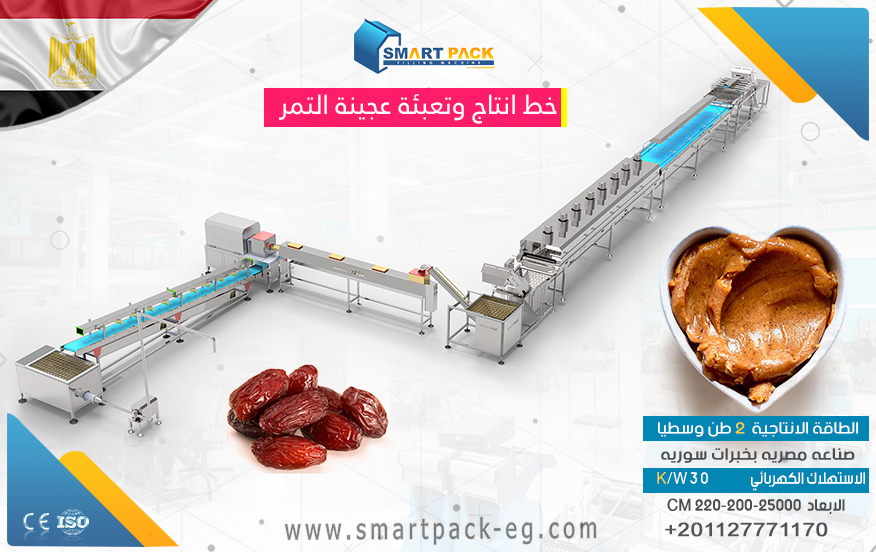
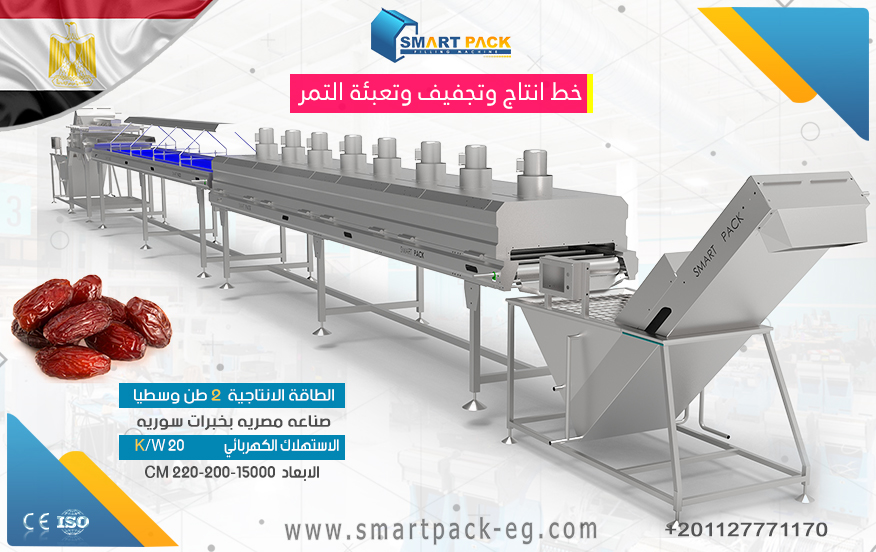
Integrated production lines reduce contamination and improve operational efficiency
Connecting production, filling, and packaging is what transforms dates from raw material into profitable food products.
Comparative Tables Highlighting Nutritional and Industrial Advantages
Dates vs. Artificial Sweeteners in Food Manufacturing
| Factor | Natural Dates | Artificial Sweeteners |
|---|---|---|
| Nutritional value | Provide natural sugars, fiber, and minerals that enhance product quality and healthy marketing | No nutritional value, limited to sweetness only |
| Market acceptance | High consumer trust due to natural origin | Increasing consumer hesitation |
| Industrial flexibility | Multiple forms and applications | Single-function use |
| Brand impact | Strengthens healthy and natural brand image | Adds no real marketing value |
Dependence on Dates in Food Projects
| Project Type | Industrial Impact | Profit Impact |
|---|---|---|
| Date-based projects | Stable production and consistent quality with proper production lines | Allows premium pricing and higher profit margins |
| Artificial-based projects | Regulatory and market challenges | Competes mainly on price |
Market Study of Dates in Modern Food Industries
Global demand for dates and date-based products continues to grow, driven by the expansion of the healthy food sector. Factories investing in dates benefit from:
Rising local demand
Multiple export opportunities
Expansion across product categories
Stable and reliable supply chains
This makes dates a low-risk, high-return raw material.
Profitability and Financial Returns from Using Dates
Dates offer a clear profitability equation for food factories:
Relatively stable raw material cost
High added value
Flexible pricing opportunities
Year-round market demand
Factories that invest in specialized date production lines achieve faster return on investment compared to many other food ingredients.
Smart Investment Tips for Date-Based Food Factories
Choose industrially suitable date varieties, not just the cheapest
Invest in scalable production lines
Integrate production, filling, and packaging from the start
Use quality as a core marketing tool
Work with equipment suppliers who understand food manufacturing
Why Smart Pack Is an Ideal Partner for Date-Based Food Projects
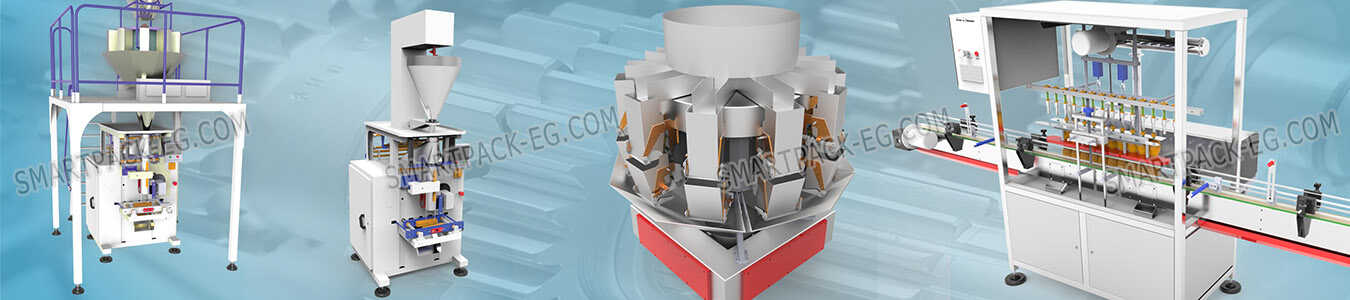
Industrial success depends not only on raw materials, but on the equipment that processes them. Smart Pack provides integrated solutions in filling, packaging, and production lines designed specifically for food industries and viscous products such as date molasses.
Relying on Smart Pack solutions helps factories:
Maintain consistent product quality
Reduce production waste
Enhance commercial appearance
Strengthen market competitiveness
Frequently Asked Questions About Dates in Food Manufacturing
Why are dates preferred in food industries
Because they are natural, nutritionally rich, and industrially versatile.
Does using dates increase production cost
On the contrary, it increases added value and medium-term profitability.
What is the most common industrial form of dates
Date molasses and date paste.
Do dates require specialized production lines
Yes, to ensure consistency, quality, and efficient filling and packaging.
How do you choose the right filling machines
Based on product form, viscosity, and target production volume.
A Direct Call to Action for Food Factories and Investors
If you are looking for a raw material that combines nutritional quality, marketing power, and industrial profitability, dates are the smartest choice. Using dates is not a temporary trend—it is a long-term investment in a market rapidly shifting toward natural food.
Start today by upgrading your production lines and investing in professional filling and packaging solutions from Smart Pack, and make dates the foundation of your future industrial success.