 Admin
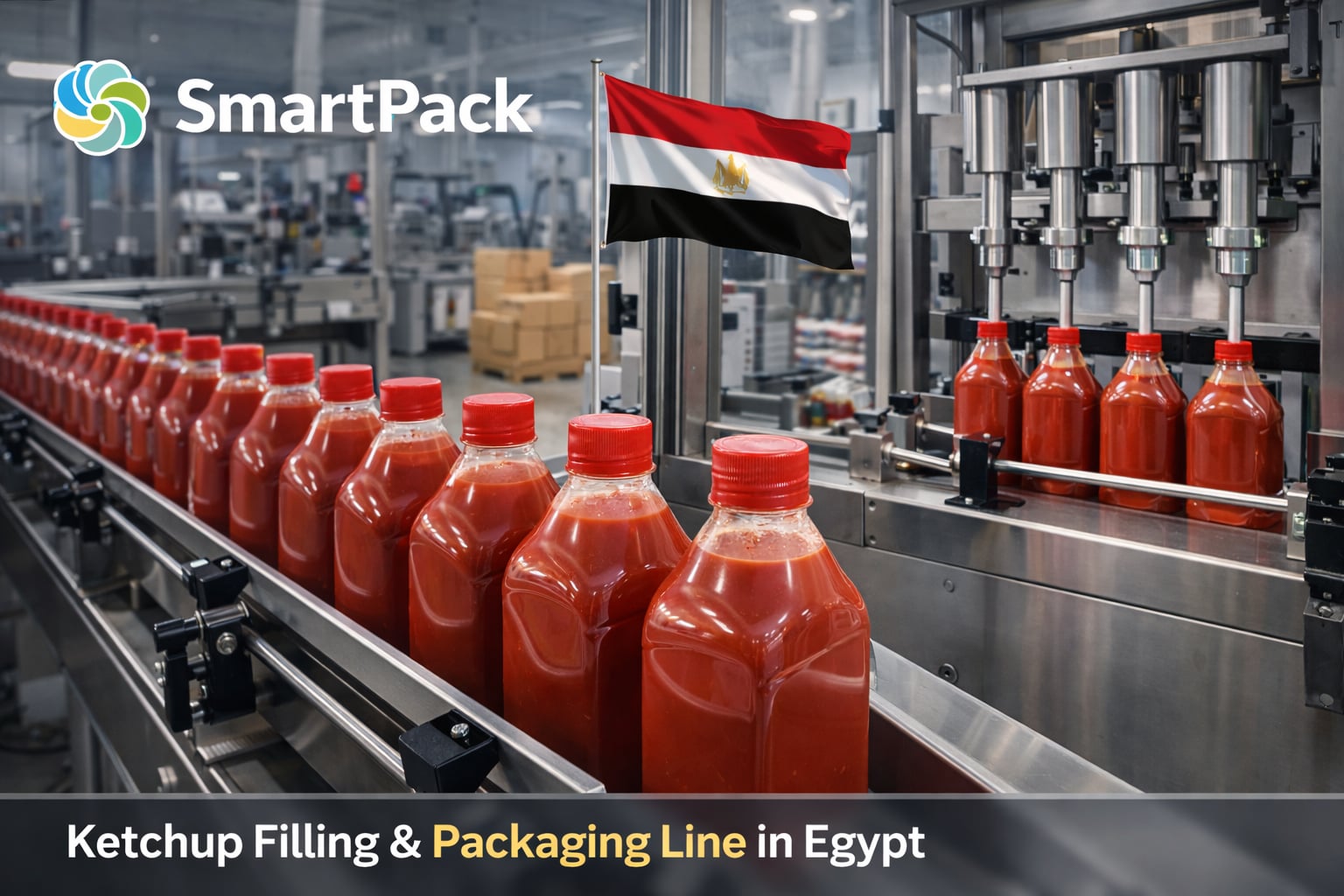
Admin Ketchup Filling and Packaging Machinery Line in Egypt
A Profitable Food Industry Project with Strong Market Demand
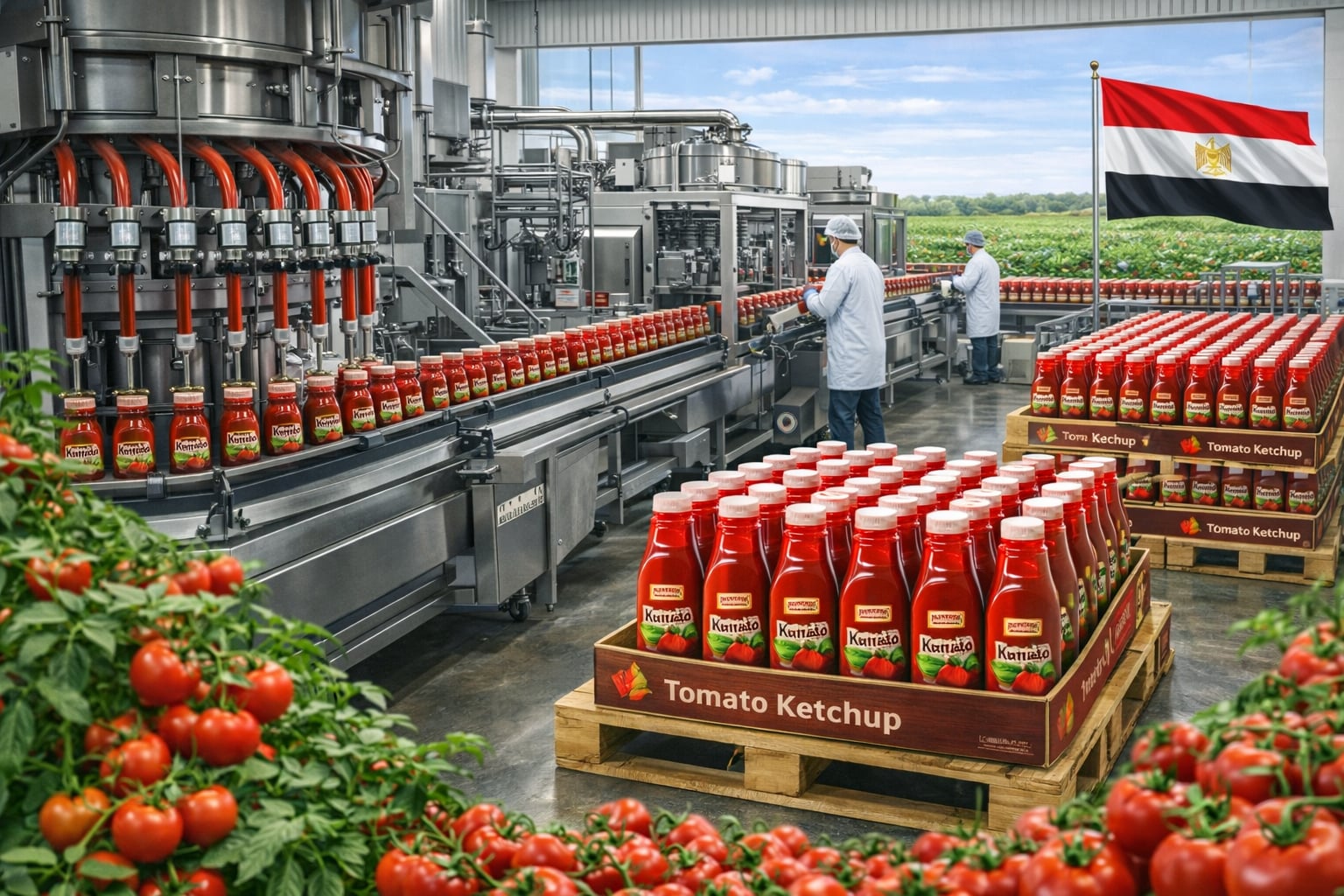
The ketchup filling and packaging machinery line in Egypt is one of the most important and profitable food industry projects, driven by continuous demand from consumers, restaurants, and food manufacturers. Ketchup is a staple ingredient in many meals and food products, enjoying strong demand in both retail and commercial markets.
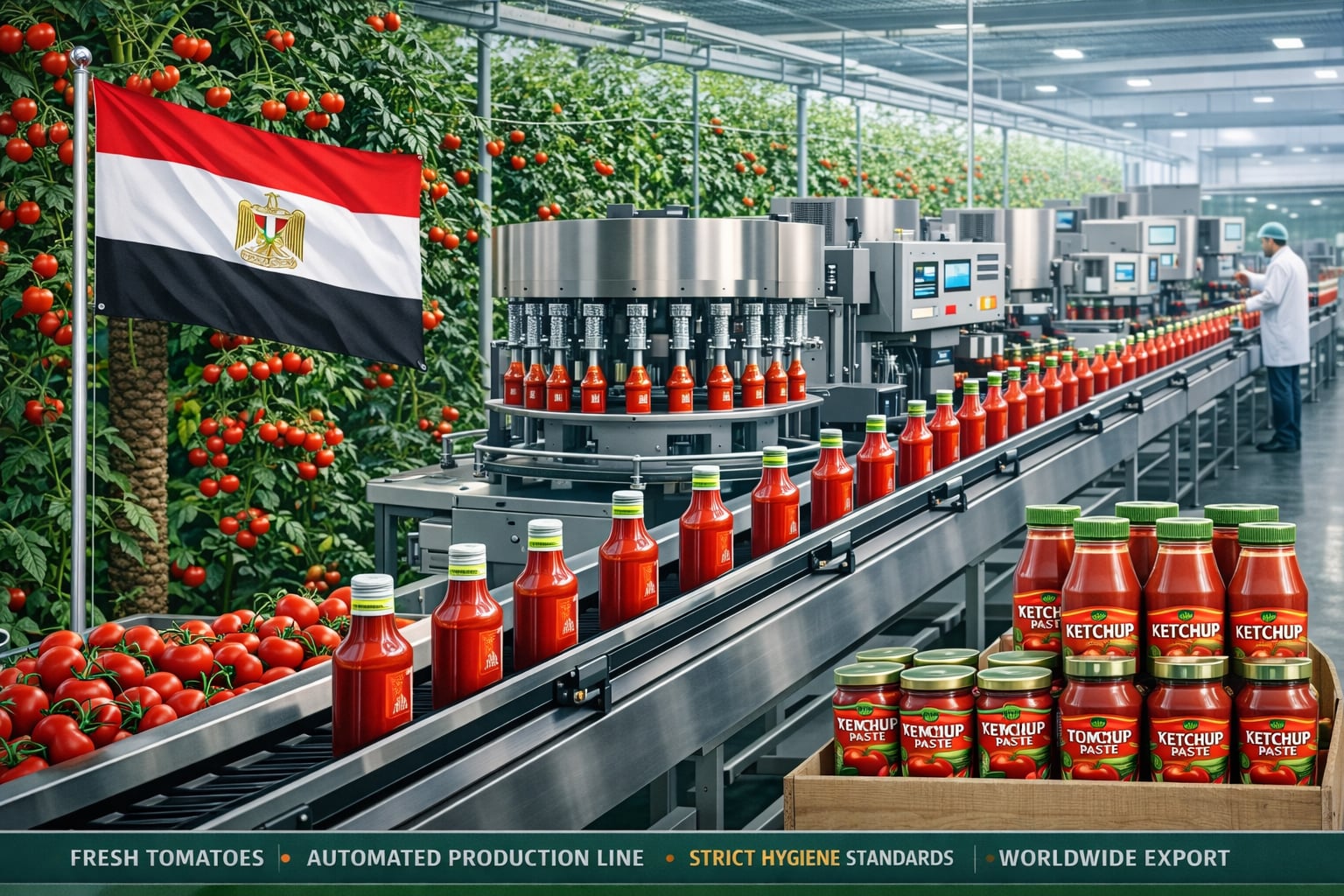
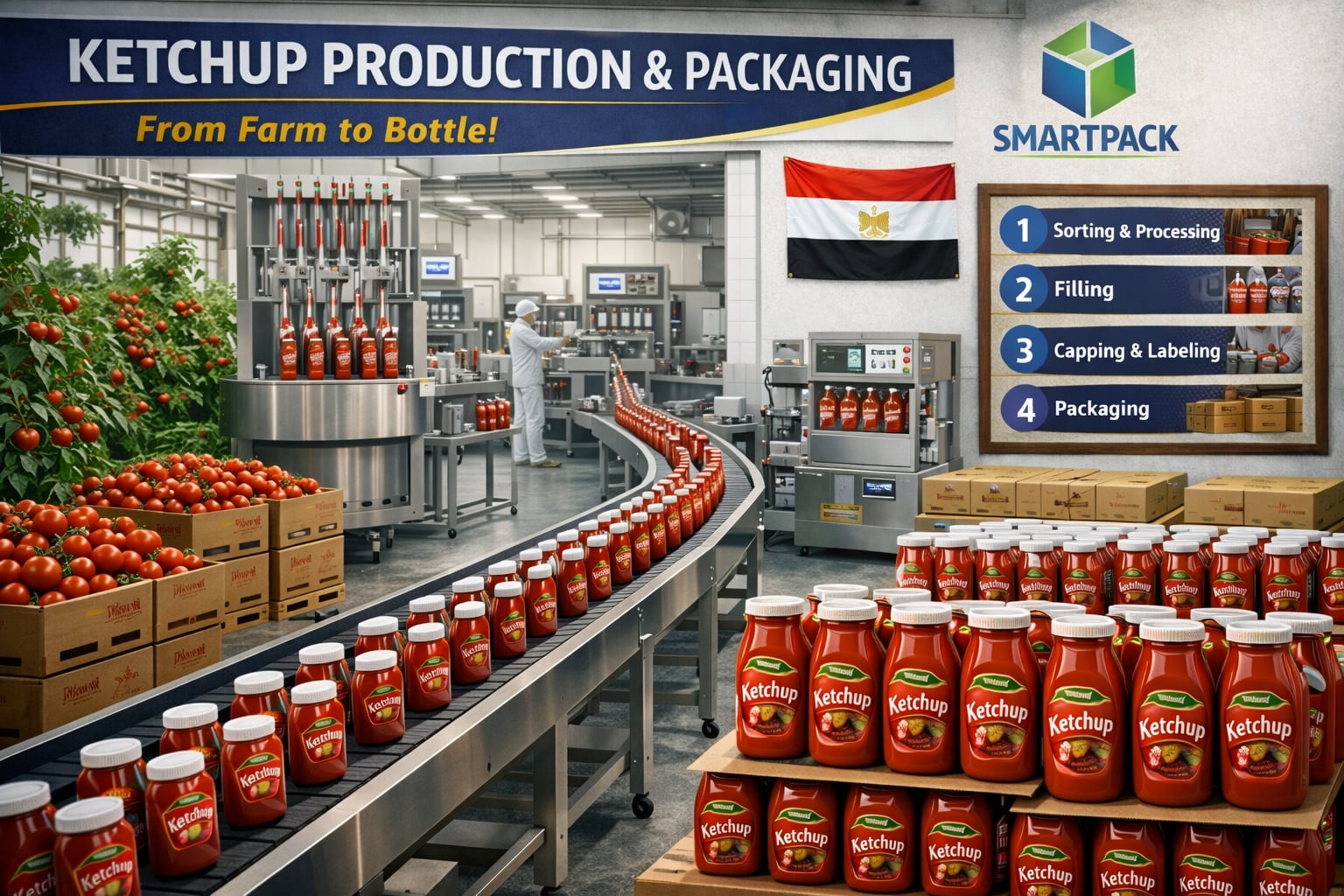
The success of this project depends on designing a fully integrated production line that starts with sauce preparation and ends with final packaging, in addition to selecting high-quality filling and packaging machines that ensure accurate filling, high operating speed, and product safety.
This comprehensive guide covers the technical, operational, and sales aspects of establishing a ketchup filling and packaging line, offering practical tips for investors and guidance on selecting the right equipment.
First: Why Is a Ketchup Filling & Packaging Project Important in Egypt?
A ketchup project offers several advantages that make it a sound economic choice:
-
Stable and continuous local market demand
-
Widespread use in restaurants, cafés, and food factories
-
Easy storage and transportation compared to some food products
-
Export potential to Arab and African markets
-
Multiple packaging sizes to meet diverse customer needs
This makes the project an excellent opportunity for investors with an industrial vision and ambitions to reach wide markets.
Second: Ketchup Manufacturing Stages Before Filling
Ketchup production passes through several stages before it is ready for filling:
1. Raw Tomato Selection
High-quality tomatoes are selected to ensure optimal color and flavor.
2. Washing and Cutting
Tomatoes are thoroughly washed to remove dirt, then cut.
3. Cooking and Mixing
Tomatoes are cooked with sugar, vinegar, and spices until the mixture is well blended.
4. Filtration
Skins and seeds are removed to achieve a smooth, homogeneous texture.
5. Concentration and Homogenization
The mixture is concentrated to the desired viscosity, then cooled before filling.
Careful execution of these stages ensures a high-quality final product.
Third: Ketchup Filling and Packaging Machines
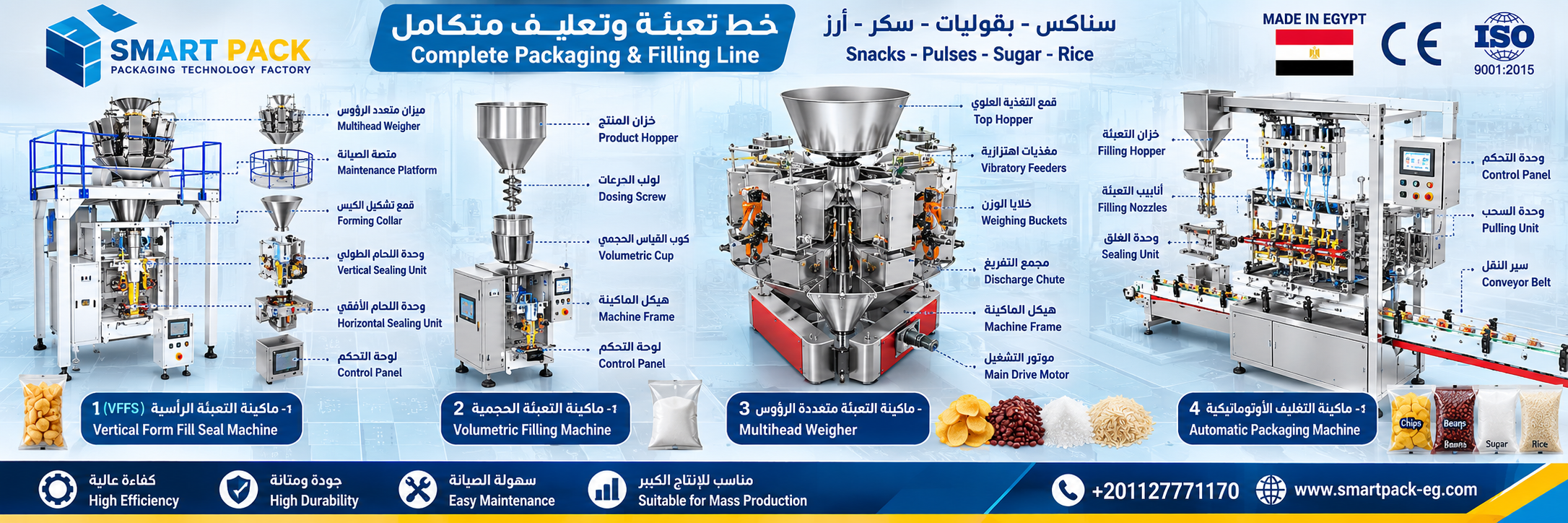
Selecting the right filling machines requires understanding the high viscosity of ketchup and the needs of the production line. Key machines include:
Viscous Liquid Filling Machines
Designed to handle thick products like ketchup with high weight and volume accuracy.
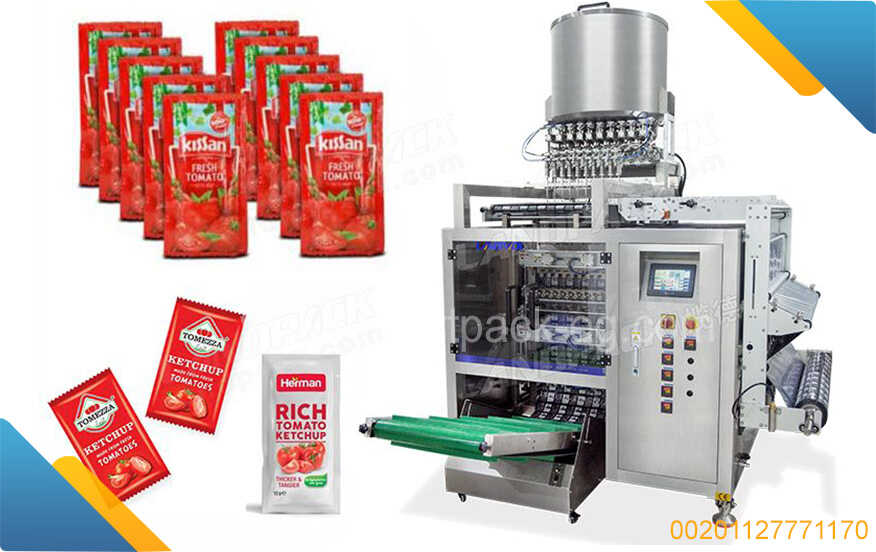
Vertical Form-Fill-Seal (VFFS) Machines
Automatically form, fill, and seal flexible pouches—ideal for sachets.
Bottle Filling Machines (Plastic & Glass)
Suitable for filling ketchup into bottles of various sizes.
Capping Machines
Ensure tight sealing to prevent leakage.
Labeling Machines
Apply labels and commercial information accurately.
Secondary Packaging Machines (Shrink or Carton)
Group products for easier storage and transportation.
Machine Types and Applications
| Machine Type | Application | Suitable For |
|---|---|---|
| Viscous liquid filling | Filling ketchup containers | Medium & large factories |
| Vertical packaging (VFFS) | Flexible pouches | Multi-size projects |
| Capping machines | Secure sealing | All container types |
| Labeling machines | Product labeling | All projects |
| Shrink packaging | Outer packaging | Transport & storage |
Fourth: Designing an Integrated Ketchup Production Line
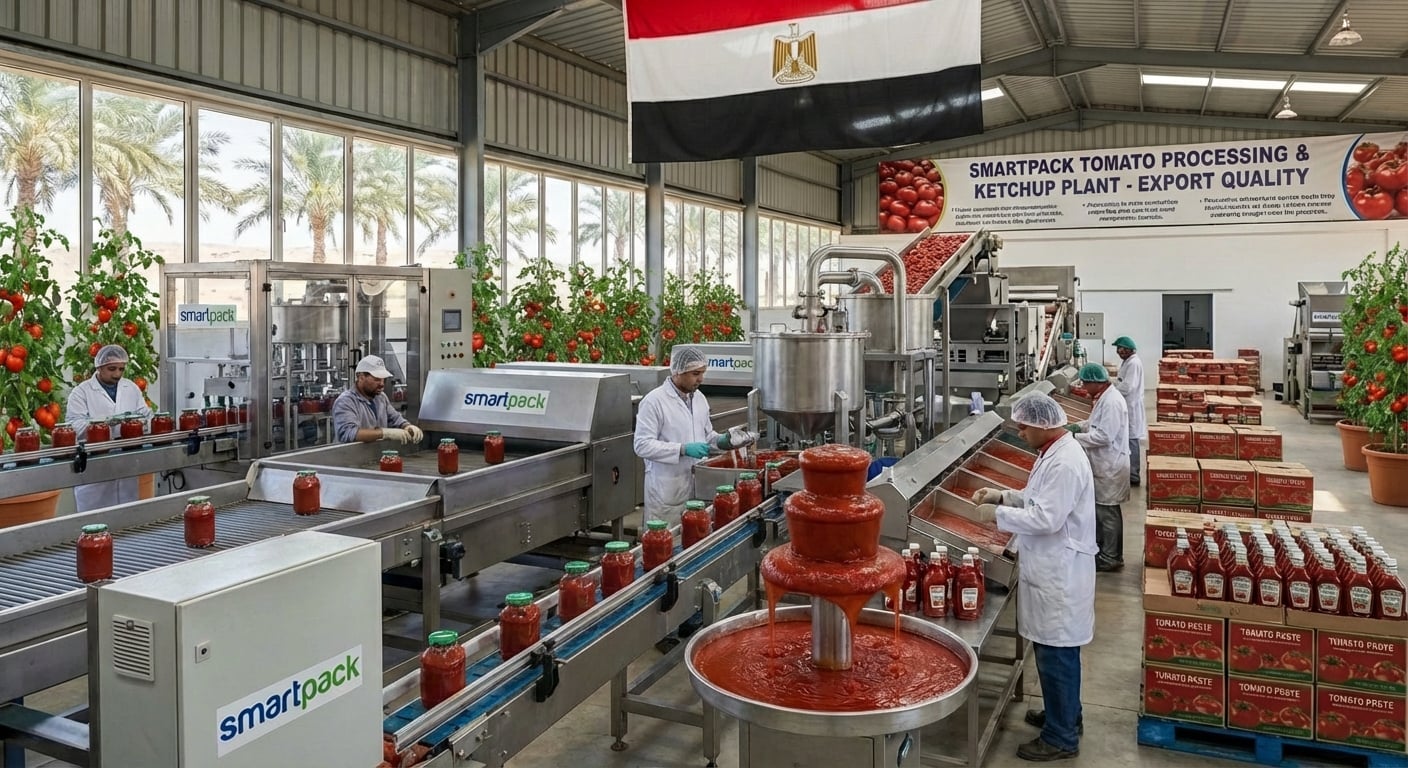
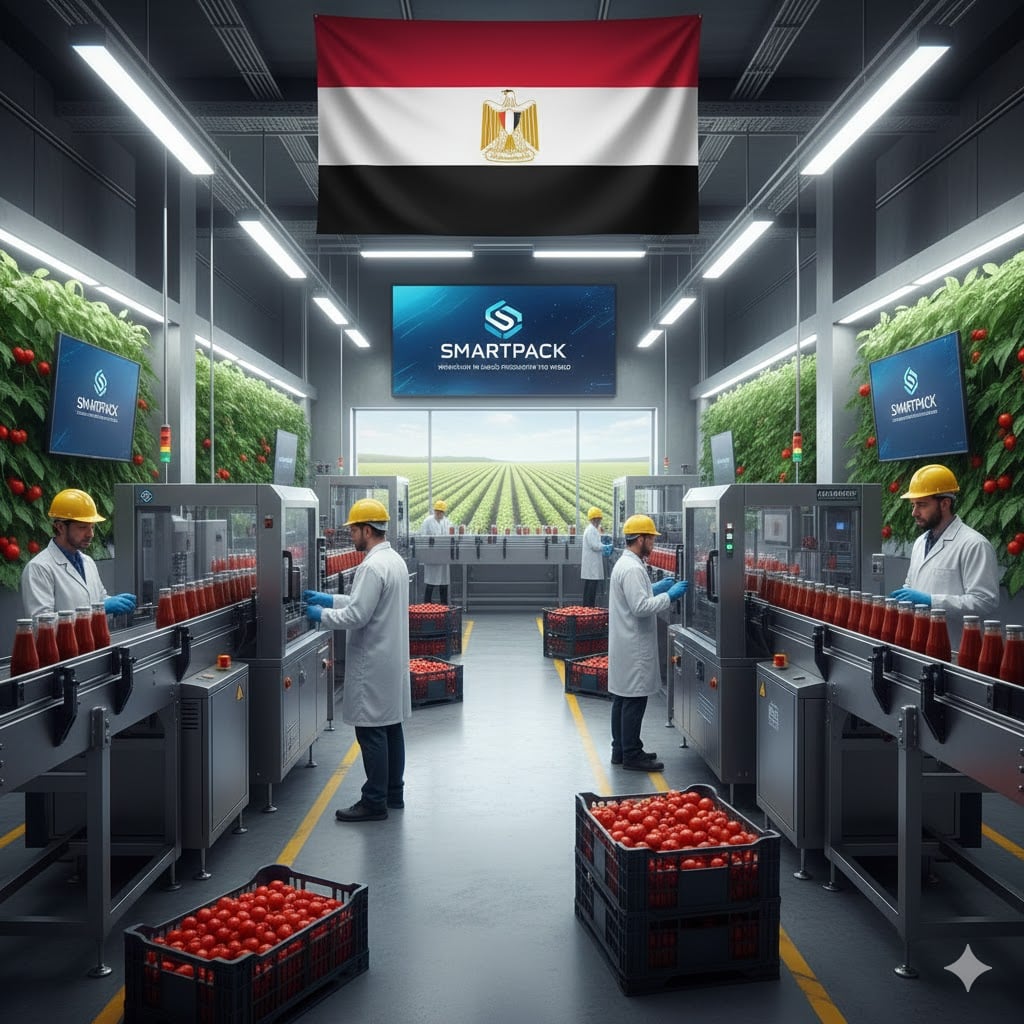
A complete filling and packaging line includes:
-
Preparation and cooking unit
-
Filtration and clarification unit
-
Filling unit
-
Capping unit
-
Labeling unit
-
Secondary packaging unit
-
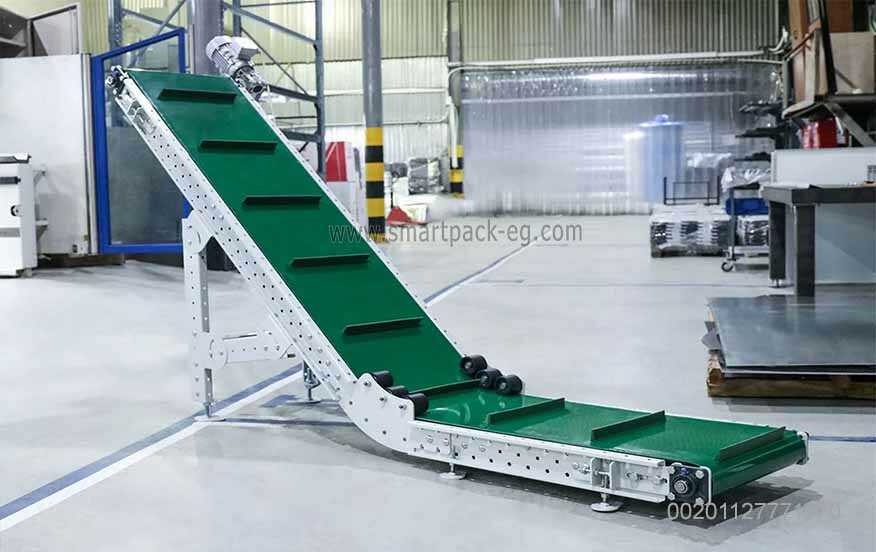
Conveyor systems for finished products
A well-coordinated layout improves workflow efficiency and minimizes downtime and waste.
Fifth: Choosing the Right Ketchup Packaging
Packaging selection affects production cost and filling methods:
Glass Bottles
Offer a premium look and suit high-end markets.
Plastic Bottles
Cost-effective, lightweight, and easy to transport—ideal for mass markets.
Flexible Pouches
Suitable for fast-moving products and varied portion sizes.
Sixth: Estimating Investment Costs
Main Cost Components
| Item | Estimated Cost |
|---|---|
| Filling & packaging machines | Medium to high |
| Factory setup | Medium |
| Raw materials | Variable |
| Labor & operation | Monthly |
Budgeting Steps
-
Calculate fixed and variable costs
-
Estimate monthly production volume
-
Determine the break-even point
-
Calculate expected returns
Accurate cost estimation supports a solid financial plan.
Seventh: Ketchup Sales and Distribution in Egypt
A successful sales strategy uses multiple channels:
-
Retail stores and supermarkets
-
Supplying restaurants and cafés
-
Wholesale distribution
-
Online sales via e-commerce and social platforms
-
Export to Arab and African markets
Diversifying sales channels increases revenue and reduces market risk.
Eighth: The Role of Smart Pack in Project Setup
Smart Pack provides integrated industrial solutions for food filling and packaging projects, including:
-
Production line needs assessment
-
Recommendation of suitable machines
-
Design of complete filling and packaging lines
-
Operator training
-
After-sales technical support
Working with a specialized company reduces risk and enhances production quality.
Ninth: Practical Tips for Project Success
-
Use high-quality tomato ingredients
-
Select machines designed for high-viscosity products
-
Ensure packaging complies with food safety standards
-
Maintain machines regularly
-
Plan for product development and multiple pack sizes
-
Establish a clear distribution strategy from the start
Frequently Asked Questions (FAQ)
1. Is a ketchup filling and packaging project profitable in Egypt?
Yes, especially with strong local market demand.
2. What is the most suitable packaging for ketchup?
Plastic bottles for mass markets; glass bottles for premium segments.
3. Do machines require regular maintenance?
Yes, maintenance ensures performance and reduces breakdowns.
4. What’s the difference between vertical filling and fully automatic lines?
Vertical filling suits pouches; fully automatic lines are faster and ideal for large-scale production.
5. Can ketchup products be exported?
Yes, if they comply with international food safety standards.
6. Does Smart Pack provide operator training?
Yes, including operation and maintenance training.
Conclusion
The ketchup filling and packaging machinery line project in Egypt represents a strong investment opportunity in the food sector. With proper planning, the right equipment selection, and an effective marketing strategy, investors can achieve long-term success. Partnering with a specialized company such as Smart Pack provides full support—from design to final operation—ensuring a reliable, high-quality production line.