 Admin
Admin Fully Automatic Arabic Bread Production Line 6000–8000 Loaves/Hour
A Stable-Demand, High-Continuity Industrial Investment
Arabic bread is a core food staple that is not affected by seasonal market fluctuations and maintains consistent daily demand all year round.
Factories equipped with high-efficiency automatic bread production lines are best positioned to ensure operational continuity, reduce unit cost per loaf, and meet the needs of large markets and long-term supply contracts.
Investing in a fully automatic Arabic bread production line with a capacity of 6000–8000 loaves per hour places the factory in a strong competitive position—whether for the local market, institutional supply, or regional export.
What Is an Automatic Arabic Bread Production Line Project?
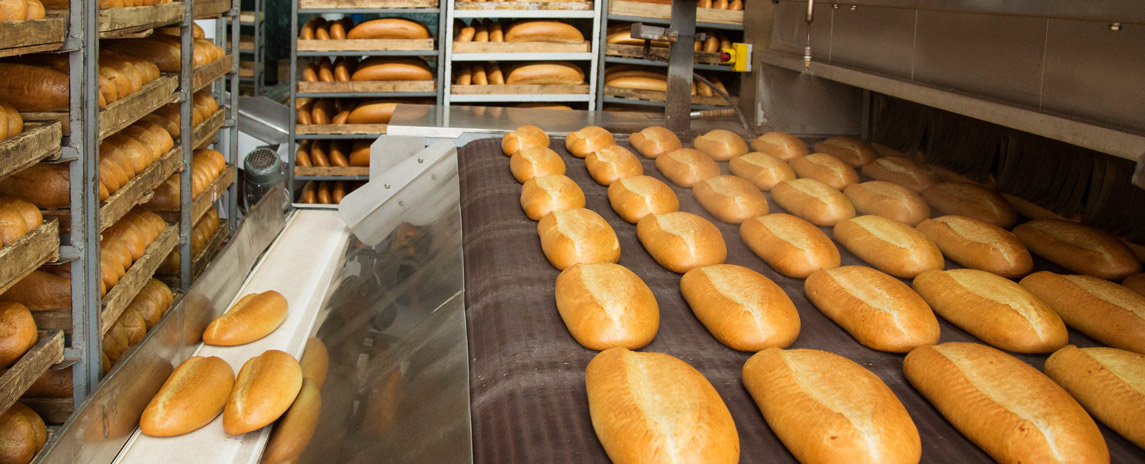
This project converts traditional, labor-intensive bread production into a fully integrated industrial system that starts with dough preparation and ends with bread ready for packaging.
The line includes:
-
Automatic dough mixing
-
Precise dividing and rounding
-
Controlled fermentation
-
Uniform sheeting and shaping
-
Industrial conveyor tunnel oven
-
Gradual cooling
-
Full readiness for packaging and wrapping
This type of industrial bread production line is ideal for large factories and organized supply chains.
Why 6000–8000 Loaves/Hour Is the Optimal Industrial Capacity
This production capacity is ideal for factories that:
-
Operate on daily supply schedules
-
Serve wide geographic areas or multiple cities
-
Supply large retail outlets and institutions
-
Aim to reduce unit cost and increase profit margins
Operational Advantages
-
Stable and continuous production
-
Reduced dependence on labor
-
Uniform loaf weight and thickness
-
Easy scalability for future expansion
Technical Specifications of the Arabic Bread Line (6000–8000 Loaves/Hour)
General Specifications
-
Actual production capacity up to 8000 loaves/hour
-
Food-grade stainless steel contact parts
-
Automatic control of speed and temperature
-
Compatible with packaging and wrapping systems
-
Designed for continuous industrial operation
Operational Benefits
-
Consistent bread quality
-
Reduced production waste
-
Easy maintenance
-
Long operational lifespan
Production Stages Inside an Arabic Bread Factory
Dough Mixing
Ingredients are mixed in precise ratios to ensure consistent dough texture.
Dividing and Rounding
The dough is divided into uniform weights and rounded automatically.
Fermentation
Controlled proofing time produces light, well-expanded loaves.
Sheeting and Shaping
Dough is sheeted to uniform thickness for even baking.
Baking
Bread is baked in an industrial conveyor oven with precisely distributed heat.
Cooling
Gradual cooling preserves bread quality before packaging.
Suitable Packaging and Wrapping Machines for Arabic Bread Lines
Although Arabic bread is a daily product, professional packaging increases market value and extends shelf life.
Recommended options include:
-
Multi-size bag packaging machines
-
Automatic plastic bag wrapping machines
-
Tight sealing systems
-
Counting and stacking solutions
This stage is essential for professional industrial bakery packaging operations.
Comparison Tables
Arabic Bread Production Line Capacity Comparison
| Production Capacity | Target Facility | Usage |
|---|---|---|
| 3000–4000 loaves/hour | Large bakeries | Local distribution |
| 6000–8000 loaves/hour | Industrial factories | Wide supply & export |
Production Line Components Comparison
| Stage | Function | Impact |
|---|---|---|
| Mixing | Dough consistency | Bread quality |
| Fermentation | Dough expansion | Shape |
| Baking | Proper cooking | Taste |
| Packaging | Protection | Marketing |
Arabic Bread Market Overview
-
Stable daily demand with no seasonality
-
Widespread consumption in homes and restaurants
-
Strong institutional and food-service supply opportunities
-
Export potential to nearby regional markets
The market strongly supports industrial Arabic bread production and packaging investments.
Cost, Profitability, and Return on Investment
Main Cost Elements
-
Automatic production line
-
Packaging and wrapping machines
-
Raw materials
-
Energy and operational costs
Expected Returns
-
Stable profit margins
-
Lower cost per loaf with higher output
-
Fast capital turnover
-
Competitive investment payback period
Well-planned high-capacity lines generate strong and sustainable financial returns.
Smart Investment Tips for Factories
-
Choose a line that matches real market demand
-
Do not neglect the cooling stage before packaging
-
Invest in a reliable packaging machine
-
Plan scalability from day one
-
Focus on quality consistency, not speed alone
Why Choose Smart Pack for Arabic Bread Production Lines?
Selecting the right industrial partner is a long-term investment decision.
Smart Pack provides:
-
Arabic bread production lines tailored to factory needs
-
Integrated packaging and wrapping solutions
-
Practical expertise in food industries
-
Strong after-sales technical support
-
Pre-implementation operational consulting
The right partnership reduces risk and increases operational stability.
Frequently Asked Questions
Is a 6000–8000 loaves/hour line suitable for export?
Yes, especially with proper packaging and consistent quality.
Can loaf weight be adjusted?
Yes, through adjustable dividing units.
Does the line require large labor teams?
No, it is designed to minimize labor dependence.
Why is packaging important for bread?
It improves appearance and extends shelf life.
Can additional stages be added later?
Yes, the line is expandable and upgradeable.
Start Your Industrial Project with Confidence
If you are looking for a stable-demand, long-term, and scalable food project, a fully automatic Arabic bread production line (6000–8000 loaves/hour) is a smart investment choice.
Contact Smart Pack today for technical consultation, customized line design, and the selection of the best packaging machines—ensuring consistent quality and lower operating costs.
Investing in bread is investing in stability.