 Admin
Admin Tomato Sauce Production, Filling, and Packaging Project in Egypt
A High-Demand Food Industry Investment with Sustainable Growth
The tomato sauce production, filling, and packaging project in Egypt is considered one of the most important food manufacturing projects due to its constant demand and high consumption volume. Tomato sauce is widely used in households, restaurants, commercial kitchens, and food factories, making it a core food product that requires professional production and packaging lines to ensure quality and food safety.
Establishing a fully integrated production line, from processing to filling and packaging, requires careful planning, selecting machines suitable for the viscous nature of tomato sauce, and proper factory layout design. In this guide, we explore the production stages, machinery importance, equipment selection, project costs, and practical success tips.
First: Why Is Tomato Sauce Filling and Packaging Important in Egypt?
The tomato sauce packaging project represents an excellent investment opportunity in Egypt for several reasons:
Steady Consumer Demand
Tomato sauce is a daily-use essential product for households and restaurants.
Multiple Uses
It is widely used in restaurants, food factories, fast food chains, and home cooking.
Easy Marketing
Well-packaged products achieve faster market penetration, both offline and online.
Export Potential
High-quality tomato sauce can be exported to Arab and African markets in compliance with international standards.
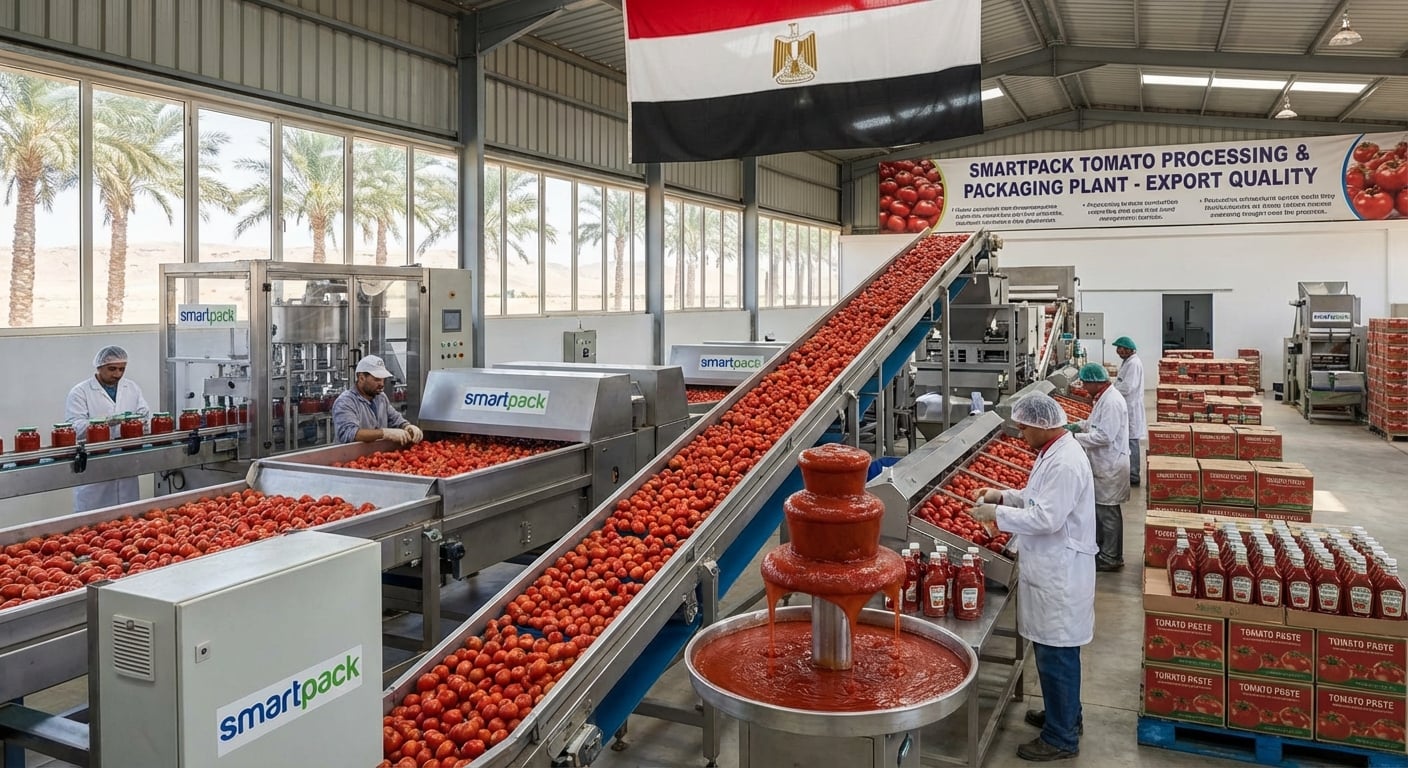
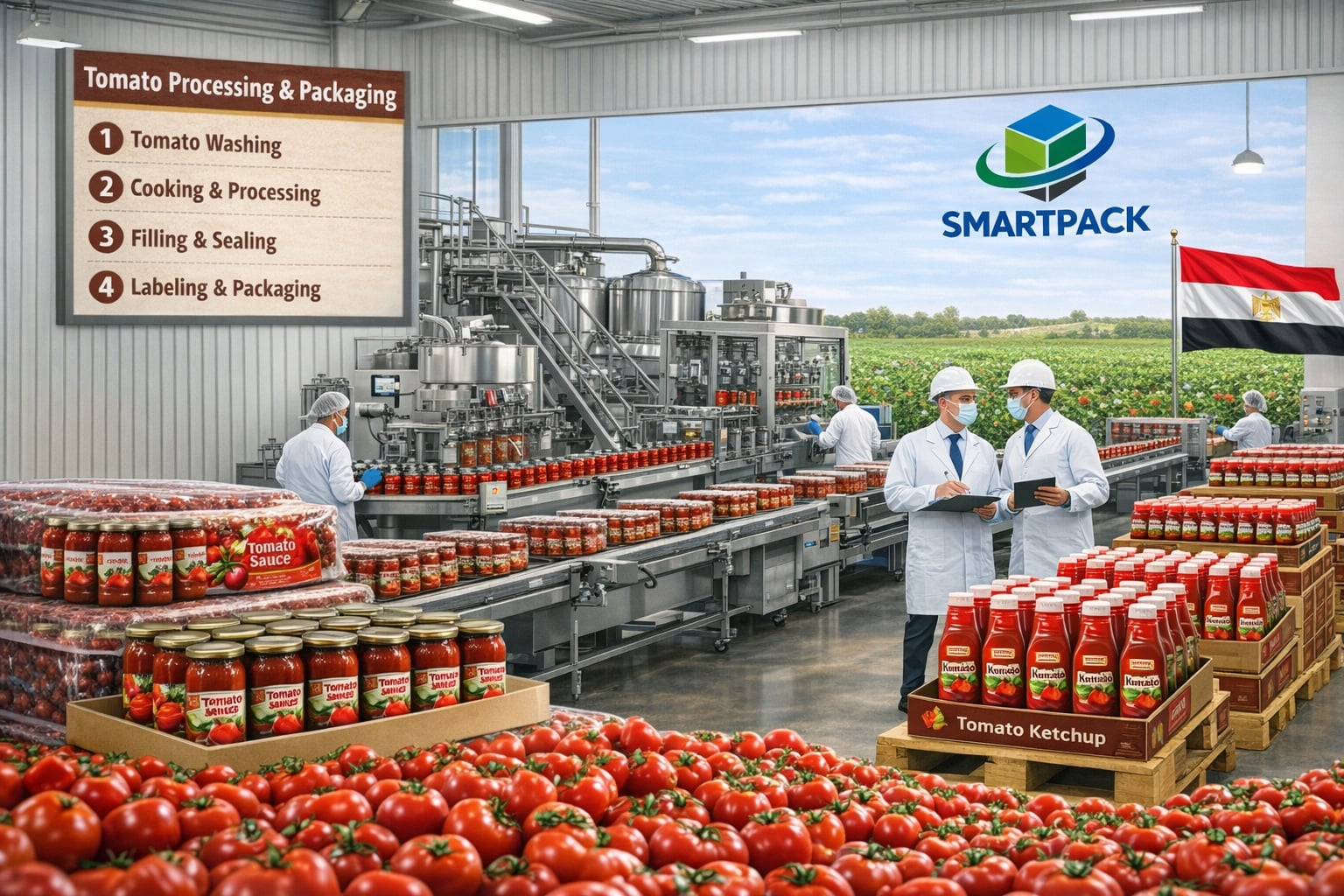
Second: Tomato Sauce Manufacturing Stages
Tomato sauce goes through several stages before packaging:
1. Tomato Receiving and Inspection
Fresh tomatoes are received from suppliers and inspected to ensure quality.
2. Washing and Cleaning
Tomatoes are thoroughly washed to remove dirt and impurities.
3. Blanching and Crushing
Tomatoes are blanched and crushed to prepare the pulp.
4. Cooking and Concentration
The sauce is cooked with salt, spices, and other ingredients, then concentrated to the desired consistency.
5. Filtration
Skins and seeds are separated to obtain a smooth sauce texture.
6. Cooling
The sauce is cooled before moving to the filling stage.
Each stage directly impacts the final product quality and must be executed with precision.
Third: Tomato Sauce Filling and Packaging Machines
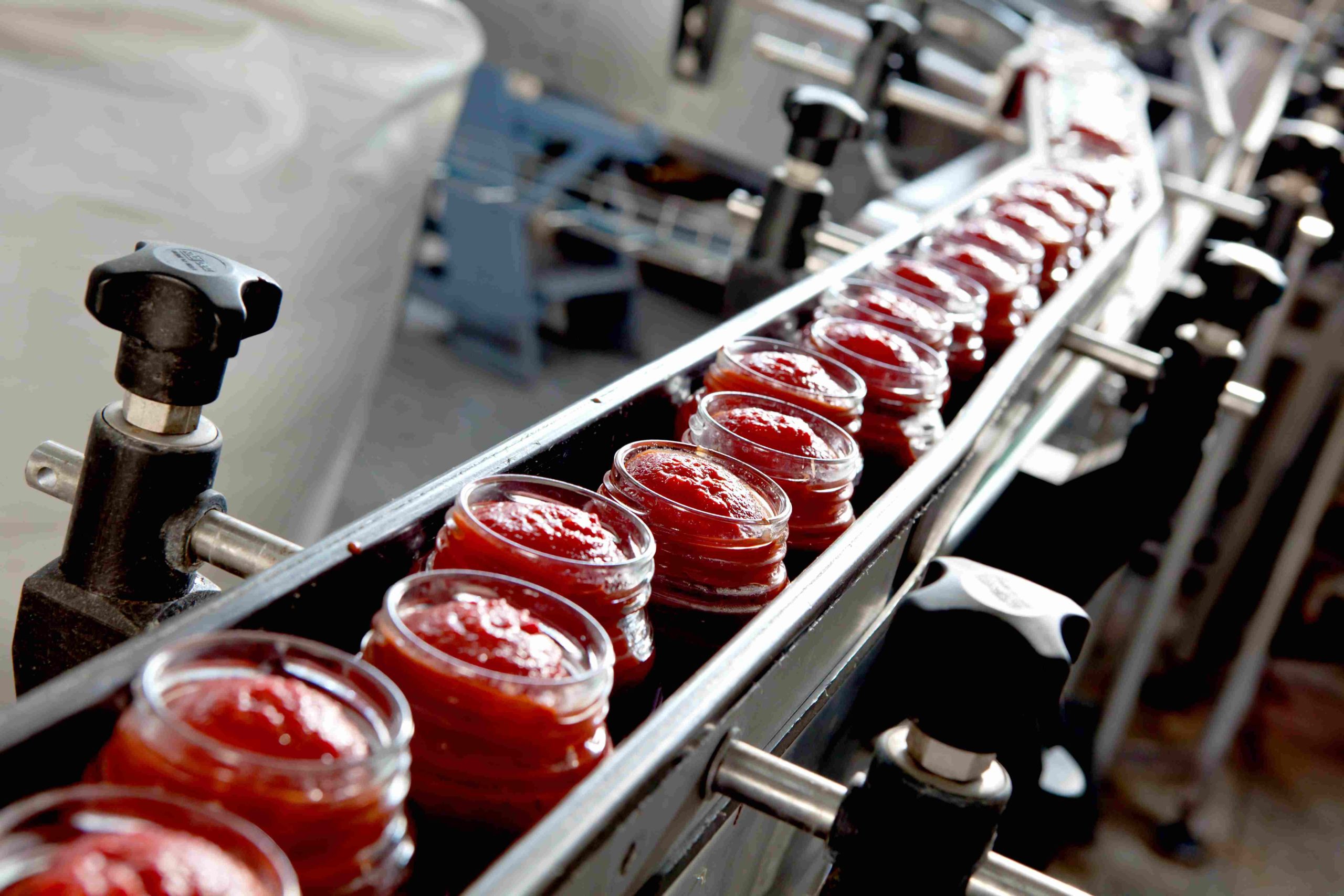
Choosing the right filling and packaging machines is a critical success factor, as tomato sauce has a thick, viscous consistency that requires specialized equipment.
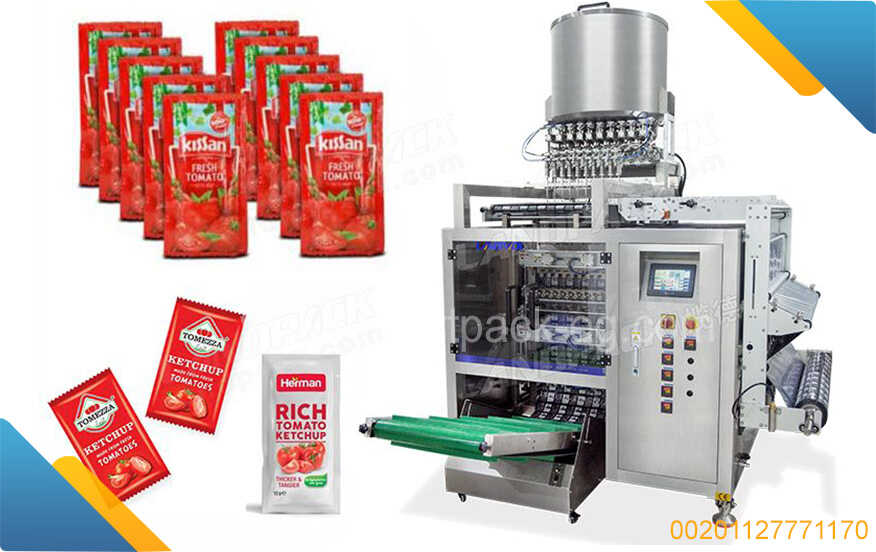
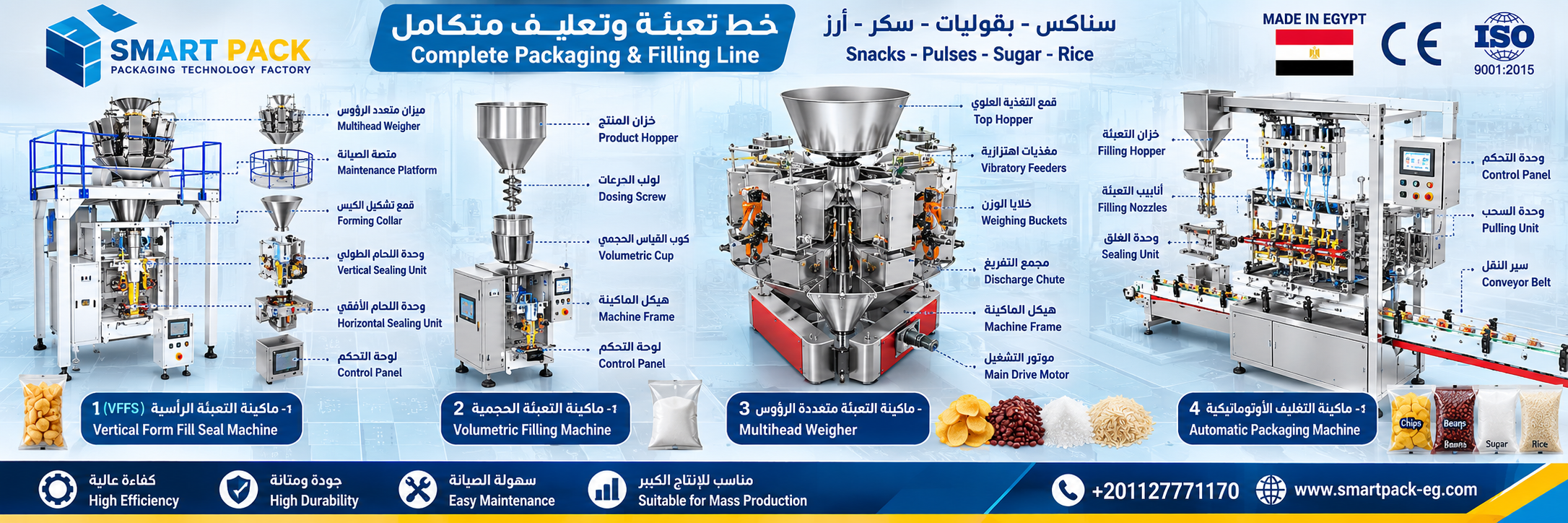
Vertical Packaging Machines
Ideal for filling tomato sauce into small or large plastic pouches.
Viscous Liquid Filling Machines
Used for filling sauce into glass or plastic bottles with high accuracy.
Semi-Automatic Filling Machines
A flexible and cost-effective solution for small and medium factories.
Fully Automatic Filling Lines
Suitable for large factories with high production capacity and minimal human intervention.
Automatic Capping Machines
Ensure tight sealing to prevent leakage and contamination.
Labeling Machines
Accurately apply labels and product information.
Shrink Wrapping Machines
Used for secondary packaging, grouping bottles for storage and transport.
Machine Types and Their Applications
| Machine Type | Application | Suitable For |
|---|---|---|
| Viscous liquid filling | Bottles & plastic containers | Medium & large factories |
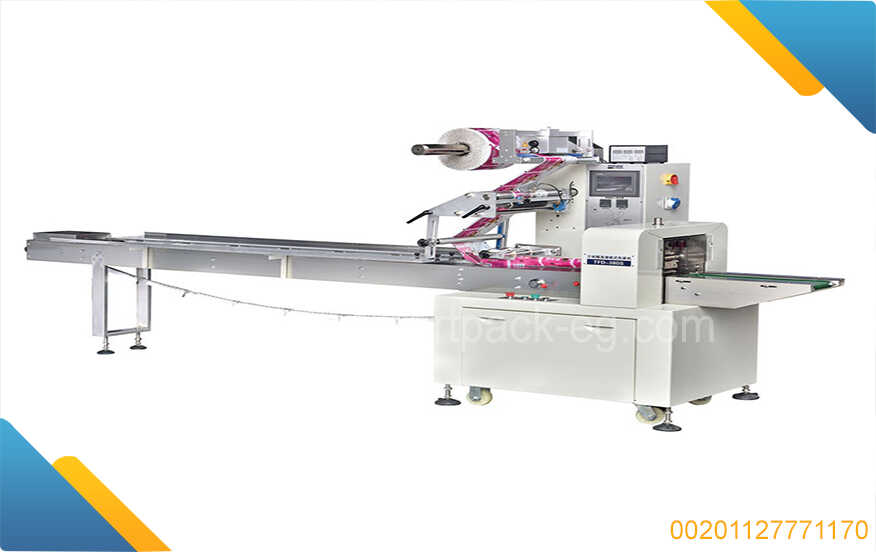
| Vertical packaging | Flexible pouches | Multi-weight production |
| Semi-automatic filling | Limited output | Small factories |
| Fully automatic filling | High-speed production | Large factories |
| Capping machines | Secure sealing | All project sizes |
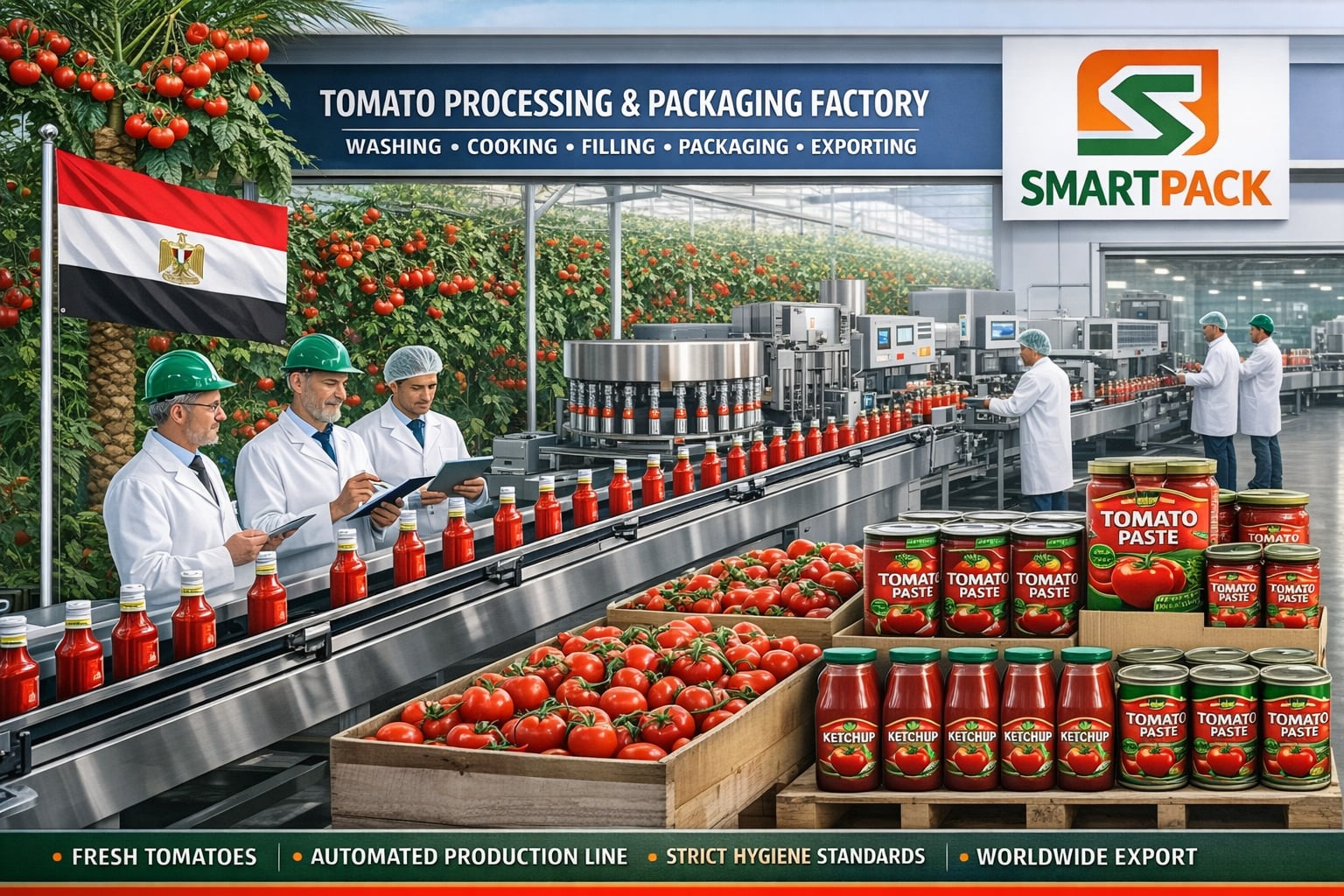
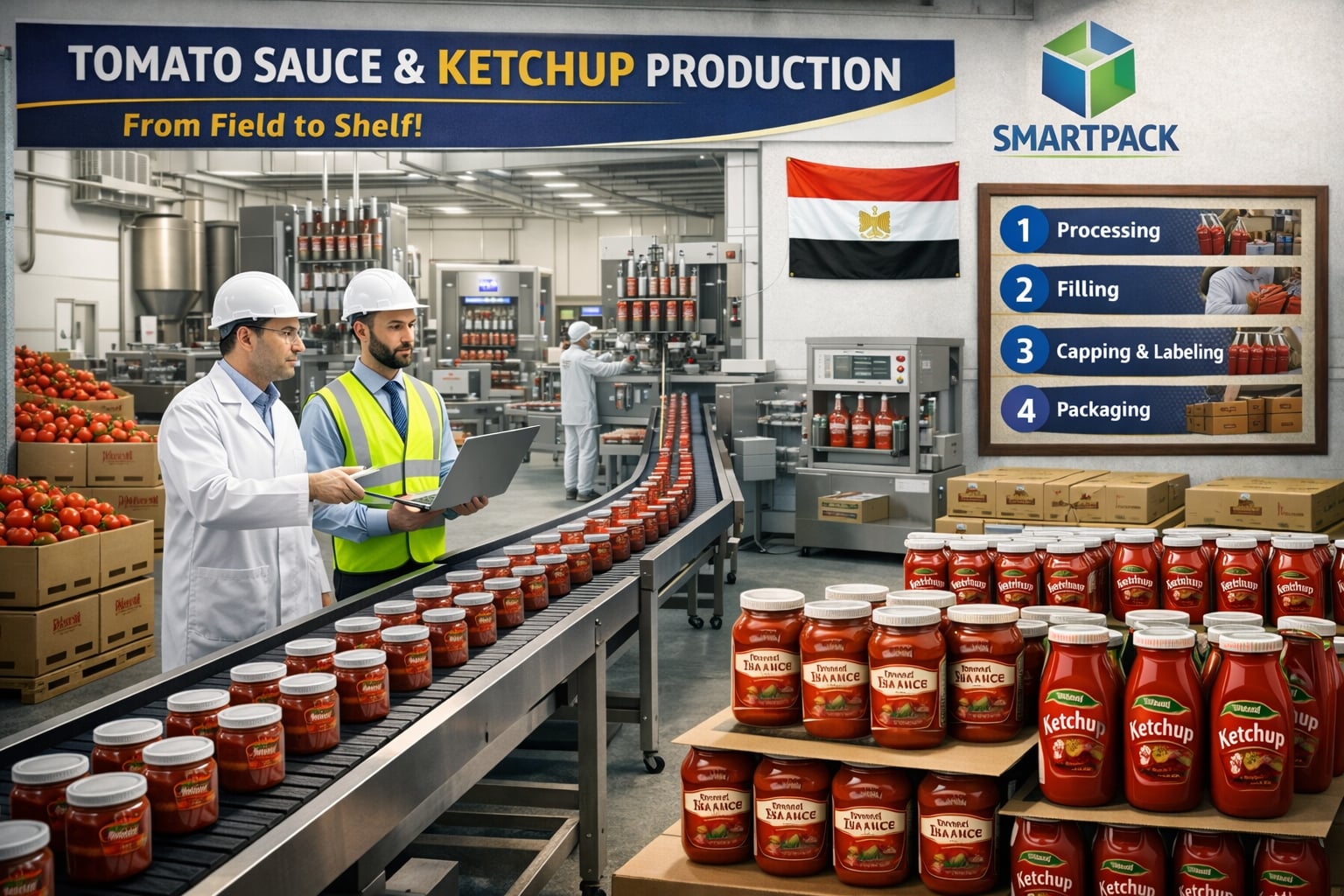
Fourth: Integrated Production Line Design
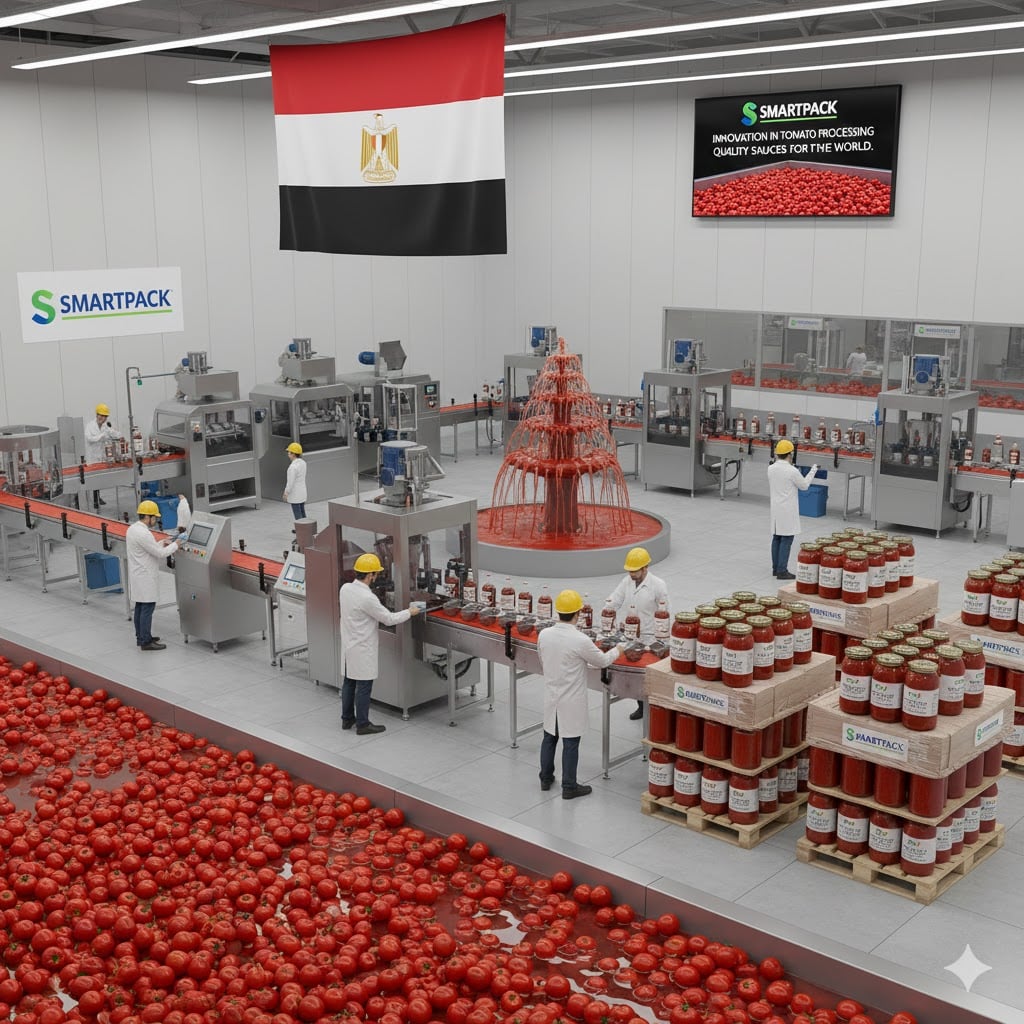
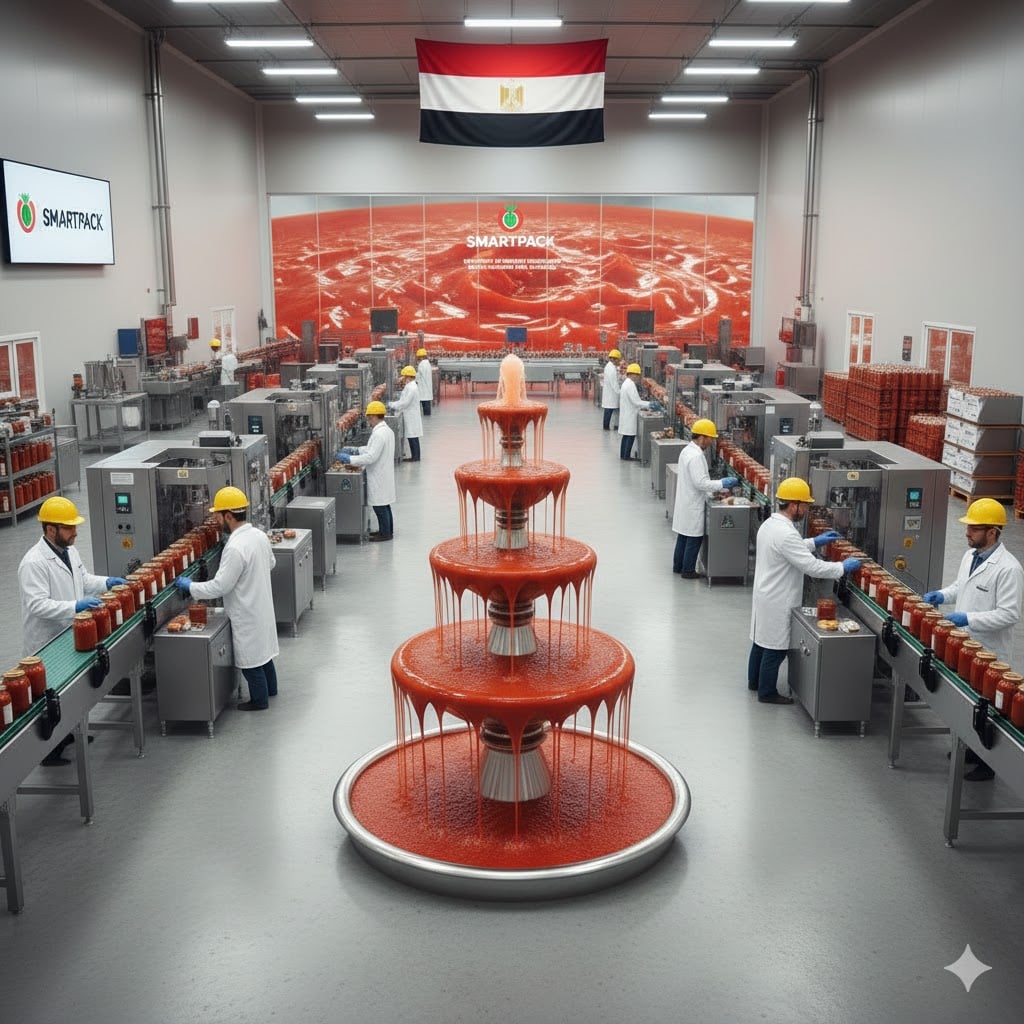
A complete tomato sauce production line includes:
-
Tomato receiving and cleaning unit
-
Washing and sorting unit
-
Crushing and cooking unit
-
Filling unit
-
Container sealing unit
-
Labeling unit
-
Secondary packaging unit
-
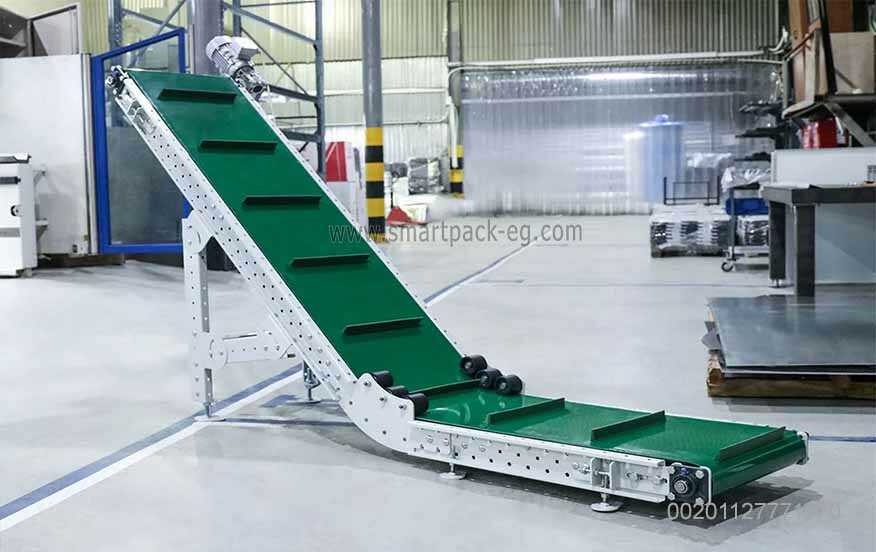
Conveyor systems for smooth workflow
An integrated design helps reduce waste, increase efficiency, and standardize product quality.
Fifth: Choosing the Right Packaging for Tomato Sauce
Packaging selection affects both production cost and market acceptance, including:
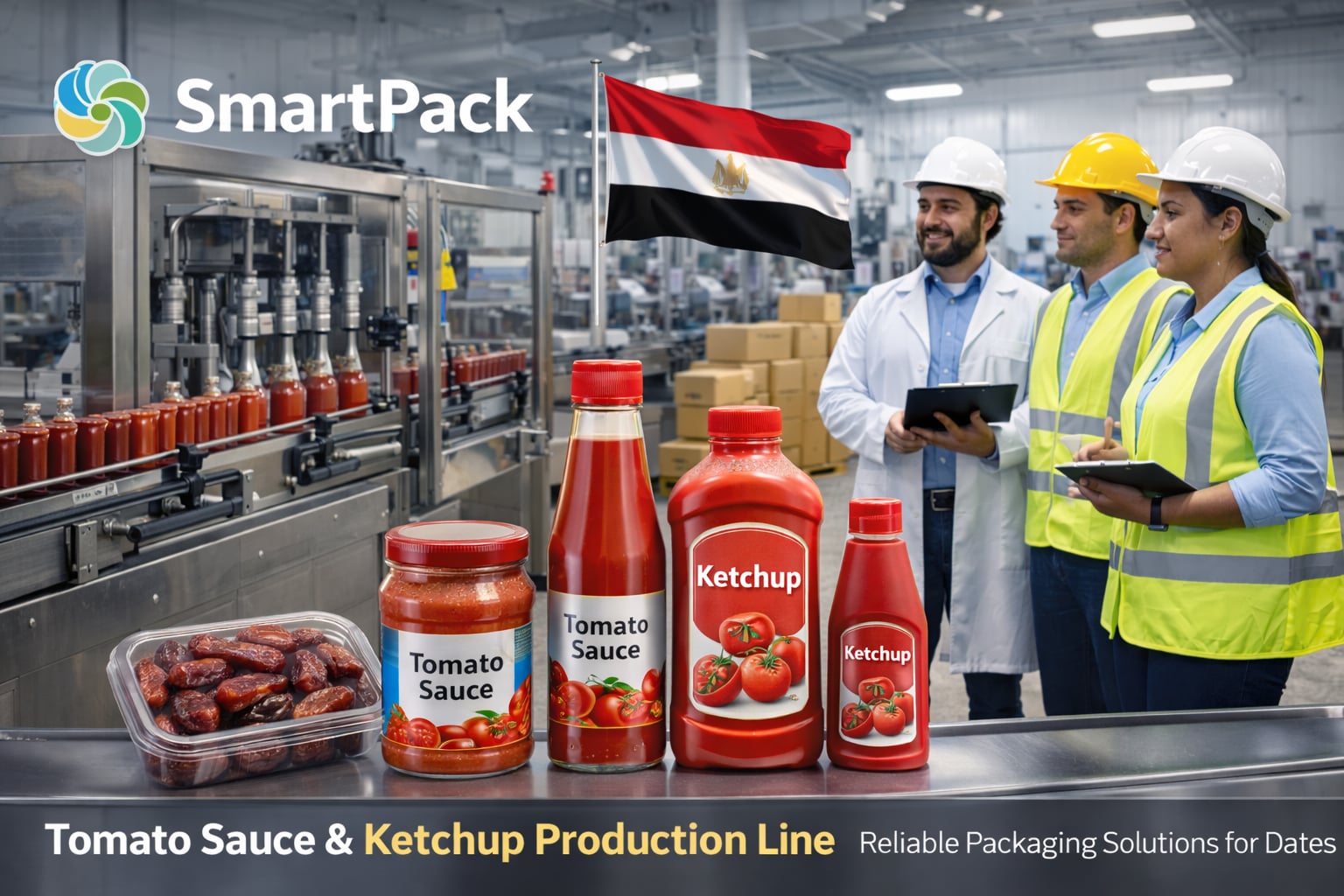
Glass Bottles
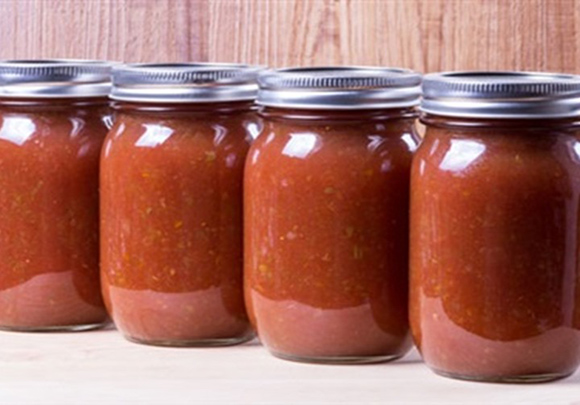
Ideal for premium products and provide higher consumer trust.
Plastic Bottles
Cost-effective, lightweight, and easier to transport.
Flexible Pouches
Perfect for retail offers and lower packaging costs.
Sixth: Project Investment Costs
Main cost components include:
| Item | Estimated Cost |
|---|---|
| Filling & packaging machines | Medium to high |
| Factory setup & infrastructure | Medium |
| Raw materials (tomatoes & spices) | Variable |
| Labor & machine operation | Monthly |
Preparing a detailed budget is essential to determine break-even point and expected profitability.
Seventh: Product Sales and Distribution Channels
Project success depends on an effective sales and distribution strategy, such as:
-
Retail stores and supermarkets
-
Supplying restaurants and hotels
-
Wholesale distribution
-
Online sales through digital platforms
-
Export to Arab and African markets
Eighth: Practical Tips for Project Success
-
Use high-quality raw tomatoes
-
Choose machines suitable for viscous liquids
-
Ensure packaging materials meet food safety standards
-
Train workers on operation and maintenance
-
Plan for continuous product development
Frequently Asked Questions (FAQ)
1. Is the project profitable in Egypt?
Yes, due to constant demand for processed tomato sauce.
2. What is the best packaging type for tomato sauce?
Glass for premium products, plastic for mass markets.
3. Do machines require regular maintenance?
Yes, to maintain performance and reduce breakdowns.
4. What is the difference between vertical and fully automatic filling?
Vertical machines are ideal for pouches, while fully automatic lines are faster and suitable for large volumes.
5. Is online distribution important?
Yes, it expands market reach and increases sales.
6. Does Smart Pack provide technical support?
Yes, including training, maintenance, and after-sales service.
Conclusion
The tomato sauce production, filling, and packaging machinery project in Egypt represents a strong investment opportunity in a sustainable food sector with high and continuous demand. Proper planning, selecting the right equipment, and effective marketing significantly increase the chances of success. For optimal results, partnering with a specialized company such as Smart Pack ensures integrated solutions from design to full operation, helping investors achieve competitive and high-quality products in local and international markets.