 Admin
Admin Used Oil Filling, Packaging, and Resale Project in Egypt: A Complete Practical Guide
Introduction
The used oil market in Egypt is witnessing strong momentum due to the rising demand for recycling processes and the reuse of waste oil in industrial applications and environmental services. The used oil filling, packaging, and resale project stands out as a promising investment, combining environmental responsibility with economic returns by adding value to a resource that was previously wasted.
Recycling used oil and converting it into a marketable product requires not only suitable equipment and advanced processing techniques, but also a clear understanding of the recycling market and the selection of accurate, efficient filling and packaging machines to ensure product safety during transportation, storage, and display.
In this comprehensive guide, you’ll find:
-
The project concept and its importance
-
Stages of used oil utilization
-
Suitable filling and packaging machines
-
Sales and marketing methods
-
Preliminary feasibility overview
-
Six frequently asked investor questions
Why Is the Used Oil Project Important in Egypt?
Used oil is one of the industrial and household wastes that can be transformed into a valuable product—either as an alternative fuel oil or as a raw material for industries such as soap manufacturing, fertilizers, tires, or bioenergy.
Key importance factors include:
-
Reducing environmental pollution caused by improper oil disposal
-
Utilizing a widely available resource in urban areas
-
Meeting demand from factories and companies using recycled oil
-
Creating jobs and circular use of underutilized resources
-
Achieving high profit margins compared to many other industries
With proper planning, the project can become a sustainable and scalable business.
Stages of Used Oil Processing
Before filling and packaging, used oil must go through several precise stages:
-
Used oil collection – from restaurants, cafés, and bakeries using dedicated vehicles or tanks
-
Primary filtration – removal of large impurities such as food residues and solids
-
Sedimentation and fine filtration – separating sediments in tanks, then filtering through fine filters
-
Purification – optional units to remove odors and improve oil quality
-
Storage – storing processed oil in suitable tanks before filling
These steps ensure the oil is ready for marketing or industrial use.
Used Oil Filling and Packaging Machines
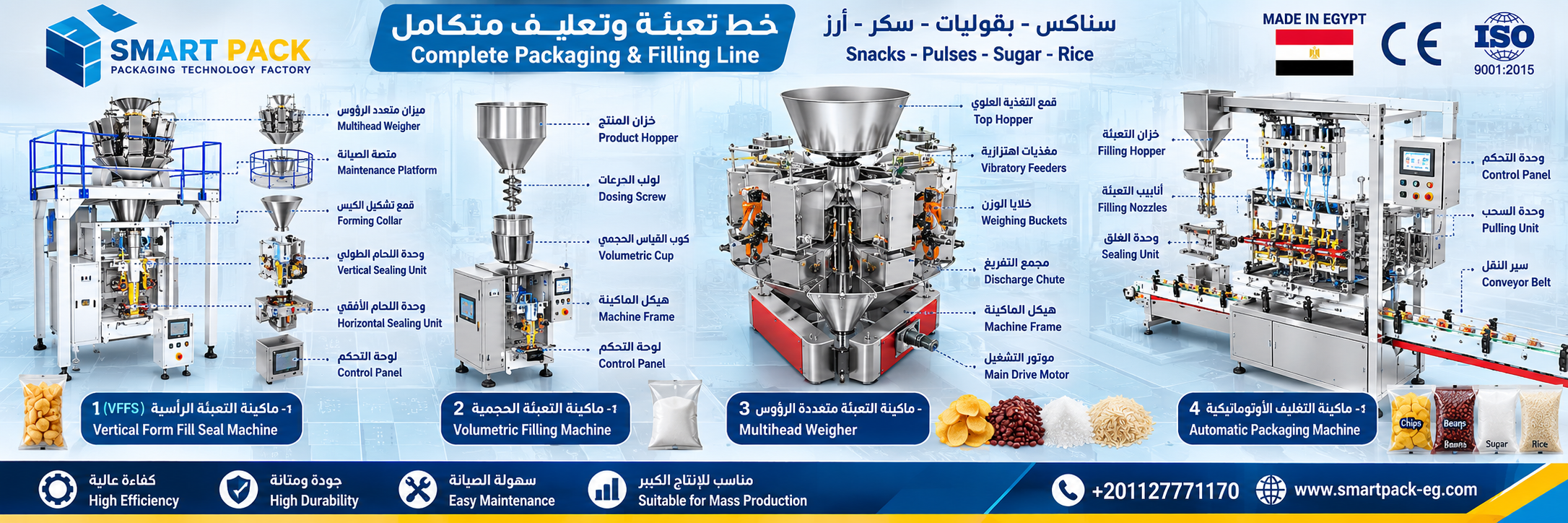
Selecting the right filling equipment boosts efficiency and final product quality. Common machines include:
-
Liquid filling machines – for filling oil into plastic bottles, glass containers, or cans
-
Automatic filling machines – suitable for medium and large factories with high output
-
Semi-automatic filling machines – cost-effective for small and medium projects
-
Drum filling machines – designed for large containers used in industrial storage
-
Labeling machines – for product data, production dates, warnings, and usage instructions
Machine Types and Uses
| Machine Type | Application |
|---|---|
| Liquid filling machines | Small & medium containers |
| Automatic filling machines | Large production lines |
| Semi-automatic fillers | Small & medium projects |
| Drum filling machines | Large containers |
| Labeling machines | Product identification |
Designing the Right Production Line
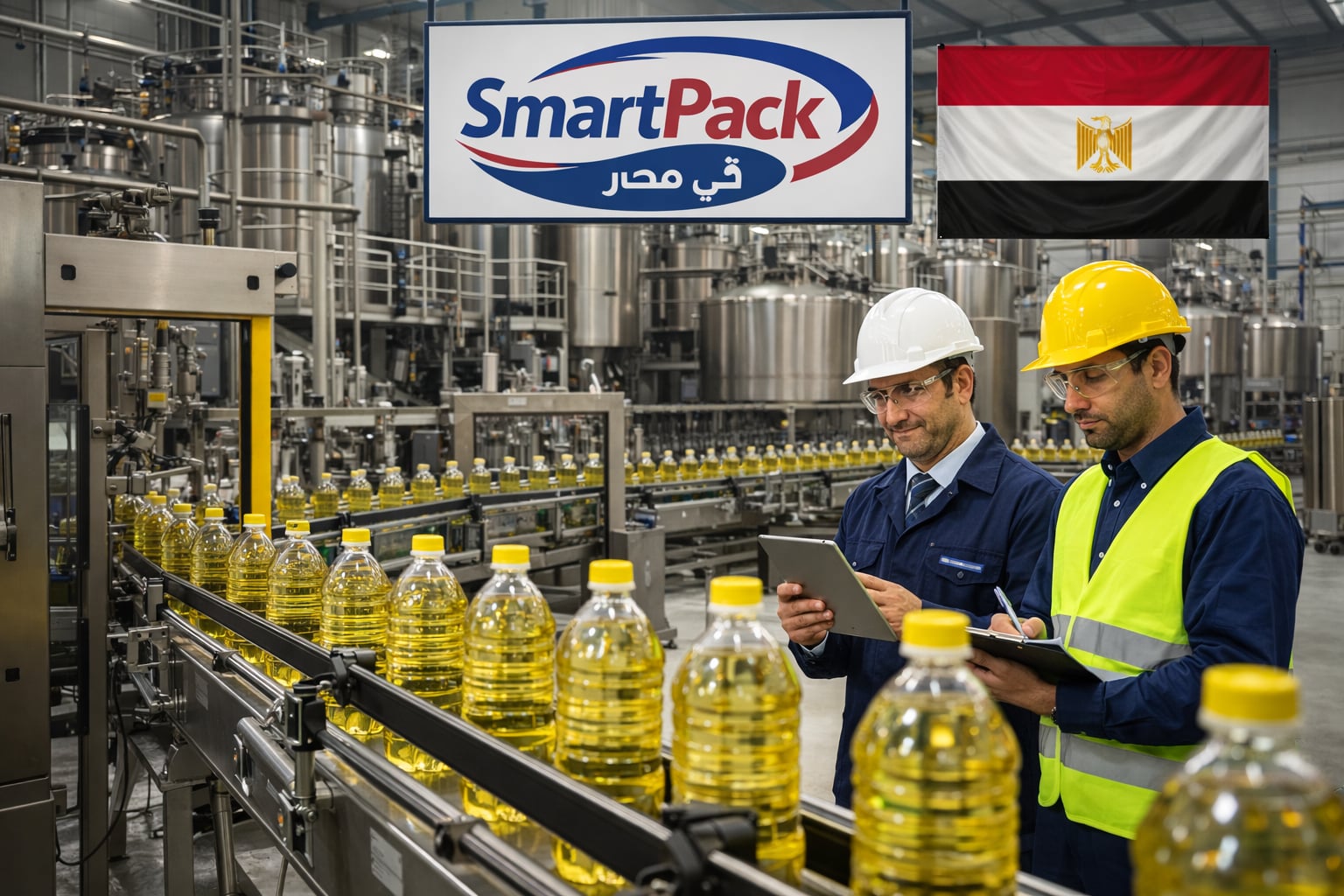
An efficient, waste-reducing production line typically includes:
-
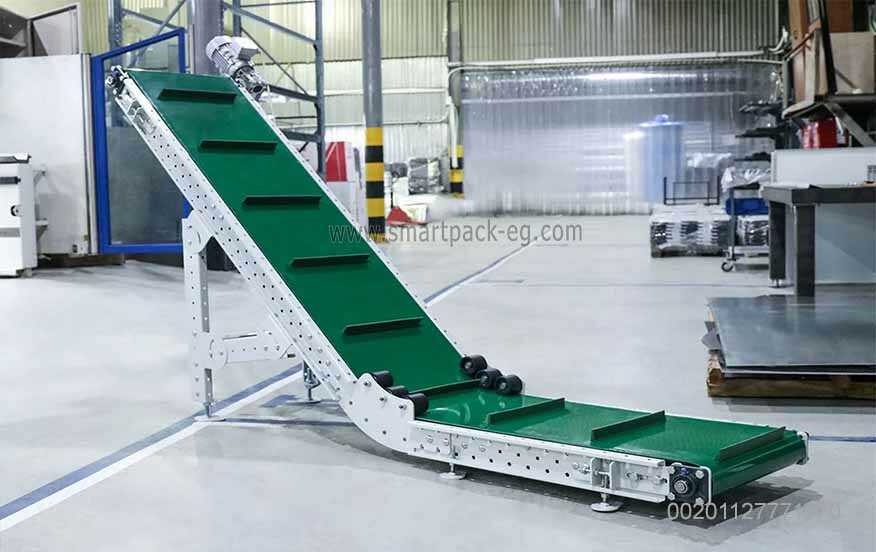
Raw material conveyor
-
Filtration & purification unit
-
Filling unit
-
Capping unit
-
Labeling unit
-
Secondary (outer) packaging
-
Final product conveyor
Logical arrangement improves workflow efficiency and reduces operating costs.
Sales and Marketing Methods for Processed Used Oil
Project success depends on a strong sales strategy, including:
-
Selling to factories and farms – many use processed oil for various purposes
-
Supplying bioenergy companies – used oil is a key raw material
-
Wholesale distribution – wider coverage across Egypt
-
Contracts with environmental companies – compliance-driven recycling demand
-
Digital marketing – websites and online platforms to reach new clients
Cost & Revenue Overview
| Item | Estimated Cost |
|---|---|
| Filling & packaging machines | Medium to high |
| Purification equipment | Medium |
| Packaging containers | Variable (by size) |
| Labor & operations | Monthly |
| Transportation & marketing | Estimated |
Expected returns depend on:
-
Daily production volume
-
Target customer segments
-
Pricing strategy
-
Product quality
With proper management, the project can achieve solid returns within a reasonable timeframe.
Why Choose Smart Pack
Partnering with a specialized company like Smart Pack offers:
-
Precise analysis of project requirements
-
Recommendation of machines suitable for used oil properties
-
Complete production line design
-
After-sales technical support and spare parts
-
Operator training for correct operation
A strong industrial partner reduces risks and increases success potential.
Practical Tips for Project Success
-
Don’t choose machines based on price alone
-
Select easy-to-maintain equipment
-
Use safe, suitable containers
-
Monitor product quality regularly
-
Establish a clear distribution plan before production
Frequently Asked Questions (FAQ)
1. Is the used oil filling and packaging project profitable in Egypt?
Yes—especially with strong demand for recycling and industrial reuse.
2. What is the best packaging for processed oil?
Durable plastic containers or large drums, depending on the target market.
3. Does the project require licenses?
Yes—compliance with environmental, health, and safety regulations is mandatory.
4. Automatic vs. semi-automatic filling—what’s the difference?
Automatic offers higher output at higher cost; semi-automatic is cheaper with lower capacity.
5. Do machines need regular maintenance?
Yes—preventive maintenance preserves performance and reduces downtime.
6. Does Smart Pack provide workforce training?
Yes—training on operation and basic maintenance is included.
Conclusion
The used oil filling, packaging, and resale project in Egypt represents a real investment opportunity within an important environmental and industrial sector. Through sound planning, the right equipment selection, and an effective marketing strategy, the project can deliver strong returns and serve as a successful model for recycling and related industries.