 Admin
Admin Mineral Water Production: A Profitable and Sustainable Industrial Project
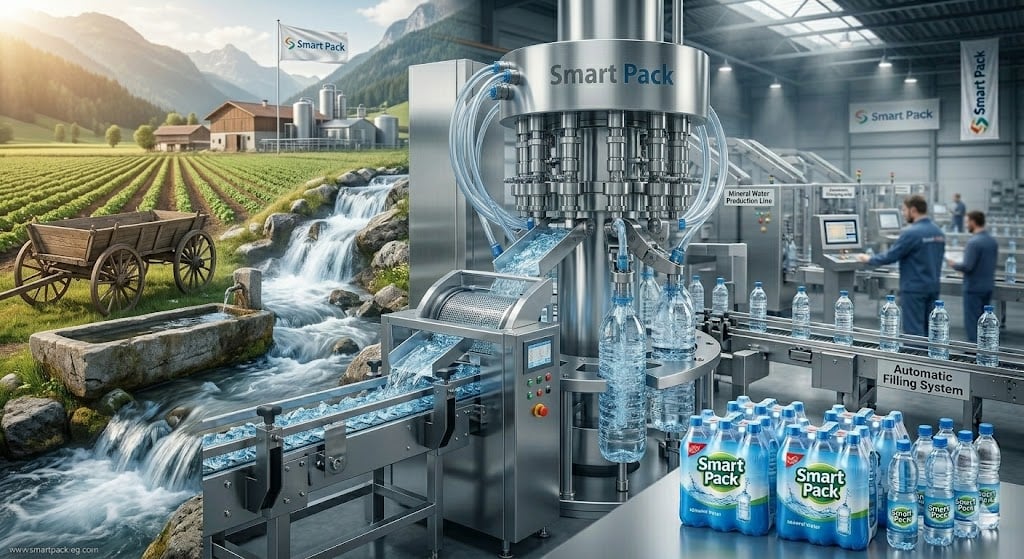
With the growing demand for clean drinking water in Egypt and regional markets, mineral water production has become a highly profitable and sustainable industrial business that can generate steady daily cash flow. Water is not a luxury—it is a daily necessity for households, institutions, and businesses.
By selecting high-quality filling and packaging machines and building a fully integrated industrial production line, you are not just producing a product—you are building a trusted brand capable of competing locally and internationally.
This guide walks you through the practical steps to set up a mineral water production line, choose the best filling and packaging equipment, and turn your project into a high-profit operation.
Why Is a Mineral Water Project Profitable and Promising?
The bottled mineral water market in Egypt is among the fastest-growing sectors, driven by continuous demand from households, restaurants, schools, companies, and construction sites. Increased awareness of health and safety has further accelerated reliance on bottled water.
With population growth and rising consumer awareness, demand for bottled water is expected to continue increasing—making investment in this sector a scalable, long-term opportunity.
Planning and Setting Up a Mineral Water Production Line
1. Market Study and Business Planning
Before purchasing any equipment, conduct a detailed market study to assess demand size, competitors, pricing, and distribution requirements.
Based on this analysis, develop a clear business plan defining objectives, expected production capacity, investment cost, and projected returns.
2. Water Treatment Systems
The first stage of mineral water production is water treatment and purification to meet health and regulatory standards. This includes filtration units, purification systems, and sterilization processes to eliminate impurities and bacteria.
3. Filling and Packaging Machines
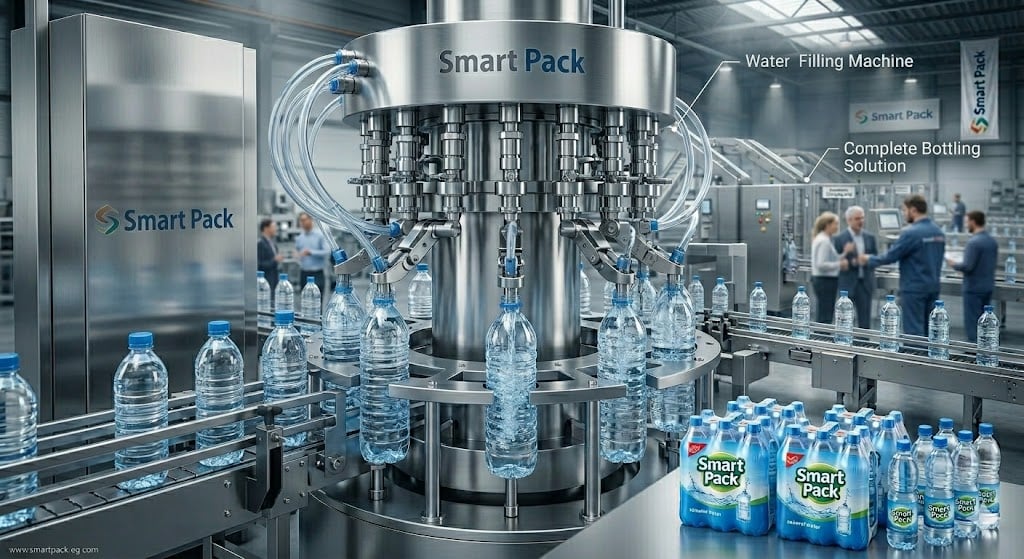
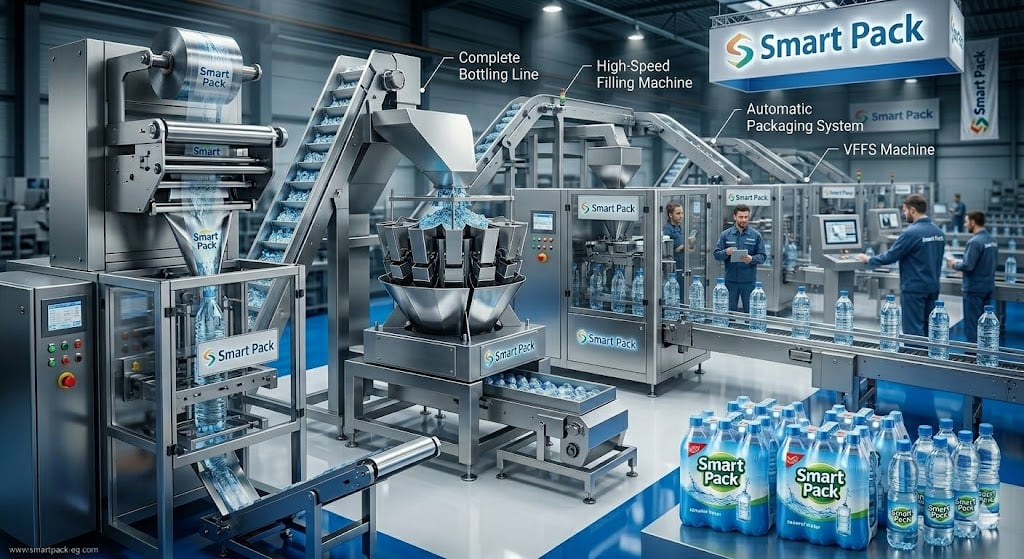
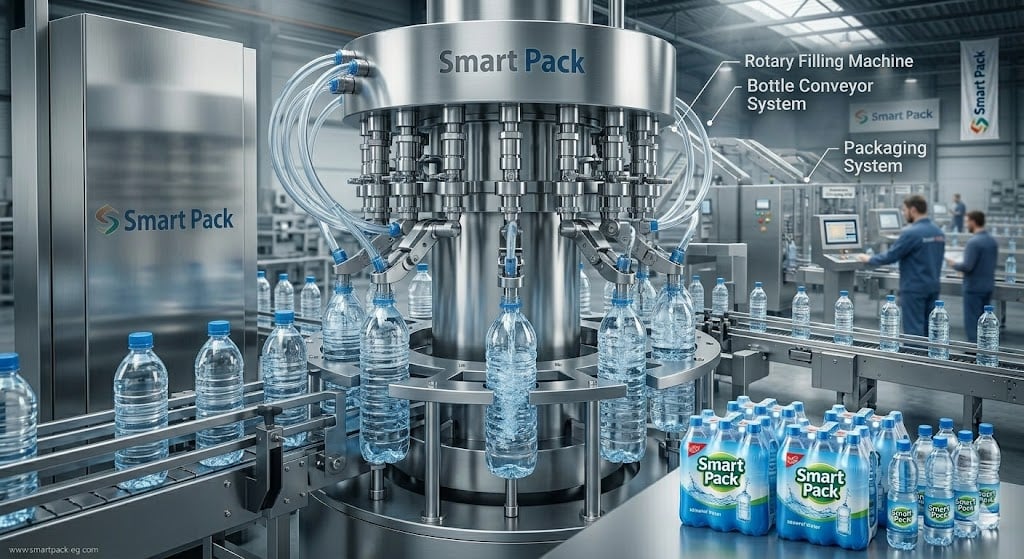
Once purified, water moves directly to specialized machines that rinse bottles, fill them, apply caps, and label them. Many modern systems integrate bottle rinsing, filling, capping, and labeling into a single synchronized unit.
4. Fully Automatic Filling
Modern lines use PLC-controlled automatic filling machines to regulate bottle counts, filling accuracy, and quality control—boosting efficiency and minimizing errors.
5. Final Packaging and Bundling
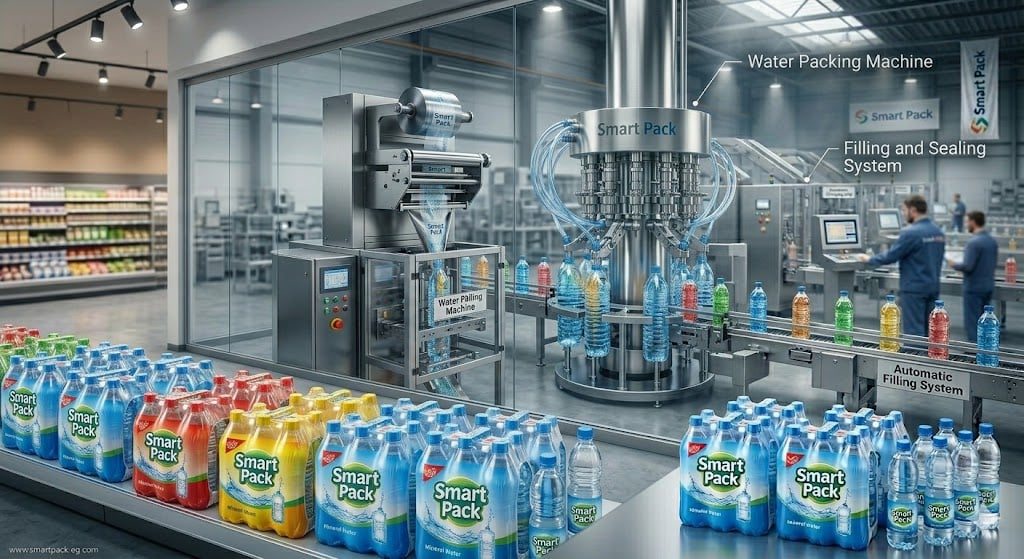
After filling, bottles are transferred to shrink-wrapping or carton packing units, preparing them for safe transportation, storage, and distribution.
Mineral Water Filling Machines: Types and Their Role in Productivity
Choosing the right filling machines is one of the most critical decisions in setting up your project, as machine type and performance determine filling accuracy, production speed, and final product quality.
Common Machines in a Water Production Line
-
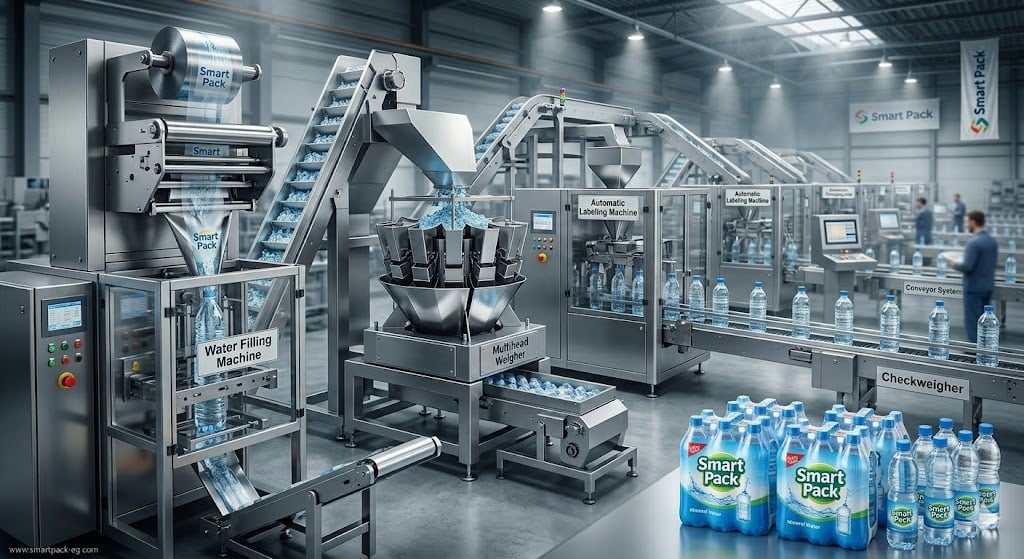
Bottle Rinsing Machines: Clean bottles before filling to ensure hygiene.
-
Filling & Capping Machines: Precisely fill bottles and securely apply caps to extend shelf life.
-
Labeling Machines: Apply brand labels and product information to each bottle.
Factory Setup and Infrastructure Requirements
When establishing a mineral water factory, choose a location close to clean water sources and ensure reliable access to electricity, water supply, and drainage systems.
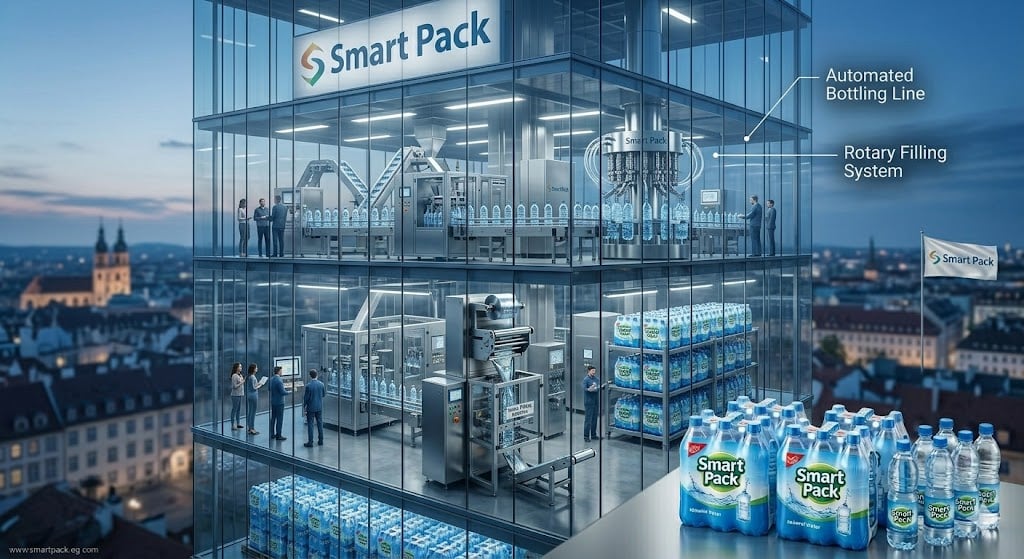
Factory layout should follow a logical production flow—from treatment to filling, packaging, storage, and dispatch—while allocating dedicated areas for quality control and inspection.
Strong infrastructure ensures smooth production flow and reduces unnecessary operational and transportation costs.
Marketing and Distribution Strategies to Maximize Profit
After producing high-quality mineral water, effective marketing and distribution become key to success. Proven strategies include:
-
Partnering with local distributors, retailers, and supermarkets for rapid market penetration.
-
Promoting your brand through digital marketing channels to reach diverse consumer segments.
-
Targeting export markets with rising demand for bottled water.
-
Supplying hotels, restaurants, and institutions that require consistent daily volumes.
Combining these strategies helps maximize ROI and ensures sustainable growth.
Frequently Asked Questions
Is a mineral water bottling project suitable for beginners?
Yes. It benefits from constant daily demand and is less affected by seasonal fluctuations, making it a stable and profitable industrial project.
What is the expected investment for a medium-scale bottling line?
Investment depends on capacity and equipment, but typical lines range from 2,000 to 12,000 bottles per hour, scalable with growth plans.
Are there specific health requirements?
Yes. Compliance with local health regulations is mandatory, requiring accurate filtration, purification, and sterilization systems.
Why choose a fully automatic filling machine?
Automatic machines offer higher speed, precise filling, reduced labor dependence, and consistent product quality.
Can the production line be expanded in the future?
Absolutely. With proper design, additional modules or higher speeds can be added as market demand grows.
Ready to Start?
If you are ready to transform the idea of mineral water production into a profitable and sustainable industrial business, now is the ideal time to begin.
Contact us for a free technical consultation to help you select the best filling and packaging machines and design a complete production line aligned with your goals. We’ll support you step by step—from planning to full operation—to launch a powerful production line that delivers maximum return on investment in Egypt and beyond.